
Dell 15.6-inch DC15250
4.3Editor score
Intel Core i5 processor
15.6-inch Full HD display
Numeric keyboard included
Finding the best laptop for 15 year old means balancing schoolwork, creativity, communication, entertainment, and a design that can handle life in a backpack. A teen laptop should be capable enough for research, documents, video calls, and entertainment without becoming intimidating to carry, configure, or maintain.
We compared ten HP, Dell, Lenovo, and Acer laptops using the supplied specifications, focusing on processor capability, memory, storage, display quality, connectivity, portability, battery information, and suitability for common student activities. The guide covers both Windows laptops and Chrome-based alternatives for web-focused learning.
Each selection reveals a different balance: some prioritize a large touchscreen and everyday performance, while others emphasize mobility, battery life, a numeric keypad, or a familiar Windows environment. Product details and availability can change, so readers should verify the current listing and specifications before making a final purchase.
4.3Editor score

4.4Editor score
4.3Editor score
As an Amazon Associate we earn from qualifying purchases.
The table below compares all ten laptops by their most important specifications, including processor, memory, storage, display, and portability. It is a quick way to identify which models suit browser-based schoolwork, full Windows productivity, larger-screen study, or more demanding creative and gaming tasks.


The HP 15.6 inch Laptop stands out as the most balanced option in this guide, combining a 4.4 rating with a capable AMD Ryzen 3 7320U processor, 8GB of LPDDR5 memory, and a 256GB PCIe NVMe SSD. Its 15.6-inch HD touchscreen makes it particularly approachable for a 15-year-old who may prefer direct interaction over a conventional trackpad.
We may earn a commission when you buy through this link, at no additional cost to you.
The Ryzen 3 7320U is designed for a practical mix of schoolwork, browsing, communication, and general productivity. Windows 11 Home provides access to familiar desktop applications, while the 256GB NVMe drive offers a meaningful improvement over slower traditional storage. Eight gigabytes of memory is a reasonable amount for a student laptop, particularly when the operating system and applications are kept organized.
The touchscreen adds genuine value for scrolling through documents, navigating class materials, drawing with a stylus, or using tablet-style interfaces. Its 1366-by-768 resolution is the main limitation, and buyers who regularly edit detailed photos or watch very high-resolution content may prefer the Full HD Acer Aspire 3. The supplied details also do not establish suitability for demanding modern games, so this should be viewed as a versatile school and entertainment laptop rather than a dedicated gaming machine.
This is a strong recommendation for a teen who needs a conventional Windows computer, a large screen, and simple touch controls without moving into the premium tier. The storage capacity, processor class, and memory make it more flexible than the Chromebooks in this list, while the touchscreen helps it stand apart from the other HP alternatives. It is the easiest general-purpose choice for schoolwork, creative browsing, and entertainment.
Windows 11 Home gives students access to a broad desktop software ecosystem, which can be useful for assignments that extend beyond standard browser-based tools. The large display also makes document work, video calls, and entertainment more comfortable than on a smaller notebook.
The micro-edge HD touchscreen supports pinch, tap, and swipe navigation, offering a quick way to move through web pages and applications. It is particularly helpful for quick student interaction, although a stylus and the included display resolution should be considered if drawing is a major interest.
We may earn a commission when you buy through this link, at no additional cost to you.
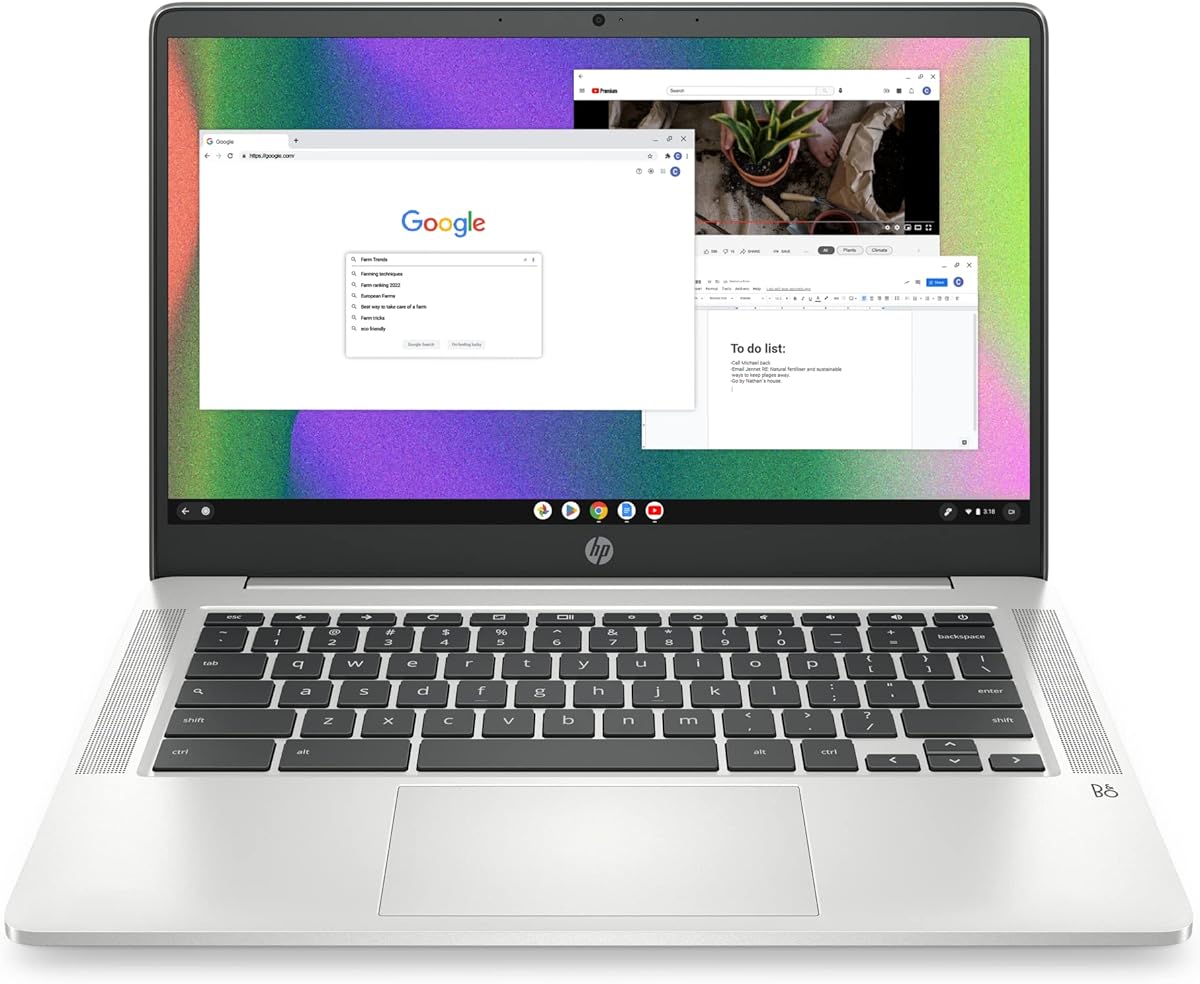
The HP Chromebook 14 is a focused choice for students whose schoolwork is centered on web applications, Google services, online coursework, and communication. It carries a 4.4 rating, a 3.24-pound weight, and a 14-inch anti-glare HD display, making it easy to carry between classes and comfortable for extended reading.
We may earn a commission when you buy through this link, at no additional cost to you.
The Intel Celeron N4000 and Intel UHD Graphics 600 are suited to web browsing, music, video streaming, and online lessons. The anti-glare coating helps reduce reflections in bright classrooms, while the Wide Vision HD camera and integrated digital microphones cover video chats and group-study needs. Wi-Fi 5 and Bluetooth 5.0 provide standard wireless connectivity.
Its largest constraint is local storage. The 32GB eMMC drive leaves less room for downloaded files, offline movies, and larger applications, although cloud storage can reduce the need to retain many files locally. Four gigabytes of RAM is also modest for heavy multitasking. Chrome OS includes built-in protection, cloud backup, and access to many Android apps, making the system approachable for a first personal computer.
This Chromebook is a sensible choice for a 15-year-old who primarily uses browser-based school tools and values a light, familiar design over desktop software. It may not suit a student who needs large local media libraries, intensive creative applications, or advanced school software. For that kind of use, the HP 15.6 inch touchscreen or Dell DC15250 is a better fit.
At 3.24 pounds, the Chromebook minimizes the weight students must manage throughout a school day. Its slim form also makes it practical for shared study spaces, libraries, and travel where charging access may be inconsistent.
A wide-view HD camera and dual array microphones support the online meetings that now play a major role in group assignments. Chrome OS works naturally with browser-based video calling, making the system approachable for everyday communication.
We may earn a commission when you buy through this link, at no additional cost to you.
The HP 14-inch N150 Laptop combines an Intel Processor N150 with 8GB of RAM, 128GB of UFS storage, Windows 11, Wi-Fi 6, and a one-year Microsoft 365 subscription. Its 4.4 rating and broad connectivity make it a well-rounded option for writing, research, remote learning, and routine productivity.
We may earn a commission when you buy through this link, at no additional cost to you.
The four-core processor can reach approximately 3.6GHz, giving it more general-purpose capability than the basic Celeron Chromebooks in this guide. Eight gigabytes of RAM provides a steadier foundation for running office applications, web meetings, and browser tabs together. USB-C and HDMI 1.4 make it easier to connect a monitor, while Wi-Fi 6 should provide a modern wireless foundation for classrooms and home networks.
Storage is the principal limitation. A 128GB UFS drive may fill quickly if the student downloads large videos, installs multiple demanding applications, or keeps extensive media offline. The system also includes Windows 11 Home in S mode, which can restrict installation methods and require users to move an application out of S mode before full desktop access is available. The included Microsoft 365 term adds clear value for Word, Excel, and PowerPoint assignments.
This laptop fits a teen who wants a small Windows machine for school, communication, and light creative work but does not need a large internal drive. It is also a strong option for students moving into college because the portable weight, modern ports, and included productivity subscription create a convenient package. Buyers should plan for external storage or regular cloud backups.
Wi-Fi 6 and Bluetooth support modern connected use, while USB-C and HDMI 1.4 provide practical expansion options. These connections are useful when a student needs a larger display, wired network, external drive, or presentation setup.
The included one-year Microsoft 365 subscription provides access to standard document, spreadsheet, and presentation tools. That makes the laptop more immediately useful for school assignments, particularly for a first-time student setting up a study computer.
We may earn a commission when you buy through this link, at no additional cost to you.
The acer Aspire 3 differentiates itself with a 15.6-inch Full HD IPS display, a slim design, and the same AMD Ryzen 3 7320U processor found in the top-ranked HP model. Its 4.2 rating reflects a capable general-purpose option for students who value screen clarity and a polished, portable form.
We may earn a commission when you buy through this link, at no additional cost to you.
The 1920-by-1080 IPS panel offers more detail than the HD screens found on many Chromebooks, which is valuable for reading, viewing educational material, and editing images. Narrow bezels preserve a relatively modern appearance, while the quad-core Ryzen processor and Radeon graphics provide enough capability for standard productivity, streaming, and casual gaming. The 8GB of LPDDR5 memory also supports smoother multitasking than a four-gigabyte configuration.
The 128GB NVMe SSD should be quick for a laptop of this class, but its capacity is limited for a student who stores large media files or several full desktop applications. Acer PurifiedVoice with AI Noise Reduction and a front-facing camera using temporal noise reduction are useful additions for online classes. The system does not list a touchscreen, so students who prefer finger navigation should consider the HP alternative instead.
The Aspire 3 is best for a teen who wants a large, sharp display, a slim Windows laptop, and more visual detail than a basic Chromebook. It is especially attractive for students splitting time between school documents, web research, video calls, and entertainment. Extra storage would be the logical next upgrade if the listing does not offer a higher-capacity configuration.
The Full HD IPS display provides more usable detail than a standard 1366-by-768 panel. Its wide viewing angles are also helpful when sharing a worksheet, viewing a lecture, or collaborating with classmates around a desk.
Wi-Fi 6, an NVMe drive, LPDDR5 memory, and a quad-core processor create a modern foundation. The slim chassis supports portability, making the model practical for students who regularly move between school, home, and extracurricular activities.
We may earn a commission when you buy through this link, at no additional cost to you.
The Dell 15.6-inch DC15250 is the premium selection in this guide, bringing an Intel Core i5 1334U processor, a Full HD display, and Windows 11 Home to a designed everyday-computing package. Its 4.3 rating and business-oriented features make it a strong option for a teen who wants extra headroom for demanding coursework.
We may earn a commission when you buy through this link, at no additional cost to you.
The Core i5 processor is the key advantage over the entry-level N-series and Celeron alternatives. It should provide a more responsive experience when handling multiple applications, larger school projects, and demanding productivity software. The Full HD screen offers clearer text and images, while Dell ComfortView is designed to reduce blue-light emissions during extended viewing sessions.
The keyboard deserves special attention. Roomy keypads, a separate numeric keypad, and a calculator hotkey are useful for data entry, algebra, spreadsheets, and timed computer-based tests. Lift-hinges create a more ergonomic typing angle, which may help during long writing assignments. Energy-efficient batteries and Express Charge are also mentioned, and a one-year onsite service option adds reassurance for a family that does not want to transport a repair.
The supplied information does not list memory capacity, internal storage type, weight, or detailed battery figures, so buyers should check those specifications carefully. The Dell may also be less convenient than a Chromebook for light web-only users. Nevertheless, it is the best fit here for a 15-year-old who needs a full-size, dependable Windows laptop for advanced school software, spreadsheets, coding, or future academic growth.
A Core i5 processor provides a higher performance ceiling than the basic processors used by many entry-level Chromebooks and compact Windows laptops. That margin is valuable for advanced applications, multitasking, and students who expect their computing needs to grow.
The separate numeric keypad gives this laptop a distinctive advantage for math, accounting, and spreadsheet tasks. Lifted hinges and a roomy layout also support longer sessions, although the large overall design may not be ideal for every backpack.
We may earn a commission when you buy through this link, at no additional cost to you.
The Lenovo Flagship Chromebook is a compelling alternative for students who want a lightweight, full HD touchscreen computer. Its MediaTek Kompanio 520 processor is octa-core, and the 14-inch 1920-by-1080 IPS touchscreen supports both finger navigation and wide viewing angles.
We may earn a commission when you buy through this link, at no additional cost to you.
At 2.86 pounds, this is among the most portable full-size options in the guide. The slim dimensions, Wi-Fi 6, Bluetooth 5.1, and selection of USB-A, USB-C, a microSD reader, and an audio jack make it suitable for mobile study. The integrated 720p camera includes a privacy shutter, a thoughtful detail for students sharing screens or working in shared spaces.
The main limitations are the 4GB of RAM and 64GB of eMMC storage. Chrome OS can handle browser-based productivity and multiple standard tabs, but offline files and locally installed applications require more space. The Kompanio chip is better suited to routine Chromebook tasks than intensive software suites or demanding games. Google Classroom, Zoom readiness, and broad app support make it relevant to remote and hybrid learning.
Choose the Lenovo when portability, a sharp touchscreen, and a lightweight Chromebook experience matter more than extensive local storage. It would be a particularly good first computer for online learning, note-taking with a stylus, and entertainment away from a desk. Students needing full desktop software should look toward the Windows models instead.
The combination of a 2.86-pound weight, narrow-looking 14-inch form, and Full HD touchscreen gives this Chromebook a modern and portable profile. It is easy to carry for a full day of classes and comfortable for interactive web-based lessons.
A physical camera privacy shutter offers a simple way to prevent unwanted video capture. USB-A and USB-C connectivity, a microSD slot, and an audio jack provide more attachment options than many minimal Chromebooks.
We may earn a commission when you buy through this link, at no additional cost to you.
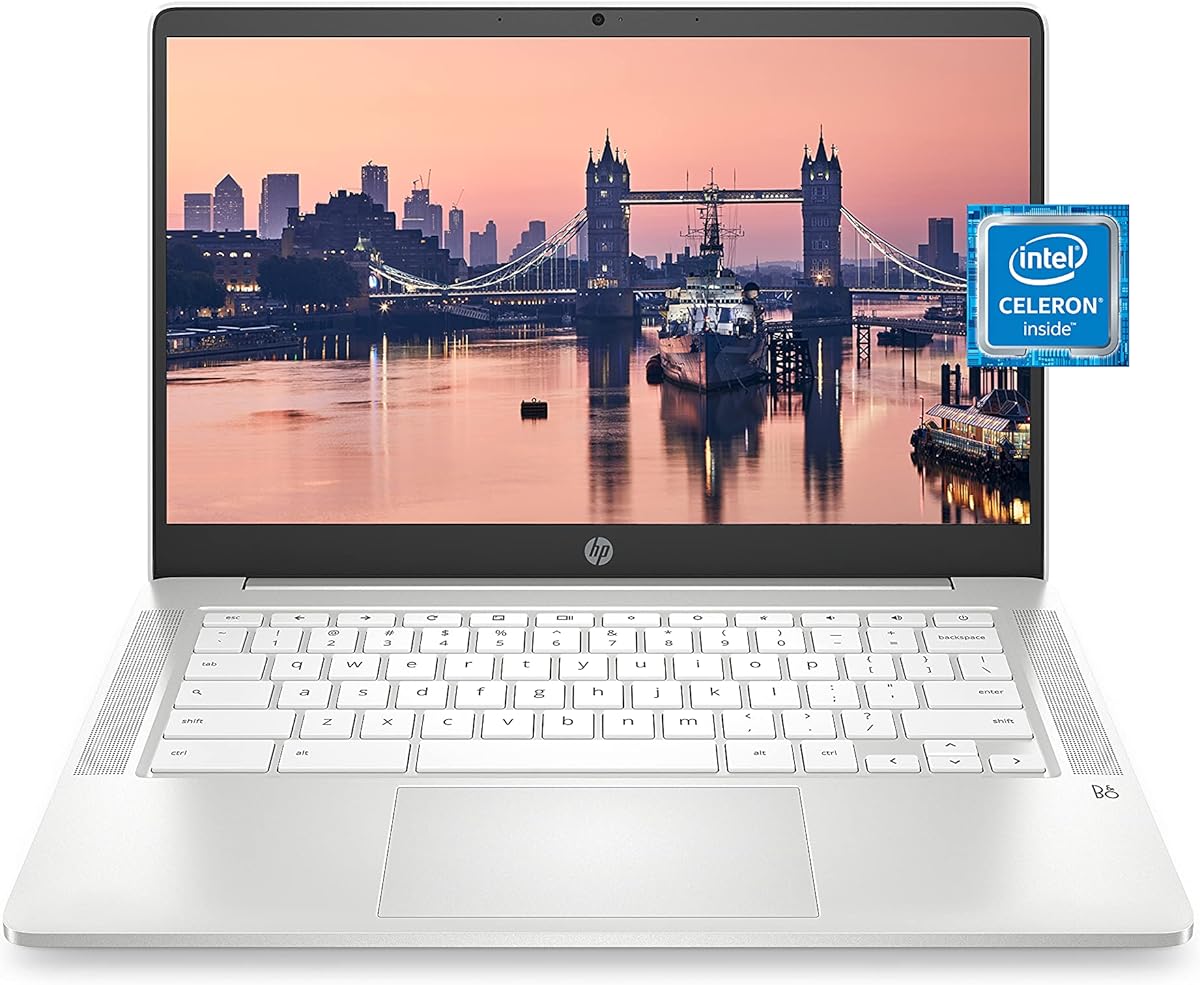
The HP Chromebook 14 N4120 is a value-focused choice with a 4.3 rating, a thin 14-inch form, and advertised battery life of up to 14 hours. Its Intel Celeron N4120 processor, 4GB of RAM, and 64GB eMMC make it best suited to online coursework, communication, browsing, and streaming.
We may earn a commission when you buy through this link, at no additional cost to you.
Battery endurance is the headline advantage. The supplied specifications state up to 14 hours of use, while HP Fast Charge can raise the charge from 0 to 50 percent in approximately 45 minutes. That combination reduces anxiety for students who carry the computer throughout the day without consistent access to an outlet. The micro-edge anti-glare display also helps with readability in varied indoor lighting.
Intel UHD Graphics 600 supports smooth 4K content according to the supplied information, though this is not a high-performance gaming laptop. Four gigabytes of RAM is adequate for Chrome OS, and 64GB of flash storage provides room for applications and essential offline documents. Chrome OS includes automatic updates, built-in protection, cloud backup, and access to the Google Play Store.
This is the top budget selection for a teen whose priorities are long battery life, low-maintenance operation, and a portable school computer. It is less suitable for large offline media libraries, advanced creative applications, or full desktop software. Even so, the long battery target and fast charging make it a particularly practical school companion.
An advertised runtime of up to 14 hours can cover classes, homework, and entertainment between charging opportunities. Actual results depend on usage, display settings, and wireless activity, so the number should be treated as a manufacturer target rather than a guarantee.
Chrome OS is designed around browser-based work, with automatic updates, cloud backups, and access to many Android applications. The result is a straightforward system that can be especially useful for a student learning to organize files and manage online coursework.
We may earn a commission when you buy through this link, at no additional cost to you.
The Windows 11 i3 Laptop is an unusually well-equipped budget-style option, with a 4.5 rating, 12GB of RAM, 256GB of SSD storage, a Full HD anti-glare display, and a backlit keyboard. These specifications make it attractive for a teen who wants a capable full Windows computer without moving to the premium tier.
We may earn a commission when you buy through this link, at no additional cost to you.
The Intel Core i3 processor has two cores and four threads, reaching up to 3.4GHz, with integrated Intel UHD Graphics 620. It handles office software, online classes, HD streaming, and normal multitasking, while 12GB of RAM provides a comfortable margin when several browser tabs, documents, and communication applications are open together.
Connectivity is another major strength. Three USB 3.0 ports, HDMI 2.1, a USB-C port supporting PD3.0 fast charging, Wi-Fi 6, Bluetooth 5.2, and a TF card slot create a flexible setup for peripherals, monitors, and portable storage. The card slot is expandable up to 2TB according to the supplied information, helping compensate for the internal 256GB drive. Dual speakers, a webcam, and a backlit keyboard support evening study and video calls.
The 57.75Wh battery is listed at approximately seven hours of mixed use, and the laptop weighs 3.6 pounds with a thickness of 19.5mm. That is a sensible balance for school use, though the Core i3 is less suitable for intensive gaming or advanced creative work. Overall, this model is a well-rounded recommendation for a student who values memory, ports, and display quality over maximum processing power.
The generous memory allocation helps when a student moves between recorded lectures, browser research, messaging, and document editing. It also provides more room for future growth than the four-gigabyte configurations common in compact Chromebooks.
Multiple USB ports, HDMI, USB-C charging, and an expandable card slot make it easy to build a study setup at a desk or connect accessories at school. The backlit keyboard is a practical addition for late-night work.
We may earn a commission when you buy through this link, at no additional cost to you.
The HP 14-inch N150 Laptop is a compact Windows option for students who want familiar software and strong portability. It has a 4.5 rating, a four-core Intel N150 processor reaching up to 4.4GHz, 4GB of DDR5 memory, a 128GB SSD, and one year of Microsoft 365.
We may earn a commission when you buy through this link, at no additional cost to you.
The slim 0.71-inch profile and 3.24-pound weight make it easy to carry between home, school, and work. Its 14-inch non-touch display has a 250-nit brightness and anti-glare coating, which helps with general visibility but may appear dimmer than brighter premium panels. A simple, familiar layout is useful for students who do not need a touchscreen.
The port selection is more versatile than many similarly compact laptops. It includes USB 3.0 Type-C, USB 3.0 Type-A, HDMI, and a headphone and microphone combination jack, along with Wi-Fi and Bluetooth. The included cloud storage can help with files and backups, while the 128GB SSD offers a fast local drive for applications and active projects.
The main limitation is 4GB of RAM, which can constrain heavy multitasking. The N150 is also an entry-level processor rather than a high-performance one. For browsing, writing, video calls, and standard school applications, however, it provides a neat package. This laptop is best for a teen who prioritizes portability, Windows, and useful connections over demanding creative software or extensive local storage.
The thin chassis and 3.24-pound weight reduce bulk when the computer is carried between classes. Its 14-inch display preserves a comfortable work area without the footprint of a full-size 15.6-inch model.
USB-A, USB-C, HDMI, and an audio jack cover common student needs, from external storage to presentation displays. One year of Microsoft 365 supports standard document, spreadsheet, and presentation work from the beginning.
We may earn a commission when you buy through this link, at no additional cost to you.
The HP Everyday Slim Laptop has a 5.0 rating, the highest listed score in the guide, and offers a straightforward configuration built around an Intel N150 processor, 4GB of RAM, a 128GB SSD, Windows 11, and Microsoft 365. Its appeal lies in a simple, portable design for everyday student tasks.
We may earn a commission when you buy through this link, at no additional cost to you.
The HP True Vision 720p HD camera uses temporal noise reduction to improve the appearance of video calls, while dual array microphones support clearer online communication. A full-size keyboard and a multi-touch HP Imagepad complete the input experience. These details are meaningful for a teen who attends virtual classes, joins group projects, or regularly communicates with classmates.
The N150 processor and 4GB of memory are sufficient for web browsing, writing, standard office applications, video calls, and media playback. The 128GB SSD keeps startup and application access responsive, but it places a clear limit on the amount of content stored locally. One year of Microsoft 365 adds immediate productivity value, while a longer-term account may be needed for continued use of the included applications.
This laptop is a good fit for a first personal computer or a lightweight school device focused on communication and standard productivity. It is not intended to be a high-end gaming, programming, or media-editing machine. Its high rating and practical communication features make it worth considering, but the limited memory and storage should be checked against the student's long-term needs before purchase.
The 720p HD camera and temporal noise reduction can improve the visual quality of online meetings in ordinary indoor conditions. Dual microphones complement the camera by helping the system capture voices more effectively during group discussions.
Windows 11, Microsoft 365, a full-size keyboard, and a multi-touch touchpad create a conventional computing experience that should be easy for a teenager to learn. Its slim construction also keeps it practical for regular carrying.
We may earn a commission when you buy through this link, at no additional cost to you.
The right student laptop depends less on a single specification than on how the teen will use it. Begin with the required school software, then consider screen size, portability, battery expectations, memory, storage, and the learning curve associated with the operating system.
In short, choose Windows for software flexibility and Chromebooks for simplicity, portability, and browser-based learning.
An Intel Core i3 or i5 offers more headroom for demanding applications, complex multitasking, and future coursework than entry-level N-series, Celeron, and Kompanio processors. The AMD Ryzen 3 7320U used in two selections is a capable general-purpose platform for writing, browsing, media, and moderate productivity. Intel N150 systems are appropriate for standard school applications but should not be expected to handle intensive editing, complex simulations, or demanding modern games.
Prioritize enough processing power for the software the student will actually use, not an expensive specification that remains unused.
Memory determines how comfortably a computer handles several applications at once. Eight gigabytes is a sensible minimum for a new general-purpose laptop, while 12GB provides additional flexibility for browser-heavy students and creators. Four gigabytes is common in inexpensive Chromebooks and can be sufficient for basic online work, but it leaves less room for heavier multitask. After choosing a laptop, students should also keep background applications limited and restart periodically when performance slows.
Aim for 8GB or more when possible, while accepting 4GB when the intended workload is primarily web-based.
Storage should hold the operating system, applications, assignments, photos, and any media the student wants offline. A 128GB drive is workable with cloud storage and careful housekeeping, but a 256GB SSD is more comfortable for a teen who downloads videos, installs multiple programs, or edits media. NVMe and UFS storage improve responsiveness, but capacity still matters. Cloud storage can protect important files, though students should retain local copies of active schoolwork in case connectivity is limited.
Choose 256GB for greater independence, or combine 128GB with an organized cloud and external-storage plan.
A 15.6-inch screen gives students more room for split-view work, documents, and streaming, while a 14-inch model is easier to carry. Full HD resolution is sharper than a 1366-by-768 HD panel, especially for text and detailed images. IPS displays generally provide better viewing angles, while anti-glare coatings help in bright rooms. Touchscreens add direct navigation but can increase cost and may introduce glare. A 250-nit panel may be adequate indoors but is less impressive outdoors.
Prioritize Full HD and comfortable viewing angles, then choose screen size according to whether mobility or desk space matters more.
A lightweight laptop is easier to carry throughout a school day. Models around three pounds are generally convenient, while larger 15.6-inch systems may require more backpack space. Advertised battery figures are often based on specific wireless streaming conditions, so they should be treated as targets. A stated 11 to 14 hours is attractive for all-day use, while a seven-hour mixed-use estimate may be adequate for shorter school days. Fast charging can provide meaningful convenience between classes.
For a teen who carries a computer every day, balance weight, thickness, screen size, and realistic battery needs rather than optimizing only one number.
At least one USB port, an audio jack, and a modern wireless connection are essential for a student computer. USB-C can simplify charging and may support display or data accessories, while HDMI is useful for presentations and larger monitors. Wi-Fi 6 can provide a strong connection in busy homes and schools, although the school network must support the standard. A webcam, microphones, and speakers also matter for remote learning, and a numeric keypad can help with math and spreadsheet work.
Check the ports the student will actually use and confirm that essential school accessories connect without requiring unnecessary adapters.
A slim profile does not automatically indicate a fragile computer, but a protective sleeve or case can reduce damage from commuting, sports, and crowded backpacks. Warranty and repair support deserve attention because a damaged school computer can interrupt important deadlines. Some listings offer onsite or limited hardware service, while others provide standard protection. Parental controls, user accounts, and screen-time settings can be useful for younger teens, and Windows Family Safety provides additional management options that can be adjusted as the student becomes more independent.
Treat support, protection, and account management as part of the purchase decision, not details to consider only after something goes wrong.
Begin by signing into the correct personal or family account, installing required school applications, and updating the operating system before the student starts working. Create clearly named folders for subjects, assignments, downloads, and media. Enable automatic cloud backup for important documents, but also keep local copies of any work due soon. Browser organization, sensible file names, and regular cleanup make the computer easier to use and reduce the chance of misplaced work.
Protect the machine by using a padded case, keeping drinks away from the keyboard, and avoiding unstable surfaces. Clean the screen and keyboard with a soft microfiber cloth, and do not use harsh liquids. Leave ventilation openings clear, use a protective sleeve in a backpack, and charge on a hard surface when possible. Software updates should be installed regularly, while unfamiliar links and downloads should be checked before opening.
Establish a routine that fits the teen's schedule. Short, focused study periods with brief breaks can support focus, and a nightly shutdown or restart clears temporary files and prompts needed updates. Parents and students should agree on backup locations, communication hours, app permissions, and parental-control settings. As the teen becomes more capable, those boundaries can be adjusted gradually while keeping security tools and backup habits in place.
The best type depends mainly on the software used at school. A Chromebook is convenient for browser-based assignments, while a Windows laptop is more flexible for Microsoft Office, creative programs, coding, and specialized school applications. A 14- or 15.6-inch screen with at least 8GB of memory is a sensible starting point for most students.
Usually not for ordinary schoolwork, browsing, documents, and video calls. A dedicated gaming laptop adds weight, heat, and cost, while many standard laptops can handle educational media and casual games. Consider one only if advanced games or specialized creative applications are a regular, clearly identified need rather than an occasional wish.
Eight gigabytes is a good general-purpose amount for browsing, writing, spreadsheets, video calls, and moderate multitasking. Four gigabytes can work in a lightweight Chromebook, but it may feel limited when many tabs and applications are open. Students doing advanced creative or technical work benefit from 12GB or more.
Choose a Chromebook when schoolwork primarily takes place in Google Workspace, Microsoft 365 online, or other browser-based services. Choose Windows when the curriculum requires software that must run as a desktop application, when a larger local file library is needed, or when the student expects advanced creative and technical work.
A 14-inch laptop is usually easier to carry and still provides enough room for writing and research. A 15.6-inch model is better for split-screen work, detailed documents, and entertainment. Full HD resolution is preferable because it makes small text and detailed images easier to view, especially on a larger screen.
A 128GB drive can be enough for a browser-focused student who uses cloud storage and removes large downloads. A 256GB SSD is more comfortable for applications, offline videos, photos, and active projects. Students should maintain a backup routine regardless of capacity and keep local copies of work that is due soon.
Use separate personal accounts, enable automatic operating-system updates, review browser permissions, and establish consistent backup procedures. Parental controls can help with screen time and app access, but they should be explained to the student rather than used only as a surprise restriction. Device location and activity tools can also support family communication when used collaboratively.
Install the school’s required applications, sign into the correct account, update the system, configure cloud backups, and test the webcam, microphone, speakers, and network. Creating subject folders and a naming system for assignments helps prevent confusion. A short trial period before the first due date also gives the family time to resolve any access or compatibility problems.
The HP 15.6 inch touchscreen laptop is the strongest all-around choice because it combines Windows 11, a Ryzen 3 processor, 8GB of memory, 256GB of fast storage, and a useful large display. The Dell DC15250 is the premium option for students who need stronger processing performance, a Full HD screen, and a numeric keypad, while the HP Chromebook 14 N4120 offers the most practical budget path for browser-focused learning and long battery life.
Prioritize the features that match actual schoolwork. Full Windows compatibility matters for specialized applications, while a Chromebook can simplify web-based study. Memory, storage, screen clarity, portability, and reliable connectivity should be balanced rather than treated as isolated specifications. Also consider the student’s comfort: a device they understand and enjoy using is more likely to become a productive tool.
Product listings, configurations, and prices can change, so verify the current processor, memory, storage, display, ports, and operating-system details before ordering. Checking recent customer feedback and ensuring that all required school applications run on the selected system can prevent unpleasant surprises. A careful final comparison will produce a laptop that feels manageable today and remains useful as school demands grow.