
First Alert Hardwire Combination Smoke & Carbon Monoxide Alarm
4.6Editor score
Smoke and carbon monoxide sensing
Integrated LED visual warning
Ten-year battery backup
Explore the best smoke alarms for hearing impaired, comparing visual alerts, backup power, smart features, connectivity, and installation needs.
Smoke alarms for hearing impaired residents must communicate danger without relying on sound alone. The strongest options in this guide combine audible warning, bright visual signals, accessible controls, reliable backup power, and network features that can send remote notifications to family members or caregivers.
We compared all 10 products by considering the type of danger detected, presence and strength of visual alerts, power configuration, interconnectivity, smart notifications, accessibility features, installation requirements, ratings, and the information supplied by each manufacturer. The list includes integrated alarms, dedicated strobes, combination units, and connected detectors.
Each review explains the product's most useful characteristics, practical limitations, and ideal buyer. The first three products serve as our top selections for overall usefulness, premium protection, and value. Product details, features, and availability can change, so readers should verify current specifications and pricing before purchasing.
4.6Editor score

4.6Editor score
4.2Editor score
The comparison highlights the visual-alert capabilities, detection coverage, power requirements, interconnection, and smart connectivity of all 10 products, helping readers distinguish dedicated visual alarms from multifunction and connected alternatives.
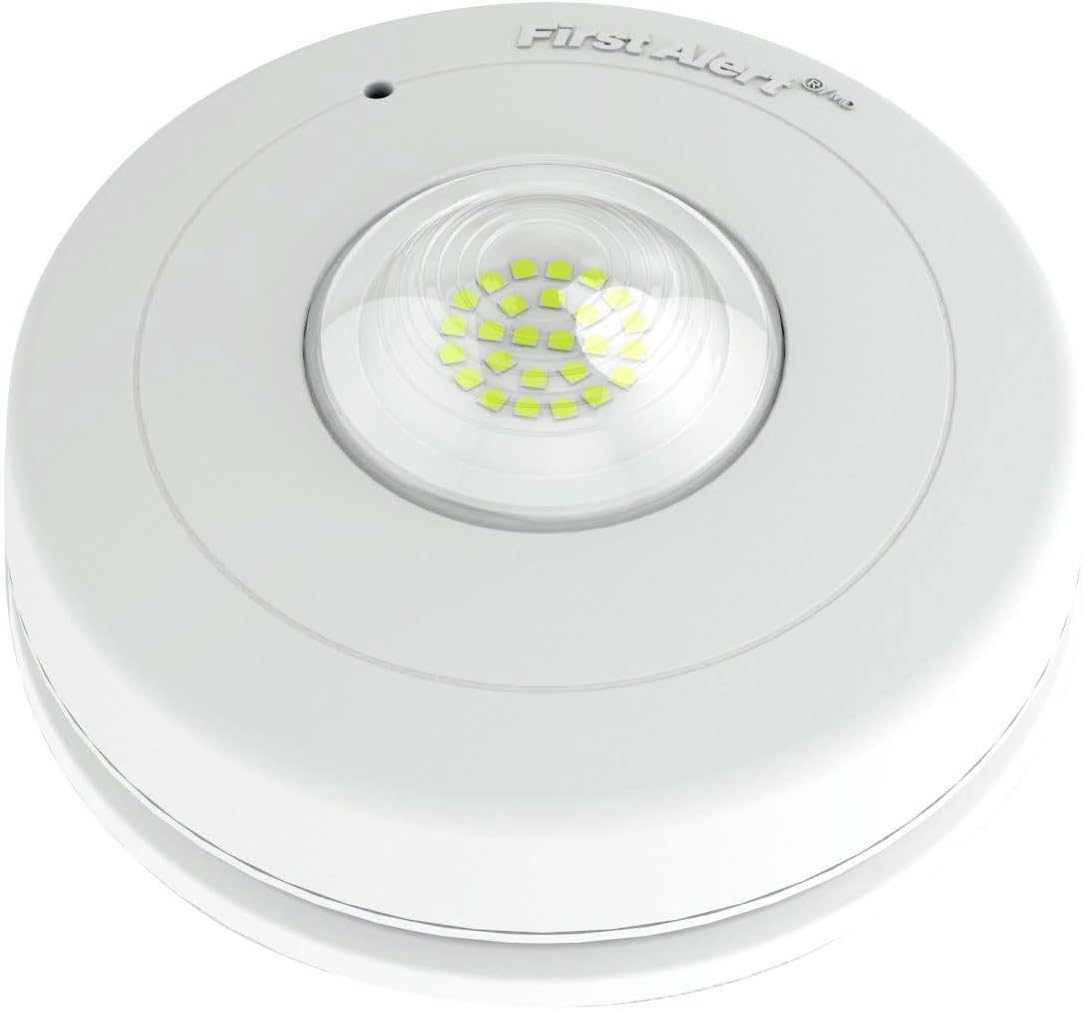


The First Alert Hardwire Smoke Alarm with 10-Year Battery Backup & LED Light is our top overall selection because it combines smoke detection with a powerful visual warning in a single device. Its 4.6 rating reflects a strong balance of useful features, including hardwired primary operation, a ten-year battery backup, interconnection capability, and a test/silence control.
We may earn a commission when you buy through this link, at no additional cost to you.
The integrated LED strobe is the defining feature for a hearing impaired household. It provides a visual indication when the alarm activates rather than forcing the resident to rely entirely on an audible tone. Precision Detection technology is designed to reduce nuisance alarms caused by cooking while still providing early warning in a fire emergency, and the backup battery preserves protection during a power failure.
Its interconnection support is also valuable in a larger home because compatible alarms can sound together when one unit detects danger. The ten-year backup reduces routine battery replacement concerns, while the test/silence button makes regular checks straightforward. The main trade-off is installation: hardwiring requires compatible wiring and may be less convenient than choosing a battery-only unit.
This is the best choice for most homeowners who want one integrated alarm rather than a separate smoke detector and visual signaling appliance. Place the strobe where it can be seen from sleeping areas and common spaces, and confirm compatibility with existing alarms before installation. For households unable to rewire, a connected battery model may be easier to deploy.
The integrated LED strobe gives hearing impaired residents a direct visual alert when smoke is detected. Its placement is crucial, so evaluate the alarm from multiple rooms and especially from the bed rather than assuming it will be visible everywhere.
Hardwired power provides the normal operating connection, while the ten-year battery backup maintains warning capability during an outage. This dual-power approach is especially useful for residents who cannot rely on hearing to discover a nighttime emergency.
We may earn a commission when you buy through this link, at no additional cost to you.
The First Alert SLED177 is a dedicated visual signaling device for households that already have compatible smoke alarms and need a stronger way to notify hearing impaired residents. Its 4.1 rating reflects a straightforward specialized design built around a 177-candela LED strobe rather than a combination of detection and notification functions.
We may earn a commission when you buy through this link, at no additional cost to you.
The high output is intended to provide an effective visual warning, including while a resident is asleep. When multiple units are installed, the strobes flash in unison, creating a consistent warning across several rooms. Its slim profile and ability to mount on a ceiling or wall also make it more flexible visually than a bulky alarm unit.
This product does not itself detect smoke or carbon monoxide, so it cannot replace a working alarm. It must be installed as part of a compatible hardwired system and used where power is continuously available. Its 4.1 rating is lower than the highest-rated models in this guide, but rating alone does not capture the purpose of a dedicated strobe.
Choose the SLED177 when your existing system supports visual signaling and you want particularly noticeable flashes. It is especially useful for supplementing alarms near bedrooms, common areas, or other spaces where sound may not wake someone. If you need the alarm and visual signal in one device, the top-ranked integrated alarm is the simpler choice.
A dedicated strobe can be positioned where it is easier to perceive than a small indicator on a ceiling alarm. For sleeping areas, test whether the light is visible from the pillow and across the room before considering the installation complete.
The ability to flash in unison supports a consistent household alert. Multiple synchronized strobes can make danger easier to recognize in different rooms, provided they are wired into a compatible system and installed with suitable spacing.
We may earn a commission when you buy through this link, at no additional cost to you.
The First Alert BRK 7030BSL combines smoke and carbon monoxide detection with an LED strobe in one housing. Its 4.2 rating makes it a practical value-oriented option among integrated alarms, particularly for households seeking both danger detection and a visual warning without adding two separate devices.
We may earn a commission when you buy through this link, at no additional cost to you.
A key benefit is the Smart Strobe feature, which provides separate flash patterns for smoke and carbon monoxide events. The synchronized 77-candela LED is intended to wake hearing impaired residents, while multiple installed units can flash in unison. Optipath 360 technology provides direct access to the smoke-sensing chamber, and the product includes a ten-year limited warranty.
The limitation is that it requires hardwired installation. Also, its 77-candela output is lower than the 177-candela output of the dedicated SLED177 strobe, so buyers should think carefully about whether the light is sufficiently visible from every required location. As with any installed warning appliance, placement and local requirements matter.
This model is a good fit for homeowners who want combined smoke and carbon monoxide protection with visual signaling in a single unit. It offers more complete coverage than a dedicated strobe without requiring a separate CO alarm for the same locations. Verify electrical compatibility and placement guidance before purchasing.
Separate smoke and carbon monoxide flash patterns can help residents distinguish the type of danger rather than receiving an undifferentiated visual signal. The distinction is particularly useful when both hazards are possible and prompt action differs.
Combining smoke and carbon monoxide sensing with a strobe can simplify installation planning. One compatible hardwired unit covers multiple needs while preserving a visual path to alert residents who may not hear an audible alarm.
We may earn a commission when you buy through this link, at no additional cost to you.
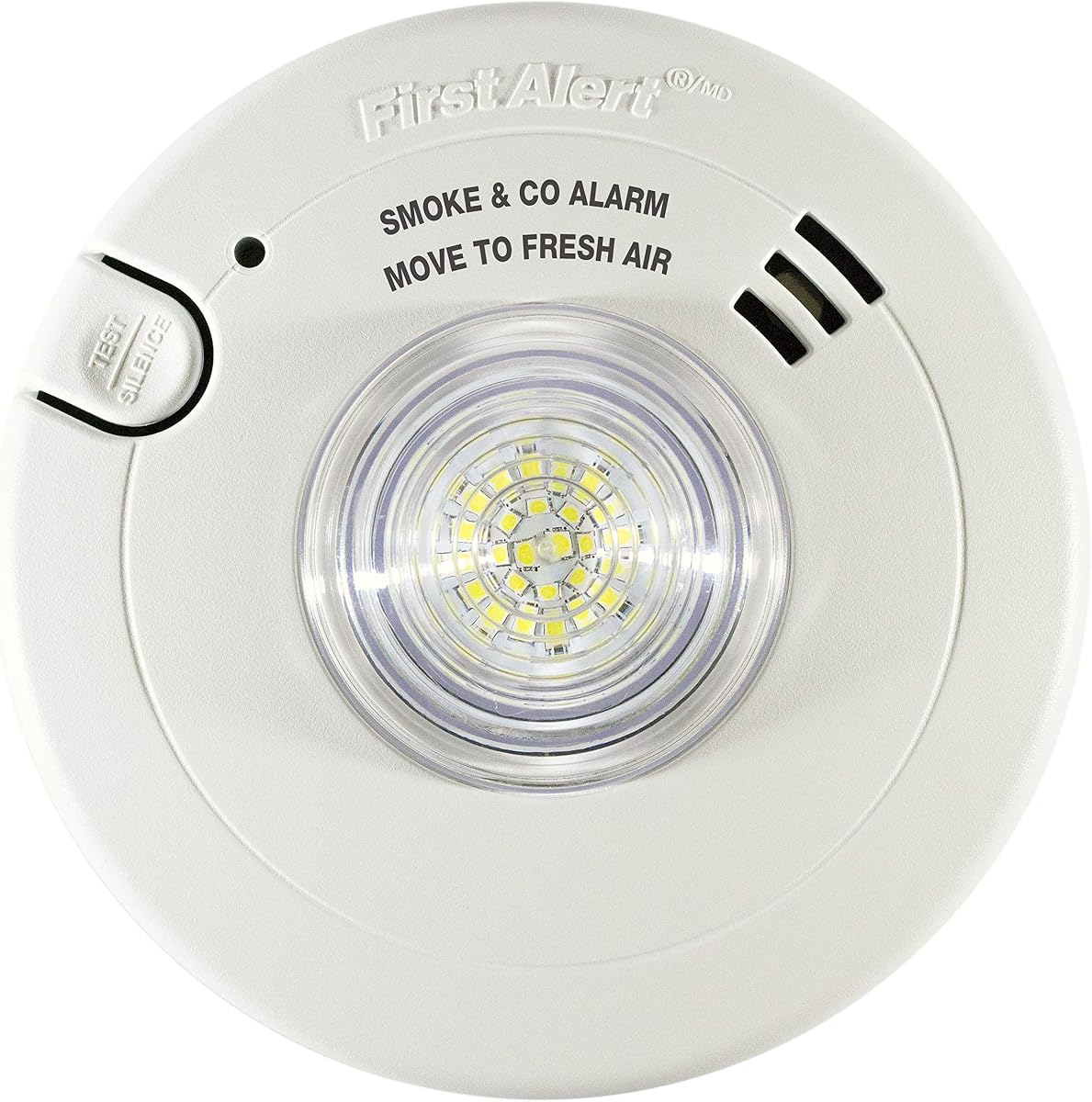
The First Alert Hardwire Combination Smoke & Carbon Monoxide Alarm is our premium recommendation because it brings together smoke detection, carbon monoxide detection, and a visual strobe in one hardwired unit. Its 4.6 rating ties for the highest rating among the products in this guide, while the backup battery adds resilience during outages.
We may earn a commission when you buy through this link, at no additional cost to you.
Precision Detection technology is designed to reduce cooking-related nuisance alarms while delivering early warning. The integrated LED strobe provides visual warning for hearing impaired residents, and compatible alarms can sound together when one unit activates. A test/silence button supports routine checks and offers temporary silencing for up to eight hours.
The trade-offs involve installation and system compatibility. Hardwiring is less flexible than plugging in a detector or installing a battery-only alarm, and homes may need a qualified electrician when wiring is absent or outdated. Users must also follow the test/silence instructions rather than treating silence as proof that the unit is malfunctioning.
This alarm is ideal for a home seeking a comprehensive, integrated warning appliance with strong visual output and battery resilience. It offers the most complete feature set here for residents who need multiple danger types covered. If the property supports hardwired installation and compatible interconnected alarms, it is a particularly strong long-term choice.
Smoke and carbon monoxide sensing are combined with an LED strobe to address both the nature of the danger and the need for a visual alert. That integration can make bedroom and common-area coverage easier to plan.
The ten-year battery backup helps maintain warning capability when household electricity is interrupted. That makes the unit more dependable during storms, outages, and other circumstances when a resident may have limited time or mobility.
We may earn a commission when you buy through this link, at no additional cost to you.
The Kidde Carbon Monoxide Detector with 10-Year Battery Backup and Digital LED Display is a purpose-built carbon monoxide monitor for deaf or hearing impaired people. Its 4.2 rating reflects a useful combination of digital information, an illuminated safety light, plug-in installation, and backup power.
We may earn a commission when you buy through this link, at no additional cost to you.
The digital display shows the carbon monoxide level detected, and a number of parts per million indicates its presence. Peak Level Memory records when carbon monoxide was last detected or when the unit was last tested. The safety light helps guide someone toward safety when dense smoke is present, adding a visual aid beyond the display.
Installation is straightforward because the unit plugs into a standard 120-volt outlet, while a ten-year lithium battery backup provides protection during outages. The Test-Hush button supports testing and temporarily silences a low-battery chirp. However, this is not a smoke detector and its safety light should not be confused with the higher-output strobe found in the dedicated hearing impaired models.
This is a good option for a household that wants an easy-to-install carbon monoxide detector with accessible visual information. It can complement, rather than replace, smoke alarms and dedicated strobes. Buyers should confirm that its placement is suitable for carbon monoxide detection and use it as part of a complete, layered warning strategy.
The digital display gives users a clear visual indication of detected carbon monoxide and the parts-per-million level. That information can be especially valuable when an audible alarm is not the preferred or reliable way to receive information.
The built-in safety light is intended to illuminate a path when dense smoke is present. While not equivalent to a synchronized emergency strobe, it provides a useful visual layer during a difficult evacuation.
We may earn a commission when you buy through this link, at no additional cost to you.
The First Alert BRK Hardwire Combination Smoke & Carbon Monoxide Alarm with LED Strobe & 10-Year Battery Backup is a one-pack integrated system for homes needing smoke detection, carbon monoxide detection, and visual notification. Its 4.0 rating places it behind several higher-rated choices but recognizes the practical value of its combined design.
We may earn a commission when you buy through this link, at no additional cost to you.
Precision Detection technology is intended to reduce cooking-related nuisance alarms and provide early warning. The integrated strobe gives hearing impaired residents a visual warning, while interconnection allows multiple BRK units to alert together and flash in unison. A ten-year battery backup maintains protection during power outages without routine battery replacement.
As a hardwired product, installation may require an electrician or familiarity with compatible alarm wiring. The one-pack format also means additional compatible units must be purchased if the goal is a synchronized network throughout the home. Buyers should verify compatibility before mixing models or replacing an existing system.
This unit is best for shoppers who prioritize a combined alarm with long-term backup power and synchronized visual warnings. It is especially practical when carbon monoxide detection and smoke detection should be located in the same place. Compared with simpler battery alarms, it offers broader coverage and a clearer visual-alert role.
Interconnected BRK units can flash in unison, helping residents recognize an alarm even when they are in another room. The system must be installed and tested as a compatible network for this coordinated behavior to work as intended.
Combining two detection types and a ten-year backup in a hardwired unit reduces separate maintenance items. It is a practical configuration for comprehensive coverage where wiring and compatible interconnection are available.
We may earn a commission when you buy through this link, at no additional cost to you.
The First Alert Battery Smoke Alarm is a straightforward smoke detector for situations where hardwiring is inconvenient or unavailable. It carries a 4.5 rating, and its supplied information confirms Precision Detection technology, battery operation, a front-access battery compartment, an end-of-life warning, and a test/silence button.
We may earn a commission when you buy through this link, at no additional cost to you.
Its major practical advantage is installation flexibility. Because it is battery operated, it can be placed according to the home's needs without running new electrical wiring. The front-access compartment makes battery replacement more convenient, while the end-of-life indicator gives users a clearer signal when the alarm should be retired.
The key limitation for this guide's audience is that the supplied product information does not mention an integrated visual strobe. It should therefore be treated as a conventional supporting smoke detector rather than a complete hearing impaired warning solution. Pairing it with a dedicated visual alarm may offer stronger accessibility.
This product fits renters, older homes without suitable alarm wiring, or households seeking an inexpensive way to add or replace smoke detection. Its 4.5 rating makes it a credible core alarm, but accessibility should be addressed separately if the resident cannot reliably hear audible warnings.
Battery operation allows flexible placement and makes this model useful where electrical work would be disruptive or impractical. Existing compatible alarms can also inform a broader home-warning plan.
The front-access battery compartment simplifies routine service, while the end-of-life warning identifies when replacement is due. Users should still follow the test schedule and respond promptly to low-battery or end-of-life indications.
We may earn a commission when you buy through this link, at no additional cost to you.
This First Alert Battery Smoke Alarm shares the same core feature set as the other battery-only model in this guide: Precision Detection technology, simple battery installation, front-access battery maintenance, an end-of-life warning, and a test/silence button. It earns a 4.5 rating and is a capable conventional smoke alarm.
We may earn a commission when you buy through this link, at no additional cost to you.
The product can fill gaps in a layered warning plan where an existing hardwired system handles visual notification. Battery operation makes it useful in locations without suitable wiring, while accessible battery servicing and replacement guidance simplify ongoing ownership. It is also a practical way to add detection in a guest room, basement, or other secondary area.
The supplied listing information does not identify a visual strobe, so the alarm should not be represented as a standalone solution for a resident unable to hear smoke warnings. Its battery also needs periodic replacement, even though routine maintenance is easier than before because the compartment opens from the front.
For households needing flexible smoke detection without wiring, this is a solid supporting choice. Pairing multiple units with one or more of the dedicated visual alarms in this guide creates a more dependable strategy for deaf and hearing impaired residents. Its strongest feature is convenience rather than direct visual notification.
A battery smoke alarm can add detection where wiring is inconvenient without duplicating the visual-alert role. Positioning it near sleeping areas while using dedicated strobes elsewhere can create a clearer warning path throughout the home.
The front-access compartment removes much of the inconvenience associated with changing batteries. Regular testing and immediate attention to end-of-life warnings remain essential for every smoke alarm in the home.
We may earn a commission when you buy through this link, at no additional cost to you.
The Kidde Smart Smoke & CO Detector with Ring is a connected hardwired detector designed to provide smoke and carbon monoxide warnings through the Ring app. Its 4.1 rating reflects a capable smart-alert platform, although the supplied information does not confirm a built-in strobe for hearing impaired residents.
We may earn a commission when you buy through this link, at no additional cost to you.
Real-time notifications cover smoke, carbon monoxide, and low-battery events without requiring a subscription, which is valuable when the resident is away or a caregiver needs immediate remote information. An optional paid subscription adds continuous monitoring, while compatibility with Alexa-enabled devices provides another notification route.
The device is hardwired and uses an AA battery for backup, so it requires suitable wiring even though it can continue operating during an outage. One Kidde smart detector can enable mobile alerts for other hardwired alarms in the home, depending on system compatibility and the user guide. Its claimed faster smoke detection is based on internal testing, so buyers should interpret that claim as manufacturer-provided information.
This model is best for households already using Ring or interested in remote caregiver notifications. It is a strong supplement to physical visual strobes, not necessarily a replacement for them. Consider pairing connected detection with dedicated visual alarms so residents receive both local and remote warnings.
Real-time app notifications can reach a resident, family member, or caregiver even when nobody is immediately near the detector. This adds an important layer for deaf and hearing impaired users who cannot depend on a nearby audible alarm.
The stated ability to provide mobile alerts for hardwired alarms throughout the home can simplify monitoring. Users should consult the guide and confirm their existing alarm compatibility before expecting every connected unit to work together.
We may earn a commission when you buy through this link, at no additional cost to you.
The Kidde Smart Smoke Detector with Ring combines hardwired smoke detection with app-based notifications and AA battery backup. Its 4.2 rating makes it a solid connected option, particularly for households that want remote awareness in addition to an alarm's local audible warning.
We may earn a commission when you buy through this link, at no additional cost to you.
The detector sends real-time Ring app notifications for smoke and low-battery events without requiring a subscription. It can also contribute to whole-home smart connectivity, and the supplied information states that it works with Alexa-enabled devices. Enhanced sensing is designed to reduce nuisance alarms often associated with cooking compared with prior Kidde generations.
Unlike the preceding connected model, this product does not include carbon monoxide detection. The supplied information also does not state that it has a strobe, so it should be considered a smart smoke detector that can complement a home's physical visual warning system. Hardwired installation and the need to maintain the AA battery are additional considerations.
This is a good fit for a Ring household that wants remote smoke alerts without committing to a paid monitoring subscription. It is particularly useful as a supporting layer when residents spend time away or when a caregiver should know that an alarm event occurred. Pairing it with dedicated visual strobes gives hearing impaired residents a stronger local alert.
Real-time smoke and low-battery notifications are available without a subscription, making the detector useful for households that want remote awareness without a recurring monitoring service. Optional extended monitoring remains available for those who want it.
Phone and Alexa-compatible notifications can reach someone other than the resident. That remote path complements a strobe by providing information even when nobody is in the same room to see the visual warning.
We may earn a commission when you buy through this link, at no additional cost to you.
The right alarm must provide a warning residents can perceive, remain operational during outages, and fit the home's wiring and communication system. Compare visual output, hazard coverage, network features, installation constraints, and accessibility rather than considering audible volume alone.
A hearing impaired warning system should provide a bright strobe or illuminated warning that can be noticed through a closed door or from another room. The dedicated SLED177 is listed at 177 candela, while the BRK 7030BSL uses a 77-candela synchronized LED. Higher listed output is not the only consideration: placement, obstruction, viewing angle, sleeping position, and the resident's vision all affect whether a flash is noticed.
Choose a strong visual signal and position it where the resident can see it. Test the setup from the bed, hallway, bathroom, and other relevant spaces rather than evaluating it only from directly in front of the appliance.
A smoke alarm addresses fire smoke, while a combination alarm can detect both smoke and carbon monoxide. Carbon monoxide is a separate hazard that may be present without visible flames or smoke, so choosing only a visual smoke alarm does not provide equivalent coverage. Households with fuel-burning appliances or attached garages should strongly consider appropriate CO detection in addition to smoke detection.
Match detection coverage to the dwelling and follow placement guidance. A combined unit can simplify installation when both hazards require monitoring in the same location, but separate devices may be necessary for optimal placement.
Alarm reliability must continue when household electricity fails. Several hardwired products include a ten-year backup battery, the plug-in Kidde CO detector includes a ten-year lithium battery, and the connected Kidde models use an AA backup battery. A sealed or long-life battery reduces replacement frequency, but users must still respond to low-battery and end-of-life warnings.
Prioritize a unit with backup power appropriate to the installation. Check battery duration, replacement procedures, and the manufacturer's guidance before assuming a sealed battery never requires attention.
An interconnected system can cause compatible alarms to alert together and synchronize their strobes. That consistency helps residents identify a warning even if a single unit is in another room. Compatibility is essential, so confirm model numbers, wiring requirements, and manufacturer instructions before mixing devices or replacing an existing alarm network.
For a multi-level home, synchronized flashing is often more useful than isolated units. Plan the number of alarms and strobes needed to provide a visible path from sleeping areas to common spaces.
Connected detectors can send smoke, carbon monoxide, or low-battery notifications through an app to a resident, relative, or caregiver. The Kidde models in this guide provide real-time alerts without a subscription, while optional extended monitoring is available separately. Smart features support remote awareness but do not replace local visual notification.
Choose a connected model if the household already uses the associated ecosystem and wants information while away. Confirm network compatibility, app setup requirements, and whether the detector's alerts depend on internet availability.
Hardwired alarms provide a permanent power connection and generally suit integrated warning networks, but installation can require opening walls, attic access, or the help of an electrician. Battery-only and plug-in products are more flexible for renters, secondary rooms, and homes without suitable wiring. Connected hardwired devices still use a backup battery for outages.
Choose hardwired models when reliable continuous power and system integration matter most. Choose battery-only or plug-in models when simplicity, placement flexibility, and minimal electrical work are the priority.
Accessibility includes how information is presented, not just whether an alarm is loud. A digital carbon monoxide display can reveal sensed levels visually, and clearly accessible test or silence controls help owners maintain the device. The Kidde plug-in detector also uses a safety light to help guide someone through dense smoke. These features complement, but do not necessarily replace, a high-output strobe.
Look for visual status information and controls that residents can understand and operate independently. Test the unit regularly and confirm that warning indicators remain visible from a seated or standing position.
Cooking-related nuisance alarms can lead people to ignore or disable a device, which defeats its purpose. Precision Detection and enhanced sensing are designed to reduce these interruptions while preserving early warning. The test/silence controls on several First Alert products also provide a temporary way to silence nuisance events, with some models allowing up to eight hours.
Favor models with nuisance-alarm reduction, but never disable a working alarm. If repeated false alarms occur, verify placement, environmental conditions, compatible interconnection, and the instructions for testing and silencing.
Plan the system before installation. Identify sleeping rooms, common areas, and other locations where a visual warning must be noticed, then map how alerts will travel from each detector. Review compatible wiring, device limits, manufacturer instructions, and local placement requirements before buying or connecting units.
Install each alarm according to its guide, whether it is hardwired, plug-in, or battery operated. After installation, activate and test every device, the test/silence control, interconnected alarms, and synchronized strobes. View each strobe from realistic positions, particularly at night from the bed, and adjust placement where visibility is poor.
Maintain the system on a regular schedule. Test compatible smoke alarms as recommended by the manufacturer, replace batteries when indicated, and replace any unit that reaches end of life. Keep vents and surrounding areas unobstructed, and update app contacts or connected services when household caregivers change.
They can be, because a bright strobe provides a visual warning that does not depend on hearing an audible tone. Effectiveness depends on installation, brightness, room layout, sleep patterns, and the resident's vision. A strobe should be part of a complete system that also includes suitable smoke detection, interconnection, and clear evacuation planning.
There is no single best type for every home. An integrated hardwired alarm with an LED strobe, battery backup, and compatible interconnection is a strong all-around option. A dedicated high-output strobe can supplement an existing system, while a connected detector adds remote phone notifications. The right choice depends on wiring, placement, monitoring needs, and the resident's environment.
Smoke and carbon monoxide are different hazards, so one does not replace the other. A combination unit can detect both in a single device, but separate units may allow better placement in some homes. Consider the presence of fuel-burning appliances, attached garages, local recommendations, and the layout of the residence before deciding where each type belongs.
Yes, provided the backup battery is healthy and correctly installed. Products with ten-year backup batteries reduce routine replacement frequency, while other models use replaceable AA cells. Test the device as directed, replace batteries when prompted, and replace the entire alarm when its end-of-life warning indicates that it has reached the end of its service life.
The two connected Kidde products listed here provide real-time smoke, carbon monoxide, or low-battery notifications through the Ring app without requiring a subscription. An optional paid plan adds continuous monitoring. Remote notifications are useful for caregivers and residents who are away, but they should supplement rather than replace local audible and visual alarms.
The correct number depends on the floor plan, alarm coverage, wiring, and applicable installation guidance. At minimum, visual alerts should be reachable from sleeping areas and common spaces, with additional synchronized strobes helping residents recognize a warning elsewhere in the home. Interconnected units can provide broader coverage, but every installed device must be compatible.
Check that the unit is receiving power, that any required backup battery is installed correctly, and that interconnection settings match the installation instructions. Use the test function from a safe position and follow the manufacturer's troubleshooting guidance. Replace the device if its end-of-life signal appears, and never ignore a malfunctioning alarm while relying on another unit.
A small status LED generally does not provide the same emergency visibility as a high-output strobe. Dedicated strobes are especially useful in bedrooms, hallways, and other spaces where a resident must see a large, unmistakable signal. Whether one is necessary depends on the existing alarm system, the resident's vision, and whether the existing units visibly alert under emergency conditions.
The First Alert Hardwire Smoke Alarm with 10-Year Battery Backup & LED Light is the strongest overall choice because it combines a visual strobe, hardwired operation, battery backup, and compatibility with interconnected alarms. The First Alert Hardwire Combination Smoke & Carbon Monoxide Alarm offers the most premium all-in-one configuration, while the BRK 7030BSL provides a capable value-focused combination alarm with distinct visual patterns.
Prioritize a warning method the resident can reliably perceive, then build around power resilience and placement. Dedicated strobes provide stronger visual alerts, combination alarms simplify coverage of two hazards, and connected detectors extend notifications to phones and caregivers. In every case, verify compatibility, test regularly, and make sure warning paths remain visible from realistic sleeping and everyday positions.
Product specifications, ratings, and availability can change, so confirm current details before buying. Compare the latest manufacturer instructions and installation requirements, consult local safety guidance where appropriate, and review current pricing at the time of purchase. A carefully chosen alarm is most valuable when it is correctly positioned, regularly tested, and supported by a clear household response plan.


