
Kids Smart Phone for Girls
4.4Editor score
Four-inch touchscreen display
Twenty-eight learning games
Thirty-two gigabyte storage
Finding a smartphone for an 11-year-old means balancing independence, communication, creativity, and safety. A useful device should feel grown-up without being overwhelming, offering useful cameras, dependable battery life, manageable controls, and a design that can withstand school days, travel, and everyday handling.
This guide compares ten options that fall into two broad categories: real smartphones with cellular service and internet access, and offline toy phones built around games, cameras, and educational activities. We considered screen size, camera setup, parental controls, battery claims, storage, included accessories, compatibility, and ease of use.
Each review identifies what the product handles well and where it falls short, helping families distinguish a first independent phone from a compact learning toy. Feature bundles, network compatibility, and availability can change, so readers should confirm current specifications and carrier requirements before purchasing.
4.4Editor score

3.7Editor score

3.8Editor score
As an Amazon Associate we earn from qualifying purchases.
The comparison below separates genuine connected smartphones from offline learning phones, with particular attention to the experience an 11-year-old will actually use at home, school, and while traveling.




The NUU N20 is the most practical connected phone in this guide for an 11-year-old who needs messaging, browsing, video calls, and ordinary app access. It carries a 3.7 rating, but its balanced specification set makes it a credible first phone rather than a stripped-down feature phone. The 6.6-inch 90Hz display provides enough room for school tools, videos, and everyday browsing without making the device feel like a miniature tablet.
We may earn a commission when you buy through this link, at no additional cost to you.
Its everyday performance comes from 6GB of physical RAM, 6GB of expandable memory, and 128GB of internal storage. The camera arrangement includes a 16MP main rear camera, an 8MP wide-angle lens, an LED flash, and a 5MP front camera. For a child, that combination is practical: the rear system handles ordinary photos and group shots, the wide-angle lens adds flexibility, and the front camera supports video conversations with family or friends.
The main limitation is the 5000mAh battery, which is listed for up to eight hours of video playback under optimal conditions. Gaming, high screen brightness, and frequent connectivity can shorten that experience and require more charging. Carrier compatibility also deserves attention because the phone is unlocked for major GSM networks but does not include a SIM card, and coverage varies by location. These are manageable considerations rather than serious flaws for supervised everyday use.
This is our top overall recommendation for an 11-year-old ready for a real smartphone. Android 15, Google Family Link compatibility, support for parental-control apps, side fingerprint unlocking, and a simple setup process cover the main requirements. The included screen protector, TPU case, and charger also make it easier to begin using the phone immediately. It is best suited to a family that wants independence with built-in tools for supervision.
The NUU N20 supports parental-control apps including Google Family Link, Bark, and Qustodio, giving parents multiple approaches to app limits, communication monitoring, and account management. Android 15 and straightforward setup make it suitable for a child learning how to use a personal device without starting with an overly complicated interface.
The large 90Hz display is comfortable for reading, streaming, schoolwork, and video calls, while the camera system is more versatile than most toy phones. Storage can be expanded by up to 128GB with a separately sold microSD card, which is helpful for a child who may save many photos, videos, and downloaded files.
We may earn a commission when you buy through this link, at no additional cost to you.
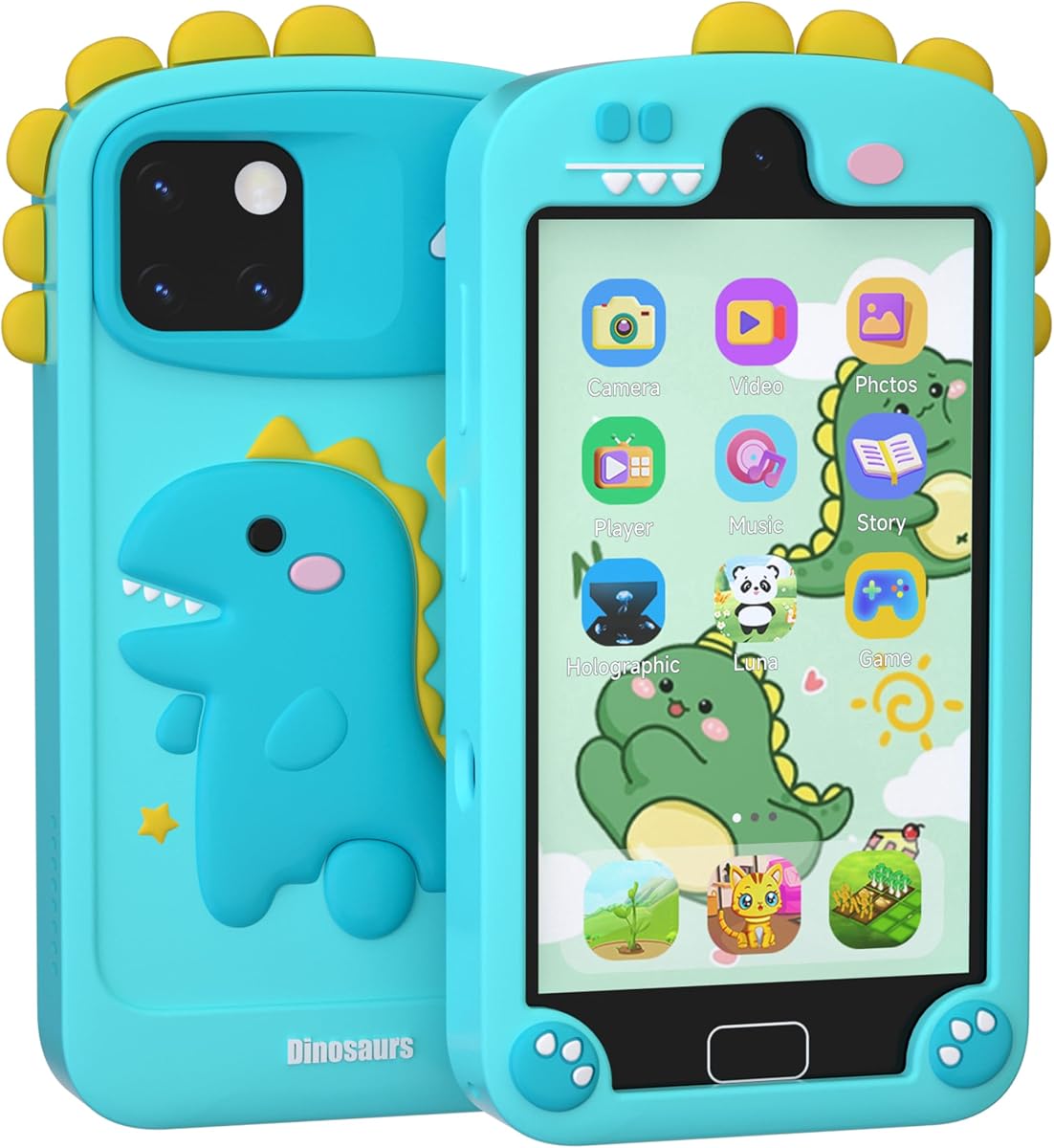
This toy phone is an excellent budget choice for an 11-year-old who wants a personal device for games, photography, stories, and learning rather than a full cellular connection. It has a 4.4 rating and a 4-inch HD touchscreen sized for smaller hands. Because it operates without Wi-Fi, it also provides a controlled introduction to smartphone-shaped technology without opening the wider internet.
We may earn a commission when you buy through this link, at no additional cost to you.
The 10-in-1 feature set includes puzzle games, ABC learning, 3D holographic projection, a piano, sleep stories, and a built-in 32GB card. Its educational library contains 28 puzzle games and seven learning themes covering subjects such as letters, world flags, and recognizable buildings. These activities can support logic, reaction time, hand-eye coordination, and basic general knowledge, although they remain entertainment rather than a substitute for formal schooling.
Dual cameras let the child take selfies or capture family moments, while 13 stickers add visual variety. A shockproof cartoon-style silicone case helps protect the device from common drops, and the 1000mAh battery is stated to support up to eight hours of play. The main limitation is obvious but important: it is an offline toy phone, so a parent should not expect text messaging, outside app downloads, web browsing, or emergency calling.
For families seeking a supervised transition toward smartphone ownership, this is a compelling pick. It is also suitable for airplane rides, car journeys, restaurants, and other situations where complete isolation from online content is desirable. The age guidance extends to 12, making it particularly relevant for an 11-year-old. Its strongest case is providing fun, educational play in a child-friendly and durable format.
The mix of alphabet games, flags, landmarks, puzzles, and stories gives an 11-year-old more varied material than a basic electronic toy. The holographic projection and piano modes also encourage imaginative, screen-free breaks around the touchscreen, which can be useful during long journeys.
An offline device lets children practice tapping, navigating menus, taking photos, and using built-in utilities without encountering advertisements, strangers, or unrestricted web content. It can therefore serve as a useful stepping stone before a child receives a fully connected Android phone.
We may earn a commission when you buy through this link, at no additional cost to you.
The Kids Smart Phone Gifts model is a compact, non-internet-connected learning phone with a 4.2 rating. Its 23 entertainment, educational, and practical functions include games, drawing, music, photography, letter cards, habit tracking, audiobooks, and calendars. Although the product title emphasizes younger ages, the feature set can still engage an 11-year-old who likes a broad collection of offline activities.
We may earn a commission when you buy through this link, at no additional cost to you.
A 2.8-inch IPS HD screen gives the child clear visuals and responsive touch input. The stated camera specifications are notable for a toy device, with 8.5MP autofocus cameras on both the front and rear, 19 cartoon stickers, and video capture. The included 8GB memory card provides room for saved photos and videos. A 3.5mm headphone jack, full-frequency speaker, and adjustable volume add flexibility for music and stories.
Its school mode is the most useful feature for an older child, because a parent can set limits on play time. The device also includes a password-protected unicorn-style silicone case, a lanyard, and a USB-C cable. The 600mAh battery charges in about two hours and is stated to deliver up to five hours of continuous use. That is less convenient than the larger batteries in the NUU and Ashfly toy phones, particularly for long excursions.
This model makes the most sense for a child who values creativity, organization, and learning activities in a small device. The included lanyard is helpful for travel, while the case offers drop protection. It is not a real phone and cannot serve as a communication or emergency device, so families should consider it a focused learning toy with smartphone-like features rather than a replacement for connected mobile service.
For an 11-year-old, controlled access is particularly valuable. School mode can restrict play time, while the habit tracker, calendar, and audiobooks introduce basic organization routines that complement a regular school schedule.
The 4.3-by-2.3-by-0.5-inch body is easy to carry, and the included lanyard reduces the chance of leaving it behind. Its silicone case and USB-C cable make it a self-contained, low-friction device for travel or quiet entertainment.
We may earn a commission when you buy through this link, at no additional cost to you.
The Ashfly Kids Smart Phone is the most content-rich offline learning device in the roundup, earning a 4.2 rating. It is built around 210-plus interactive learning games for ages 3 to 12, making it particularly relevant for an 11-year-old who wants a deeper activity library than a basic toy phone provides. The device combines education, creativity, photography, and structured parental controls in one compact package.
We may earn a commission when you buy through this link, at no additional cost to you.
Creative content is a major strength. The phone includes 28 pages of drawing templates, 120 pages of coloring pages, and five stories, alongside the game library. Its 8MP imaging and 1080P video recording allow a child to preserve family events and everyday moments. An 8GB memory card can hold photos, songs, and learning materials, while the 2000mAh rechargeable battery is larger than that of most competing toy phones in the list.
Parental controls include password protection, application management, time management, and multi-account creation. These features give an older child more independence while allowing adults to structure access. One inconsistency in the supplied product information is the screen description: the title names a 3.97-inch display, while one feature point refers to a 2.97-inch screen. Buyers should therefore verify the physical display size in the current listing. The product also provides no cellular calling or internet access.
This is a strong recommendation for an 11-year-old who enjoys educational games, drawing, stories, and photography without needing a connected phone. The large game library reduces the chance of boredom, and the 2000mAh battery supports extended use. Families considering it for school-age children should also check dimensions and storage needs, while those wanting communication with friends should choose a genuine cellular smartphone instead.
With more than 200 interactive games and nearly 200 drawing and coloring pages, the Ashfly model offers unusually broad offline content. It is a better fit for an 11-year-old than many devices aimed exclusively at preschoolers because the volume and variety support sustained, independent play.
Password protection, time management, app management, and multiple child accounts provide a useful level of household oversight. These tools let a parent set boundaries without removing every creative option, which strikes a practical balance for a child nearing the usual upper limit of many toy-phone age ranges.
We may earn a commission when you buy through this link, at no additional cost to you.
The Kids Phone Learning Toy has a 4.2 rating and combines familiar phone gestures with educational and organizational features. Its 2.8-inch IPS touchscreen provides a clear, compact interface, while the included 13 puzzle games, ABC learning themes, talking cards, and animal sounds support basic cognitive practice. An 11-year-old may find some material childish, but the habit tracker and practical utilities add relevance.
We may earn a commission when you buy through this link, at no additional cost to you.
The device includes front and rear cameras with stated 8MP imaging and 1080P video, plus 23 stickers for decorating pictures. A built-in MP3 player and 3.5mm headphone jack make it useful for music on the move. More importantly for an older child, the selection of tools—recorder, calculator, calendar, alarm clock, flashlight, countdown timer, and stopwatch—resembles a small personal organizer as well as a game device.
The anti-addiction mode allows adults to manage daily gaming time, which helps maintain a healthier balance between entertainment and other activities. The 600mAh rechargeable battery supports four to five hours of continuous shooting according to the product information, and the included 8GB SD card can hold a substantial number of photos. At only 70 grams and approximately 4.29 by 2.32 by 0.7 inches, it is easy to carry in a pocket or backpack.
This is a good option for a child who wants the social experience of having a phone without cellular service or unrestricted online access. The instant-on design, with no application downloads required, also makes it uncomplicated to use during travel or as a quiet activity device. Its main weakness is the relatively short battery life and lower age orientation, but those limitations are acceptable for short supervised sessions.
The habit tracker is the feature most likely to appeal to an older child. Pairing it with a calendar, alarm clock, timer, and stopwatch turns the device from a simple game console into a small organization tool that can support homework and household responsibilities.
There is no need to download applications or configure an account. The child can switch it on, play games, listen to music, take photos, and use the practical utilities, making it a low-maintenance option for adults as well as children.
We may earn a commission when you buy through this link, at no additional cost to you.
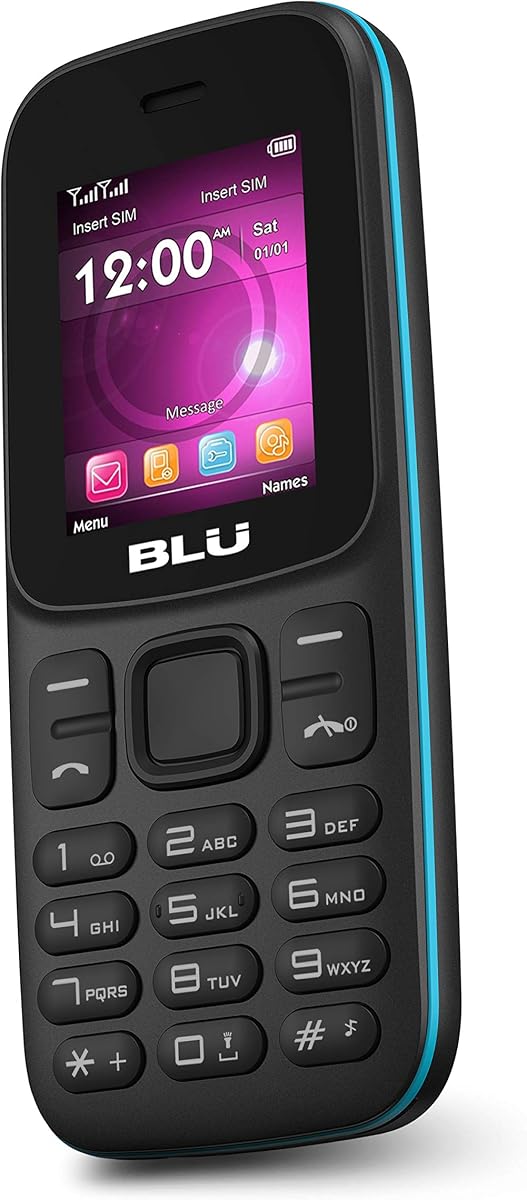
The BLU Z5 is a deliberately simple dual-SIM phone rather than a modern touchscreen device. It carries a 3.4 rating, which reflects the limited nature of its feature set. For an 11-year-old whose main needs are calls, basic messaging, music, and emergency availability, its simplicity can be an advantage rather than a flaw.
We may earn a commission when you buy through this link, at no additional cost to you.
The 1.8-inch 128-by-160 display is small and low resolution by current standards, making extended reading, video, and app-based activities unpleasant. Internal storage is only 32MB, although a microSD slot supports expansion by up to 32GB. The VGA camera is basic, while the built-in FM antenna, MP3 and MP4 players, and flashlight cover several essential offline functions without demanding a large screen.
GSM support covers the 850, 900, 1800, and 1900 bands. Because this is a carrier-specific device without a modern Android interface, families should verify that the desired network supports these frequencies and that the required service functions are available. The 600mAh battery is modest, but the lightweight hardware and feature-limited operating system should place less demand on it than a 5G smartphone.
The BLU Z5 is best suited as a simple communication phone for calls and essential functions, or as a backup device. An 11-year-old interested in games, photography, educational apps, maps, or messaging through modern services will find a connected Android model much more rewarding. Its biggest advantage is that the limited interface reduces opportunities for distraction and accidental complex tasks.
The compact display and limited feature set are well suited to calls, music, and straightforward menus. An older child can learn basic phone skills without navigating a large touchscreen or opening unlimited applications, making this a useful transition option between a toy device and a smartphone.
Dual SIM support can help a child keep separate lines for family communication and other needs. It is especially relevant for travel or for families using different networks, although the parent should confirm coverage and service compatibility before activation.
We may earn a commission when you buy through this link, at no additional cost to you.
The Nokia G10 is a real Android smartphone whose defining advantage is endurance. It has a 3.8 rating and a stated battery life of up to three days between charges, making it a strong fit for school, sleepovers, and trips where dependable access to a charger may be uncertain. The large 6.52-inch screen and brightness boost make it comfortable for videos, reading, and navigation.
We may earn a commission when you buy through this link, at no additional cost to you.
The 13MP triple camera system gives an 11-year-old more ways to capture family life than a single-camera phone. Nokia also promised two years of upgrades, allowing the device to receive newer Android features during its early life. A side fingerprint sensor and face recognition provide straightforward security methods, while dual SIM support adds flexibility. The phone is unlocked and compatible with several named GSM providers, including AT&T, Boost, Cricket, H2O Wireless, Metro, Net10, Simple Mobile, T-Mobile, and Tracfone.
The most important limitation is network compatibility: the product is not compatible with Verizon, and other GSM carriers cannot be confirmed. It also has only 32GB of internal storage, which may fill quickly with photographs, videos, and applications. Unlike some modern models, no microSD expansion is described, so a family with substantial media storage needs should account for that limitation before choosing it.
For households on a supported network, the Nokia G10 is an excellent first smartphone for an 11-year-old who wants reliable battery life, a large screen, and a familiar Android experience. It provides enough performance for communication, school support, photography, and entertainment without focusing on the most demanding mobile specifications. Check carrier compatibility first, then use Android parental controls to structure access.
The three-day battery claim gives this phone a meaningful advantage over many alternatives. A child can get through a full day of school, activities, and evening communication without searching for a charger, and the claim is particularly reassuring for children who may not consistently carry a battery pack.
The 13MP triple camera system supports everyday photography, group shots, and varied shooting options. Side-mounted fingerprint unlock and face recognition provide quick access without complicated passcode entry, while Android's standard parental-control tools make the device practical for a child learning independent smartphone habits.
We may earn a commission when you buy through this link, at no additional cost to you.
The Kids Smart Phone for Boys is closely related to the 4.4-rated girls model, with a 4-inch HD touchscreen and a broad collection of offline activities. It is designed for children ages 3 to 12 and combines more than 10 categories of content, including puzzles, learning, camera functions, video, music, stories, holographic projection, a piano, drawing, a recorder, a calculator, a calendar, an alarm clock, a flashlight, and a stopwatch.
We may earn a commission when you buy through this link, at no additional cost to you.
Thirteen educational puzzle games and seven learning themes cover ABC learning, national flags, and notable buildings from around the world. These activities can encourage logic, reaction speed, coordination, and general curiosity. The creative tools are equally notable: graffiti-style painting, a piano function, and 3D holographic projection provide ways to play that extend beyond conventional touchscreen games.
A built-in 32GB card provides storage for downloaded songs, stories, pictures, and videos, while front and rear cameras and 13 stickers make it fun to document family moments. The supplied silicone case is described as drop-proof, and the 1000mAh battery offers a useful amount of play time. As with the related toy model, it is entirely offline, so calling, messaging, web access, and outside app installation are not part of the experience.
This is a well-rounded choice for an 11-year-old who wants a personal-looking device for entertainment and creativity but does not yet need cellular independence. The combination of practical tools and learning content makes it more engaging than a very basic toy phone. Parents should view it as a stepping stone, not a functional communications device.
The combination of 3D projection, a piano, drawing, stories, music, and practical tools gives the child several ways to interact. This variety is important for an 11-year-old, who may quickly lose interest in a device that offers only a handful of repetitive games.
The included 32GB card makes it possible to load music, sleep stories, pictures, and video for offline use. Combined with the protective silicone case, the device is well suited to travel, car rides, and other occasions where a child wants entertainment without unrestricted network access.
We may earn a commission when you buy through this link, at no additional cost to you.
The Motorola Moto g Play is a capable Android smartphone offered through Total by Verizon. It has a 3.8 rating, a 6.5-inch 90Hz HD+ display, and a 5000mAh non-removable battery with a stated three-day battery life. The combination makes it a credible everyday phone for an 11-year-old, especially for families already committed to the carrier.
We may earn a commission when you buy through this link, at no additional cost to you.
A 16MP triple camera system provides a higher-resolution main camera than most competing models in this guide, along with additional lenses for flexible shooting. The 90Hz display should make menus, games, and scrolling feel more responsive than on a standard 60Hz screen. Together, these features support video calls, school-related browsing, entertainment, and family photography without requiring a premium-tier device.
The decisive caveat is network locking. The phone can only be used on the Total by Verizon wireless network, and activation takes place through the carrier's website. This is not an unlocked device, so families cannot freely insert a SIM from another provider. The carrier also offers no-contract talk, text, and data plans, which can make setup straightforward for households that want one predictable bill.
The Moto g Play is a strong recommendation for a child in a Total by Verizon household. The large display, capable cameras, and lengthy battery life cover the major needs of a first smartphone. Before buying, however, confirm that the household is comfortable with the carrier lock and activation process. It is much less attractive to someone who wants carrier flexibility or plans to switch networks.
The 6.5-inch 90Hz HD+ display is well suited to gaming, scrolling, reading, and video calling. The 16MP triple camera arrangement gives the child a higher-resolution main sensor and more shooting flexibility than the basic or toy devices in this roundup.
Carrier-locked activation and no-contract plans can simplify the setup for a family already using Total by Verizon. The trade-off is clear: device flexibility is limited, and a family that changes carriers later may need to replace the phone rather than simply install a new SIM.
We may earn a commission when you buy through this link, at no additional cost to you.
The Kids Smart Phone Toys device distinguishes itself with an expansive catalog of more than 220 games. It carries a 4.0 rating and is intended for ages 3 through 12. The collection spans 55 first-learning games, 15 brain-training games, more than 90 Montessori games, 39 art and craft games, and 19 STEM games, making the library a strong fit for an 11-year-old who wants variety.
We may earn a commission when you buy through this link, at no additional cost to you.
Beyond games, it includes practical applications such as a drawing tool, alarm clock, timer, stopwatch, and calculator. The 3.97-inch touchscreen supports photography and video, while ABC learning and science instruction encourage curiosity. Parental control mode adds password protection, app management, time management, child-account creation, and access to phone settings, allowing adults to adjust the device to the child's routine.
The 1500mAh battery provides a stated one and a half to two hours of continuous use, which is shorter than that of the Ashfly model and some other toy phones in the guide. The device also operates without Wi-Fi, so it cannot provide calling, messaging, web browsing, or live location services. These limitations make it better suited to focused entertainment at home, in a car, or during a flight than to all-day supervised communication.
Despite the continued use of the word kids in the product title, the broad age range and sophisticated content library make this a legitimate choice for an 11-year-old. It is especially good for a child who enjoys STEM, Montessori-style activities, art, and logic puzzles. Families should set expectations that this is a learning and entertainment toy rather than a connected first smartphone.
More than 220 games create a substantial library for an 11-year-old who might otherwise find a small toy phone repetitive. Separate learning, brain-training, Montessori, art, and STEM categories make it easy for a child to rotate among interests without adult intervention.
The drawing tool, calculator, clock, timer, and stopwatch add everyday usefulness, while parental settings help an adult balance the entertainment content. The relatively short active-use time means longer sessions should be planned around access to a charging cable.
We may earn a commission when you buy through this link, at no additional cost to you.
The right choice depends on whether the child needs genuine communication or simply a safe, engaging device for entertainment and learning. Consider connectivity, supervision, screen size, battery endurance, camera needs, and durability before comparing models.
A real smartphone supports calls, messaging, web access, maps, video calls, downloadable apps, and potentially location services. That independence can be valuable for an 11-year-old who travels, attends activities independently, or needs to contact family. It also creates a larger digital-safety responsibility, making parental controls, account restrictions, and family communication essential. An offline toy phone provides games, cameras, music, stories, and educational activities without web access or cellular calling, which can be an excellent controlled introduction or a screen-free travel option for a younger child.
The NUU N20 is unlocked and supports major GSM carriers, but the SIM is not included and compatibility should be checked. The Nokia G10 supports several named GSM providers but is not compatible with Verizon, while the Motorola Moto g Play is locked exclusively to Total by Verizon. These details determine whether the phone can actually be activated in the child's area. Families should also consider coverage quality, parental-control options offered by the carrier, and how easy it is to add or remove lines.
An 11-year-old needs more supervision than a very young child but may not be ready for completely unrestricted access. Look for password protection, time limits, app management, account creation controls, and Google Family Link compatibility. The NUU N20 supports several popular parental-control apps, while the offline toy phones include local controls for playtime and accounts. Families should also discuss photography, messaging, location sharing, purchases, and acceptable online behavior rather than relying only on technical restrictions.
A larger screen is better for reading, schoolwork, maps, video calls, and gaming, but it also makes the phone heavier and easier to drop. The NUU N20 has a 6.6-inch 90Hz display, the Nokia G10 uses a 6.52-inch screen, and the Motorola Moto g Play has a 6.5-inch 90Hz panel. Toy phones are more compact, generally ranging from 2.8 to 4 inches, which makes them easy to carry but less comfortable for sustained reading or video.
Battery needs differ sharply between real and toy devices. The Nokia G10 advertises up to three days of use, while the NUU N20 and Moto g Play have 5000mAh batteries, with the NUU listing up to eight hours of video playback under optimal conditions. Toy-phone claims range from one and a half to two hours for the 1500mAh model, up to five hours for 600mAh devices, and up to eight hours for the 1000mAh models. A child who forgets to charge consistently should favor a real phone with stronger endurance.
The camera and storage combination determines how often a child can save photos, videos, music, and learning content. The NUU N20 combines 16MP, 8MP wide-angle, and 5MP front cameras with 128GB expandable storage. The Nokia G10 has a 13MP triple camera, the Moto g Play has a 16MP triple system, and toy phones use smaller sensors but often include 32GB or 8GB memory cards. For an 11-year-old interested in photography or content creation, a connected Android model offers the most flexibility.
A phone used at school, in the yard, or while traveling should tolerate drops and daily wear. The NUU N20 includes a TPU case and screen protector, while several toy phones ship with thick silicone cases. A lanyard on one toy model helps prevent loss. Even with a protective case, families should consider a screen protector and a clearly labeled way to identify the device. Connected phones may be more emotionally valuable and costly to replace, so durability deserves particular attention.
The strongest offline devices offer more than a handful of basic games. The Ashfly model includes more than 200 learning games and nearly 200 drawing pages, while the Kids Smart Phone Toys model offers more than 220 categorized games. Other toy phones provide puzzles, ABC themes, music, stories, projection, and practical tools. For an 11-year-old, breadth matters because varied content is less likely to become boring than a small set of repetitive activities.
Begin by setting expectations before the child starts using the device. Agree on suitable times for use, approved applications, camera and messaging behavior, game limits, and what happens if the rules are broken. For an offline toy phone, explain which functions are available and why internet calling is not possible. For a real smartphone, create the child's supervised account during setup, enable parental controls, and connect family communication methods before handing over full access.
Configure the device in stages rather than making every decision at once. Start with basic calling, messaging, camera, and carefully selected educational applications, then add games or other services after the child demonstrates that they understand the rules. Review app permissions, web content settings, location sharing, account purchases, and photo access. On the NUU N20, families can use Google Family Link, Bark, Qustodio, or similar tools; on offline models, use the built-in time-management and password features.
Care for the phone by keeping the protective case on and using a screen protector, particularly on a connected model. Provide a designated charging place, keep the charging cable accessible, and teach the child not to use the device while walking, crossing streets, or riding a bicycle. For toy phones, regularly check available storage and remove unwanted files while preserving important learning content. For any model, explain that the camera should not be used to photograph other people without permission.
The best choice depends on the child's needs. The NUU N20 is a strong all-around connected option with a large display, expandable storage, and parental-control support, while the Nokia G10 stands out for battery endurance if its carrier is compatible. An offline toy phone may be more appropriate for a child who is not ready for unrestricted communication or internet access.
It can be useful for schoolwork, maps, video calls, and family communication when strong supervision is possible. Use child accounts, app restrictions, time limits, and open family rules before the device is used independently. Some families may prefer an offline toy phone as a safer first step toward eventual smartphone ownership.
No. The toy phones in this guide operate offline and provide games, cameras, music, stories, and educational activities without cellular calls, text messaging, or internet browsing. The NUU N20, Nokia G10, and Motorola Moto g Play are genuine smartphones that require compatible cellular service.
The Nokia G10 has the strongest stated endurance at up to three days between charges, although actual results depend on use and network conditions. The NUU N20 and Moto g Play both use 5000mAh batteries, while the offline toy phones vary more widely. Choose based on whether the child charges regularly and how demanding the intended activities are.
Connected phones can support robust supervision through Android family tools and third-party parental-control applications. The NUU N20 specifically supports Google Family Link, Bark, and Qustodio. The toy phones offer local controls such as time management, app management, password protection, and school mode, but they do not need extensive online filtering because they do not connect to the internet.
Check carrier compatibility, whether the device is unlocked, coverage in the child's usual locations, parental-control features, camera access, storage, battery expectations, and whether a case or screen protector is included. For an 11-year-old, also consider whether the child can manage the device independently and whether a separate number or family account is required.
A larger screen is generally better for reading, schoolwork, maps, gaming, and video calls because text and controls are easier to see. It may also feel less like a toy. The trade-off is a larger, more delicate device, so a protective case and screen protector are especially important for daily school use.
An 8GB or 32GB memory card can be sufficient for an offline learning phone, especially when it holds only selected games, music, and photos. A connected smartphone benefits from more internal storage because applications, videos, and camera files accumulate quickly. The NUU N20's 128GB expandable storage offers the most flexibility among the listed connected options.
The NUU N20 is the strongest overall recommendation for a child ready to use a genuine smartphone, combining a large 90Hz display, modern Android controls, expandable storage, and useful camera hardware. The Kids Smart Phone for Girls is the budget pick for offline learning, while the Nokia G10 is the premium endurance option for families on a supported GSM network. Each serves a distinct level of independence.
Before choosing, prioritize the child's actual needs. Communication, schoolwork, and navigation favor a connected Android device; controlled learning and creative entertainment favor an offline toy phone. Whichever category is selected, parental controls, clear family rules, a protective case, and realistic expectations about battery life are just as important as the headline specifications.
Finally, verify the current carrier, network, storage, and accessory details before ordering. Device bundles, software, and carrier requirements can change, and a phone that seems ideal on paper will work best only when it fits the child's routines and the family's connectivity needs.