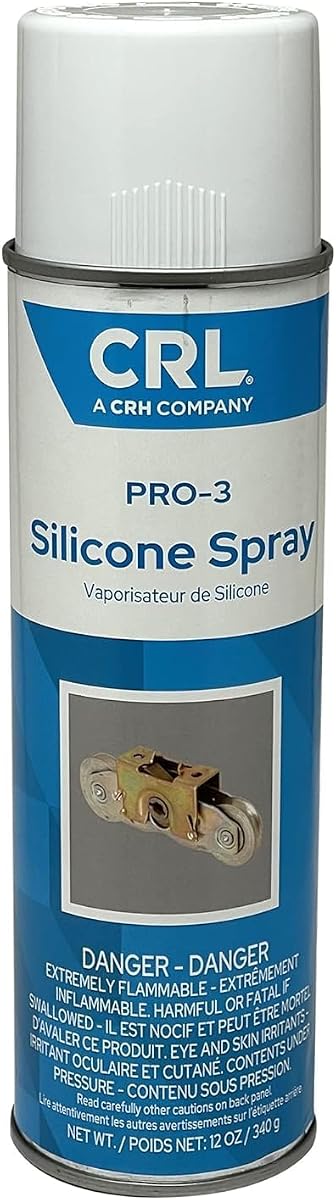
CRL PR03 Silicone Spray
4.7Editor score
Fast-drying non-greasy finish
Waterproofs and lubricates
Suitable for windows and rollers
Our guide compares the 10 best Silicone Based Lubricants for Windows, evaluating lubrication, finish, compatibility, ease of use, and application needs.
Silicone-based lubricants help sliding windows, glass doors, channels, rollers, seals, and hinges move more smoothly by reducing friction without leaving the heavy oily residue associated with conventional lubricants. The right formula can also resist moisture, dirt, corrosion, and temperature changes that make window hardware noisy or difficult to operate.
This guide compares ten silicone lubricants using their stated application details, material compatibility, drying behavior, temperature range, and suitability for windows. It includes products aimed directly at vehicle and household window tracks as well as broader industrial sprays, while also identifying products whose primary intended uses fall outside window maintenance.
The selections show the strongest options for different priorities, including precise track application, clean low-friction lubrication, broad material compatibility, and long-term protection. Product availability and prices can change over time, so readers should verify current listings, can sizes, and manufacturer instructions before making a purchase.
4.7Editor score

4.4Editor score

5.0Editor score
The comparison below places all ten products side by side, highlighting their stated form, window relevance, material compatibility, and key application features.




Glodway Car Window Lubricant Spray is a 10-ounce dry silicone product created specifically around electric car windows, sliding tracks, and related vehicle hardware. Its 4.4 rating reflects a generally favorable customer reception, while its most distinctive feature is the attached straw system. That detail matters in window work because lubricant applied too broadly can create overspray on the glass, upholstery, weather stripping, or nearby trim.
We may earn a commission when you buy through this link, at no additional cost to you.
The spray offers two application patterns: a narrow stream for reaching inside a track from above and a wider stream for covering larger areas. This flexibility is particularly useful when servicing a window channel that contains several separate contact points. The formula is also presented as useful for rubber seals on recreational vehicles, boats, cars, and other vehicles, along with hinges, locks, leveling-jack threads, and folding-step pivots.
The trade-off is that this is a purpose-built vehicle maintenance aerosol rather than a universal household silicone spray. Aerosol application requires care around glass and trim, and the instructions call for thorough cleaning and drying of the track before spraying. Its 4.4 rating is also lower than the ratings of several broader alternatives, although the rating alone does not capture the unusually useful targeted nozzle.
This is the strongest recommendation for someone maintaining a car window that sticks, squeaks, or moves unevenly. The dual straw, track-specific design, seal-conditioning positioning, and corrosion protection make it more purposeful than a general-purpose lubricant for this particular job. Apply sparingly, keep the straw aimed into the channel, and follow the included directions.
The attached straw reaches into confined channels without requiring the removal of interior door panels. The wider spray pattern remains available for larger sections when a broader coating is more practical.
The manufacturer also identifies door hinges, locks, jack threads, folding-step pivots, and rubber seals as suitable applications. That makes the can useful as a compact vehicle-maintenance product rather than a single-purpose track treatment.
We may earn a commission when you buy through this link, at no additional cost to you.
CRL PR03 Silicone Spray is a general-purpose silicone lubricant with a 4.7 rating and a particularly relevant list of applications that includes glass door rollers, drawers, windows, screens, and hinges. It is designed to lubricate while sealing out moisture, then dry quickly without leaving an oily or greasy film. Those characteristics align well with window maintenance, where residue near seals and rollers can interfere with smooth operation.
We may earn a commission when you buy through this link, at no additional cost to you.
The absence of a greasy film is a major practical advantage over heavier lubricants. Silicone can reduce friction while leaving a clean-looking surface that is less likely to attract fresh grime, provided the product is applied in an appropriate amount. Its use on screens also makes it more versatile than formulations promoted exclusively for rubber or metal-to-metal contact.
The important limitation is explicit: the manufacturer says not to use it on power-coated surfaces. Power coating can be sensitive to solvents and aggressive chemical exposure, so a small test area and the product instructions are especially important. The product information also does not mention a precision straw, which could make it less convenient for deeply recessed vehicle tracks than the Glodway option.
Choose CRL PR03 when a fast-drying, non-greasy finish and broad window-related use are the priorities. It is well suited to sliding glass door rollers, screens, window hardware, and household mechanisms that occasionally bind or squeak. It is a strong all-around pick for routine maintenance and one of the most convincing options based on customer rating.
The fast-drying formula leaves no greasy or oily film, which is valuable around glass, tracks, and visible hardware. A cleaner finish can also make it easier to spot excess application during the job.
Glass door rollers, screens, hinges, and drawers are all listed applications. This wider scope makes the product practical for a home maintenance kit rather than a narrowly specialized purchase.
We may earn a commission when you buy through this link, at no additional cost to you.
CRC 03040 is a food-grade silicone lubricant spray supplied as a two-can pack, and it carries a 5.0 rating. Its core selling points are NSF H1 certification, reliable performance up to 400°F, and a clear, colorless, odorless film. Those features make it a strong choice where cleanliness, temperature resistance, and controlled application matter more than inexpensive window-specific packaging.
We may earn a commission when you buy through this link, at no additional cost to you.
The formula is designed to reduce friction, galling, sticking, and binding on most metals, plastics, and rubber components. It also functions as a release agent, helping prevent product buildup in processing applications. The integrated Perma-Lock actuator is designed not to detach and provides two spray options for balancing targeted coverage and broader distribution.
For ordinary residential windows, however, the food-processing and two-can format may be more than a homeowner needs. The product information does not specifically identify window tracks, rollers, or seals, so suitability must be judged according to general material compatibility and the manufacturer's directions. Its high-temperature and food-contact credentials should not be treated as a substitute for explicit window guidance.
This product is most compelling for commercial kitchens, food packaging equipment, or maintenance setups involving compatible window components in demanding environments. Home users with many household and automotive projects may appreciate the two-can supply. For a single household window, the specialized CRL products provide a more direct fit.
The colorless, odorless, non-staining film is a major advantage in food processing and packaging environments. It also makes the product attractive where visible residue would be undesirable.
Performance up to 400°F and compatibility with most metals, plastics, and rubber support use across varied equipment. Always confirm the exact track or hardware material before applying it.
We may earn a commission when you buy through this link, at no additional cost to you.
Swiss Navy Premium Silicone Based Lubricant is a personal lubricant marketed for intimate use, with a 4.6 rating. It is water-free, pH-neutral, hypoallergenic, and made without water, preservatives, or harsh additives. Its leak-proof bottle supports one-handed dispensing, while the silicone formula is described as long-lasting and resistant to drying or becoming sticky.
We may earn a commission when you buy through this link, at no additional cost to you.
Those qualities may be attractive in a personal-care context, but they do not establish suitability for windows. The supplied information does not identify automotive seals, window channels, glass rollers, wood, vinyl, painted surfaces, or metal compatibility. It also offers no precision nozzle or aerosol delivery for reaching recessed tracks without overspray.
A user might assume that any silicone lubricant should work in a window channel, but formulations and additives can differ substantially by intended use. Personal products should not be placed in automotive tracks or household hardware without checking the full manufacturer instructions. Even a smooth, skin-safe product may leave an unsuitable film, odor, or residue around glazing and seals.
This product is not recommended for the window applications covered in this guide because its stated purpose is personal lubrication rather than mechanical maintenance. The 4.6 rating and positive personal-use attributes do not overcome that mismatch. Shoppers seeking a window solution should instead select a product specifically described for sliders, channels, rollers, or automotive window components.
The formula's water-free, pH-neutral, hypoallergenic design addresses intimate-use needs rather than mechanical friction. Those attributes have little bearing on weather seals, corrosion, or track debris.
One-handed dispensing is useful for its intended personal application. A simple bottle also offers less control around narrow window channels than a directed aerosol straw.
We may earn a commission when you buy through this link, at no additional cost to you.
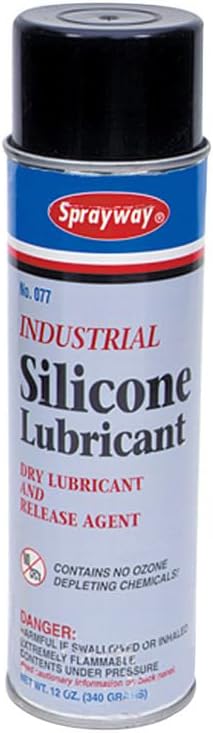
SW77 CRL Sprayway Dry Silicone Lubricant and Release Agent is a focused dry-silicone product with a 4.1 rating. Its description is brief but directly relevant: it lubricates without picking up debris and is expressly described as excellent for sliders and window channels. Those two attributes closely match the central requirements of many window-maintenance tasks.
We may earn a commission when you buy through this link, at no additional cost to you.
The dry, debris-resistant concept is useful in exposed tracks, where oily residue may gather dust, grit, and fragments. The formulation is also a release agent, which can help moving pieces separate more easily. The product contains no ozone-depleting chemicals, adding an environmental consideration without distracting from its mechanical purpose.
The 4.1 rating is the lowest among the ten products, which may discourage buyers who prioritize customer feedback. The supplied information is also limited compared with the more detailed descriptions of several competitors, and it does not list a broad set of compatible window materials. Users should consult the current label before applying it to coatings, seals, or unfamiliar plastics.
SW77 is worth considering for a sliding window or channel that is binding partly because residue and debris are accumulating. Its specific emphasis on dry lubrication and sliders makes it relevant, even though it is not the strongest pick across every measure. Clean the channel first, apply a modest amount, and reassess movement before adding more.
The formula is marketed to lubricate without attracting debris. That characteristic is particularly helpful in open or exposed tracks where loose grit can create additional abrasion and jamming.
Sliders and window channels are named directly in the product description. That directness helps compensate for the more limited information about materials and other possible uses.
We may earn a commission when you buy through this link, at no additional cost to you.
Wurth Silicone Spray Lubricant is a 13.5-ounce multi-purpose aerosol with a 5.0 rating. It is formulated for metal, rubber, plastic, wood, and glass, giving it one of the broadest stated material ranges in this group. Its quick-drying, non-sticky finish is particularly attractive for window tracks, where a heavy or tacky film could undermine the benefit of lubrication.
We may earn a commission when you buy through this link, at no additional cost to you.
The spray is also positioned for high-temperature and high-pressure environments. It is described as helping reduce wear, rust, and corrosion on tools, machines, and hardware, all of which are relevant to exposed window mechanisms in vehicles, garages, and workshops. An easy-spray nozzle is intended to provide consistent coverage during routine maintenance and repair work.
As a premium, industrial-oriented choice, it may be more than a homeowner needs for a single squeaky sash. The fact that multiple materials are listed does not guarantee compatibility with every coating, elastomer, or specialty plastic. Even broad industrial formulations should be tested discreetly when the surface is coated, painted, or otherwise sensitive.
This is an excellent selection for users who maintain both windows and varied household or automotive hardware. The combination of a 5.0 rating, fast non-sticky drying, corrosion protection, and compatibility with glass, rubber, plastic, wood, and metal gives it exceptional flexibility. It is particularly compelling for vehicle windows and other mechanisms exposed to heat or moisture.
Compatibility with metal, rubber, plastic, wood, and glass makes the spray practical when a maintenance project involves several track components. Users should still verify painted or coated surfaces before full application.
The product is presented as helping prevent wear, rust, and corrosion, not merely reduce squeaks. That makes it useful for exposed hardware that regularly encounters moisture, heat, and pressure.
We may earn a commission when you buy through this link, at no additional cost to you.
Captain O-Ring is a 1.76-ounce high-viscosity silicone lubricant grease designed for o-rings, gaskets, seals, and related components. Its 4.7 rating, NSF H1 certification, and service range from minus 40°F to 400°F make it a strong option for demanding sealing applications. The formula is also described as moisture, chemical, corrosion, and oxidation resistant.
We may earn a commission when you buy through this link, at no additional cost to you.
The high viscosity helps the grease adhere to the lubricated part instead of immediately running away. That quality is valuable for stationary or semi-stationary seals in plumbing, pumps, valves, marine equipment, aquariums, and food-service systems. It can lubricate, seal, and protect components while reducing friction and wear.
For a window, however, a heavy grease is not automatically better than a dry silicone spray. Some slider and roller systems are designed to shed excess lubricant, and a viscous product could collect dirt or interfere with parts that need to slide freely. Because the supplied description does not identify window channels or specify suitability for every moving track component, users should confirm compatibility first.
This product is best for a window that contains a specific rubber gasket, o-ring, or seal needing long-lasting conditioning and protection, rather than for a general sticky sliding track. It is also compelling for marine or food-adjacent equipment. If the goal is simply smoother window movement, one of the dry aerosol options is likely a closer fit.
The high-viscosity formula stays attached to the treated part, which helps it remain in service under demanding conditions. This differs from a thin, fast-drying spray that may need more frequent attention.
Resistance to moisture, chemicals, corrosion, and oxidation supports use in marine, plumbing, food-service, and industrial settings. The broad temperature range adds another layer of versatility.
We may earn a commission when you buy through this link, at no additional cost to you.
3-IN-ONE Professional Silicone Lubricant is a 311-gram product with a 4.6 rating. It combines high-performance lubrication and corrosion protection in a quick-drying formula described as leaving no mess. Sliding rails are specifically listed among its applications, alongside hinges, catches, valves, runners, levers, pulleys, fans, castors, tools, and marine equipment.
We may earn a commission when you buy through this link, at no additional cost to you.
The formula is stated to be safe on metal, rubber, wood, and vinyl, which covers several materials commonly found around windows and in general household hardware. Its stated temperature range runs from minus 18°C to 149°C, offering useful resilience in changing indoor and outdoor conditions. Corrosion protection is especially relevant to metal rails, runners, and fasteners exposed to moisture.
The primary drawback is positioning. This is a general maintenance lubricant rather than a product marketed specifically for window channels, and the 311-gram format may be more than a casual shopper wants. As with any broad compatibility claim, painted surfaces and delicate finishes should be checked before spraying, particularly where overspray could settle around glass.
Choose 3-IN-ONE when a household or workshop already uses the brand and you want one product for sliding rails, hinges, catches, and other mechanisms. It is a practical, versatile option for window projects involving multiple compatible materials. Users seeking a precision track applicator should look instead for a product with a directed nozzle.
Sliding rails, runners, hinges, catches, levers, pulleys, castors, and tools are all named uses. That makes the product efficient for general household and workshop maintenance.
Metal, rubber, wood, and vinyl are listed as suitable surfaces. The quick-drying, non-mess result is particularly useful for visible rails and moving household components.
We may earn a commission when you buy through this link, at no additional cost to you.
Yamaha Yamalube Silicone Protectant and Lubricant is an original Yamaha OEM product supplied in a 10.5-ounce spray can. It carries a 4.7 rating and is described as a general-purpose silicone-based lubricant and protectant. Its stated strength is protecting metals against rust and corrosion, even in harsh saltwater environments.
We may earn a commission when you buy through this link, at no additional cost to you.
That marine emphasis makes it a logical option for boat windows and hardware exposed to salt, humidity, and repeated weather. Silicone lubrication can help moving components operate more smoothly while the protectant function helps defend exposed metal. The product is also appropriate for broader maintenance situations in which a general-purpose spray is useful.
The supplied details do not specifically mention window tracks, glass rollers, seals, or a precision application straw. They also omit a formal temperature range and a detailed list of compatible elastomers or coatings. A boat owner may find the marine protection especially relevant, but other shoppers should consult the can before applying it to unknown track components.
This is a solid recommendation for marine window hardware and Yamaha-oriented vehicle or equipment maintenance. Its 4.7 rating and corrosion-focused formula distinguish it from options marketed mainly for fast drying or food contact. For an ordinary home sliding window, a product with direct window-channel guidance may offer a more transparent fit.
The formula is expressly positioned for harsh saltwater environments. That protection is valuable for boat windows, exposed rails, and hardware frequently exposed to salt and moisture.
The product is an original Yamaha general-purpose silicone protectant and lubricant. It may be particularly convenient for owners already maintaining compatible Yamaha equipment.
We may earn a commission when you buy through this link, at no additional cost to you.
ASTROGLIDE X Premium Waterproof is a 2.5-fluid-ounce personal lubricant with a 4.5 rating. The product uses a silicone blend intended to be extremely long-lasting, waterproof, and suitable for water play. It is also described as non-irritating, hypoallergenic, and free from parabens and glycerin, with compatibility stated for natural rubber latex.
We may earn a commission when you buy through this link, at no additional cost to you.
These are meaningful qualities for the personal application the product is designed to serve, but they provide little evidence that it is appropriate for a window. There is no mention of automotive seals, glass, plastic, vinyl, painted channels, metal tracks, or the debris resistance needed for exposed mechanical parts. The 2.5-ounce bottle also lacks a directed aerosol applicator.
Although all silicone lubricants share a broad base chemistry, personal and mechanical products can differ in viscosity, carrier ingredients, film characteristics, and additives. Introducing a personal lubricant into a window track could leave a film that attracts dirt or is incompatible with weather seals. The label should be checked before any off-label mechanical use, and an approved mechanical lubricant is the safer choice.
This is not a recommended window purchase because its stated purpose and supporting claims are entirely personal. Readers who encounter it while researching silicone lubricants should not let the shared ingredient name override the application mismatch. For a sticking window, select a product that explicitly discusses tracks, sliders, rollers, or relevant hardware materials.
The waterproof, long-lasting film supports the product's intended personal use. Water resistance alone does not make a lubricant appropriate for exterior tracks, where grit and weather exposure dominate.
The compact 2.5-ounce container is designed for portability and personal application. It does not provide the controlled delivery needed for careful window-track maintenance.
We may earn a commission when you buy through this link, at no additional cost to you.
The best choice depends on the type of window, the materials involved, and whether you need a dry track treatment, a protective spray, or a heavier seal-conditioning grease. Use the following factors to narrow the options before checking the current listing.
Household sliding windows, glass patio doors, vehicle windows, and marine hatches do not have identical hardware. A product that works well in a vertical household track may not be the best choice for a car door channel, while a heavy grease can be excessive for a lightweight roller. Look for explicit references to windows, channels, sliders, glass rollers, tracks, or the exact mechanism involved. If a listing does not mention windows directly, verify that its stated materials and application characteristics fit the part before applying it.
Exposed window tracks collect dust, grit, pet hair, leaves, and fragments of failed seals. A lubricant that dries cleanly and does not attract debris can maintain smoother operation better than one that leaves a persistent oily or tacky film. Products explicitly described as dry lubricants or non-sticky sprays are often attractive for this reason. Even with a dry formula, cleaning the track before application remains important because lubricant does not remove embedded contamination.
Window systems may contain rubber, vinyl, plastic, metal, glass, powder-coated surfaces, painted frames, and different types of seals. Silicone products can vary in their approved substrates and additives, so consult the label and manufacturer instructions. Test a small, inconspicuous area when a coating or unfamiliar plastic is involved. Never assume that a product safe for bare metal or rubber is also suitable for a power coating.
A narrow straw is valuable for reaching deep vehicle tracks without removing interior panels, while a standard aerosol nozzle may be quicker for larger exposed areas. Some products provide both narrow and wide spray options. Pumps and small bottles offer more control for pinpoint work but require careful placement. Consider the geometry of the window, the size of the opening, and whether overspray could land on glass, upholstery, paint, or flooring.
Windows experience changing temperatures, condensation, rain, and sunlight. A lubricant rated for a broad temperature range can remain functional through seasonal changes, while marine applications demand particular attention to salt and corrosion protection. Products with clear high-temperature, low-temperature, waterproof, or corrosion-resistant claims deserve consideration in exposed environments. Verify numerical limits when they are stated rather than assuming all silicone formulas behave identically.
A thin aerosol is convenient for channels, rollers, and broad areas, while silicone grease is better suited to o-rings, gaskets, and seals that benefit from strong adhesion. Using heavy grease in a precision slider or roller system may interfere with movement or attract contamination. Identify whether the main problem is a rubbing track, a binding roller, a stiff seal, or exposed metal corrosion before choosing the consistency.
NSF H1 certification can matter when equipment may encounter incidental food contact, such as counters in commercial kitchens, beverage equipment, or food-processing systems. It does not automatically make a product the best window lubricant, but it can indicate a higher level of formulation oversight for certain applications. Certification should support the intended use rather than distract from direct window compatibility and performance.
A large multipack may be efficient for frequent professional maintenance, while a small container can be more practical for occasional household use. Consider storage requirements, the expected number of applications, and whether you need one specialized formula or a general-purpose product. Buying a large multipack solely for a single household window may create unnecessary leftover product, whereas a small personal-use bottle is unlikely to serve a mechanical maintenance program.
Begin by identifying the window system and checking the lubricant's instructions for compatible materials. Test the product discreetly on a small area, especially on coated frames, specialty plastics, or rubber seals that are not explicitly covered by the manufacturer. Keep the can or bottle away from the glass during application, and use only enough product to reduce friction.
Clean the track with a brush or suitable cleaning method, remove grit and old lubricant, and let the area dry. Direct the spray or applicator into the contact points rather than flooding the entire channel. For an aerosol with a straw, insert the narrow extension carefully and keep the can upright. Move the window several times afterward, inspect for excess residue or overspray, and clean away anything that could collect dirt.
Allow the lubricant to dry according to the product directions before operating the window heavily or exposing the treated area to weather. Reapply only when sticking or noise returns, and avoid adding repeated layers that may create a greasy film. Periodically clean the channel again, especially in dusty environments, because lubrication cannot compensate for packed debris or a damaged roller or seal.
No. Silicone spray is suitable for many rubber, vinyl, metal, and plastic components, but the manufacturer's compatibility guidance controls. Avoid power-coated or otherwise sensitive surfaces unless the label explicitly permits them, and test unfamiliar plastics or finishes in a small area before full application.
A clean, dry silicone lubricant can be appropriate for many car window tracks and rubber seals. Choose a product that explicitly mentions vehicle windows, sliders, or tracks, and use a directed straw or careful spray pattern to prevent lubricant from reaching glass, upholstery, or painted trim.
Lubricant may reduce friction in a healthy mechanism, but it cannot repair a broken motor, disconnected cable, damaged regulator, cracked roller, or separated seal. If the window does not move normally or makes severe mechanical noises, inspect the hardware and consider professional service before masking the problem with lubricant.
Not for every window. Grease is useful for o-rings, gaskets, and seals that need lasting adhesion, while a cleaner spray is usually easier to control in a narrow sliding track or around a roller. Heavy grease in a track designed to shed lubricant can collect grit and make movement less consistent.
It is better not to assume so. Personal lubricants are formulated and labeled for intimate use, not mechanical tracks, and their additives, film, odor, or residue may be inappropriate for weather seals and glazing. Choose a product whose stated applications include windows, sliders, rollers, or compatible hardware.
There is no universal schedule because usage, weather, and debris determine how quickly a track loses lubrication. Apply when the window begins sticking, squeaking, or moving unevenly, after cleaning the channel, and avoid repeated applications that create a heavy residue.
Silicone lubricant reduces friction but is not a de-icer and does not remove ice or moisture from a track. Clear ice carefully and allow the area to dry before lubricating. An appropriate window and door de-icer is better suited to frozen or moisture-related freeze-ups.
Do not rub the spot while it is fresh, because that can spread the film. Wipe or clean the glass using a method approved for the surrounding surfaces, and check the lubricant instructions for removal guidance. Prevent future overspray by directing the nozzle away from the glazing and applying only a small amount.
Glodway Car Window Lubricant Spray stands out for directed application in vehicle tracks, CRL PR03 offers a clean fast-drying option for general window hardware, and Wurth provides broad multi-material coverage with a 5.0 rating. Each fills a different need, so the best choice depends on the window mechanism and the materials involved.
Prioritize a product explicitly suited to sliders, tracks, rollers, or seals, then check its finish, material compatibility, and application method. Dry, non-sticky formulas generally suit exposed tracks better, while silicone grease is more appropriate for adherent gasket and o-ring protection. Cleaning the track before applying lubricant remains essential.
Ratings and product details can change as listings evolve, and prices and availability also fluctuate. Before purchasing, confirm the current package size, manufacturer instructions, compatibility statements, and seller information on the product page so the selected lubricant matches the window project.