
GL.iNet GL-MT3000 Beryl AX
4.5Editor score
Compact WiFi 6 design
2.5G multi-gig WAN
Preinstalled VPN applications
WPA3 network protection
OpenWrt 21.02 firmware
Explore the best Public WiFi Sharing Router options, comparing security, speed, portability, VPN support, Ethernet ports, and ease of use for travel.
A public WiFi sharing router creates a private local network from an existing connection, giving phones, laptops, tablets, and other devices one secure sign-in instead of connecting individually. The best model balances useful travel portability, dependable performance, VPN capabilities, and simple management.
We compared all ten routers by examining WiFi generation, supported operating modes, VPN protocols, wired ports, USB support, device capacity, and physical design. The list includes compact travel models, touchscreen routers, OpenWrt-based systems, and a larger tri-band router that may suit users who need broader home coverage.
Each review highlights the features that distinguish the model, along with honest limitations that could affect your setup. Ratings reflect the supplied customer feedback, while availability, features, and prices can change, so readers should confirm current details before making a final purchase.
4.5Editor score

4.2Editor score
4.4Editor score
The comparison below places every model on the same practical criteria, including wireless generation, public-network modes, VPN support, wired connectivity, portability, and the number of devices each router is designed to accommodate.


The TP-Link Roam 6 AX1500 is a pocket-oriented dual-band travel router built around the core idea of turning a public connection into a private network. Its supplied rating is 4.2, placing it among the more positively reviewed products in this guide. The router supports up to 60 devices and offers WiFi 6 performance of up to 1,201 Mbps on the 5 GHz band and 300 Mbps on the 2.4 GHz band, although real results depend on the upstream connection, distance, and surrounding conditions.
We may earn a commission when you buy through this link, at no additional cost to you.
The defining benefit is flexibility. It can operate as a router connected to public WiFi, an ISP source, or phone-based USB tethering. It can also work in AP, repeater, and client configurations, allowing it to extend an existing network or add wireless connectivity to wired devices. A 1 Gbps WAN/LAN port and separate 1 Gbps LAN port make it more useful than a basic hotspot, while the USB-C 3.0 interface supports convenient powering through a compatible charger or power bank.
Security options make it a credible choice for hotels, airports, Airbnbs, and temporary workspaces. OpenVPN and WireGuard are supported, allowing the router to protect connected traffic when configured appropriately. One-step captive portal authentication lets users join a public network once and then connect their personal devices to the private network without repeatedly submitting credentials through a browser. TP-Link also identifies the device as part of its Secure-by-Design commitment.
The main limitation is that it is a step below newer WiFi 7 alternatives in theoretical throughput and wired speed. Its 60-device limit is ample for most individual trips, yet it is less generous than the capacity offered by several competing models. The best buyer is a traveler who values compact size, familiar TP-Link management, useful operating modes, and straightforward private-network creation more than the highest possible speed.
Connecting once through the router can reduce the need to expose every phone, laptop, and tablet to a public hotspot directly. The one-step captive portal feature is particularly convenient when a hotel or airport requires a sign-in page before the network becomes usable.
Router, access point, repeater, and client modes mean the same device can support travel, temporary wired access, and home networking. USB tethering also gives it a practical path when cellular service is the available upstream connection.
We may earn a commission when you buy through this link, at no additional cost to you.
The TP-Link Roam 7 BE3600 raises the performance ceiling for compact travel routers. It carries a supplied rating of 4.4 and uses dual-band WiFi 7, offering up to 2,882 Mbps on 5 GHz and 688 Mbps on 2.4 GHz. It can accommodate up to 90 connected devices, making it appropriate for families, shared accommodations, and work groups that need one protected network rather than separate public sign-ins.
We may earn a commission when you buy through this link, at no additional cost to you.
Its 2.5 Gbps WAN port is a meaningful upgrade for users who can obtain a suitably fast upstream connection, while the 1 Gbps LAN port supports wired peripherals. Multi-Link Operation combines available frequency bands to improve throughput, latency, and reliability. The router can connect through Ethernet or USB phone tethering, create a private hotspot over public WiFi, or enter AP, repeater, and client modes for other networking tasks.
Privacy controls include OpenVPN and WireGuard as both client and server functions, along with PPTP and L2TP support. The Tether app provides one-step captive portal authentication, so users can create a private network and avoid repeated public-network logins. Firmware management, VPN configuration, and network adjustments are also handled through the app or a web-based management interface.
Despite its modern wireless platform, this remains a dual-band model and does not support the 6 GHz band. It also offers only one dedicated LAN port, which may matter for users who want several wired connections at once. Overall, it is an attractive middle ground for anyone who wants WiFi 7 speed and multi-gigabit uplink capability without moving to a larger, fixed-home design.
The 2.5 Gbps WAN port can make a substantial difference when the source network is fast enough to use it. It is particularly relevant to travelers working with large transfers, high-resolution files, or a home connection shared through Ethernet.
WiFi 7 and Multi-Link Operation provide a modern foundation, while OpenVPN and WireGuard add meaningful privacy options. The combination suits users who need a private local network but also want flexible remote-access functionality.
We may earn a commission when you buy through this link, at no additional cost to you.
The TP-Link Roam 6 AX3000 combines WiFi 6 performance with several features that are usually associated with larger routers. Its supplied rating is 4.1, and the device can deliver up to 2,402 Mbps on the 5 GHz band and 574 Mbps on 2.4 GHz. It supports router, hotspot, and AP/repeater modes, making it useful in hotels, Airbnbs, airports, temporary offices, and conventional home environments.
We may earn a commission when you buy through this link, at no additional cost to you.
The most distinctive feature is its media connectivity. A USB 3.0 port allows users to connect external hard drives or microSD cards up to 512GB for backup and file sharing over the private network. That turns the router into more than a simple gateway and can be useful for traveling groups that need to exchange documents or media without relying on cloud services.
Its 2.5 Gbps WAN/LAN port and 1 Gbps LAN port provide useful wired speed, while OpenVPN and WireGuard support both client and server use. PPTP and L2TP are also available. One-step captive portal authentication simplifies the process of creating a private network from public WiFi, and the pocket-sized enclosure remains appropriate for frequent travel.
The storage-sharing feature is less useful if travelers do not carry compatible media, and the product's supplied rating trails several alternatives in this list. It is also a WiFi 6 rather than WiFi 7 model. Even so, its combination of multi-gigabit connectivity, file sharing, and multiple operating modes makes it one of the most functionally complete compact routers here.
USB-connected storage can be exposed to authorized devices on the private network. This is especially useful for teams sharing documents or media in a temporary location where repeated cloud uploads would be inconvenient.
Router mode supports Ethernet and phone tethering, hotspot mode secures access to public WiFi, and AP/repeater mode broadens an existing setup. This flexibility lets the router follow the user rather than requiring a separate device for each connection style.
We may earn a commission when you buy through this link, at no additional cost to you.
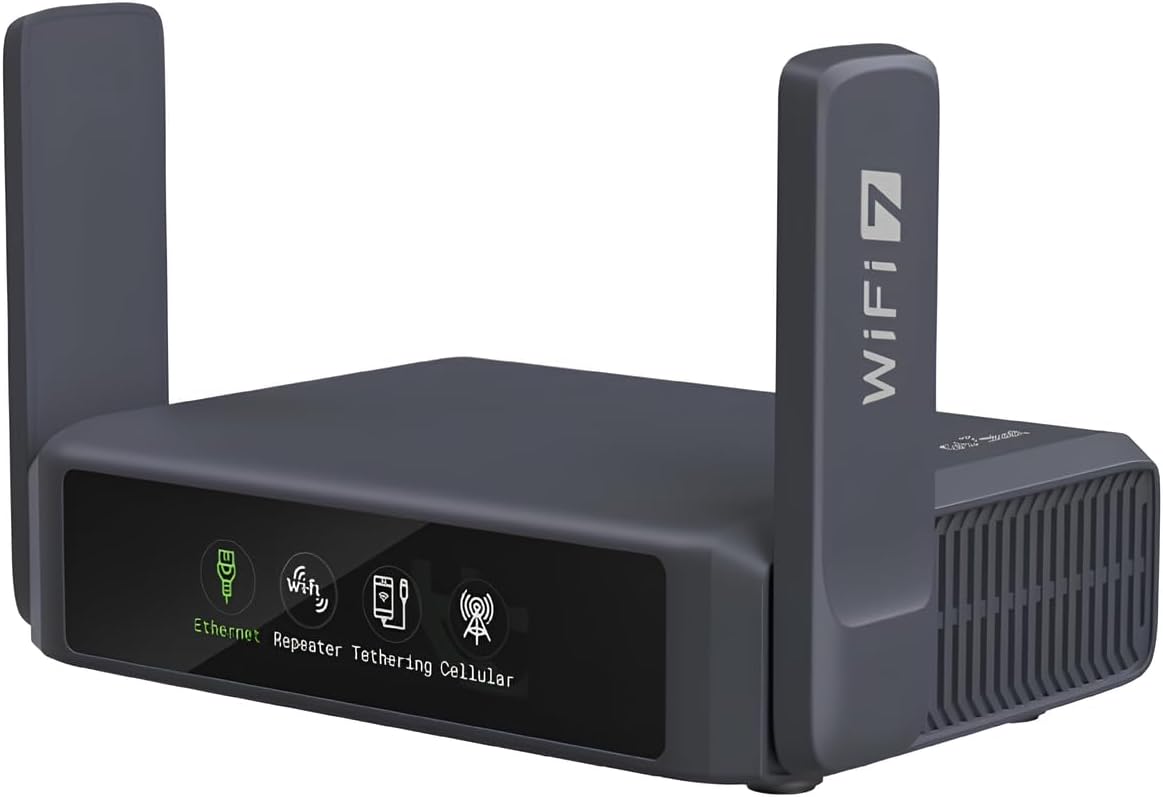
The GL.iNet GL-MT3000 Beryl AX combines an attractive rating of 4.5 with a genuinely travel-friendly form factor. It is a dual-band WiFi 6 router capable of 574 Mbps on 2.4 GHz and 2,402 Mbps on 5 GHz. Its 2.5 Gbps multi-gigabit WAN port and 1 Gbps LAN port make it suitable for travelers who want more flexibility than a phone hotspot can provide.
We may earn a commission when you buy through this link, at no additional cost to you.
The Beryl AX runs on OpenWrt 21.02, which is the standout feature for technically inclined users. The platform supports a large selection of ready-made plug-ins, and GL.iNet provides a no-code interface for browsing, installing, and managing packages. OpenVPN and WireGuard are preinstalled and compatible with more than 30 providers, although using a provider requires an active subscription.
Security features include WPA3, DNS over HTTPS, DNS over TLS, and IPv6 authentication. The router can act as a VPN client and server at the same time, allowing remote access to local resources while also routing internet traffic through a VPN. A physical switch can toggle among VPN and AdGuard Home functions, though it must first be configured in the admin panel.
Its 2.4 GHz maximum of 574 Mbps is modest compared with some newer dual-band routers, and the OpenWrt interface can feel more demanding than a simplified mobile app. Even so, the Beryl AX offers an exceptional balance of portability, security, customization, and capable hardware, making it an easy recommendation for travelers who want control without carrying a full-size router.
The no-code package interface makes advanced firmware features approachable, while the underlying OpenWrt platform remains available for deeper customization. Users can add useful software without abandoning the standard management environment.
WPA3 secures the local wireless network, while DNS encryption and IPv6 authentication add privacy protections. The router can also send traffic through a chosen VPN provider, making it well suited to hotels, airports, and shared workspaces.
We may earn a commission when you buy through this link, at no additional cost to you.
The GL.iNet GL-BE3600 Slate 7 is the most interface-focused model in the guide. Its supplied rating is 4.4, and the built-in color touchscreen provides quick access to network status, QR codes, real-time speed information, VPN controls, and provider selection. It combines that convenience with dual-band WiFi 7 performance of up to 2,882 Mbps on 5 GHz and 688 Mbps on 2.4 GHz.
We may earn a commission when you buy through this link, at no additional cost to you.
Two 2.5 Gbps Ethernet ports—one WAN and one LAN—provide useful wired connectivity, and a USB 3.0 port adds storage or peripheral flexibility. The Slate 7 runs on OpenWrt 23.05 and includes 512MB of storage, offering room for plugins and customization. This makes it suitable for advanced users who want control without navigating every setting through a small web page.
OpenVPN and WireGuard are preinstalled and work with more than 30 listed VPN providers, though a separate active subscription is required. The device supports simultaneous VPN client and server operation, so users can access local resources while sending internet traffic through a VPN. WPA3, encrypted DNS options, and IPv6 authentication contribute to its security toolkit. AdGuard Home can be enabled alongside the VPN controls.
The touchscreen is the defining premium feature, but some controls do nothing until assigned a function in the admin panel. It also remains a dual-band router without 6 GHz support. For buyers who value immediate on-device control, attractive travel design, and advanced networking features without managing a full-size desktop router, the Slate 7 stands out clearly.
The display shows key status details and allows common actions without opening the admin interface. QR-code scanning, VPN toggling, provider selection, and mode indicators are particularly helpful in hotels, airports, and temporary workspaces.
WiFi 7, two multi-gig ports, USB 3.0, and OpenWrt 23.05 create a capable foundation. VPN and DNS tools add useful control for travelers who need to protect traffic on shared networks.
We may earn a commission when you buy through this link, at no additional cost to you.
The ASUS RT-BE58 Go delivers dual-band WiFi 7 performance of up to 3.6 Gbps with Multi-Link Operation and 4K-QAM. It carries a supplied rating of 4.2 and is designed for users who want a travel router that can also participate in a broader ASUS mesh network. Its emphasis is on polished setup, private-network creation, and familiar ASUS management.
We may earn a commission when you buy through this link, at no additional cost to you.
The router can create a private hotspot over public WiFi in WISP mode, and an easy toggle switch helps users move between connection methods. It can also turn a smartphone or mobile dongle into a shareable network through 4G LTE and 5G tethering. That combination makes it suitable for trips where fixed public WiFi is inconsistent or where cellular connectivity is the more dependable source.
Comprehensive VPN features, commercial-grade security, and the ASUS Router app provide a strong privacy and management package. Guest Network Pro can create separate subnets for IoT equipment or visitors, and AiMesh support gives users a path toward wider coverage. Universal 18W USB-C Power Delivery allows the router to share a compatible charger with a phone or laptop.
It is less flexible for users who want extensive open-source package management, as the ASUS interface does not offer the same OpenWrt ecosystem found on several GL.iNet models. The absence of a built-in touchscreen also makes it less visually interactive than the Slate 7. Its strongest audience is an ASUS user who values security features, app-based management, WISP mode, and future mesh expansion.
WISP mode turns a public connection into a private local network, allowing personal devices to connect through the router. This is useful in hotels and cruise ships where users would otherwise expose each device to the shared network directly.
AiMesh support means the device is not limited to an isolated trip. It can serve as part of a wider home mesh, making it appealing to users who want one router capable of handling both temporary and permanent network needs.
We may earn a commission when you buy through this link, at no additional cost to you.
The GL.iNet GL-MT3600BE Beryl 7 is the strongest all-around choice in this guide because it combines modern WiFi 7 hardware, a compact travel format, multi-gigabit wired access, and unusually high VPN throughput. Its supplied rating is 4.2. It supports up to 120 devices, giving it ample capacity for families, shared travel spaces, and temporary workgroups without moving to a large fixed router.
We may earn a commission when you buy through this link, at no additional cost to you.
Wireless performance reaches up to 2,882 Mbps on the 5 GHz band and 688 Mbps on 2.4 GHz. Two 2.5 Gbps Ethernet ports—one WAN and one LAN—provide strong wired options, while USB 3.0 adds another connection point. The combination makes the router useful with public WiFi, phone tethering, existing wired networks, and local peripherals rather than serving only as a basic travel hotspot.
Its stated VPN performance reaches up to 1,100 Mbps with WireGuard and 1,000 Mbps with OpenVPN-DCO. OpenVPN and WireGuard are preinstalled and compatible with more than 30 providers, although users need an active provider subscription. The router can operate a VPN server and client simultaneously, enabling access to local resources while protecting internet traffic. WPA3, DNS over HTTPS, DNS over TLS, and IPv6 authentication round out the security features.
OpenWrt 21.02 provides extensive customization, including support for thousands of plug-ins, while a physical switch can activate VPN or AdGuard Home after initial configuration. The main drawbacks are the lack of a touchscreen and the continued need for a VPN subscription when using provider-based encryption. Even so, the Beryl 7 delivers the most persuasive combination of portability, throughput, privacy, and flexibility in the roundup.
The supplied maximum VPN speeds of 1,100 Mbps for WireGuard and 1,000 Mbps for OpenVPN-DCO are among the strongest figures in the guide. Actual performance will vary with the provider, configuration, upstream network, and devices involved.
Supporting as many as 120 devices makes the Beryl 7 practical for shared accommodations or mobile teams. One private network is easier to manage than giving every traveler a separate public-network credential.
We may earn a commission when you buy through this link, at no additional cost to you.
The GL.iNet GL-AXT1800 Slate AX delivers a 1,800 Mbps combined WiFi 6 rate, divided into 600 Mbps on 2.4 GHz and 1,200 Mbps on 5 GHz. Its supplied rating is 4.4, and it can accommodate up to 120 connected devices. MU-MIMO, OFDMA, and BSS coloring help the router manage dense client environments more effectively than a simple travel hotspot.
We may earn a commission when you buy through this link, at no additional cost to you.
This model is particularly compelling for travelers who need to share a private network among many devices. It can repeat a public or hotel connection and create a private local network for personal equipment. It also works with captive portals, though the product information notes that free public networks may impose time limits and require the router to reconnect after a session expires.
OpenVPN and WireGuard are preinstalled, with supplied maximum speeds of 500 Mbps and 550 Mbps respectively. Cloudflare encryption is also supported. The router runs OpenWrt 21.02, so it provides access to a broad plugin ecosystem and allows more advanced customization. A physical switch offers quick access to VPN or AdGuard Home functions after the user assigns a function in the admin panel.
A USB storage feature supports SAMBA and WebDav sharing, adding convenience for a small personal file server. The trade-offs are that this is a WiFi 6 model rather than WiFi 7, and file sharing requires an external drive. For travelers who prioritize size, device capacity, VPN functionality, and open-source flexibility, the Slate AX remains a strong choice.
The Slate AX can convert a public wired or wireless connection into a private network for your own devices. This is especially helpful when a captive portal would otherwise require repeated sign-ins across several products.
SAMBA and WebDav support make attached USB storage accessible to authorized devices on the local network. That can simplify document exchange or media sharing without requiring a separate computer to remain running.
We may earn a commission when you buy through this link, at no additional cost to you.
The ASUS RT-AX57 Go is a dual-band WiFi 6 travel router focused on secure public-network use and broad connectivity options. Its supplied rating is 4.1. It supports up to 70 devices and uses a 160 MHz channel to increase network capacity, making it suitable for a personal trip, family travel, or a temporary RV and cruise-ship network.
We may earn a commission when you buy through this link, at no additional cost to you.
Its central strength is tri-mode operation. The router can accept 4G LTE or 5G mobile tethering, create a private hotspot over public WiFi in WISP mode, or function as a conventional network. A quick toggle switch makes it easier to change connection modes, which is useful when moving between cellular coverage, a campsite, and a hotel network.
VPN support includes multiple protocols, one-touch activation, compatibility with up to 30 providers, and site-to-site VPN. ASUS adds Triple-level Network Security with AiProtection, DNS over TLS, a one-tap security scan, and Safe Browsing. Guest Network Pro and a customizable guest portal add flexibility for visitors or connected equipment.
Compared with newer WiFi 7 travel routers, its maximum throughput is lower, and it does not offer the same deeply customizable OpenWrt package environment. Its strengths are instead the polished ASUS security suite, convenient WISP workflow, mobile tethering, and AiMesh compatibility. It is a natural choice for users already invested in the ASUS ecosystem.
WISP mode protects a group of devices by creating one local network from public WiFi. When public service is weak or unavailable, 4G and 5G tethering offer another source of connectivity through a phone or dongle.
One-touch activation reduces the effort required to route traffic through a chosen VPN service. Site-to-site support and AiProtection add value for travelers who also maintain small offices or remote-access environments.
We may earn a commission when you buy through this link, at no additional cost to you.
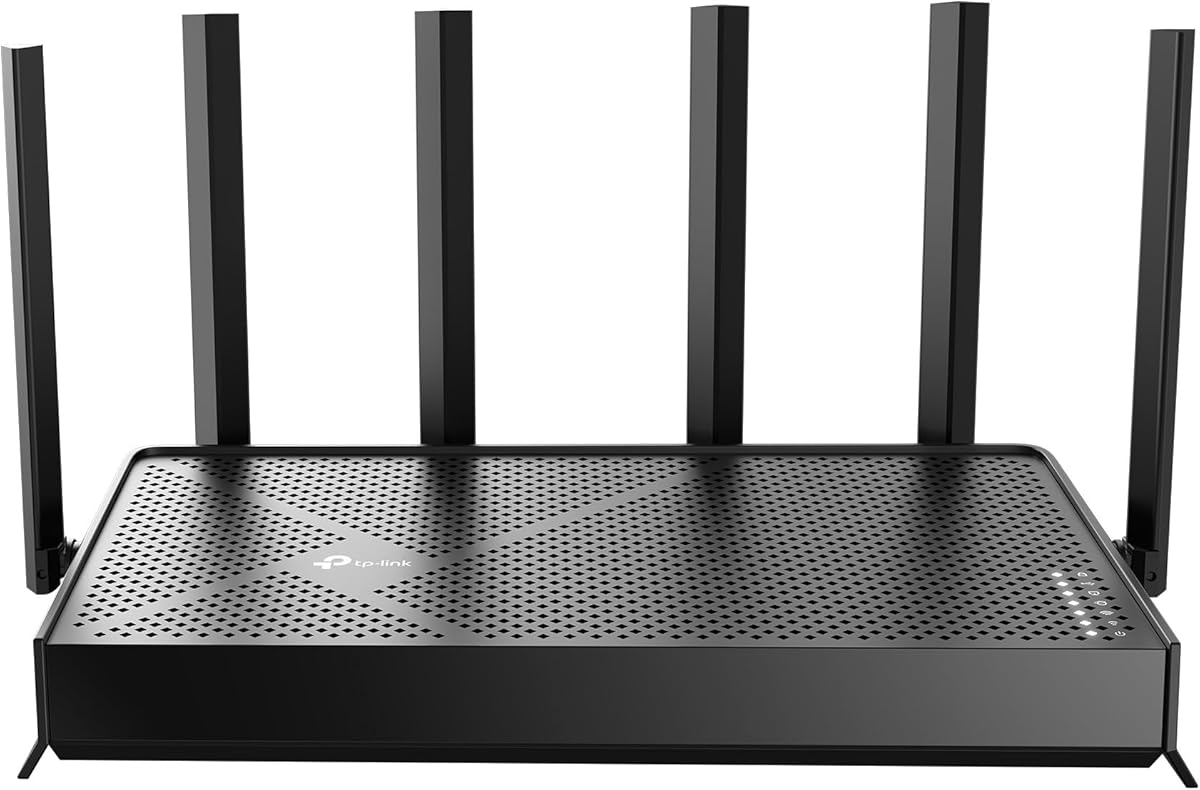
The TP-Link Archer BE600 is included because it provides an instructive contrast with the travel-focused routers around it. This is a tri-band WiFi 7 home router designed for broad coverage and demanding wired connections rather than a pocket-sized public WiFi sharing device. Its supplied rating is 4.2, and it supports up to 120 clients across as much as 2,600 square feet of coverage.
We may earn a commission when you buy through this link, at no additional cost to you.
Wireless speed reaches up to 5,765 Mbps on 6 GHz, 2,882 Mbps on 5 GHz, and 1,032 Mbps on 2.4 GHz. Multi-Link Operation combines bands to improve continuity and performance, while six antennas and beamforming focus coverage toward difficult areas. For users with compatible clients, the router supports 320 MHz channels, Multi-RUs, and 4K-QAM.
Its wired connectivity is exceptional for a WiFi 7 router. It offers one 10 Gbps WAN/LAN port, one 2.5 Gbps WAN/LAN port, and three 2.5 Gbps LAN ports. That makes it suitable for connecting fast storage, a multi-gig modem, desktop computers, and other high-bandwidth equipment. VPN client support also allows home devices to reach remote VPN servers without installing separate VPN software on every device.
TP-Link Home Security, parental controls, and real-time IoT protection add value for a fixed installation. The trade-off is obvious: this larger tri-band router is not the most practical choice for a carry-on, campsite, or temporary hotel setup. Consider it when the main goal is a powerful private network at home or in a large RV, and a compact travel router would feel too restrictive.
The Archer BE600 creates a local network with the capacity for many connected devices and extensive indoor coverage. It is better suited to permanent installation than to a compact travel scenario.
A 10 Gbps port and three additional 2.5 Gbps LAN ports support demanding storage and workstation connections. These interfaces provide more room for advanced wired setups than most travel routers in the guide.
We may earn a commission when you buy through this link, at no additional cost to you.
The right public WiFi sharing router depends on where it will travel, how many devices must connect, the quality of the upstream service, and how much network customization you need. Wireless speed, security, ports, battery-free operation, and management convenience should be considered together rather than in isolation.
A travel router cannot deliver more reliable throughput than the public WiFi, phone tethering, or wired connection feeding it. Consider the slowest likely upstream source when evaluating advertised wireless speeds, especially in hotels, airports, and crowded cafés where shared bandwidth may be limited. A multi-gigabit WAN port can help when the source is fast and a modern phone or internet plan can supply that speed, but it will not turn a slow public connection into a fast one.
WiFi 6 remains well suited to most travel scenarios, while WiFi 7 offers newer capabilities such as Multi-Link Operation, higher channel widths, and improved efficiency in some client combinations. Dual-band routers use 2.4 GHz and 5 GHz, while tri-band models add 6 GHz. The newer standard matters most when your own devices support it; otherwise, the actual upstream network and distance to the router will influence results more heavily.
Travel routers in this guide range from models aimed at roughly 60 devices to others designed for as many as 120. Capacity figures are maximum targets rather than guarantees of equal performance for every client. Look at the types of devices you will connect, their bandwidth demands, and whether your phone or laptop supports the newer WiFi generation. A higher limit offers useful headroom for families and shared workspaces.
Creating a private network is only one layer of protection; VPN support can encrypt traffic traveling through that network. OpenVPN and WireGuard appear repeatedly among the strongest options, while PPTP and L2TP provide additional compatibility on certain models. Look for WPA3, encrypted DNS options, IPv6 support, firewall controls, and a clear local administration password. Provider-based VPN services may require a separate active subscription, and OpenVPN settings remain in place until explicitly changed.
At least one gigabit Ethernet port can provide a stable connection to a laptop, desktop, or game console. A 2.5 Gbps WAN port is valuable when a fast upstream service is available, while multiple LAN ports make the router more useful as a temporary wired network. USB support can enable file sharing or local storage on selected models, but the feature is useful only if you carry compatible media and configure it correctly.
Public-network sharing is the central feature, but useful travel routers support more than one role. Router mode handles Ethernet or phone tethering, hotspot or WISP mode creates a private network from public WiFi, and AP or repeater mode extends an existing network. Client mode can connect a wired device wirelessly. Confirm that the model supports the connection method you expect because terminology can differ between manufacturers.
A pocket-sized router is easier to carry than a compact but full-size home model, but screen size, controls, and port arrangement also affect usability. Most travel routers run on USB-C power, and several can use a compatible power bank. Check the required power profile, particularly for models that call for a specific wattage. Battery-free designs offer unlimited runtime when a charger or outlet is available, which is usually preferable for extended travel.
A simple mobile app is convenient for travelers who want quick setup and clear status information. OpenWrt provides deeper control through packages, scripts, and plug-ins, making it attractive for technically experienced users. A touchscreen can make common actions more accessible, although it should complement rather than replace a responsive web interface. Consider the physical VPN toggle, QR-code access, status indicators, and quality of setup documentation before choosing a model.
Begin by charging the router fully, identifying the correct USB-C power supply, and installing the latest available firmware through the manufacturer's app or web interface. Connect it to the desired upstream source, such as public WiFi, an Ethernet connection, or phone tethering. If a captive portal appears, complete that sign-in once through the router's indicated browser workflow, then configure a strong local WiFi name and password.
Next, select the appropriate operating mode. Use hotspot or WISP mode when sharing public WiFi, router mode when the router is acting as the main gateway, and repeater or access-point mode when extending an existing network. Connect personal devices to the router's private SSID rather than to the upstream network directly. If using a VPN, install the relevant client profile, sign in to the provider, verify the connection, and confirm that traffic is using the intended tunnel before handling sensitive work.
To keep the router reliable, use a stable surface with ventilation, protect the ports and cable connections, and avoid exposing it to moisture, excessive heat, or impact. Update firmware when improvements are released, change the local administrator password, and remove old VPN configurations or shared files that are no longer needed. Before checking into a hotel, connecting to cruise-ship WiFi, or sharing the network with companions, verify the private network name and encryption settings.
It is a portable router that connects to an existing internet source, such as hotel WiFi, airport WiFi, an Ethernet connection, or phone tethering. It then creates a separate local network for your devices. This gives your phones and computers one private network to join instead of connecting each one directly to the public service.
No router can guarantee that every part of a public network is safe. A travel router does make device management more controlled and can add encryption when configured with a supported VPN service. You should still use HTTPS, keep software updated, avoid suspicious prompts, and use multifactor authentication for important accounts.
You can generally create a private local network without a VPN subscription. However, models that connect to third-party VPN providers require an active plan or compatible provider configuration. OpenVPN and WireGuard client support on the router does not automatically include access to a VPN server or provider account.
Usually not. The router can improve local wireless performance, organize device connections, and provide more capable coverage within its own network. It cannot overcome a slow or congested upstream public connection, and actual internet speed is often limited by that source, the venue, and the distance to the router.
WISP mode is designed to connect to a public or upstream wireless network and share that connection through a private local network. Repeater mode generally extends an existing network that you control or have permission to use. Exact labels vary, so check the router's mode descriptions before configuring it.
Yes, several models support USB phone tethering, including the TP-Link Roam models listed here. The phone becomes the upstream internet source, and the travel router creates a private WiFi network for other devices. Compatibility depends on the phone, operating system, cable, and the router's supported tethering mode.
No. A simple app-based router is usually more convenient for occasional travelers who only need to create a private network and connect a few devices. OpenWrt is more valuable when you want VPN profiles, plug-ins, scripts, advanced firewall settings, or other customization options.
The listed models support capacities ranging from about 60 to 120 devices, depending on the model. That is a maximum design figure rather than a promise of identical performance for every client. Real results depend on device activity, wireless generation, distance, interference, and the upstream connection.
The GL.iNet GL-MT3600BE Beryl 7 stands out as the most complete general recommendation, combining WiFi 7, two 2.5G Ethernet ports, strong VPN performance, support for up to 120 devices, and OpenWrt customization in a travel-friendly design. The GL.iNet GL-MT3000 Beryl AX is a compelling budget-oriented alternative for users who value portability, strong customer feedback, and OpenWrt features more than the newest wireless generation.
For buyers who want the most convenient premium interface, the GL.iNet GL-BE3600 Slate 7 adds a useful touchscreen, modern WiFi 7, multi-gigabit wired connections, and extensive networking controls. ASUS models are worth considering for polished security, WISP workflows, mobile tethering, and AiMesh expansion, while the TP-Link Roam range offers several sensible combinations of size, ports, storage, and device capacity.
Prioritize the features your trip actually requires: reliable upstream compatibility, enough device capacity, current security controls, VPN support, and the right power and port arrangement. Product specifications, ratings, availability, and prices can change, so confirm the current listing and final details before purchasing.