
Acoustic Guitar Pickup Passive Magnetic Soundhole Pickup
4.3Editor score
Removable soundhole installation
Separate volume and timbre controls
No batteries required
Explore 10 of the best passive acoustic pickups and compare their sound quality, installation, compatibility, controls, and travel-ready amplification options.
A passive acoustic pickup gives an acoustic instrument a practical way to reach an amplifier, PA system, or recording setup without requiring batteries. A good model should preserve the instrument’s character, provide dependable signal output, install without unnecessary modification, and work with the guitar, strings, and amplification equipment you already own.
The products in this guide cover several approaches, including bridge-plate piezo systems, removable soundhole magnetic pickups, and externally mounted transducers. We compared their transducer types, installation methods, tonal positioning, control options, stated compatibility, included accessories, and practical features to identify the strongest option for different needs.
Each review explains what the product is best positioned to deliver, along with any meaningful trade-offs visible in its specifications. The list ranges from accessible systems for adding amplification to refined options for balanced acoustic clarity, and current pricing and availability may change over time.
4.3Editor score

4.4Editor score

4.4Editor score
The table below compares all ten passive acoustic pickups by transducer approach, mounting method, key controls, and stated compatibility. It makes it easier to distinguish permanent-style piezo systems from removable magnetic and transducer alternatives.



The Journey Instruments Passive Piezo Acoustic Pickup EP001K is a bridge-mounted piezo system built around transparent amplification of an acoustic guitar. It carries a 4.5 rating, and its strongest appeal is the stated goal of magnifying the guitar’s natural sound rather than imitating a different instrument. The listed response extends from 22Hz to 18kHz, providing broad coverage across the instrument’s fundamental and upper-frequency range.
We may earn a commission when you buy through this link, at no additional cost to you.
Three balanced, high-output, 20mm German-made ceramic piezo elements form the sensing core. Their stated balance is particularly useful for an acoustic guitar because a pickup with uneven element response can cause some strings or registers to feel more prominent than others. The system also needs no batteries, eliminating battery-related interruptions during rehearsal, travel, or performance.
The main trade-off is installation. Unlike a removable soundhole pickup, this unit is intended to be installed at the guitar’s bridge plate, so the process is more involved and less reversible than simply lowering a magnetic pickup into the soundhole. The EP001K also appears designed around a particular standard bridge-plate and output-jack arrangement, making compatibility checks essential before purchase.
This is a strong recommendation for a player who wants a natural, battery-free piezo signal and is comfortable with a more permanent installation. It is especially compelling for the brand’s collapsible acoustic guitars, since the product information specifically highlights their suitability for travel. Players who need frequent instrument changes should instead favor a removable soundhole model.
The stated 22Hz–18kHz response gives the EP001K a wide operating range, allowing it to capture both the body of the guitar and a substantial portion of its upper harmonics. The product’s central design priority is transparent sound, making it a natural choice for players who want amplification to support the existing acoustic character rather than overwhelm it.
Because the passive pickup does not require batteries, it avoids the need to monitor power levels or interrupt a session for replacements. That makes the system especially practical for rehearsals, small gigs, and travel, where dependable operation is more important than onboard electronics.
We may earn a commission when you buy through this link, at no additional cost to you.
The Acoustic Guitar Pickup Passive Megnetic Soundhole Pickup with Humbucker Volume Timbre Control offers a convenient way to add amplification to a steel-string acoustic guitar. Its 4.3 rating reflects a solid overall proposition, particularly for players who value at-home tone shaping and easy removal. The pickup uses a magnetic sensing approach and mounts inside the soundhole without requiring modification to the guitar body.
We may earn a commission when you buy through this link, at no additional cost to you.
Two separate knobs are one of its most useful distinguishing features. One controls output level, while the other adjusts timbre, allowing the player to shape the pickup’s response at the instrument rather than relying entirely on amplifier settings. The product information describes the resulting character as warm and balanced and highlights its suitability for fingerstyle players as well as guitarists who want a useful balance across the instrument.
Compatibility requires attention. The stated soundhole range is 85–100mm, and the product is intended for 39–41 inch acoustic guitars. It explicitly does not apply to classical guitars. Those limitations reduce its universality but also make it clearer who can install it without modification.
This is an attractive choice for a beginner or budget-conscious guitarist who wants simple, removable amplification and direct control over volume and tone. It is less appropriate for a player with a classical instrument, an unusually narrow soundhole, or a guitar outside the stated size range. Confirming dimensions before ordering is essential.
Separate volume and timbre controls give the player more authority over the pickup’s contribution to the overall signal. Adjusting these controls before moving to an amplifier or PA can help find a balanced starting point for different playing styles, room conditions, and instrument volumes.
The soundhole design allows the pickup to be inserted and removed without altering the guitar body. That makes it practical for players who share an instrument, travel with different guitars, or want to preserve their acoustic setup when amplification is unnecessary.
We may earn a commission when you buy through this link, at no additional cost to you.
The Journey Instruments Passive Piezo Acoustic Pickup EP201KM is built for guitars with smaller bridge plates and is especially relevant to players who want a compact passive system. It shares the EP001K’s stated 22Hz–18kHz frequency response and 4.5 rating, reflecting the brand’s emphasis on natural tone and broad pickup coverage. Its flange-jack output is an important physical distinction from models using a standard output jack.
We may earn a commission when you buy through this link, at no additional cost to you.
The product description highlights quick, effortless setup without batteries and the use of quality ceramic piezo elements. Those characteristics make it a straightforward option for a guitar that is primarily used for amplified practice, rehearsal, and travel rather than one that changes between performers every day.
Its key limitation is the more specific hardware fit. The model is intended for smaller bridge plates, which can make it less versatile for instruments with different dimensions. The flange-jack arrangement should also be checked against the guitar and the cables or adapters available in the player’s setup. As with other bridge-mounted piezos, installation is more involved than installing a soundhole pickup.
The EP201KM is a strong fit for a musician who uses a compatible smaller-bridge guitar and values natural piezo amplification with minimal electronics. It is particularly well aligned with collapsible Journey Instruments guitars and players who travel with a dependable, battery-free setup.
The defining feature is a design aimed at guitars with smaller bridge plates. That specificity can be a major advantage when it matches the instrument perfectly, while also making dimension checks important for anyone considering it for a different acoustic model.
The new flange jack offers a distinct connection option and is positioned as part of the EP201KM’s travel-friendly design. Players should verify the available output connection on their guitar and amplifier or direct box before installation.
We may earn a commission when you buy through this link, at no additional cost to you.
The Journey Instruments Passive Piezo Acoustic Pickup EP101KM combines a small-bridge-plate format with the brand’s established piezo approach. Its 4.5 rating and 22Hz–18kHz stated response place it alongside the EP001K and EP201KM as one of the strongest-rated options in this guide. The product is designed to amplify the guitar’s natural sound without requiring battery power.
We may earn a commission when you buy through this link, at no additional cost to you.
Its three German-made ceramic piezo elements measure 20mm in diameter and are presented as a source of consistent, high-quality performance. The standard output jack makes the EP101KM more immediately relevant to players familiar with conventional quarter-inch connections, although the exact guitar fitting still needs to be confirmed.
The main compromise is installation and model-specific fit. A pickup intended for smaller bridge plates will not be a universal solution, and the more permanent style of mounting differs from the convenience of a soundhole product. Players who share a single guitar among several musicians may find that a removable pickup better serves their needs.
For a compatible guitar, the EP101KM is an attractive balance of natural tone, broad response, and straightforward output. It is especially suitable for players who want a dependable passive pickup for rehearsals, performances, and travel without introducing a power dependency.
The three 20mm ceramic elements are intended to provide reliable sensing across the guitar. That focus on consistent components supports the product’s broader goal of presenting a natural amplified version of the instrument rather than creating an exaggerated stage tone.
A standard output jack simplifies the connection plan for many electric guitars, amplifiers, and direct boxes. Players should still inspect the guitar’s existing jack and confirm that the pickup’s mounting geometry matches the smaller bridge plate described in the product information.
We may earn a commission when you buy through this link, at no additional cost to you.
The Seymour Duncan Woody Hc Hum Canceling – Maple – Acoustic Guitar Pickup is a passive magnetic soundhole pickup with a 4.4 rating. Its defining qualities include hum cancellation, a warm and rich tonal target, and a distinctive maple housing. The pickup is intended for steel-string acoustic guitars and uses a quarter-inch male jack for connection.
We may earn a commission when you buy through this link, at no additional cost to you.
Because it mounts in the soundhole, the Woody HC can be added without altering the guitar body. This makes it practical for a player who wants to preserve a familiar instrument while adding stage, rehearsal, or recording capability. The magnetic design responds to string vibration, while the hum-cancelling configuration helps reduce unwanted electrical noise in a live amplification environment.
The most important limitation is string type. The manufacturer explicitly notes that this magnetic pickup does not work with nylon-string instruments, making it unsuitable for classical guitars and many flamenco instruments. A piezo system or a compatible external transducer would be more appropriate for those applications.
The maple version is a refined choice for a steel-string player who values a removable setup, noise control, and a warm stage sound. It is a particularly sensible recommendation for performers who do not want a permanent installation and need a pickup that can move between compatible guitars.
The Woody HC is designed to deliver a warm, rich acoustic tone while its hum-cancelling construction reduces unwanted noise. Together, these characteristics make it well suited to amplified rehearsal, small-stage performance, and recording situations where both musical character and signal cleanliness matter.
Installing the pickup in the soundhole preserves the guitar body and makes the system easy to remove. That flexibility is useful for players who alternate between amplified and unamplified use or who regularly switch among compatible instruments.
We may earn a commission when you buy through this link, at no additional cost to you.
The Seymour Duncan Woody Hc Hum Canceling – Walnut – Acoustic Guitar Pickup is a fully specified version of the soundhole pickup concept. It earns a 4.4 rating and pairs a warm, rich acoustic tone with hum cancellation. Its double-potted housing is designed to resist feedback, while the included low-capacitance cable provides a direct path to an amplifier, PA, direct box, or console.
We may earn a commission when you buy through this link, at no additional cost to you.
The supplied 14-foot cable is a meaningful convenience for stage and studio work. Low capacitance helps preserve signal integrity over that length, while the quarter-inch connection makes the system familiar to players who already use electric guitars. The pickup also mounts instantly in the soundhole without any modification and can be removed when it is not needed.
Its fit is specific. The stated soundhole range is 94–100mm, and the product is intended for standard steel-string acoustics. It is not compatible with nylon-string instruments, so players of classical guitars should choose a piezo or other external transducer instead. The long cable and large soundhole housing may also be less convenient for a minimalist portable setup.
This is the strongest complete package in the guide for a steel-string player who wants a specific warm, compressed acoustic voicing, straightforward mounting, and a high-quality included cable. The Walnut finish also gives the pickup a distinctive visual identity. For most serious stage users, its feedback resistance and signal accessories justify choosing it over a basic magnetic model.
Double potting is the key technical feature for stage use because it helps make the pickup resistant to feedback. Combined with the hum-cancelling design and low-capacitance cable, it supports a cleaner and more predictable amplified signal.
The included 14-foot cable is designed to plug directly into familiar amplification and recording destinations. Removing the need to source a matching cable simplifies setup, while the removable housing allows the guitar to return quickly to its normal acoustic configuration.
We may earn a commission when you buy through this link, at no additional cost to you.
The Donner Acoustic Guitar Pickup, Guitar Pickups Sound Seeker Pure Sound Transducer is a three-element passive system designed for far more than a single acoustic guitar. Its stated compatibility includes acoustic, classical, and resonator guitars, ukulele, banjo, mandolin, wood bass, cello, violin, fiddle, Dobro, cajon, dulcimer, and steel drums. That breadth makes it an especially practical choice for a multi-instrument player.
We may earn a commission when you buy through this link, at no additional cost to you.
The pickup can be mounted externally with the supplied green glue or 3M stickers, or positioned inside an instrument using the included accessories. It is pre-wired and requires neither soldering nor batteries, reducing the technical barrier for first-time users. Multiple placement positions allow the player to adjust how the pickups interact with the instrument’s body and top.
The main trade-off is that placement has a direct effect on tone and consistency. External adhesive mounting avoids permanent body modification, but it depends on a secure bond and may be less visually integrated. A different location can produce a meaningfully different balance, so the system requires experimentation rather than one universally correct position.
The Donner system is a strong recommendation for a player who needs amplification across several acoustic-family instruments, especially if soldering and complex wiring are unattractive. It is also useful for anyone who wants to experiment with internal versus external placement. Players seeking a single permanently installed soundhole solution may prefer a magnetic model instead.
The unusually broad instrument compatibility is the standout benefit. Rather than buying a dedicated pickup for every instrument, a player can reuse the passive system on guitars, folk instruments, strings, percussion, and other suitable sound sources.
Pre-wired construction and included mounting hardware make setup approachable. External mounting preserves the body, while the option to place the elements internally can provide a more integrated installation when the instrument’s construction allows it.
We may earn a commission when you buy through this link, at no additional cost to you.
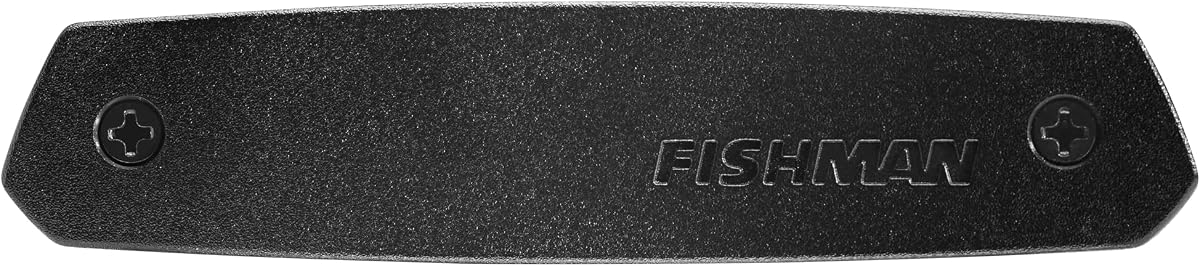
The Fishman Neo D Single Coil Magnetic Soundhole Pickup,PRONEOD01 is a compact passive magnetic pickup built around string-to-string balance and acoustic clarity. It has a 4.3 rating and uses a single-coil, high-impedance design that needs no battery. The dark brown, low-profile housing is intended to blend into the soundhole without adding much visual bulk.
We may earn a commission when you buy through this link, at no additional cost to you.
Installation requires no alteration to the guitar, and the plug-and-play approach reduces setup time. A single-coil magnetic pickup can provide a clear and articulate representation of each string, which is useful for fingerstyle playing, light picking, and arrangements where individual note definition matters.
Compared with a humbucker, the single-coil configuration generally offers less resistance to electromagnetic interference. That may be noticeable near transformers, computer equipment, or other sources of hum, particularly in a noisier performance environment. The pickup also provides no onboard tone or volume controls, so shaping must occur at the amplifier or mixing stage.
The Neo-D Single Coil is a strong choice for a player who prioritizes clarity, balance, and a compact no-modification installation. It is best suited to environments where the signal path is clean and the guitarist wants direct, responsive articulation. Those who need stronger hum rejection should examine a humbucking model.
The pickup is specifically praised for string-to-string balance and acoustic clarity. Those qualities suit a player who wants each note to retain definition while the amplified signal remains evenly weighted across the instrument.
Its passive high-impedance design needs no battery, and the soundhole format allows installation without altering the guitar. That makes the transition between acoustic practice and amplified work quick and uncomplicated.
We may earn a commission when you buy through this link, at no additional cost to you.
The Fishman Neo-D Magnetic Humbucker Acoustic Pickup is a passive soundhole pickup built for players who want the clarity of a magnetic system with improved resistance to unwanted noise. Its 4.3 rating reflects a well-regarded balance of tonal performance and practical installation. The product uses the same neodymium magnet structure as the manufacturer’s award-winning Rare Earth pickup.
We may earn a commission when you buy through this link, at no additional cost to you.
The humbucking configuration is the defining difference from the Neo-D Single Coil. It is a more logical choice for stages, home studios, or rehearsal spaces where nearby electronics might otherwise introduce noise into a single-coil signal. The pickup also retains a low-profile, high-impedance format and needs no battery.
As a humbucker, it occupies more of the soundhole than a single-coil unit, which can create a tighter fit. It also lacks integrated tone and volume controls, so the player will need an amplifier or mixer that provides sufficient adjustment. Those are reasonable limitations for a premium magnetic system designed to focus on signal quality.
The Neo-D Humbucker is best for a steel-string player who values clean articulation, balanced strings, and dependable passive operation. It is especially compelling in noisier amplification environments or for live use where hum could otherwise become distracting. Players with very small soundholes should check dimensions and clearance before ordering.
The humbucking design reduces unwanted electromagnetic interference compared with a single-coil arrangement. This makes the pickup a more dependable choice for live amplification, rehearsal, and recording environments where a clean baseline signal is valuable.
The neodymium magnet structure is intended to deliver exceptional string balance and sparkling acoustic clarity. It gives the pickup a more focused magnetic response while retaining a passive design that requires no battery management.
We may earn a commission when you buy through this link, at no additional cost to you.
The DiMarzio Black Angel Acoustic Soundhole Pickup is a passive magnetic pickup for acoustic guitar and carries a 4.5 rating. That score places it among the strongest-rated products in this guide, even though its supplied specification is brief. The essential facts are clear: it is designed for soundhole placement, uses a magnetic sensing approach, and requires no battery.
We may earn a commission when you buy through this link, at no additional cost to you.
Its simplicity is a legitimate advantage. A passive, removable soundhole pickup offers a straightforward path from an acoustic guitar to an amplifier or recording system without permanent body modification or power management. The Black Angel may appeal to a player who wants a focused solution rather than a broad set of installation options or onboard controls.
The limited supplied information is the main consideration. The product data does not describe string compatibility, exact soundhole dimensions, included controls, cable details, or specific tonal characteristics. Those omissions make it especially important for a buyer to consult the current manufacturer or retailer documentation before installation.
The Black Angel is a credible recommendation for an acoustic guitarist who wants a specialized passive magnetic pickup with a strong customer rating. Its likely appeal is simplicity and established brand recognition. However, a buyer who needs explicit steel-string compatibility, known dimensions, or detailed tonal specifications may feel better informed with one of the more thoroughly documented options in this comparison.
The pickup avoids batteries and external power, simplifying both rehearsal and performance. Its soundhole format also supports a removable configuration, allowing the instrument to remain practical for regular acoustic use.
The Black Angel is aimed directly at the acoustic soundhole pickup category rather than multi-instrument installation. That focused approach may appeal to a guitarist who wants a dedicated magnetic solution and does not require onboard tone controls.
We may earn a commission when you buy through this link, at no additional cost to you.
Choosing a passive acoustic pickup involves balancing sensing technology, mounting method, instrument compatibility, and the type of signal you want. The right system should fit your guitar, suit your playing style, and integrate cleanly with your existing amplification or recording setup.
Piezo pickups respond to vibration through the guitar body and are commonly associated with a bright, detailed, sometimes slightly compressed acoustic signal. Magnetic pickups sense the strings and can provide a familiar, focused sound with strong string definition, but they generally require steel strings. The DiMarzio Black Angel, Fishman Neo-D models, Seymour Duncan Woody HC, and the adjustable magnetic soundhole pickup fall into the magnetic category, while the Journey Instruments and Donner products use passive piezo sensing.
The practical question is what instrument you play and how you want it to sound. Magnetic designs are often intuitive for electric-guitar players and excellent for articulation, while piezo systems can work with both steel- and nylon-string instruments when their mounting method permits. Match the sensing principle to the guitar before focusing on finer tonal preferences.
Soundhole pickups need enough clearance for their mounting hardware, and some models specify a precise diameter range. The adjustable magnetic pickup is listed for 85–100mm soundholes and specific 39–41 inch guitars, while the Seymour Duncan Woody HC is stated for 94–100mm standard steel-string soundholes. Bridge-mounted piezo units require a different kind of check: compare bridge-plate dimensions, drilling access, and output-jack arrangement.
Measure before purchasing and do not assume that all acoustic guitars share the same construction. A pickup that appears similar in a product photograph may use a different mounting footprint or connector. Compatibility determines whether installation is clean and reversible or requires additional work.
A removable soundhole pickup is the easiest option to install and the most convenient for players who switch instruments. It usually leaves the guitar body untouched and can be removed when the natural acoustic sound is preferred. Bridge-mounted piezos can integrate neatly with the instrument but generally involve a more involved installation and a less reversible setup. External adhesive transducers offer a third path, preserving the body while allowing experimentation with position.
Think about how often the instrument changes hands. For a regular acoustic player, a permanent-style system may be worthwhile if it matches the guitar perfectly. For a shared, studio, or touring setup, portability and quick removal may matter more than a more integrated appearance.
The adjustable magnetic soundhole pickup stands out because it provides separate volume and timbre knobs. These controls make it possible to refine the pickup at the source, which can be especially helpful for fingerstyle playing or when the amplifier offers limited adjustment. Most magnetic systems in this list rely on controls located in the amplifier, mixer, or direct box instead.
Onboard controls are not automatically better. They add convenience and can preserve a useful starting point, but they also occupy soundhole space and may not cover every tonal change. Players who enjoy adjusting their sound at the guitar may value the extra flexibility, while others may prefer the simplicity of a fixed pickup and a familiar signal chain.
A magnetic single-coil pickup can offer excellent clarity but may pick up electromagnetic interference. A humbucker configuration, such as the Fishman Neo-D Humbucker or Seymour Duncan Woody HC, is generally more appropriate where the stage or studio contains transformers, computers, lighting equipment, or other potential noise sources. The Donner and Journey Instruments piezo systems avoid magnetic sensing and therefore do not present the same hum sensitivity.
Noise control is not the same as total feedback elimination. Pickup placement, cable quality, grounding, amplifier gain, and the room all affect the final result. The double-potted housing and low-capacitance cable of the Woody HC are useful, but players should still use sensible gain staging and a stable connection.
The complete pickup package can determine how quickly the system is ready to use. The Seymour Duncan Woody HC includes a 14-foot low-capacitance cable designed for direct connection to an amplifier, PA, direct box, or console. The Donner package includes glue, 3M stickers, cable holders, a leather pad, an ABS clip, and a pre-wired pickup, supporting either internal or external placement.
Accessories do not automatically make one system better, but they can reduce setup friction. A good cable may be important for signal integrity, while clips and holders help keep an external installation secure. Conversely, a player who already has the necessary cable and mounting hardware may value a simpler package more than extra accessories.
Passive operation is particularly attractive for travel because there are no batteries to recharge or replace. The Journey Instruments pickups are explicitly positioned for musicians on the go and for collapsible acoustic guitars. The Woody HC and Fishman Neo-D models also use passive, removable soundhole designs, while the Donner system can be transferred across a wide collection of compatible instruments.
For touring, evaluate the pickup’s physical size, connection method, cable requirements, and how quickly it can move between instruments. A compact, removable system that fits without permanent alteration is often more useful than a specialized installation that only suits one guitar.
Most electric guitars use a quarter-inch output, and the magnetic products in this guide either use or are designed around that familiar connection. The Journey Instruments EP201KM uses a flange jack, while the EP101KM is described as using a standard output jack. External piezo systems may require additional connection hardware depending on their mounting arrangement.
Check the existing output on the guitar, the input on the amplifier or direct box, and the cables already owned. This prevents the common frustration of discovering after installation that a connector or adapter is missing, particularly for players who expect the pickup to be immediately usable.
Before installation, identify the pickup’s sensing method and compare its mounting requirements with the guitar. Soundhole models need enough clearance for the housing and any cable supports, while bridge-mounted piezo systems require inspection of the bridge plate and output connection. Confirm that the guitar’s string type, soundhole diameter, or bridge geometry matches the stated compatibility before modifying anything.
Follow the included installation instructions carefully and work with the power disconnected when connecting cables. A removable soundhole pickup should sit securely without pressing against strings or blocking the soundhole. An external piezo system needs a clean, secure bonding surface, and a bridge installation should be checked to ensure that the elements and wiring are not exposed to stress or contact with moving parts.
Begin with a modest amplifier volume, connect the pickup through a suitable cable, and raise the gain gradually while monitoring for hum, feedback, and unintended frequency buildup. Store the pickup in a dry environment, avoid pulling on the cable, and periodically inspect adhesive mounts or soundhole fittings. For removable systems, unplugging the cable by the connector rather than the lead helps reduce accidental damage.
No. Every pickup in this guide is described as passive and battery-free. The pickup generates an output from the instrument’s vibration or magnetic field, while the amplifier supplies the power needed to produce audible sound. This simplifies travel and stage use, although an external power supply or a separate active DI box may still be required for certain recording or direct-box connections.
Generally, the magnetic models listed here are intended for steel-string acoustic guitars. The Seymour Duncan Woody HC explicitly states that it will not work with nylon-string instruments, and the adjustable magnetic pickup likewise excludes classical guitars. A passive piezo or external transducer is usually the more appropriate choice for classical, flamenco, or other nylon-string instruments.
Usually, yes. A soundhole pickup simply lowers into the opening and routes its cable out of the instrument without modifying the body. A bridge-mounted piezo pickup generally requires more precise placement and hardware installation, although it can look more integrated once fitted. Players should compare the pickup’s dimensions with their guitar before choosing an installation method.
A single-coil pickup uses one magnetic coil and is often valued for clear, articulate string detail. A humbucking pickup uses two magnetic coils to cancel unwanted hum, making it better suited to noisy stages, rehearsal rooms, and recording environments. The Fishman Neo-D Single Coil and Neo-D Humbucker provide those two distinct approaches within the same general product family.
Not exactly. A pickup responds to localized string vibration, body movement, or both, depending on its transducer and placement, while a microphone captures sound through the air. A soundhole microphone can also capture more of the room and natural acoustic nuance, while a pickup offers a focused and repeatable signal that is usually easier to control during amplification or recording.
Yes, provided the output can feed an appropriate recording device. The Woody HC is specifically described as compatible with an amplifier, PA, direct box, or console, and a high-impedance recording interface may suit other passive systems. Check the pickup’s output type, connector, impedance expectations, and any requirements of the interface or preamp before recording.
Start with moderate gain, keep the cable secure, and position the amplifier away from the pickup where practical. A humbucking or double-potted model can offer better resistance to unwanted noise and feedback than a basic single-coil system, but installation, room acoustics, and amplifier settings also matter. External piezo pickups can be positioned differently to help control how the body resonates into the signal.
Check the manufacturer’s stated dimensions and compatibility notes before ordering. Soundhole models often specify a minimum and maximum diameter, while bridge piezo systems may require particular bridge-plate geometry or output-jack arrangements. Also verify the string type, since magnetic pickups are generally intended for steel strings and are not suitable for many nylon-string instruments.
The adjustable magnetic soundhole pickup stands out as the best budget-oriented choice because it combines a removable installation with separate volume and timbre controls. For a more refined magnetic stage system, the Seymour Duncan Woody HC models provide hum cancellation, warm voicing, and feedback-conscious construction, with the Walnut version including a studio-quality cable. The Journey Instruments EP001K is the leading natural-focused piezo recommendation for compatible bridge-plate guitars.
The most important decision is fit. A pickup should match the instrument’s construction, string type, soundhole or bridge geometry, and existing output connection before any tonal preference matters. Players who value a removable setup should compare the magnetic soundhole options, while those seeking natural piezo amplification or multi-instrument flexibility should look closely at the Journey Instruments and Donner systems.
Current pricing and product availability can change, so compare the latest listing, customer feedback, included accessories, and compatibility information before making a final purchase. The right passive acoustic pickup should make amplification feel convenient, preserve the character of the instrument, and remain dependable in the settings where it will be used most often.