
ASUS RT-AX1800S
4.3Editor score
Subscription-free network security
Parental controls and scheduling
Five Gigabit Ethernet ports
AiMesh expandable networking
Our parental control routers guide compares ten Wi-Fi 6, Wi-Fi 6E, and Wi-Fi 7 models for filtering, scheduling, coverage, security, and easy family management.
Parental control routers combine wireless coverage, content filtering, device scheduling, and network security in one central hub for the home. The strongest models make age-appropriate rules easy to create while preserving smooth performance for gaming, streaming, schoolwork, and video calls across many connected devices.
We compared the ten routers in this guide using their stated wireless standards, band configurations, management features, security tools, mesh support, parental controls, and hardware interfaces. The list covers affordable dual-band options, premium tri-band systems, Wi-Fi 7 models, and a wired VPN-focused router for more specialized needs.
Each pick reveals what it offers best, from straightforward scheduling and filtering to high-speed multi-gigabit connectivity. Ratings and product details reflect the supplied information, while availability, firmware behavior, and pricing can change over time, so readers should verify current specifications before purchasing.
4.3Editor score

4.2Editor score

4.3Editor score
The comparison below places each router’s wireless generation, frequency configuration, family-management emphasis, and expansion options side by side so readers can identify the model that best matches their household priorities.


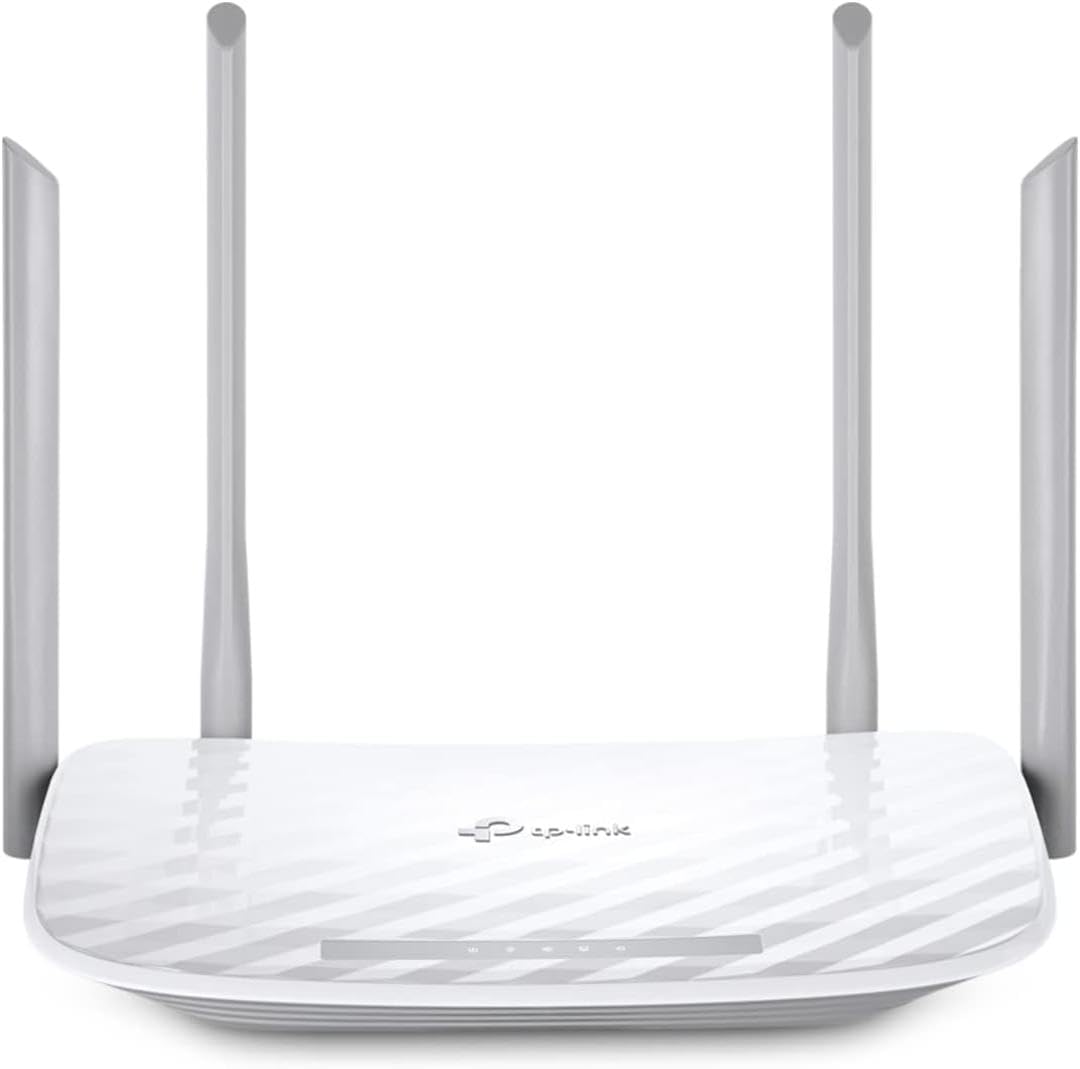


The TP-Link Archer AX21 V5 is a dual-band Wi-Fi 6 router with a 4.4 rating, making it one of the strongest-rated models in this comparison. Its AX1800 class combines a 5 GHz band rated up to 1,200 Mbps with a 2.4 GHz band rated up to 574 Mbps, giving it a practical balance for busy homes without moving to a more complex premium platform.
We may earn a commission when you buy through this link, at no additional cost to you.
The router emphasizes efficient handling of multiple clients through OFDMA and focused coverage through beamforming, four high-gain antennas, and an advanced front-end module. Its Tether app provides setup and firmware management, while the inclusion of OpenVPN and PPTP server support adds flexibility for households that want controlled remote access to their home network.
Its main limitation is that the supplied feature information focuses more heavily on performance, coverage, and security than on detailed parental scheduling, filtering, or age-based profiles. A separate modem is also required, and real wireless performance will depend on the internet plan, device capabilities, home construction, distance, and interference. These caveats keep it from being the most explicitly family-focused choice.
The Archer AX21 V5 is still a strong pick for buyers who want a proven, approachable Wi-Fi 6 router with a high rating, efficient multi-device operation, and VPN server functionality. It suits households that mainly need dependable coverage and basic network administration, while those requiring granular content filtering should confirm the current parental-control interface before making a final decision.
OFDMA allows the router to communicate with multiple devices more efficiently, while beamforming helps direct signal toward clients rather than scattering it indiscriminately. Together with the two-band AX1800 configuration, these features suit homes with numerous phones, televisions, computers, and connected household products.
Built-in OpenVPN and PPTP server support can be useful for secure access to home resources. The router also works with a broad range of listed internet service providers, although a compatible cable or DSL modem remains necessary for a typical home connection.
We may earn a commission when you buy through this link, at no additional cost to you.
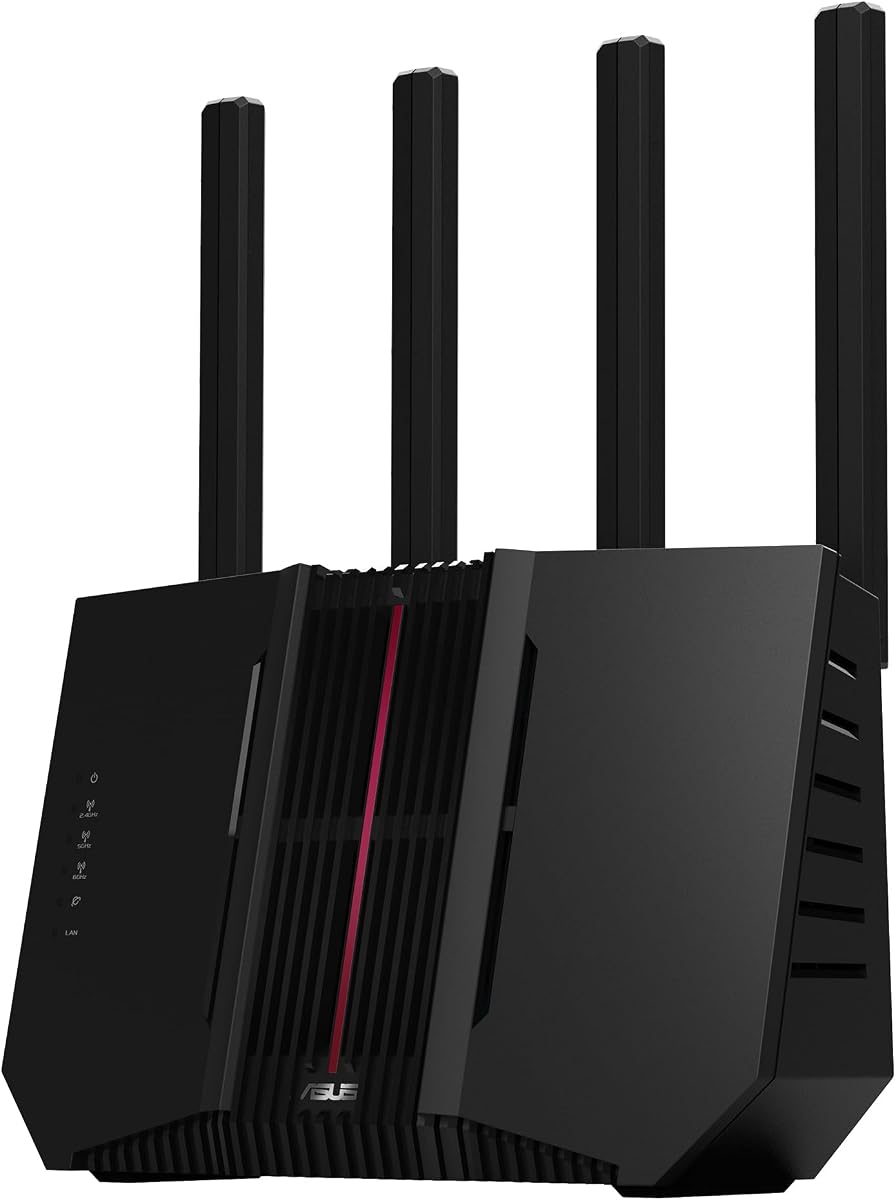
The ASUS RT-AX1800S combines a 4.3 rating with explicitly stated parental controls, subscription-free network security, and built-in VPN support. It is a particularly compelling budget-oriented choice for families because it puts common household controls on a mainstream Wi-Fi 6 platform without presenting itself as a high-end gaming or specialist security appliance.
We may earn a commission when you buy through this link, at no additional cost to you.
Its dual-core processor and support for MU-MIMO, OFDMA, and 1024-QAM are designed to improve throughput and efficiency across multiple wireless clients. Five Gigabit Ethernet ports provide one WAN connection and four LAN connections, which is useful for a wired desktop, game console, television, or home-office device. ASUS Instant Guard can also create a secure VPN connection for remote access.
The RT-AX1800S is a dual-band router and does not offer the 6 GHz capacity of a tri-band Wi-Fi 6E or Wi-Fi 7 system. Actual range and throughput still depend on the building, traffic, number of clients, and placement. Families with very large homes may also need an AiMesh-compatible unit to eliminate dead zones, and more advanced filtering may warrant checking the latest ASUS parental-control interface.
Overall, this is the most practical pick for households seeking explicit parental controls without a premium-tier design. It balances a useful set of Gigabit connections, extendability, VPN functionality, and subscription-free protection, making it a well-rounded starting point for shared family networks with moderate wireless demands.
The router's parental controls are a central reason to consider it for family use, while the inclusion of subscription-free AiProtection Classic strengthens its value for buyers wary of recurring security fees. The supplied information does not state that every advanced filtering feature is included, so the current interface should be checked for specific needs.
AiMesh compatibility allows households to add compatible ASUS equipment for broader coverage. The RT-AX1800S is best suited to homes where the main access point is reasonably central, rather than households that require a tri-band system or multi-gigabit wired connections.
We may earn a commission when you buy through this link, at no additional cost to you.
The TP-Link Archer BE230 is a dual-band Wi-Fi 7 router that pairs a 4.2 rating with explicitly described robust parental controls and real-time IoT security. It is a forward-looking option for families that want a current wireless standard, flexible management, and room for connected devices to grow without immediately choosing a tri-band system.
We may earn a commission when you buy through this link, at no additional cost to you.
Its BE3600 class provides stated maximum speeds of up to 2,882 Mbps on 5 GHz and 688 Mbps on 2.4 GHz. Multi-Link Operation, Multi-RUs, and 4K-QAM improve responsiveness, reliability, and capacity, although the router does not support the 6 GHz band. A 2.5 Gbps WAN/LAN port, another 2.5 Gbps LAN port, and three 1 Gbps LAN ports give it useful wired flexibility.
Coverage is stated for up to 2,000 square feet and as many as 60 devices at a time, with four internal antennas and beamforming supporting that claim. The real-world result depends on layout, walls, client hardware, and competing radio traffic. It also lacks the 6 GHz capacity that distinguishes higher-end tri-band models, and users will need a separate modem in most cases.
The Archer BE230 is well suited to households wanting explicit parental controls alongside Wi-Fi 7 and multi-gigabit options. Families with many high-speed devices, extensive smart-home equipment, or a growing collection of connected clients will appreciate the capacity headroom, while those needing 6 GHz should look toward a tri-band alternative.
TP-Link HomeShield is described as providing robust parental controls and real-time IoT protection, making the Archer BE230 more explicitly family-oriented than many basic routers. These features are designed to centralize device access and network management in the Tether app.
The 2.5 Gbps ports are valuable for users with a matching internet plan, modern wired devices, or a fast NAS. The remaining Gigabit LAN ports allow the router to serve a broader mix of equipment without sacrificing convenient physical connections.
We may earn a commission when you buy through this link, at no additional cost to you.
The ASUS RT-AX3000S stands out because its supplied title and feature list explicitly combine parental control scheduling, built-in VPN, and AiMesh compatibility. Its 4.2 rating reflects a well-regarded product, while the AX3000 configuration offers a higher stated aggregate class than the AX1800S without moving into a premium multi-gigabit design.
We may earn a commission when you buy through this link, at no additional cost to you.
Wireless performance is listed at up to 574 Mbps on 2.4 GHz and 2,402 Mbps on 5 GHz. MU-MIMO and OFDMA improve simultaneous communication with multiple devices, and 1024-QAM supports faster wireless connections. The ability to add AiMesh-compatible routers is particularly relevant for parents who need rules and coverage to extend across a larger floor plan.
Parental control scheduling is the headline family-management feature, allowing connected devices to be managed according to planned periods. The exact depth of content filtering is not detailed in the supplied information, so buyers with specialized requirements should review the current ASUS interface. The router also remains a dual-band design without 6 GHz support, and wall placement, distance, and household traffic will affect actual performance.
This is the best overall recommendation for a family that values clear scheduling, expandable coverage, and a capable mainstream wireless platform. It avoids the complexity of a high-end tri-band system while offering more aggregate headroom than the budget-oriented RT-AX1800S, making it a balanced central router for a typical connected home.
Parental control scheduling helps households set consistent limits for school nights, leisure time, and device use. Automatic time rules can also reduce the need for family members to make exceptions manually every time a connected device is used.
AiMesh compatibility offers a straightforward path to extend coverage through compatible ASUS routers. It is especially useful when a single access point cannot provide reliable service in bedrooms, basements, offices, or other areas separated by thick walls.
We may earn a commission when you buy through this link, at no additional cost to you.
The TP-Link Archer A54 is an AC1200 dual-band Wi-Fi 5 router with a 4.3 rating and a clear focus on uncomplicated household networking. It offers up to 867 Mbps on 5 GHz and 300 Mbps on 2.4 GHz, making it most appropriate for homes with moderate internet speeds and a limited number of high-bandwidth devices.
We may earn a commission when you buy through this link, at no additional cost to you.
Four external antennas support stable connections, and the stated coverage target reaches up to 1,000 square feet. WPA3 improves wireless security, while Access Point mode lets an existing wired network become wireless. Tether app support simplifies configuration and firmware updates, and EasyMesh compatibility provides a path to larger-home coverage.
Its biggest limitation is the Wi-Fi 5 standard, which is older than the Wi-Fi 6, Wi-Fi 6E, and Wi-Fi 7 alternatives in this guide. The supplied information does not explicitly describe parental control scheduling or content filtering, so it is not the strongest choice for a household whose central requirement is detailed family management. A separate modem is generally required.
The Archer A54 is best for value-conscious buyers who need a dependable, easy-to-manage router for modest coverage needs. It may also work well as a secondary mesh component, access point, or straightforward router in a smaller home, but families prioritizing advanced parental tools or newer wireless capacity should choose one of the explicitly featured alternatives.
The Tether app keeps initial configuration and firmware updates approachable for nontechnical users. This simplicity is valuable for secondary locations, rentals, and modest homes where advanced wireless capacity is unnecessary.
Access Point mode can extend an existing wired network, while EasyMesh compatibility offers a way to add compatible equipment. These features provide useful flexibility without requiring the router to serve as the sole source of network management.
We may earn a commission when you buy through this link, at no additional cost to you.
The TP-Link ER605 is a wired Gigabit VPN router rather than a conventional wireless home router. It carries a 4.4 rating, tied for the highest among the listed products, and is aimed at users who need powerful network controls, multiple WAN options, and secure remote connectivity more than built-in Wi-Fi.
We may earn a commission when you buy through this link, at no additional cost to you.
Its port configuration includes one Gigabit WAN port, two Gigabit WAN/LAN ports, and two Gigabit LAN ports. A USB port supports mobile broadband through a compatible 4G or 3G modem for WAN backup. Multiple IPsec, OpenVPN, L2TP, and PPTP connections provide extensive options for linking private networks or supporting remote users.
Security features include advanced firewall policies, denial-of-service defense, IP, MAC, and URL filtering, SPI firewall protection, VPN passthrough, and local management. The supplied data does not identify modern child-scheduling or age-profile tools, and parents would need separate wireless access points if they want Wi-Fi. Configuration is also more appropriate for technically informed users than for a simple family plug-in experience.
The ER605 is ideal for a small office, home business, or technically capable household that needs wired redundancy, VPN support, and detailed filtering. It is not the most natural choice as a primary parental control router because it lacks built-in wireless and is not presented as having family-oriented content profiles.
Up to three ports can operate as WAN connections, allowing traffic allocation or backup service arrangements. USB mobile-broadband support adds another potential path to maintain connectivity if the primary internet service is interrupted.
IP, MAC, and URL filtering can complement the router's firewall and VPN functions. These controls are valuable for technically experienced administrators, although they are less approachable than consumer-oriented parental dashboards and presets.
We may earn a commission when you buy through this link, at no additional cost to you.
The ASUS RT-BE88U is a high-end Wi-Fi 7 router with a 4.3 rating, 10G wired connectivity, and an explicitly stated set of parental controls. It is the premium choice in this guide for families that want a powerful central platform, high-speed wired devices, advanced security, and flexible network segmentation.
We may earn a commission when you buy through this link, at no additional cost to you.
The router supports throughput up to 7,200 Mbps through Wi-Fi 7 features such as Multi-Link Operation and 4096-QAM. A 10G SFP+ port and a 10G WAN/LAN port can support demanding local storage, workstations, and ultra-fast internet plans. Its quad-core 2.6 GHz 64-bit processor provides the computing headroom for high traffic and advanced services.
Guest Network Pro can establish up to five SSIDs, which is useful for separating children, guests, work equipment, and connected household devices. It also includes one-click VPN connections, convenient parental controls, and AiProtection Pro powered by Trend Micro without a stated subscription requirement. As a dual-band router, however, it does not offer the 6 GHz spectrum available from higher-end tri-band systems.
The RT-BE88U is recommended for affluent or demanding households that need both sophisticated family management and exceptional wired performance. It is especially suitable for a home office, 4K streaming, local high-speed storage, and numerous simultaneous clients, provided the household can take full advantage of its advanced hardware.
Support for up to five SSIDs gives parents a practical way to isolate guest devices, connected toys, work systems, and household computers. Separate networks can simplify management and reduce unnecessary interactions between device groups.
The two 10G ports distinguish this model from conventional Wi-Fi 7 routers with Gigabit interfaces. They can benefit compatible NAS devices, high-end computers, and fast internet services, while Multi-Link Operation supports resilient wireless connections across available bands.
We may earn a commission when you buy through this link, at no additional cost to you.
The TP-Link Archer AXE75 is a tri-band Wi-Fi 6E router with a 4.3 rating and a useful mix of speed, coverage, and family-management tools. Its three bands provide up to 2,402 Mbps on 6 GHz, 2,402 Mbps on 5 GHz, and 574 Mbps on 2.4 GHz, giving compatible devices access to a wider range of radio paths.
We may earn a commission when you buy through this link, at no additional cost to you.
The 6 GHz band offers additional bandwidth and lower congestion for supported clients, while true tri-band operation and OFDMA help the router serve more devices simultaneously. A 1.0 GHz dual-core processor, 512 MB of memory, and a housing designed for heat dissipation support sustained operation, and EasyMesh compatibility helps cover larger homes.
TP-Link HomeShield includes basic network security, device identification, basic parental controls, quality of service, and weekly or monthly reports. It can also operate as a VPN server and client using OpenVPN, PPTP, or L2TP. The important distinction is that the supplied information identifies the included controls as basic, so households wanting highly granular filtering may need to examine the current feature tiers and optional subscriptions.
The Archer AXE75 is a well-rounded family router for users who want 6 GHz support and strong multi-device capacity without moving to a Wi-Fi 7 model. It is particularly suitable for mixed households with modern wireless clients, streaming, gaming, and school devices that could benefit from a less congested band.
The 6 GHz band can provide modern compatible clients with more available spectrum, while the 5 GHz and 2.4 GHz bands continue serving other devices. This separation improves flexibility when many products in the home support different wireless generations.
Basic parental controls, device identification, security scanning, and reporting cover common family needs without making the core feature set sound dependent on a larger paid platform. Buyers should still verify whether a specific advanced filtering requirement is included in the current HomeShield offering.
We may earn a commission when you buy through this link, at no additional cost to you.
The ASUS RT-BE82U is a dual-band Wi-Fi 7 router with a 4.2 rating and a strong emphasis on multi-gigabit wired connectivity. Its maximum stated wireless throughput reaches 6,500 Mbps, while Multi-Link Operation allows compatible devices to use multiple bands to improve stability and data transfer efficiency.
We may earn a commission when you buy through this link, at no additional cost to you.
Five 2.5GbE ports provide more high-speed wired options than a standard Gigabit router. This is useful for modern laptops, desktop computers, network storage, and smart televisions, especially when connected devices benefit from faster local transfers. AiMesh compatibility provides a familiar path to whole-home roaming and coordinated coverage.
AiProtection Pro powered by Trend Micro, one-tap security scanning, and Safe Browsing form the model's core network-security story. Unlike some ASUS selections, the supplied product information does not explicitly highlight detailed parental scheduling, so buyers focused on age profiles and time rules should confirm those tools in the current interface. The dual-band design also omits 6 GHz, despite the high aggregate wireless figure.
The RT-BE82U is a compelling option for a modern home with several wired high-speed devices and a need for Wi-Fi 7. It makes more sense to buyers who prioritize 2.5GbE and mesh flexibility over a dedicated 6 GHz band, while ASUS models with more explicit family-control details may be easier to recommend for parental management.
The unusual concentration of 2.5GbE ports allows several wired products to operate above standard Gigabit limits. It is particularly useful for a home office or media system where local file transfers, large downloads, and demanding applications benefit from additional bandwidth.
AiMesh extendable routers are designed to provide seamless roaming while retaining access to advanced network features. Buyers planning a larger system can start with this model and add compatible ASUS equipment as coverage needs develop.
We may earn a commission when you buy through this link, at no additional cost to you.
The ASUS RT-BE9700 is a high-end Wi-Fi 7 tri-band router with a 3.9 rating and the highest stated aggregate wireless throughput in the group at 9,700 Mbps. It uses 320 MHz channels in the 6 GHz band and 4096-QAM, making it designed for compatible modern clients that can exploit unusually broad radio capacity.
We may earn a commission when you buy through this link, at no additional cost to you.
Multi-Link Operation can connect across multiple bands for stable links and efficient transfers. Versatile WAN configuration, AI WAN detection, dual WAN capability, and a USB port ready for 4G LTE or 5G tethering provide additional resilience for demanding network environments. The router also supports advanced site-to-site VPN, Instant Guard, and AiMesh whole-home expansion.
Its 3.9 rating is the lowest among the ten products, though that should not automatically be read as poor suitability for family use. The supplied information does not explicitly describe granular parental scheduling or age-based profiles. The advanced platform, high-end radio design, and numerous network options also make it more specialized than mainstream family routers, and compatible clients are needed to receive the full benefit of its tri-band capabilities.
The RT-BE9700 is best suited to high-end households, tech enthusiasts, and families with many compatible Wi-Fi 7 devices that need a large amount of wireless capacity. It is a sensible aspirational choice when the budget supports the most advanced ASUS option, while most families will find more useful value in one of the AX1800S, AX3000S, BE88U, or AXE75 models.
The dedicated 6 GHz band and 320 MHz channels offer substantial spectrum to compatible clients. This can reduce congestion and improve capacity in a dense home, especially when many devices support the newest wireless standard.
AI WAN detection, flexible WAN configuration, mobile tethering, and site-to-site VPN make the router useful for advanced connectivity requirements. These options add continuity and security for households that work remotely or operate networked devices across multiple locations.
We may earn a commission when you buy through this link, at no additional cost to you.
The right parental control router depends on more than headline wireless speed. Households should balance control features, security, coverage, wired connectivity, device demands, and ease of use while accounting for the separate modem most models require.
The most important feature is a management interface that makes it easy to create schedules, assign devices to family groups, pause connectivity, and restrict unsuitable content. The supplied information explicitly highlights parental controls and scheduling on the ASUS RT-AX1800S and RT-AX3000S, robust parental controls on the TP-Link Archer BE230, convenient controls on the ASUS RT-BE88U, and basic controls on the TP-Link Archer AXE75. Exact filters, profile depth, and whether particular features require a subscription should be confirmed in the current interface.
Choose the router whose controls match your family's actual routine rather than buying on the number of security features alone. Scheduled bedtime access, study-hour rules, guest isolation, and temporary pauses are more useful to many homes than obscure technical settings.
A newer wireless standard can provide greater efficiency, improved simultaneous-device handling, and support for newer client hardware. The guide spans Wi-Fi 5 through Wi-Fi 7: the Archer A54 uses Wi-Fi 5, the AX1800S, AX21 V5, and AX3000S use Wi-Fi 6, the AXE75 adds a 6 GHz band with Wi-Fi 6E, and the BE230, BE82U, BE88U, and BE9700 use Wi-Fi 7. Aggregate speed figures are theoretical class labels, not guaranteed real-world transfers.
Most households will benefit more from appropriate band capacity and good placement than from chasing the highest possible number. Consider how many recent devices support 6 GHz or Multi-Link Operation before paying a premium for those capabilities.
A router placed in a central location often serves a moderate home effectively, but walls, floors, and competing equipment can create dead zones. Every wireless pick except the wired TP-Link ER605 supports some form of expansion: ASUS models use AiMesh, while the TP-Link selections provide EasyMesh compatibility. This lets households add compatible access points without losing the benefit of a single management system.
Estimate coverage from the router's stated square-foot figure, but treat it as a guide rather than a guarantee. Larger homes, unusual layouts, and many connected devices benefit more from a properly planned mesh system than from relying on one high-gain antenna configuration.
Wired connections remain important for desktop computers, smart televisions, game consoles, and network storage. The ASUS RT-AX1800S provides five Gigabit Ethernet ports, the RT-BE82U provides five 2.5GbE ports, and the RT-BE88U includes a 10G SFP+ port and a 10G WAN/LAN port. The TP-Link ER605 offers a wired-only design with several configurable WAN or LAN ports.
Match port speed to your actual equipment and internet service. A multi-gigabit port has limited value without a correspondingly fast modem, plan, switch, and client, but it can be worthwhile for local storage and high-performance computers.
Parental controls are only one layer of home-network security. Look for WPA3 where available, current firewall protections, device identification, malicious-site filtering, and secure remote access. ASUS highlights subscription-free AiProtection Classic or Pro on several models, while TP-Link combines HomeShield features with security commitments on selected hardware. The TP-Link ER605 focuses on firewall policies, filtering, denial-of-service defense, and extensive VPN support.
Remote access deserves particular attention because families often need to reach home systems securely while away. OpenVPN, PPTP, L2TP, Instant Guard, and site-to-site VPN support can be valuable, but configuration complexity varies significantly among consumer and business-oriented routers.
A router must handle more than the number of people in a household because phones, watches, televisions, speakers, cameras, and appliances may all connect simultaneously. OFDMA, MU-MIMO, Multi-Link Operation, and multi-band designs improve efficiency, while the Archer BE230 is stated to cover up to 2,000 square feet and up to 60 devices at a time. That figure still depends on client capabilities and network conditions.
Count regularly connected household electronics and identify which devices use large uploads, cloud storage, gaming, or high-resolution streaming. Choose headroom above the current total so that adding devices does not immediately strain performance.
A router must be easy to configure and maintain, not merely powerful. The TP-Link Tether app supports setup and firmware management for the Archer models, while ASUS provides an established interface and app-based administration across its AiMesh and AiProtection systems. Business-oriented features on the ER605, including multiple VPN protocols and WAN policies, are more likely to suit users who are comfortable with advanced network configuration.
Firmware updates, readable device lists, simple pause controls, and clear status indicators are important for long-term use. Choose a platform that matches the household's technical comfort and that receives ongoing maintenance from its manufacturer.
Most of the wireless routers in this guide require a separate cable or DSL modem, while the ER605 is a wired router and does not supply wireless connectivity. The AX21 V5 and BE230 explicitly state that a modem is required, and the A54 notes the same requirement for most providers. Some users may already have a modem that can be placed in bridge mode, while others will need a compatible unit.
Check the current internet plan, existing modem, cabling, and any VPN or remote-access requirements before ordering. These details can determine whether a particular router is usable immediately and whether additional equipment is necessary.
Begin by placing the router in a central, open location rather than inside a cabinet or at the edge of the property. Connect the appropriate internet source, complete the manufacturer's setup process, and update the firmware before creating detailed family rules. A short baseline test can reveal weak areas that later need better placement or a mesh extension.
Create household groups instead of assigning every rule to a single device. Give children their own profiles, set appropriate time windows, separate guests and connected household products, and review restrictions after major changes in school, work, or leisure schedules. Pause controls are useful for temporary exceptions, while consistent schedules reduce the need for daily manual intervention.
Treat the router as part of the home's cybersecurity routine. Keep its administrator account protected, use current firmware, review connected devices, remove unused clients, and periodically review activity reports. For additional protection, use WPA3 where supported, keep the router's security features enabled, and avoid exposing administrative pages directly to the public internet.
Most of the wireless routers in this guide require a separate compatible cable or DSL modem. The modem connects to the router's WAN or internet port, while the router creates and manages the local Wi-Fi network. Some existing modems can be placed in bridge mode, but that capability and compatibility should be confirmed before installation. The TP-Link ER605 is also a wired router and does not provide Wi-Fi on its own.
Look for time scheduling, device grouping, content filtering, pause controls, guest networks, and clear activity reporting. The ASUS RT-AX1800S and RT-AX3000S explicitly emphasize parental controls and scheduling, while the Archer BE230 and BE88U also describe family-management features. Check the current interface for filter categories, per-device exceptions, and any advanced features that may require a subscription.
No. Wireless speed determines performance and capacity, while parental controls determine how effectively you can manage access. A high-speed router with weak or unsuitable management tools may be less useful for a family than a simpler model with clear scheduling. The best choice balances both sides: enough wireless capacity for your devices plus controls that match your routine.
It can be, especially when the router is in a central location but bedrooms, basements, offices, or upper floors still have weak service. The ASUS models in this guide support AiMesh, and the TP-Link wireless models support EasyMesh-compatible expansion. Add compatible access points where signal quality is poor rather than simply increasing transmitter power in every room.
Router-based controls primarily govern traffic passing through that home network. When a phone or tablet switches to cellular data or another Wi-Fi network, the router's filters no longer apply. Families can extend protection with device-level parental-control software, browser restrictions, family mobile plans, and Safe Browsing tools on individual devices.
Wi-Fi 6E adds the 6 GHz band to the Wi-Fi 6 family, creating more available spectrum for compatible devices. Wi-Fi 7 builds on that foundation with features such as Multi-Link Operation and 4096-QAM. The Archer AXE75 is the tri-band Wi-Fi 6E option here, while the Archer BE230 and the three ASUS BE-series routers use Wi-Fi 7.
Only if the rest of your network can benefit from them. The ASUS RT-BE82U's five 2.5GbE ports and RT-BE88U's 10G options can support compatible modern devices, high-speed local storage, and suitable internet plans. Standard Gigabit connections remain adequate for many homes. Check your modem, internet service, switches, and individual devices before paying for capabilities they cannot use.
Check for firmware updates regularly, especially after installation, when a new device connects, or when management features change. Firmware updates can improve performance, security, compatibility, and parental-control behavior. TP-Link explicitly recommends using the Tether app to keep Archer firmware current, while ASUS users should follow the firmware notifications and update guidance in the ASUS administration interface.
The ASUS RT-AX1800S is the best budget pick because it combines explicit parental controls, subscription-free network security, VPN support, five Gigabit Ethernet ports, and AiMesh expansion in an approachable Wi-Fi 6 platform. The ASUS RT-AX3000S rises to the best overall choice thanks to its clearly stated scheduling features, higher AX3000 class, and similarly expandable design.
For a premium household, the ASUS RT-BE88U delivers the strongest combination of family controls, 10G connectivity, advanced security, and Wi-Fi 7 performance. The TP-Link Archer BE230 and Archer AXE75 are strong alternatives for buyers who prefer TP-Link HomeShield, while the ASUS RT-BE82U and RT-BE9700 serve advanced homes needing high-speed wired or tri-band wireless capacity. The TP-Link ER605 is a different category entirely, specializing in wired VPN and firewall functions.
Prioritize the controls your family will actually use, then confirm current feature availability, device compatibility, and the need for a separate modem. Product availability, firmware behavior, and pricing can change, so check current listings and manufacturer documentation before making a final purchase.