
HP 14-inch HD Chromebook
4.4Editor score
Chrome OS school focus
Anti-glare 14-inch display
Up to 14-hour battery
A laptop for junior high students needs to be dependable, easy to carry, and simple enough to use for assignments without becoming a distraction. The right model should handle web-based lessons, documents, presentations, video calls, and entertainment while remaining comfortable for long school days. Screen quality, keyboard design, battery life, and repairability can matter as much as raw processing power.
This guide compares ten HP, Lenovo, and Dell laptops based on the supplied specifications, including processor, memory, storage, display, operating system, connectivity, ports, weight, and stated battery performance. It covers Chromebooks designed around cloud-based schoolwork as well as Windows laptops for students who need traditional desktop software. The rankings reflect suitability for typical junior high workloads rather than demanding professional applications.
Each review explains the strongest reasons to consider a particular model, along with limitations that families should understand before buying. The top selections show how a laptop can fit different needs, from a low-cost school Chromebook to a higher-resolution touchscreen or a Windows notebook with more memory. Prices and configurations can change, so compare the current listing and specifications before making a final decision.
4.4Editor score
4.6Editor score

4.2Editor score
As an Amazon Associate we earn from qualifying purchases.
The comparison below places all ten laptops side by side, emphasizing the differences that matter most to a junior high student: operating system, processor, memory, display, storage, portability, and connectivity.




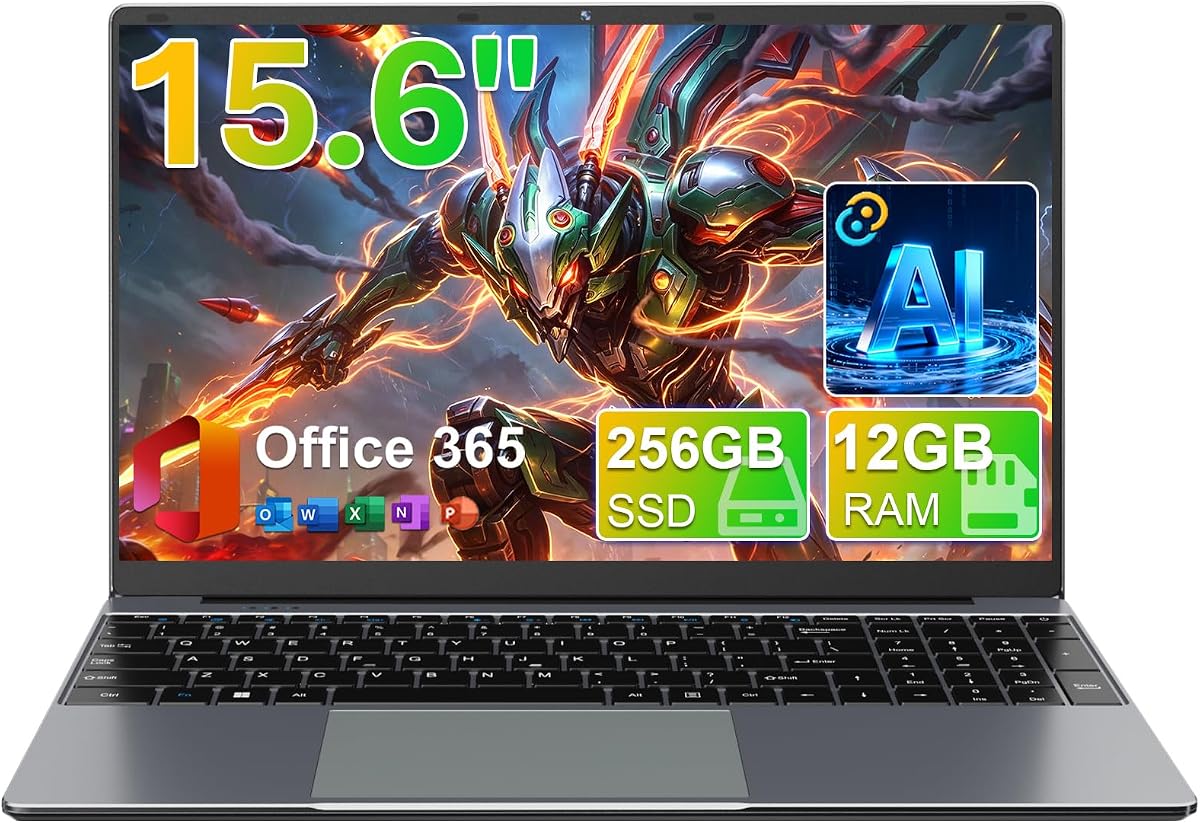
This model earns the Editor's Choice position because it offers the most balanced set of features for general junior high use. Its 4.6 rating is the highest in the group, while the 15.6-inch Full HD IPS panel provides considerably more working space than the 1366-by-768 screens found on several alternatives. A Celeron J4105 quad-core processor, 12GB of memory, and a 256GB SSD form a practical configuration for browsing, writing, research, and video calls.
We may earn a commission when you buy through this link, at no additional cost to you.
The strongest advantage is the combination of 12GB RAM and SSD storage. More memory helps when several browser tabs, a video meeting, and a document are open simultaneously, while SSD storage makes loading applications and saving files feel more responsive than a typical eMMC drive. The 1920-by-1080 display is also helpful for research papers, spreadsheets, Google Classroom, and presentations because more content can fit on screen without magnification.
There are compromises. The J4105 belongs to the entry end of the processor market, so it is not a strong choice for advanced video editing, intensive gaming, or demanding software. The 15.6-inch footprint may be less convenient than a 14-inch model for a child carrying a laptop every day. Still, the extra screen area and strong memory configuration make this a sensible general-purpose choice for schoolwork performed at home or at a desk.
This is a good recommendation for students who split time between school platforms, Microsoft tools, research, and entertainment. Its 180-degree hinge also makes it convenient for watching tutorials or sharing a screen. Choose it when display quality, memory, and storage matter more than having the smallest possible chassis, and verify that the larger screen fits comfortably in the student's daily bag.
The Full HD IPS display provides a sharper and more useful workspace than a basic HD panel, especially for reading websites, editing documents, and watching instructional videos. Narrow bezels also help the larger screen remain visually manageable.
With 12GB of RAM, this laptop is better prepared than the 4GB models in the roundup for keeping multiple tabs and learning applications open. The 256GB SSD also provides more room for locally stored assignments and media.
We may earn a commission when you buy through this link, at no additional cost to you.
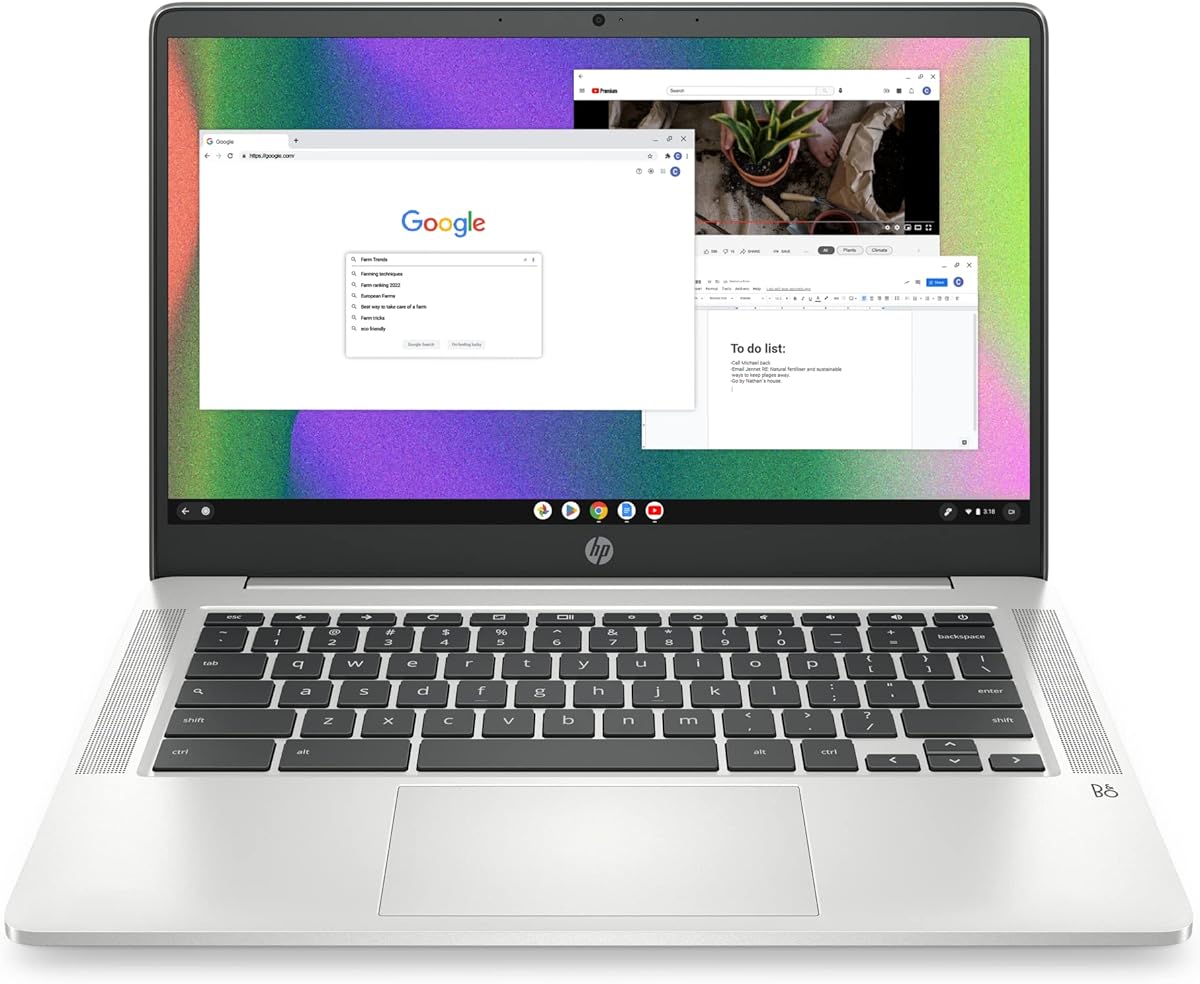
This HP Chromebook is the Best Budget pick for families seeking a straightforward computer for browser-based learning. It has a 4.4 rating and pairs the Intel Celeron N4120 quad-core processor with 4GB of LPDDR4x memory and 64GB of eMMC storage. That combination is well suited to Google Classroom, Google Docs, web research, Zoom, and other cloud-centered activities commonly used by junior high students.
We may earn a commission when you buy through this link, at no additional cost to you.
Battery life is a major selling point. The supplied specifications state up to 14 hours of battery life, which should help on long school days when charging access is limited. The 14-inch anti-glare display is also appropriate for a shared study space because it reduces distracting reflections. Connectivity is practical, with two USB-A ports, one USB-C port, HDMI, and a headphone jack for accessories used in lessons.
The limitations are important to recognize. A 4.4 rating indicates broad satisfaction, but the laptop's 1366-by-768 resolution is less detailed than a Full HD screen, and 4GB of memory is sufficient rather than generous. The 64GB eMMC drive also leaves less local space than the SSD-equipped models here. Students who install large game libraries or retain extensive video files may need external storage or cloud space.
For a student whose lessons are primarily online and whose family wants a low-cost, familiar Chrome OS device, this is a strong recommendation. It offers the essentials without unnecessary complexity. Families should focus on comfortable keyboard use, protective case or sleeve, and keeping the browser updated, while also setting expectations that this is a focused school tool rather than a high-end creation machine.
The stated 14-hour battery figure makes this Chromebook attractive for students who spend much of the day away from an outlet. Actual runtime varies with screen brightness, Wi-Fi use, video calls, and the number of active applications.
Chrome OS integrates the browser, Android apps, and cloud tools into a straightforward environment. That simplicity helps younger students focus on assignments and reduces the likelihood of encountering unnecessary background software or complicated setup processes.
We may earn a commission when you buy through this link, at no additional cost to you.
The HP Stream is a flexible Windows option for a junior high student whose learning does not fit entirely inside a browser. It has a 4.2 rating, an Intel N150 processor, 4GB of DDR4 memory, 128GB of UFS internal storage, and a docking station that adds 1TB of storage. Windows 11, AI Copilot, and a one-year Office 365 subscription make it suitable for both school and general productivity.
We may earn a commission when you buy through this link, at no additional cost to you.
Its broad port selection is one of the most useful features. The laptop includes USB-C, two USB-A ports, HDMI, a media card reader, and a headphone and microphone combination jack. Wi-Fi 6 and Bluetooth 5.4 support modern school wireless networks and accessories. At 3.24 pounds, it is portable enough for a backpack, and the anti-glare 14-inch screen should remain comfortable during long reading sessions.
The trade-off is that the included 1TB belongs to the docking station rather than the laptop's main internal storage. Students must carry or leave the dock where it is used, and some of the listed accessories add clutter. The 4GB of RAM is also modest for simultaneous Microsoft applications, numerous browser tabs, and other demanding activity. The N150 is efficient but not a high-performance processor.
This model is a good fit for a student who wants familiar Windows applications, Office 365, and plentiful accessory storage in one package. It is less attractive for someone who needs a highly portable all-in-one device. Before buying, determine whether the docking station will be a useful home-station component or simply extra equipment the student must transport.
The 7-in-1 docking station adds 1TB of storage and expands the laptop's connection options at a desk. It can be a useful home setup for keeping assignments, media, and peripherals organized without constantly moving the computer.
AI Copilot and a one-year Office 365 subscription support everyday writing, planning, and document tasks. Students can still benefit from these features, but adult supervision and school device policies remain important for younger users.
We may earn a commission when you buy through this link, at no additional cost to you.
This Lenovo Chromebook is the Best Premium pick because its Full HD touchscreen, light 2.86-pound chassis, and strong connectivity improve the everyday school experience. It has a 4.2 rating and uses an eight-core MediaTek Kompanio 520 processor designed for efficient performance, long battery life, and cloud-based work. Chrome OS provides access to web applications, Android apps, built-in protection, and cloud backups.
We may earn a commission when you buy through this link, at no additional cost to you.
The 1920-by-1080 IPS display offers a noticeably clearer and more flexible interface than a standard HD panel. Touch navigation can be helpful for drawing, reviewing diagrams, reading material, or using educational applications. The 720p webcam includes a physical privacy shutter, giving families a practical way to block the camera when it is not needed. Wi-Fi 6 and Bluetooth 5.1 should serve most current school and home networks.
Its 4GB of memory and 64GB of eMMC storage are more limited than several Windows choices. The touchscreen may also draw additional power compared with a non-touch display. Families who need extensive local files, advanced desktop software, or high-end games should investigate a more powerful Windows notebook. For browser-based learning, however, these limitations are much less significant.
This is a compelling recommendation for a student who values a sharp display, touch interaction, portability, and privacy controls. The Abyss Blue finish also gives it more visual personality than a generic gray school computer. It works especially well for research, video lessons, Google Classroom, and presentations where the Full HD panel can take advantage of its resolution.
The touchscreen and 1920-by-1080 resolution make the screen useful for more than static reading. It offers crisp detail, a wide viewing angle, and another way to interact with compatible learning applications.
A physical webcam privacy shutter and a 2.86-pound weight balance modern features with easy carrying. USB-A, USB-C, a microSD reader, and an audio jack provide a practical selection of connections.
We may earn a commission when you buy through this link, at no additional cost to you.
The Lenovo IdeaPad 3i Chromebook stands out with a strong combination of Full HD touch, color quality, battery life, and storage. It carries a 4.4 rating and uses the same efficient eight-core MediaTek Kompanio 520 processor found in the premium Lenovo selection. Its 14-inch anti-glare touchscreen supports 1920-by-1080 resolution, 300 nits of brightness, and 100% sRGB color coverage.
We may earn a commission when you buy through this link, at no additional cost to you.
That display specification is especially useful for students who watch video lessons, create presentations, or work with visual content. A 720p camera with a privacy shutter supports online classes and adds a straightforward privacy measure. The storage arrangement totals 128GB by combining 64GB of eMMC with an attached 64GB SD card, while Wi-Fi 6 and Bluetooth 5.1 cover standard connectivity needs.
Its main limitation is 4GB of soldered LPDDR4x memory. That is adequate for typical school applications but cannot be upgraded later. The separate SD card also should not be treated as a seamless extension of internal storage for every application. The specified battery life of up to 13 hours is useful, although real-world results depend on brightness, network activity, and workload.
Choose this model when a student wants a better screen and more local storage than a basic Chromebook without moving into a heavier Windows notebook. It is particularly well suited to cloud-centered schoolwork, Google Classroom, browsing, and media lessons. Its touchscreen and color calibration also make it a more enjoyable general-purpose computer for creative school projects.
The 100% sRGB display is a meaningful advantage for photos, diagrams, and video. At 300 nits, it also offers more brightness than the entry-level 220-nit HP panel elsewhere in this roundup.
The included SD card raises total available storage to 128GB, which can be helpful for offline files and media. Families should confirm that the laptop's applications support the intended storage arrangement and keep important assignments backed up.
We may earn a commission when you buy through this link, at no additional cost to you.
This HP student laptop provides a familiar Windows 11 experience with Microsoft 365 and 1TB of OneDrive cloud storage included. It has a 4.2 rating and uses an Intel N4102 processor with integrated graphics. The 14-inch anti-glare display, full-size keyboard, and 3.24-pound weight make it a conventional school notebook that should be easy to place in a backpack.
We may earn a commission when you buy through this link, at no additional cost to you.
The included cloud storage is valuable for students whose work is primarily documents, presentations, and browser-based assignments. A 720p HP True Vision camera with noise reduction and dual microphones can support online classes, while a dedicated Copilot key offers quick access to AI assistance. USB-C, two USB-A ports, HDMI, and an audio jack cover most common accessory connections.
The Intel N4102 and unspecified local storage capacity make this configuration modest. Windows 11 S Mode emphasizes security and a more controlled app environment, which can be useful for a younger student, but it may differ from the standard Windows experience expected by some families. The 1366-by-768 panel is adequate for schoolwork but not especially detailed, and the 220-nit brightness is modest.
This is a good option for a household that wants Windows and Microsoft 365 without moving to the Dell model. It should serve typical online lessons, word processing, research, and communication well. The strongest reason to choose it is the combination of cloud access, familiar software, portability, and a useful port selection, provided the local specifications meet the student's offline storage needs.
OneDrive gives students a convenient place to keep assignments and share work across devices. Cloud access also reduces dependence on the laptop's local drive, although internet access remains necessary for most of the benefit.
The 720p camera, dual array microphones, noise reduction, and physical keyboard support remote learning. A full-size layout also feels more natural for sustained typing than a compact tablet keyboard.
We may earn a commission when you buy through this link, at no additional cost to you.
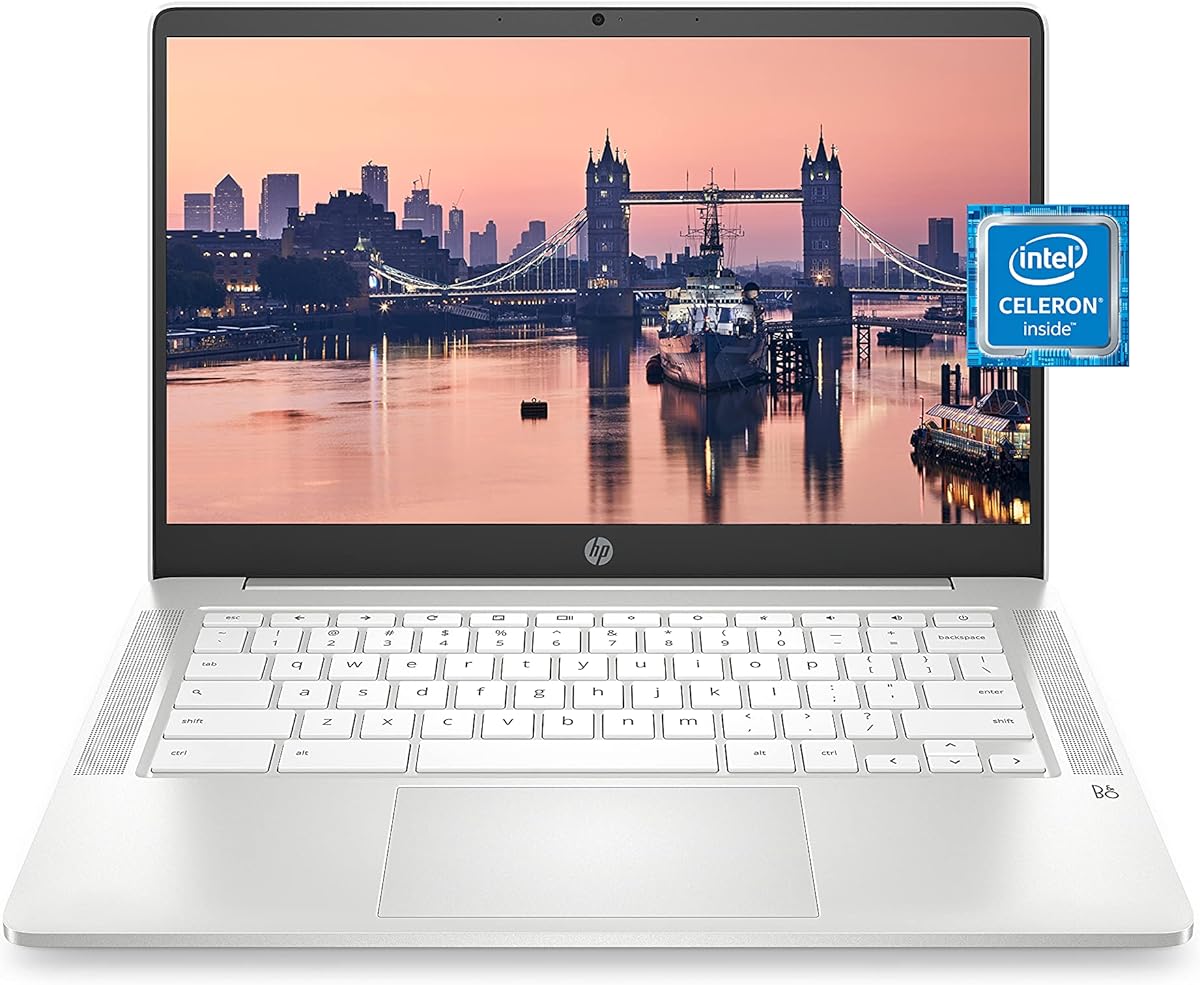
The HP Chromebook 14a-na0226nr is a well-established school-oriented option with a 4.3 rating. Its Intel Celeron N4120 quad-core processor, 4GB of memory, and 64GB eMMC storage closely resemble the other HP Chromebooks in the roundup, but this model also highlights fast charging, custom-tuned speakers, and a particularly thin, portable design.
We may earn a commission when you buy through this link, at no additional cost to you.
The stated battery life reaches up to 14 hours, and HP Fast Charge can raise the battery from zero to approximately 50% in around 45 minutes. That makes it useful for a student who needs a quick boost between classes or activities. The 14-inch anti-glare display is comfortable for browsing and documents, while the full-size keyboard and multi-touch touchpad support familiar desktop interaction.
As a 2022 model, buyers should pay attention to the current condition and warranty terms of the specific listing. The N4120 and 4GB memory are adequate for Chrome-based schoolwork, but many browser tabs, simultaneous video calls, and other heavy multitasking may expose their limits. The 1366-by-768 resolution is also less sharp than the Full HD Lenovo and 15.6-inch IPS options.
This remains a sensible recommendation for a student who values long battery life and fast charging over premium display quality. It is particularly useful for families comfortable with Chrome OS and web-based tools. Verify the included warranty, condition, and current software support details before purchase, especially when comparing it with newer Chromebook models.
HP Fast Charge is convenient when a student has a limited break or needs to add several hours of use before the end of the day. Charging speed can vary with the adapter, temperature, and battery state.
The thin chassis and long stated runtime make the laptop convenient for travel and study away from home. Stereo speakers add value for music, media lessons, and videos when headphones are not being used.
We may earn a commission when you buy through this link, at no additional cost to you.
The Dell 15.6 FHD laptop is the strongest traditional Windows option in the roundup. It has a 4.3 rating, an Intel Core 3 100U processor, 8GB of RAM, and Windows 11 Home. Compared with the 4GB configurations used by most alternatives, its higher memory capacity gives it more room for running documents, browser tabs, and learning applications together.
We may earn a commission when you buy through this link, at no additional cost to you.
The Full HD 15.6-inch display provides sharp visuals and enough workspace for research and school projects. A separate numeric keypad, roomy keys, lifted hinges, and a calculator hotkey make the laptop especially useful for math-oriented work. Dell ComfortView software is included to help reduce blue-light emissions during extended viewing, while energy-efficient batteries and Express Charge support daily productivity.
The main questions are size, weight, and storage because the supplied information does not state a capacity for the drive or a precise weight. A 15.6-inch notebook is usually less compact than a 14-inch Chromebook, and younger students may find it less comfortable to carry every day. Windows 11 Home is also less restrictive than the S Mode configuration, which means family controls become more important.
Choose the Dell when software compatibility, memory, a large sharp screen, and numeric keypad input matter more than minimal cost or maximum portability. It is a particularly sound recommendation for a student progressing into heavier school software or college preparation, provided the available storage is adequate and the device fits the student's routine.
Lifted hinges create a more natural typing angle, while the roomy keyboard supports longer writing and editing sessions. The Full HD screen also reduces the need to zoom when working with detailed text.
A one-year onsite service option can be valuable for a long-term school computer. It provides an additional route for covered hardware issues, although buyers should review the service terms and remain organized about warranty documentation.
We may earn a commission when you buy through this link, at no additional cost to you.
The HP Chromebook 14a-na0021nr delivers the basics of a cloud-first school computer in a lightweight 3.24-pound chassis. It has a 4.4 rating, an Intel Celeron N4000 processor, 4GB of RAM, and 32GB of eMMC storage. Chrome OS, an anti-glare 14-inch display, a webcam, and dual microphones cover the core needs of online learning.
We may earn a commission when you buy through this link, at no additional cost to you.
Its stated battery life of up to 13 hours and 30 minutes makes it suitable for a full school day when charging is limited. Intel UHD Graphics 600 supports video playback and everyday web graphics, while Wi-Fi 5 and Bluetooth 5.0 provide standard connectivity. The lightweight design is particularly helpful for younger students who may need to carry a computer between classes, libraries, or study areas.
This is also the oldest model identified in the roundup, dated 2021, and it has the smallest internal storage at 32GB. The N4000 processor is less capable than the N4120 used in newer HP Chromebooks, especially when handling many simultaneous tasks. Families should check the current condition, warranty coverage, automatic update status, and included accessories before considering this older configuration.
It remains a good match for a child who needs a lightweight, inexpensive computer for web-based assignments and communication. Parents looking for longer software support or more local storage may prefer one of the newer HP models. This device makes the most sense when affordability and basic Chromebook functions matter most.
At 3.24 pounds, the laptop is easy to include in a daily school bag. Its 14-inch anti-glare screen provides a practical work area without moving into a much larger notebook.
A Wide Vision HD camera and integrated dual array digital microphones support video chats and recorded lessons. A headset may still improve audio in a noisy room or when a group of students shares a space.
We may earn a commission when you buy through this link, at no additional cost to you.
The HP Essential 2026 is a modern Windows value pick with a 4.4 rating. Its Intel N150 processor has four cores, four threads, a 6MB L3 cache, and Turbo Boost capability, while 4GB of LPDDR5 memory and 128GB of UFS storage cover the basics of schoolwork. A one-year Microsoft 365 Personal subscription adds Word, Excel, PowerPoint, and cloud storage.
We may earn a commission when you buy through this link, at no additional cost to you.
The 14-inch anti-glare display uses a 1366-by-768 panel with 250-nit brightness, and its 79% screen-to-body ratio helps keep the design compact. A 720p camera with noise reduction and dual microphones supports online learning. Wi-Fi 6, Bluetooth 5.4, USB-C with DisplayPort, two USB-A ports, HDMI, an audio jack, and an SD reader provide modern and flexible connectivity.
The main limitation is 4GB of RAM, which is modest for heavy browser use and several simultaneous applications. The storage figure of 128GB is also limited for large media collections, although cloud storage can offset some of that constraint. The HD resolution is acceptable for documents and lessons but will not match the sharper Full HD displays of the Dell, Lenovo, and 15.6-inch IPS options.
This laptop is a good recommendation for a student who needs Windows, Microsoft 365, modern wireless standards, and a lightweight design. It is also a sensible first computer for typing, web research, presentations, and online classes. Choose it over a higher-priced model when the family values portability and current connectivity more than a larger memory allowance.
Wi-Fi 6 and Bluetooth 5.4 make the laptop well prepared for current networks and peripherals. The USB-C port also supports DisplayPort 1.2, allowing a compatible external monitor to expand the workspace.
The 3.24-pound, 0.71-inch-thick design is easy to carry, and the stated battery figures reach up to 11 hours for video playback. Office 365 and a dedicated Copilot key support daily assignments and organization.
We may earn a commission when you buy through this link, at no additional cost to you.
The best school laptop balances the software a student actually uses with the hardware needed to support it. A family should consider device size, operating system, memory, storage, display, battery life, connectivity, durability, and the child's learning habits rather than focusing on one specification in isolation.
Chrome OS is usually the simplest and most focused environment for a junior high student whose work happens in web-based school platforms, Google Workspace, and Android apps. It updates quickly, stores much of its data in the cloud, and includes fewer traditional desktop applications. Windows 11 offers broader compatibility with Microsoft Office, educational software, creative applications, games, and programs a school may require. The HP Stream, HP New Student Laptop, Dell, and HP Essential models provide Windows access, while the other recommendations use Chrome OS.
Memory determines how comfortably a laptop can keep several applications open at once. Four gigabytes is generally enough for a Chromebook handling a typical assignment, a set of browser tabs, and a video meeting, although heavier use can create slowdown. Eight gigabytes provides more breathing room for Windows, and 12GB is preferable for a student who keeps research tabs, documents, and communication tools open throughout the day. The 15.6-inch IPS model stands apart with 12GB, while the Dell offers 8GB.
Storage capacity determines how many assignments, photos, videos, and offline applications can live on the computer. The 32GB and 64GB Chromebooks should work well when assignments are kept online, but they offer less freedom for downloaded media or offline files. A 128GB UFS drive provides a more useful balance for Windows, while the 256GB SSD in the 15.6-inch IPS model supports heavier local use. The HP Stream's additional 1TB docking station expands capacity when the computer is used at a desk.
A 14-inch laptop is a common compromise between usable workspace and easy carrying, while a 15.6-inch model gives students more room for research, spreadsheets, and side-by-side materials. Resolution matters as much as size: the 1920-by-1080 panels on the Dell, Lenovo Chromebooks, and 15.6-inch IPS model present clearer text and images than the 1366-by-768 HD screens on several HP models. Anti-glare is useful in classrooms, while IPS wide viewing angles help when a student shares the screen.
A school laptop should survive classes, lunch, travel, and homework without repeatedly searching for an outlet. Stated figures range from 11 to 14 hours among the HP models, although real battery life depends on brightness, Wi-Fi, video calls, and workload. The HP 14a-na0226nr also offers HP Fast Charge, which the manufacturer says can take the battery from zero to 50% in approximately 45 minutes. Families should consider how the device will be used at school and whether a compact charger is available.
Remote learning makes the webcam, microphones, and wireless connection essential. Most recommendations include a 720p camera, dual microphones, and some form of noise reduction. The Lenovo Flagship and IdeaPad models add a physical webcam privacy shutter, which is useful for a child using the device outside school. Wi-Fi 6 is present in the Lenovo, HP Stream, HP New Student, and HP Essential laptops, while older or entry models use Wi-Fi 5. USB-A, USB-C, HDMI, audio, and memory-card ports determine which accessories can be connected.
A younger student is more likely to carry a laptop every day, so weight and dimensions deserve attention. Several models weigh about 3.24 pounds, while the Lenovo Flagship is listed at 2.86 pounds. A 15.6-inch laptop usually needs more bag space than a 14-inch model. Families should also consider keyboard comfort, screen size, hinge flexibility, and whether a protective sleeve or case will fit. The 15.6-inch IPS model's 180-degree hinge offers a flexible alternative to a separate tablet for some tasks.
School computers are used daily, carried in bags, and handled by growing children. Look for a sturdy case or sleeve, a comfortable keyboard, reliable port protection, and clear warranty terms. Software also matters: Chrome OS provides a relatively controlled web-centered environment, while full Windows gives more freedom and calls for stronger adult management. Some listings include extended storage warranties, one-year hardware warranties, or onsite service, but buyers should verify the exact coverage associated with the current seller and configuration.
Begin by signing in with the student's school account, installing required learning applications, and configuring browser profiles, parental controls, and device-management tools. Create clearly named folders for subjects and keep assignments organized both locally and in the school's cloud platform. Set a consistent update schedule, confirm that the charger and USB-C or power adapter are labeled, and explain which activities are appropriate for school use.
For daily care, keep food and drinks away from the keyboard, clean the screen with a soft microfiber cloth, and avoid abrasive household cleaners. Use a padded sleeve or protective case in a backpack and do not leave the laptop in a hot car. Keep ports free of dust, respect battery temperature warnings, and use the charger supplied with the system. Families should back up important school files regularly rather than treating one device as the only copy.
Establish a routine for charging, software updates, and temporary file cleanup. Review installed applications, browser extensions, account sharing, and privacy settings every few months. For a student using AI features, Copilot, or web-based assistants, establish clear rules about source checking, personal information, and appropriate use. If the laptop becomes slow, check for excessive browser tabs and pending updates before assuming the hardware has failed.
Chrome OS is often the easiest choice for a younger student whose schoolwork relies on Google Classroom, web browsers, and cloud-based documents. Windows 11 is the better option when the curriculum requires traditional desktop applications, advanced Microsoft Office features, or specific educational software. The best decision depends on what the school asks students to use rather than on the operating system's brand alone.
Four gigabytes is usually adequate for basic browsing, Google Docs, and ordinary Chromebook use, although many open tabs can make it feel slow. Eight gigabytes gives a Windows student more room for multitasking, while 12GB is a strong configuration for heavy browsing, multiple applications, and media. A junior high student who rarely opens more than a few learning tools at once may not need to pay for extra memory.
A 14-inch laptop is easier to carry and usually fits more comfortably in a smaller school bag. A 15.6-inch laptop offers a larger workspace for research, writing, and presentations, but it adds weight and bulk. Full HD resolution is valuable on either size because it produces clearer text than a basic 1366-by-768 panel.
A touchscreen can be useful for touching diagrams, navigating educational applications, and viewing content, but it is not essential for typing standard school assignments. It may consume more power and sometimes carries a higher cost. Families should consider whether school software and the student's learning style genuinely benefit from touch before prioritizing it over memory, battery life, or display quality.
A 64GB Chromebook can be sufficient for students who store assignments in the cloud and avoid large offline game or media libraries. Windows users generally benefit from at least 128GB, particularly when saving videos, presentations, and educational software. External storage or included cloud space can expand capacity, but important files should still be backed up separately.
Several models include Copilot or an AI assistant, but availability and policies vary by school. Parents should teach students to treat AI output as a draft or learning aid rather than an unquestionable answer. Students should verify facts, cite sources appropriately, avoid sharing personal information, and follow the rules established by their teacher or school.
Yes, if the student's assignments mainly use web-based tools and the device has adequate memory and storage for the number of open applications. A low-cost Chromebook can handle writing, research, video calls, presentations, and media well. A Windows laptop or a higher-memory model is preferable for specialized software, extensive file storage, or heavy multitasking.
Begin with school requirements, then install required apps, update the operating system, enable parental controls, and configure the student's account. Establish rules for communication, browsing, downloads, screen time, and AI use. A protective case, regular backups, and a charging routine help prevent the most common school-year problems.
The 15.6-inch FHD IPS student laptop is the most versatile choice in this guide, combining a sharp 1920-by-1080 display, 12GB of memory, and 256GB SSD storage. The HP 14-inch HD Chromebook is the strongest budget-oriented option for browser-based schoolwork, while the Lenovo Flagship Chromebook offers a premium Full HD touchscreen, lightweight body, and privacy-shutter webcam.
Families should prioritize the software students must use, followed by adequate memory, a comfortable keyboard, and a display that is easy to read. The HP Stream, Dell, and HP Essential laptops make sense when Windows compatibility matters. The Lenovo and HP Chromebooks are well suited to students who want a simpler, cloud-centered experience, with the 15.6-inch IPS option offering the strongest balance for a mixed workload.
Before purchasing, check the current listing, exact storage details, warranty terms, included accessories, and compatibility with the school's required software and network. Prices, promotions, configurations, and availability can change, so the best laptop is the one that meets the student's real workload while fitting comfortably within the family's budget.