
BBQHKCX R622H First Stage Gas Regulator
4.5Editor score
Two-and-a-half-million BTU capacity
Adjustable four-to-12 PSI
Three-quarter-inch NPT connections
A high flow propane regulator must deliver stable pressure when several appliances operate at once, while maintaining the correct connection, venting, and pressure range for the entire system. The right model is determined by BTU capacity, inlet and outlet pressure, fuel type, installation environment, and whether the application needs adjustable, fixed, first-stage, second-stage, or integrated regulation.
This guide compares ten propane regulators using the specifications and product information supplied for each model. It covers portable appliance assemblies, RV and camper equipment, residential two-stage kits, high-capacity first-stage regulators, and compact integral units, with particular attention to pressure, capacity, connection size, materials, and installation requirements.
Each review explains where the regulator fits best and where its design creates limitations. Ratings reflect the supplied customer feedback, while current prices and availability can change, so readers should confirm the live listing, compatibility, local code requirements, and current cost before buying.
4.5Editor score

4.5Editor score

4.6Editor score
As an Amazon Associate we earn from qualifying purchases.
The table below compares all ten regulators by their intended role, pressure configuration, capacity, and connection format, making it easier to identify the proper model for an RV, portable appliance, residential, or commercial installation.


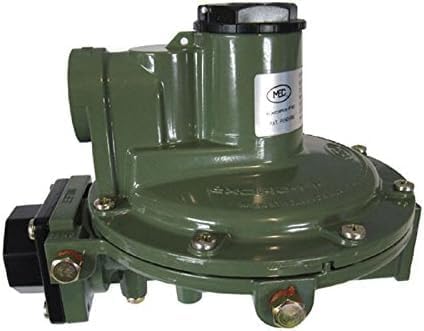


The Marshall Excelsior MEGR-6120-60 offers a broad zero-to-60 PSI adjustment range, a durable die-cast aluminum body, and a convenient two-port arrangement. Its supplied customer rating is 4.5 out of 5, making it a strong general-purpose choice for installers who need flexibility rather than a fixed-output appliance regulator. The separate gauge port is especially useful when the application requires close pressure monitoring.
We may earn a commission when you buy through this link, at no additional cost to you.
Its most important strength is adaptability. The same unit can be adjusted for different working pressures instead of being permanently tied to one appliance design. One-quarter-inch FNPT inlet and outlet connections support compact gas-line layouts, while vapor-or-liquid capability broadens its potential use in professional and specialized installations. The side outlet can be fitted with a gauge, although the gauge is not included.
The main limitation is that this is a component, not a ready-made hose-and-regulator kit. Users must provide the correct tank connector, hose, fittings, and any required downstream regulation. A 60 PSI adjustment range also does not mean the unit is automatically appropriate for every appliance; the connected equipment, fuel state, system design, and applicable safety codes all determine whether this pressure range is suitable.
This is our top overall recommendation for a flexible high-pressure regulator because it combines useful adjustment, a practical gauge port, and rugged construction in a compact format. It is particularly attractive to professionals comfortable selecting compatible fittings and checking the downstream system. RV owners seeking a complete assembly should instead consider one of the purpose-built hose regulators on this list.
The adjustable zero-to-60 PSI range allows the regulator to be matched to a broader mix of high-pressure appliances and system layouts. Verify the required operating pressure before installation and avoid using the maximum adjustment merely because it is available.
The side outlet provides a convenient location for a gauge when operators need to observe delivery pressure. The regulator does not include a gauge, so select one with the correct range and connection for the installation.
We may earn a commission when you buy through this link, at no additional cost to you.
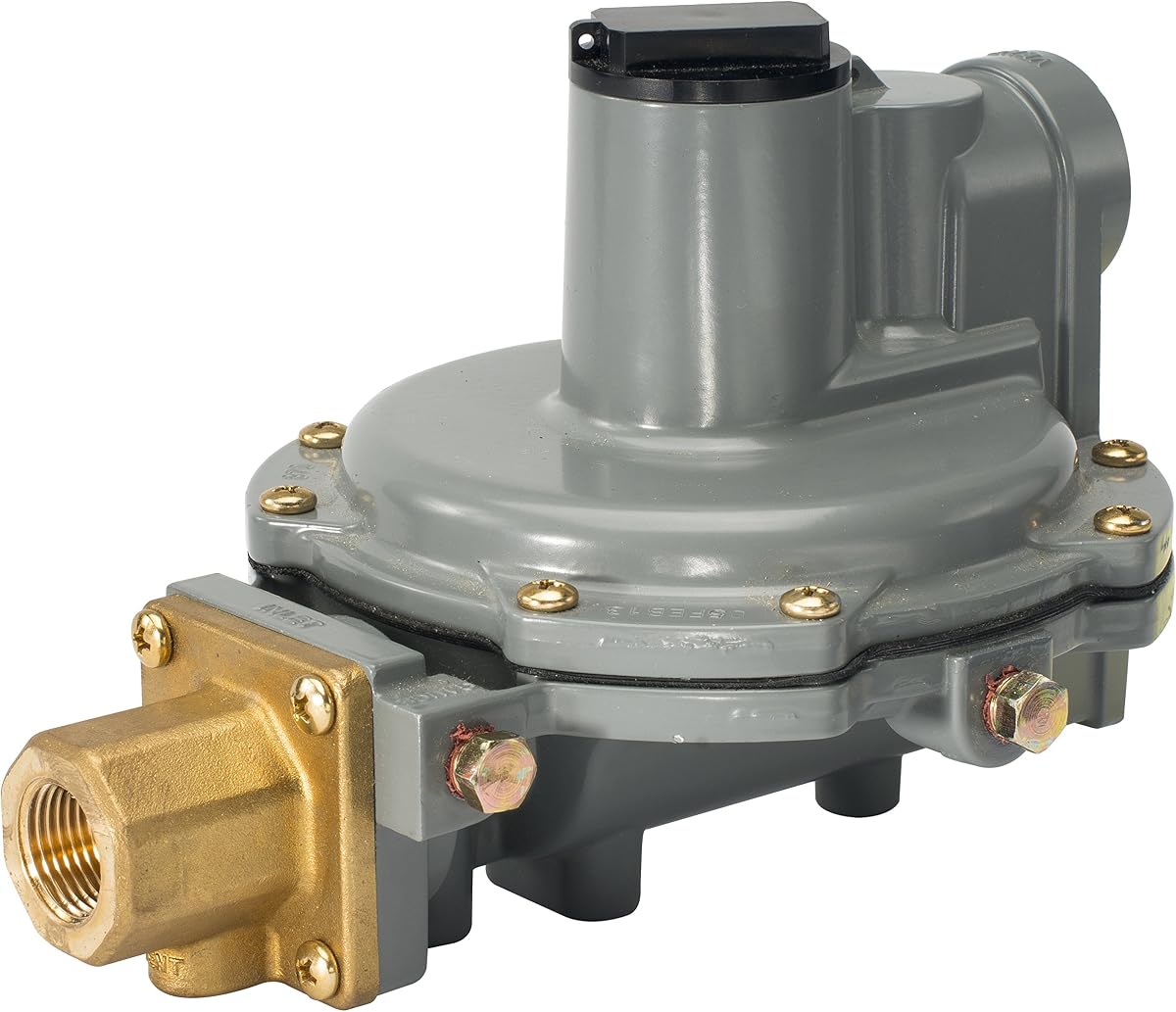
The BBQHKCX R622H is the highest-capacity option in this guide, supporting up to 2,500,000 BTU per hour while offering adjustable outlet pressure from 4 to 12 PSI. It carries a supplied rating of 4.5 out of 5 and is aimed at demanding first-stage applications involving heaters, burners, generators, commercial kitchens, and industrial equipment.
We may earn a commission when you buy through this link, at no additional cost to you.
This regulator stands apart through its three-quarter-inch NPT inlet and outlet, 7/32-inch orifice, screened vent, and internal relief valve. The factory output is listed as 8 PSI but can be adjusted, while the inlet rating reaches 250 PSI. Its compatibility with propane, natural gas, and manufactured gas within rated limits makes it adaptable for properly engineered installations rather than a narrow single-appliance solution.
The design is not a drop-in regulator for every user. It is specifically intended for a first stage in suitable two-stage systems, is not for indoor use or low-pressure systems, and the manufacturer strongly recommends professional installation. Users must also confirm the actual fuel, inlet pressure, load, vent location, and local code requirements because a high capacity rating alone does not establish safe compatibility.
Choose the R622H when the connected system genuinely needs very high flow and the installation environment is appropriate. It is a strong premium choice for commercial or industrial users with qualified installation support, as well as residential systems designed around a two-stage architecture. For ordinary RV or countertop appliance use, a smaller purpose-built assembly will usually be simpler and more appropriate.
A capacity of up to 2,500,000 BTU per hour gives the R622H the ability to serve large burners, heaters, and generator loads. Confirm that the complete piping, shutoffs, connectors, and downstream components are also appropriately sized.
As a first-stage regulator, the R622H reduces tank pressure before delivering it to a downstream second stage. This makes it a system component rather than a universal replacement, and its intended application must be understood before purchase.
We may earn a commission when you buy through this link, at no additional cost to you.
The Flame King 300,000 BTU horizontal regulator is a two-stage LP assembly intended for larger RVs, vans, trailers, campers, food trucks, and generator applications. Its supplied customer rating is 4.4 out of 5, and the key attraction is the combination of a POL tank connection, 300,000 BTU capacity, and horizontal mounting configuration.
We may earn a commission when you buy through this link, at no additional cost to you.
The dual-stage design is intended to maintain more consistent pressure as demand changes, reducing the effect of pressure surges and drops within the covered system. Heavy-duty aluminum and solid brass connections support the physical demands of mobile installation, while the POL inlet and three-eighth-inch NPT outlet connect the unit to a standard RV-style gas-line layout. The listed outlet is 11-inch water column.
Users should notice that 11-inch water column is not interchangeable with the high-PSI output of heaters or some other appliance regulators. It is a specific RV distribution pressure and must match the appliances being served. Installation also requires care around the vent, orientation, connector compatibility, and local requirements for LP systems installed in vehicles.
This is a strong fit for larger RV or mobile installations that need a dedicated two-stage regulator and enough capacity for generator or appliance loads. It is less suitable for a small portable appliance or a system designed around a different pressure range. The horizontal layout, POL connection, and 300,000 BTU rating should all be checked against the available mounting space and system design.
The two-stage arrangement is built to keep delivery pressure steadier as RV appliance demand changes. Stable output can improve appliance operation while reducing pressure fluctuations across the connected gas distribution system.
A POL inlet and three-eighth-inch NPT outlet align with common RV tank and gas-line arrangements. The compact horizontal form is intended to make orientation and mounting easier in vehicle installations where space is limited.
We may earn a commission when you buy through this link, at no additional cost to you.
The GASONE 2109-RED combines an adjustable high-pressure regulator with a four-foot hose and a type-one QCC-1 tank fitting. Its supplied rating is 4.6 out of 5, placing it among the strongest customer-rated products in the guide, while the integrated hose makes it especially convenient for portable high-pressure appliances.
We may earn a commission when you buy through this link, at no additional cost to you.
The regulator adjusts from 0 to 20 PSI using a red knob, allowing users to match delivery pressure to burners, heaters, smokers, and fryers. Brass fittings provide the connection points, the rubber hose is described as heavy duty, and the outlet uses a three-eighth-inch flare connection. The assembly is presented as ready to connect to the tank and appliance, with tool tightening recommended for a secure fit.
Its simplicity also defines its limitations. The type-one connection fits U.S. tanks using that standard but will not connect to every other cylinder or fitting arrangement, and the assembly does not replace a complete residential two-stage system. A user also needs to match the 20 PSI range to the appliance's specified operating pressure rather than assuming the knob can compensate for an incompatible design.
For portable burners, fryers, smokers, heaters, and other compatible equipment, the GASONE is an accessible and straightforward starting point. It is our budget recommendation because it combines an adjustable regulator, hose, and standard tank connector in one package. Verify the appliance connection, required pressure, hose length, and local safety expectations before connecting it.
Including a four-foot hose removes the need to separately match a regulator to a standard connector and appliance lead. This convenience makes the assembly useful for temporary outdoor setups and portable propane equipment.
The zero-to-20 PSI knob gives portable-appliance users a way to set delivery pressure for compatible equipment. The connected appliance's instructions should determine the correct setting and should take precedence over general adjustment guidance.
We may earn a commission when you buy through this link, at no additional cost to you.
The Marshall Regulator Home Propane Supply Kit is a more complete residential solution than a standalone regulator. It includes a 10 PSI high-pressure first-stage regulator, an 11-inch water column second-stage regulator, a POL-to-one-quarter-inch pigtail, a one-half-inch brass shutoff, and a one-half-inch close nipple. Its supplied customer rating is 4.6 out of 5.
We may earn a commission when you buy through this link, at no additional cost to you.
The first stage has a listed capacity of 1,000,000 BTU and uses a one-quarter-inch inlet with a one-half-inch outlet. The second-stage unit reduces the pressure to 11-inch water column and is rated for 710,000 BTU, with one-half-inch inlet and outlet connections. Together, the components provide the pressure-reduction sequence required by a properly designed two-stage residential LP system.
A kit of this type is best installed as a coordinated system rather than assembled through convenience. Pipe sizing, tank and appliance load, shutoff placement, support, vent orientation, local code, and the qualifications of the installer all matter. The individual capacities do not mean the entire home can consume any amount of propane; the weakest connected component and the system's actual demand still matter.
This kit is best for a homeowner or qualified installer replacing a complete home propane supply arrangement, especially when the existing system uses the matching one-half-inch layout. It is less appropriate for a single portable appliance or a simple RV appliance. The inclusion of both stages, pigtail, and shutoff provides a convenient starting point, but final sizing and installation should be handled by someone familiar with residential LP systems.
The package pairs high-pressure and low-pressure regulation rather than treating them as interchangeable products. That configuration is central to many residential LP systems and reduces the need to source each major component separately.
A POL pigtail, brass shutoff, and close nipple provide several of the pieces needed around the regulator assembly. Additional pipe, fittings, supports, and code-required components may still be necessary.
We may earn a commission when you buy through this link, at no additional cost to you.
The Marshall R632A-JFF combines first- and second-stage regulation in one UL-listed unit. It reduces LP tank pressure to a 9-to-13-inch water column spring range and carries a supplied rating of 4.6 out of 5. The integrated design can simplify installation by reducing the number of separate pressure-regulation connections.
We may earn a commission when you buy through this link, at no additional cost to you.
Its stated capacity is 850,000 BTU, with inlet pressure supported up to 250 psig. A POL inlet and three-quarter-inch FNPT outlet connect the regulator to common tank and line arrangements. Dual vent provisions—a first-stage inverted-flare vent and a second-stage screened vent—support the two pressure-reduction stages, although their positions and protection must be preserved during installation.
The trade-off is that an integrated regulator is less flexible than a full kit when a project needs different pipe sizes or separately selected components. It is designed for LP systems and does not become a natural-gas regulator simply because some connections appear similar. Users must also ensure that the three-quarter-inch outlet, downstream pipe, and appliance manifold are sized correctly for the intended load.
The R632A-JFF is well suited to a residential, camper, or RV LP application that calls for a single integrated two-stage unit and a 9-to-13-inch water column delivery range. It is a strong alternative to a multi-piece kit for installers who want fewer regulator connection points. Confirm the existing tank connector, outlet size, vent clearances, and required output before ordering.
Combining two stages in one body can streamline a system compared with separately mounted regulators. Fewer joints may simplify layout, but the entire unit still requires correct piping, support, and protection.
The listed 850,000 BTU capacity supports substantial residential demand when the rest of the system is properly sized. A regulator cannot compensate for undersized pipe, restrictive fittings, or an excessive combined appliance load.
We may earn a commission when you buy through this link, at no additional cost to you.
The Marshall 1622-BCF is a dedicated second-stage propane regulator with an 11-inch water column output and one-half-inch FNPT connections on both sides. The supplied information does not include a customer rating, so this review does not assign a rating. Its straight-through design and matching port sizes make it relevant to existing residential-style two-stage systems.
We may earn a commission when you buy through this link, at no additional cost to you.
As the second stage, the regulator is intended to receive the reduced pressure produced by a first-stage unit and deliver the lower pressure expected by LP appliances. Its one-half-inch inlet and outlet can simplify replacement in a pipe run already sized around those connections. A regulator alone, however, does not provide a complete tank-to-appliance system.
Users must match this regulator to the required upstream pressure, appliance manifold, pipe size, vent orientation, and local installation requirements. A second-stage unit is not a substitute for a first-stage regulator at the tank, and pairing it with an incompatible upstream device may prevent the complete system from operating as designed. The 11-inch water column output is also specific to the appliances served.
Choose the 1622-BCF when repairing or expanding a compatible two-stage LP system that already uses 11-inch water column and one-half-inch connections. It is not the right purchase for someone seeking an all-in-one RV kit, portable hose regulator, or standalone tank-pressure device. Confirming the existing components is essential because the matching port size alone does not prove full system compatibility.
This model is designed to perform one specific job within a larger two-stage arrangement. Matching the output and connection dimensions to the existing system helps prevent incompatible replacements.
The inline configuration can make pipe routing easier when the surrounding system already uses one-half-inch FNPT components. Proper support, venting, and code-compliant installation remain necessary.
We may earn a commission when you buy through this link, at no additional cost to you.
The Marshall R232A-BBF integrates two-stage LP pressure regulation into a body measuring approximately 7 by 5 by 5 inches. Its supplied rating is 4.6 out of 5, and its compact format distinguishes it from larger residential kits. The unit supports up to 550,000 BTU with an outlet spring range of 10.2 to 13 inches water column.
We may earn a commission when you buy through this link, at no additional cost to you.
A one-quarter-inch FNPT inlet and one-half-inch FNPT outlet support common propane tank and line arrangements, while the maximum inlet rating is 250 psig. The design is suited to heaters, grills, furnaces, and whole-house LP equipment when demand remains within its listed capacity. Its separate screened vent arrangements are positioned according to the stage they serve.
The main limitation is capacity. Its 550,000 BTU rating is lower than the R632A-JFF, and it should not be treated as a solution for an oversized load. The quarter-inch inlet may also require careful attention to pressure loss over long runs or restrictive fittings. Vent locations must remain unobstructed and correctly oriented, and the unit must be installed in a suitable environment.
The R232A-BBF is a good fit for a compact RV, camper, generator enclosure, or small residential installation where a full two-stage unit saves space. It works particularly well when the existing system already uses the stated connection sizes and an 11-inch water column appliance manifold. It is less appropriate for a major high-demand system that needs a larger-capacity regulator.
The integral body combines both stages without requiring two separately mounted regulators. Its compact dimensions are useful in tight RV compartments, generator enclosures, and other constrained installations.
The 550,000 BTU capacity covers a meaningful range of common heating, cooking, and generator applications. The connected load and pipe design must remain within that limit for stable operation.
We may earn a commission when you buy through this link, at no additional cost to you.
The New Fairview GR-630B provides a fixed 30 PSI outlet in a compact housing measuring 4.02 by 3.35 by 2.8 inches. It has the highest supplied customer rating in the guide at 4.7 out of 5. A 500,000 BTU capacity and one-quarter-inch FPT inlet and outlet make it a practical high-pressure option for suitable RV, camper, and trailer systems.
We may earn a commission when you buy through this link, at no additional cost to you.
The regulator is intended for equipment that requires pounds-per-square-inch pressure rather than the low inches-water-column output used by common RV appliance manifolds. Its zinc alloy housing is designed for a durable, compact installation, and the common quarter-inch connections can simplify replacement where the existing lines and kit use the same dimensions. It also supports applications involving generators and heavier LP loads.
The fixed 30 PSI output is the main consideration. It cannot serve appliances that require a different pressure or replace an 11-inch water column distribution regulator. Users should also confirm the upstream connection, whether a separate high-pressure hose and POL fitting are required, and whether the installed location provides the orientation and protection expected for the regulator.
The GR-630B is best for RV owners replacing or adding a compact 30 PSI regulator for compatible high-pressure appliances, particularly where space is tight and demand approaches but does not exceed 500,000 BTU. Its compactness, capacity, and strong customer feedback make it an attractive targeted choice. Do not select it solely for its high-pressure output without confirming that the entire connected system expects that pressure.
The small housing fits more readily into confined camper and trailer compartments than many larger regulators. Available mounting space and the regulator's orientation requirements should be checked before installation.
A fixed 30 PSI output serves compatible high-pressure appliances that operate in pounds per square inch. This is not interchangeable with low-pressure appliance manifolds that use inches water column.
We may earn a commission when you buy through this link, at no additional cost to you.
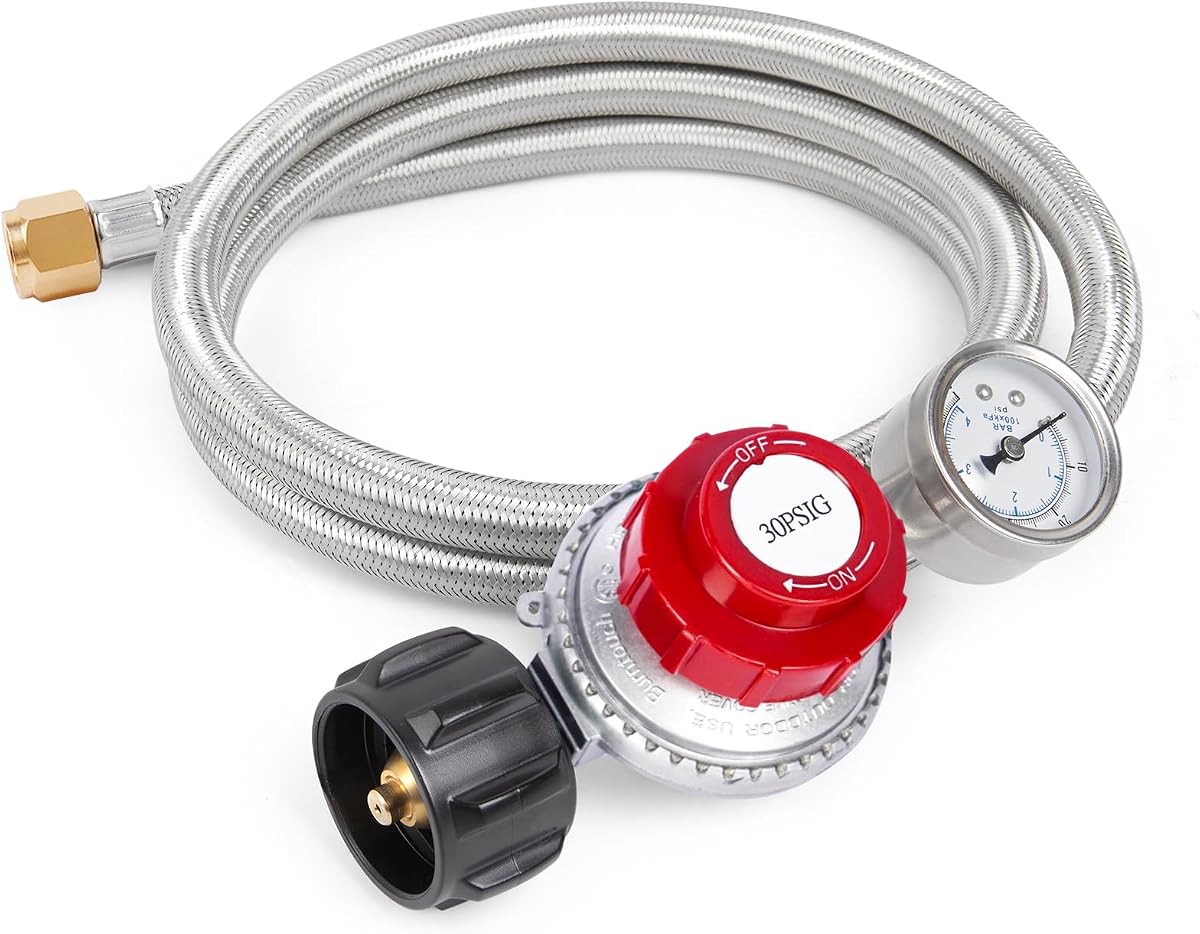
The GASPRO adjustable high-pressure regulator pairs a zero-to-30 PSI regulator with a built-in gauge and a five-foot stainless steel braided hose. Its supplied customer rating is 4.2 out of 5, the lowest among the rated products in this roundup, but the integrated monitoring feature makes it distinctive for portable equipment.
We may earn a commission when you buy through this link, at no additional cost to you.
The dial gauge gives the user direct visibility of the adjusted outlet pressure, which is useful when connecting a turkey fryer, outdoor burner, fish cooker, or fire pit. A brass type-one connector fits common U.S. propane cylinders, while the opposite end uses a three-eighth-inch female flare connection. The stainless steel braided hose is described as more resistant to chewing and more durable than rubber alternatives.
The product is specifically intended for equipment that operates at up to 30 PSI. It is not a general low-pressure RV regulator and should not be connected to an appliance manifold expecting a different range. The hose length, connector style, and appliance inlet also need to match, and outdoor placement should be selected with the same care used for any fuel connection.
This assembly is best for portable high-pressure cooking and heating equipment where the operator wants visible pressure control without assembling a separate gauge and hose. It is less appropriate for a whole-home or RV distribution system. Confirm the appliance's required pressure, check the hose and fittings, and follow the manufacturer's operating instructions when setting the regulator.
The built-in dial lets operators see the selected outlet pressure during setup and operation. It is a useful control feature, particularly for portable equipment that may be moved between different connection points.
The five-foot stainless steel braided hose is intended to withstand outdoor use and resist chewing better than conventional rubber hose. It still needs normal inspection for damage and must remain compatible with the connected appliance.
We may earn a commission when you buy through this link, at no additional cost to you.
The correct regulator depends on the entire propane system, not simply the size of the tank. Start with the required pressure and connected load, then verify connection standards, stage design, fuel type, venting, and installation conditions before making a selection.
Summary: Match the regulator output to the appliance's specified pressure, not the tank pressure or the regulator's maximum rating.
Summary: Choose a capacity that covers expected simultaneous demand, and verify that the rest of the system can also carry that load.
Summary: Identify the regulator's exact job in the system before comparing models, because stages are not interchangeable.
Summary: Match both inlet and outlet thread type, diameter, and gender to the existing equipment before ordering.
Summary: Verify the marked fuel compatibility and intended system type rather than assuming all propane-style fittings are interchangeable.
Summary: Keep every vent unobstructed, correctly oriented, and protected according to the regulator's installation instructions.
Summary: Measure the installation space and allow room for connectors, tools, ventilation, and routine service.
Summary: Inventory every required connector and hose before choosing between a standalone regulator and a complete assembly.
Begin by identifying the fuel, tank connection, required delivery pressure, and total connected load. Read the regulator instructions and the appliance manual, then confirm that the outlet pressure, connection sizes, and capacity match the intended system. A new installation or a major change to a home, commercial, or vehicle gas system should be handled by a qualified professional who can account for venting, pipe sizing, shutoffs, supports, and local requirements.
Before connecting anything, inspect the regulator, threads, hose, seals, and fittings for damage, contamination, corrosion, or deformation. Confirm that the tank valve is closed, keep ignition sources away, and follow the connector's tightening procedure. Do not force a fitting or use an adapter that creates an inappropriate sealing arrangement. Once connected, open the supply gradually, check for leakage, confirm the expected output, and set an adjustable regulator according to the appliance manufacturer's instructions.
Perform regular visual inspections of the hose, connectors, vent, mounting points, and exposed regulator body. Keep the vent clear of dirt, insects, nests, paint, and stored objects. Operate the regulator only within its specified pressure and capacity limits, and replace damaged or contaminated components rather than attempting to repair them. If a regulator has been exposed to a fire, a significant pressure event, liquid-fuel contamination, or visible deformation, take it out of service and obtain qualified guidance before reusing it.
The correct delivery pressure depends on the appliances being served. Some portable burners, fryers, heaters, and RV high-pressure devices require tens of PSI, while common residential and RV appliance manifolds usually operate around 11 inches water column. Check every connected appliance's specified input pressure and choose a regulator that can maintain the required output under the expected load. A tank's pressure and a regulator's maximum rating are not substitutes for the appliance's operating requirement.
No, although a regulator must have enough capacity for the connected load. Excessive capacity alone does not compensate for undersized pipe, restrictive fittings, poor venting, or an incompatible pressure range. The entire system should be sized together, including the tank connection, shutoffs, manifold, valves, and appliance input ratings. A smaller, correctly matched regulator can be more appropriate than an oversized model installed in an unsuitable system.
Generally, no. A first-stage regulator reduces the very high pressure leaving a tank and is normally paired with a second stage, while a second-stage regulator further reduces pressure for appliances designed for a low delivery range. Integral units combine both functions. Using the wrong stage can leave appliances without the correct pressure or disrupt the intended system design, so identify the regulator's position in the system before making a replacement.
PSI is a pressure measurement commonly used for portable burners and other high-pressure equipment, while inches water column is a much lower pressure measurement used by many RV and residential appliance manifolds. These values describe different operating ranges and are not directly interchangeable without understanding the system. Check the appliance nameplate, installation guide, or manufacturer instructions to determine which output it requires.
Compare the regulator's inlet and outlet specifications with the existing tank, hose, manifold, and appliance connections. Pay attention to thread type, diameter, and gender as well as the overall shape. For example, a POL inlet is not the same as a type-one QCC-1 fitting, and flare connections do not thread directly into NPT ports. Measure and confirm both ends of the connection path before ordering, including any pigtail or adapter that may be required.
It depends on the vehicle, the connected equipment, and the applicable installation requirements. A portable assembly is convenient for temporary or appliance-specific use, but a permanent RV installation may require a mounted regulator, fixed piping, approved connectors, correct venting, secure protection, and compliance with vehicle and local rules. Choose the regulator assembly based on how it will be mounted and operated rather than solely on its pressure adjustment.
Stop using the damaged component and isolate the supply if it is safe to do so. Replace a regulator with visible cracks, corrosion, deformation, or a failed vent, and replace hoses with cuts, bulges, fraying, corrosion, or damaged fittings. Do not use tape, sealant, or makeshift adapters to repair a pressure-bearing gas connection. When damage follows a fire, pressure event, or contamination, have the entire affected section evaluated by a qualified professional.
The vent allows the regulator's internal mechanism to release or equalize pressure as conditions change. If it is blocked by debris, paint, insulation, insects, or another object, the regulator may not operate as designed. Vents also need the correct orientation and suitable protection for the installation environment. Follow the manufacturer's instructions and applicable code requirements when positioning the regulator and any enclosure around it.
The Marshall Excelsior MEGR-6120-60 is the most flexible standalone recommendation because it offers adjustable zero-to-60 PSI output, a useful gauge port, and durable aluminum construction. The BBQHKCX R622H takes the lead for exceptionally high-capacity first-stage systems, while the GASONE 2109-RED is the practical budget choice for portable high-pressure appliances that need a regulator and hose in one package.
For RV and vehicle systems, the Flame King 300,000 BTU two-stage unit, the New Fairview GR-630B, and the compact Marshall R232A-BBF address different pressure and capacity needs. Residential installations should focus on whether the project calls for a complete two-stage kit, an integrated regulator, or a dedicated second-stage replacement. In every case, match the required output pressure, simultaneous load, connector type, vent arrangement, and available space before choosing.
Pricing, ratings, availability, and seller details can change, so check the current listing and product information at the time of purchase. Confirm compatibility with every connected appliance and follow current local installation requirements. For a home, commercial, or complex vehicle propane system, professional sizing and installation are the most important safeguards, regardless of which regulator receives the strongest overall rating.