Audio Express AXHDCAP
4.4Editor score
1080p30 USB capture
4K30 HDMI input
Driver-free USB operation
External HDMI Video Capture Cards vary widely; this guide compares 10 options for resolution, latency, loop-out, portability, and compatibility for creators.
External HDMI video capture cards turn cameras, game consoles, laptops, and other HDMI sources into streams, recordings, or webcam feeds. A useful model should balance dependable video quality, low-latency performance, easy computer recognition, dependable audio, and compatibility with the software and devices already in your setup.
We compared all ten products by their stated input and output resolutions, frame rates, interfaces, loop-out support, audio options, operating-system compatibility, and capture-software support. The list covers budget USB 2.0 designs, USB 3.0 models for everyday creation, premium cards for demanding console workflows, and camera-oriented capture adapters.
Each review explains what the card does best, where limitations matter, and which creators it suits. Specifications can vary by source device, encoding format, computer, and software configuration, so verify the required format before purchasing. Product availability and prices also change, making a fresh comparison before buying worthwhile.
4.4Editor score
4.5Editor score

4.7Editor score
The table below places all ten capture cards side by side, focusing on their stated capture formats, interfaces, loop-out functions, and intended source devices. Remember that HDMI input resolution, USB output resolution, and final recorded resolution are separate considerations.





The Rybozen 4K HDMI Video Capture Card combines broad source-device support with a useful set of creator-oriented features. Its 4.3 rating reflects a practical design for game capture, camera recording, and live production, while automatic webcam recognition helps simplify setup on compatible computers.
We may earn a commission when you buy through this link, at no additional cost to you.
Its strongest feature is the HDMI loop-out, which lets the source continue to appear on a local display while the computer receives a separate capture feed. The card accepts HDMI signals up to 4K30 and 1080p120 or 144Hz, although its USB output is listed at up to 2K30. A 3.5mm microphone headset input also makes it possible to add commentary without routing every audio source through a mixer.
There are trade-offs to consider. It is not a 4K120 or 4K144 capture solution, and the distinction between HDMI input and USB output resolution means the source's high-resolution capability does not guarantee equally high recorded files. Confirm the source's protected-content settings before expecting console footage to appear, and select the correct software format for a smooth recording.
This is a sensible pick for a streamer who wants console passthrough, a camera workflow, and commentary input without a complex setup. It is less suitable for creators requiring true 4K60 USB capture or advanced high-frame-rate output. For most standard 1080p streams, however, the combination of loop-out, plug-and-play operation, and broad device support is compelling.
The HDMI loop-out keeps a local display active while the capture feed travels to the computer. That arrangement is useful for multiplayer sessions, live demonstrations, and anyone who wants to monitor the exact source without relying entirely on software preview.
The built-in 3.5mm headset input provides a straightforward route for adding a microphone. Compatible cameras and other HDMI sources can also feed the same card, although the source should be tested with a display first to confirm its video and audio output.
We may earn a commission when you buy through this link, at no additional cost to you.
The Guermok Video Capture Card is a compact USB 3.0 option for creators who need to bring HDMI capture to different computers. It earns a 4.4 rating and supports HDMI input up to 4K30 with output at 2K30 or 1080p60, making it more versatile than a basic USB 2.0 capture stick.
We may earn a commission when you buy through this link, at no additional cost to you.
The aluminum alloy housing helps dissipate heat, while the small body and included USB 3.0-to-USB-C adapter suit mobile or mixed-computer setups. It works with Windows, macOS, Linux, and Android, and the stated software list includes OBS Studio, VLC, Zoom, PotPlayer, and major streaming platforms.
Users must remember that this is a capture device, not an HDMI display adapter. It requires compatible capture software, and decoding still introduces millisecond-level latency. The USB-C adapter's data rating and cable behavior can also limit throughput, so a direct USB 3.0 connection is preferable when higher resolutions or smoother formats are required.
The Guermok card fits travel kits, teaching setups, conferences, and temporary game-capture stations particularly well. It is a stronger choice than a basic 1080p30 model when portability and USB 3.0 headroom matter, but it falls short of the Elgato 4K X for high-frame-rate capture and advanced passthrough.
Its small aluminum housing and adapter-based USB-C connection reduce the equipment needed for a mobile capture kit. The design is easier to move between computers than a full-size desktop capture device, while USB 3.0 provides more bandwidth than a USB 2.0-only model.
MJPEG and YUY2 support different resolution combinations. Check the source and computer, connect through a genuine USB 3.0 path, and confirm detection in the chosen software before beginning an important recording.
We may earn a commission when you buy through this link, at no additional cost to you.
The Acer USB 3.0 HDMI Capture Card is designed around practical streaming features, including 4K HDMI input, 1080p60 output, HDMI loop-out, and direct microphone or headset connection. Its 4.4 rating reflects a solid general-purpose option for gamers, teachers, and video creators.
We may earn a commission when you buy through this link, at no additional cost to you.
Its use of YUY2 is noteworthy because that format generally preserves more color detail than compressed MJPEG at comparable settings. The HDMI loop-out permits local monitoring, and the 3.5mm input streamlines commentary. Plug-and-play operation, no external power, and stated support for OBS, XSplit, VLC, and major platforms reduce setup friction.
The primary limitation is that the card is centered on 1080p60 rather than advanced high-frame-rate output. The stated 4K capability applies to HDMI input, not a promise of 4K60 recording through USB. High-refresh console play and demanding post-production workflows remain outside the design target of this model.
Choose the Acer card when local preview, microphone access, and accurate 1080p color matter more than 4K120 or 4K144 capture. It is particularly well suited to classroom demonstrations, commentary-led streams, and ordinary gameplay broadcasts.
YUY2 avoids the heavy compression associated with many webcam-style formats and is often favored for cleaner desktop capture. The trade-off is greater data transfer, making the USB 3.0 connection and suitable source settings important.
A compatible headset or microphone can plug directly into the capture card. This is useful for gaming commentary, online lessons, and vlogging, where keeping voice synchronized with the captured source is a central requirement.
We may earn a commission when you buy through this link, at no additional cost to you.
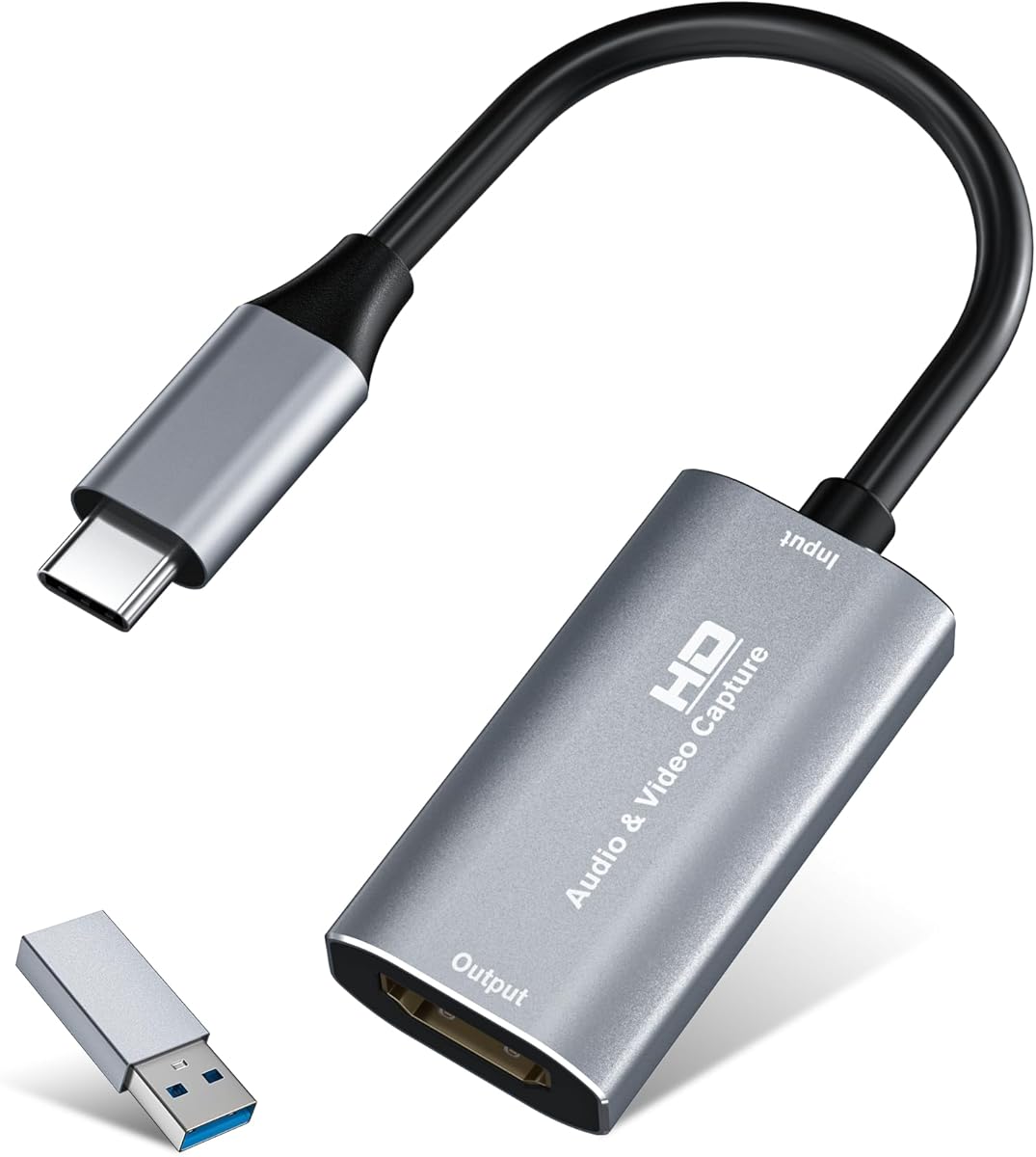
The Silver USB-C Capture Card combines 4K30 HDMI input with 2K30 or 1080p60 recording in a compact USB 3.0 design. Its 4.4 rating and broad source compatibility make it an appealing option for streamers who want a straightforward card without premium passthrough features.
We may earn a commission when you buy through this link, at no additional cost to you.
The device supports Windows, macOS, Linux, and Android, along with OBS, Zoom, VLC, and Twitch Studio. PS4, PS5, Xbox, Switch, cameras, and TV boxes are also listed as compatible sources. Its aluminum shell, driver-free operation, and included USB 3.0-to-USB-C adapter make it suitable for portable or temporary production kits.
The stated 2K30 and 1080p60 recording options should be considered alongside the 4K30 input rating. High-speed sources do not automatically produce 4K files, and tablet use depends on OTG support. There is also no stated HDMI loop-out, so the model is best for software preview rather than an independent local display feed.
This pick serves budget-conscious creators who need reliable 1080p recording from common consoles and cameras. Choose it for flexible platform support and simple setup, but look toward a loop-out model when local monitoring is important or toward a premium device for high-frame-rate capture.
The supported source list spans current and older consoles, cameras, TV boxes, and computers. This makes the card useful for creators who switch between gameplay, demonstrations, and live events without carrying separate capture hardware.
A tablet must support the appropriate OTG function and host application. Testing the HDMI source with a monitor first helps confirm that video and audio are available before troubleshooting the capture connection.
We may earn a commission when you buy through this link, at no additional cost to you.
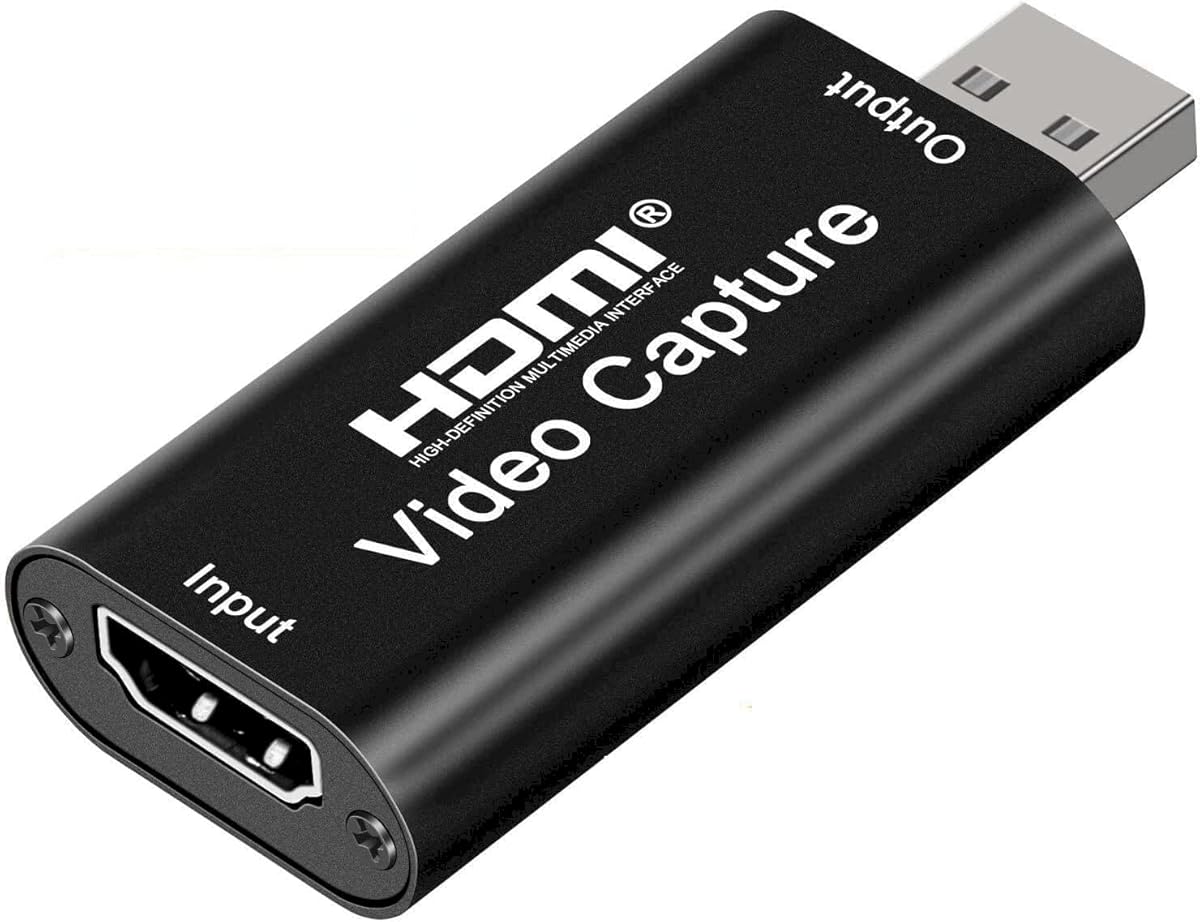
The Audio Express AXHDCAP is an approachable USB 2.0 capture card for 1080p30 workflows. Its 4.4 rating reflects a straightforward product aimed at users who want to begin recording console footage, camera video, meetings, teaching sessions, or basic streams.
We may earn a commission when you buy through this link, at no additional cost to you.
It accepts HDMI input at up to 4K30 and uses USB 2.0 for output at up to 1920 by 1080 and 30 frames per second, with stereo sound. The card needs no separate drivers or external power and is stated to work with Windows, macOS, and Linux through software such as OBS, Zoom, VLC, Twitch, and YouTube tools.
USB 2.0 is the central constraint. It cannot match the bandwidth of USB 3.0 models, and the device does not support higher recording speeds or formats beyond the stated 1080p30 limit. It also does not add an HDMI output to a computer, so buyers with a different goal should choose another product.
The AXHDCAP is best for straightforward 1080p capture on a limited budget. It makes sense for a first streaming attempt, a classroom recording, or a lightweight camera-to-computer project where 30-frame-per-second 1080p output is sufficient and high refresh rates are unnecessary.
The no-driver, no-power design reduces the number of possible setup problems. Users only need a suitable HDMI source, a working USB port, and capture software such as OBS to begin creating a basic recording.
The source can provide a 4K30 signal, but the USB 2.0 output path records at up to 1080p30. This is not a defect; it is the practical limit of the interface and should guide expectations before installation.
We may earn a commission when you buy through this link, at no additional cost to you.
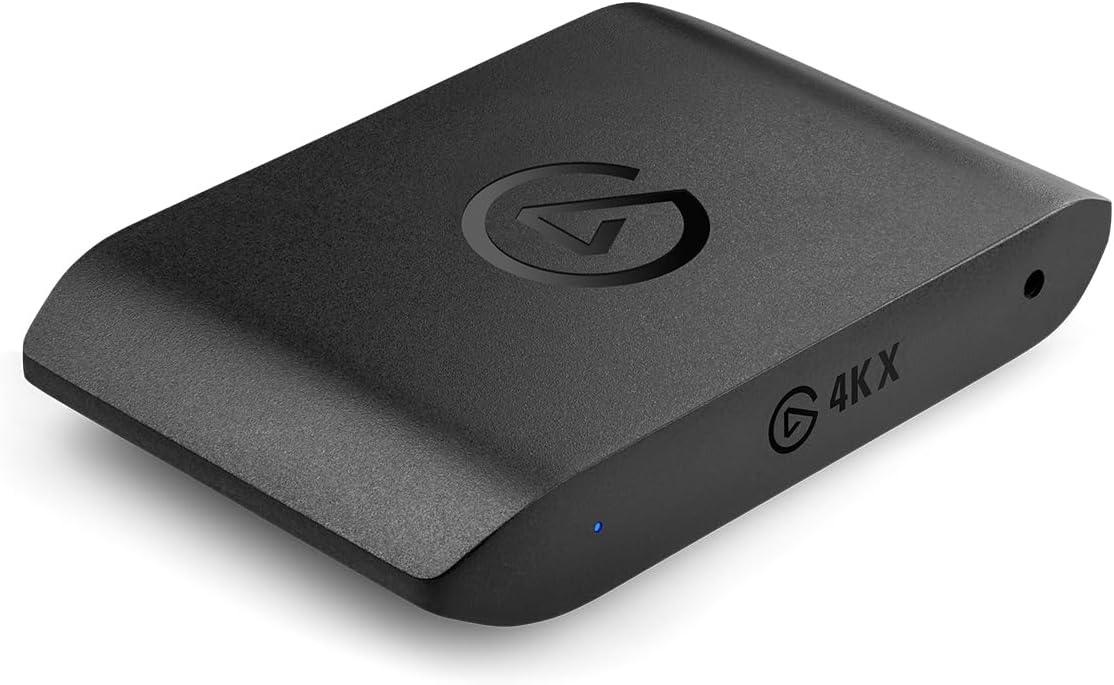
The Elgato 4K X stands apart in this guide through its combination of 4K144 capture, HDMI 2.1 input and output, 1080p240 passthrough, and variable refresh rate support. Its 4.5 rating aligns with a high-performance product aimed at console streamers, competitive players, and advanced capture workflows.
We may earn a commission when you buy through this link, at no additional cost to you.
The card's headline strength is bandwidth. Capture can reach 4K at 144 frames per second, while its HDMI 2.1 passthrough can document high frame rates up to 240fps at 1080p. VRR passthrough also helps maintain a smooth local display experience, and ultra-low latency is supported through USB 3.2 Gen 2.
None of these advanced features work independently of the source, display, software, and computer. A console or camera must provide a compatible signal, and 4K144 recording demands substantial storage, processing, and encoding capability. Creators should also distinguish 4K capture from 1080p240 passthrough because they serve different production purposes.
The Elgato 4K X is the most compelling all-around option for a creator who wants modern console support, high-frame-rate recording, and reliable passthrough in one device. It is particularly attractive to players producing fast-moving competitive content, provided the rest of the production system can sustain the selected format.
HDMI 2.1 input and output provide the bandwidth needed for high-frame-rate console workflows. That makes the card more future-oriented than models limited to 4K30 or 1080p60, provided the source device can actually output the required signal.
The local passthrough path supports a separate high-quality gaming display while the computer captures the stream. VRR passthrough is particularly useful for reducing tearing in compatible games and display arrangements.
We may earn a commission when you buy through this link, at no additional cost to you.
The UGREEN 2K Capture Card offers a balanced mix of 4K30 input, 2K30 output, and 1080p60 capture over USB 3.0. Its 4.5 rating and inclusion of both USB-A and USB-C interfaces make it a flexible choice for desktop, laptop, and tablet production.
We may earn a commission when you buy through this link, at no additional cost to you.
The card supports MJPEG and YUY2 workflows, giving creators a choice between efficient compression and greater color fidelity. Its built-in cable uses tinned copper conductors, while the aluminum housing aids heat dissipation and shielding. Broad compatibility extends to OBS, XSplit, PotPlayer, QuickTime Player, and multiple console and headset ecosystems.
The stated output ceiling of 2K30 means it is not designed for premium 4K60 recording. There is also no HDMI loop-out in the supplied information, so users wanting a separate local display path should choose the UGREEN loop-out model instead. Protected console content can prevent capture unless HDCP is disabled or the source allows it.
The UGREEN 2K model is a strong general-purpose pick for creators who value interface flexibility, 1080p60 performance, and broad software support. It works especially well for mixed-device streaming kits where USB-C convenience matters alongside dependable USB 3.0 performance.
Supporting both USB-A and USB-C makes the card easier to deploy across older and newer computers. A 5 Gbps USB 3.0 connection can also provide the headroom needed for smoother 1080p60 workflows than a USB 2.0-only design.
MJPEG can reduce processing demands, while YUY2 is useful when color quality is a priority. The better choice depends on the source, computer, software, and recording resolution, so test the intended combination before a critical session.
We may earn a commission when you buy through this link, at no additional cost to you.
The UGREEN 4K Loop-Out capture card is built for creators who need a local HDMI display path alongside 2K30 or 1080p60 recording. Its 4.4 rating reflects a useful combination of passthrough, broad source support, and flexible USB connectivity.
We may earn a commission when you buy through this link, at no additional cost to you.
The HDMI input and loop-out both accept 4K30, allowing a local monitor to show the source while the computer receives the capture feed. USB 3.0 Type-A and Type-C connections, MJPEG and YUY2 formats, and an aluminum enclosure support modern production needs. OBS, XSplit, PotPlayer, and other common tools are listed as compatible.
The important distinction is that 4K is supported for input and loop-out, not for captured files. USB output tops out at 2K30 or 1080p60. The product also does not support iPhone acquisition because iPhones do not provide the required UVC capture function, and Fire TV Stick compatibility is excluded.
This is a well-rounded option for console streamers and presenters who want to monitor a local display without giving up 1080p60 recording. It sits between basic 1080p sticks and premium high-frame-rate cards, offering the passthrough feature many creators need at a more modest specification level.
The 4K30 loop-out is useful when gameplay or presentation content must remain visible on a nearby screen during capture. It also allows the computer preview to be managed separately, which can simplify multi-screen production arrangements.
A 4K loop-out does not mean 4K recording. The usable USB capture output is 2K30 or 1080p60, so choose the card for passthrough and smooth standard-definition output rather than premium 4K files.
We may earn a commission when you buy through this link, at no additional cost to you.
The Magewell USB Capture HDMI Gen 2 combines a 4.7 rating with features aimed at dependable, long-running capture work. It supports HDMI input up to 2048 by 1080 at 60fps in 4:4:4 and operates as a single-channel video and audio capture device.
We may earn a commission when you buy through this link, at no additional cost to you.
Its FPGA-based processing handles cropping, scaling, de-interlacing, color conversion, and image flipping on the device. That offloads work from the host computer and can improve stability in demanding sessions. The card also offers thermal protection, status LEDs, a three-year limited warranty, and a utility for EDID, resolution, frame-rate, firmware, log, and diagnostic management.
The design is less suited to creators chasing 4K capture, as its stated maximum is 1080p60. It also handles only one HDMI source channel. Those limitations are less significant for conference, broadcast, training, and professional live-production environments where reliability and centralized control matter more than maximum resolution.
The Magewell card is the premium choice for organizations and serious creators who need stable continuous operation, platform flexibility, and deeper configuration options. Its 4.7 rating is the highest among these selections, reflecting a mature feature set aimed at professional integration rather than quick hobbyist use.
FPGA-based transformations reduce the amount of work placed on the host CPU. For live production, control rooms, and repeated recording sessions, this can contribute to steadier performance and a more predictable workflow.
Thermal protection, status indicators, diagnostic logging, and a three-year limited warranty support dependable deployment. The model is especially attractive when the capture card will remain connected for long periods rather than serve only occasional recording needs.
We may earn a commission when you buy through this link, at no additional cost to you.
The VIXLW Cam Link 4K is designed to bring HDMI cameras, action cameras, microscopes, and other specialist sources into a computer as a webcam or capture feed. Its 4.2 rating reflects a camera-focused product with 4K60 MJPEG, 1080p120, and plug-and-play operation.
We may earn a commission when you buy through this link, at no additional cost to you.
The stated format combinations include MJPEG at 3840 by 2160 and 60fps, NV12 and YUY2 at 4K30, and XRGB at 2560 by 1440 and 30fps. That flexibility makes the card useful for live presentations, online teaching, electronics repair, microscope observation, streaming, and conventional game-console capture.
Support is listed for Windows and macOS rather than the broader Linux, Android, and tablet ecosystem found on several alternatives. The available resolution also depends strongly on the selected format. A camera must output a clean HDMI signal at the desired resolution and frame rate, and the computer must sustain the selected data rate and encode the result without excessive dropped frames.
The VIXLW is best for a creator who already owns a capable camera and wants to use it as a webcam or high-resolution source. It is less appropriate for broad console passthrough setups because no HDMI loop-out is stated, but it can be a strong option for controlled studio and instructional workflows.
Connecting a DSLR, camcorder, action camera, microscope, or other HDMI source creates a path to OBS, Zoom, and other computer-based tools. This approach can improve visual consistency compared with a basic built-in computer camera.
MJPEG enables the stated 4K60 path, while NV12 and YUY2 support 4K30. Before recording, confirm that the camera can output the selected format and that the computer and capture application can process it consistently.
We may earn a commission when you buy through this link, at no additional cost to you.
The right external capture card depends less on the largest advertised resolution and more on matching input bandwidth, USB output, passthrough, audio, and source-device requirements. Use the following factors to identify the card that fits your production setup.
Choose a card whose input and output specifications both match your source and final file.
Match the USB connection to the desired resolution and verify that the adapter preserves USB 3.0 speed.
Prioritize loop-out when the source must remain visible on another screen; otherwise, a one-way card may meet your needs.
Check both embedded HDMI audio and microphone needs; a headset socket can be as important as video resolution.
Verify operating-system support and software compatibility before buying, especially for Linux, Android, or tablet workflows.
For interactive use, separate local monitoring latency from software streaming delay and use loop-out when available.
Confirm source recording permissions and HDCP behavior before relying on a card for console or protected-content capture.
Balance portability with thermal stability, included adapters, and the length of the recording session.
Begin by confirming that the source device outputs the intended resolution, frame rate, color format, and audio. Connect the source to the capture card's HDMI input, connect the card's USB connector to the computer, and open the capture application. If the card includes an adapter, confirm that the negotiated connection is USB 3.0 rather than USB 2.0 when the selected format requires more bandwidth.
Add the capture source in the chosen software and select the matching input format, such as 1080p60, 2K30, or 4K30. For console sources, verify that protected content is permitted and that the expected audio is present. If a local monitor is needed, connect the capture card's HDMI loop-out to that display. A loop-out shows the source directly and does not depend on the software preview, so it can remain useful even if a streaming application is disconnected.
Run a short test recording before the important session. Check synchronization between image and sound, watch for dropped frames, confirm microphone levels, and inspect the saved file rather than judging only the live preview. Store recordings on a drive with sufficient speed and free space, keep the card connected to a stable USB port, and avoid blocking its housing. For long sessions, allow ventilation and use the shortest dependable connection, especially when capturing at demanding resolutions.
No. The source must output a compatible 4K signal, the card must accept that format, and the USB output must support the intended recording resolution. A card may accept 4K30 HDMI input while recording only 1080p60 through USB. Confirm all three parts of the chain before purchasing or recording.
HDMI loop-out passes the source signal to a local display while the computer receives a separate USB feed. USB capture is the digital signal used by recording and streaming software. Loop-out is useful for monitoring gameplay or presentations, but it does not increase the card's capture resolution.
Usually not. Protected content may appear as a blank screen, distorted image, or no signal. Some consoles allow recording when protected content is disabled, but streaming services can remain protected regardless of the capture card. Check the source device's settings and content policies before a production.
USB 2.0 is generally sufficient for 1080p30 capture and can work for basic applications. It lacks the bandwidth of USB 3.0, so 1080p60, 2K, high-frame-rate capture, and some 4K workflows may be constrained. A USB 3.0 card provides a more useful margin for modern computers.
Many cards on the market use a standard UVC-compatible connection and require no separate driver installation. You still need compatible capture software, and some models require an application restart after audio setup. Check the product instructions and test the device before an important broadcast.
No. These cards primarily capture an HDMI input and send a USB video feed to a computer. They do not add an HDMI display output to a computer that lacks one. That is a different device category, sometimes called an HDMI capture or display adapter.
Common causes include an unsupported source format, protected content, an insufficient USB connection, an adapter negotiating USB 2.0, or a mismatch between software settings and the source. Test the HDMI source with a monitor, reconnect the card, verify the input format, and try a direct USB 3.0 port or a different cable before troubleshooting more deeply.
Yes, if the camera or instrument provides a clean HDMI output and the capture card is recognized by the computer. A card such as the VIXLW Cam Link 4K is designed specifically for camera, microscope, and precision-work workflows. Set the camera to the desired output format before selecting the same resolution in the capture application.
The Elgato 4K X is the strongest all-around choice for modern console creators because it combines 4K144 capture, HDMI 2.1, VRR passthrough, and low-latency USB operation. The Magewell USB Capture HDMI Gen 2 is the premium selection for dependable professional use, particularly when continuous operation, diagnostics, and on-device processing matter. The Audio Express AXHDCAP offers the most straightforward entry point for creators who only need 1080p30.
For most intermediate users, the UGREEN models and Acer card deserve close attention because they balance 1080p60 output with broad software and device support. A loop-out is essential for local console monitoring, whereas a compact one-way card may be better for travel, teaching, or a camera feeding a computer. Match the card to the source, the final output format, and the software rather than focusing on a single headline resolution.
Before buying, verify the current specifications, source permissions, and computer compatibility. Prices, product availability, and software support can change, so check current listings and recent product details. A careful format check is just as important as the final purchase decision and can prevent disappointing recordings later.