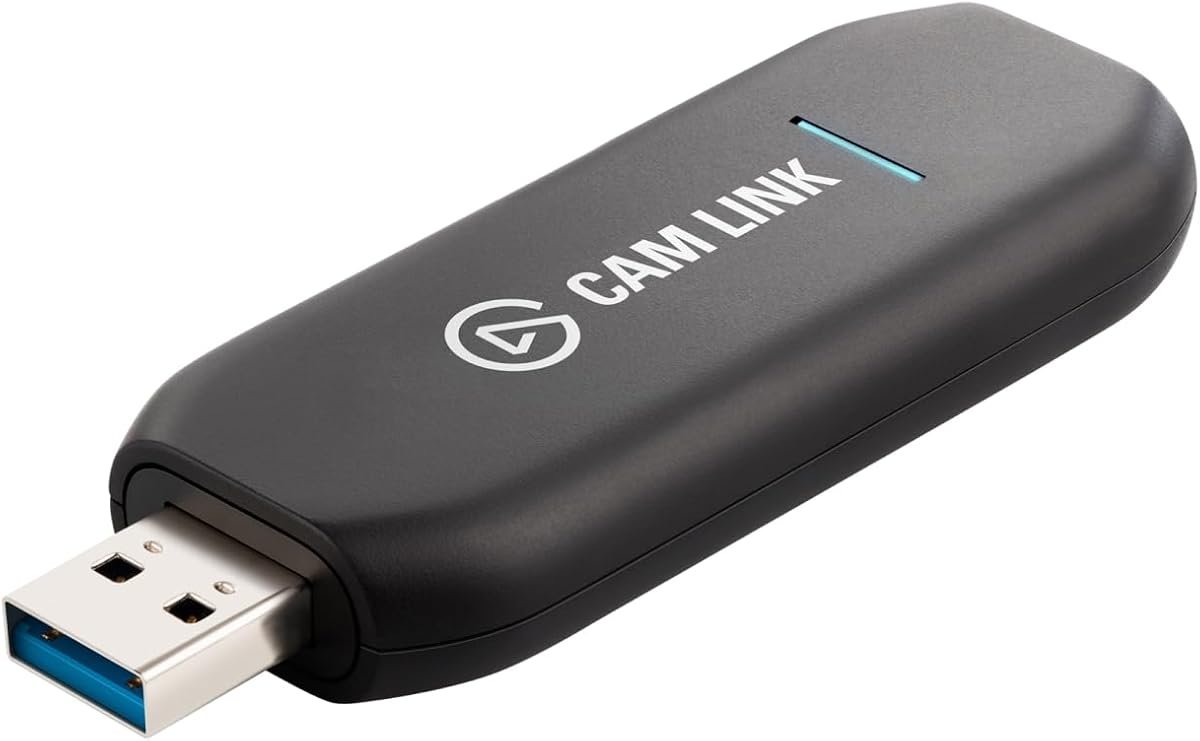
Elgato Cam Link 4K
4.6Editor score
Up to 4K60 capture
Broad camera compatibility
Ultra-low latency operation
Real-time iPad monitoring
This Elgato Capture Card guide compares 10 options for resolution, latency, connectivity, passthrough, streaming software, and value.
An Elgato capture card can transform a console, camera, or iPad into a streaming and recording source, but the best model depends on your source, computer, and output needs. Important distinctions include external versus internal installation, maximum capture resolution, HDR support, passthrough behavior, portability, and the number of PCs in your workflow.
This guide compares ten capture cards using the supplied specifications, compatibility details, ratings, and feature descriptions. It covers advanced HDMI 2.1 options, portable devices for cameras and consoles, PCIe cards for installed systems, and the basic external products that remain useful for straightforward 1080p workflows.
Each review explains who benefits most from that particular product and where it fits less comfortably. The top selections represent the strongest overall, budget, and premium choices, while prices and availability can change, so readers should verify current listings and confirm their source device is compatible before buying.
4.6Editor score
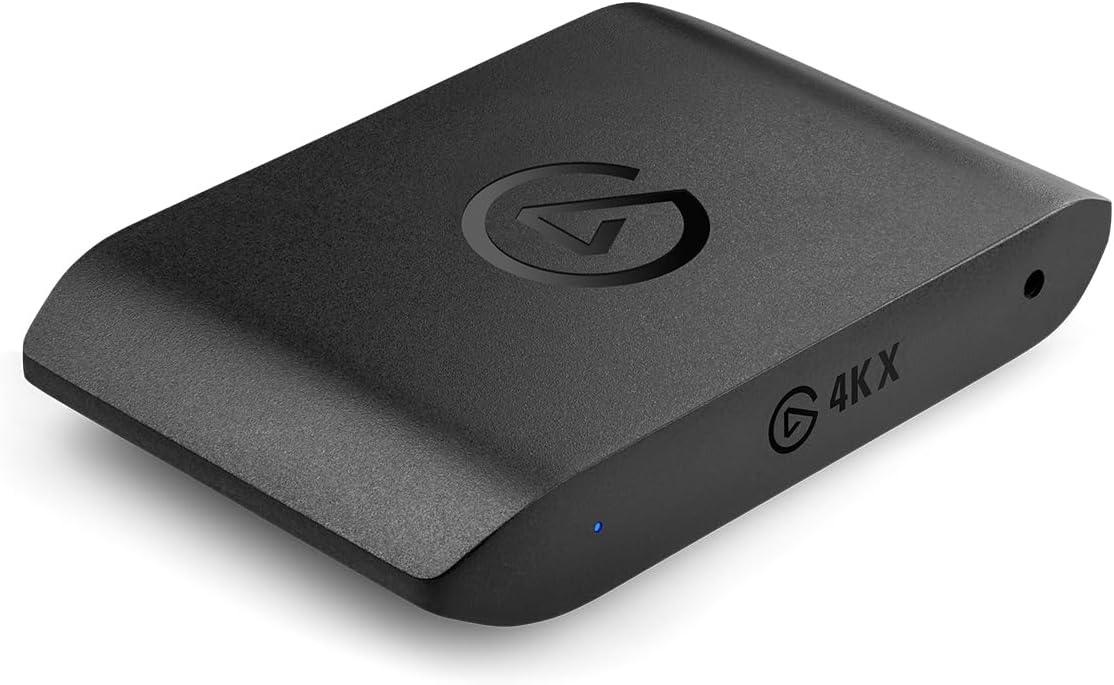
4.5Editor score

4.5Editor score
The comparison below highlights the major differences among external, portable, internal, camera-focused, and general-purpose capture devices. Pay particular attention to source compatibility, capture resolution, passthrough features, and whether the card is designed for one-PC or multi-PC production systems.


The Elgato 4K X Capture Card is the most complete high-performance option in this guide, carrying a 4.5 rating and a feature set aimed at modern consoles, competitive gaming, and serious streaming. Its standout specification is 4K capture at up to 144 frames per second with ultra-low latency, allowing creators to preserve fast motion without settling for a standard frame rate.
We may earn a commission when you buy through this link, at no additional cost to you.
HDMI 2.1 input and output form the core of its appeal. The device can record high-frame-rate 1080p footage at up to 240fps, while VRR passthrough supports smooth variable-refresh-rate gameplay on compatible displays. Compatibility with OBS, Streamlabs, Twitch Studio, Restream, Zoom, and Teams also makes it a practical choice for broadcasts, meetings, online presentations, and direct-to-platform streaming.
There are trade-offs to consider. The exceptional 4K144 and 240fps capabilities depend on a suitably capable source, computer, software configuration, storage setup, and output workflow. Users who only need ordinary 1080p60 capture may not use every headline feature, while USB 3.2 Gen 2 demands a suitably equipped host system. Nevertheless, these are limitations of the intended high-end use case rather than signs of weak performance.
This is the strongest recommendation for a creator who wants one external card to handle advanced console capture, high-speed gameplay, and modern display workflows. It suits players who care about smooth passthrough and creators who want room to grow beyond 1080p60. For a simpler 1080p-only setup, a more basic external model may be more rational, but the 4K X offers the broadest combination of speed and flexibility in the lineup.
Capturing at 4K144 or 240fps in 1080p gives fast-action footage greater detail and gives editors more options for motion-focused playback. The low-latency design also helps synchronize gameplay, broadcast output, and viewer experience.
HDMI 2.1 and VRR passthrough make this card particularly relevant to current consoles and displays. Compatible systems can retain modern visual features while a separate computer records or broadcasts the session.
We may earn a commission when you buy through this link, at no additional cost to you.
The Elgato Cam Link 4K is an unusually useful budget choice because it does more than serve one gaming niche. It has a 4.6 rating and turns a compatible DSLR or mirrorless camera into a computer webcam while also accepting camcorders, action cameras, and an iPhone. That versatility makes it one of the most accessible options for streamers, educators, remote presenters, and mobile creators.
We may earn a commission when you buy through this link, at no additional cost to you.
Its headline capability is streaming and recording at 1080p60 or as high as 4K60 when used with a compatible camera and the latest Cam Link 4K model. Ultra-low latency keeps the audio and video synchronized, which is essential when the camera is being used as a live webcam. USB-C monitoring on an iPad expands its creative role by letting users preview shots in real time from the field.
The important qualification is compatibility. The Cam Link does not create 4K60 by itself; the camera must support the required output, and the computer must be able to process it. Its USB-A 3.0 interface and specified Windows 10/11 and macOS support should also be checked against the intended setup. This model is centered on bringing a camera into a computer rather than passing a console signal to a television.
Choose the Cam Link 4K if you already own a capable camera or want to improve the image quality of online meetings and broadcasts without buying a complete broadcast camera. It is our budget pick because the combination of device flexibility, strong rating, and potential 4K60 capture is difficult to ignore. It is less appropriate for gamers who need HDMI passthrough from a console.
A compatible DSLR or mirrorless camera can provide a more polished webcam image than a typical built-in computer camera. Cam Link 4K makes that existing equipment usable through a familiar computer connection.
The ability to preview real-time shots on an iPad through USB-C gives mobile creators a practical field-monitoring workflow. It also reinforces the product's value beyond a permanent desktop setup.
We may earn a commission when you buy through this link, at no additional cost to you.
The Elgato Game Capture Neo is built around portability, with hardware described as being about the size of a smartphone. Its focus is immediately understandable: connect a console, screen, and computer or iPad, then capture a 1080p60 stream while passing a 4K60 HDR picture to the display. That makes it a compelling companion for compact streaming setups and mobile production.
We may earn a commission when you buy through this link, at no additional cost to you.
The setup process is presented as a simple three-part workflow involving the source, display, and computer or iPad. It supports PlayStation, Xbox, Switch, and other compatible consoles, removing much of the guesswork associated with gaming capture hardware. Users can retain a 4K60 HDR console output on their display without lowering the console's resolution, while recording or streaming the action in Full HD.
Its main limitation is that 4K60 is a passthrough feature rather than the card's stated capture resolution. Creators who require 4K60 files will need a different model. In addition, the supplied listing does not include a numeric customer rating, so there is no user-rating history to use as evidence of long-term reliability. The compact design may also mean fewer controls and less room for unusual connection arrangements than a full-size capture device.
The Neo is ideal for a streamer who travels, uses an iPad, or wants a dedicated capture unit that does not fill a desk. It also makes sense for console players who value 4K60 HDR viewing and only need 1080p60 recordings. For high-resolution editing or professional multi-PC broadcasting, the 4K X or 4K Pro is the stronger direction, but the Neo delivers one of the clearest cases for capture hardware built around compactness.
The smartphone-sized design makes the Neo much easier to move between locations than a full-size desktop card. It suits creators who need a dedicated, recognizable capture path for consoles and portable screens.
The 4K60 HDR passthrough lets a compatible console continue feeding a modern display its intended signal. The captured stream remains 1080p60, making the device well suited to straightforward Full HD streaming.
We may earn a commission when you buy through this link, at no additional cost to you.
The Elgato 4K Pro Internal is the premium choice for a creator willing to build a serious production PC. With a 4.5 rating, it can capture at up to 4K60 while supporting 8K60 passthrough, meaning a compatible high-end console and display can retain an exceptionally high-resolution image even while the action is recorded.
We may earn a commission when you buy through this link, at no additional cost to you.
Its HDMI 2.1 input and output provide the bandwidth required for demanding console workflows. High-frame-rate 1080p recording can reach 240fps, and VRR passthrough supports smooth variable-refresh-rate gaming. The card works with OBS, Streamlabs, Twitch Studio, Restream, Zoom, Teams, and major streaming destinations, allowing the same hardware to serve entertainment and communication workflows.
The primary drawback is physical. As an internal card, it must be installed in a compatible desktop system, and it cannot be moved easily between a laptop and a studio PC. Buyers also need to make sure their motherboard and graphics environment support the card and that their selected application is configured for its capabilities. Although the advertised resolution figures are impressive, real workflows still depend on source, software, storage, and encoding support.
The 4K Pro Internal is the right recommendation for a dedicated gaming PC or professional production system where clean installation, multi-PC capability, and high-end passthrough matter. It is especially persuasive for creators making console content at 4K60 who want their gaming display connected through the capture card. If a compact, tool-free external setup is the priority, choose the 4K X or Neo instead.
Installing the card inside the production PC creates a stable, tidy connection between the console, capture system, and display. It is a natural fit for creators who leave one machine dedicated to recording and broadcasting.
4K60 capture, 8K60 passthrough, and 240fps 1080p recording cover several distinct production needs. The card can preserve demanding console output for viewing while creating a high-quality file for editing or distribution.
We may earn a commission when you buy through this link, at no additional cost to you.
The renewed Elgato 4K Pro Internal provides access to the same broad high-end feature set as the new version, including 4K60 capture, 8K60 passthrough, and 240fps 1080p recording. Its 3.4 rating is lower than those of the new model and most other products in the guide, so the condition and history of the individual unit deserve careful attention.
We may earn a commission when you buy through this link, at no additional cost to you.
The renewed listing specifically emphasizes HDR10 capture support, VRR passthrough, ultra-low latency, and compatibility with both single-Windows-PC and dual-PC streaming configurations. These are meaningful advantages for creators who need a high-end signal path but may find the new version beyond their budget. The HDMI 2.1 connectivity also supports demanding console and display combinations.
Renewed electronics naturally carry more uncertainty than factory-new products. Users should review the seller's return terms, warranty information, condition description, and the specific details of any signs of wear. A lower customer rating can reflect the variability of renewed inventory rather than a difference in the underlying platform, but it should not be ignored. Internal installation also makes the device less convenient for mobile creators.
This renewed 4K Pro is most convincing for a knowledgeable buyer who understands the exact system requirements and can accept the risks associated with refurbished or returned hardware. It may make sense for a second streaming machine, a dual-PC setup, or a value-oriented home studio. For the least uncertainty, choose the new 4K Pro; for the lowest-cost access to its most advanced features, the renewed listing deserves careful consideration.
The renewed model retains the headline capabilities that make the 4K Pro relevant to modern console creators. It can be attractive when the primary objective is to obtain 4K60 capture and 8K60 passthrough without paying for a new unit.
A renewed purchase should be evaluated as much on seller policy and physical condition as on specifications. Clear return coverage and an accurate condition description are particularly important for an internal installation product.
We may earn a commission when you buy through this link, at no additional cost to you.
The Elgato HD60 S remains a straightforward option for creators who want dependable 1080p60 console capture without a complex feature checklist. Its 4.6 rating is among the strongest in this guide, while true passthrough and ultra-low-latency Instant Gameview support a comfortable play-and-capture experience on supported systems.
We may earn a commission when you buy through this link, at no additional cost to you.
The card records at 1080p60 and supports unlimited capture to a hard drive, making it suitable for long sessions rather than short clips. Flashback recording allows a creator to save important moments retroactively, which is valuable for fast-paced gameplay. Its compatibility with PC and Mac software, including OBS, Twitch, and YouTube workflows, also broadens the audience beyond Windows-only gaming PCs.
The defining limitation is 1080p60. Modern creator setups may want 4K capture, HDR recording, or higher-refresh passthrough, and those features are outside the HD60 S specification set. The supplied title also does not promise the same modern port and passthrough features found in the 4K X, HD60 S+, or 4K Pro. Nevertheless, for a clean 1080p stream, those advanced features may add little practical value.
The HD60 S is a strong fit for a first streaming setup, a console-focused creator, or a user who prioritizes simple operation and a well-regarded feature set. It is especially attractive when 1080p60 is the final delivery format. Users producing high-resolution tutorial files or seeking 4K HDR passthrough should move up to the HD60 S+ or 4K X instead.
True passthrough and Instant Gameview keep the card practical for players who expect little disruption between the console and display. That makes it well suited to both live broadcasts and recorded gameplay.
Unlimited capture supports creators who want to save extended gameplay rather than continuously restart short recordings. Flashback recording then helps recover standout moments without recreating them.
We may earn a commission when you buy through this link, at no additional cost to you.
The original Elgato Game Capture HD60 is the most accessible entry point in this roundup, designed for PlayStation 4, Xbox One, and Xbox 360 gameplay. It has a 4.5 rating and focuses on the essential job: recording Xbox, PlayStation, or Nintendo gameplay at a maximum of 1080p and 60 frames per second to a PC or Mac.
We may earn a commission when you buy through this link, at no additional cost to you.
The feature set remains recognizable and useful. Unlimited capture allows long recording sessions, flashback recording can save recent moments, and one-click sharing supports publication to YouTube, Facebook, and Twitter. Stream Command can add a webcam and overlays, while the built-in live commentary feature helps creators narrate their gameplay without adding another complete production suite to the workflow.
Its age is visible in the supported hardware and feature set. There is no supplied indication of 4K capture, HDR10, modern HDMI 2.1 bandwidth, or the advanced high-frame-rate capabilities found in newer models. The device also needs a compatible computer and software environment, and old listings can carry uncertainty over software support, cable standards, and current system requirements. It should be considered for its stated 1080p60 purpose rather than expected to match a contemporary 4K workflow.
This model makes sense for a beginner, a collector maintaining an older console setup, or a user who wants a straightforward 1080p60 recorder without paying for advanced passthrough. Its included USB and HDMI cables also reduce the number of extra accessories required. Anyone owning a current high-output console and aiming for modern streaming quality should choose the HD60 S or 4K X instead.
The HD60 concentrates on recording, sharing, and commentary rather than advanced signal handling. That makes the setup approachable for a first console-capture project.
The product includes both a USB cable and an HDMI cable, reducing the chance that a new user will need to identify additional connection leads immediately. Compatible capture software remains the central requirement.
We may earn a commission when you buy through this link, at no additional cost to you.
The Elgato HD60 S+ is an attractive middle ground for modern console creators who want high-quality passthrough and HDR awareness without moving directly to the most advanced HDMI 2.1 products. It carries a 4.6 rating and can capture at 1080p60 HDR10 while passing through 4K60 HDR10 with zero lag to a compatible display.
We may earn a commission when you buy through this link, at no additional cost to you.
The distinction between capture and passthrough is important. A creator can view games in their intended 4K60 HDR10 format, yet the supplied description specifies 1080p60 HDR10 for recorded or streamed content. That makes the card ideal when 1080p60 is the intended distribution format and high-end console graphics matter primarily for the creator's own display. Instant Gameview supports an ultra-low-latency workflow.
Unlimited recording and flashback capture make it practical for long gaming sessions and fast-moving events. Compatibility spans PS5, PS4 Pro, Xbox Series X/S, and Xbox One X, and it works with PC and Mac environments, including OBS. The drawback is that advanced alternatives in this guide offer higher capture resolutions, faster frame rates, and HDMI 2.1. A user creating native 4K files or capturing 4K144 may outgrow the HD60 S+.
The HD60 S+ best suits console owners who want modern HDR viewing, dependable Full HD capture, and a straightforward external workflow. It is also a sensible option for a creator who does not need the 4K X's extreme frame-rate capture. Choose it when 4K60 HDR passthrough adds real value but 1080p60 is sufficient for the published video.
The 4K60 HDR10 zero-lag passthrough lets compatible console output reach a modern television without reducing the intended display format. This preserves the visual experience while the creator records a Full HD stream.
The mix of 1080p60 HDR10 capture, broad console compatibility, and flashback recording covers the common requirements of a live gaming creator. It remains simpler and less specialized than the newest high-frame-rate models.
We may earn a commission when you buy through this link, at no additional cost to you.
The Elgato HD60 Pro combines a 4.6 rating with a simple 1080p60 capture and passthrough feature set. As a PCIe card, it targets creators with a compatible desktop who want a stable internal connection instead of a USB capture box. True passthrough and low-latency technology help the gaming experience remain responsive.
We may earn a commission when you buy through this link, at no additional cost to you.
Its practical tools remain focused on the essentials. Users can record unlimited footage directly to a hard drive and use flashback recording to save important moments. The stated console compatibility includes PS5, PS4, Xbox Series X/S, and Xbox One, giving the card relevance to both current and previous-generation systems within the supplied title.
The limitation is resolution. It does not match the 4K X or 4K Pro for 4K capture, high-frame-rate 1080p, HDMI 2.1, HDR10 capture, or 8K60 passthrough. It also requires an open desktop environment and compatible PCIe slot, making it unsuitable for a laptop or a portable arrangement. A user seeking only 1080p60 can still get a dependable result, but should confirm that the older feature set aligns with current software and display requirements.
The HD60 Pro is a good choice for a fixed gaming PC where 1080p60 output is sufficient and the user values low latency over future-facing specifications. It may also serve an established streaming setup that already has the necessary internal connection and software. For compactness, portability, or 4K output, choose an external model such as the 4K X or Cam Link 4K instead.
A PCIe installation can be a natural fit for a dedicated streaming desktop with a tidy back-panel cable arrangement. The card is intended to remain part of the production system rather than travel between locations.
The HD60 Pro prioritizes a clear combination of capture, passthrough, and flashback recording. It is most attractive to users who do not need 4K files or advanced high-refresh passthrough.
We may earn a commission when you buy through this link, at no additional cost to you.
The Rybozen HDMI Capture Card is the only non-Elgato product in this guide, included to provide a straightforward low-cost alternative. It has a 4.3 rating and supports capture up to 1080p, while accepting a wide range of HDMI sources including cameras, Xbox and PlayStation systems, PCs, set-top boxes, and other devices.
We may earn a commission when you buy through this link, at no additional cost to you.
Its input specifications distinguish signal acceptance from captured output. Video input supports 4K30 and 4K60 signals as well as 1080p120 and 1080p144, but output is limited to 2K30. It should therefore not be mistaken for a device that creates 4K files. Plug-and-play operation, automatic webcam identification, and USB 3.0 connectivity simplify setup, although the supplied description also notes that the unit may require external power.
The HDMI loop-out allows the source picture to continue playing live, and optional 3.5mm microphone input supports commentary. A headset microphone that terminates in a 3.5mm TRS connection can therefore be added to the workflow. Compatibility with Windows, Mac, OBS, Twitch, YouTube, Facebook, Twitter, PotPlayer, and VLC broadens its potential uses, but the 2K30 output and unspecified passthrough latency make it less attractive for latency-sensitive gaming.
This card suits a beginner who needs inexpensive HDMI capture for tutorials, demonstrations, or a simple stream. It may also serve as a backup device. It is not the right recommendation for competitive gaming, modern 4K production, or an Elgato-centered setup, and users should consider those limits carefully. Within the broader category, it shows why input acceptance, output resolution, and device identity should never be treated as interchangeable specifications.
Automatic device recognition and broad source support make the Rybozen easy to introduce to a simple streaming or presentation setup. It provides the essential function of moving an HDMI source into a computer.
The device can accept high-resolution and high-refresh input, yet its output is restricted to 2K30. Creators should choose it for 1080p workflows rather than assuming that every accepted input format will be captured at the same quality.
We may earn a commission when you buy through this link, at no additional cost to you.
A useful capture card should match the source, computer, display, and delivery resolution without introducing unnecessary complexity. Consider installation style, supported resolutions, passthrough behavior, latency, software, and the number of computers involved before choosing a model.
External capture cards connect through USB and are easier to move, test, and use with laptops or compact systems. They are also more convenient for users who do not want to open a desktop case. Internal PCIe cards suit dedicated production computers, provide a fixed installation, and can fit professional multi-PC workflows. The trade-off is portability: a PCIe card cannot be moved as easily between a home system and a streaming laptop.
Capture resolution determines the quality of the file that can be recorded, while passthrough resolution determines what the gaming display receives. These are separate values. A card may pass through 4K60 while capturing at 1080p60, or capture 4K60 while the console sends a higher-resolution signal to the display. Frame rate also matters for motion: 4K144, 4K60, and 1080p60 serve different creative priorities.
Passthrough lets the creator use the original source while still viewing it in a capture application. Low latency is particularly important for games because excessive delay makes local play feel disconnected from the display. VRR passthrough can also be valuable on compatible systems, supporting smooth variable-refresh-rate presentation. Users should check whether their console, capture card, display, and software all support the advertised features.
A camera-focused capture device should be judged by the outputs your camera can provide. The Cam Link 4K can accept compatible DSLRs, mirrorless cameras, camcorders, action cameras, and an iPhone, while 4K60 capture depends on compatible hardware. Console cards should support the selected console generation and required signal format. A broad label such as HDMI or USB 3.0 alone does not guarantee that every resolution, refresh rate, or audio path will work.
HDR10 support can improve both captured color information and the quality of console passthrough. High-refresh capture at 4K144 or 240fps in 1080p is useful for slow-motion editing and detailed motion review, but it places greater demands on the source, computer, software, storage, and encoding pipeline. These features are worth paying attention to when creating modern console content, but they are not necessary for every webcam, tutorial, or live presentation.
The capture card should be recognized cleanly by the chosen production software. The Elgato 4K X, 4K Pro, and renewed 4K Pro are listed as compatible with OBS, Streamlabs, Twitch Studio, Restream, Zoom, Teams, and major streaming platforms. Other cards may support OBS and common platforms through standard USB behavior. Verify operating-system compatibility, driver requirements, and application support before committing to a device.
A single-PC setup uses one computer for gaming, capturing, and broadcasting. A dual-PC setup separates the gaming machine from the recording or streaming machine and usually requires a way to send the video signal between them. The renewed 4K Pro explicitly notes compatibility with both single-Windows-PC and dual-PC configurations. Creators should identify their production architecture before choosing, because installation and connection needs differ substantially.
Unlimited capture, flashback recording, Instant Gameview, webcam overlays, and built-in commentary can improve a creator's workflow. The original HD60 emphasizes commentary and social sharing, while the HD60 S and HD60 S+ include flashback and unlimited capture. The Game Capture Neo is small enough to travel, and the Cam Link 4K can even preview shots on an iPad. Consider not only the capture quality but also the tools that save time after the recording.
Begin by identifying the source device, confirming its output resolution and refresh rate, and checking that the capture card supports that format. Connect the source to the card using the appropriate HDMI or camera connection, then connect the card's passthrough output to the display when required. For an external card, attach the USB cable to a computer that meets the interface requirements; for an internal card, install it in a compatible PCIe slot while the system is powered off.
Install or update the capture application, select the Elgato device as the video source, and begin with a standard resolution supported by the source and computer. In OBS or another compatible program, check the capture format, frame rate, color settings, and audio device. Test a short recording before starting a long stream, and use the flashback or Instant Gameview features where appropriate to catch important moments.
Care for the hardware by keeping connectors clean, avoiding pressure on the cable ends, and providing ventilation around external devices. Do not repeatedly reinsert connectors while recording, and use the proper shutdown process for the computer and capture application. For renewed or portable units, inspect the enclosure and leads for wear, store the device in a protective case, and verify the seller's return terms before the return window closes.
The Elgato 4K X is a strong all-around choice because it combines 4K144 capture, HDMI 2.1, high-frame-rate 1080p recording, and VRR passthrough. The 4K Pro Internal offers similar premium capabilities but requires installation in a compatible PC. If 1080p60 capture is sufficient, the HD60 S provides a more straightforward setup.
Yes. The Cam Link 4K is designed to connect a compatible DSLR or mirrorless camera to a computer as a webcam. It can also work with a camcorder, action camera, or iPhone. The source camera must support a compatible output, and achieving 4K60 requires compatible camera hardware and the appropriate Cam Link configuration.
No. Passthrough and capture resolution are separate specifications. The HD60 S+ can pass through 4K60 HDR10 while recording at 1080p60 HDR10, while the 4K X and 4K Pro provide higher capture resolutions. Always read both values when comparing a card.
An external card connects through USB and is easy to move between systems. It is convenient for laptops and compact production arrangements. An internal card installs in a desktop's PCIe slot and suits a dedicated production computer, particularly when a multi-PC workflow or a permanent, tidy connection is desired.
Not necessarily. HDR10 becomes most valuable when you want to preserve high dynamic range in captured content or pass an HDR signal to a compatible display. For a straightforward 1080p60 stream to standard platforms, it may add little. The feature is more important for high-fidelity console viewing, detailed recordings, and HDR-capable editing workflows.
It can be, because the renewed listing retains 4K60 capture, 8K60 passthrough, HDR10 capture, and dual-PC compatibility. The trade-off is the variability that comes with renewed electronics and the lower 3.4 rating. Check the physical condition, warranty, return policy, and seller description before making a decision.
The Cam Link 4K and Game Capture Neo explicitly support iPad-oriented workflows, including real-time preview with the Cam Link and capture or setup involving an iPad with the Neo. Compatibility depends on the app, connection, source, and operating-system support. Confirm the required iPad and software versions before purchasing.
Confirm that the console can output the intended resolution and refresh rate, the capture card supports that format, and the computer and application can process it. Storage speed, encoding settings, display capabilities, and HDR support also matter. Begin with a short test recording to confirm the entire pipeline before attempting a long session.
The Elgato 4K X is the strongest all-round recommendation in this guide, combining 4K144 capture, HDMI 2.1, high-frame-rate recording, VRR passthrough, and broad application support. The Cam Link 4K is the value-focused selection for compatible cameras and portable creative workflows, while the 4K Pro Internal is the premium choice for a dedicated, multi-PC production computer.
Start with the output you actually need. Choose the Cam Link for camera-based content, the Neo for a compact console-and-iPad arrangement, and the HD60 S or original HD60 for 1080p60 capture without unnecessary complexity. Move toward the 4K X, HD60 S+, or 4K Pro when console passthrough, HDR, higher resolution, or extreme frame rates are central to the project.
Finally, verify current prices, availability, operating-system support, and the precise capabilities of the source device before purchasing. Prices and product conditions can change, especially for renewed units, and a capture card is only as capable as the complete console, camera, computer, display, software, and cable chain surrounding it.