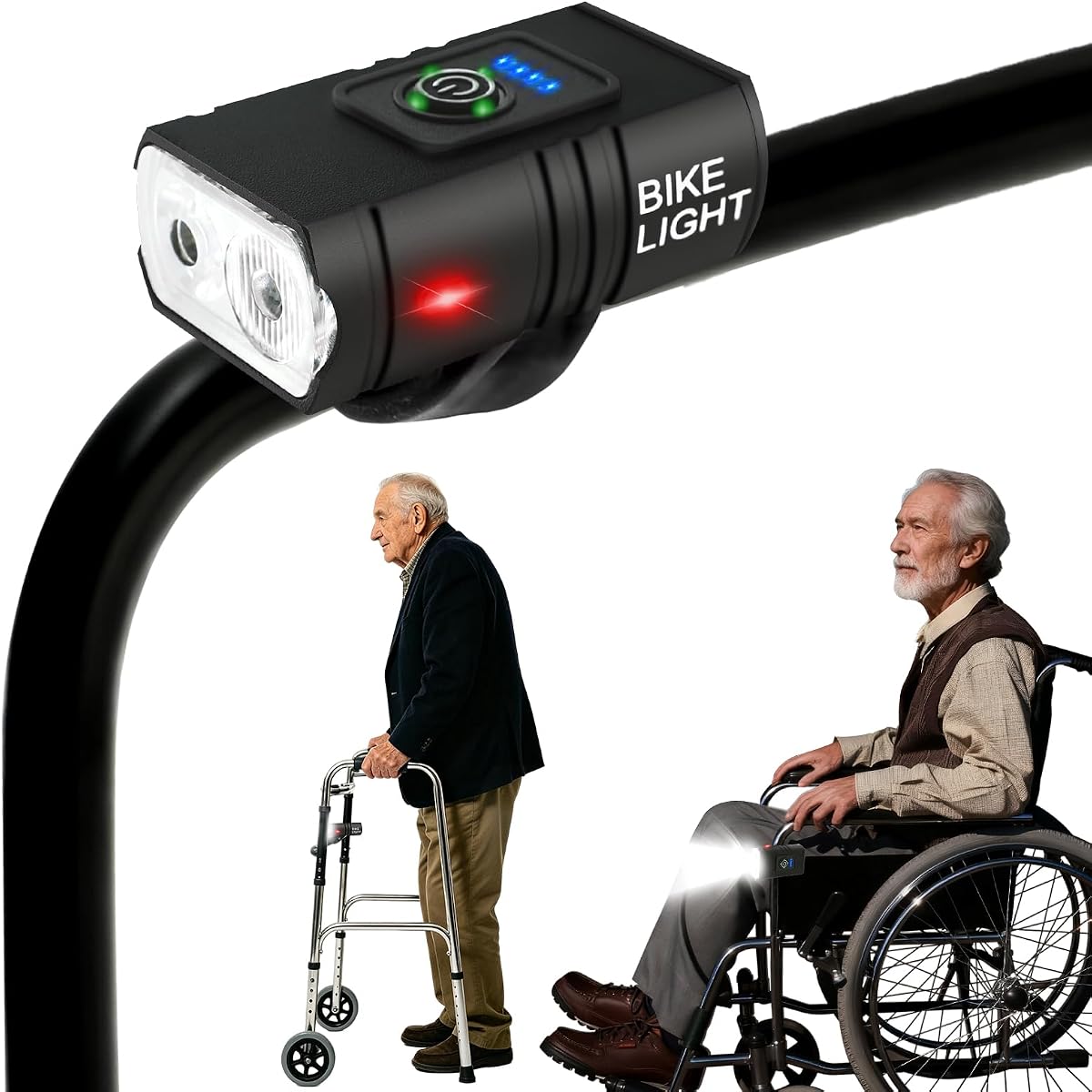
Light for a Walker and Wheelchair
4.2Editor score
Works with wheelchairs and walkers
Adjustable high-brightness lighting
Rugged aluminum alloy housing
Discover the best Electric Wheelchair LED Lights, comparing brightness, connector compatibility, charging ports, adjustability, mounting, and nighttime safety.
Electric wheelchair LED lights improve visibility after dark by illuminating paths, ramps, cracks, doorways, and other obstacles. A useful light should fit the wheelchair properly, produce a controlled beam, and remain easy to operate without distracting the rider. The best models also add practical charging or emergency functions.
We compared all ten products using the information supplied about brightness, lighting controls, connector design, angle adjustment, housing materials, charging capabilities, and intended uses. The list covers dedicated electric wheelchair lights, XLR controller-connected lamps, and a versatile option designed for wheelchairs and walkers.
Each pick below shows which feature set makes it most useful, from simple high-brightness illumination to USB charging, multiple beam modes, and emergency signaling. Ratings and product details reflect the supplied listings, while current prices and availability may change over time, so confirm the latest offer before purchasing.
4.2Editor score

4.1Editor score

4.6Editor score
This side-by-side comparison highlights the main differences in connector style, lighting controls, charging options, housing, and mounting approach, helping readers find the most suitable light for their mobility equipment.


This electric wheelchair light combines ordinary path illumination with an integrated SOS flash mode, giving it a broader safety role than a standard headlight. It carries a 4.1 rating and is the strongest all-around choice for riders who want illumination, emergency visibility, and device charging in one accessory.
We may earn a commission when you buy through this link, at no additional cost to you.
Its most distinctive features are the reversible 3-pin XLR plug and three-level vertical angle adjustment. Rotating the connector helps accommodate controllers with different port directions, while the adjustable head can point toward sidewalks, ramps, doorways, or lower obstacles. USB and Type-C outputs reduce the need to carry separate adapters when a phone, tablet, or navigation device needs power.
The trade-off is that this is not the simplest lamp in the group. It includes more electronics and controls than a basic fixed light, and users still need to confirm that their chair has a compatible charging or accessory port. The reversible plug also requires loosening the neck screw to rotate and reinstall the connector, so the setup deserves a little care.
Choose this option when visibility, emergency signaling, and charging are likely to matter during the same outings. It is especially attractive for travel, appointments after dark, and longer rides where a dead phone or poor roadside visibility could create a problem. For users who need all three functions, it offers the most balanced feature set.
The high-brightness beam is intended to illuminate sidewalks, parking areas, ramps, and other low-light spaces. SOS flashing adds a conspicuous alert mode for emergencies, roadside stops, and other situations where a steady beam alone may not attract enough attention.
USB and Type-C outputs make the light more useful during long outings. Riders can charge compatible mobile devices from the wheelchair power source, provided the chair, adapter, and output are used according to their respective instructions.
We may earn a commission when you buy through this link, at no additional cost to you.
This compact LED lamp is a practical upgrade for power wheelchairs that use a compatible 3-pin XLR connection. Its 4.6 rating reflects a well-received balance of adjustable lighting, simple installation, and an added USB output, making it a strong candidate for regular nighttime mobility.
We may earn a commission when you buy through this link, at no additional cost to you.
The optical lens and high-efficiency LED chips are designed to produce soft, even illumination rather than a harsh, glaring beam. That matters when a rider is looking toward uneven pavement, cracks, small obstacles, or a doorway. The adjustable head can also be directed to suit different seating positions, reducing the need to lean or reach.
A major convenience is the integrated USB output, which can supply emergency power to a smartphone, tablet, or GPS device. However, this is a function-focused light rather than a comprehensive emergency system: it does not offer the dedicated SOS flashing behavior found in the number-one pick. The connection must also match the wheelchair's 3-pin XLR interface.
This is a good choice for users who prioritize dependable path illumination, a compact form, and useful charging without extra wiring. It suits shopping trips, park visits, and routine travel after dark. Buyers seeking a stronger emergency signal may prefer the SOS model, while those wanting multiple output formats should examine the dual-port alternatives.
The lens is intended to spread light across the path while reducing harsh glare. This can make cracks and surface changes easier to see while keeping the visual experience more comfortable during longer evening outings.
The lightweight housing is easy to store in a wheelchair bag or backpack. Its simple XLR-style setup also supports quick removal, which can be convenient when the light is not needed or the chair is being transported.
We may earn a commission when you buy through this link, at no additional cost to you.
This XLR headlight is aimed at users who want a straightforward, high-brightness light with easy operation. It earns a 4.6 rating and combines an adjustable lamp head, a compact controller, and a standard USB charging port in a package designed for most power wheelchair models.
We may earn a commission when you buy through this link, at no additional cost to you.
Its broad light range is intended to improve visibility during nighttime travel. Because the angle can be adjusted, users can aim the head toward the path, a doorway, or a lower section of pavement. A push button provides hands-free illumination, reducing the need to manipulate a small switch while the chair is moving.
The thick EBS plastic housing is described as hard and resistant to damage, while the compact controller and light are easy to store. USB charging adds convenience for routine top-ups, but this model has a more focused purpose than the number-one pick because it lacks a dedicated emergency flash pattern and offers only the listed USB charging interface.
This is a sensible pick for regular power wheelchair users who prioritize brightness, simple controls, and adjustable visibility. It should appeal to anyone who wants a dedicated headlight without paying attention to a larger collection of secondary features. Confirm the connector and controller arrangement before ordering.
The high-brightness LEDs are designed to cover a broad area ahead of the chair. This wider reach can help riders identify road conditions, pavement edges, and nearby obstacles when visibility would otherwise be limited.
A push button activates the lighting without requiring repeated interaction with the lamp head. The separate controller format keeps the main operation understandable for riders and caregivers.
We may earn a commission when you buy through this link, at no additional cost to you.
This compact night-light controller is a functional option for motorized wheelchairs with a compatible 3-pin XLR interface. Its 4.0 rating places it among the more traditionally rated picks, but the broad beam, adjustable angle, and simple installation make it relevant to riders seeking dependable visibility.
We may earn a commission when you buy through this link, at no additional cost to you.
The wide illumination range is designed to reveal the route ahead in dark conditions. Users can adjust the lamp angle to suit uneven outdoor paths and differing light positions. The standard USB charging port provides an additional convenience, while the compact dimensions make the unit easier to carry than a large lamp assembly.
Its thick EBS plastic construction is intended to resist everyday wear and damage, although the product data does not provide a specific weather-resistance rating. Like many lights in this category, it lacks a dedicated SOS mode. The USB port should also not be assumed to offer the same output format as models with separate USB-A and Type-C ports.
This pick makes sense for users who want a conventional adjustable headlight with charging and uncomplicated operation. It is less compelling for riders who prioritize emergency alert functions or a metal mounting bracket. Verify compatibility and inspect the included controller and connector before installation.
The adjustable head can redirect the beam toward a ramp, sidewalk edge, doorway, or other area where forward illumination may not be sufficient. This makes the light more adaptable to changing routes.
The small form is easy to carry and store without taking up much room. It is a practical option for riders who want a functional night light without a large external assembly.
We may earn a commission when you buy through this link, at no additional cost to you.
This is the most versatile pick because it is designed for both wheelchairs and walkers, giving it value to households that use more than one mobility aid. Its 4.2 rating and rugged aluminum alloy construction make it an appealing budget-oriented choice for users who want dependable adjustable illumination.
We may earn a commission when you buy through this link, at no additional cost to you.
Unlike the controller-based XLR models, it is presented with a simple mounting design and broad compatibility. The high-brightness beam covers a wide area, and the freely adjustable angle allows it to be aimed toward the route ahead. The aluminum alloy housing is described as thick, hard, and resistant to breakage, which is useful for regular outdoor use.
A standard USB charging port is included, adding a useful function beyond illumination. The main compromise is that the listing does not describe a 3-pin XLR controller connection, dedicated emergency flash mode, or multi-port charging arrangement. Buyers who require those particular capabilities should look farther down the list.
This light is best for anyone who needs one accessory across a wheelchair and a walker, especially when straightforward installation and durable construction matter most. It is also a strong value pick for regular night walks. Confirm that the supplied mounting arrangement suits the specific frame before purchase.
Compatibility with both walkers and wheelchairs sets this model apart from the XLR-focused alternatives. That versatility is valuable for people who switch between mobility devices or keep equipment in different locations.
The thick aluminum alloy body is designed to provide hardness, strength, and resistance to breakage. While no formal weather rating is supplied, the material choice is appropriate for users seeking a sturdier everyday housing.
We may earn a commission when you buy through this link, at no additional cost to you.
The moovon light combines path illumination and emergency device charging in a compact 3-pin XLR adapter. It has a 4.0 rating and is especially relevant to users who already view their power chair's charging port as a useful source for keeping a phone or tablet powered during the day.
We may earn a commission when you buy through this link, at no additional cost to you.
The built-in high-brightness LED is intended to illuminate the route and make riders more noticeable to nearby pedestrians. A 3-pin XLR controller adapter supports straightforward installation without complex tools or wiring. Most importantly for buyers concerned about power safety, the intelligent chip is described as providing overcharge, overcurrent, overheating, and short-circuit protection.
The product is compact enough for a wheelchair storage bag, pouch, or backpack, although its feature set is narrower than the dual-port and SOS-equipped choices. It provides a USB charging function, not separate USB-A and Type-C outputs, and there is no stated emergency strobe. The wording about compatibility with mainstream wheelchairs and mobility scooters should still be checked against the user's own model.
This is a compelling pick for someone who regularly needs both a path light and a mobile power source. It may be especially useful during shopping, park visits, longer journeys, or unexpected outages. Those who only need illumination may prefer a simpler model, while emergency-focused riders should consider the SOS option.
The same XLR-connected unit that provides illumination also supplies power to a smartphone, tablet, or GPS device. That combination can reduce the number of accessories carried during longer outings.
The listed power-management protections address overcharging, excessive current, heat, and short circuits. These safeguards make the charging function more reassuring, although users should still follow the instructions for both the adapter and their devices.
We may earn a commission when you buy through this link, at no additional cost to you.
This controller-style LED headlight offers the same fundamental combination as several other XLR models: high-brightness illumination, an adjustable angle, simple button control, and USB charging. Its 4.0 rating makes it a credible option for power wheelchair riders seeking a compact nighttime accessory.
We may earn a commission when you buy through this link, at no additional cost to you.
The broad light range is designed to improve visibility on evening routes, while full angle adjustment helps the beam follow changes in path direction. Users can operate the light by pressing a button, providing hands-free control when the rider's attention is focused on travel. Thick EBS plastic forms a hard housing intended to withstand regular handling.
Compared with the 15-LED premium model, this light lacks multiple beam modes, a strobe alert, and the rigid metal mounting bracket. It also does not list separate USB-A and Type-C charging outputs. As a result, it works best for users seeking a straightforward light and controller rather than a complete safety and charging hub.
Choose it for routine nighttime travel, particularly when adjustability and simple push-button operation are the priorities. The compatible controller and compact size should make it convenient to carry, while the USB port adds everyday utility. Confirm the XLR layout and mounting arrangement before purchase.
The push-button controller allows the lamp to be switched on without fiddling with the lamp head. This is useful when the rider needs to keep attention on the path or when a caregiver is managing another task.
The thick plastic housing is built for regular use, while the compact controller can be stored easily. These properties are especially helpful for travel, appointments, and everyday outings.
We may earn a commission when you buy through this link, at no additional cost to you.
The 15-LED Ultra-Bright Headlight is the feature-led premium choice in this roundup. It has a 4.6 rating and stands apart through a heavy-duty 15-diode pod, three lighting modes, a dedicated toggle switch, and a rigid metal bracket designed to fit beneath a joystick assembly.
We may earn a commission when you buy through this link, at no additional cost to you.
Its wide-angle beam is intended to illuminate sidewalks, ramps, and dark pathways with strong coverage. Bright white supports clear visibility, low light is offered for foggy or rainy conditions, and emergency strobe provides a conspicuous alert mode. These settings make the unit more adaptable than lights that offer only one steady beam.
A mountable ON/OFF switch allows the rider to control the lamp without unplugging it from the controller. The kit's rigid metal bracket provides a more structured mounting solution than the simple mounting descriptions offered by some alternatives. The trade-off is a bulkier, more specialized setup and the need for a compatible standard 3-pin XLR joystick controller charging port.
This is the best option for riders who want maximum lighting flexibility, a dedicated emergency mode, and a permanent-looking frame installation. It suits frequent night travel and users willing to check controller clearance and mounting geometry. For occasional light needs, a compact plug-in model may be easier to manage.
Bright white, low light, and emergency strobe cover three different needs. Riders can select steady visibility for clear routes, softer illumination in fog or rain, or a flashing attention signal when visibility is poor.
The rigid metal bracket is intended to sit neatly beneath the joystick assembly. A separate accessible toggle lets the rider operate the powerful pod without disconnecting it from the controller.
We may earn a commission when you buy through this link, at no additional cost to you.
This dual-output XLR light holds a perfect 5.0 product rating and combines high-brightness illumination, vertical angle adjustment, and USB-A and Type-C charging. Although the supplied information does not establish how many reviews contributed to that rating, it remains one of the strongest-rated options in the group.
We may earn a commission when you buy through this link, at no additional cost to you.
The light is designed to illuminate routes after dark while also making riders more noticeable to nearby pedestrians. Three levels of vertical adjustment allow the head to be aimed toward sidewalks, ramps, doorways, or outdoor paths. One-button plug-and-play operation is intended to be accessible for wheelchair users, caregivers, and older riders.
Its most practical differentiator is the pair of charging outputs. Phones, tablets, and other compatible devices can draw power without requiring separate adapters, reducing clutter during travel. The premium 15-LED model offers more lighting modes, while the number-one pick adds SOS flashing; this model instead focuses on polished everyday utility and compact construction.
Choose it for users who use a variety of modern devices and want dependable nighttime visibility in a small package. It is a particularly good fit for long appointments, shopping trips, and travel where battery life matters. Check the charging output requirements of your devices and confirm the connector arrangement before ordering.
USB-A and Type-C outputs accommodate many common phones, tablets, and accessories. Having both formats built in can make it easier to maintain power without packing multiple charging adapters.
Three adjustment levels let users redirect the beam without moving the entire unit. The range is useful for transitioning between level paths, downward ramps, raised door thresholds, and changing outdoor routes.
We may earn a commission when you buy through this link, at no additional cost to you.
This compact XLR lighting controller is built around high-brightness, wide-angle illumination with a fully adjustable head and one-touch operation. Its 4.0 rating and USB and Type-C positioning make it a useful modern option for motorized wheelchair users who want both visibility and device connectivity.
We may earn a commission when you buy through this link, at no additional cost to you.
The broad beam is intended to enhance visibility during nighttime travel, and the adjustable angle allows it to follow different routes. One-touch activation provides hands-free lighting, reducing the need to reach for controls while the chair is moving. Its compact, lightweight construction also makes it straightforward to carry in a pocket or storage pouch.
The listing is less detailed than those for several competing models, particularly regarding housing material, mounting hardware, and weather resistance. It also does not describe an emergency strobe, multiple brightness modes, or a metal bracket. The USB and Type-C label is useful, but buyers should review the included accessories and power specifications carefully to know what is supplied.
This pick is appropriate for riders who want a small, adjustable light with convenient one-touch operation. It is a better match for everyday portability than the larger 15-LED premium model. Confirm the 3-pin XLR interface, available mounting solution, and charging details before ordering.
The high-brightness, wide-angle design is intended to reveal more of the area around the chair. That broader view is useful for spotting pavement changes, curbs, and nearby obstacles when traveling outdoors.
A single button provides hands-free control, while the compact body is easy to carry. The combination suits travelers who value convenience and a light that can be moved between storage locations.
We may earn a commission when you buy through this link, at no additional cost to you.
The right wheelchair light depends on connector compatibility, beam usefulness, controls, mounting, charging needs, and whether emergency signaling is part of the intended routine. Comparing these factors before ordering helps avoid an accessory that looks useful but cannot be installed or operated conveniently.
Most lights in this guide use a 3-pin XLR-style connection, but the physical port, power requirements, and controller arrangement can vary between mobility devices. A product described as compatible with most power wheelchairs is not a guarantee of universal fit. Check the charging or accessory port on the actual chair, compare its shape and orientation with the supplied connector, and review the manufacturer's compatibility information. The number-one pick offers a connector that can rotate to suit different port directions, which may help with unusual installations.
In short, verify the plug, port, power method, and controller layout before buying. A visually similar connector is not enough if the intended port does not provide compatible power.
A useful light should illuminate the route ahead without creating excessive glare. High-brightness LEDs and a wide beam can reveal cracks, uneven pavement, curbs, ramps, and other obstacles, but the quality and width of the beam matter more than marketing intensity alone. The 15-LED model includes a wide-angle pod, while several smaller lights use lens-based illumination intended to spread light evenly. Consider the routes you travel, whether you encounter fog or rain, and whether you need to point the light upward or downward.
In short, choose a beam that covers your usual paths and remains comfortable to look through. Adjustment and multiple modes are often more useful than simply choosing the brightest listed option.
An adjustable head helps a rider direct illumination toward doorways, ramps, thresholds, or the road without moving the entire wheelchair. Some models offer three levels of vertical adjustment, while others describe a freer range of movement. Mounting method is equally important: the 15-LED model includes a rigid metal bracket for the joystick area, whereas several compact lights are designed to be plugged in and carried or stored. Consider clearance, cable positioning, ease of removal, and whether the bracket interferes with the joystick.
In short, match adjustment range and mounting hardware to the chair. Check available space and ensure the light will not obstruct controls or steering.
Several lights double as charging controllers for a phone, tablet, or GPS device. This can be valuable during long outings, but the available ports differ. Some provide a standard USB connection, while the dual-output model offers USB-A and Type-C. The number-one pick also combines both port formats with emergency signaling. A charging output does not guarantee that every device will charge at its preferred rate, so check voltage, current, and plug requirements for the devices you intend to power.
In short, choose the charging format that matches your devices. More ports improve convenience, but correct electrical compatibility remains more important than the number of sockets.
A bright steady beam improves the visibility of the rider and the path, but a flashing mode can make the chair more conspicuous during an emergency, roadside stop, or low-visibility event. The number-one pick provides a dedicated SOS flash mode, while the premium 15-LED model offers an emergency strobe. These features add value for frequent travelers, although they are not substitutes for emergency services, reflective equipment, or safe riding practices.
In short, consider a flash or strobe if you often travel after dark. For occasional neighborhood use, a reliable adjustable beam may be sufficient.
Wheelchair lights encounter bumps, vibration, repeated handling, and changing outdoor conditions. The listed products use either thick EBS plastic or aluminum alloy in different configurations. Aluminum alloy offers a rigid, breakage-resistant option, while plastic can keep the assembly compact and light. No supplied listing establishes a formal waterproof or weatherproof rating, so the light should still be protected from heavy rain, standing water, and impact where possible.
In short, choose a housing that feels solid and suits the mounting location. Keep the light protected from immersion and severe weather unless its documentation explicitly permits exposure.
One-button operation is especially helpful because users should be able to activate the light without complicated menus or fine adjustments while traveling. The dedicated toggle on the 15-LED model is accessible and does not require unplugging the unit. Other lights use a compact controller with a push button. Consider whether the control is easy to reach, whether it can be operated with limited dexterity, and whether a caregiver can help without reaching across the rider.
In short, favor large, clearly accessible controls and straightforward on/off behavior. A simple interface is safer and more dependable than unnecessary settings.
A compact light is easier to remove, carry, and store between outings. It can also be useful in a wheelchair bag, pouch, or backpack. The walker and wheelchair model is especially versatile for people who use both forms of mobility equipment. By contrast, a mounted 15-LED assembly may provide a more permanent setup but take up more room. Think about whether the light will usually remain attached or be packed away after daytime use.
In short, balance permanent mounting with portability. Choose a compact model for frequent transport or a rigid bracket for consistent nighttime use.
Before installation, compare the light's connector with the correct port on the power wheelchair, disconnect the chair according to its operating instructions, and inspect both parts for dirt or damage. Position the lamp where it illuminates the intended path without blocking the joystick, display, controls, or visibility. Secure any bracket and route cables so they cannot contact moving parts or create a snag.
For daily operation, test the light before leaving in dim conditions and use the appropriate brightness or mode. Adjust the head toward the surface ahead, avoiding direct light into other people's eyes. For emergency signaling, use the listed flash or strobe function only when appropriate, and do not allow attention to the lamp to distract from controlling the chair or monitoring traffic.
Care for the unit by disconnecting it before cleaning or changing connections. Use a soft, dry or lightly damp cloth and avoid flooding the ports with water. Check the lamp and mount for looseness, inspect the connector for bent pins, and keep charging outputs free of debris. Do not use a charger or connected device unless the chair, light, and device requirements are compatible.
No. A 3-pin XLR-style connector may look similar across different controllers while still having a different power arrangement, orientation, or intended function. Compare the chair's charging or accessory port, check the manufacturer's compatibility information, and confirm the light's power requirements. A reversible connector may improve physical alignment, but it does not guarantee electrical compatibility.
An adjustable head lets the rider point the beam toward different obstacles without repositioning the entire chair. It can be useful at ramps, raised doorways, uneven paths, and when the light is mounted above or below the rider's natural line of sight. Products with several vertical levels are particularly adaptable to changing routes.
Several models in this guide include a USB output, and some provide both USB-A and Type-C. These outputs can supply power to compatible phones, tablets, or navigation devices from the wheelchair's power source. Check each product's included output, electrical specifications, and your device requirements before relying on the charging function.
A flashing mode is not essential for every rider, but it can increase conspicuity during emergencies, roadside stops, and low-visibility conditions. The number-one pick includes SOS flash mode, while the premium 15-LED model includes an emergency strobe. A steady, well-aimed beam remains the primary tool for seeing the path.
Most of the listed products are specifically designed for electric wheelchairs, power chairs, or mobility scooters. The walker and wheelchair light is the clearest dual-use option, offering simple mounting for both types of equipment. Users should confirm that a mount fits the frame and that the light can be positioned securely before regular use.
Aim the beam at the path ahead and slightly downward when identifying pavement changes, ramps, or small obstacles. Keep the light from blocking the joystick or other controls, and ensure the mounting hardware cannot interfere with steering or moving parts. Periodic checks are important because vibration and repeated handling can loosen a bracket or alter the lamp angle.
The supplied product information emphasizes durable plastic or aluminum alloy housings, but it does not provide a formal waterproof rating for these models. Even if a light resists splashes, it should not be immersed or exposed to heavy rain unless its documentation explicitly allows that. Keeping ports dry is especially important when the light is connected to power.
Check the light before each nighttime outing, including the switch, beam, connector, and mounting security. Periodically inspect it for looseness, cable damage, dirty contacts, and reduced light output. If a lamp flickers, becomes unusually warm, stops charging, or behaves differently from normal, disconnect it and refer to the product instructions or a qualified mobility-equipment professional.
The Electric Wheelchair LED Light with SOS Flash Mode is the strongest all-around option because it combines path illumination, emergency signaling, reversible connector positioning, vertical angle adjustment, and USB and Type-C charging. The Walker and Wheelchair Light is the best budget and versatility choice, while the 15-LED model leads the premium group with multiple modes and a rigid mounting bracket.
Prioritize connector and power compatibility before considering any secondary feature. After that, choose the beam coverage and mounting arrangement that suit your routes, then decide whether device charging or emergency signaling is necessary. A simpler lamp can be more appropriate for occasional use, while frequent night travelers may benefit from stronger illumination and multiple operating modes.
Ratings, product configurations, and availability can change, and current prices should be checked at the time of purchase. Review the final specifications, included mounting pieces, compatibility claims, and care instructions before installing any light on a mobility device.