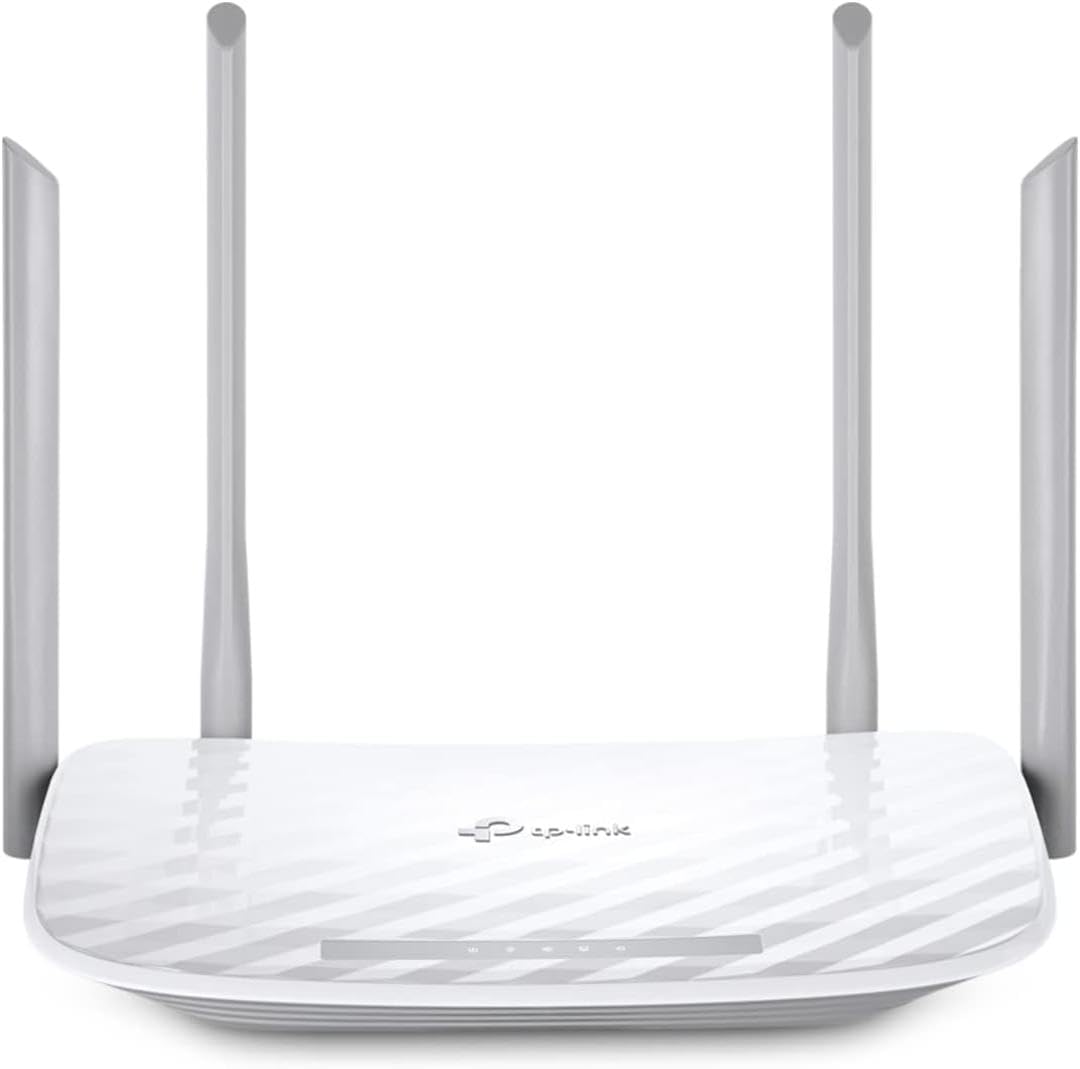
TP-Link Archer A54
4.3Editor score
EasyMesh expansion support
Compact dual-band design
Tether app management
Easy to Use WiFi Router for Seniors guide comparing setup, coverage, security, management apps, features, and performance for better home internet.
An easy to use WiFi router for seniors should provide dependable coverage without turning network management into a complicated task. App-guided installation, clear controls, automatic updates, and strong dual-band performance help older adults connect phones, computers, televisions, and smart-home devices with less frustration.
This guide compares ten routers based on the features that matter most for straightforward everyday use, including setup process, wireless coverage, wired connectivity, security, and ease of network management. It includes budget WiFi 6 options, premium WiFi 7 models, and a browser-based router that requires no companion app.
Each review explains the router’s strongest qualities, practical limitations, and likely audience. The comparison highlights differences in bands, coverage claims, ports, management options, and compatibility so readers can choose a model that suits their home, internet service, devices, and comfort with technology.
4.3Editor score

4.4Editor score
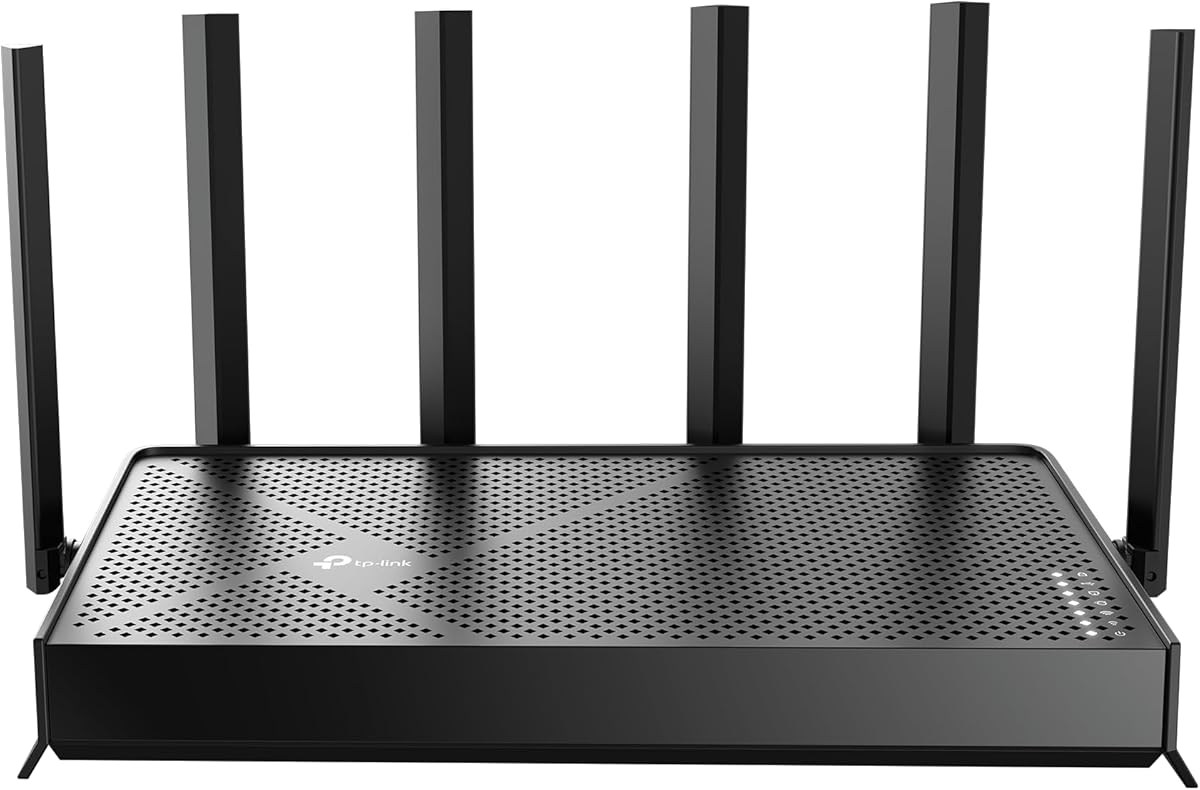
4.3Editor score
The table below compares the ten routers by wireless generation, stated coverage, management method, and wired connectivity, making it easier to identify a model that combines simple operation with suitable home capacity.


The TP-Link Archer AX21 V5 combines approachable app-based management with capable WiFi 6 hardware, making it a strong all-around choice for a senior household. Its 4.4 rating reflects a well-rounded router rather than one designed around a single specialized task. The combination of dual-band performance, broad provider compatibility, and a feature set that remains understandable is especially useful for everyday internet needs.
We may earn a commission when you buy through this link, at no additional cost to you.
The AX21 provides up to 1,200 Mbps on the 5 GHz band and up to 574 Mbps on the 2.4 GHz band, for 1.8 Gbps of total theoretical bandwidth. OFDMA helps it communicate with more devices at once, while beamforming, four high-gain antennas, and the front-end module focus signal toward connected devices. That makes it well suited to a busy home with phones, laptops, televisions, and smart-home products sharing a connection.
The main compromise is that a separate internet modem is still required, and this dual-band model does not support the 6 GHz band. Its real-world speed will also depend on the internet plan, device capabilities, distance, and walls. For most households seeking a straightforward upgrade over an older router, those limitations are easier to accept than the added complexity of a premium mesh system or unfamiliar advanced controls.
This is the recommendation for most readers who want an easy-to-manage router without settling for a dated WiFi 5 design. A family member can use the Tether app for initial setup, WiFi name and password changes, guest access, and firmware updates. It is particularly suitable for apartments and modest homes that do not need multi-gig service or the additional capacity of a tri-band or WiFi 7 system.
The free Tether app turns the router into a manageable household appliance rather than a technical project. Guided setup, remote access, and firmware updates are useful for older adults and for relatives helping from a distance.
Beamforming and four external antennas help maintain useful connections in common living areas. OFDMA is particularly valuable when several family members use phones, computers, and smart devices at once.
We may earn a commission when you buy through this link, at no additional cost to you.
The TP-Link Archer A54 is an economical way to replace an aging wireless router while retaining the familiar convenience of the Tether app. Its 4.3 rating indicates a balanced, practical option, and its dual-band design is sufficient for browsing, video calls, streaming, and other normal household activities. It is best understood as a value-focused router rather than a high-end performance system.
We may earn a commission when you buy through this link, at no additional cost to you.
The A54 offers up to 867 Mbps on 5 GHz and up to 300 Mbps on 2.4 GHz, totaling 1,200 Mbps. Four external antennas support a stated coverage area of up to 1,000 square feet. WPA3, guest network support, Access Point mode, and EasyMesh compatibility add useful flexibility, while the Tether app keeps setup and routine maintenance approachable.
The limitation is its older WiFi 5 foundation. It cannot match the throughput or device-handling capabilities of the WiFi 6 and WiFi 7 models in this comparison, and a separate modem is generally needed. EasyMesh expansion may also require an additional compatible unit, adding a cost that should be considered if the home has several floors or stubborn dead zones.
Choose the A54 for a smaller home, secondary internet connection, or straightforward budget replacement where app-based control and dependable dual-band performance matter more than cutting-edge speed. It is also a sensible first router for a senior who wants a simple, trusted brand experience without spending heavily on features that a modest internet plan cannot deliver.
The A54 prioritizes dependable everyday performance over advanced wireless standards. It is a fitting choice when internet speed, not future headroom, is the main concern.
EasyMesh compatibility can extend coverage to additional rooms without requiring a new network name. The feature works best when the household is willing to add a compatible router or range extender.
We may earn a commission when you buy through this link, at no additional cost to you.
The NETGEAR Nighthawk R6700AX offers a clear mobile-app experience and a strong set of wired connections. Its 4.2 rating reflects a capable router for apartments and small homes. The guided Nighthawk app helps users configure the network, run speed tests, pause devices, and establish a guest network without needing to navigate a complex browser interface.
We may earn a commission when you buy through this link, at no additional cost to you.
WiFi 6 performance reaches up to 1.8 Gbps across the 2.4 GHz and 5 GHz bands, and the router is advertised to cover up to 1,500 square feet for as many as 20 connected devices. Four 1 Gbps LAN ports allow computers, televisions, consoles, and storage devices to use stable wired connections, while WPA3, automatic firmware updates, and a guest network support safer everyday use.
Some very large or multistory homes may still encounter weak signal because walls, floors, and interference reduce effective range. NETGEAR Armor is offered with a trial period, but continued protection requires a separate subscription; the router’s standard security features do not depend on it. Buyers should also be prepared to use bridge mode with some modem-router combinations.
The R6700AX fits households that value the Nighthawk app, flexible Ethernet ports, and a larger stated coverage area than many budget models. It is a good choice for a family home where several people stream, attend video calls, and use smart devices while one family member handles network administration.
The Nighthawk app places common controls where users are most likely to find them. Remote management and the ability to pause connected devices can simplify troubleshooting without a visit to the router.
Four 1 Gbps LAN ports are sufficient for several stationary devices. A desktop computer, smart television, and game console can often benefit more from Ethernet than from wireless congestion.
We may earn a commission when you buy through this link, at no additional cost to you.
The TP-Link Archer A6 earns a 4.5 rating and stands out for its generous set of Gigabit LAN ports. Although it uses WiFi 5 rather than a newer standard, it provides a balanced combination of dual-band performance, useful multi-device handling, and app-based management. Those qualities make it a practical option for a home that values wired connectivity and straightforward operation.
We may earn a commission when you buy through this link, at no additional cost to you.
The router provides up to 300 Mbps on 2.4 GHz and up to 900 Mbps on 5 GHz, totaling 1,200 Mbps. Four external antennas work with beamforming, while 5 GHz MU-MIMO supports simultaneous data delivery to multiple compatible devices. Four Gigabit LAN ports offer a notable advantage for desktop computers, smart televisions, and other nearby equipment.
Its primary drawback is that maximum wireless performance is lower than that of WiFi 6 and WiFi 7 alternatives. The 2.4 GHz band also provides more range but less peak speed than 5 GHz. Most internet providers require a separate modem, and extending coverage with OneMesh requires an additional compatible device.
The A6 is best for budget-conscious households in apartments or smaller homes whose primary needs are stable internet, several Ethernet connections, and uncomplicated management through TP-Link’s Tether app. A family member can handle the initial setup and later change the network password or update the firmware without needing advanced router knowledge.
Four Gigabit LAN ports reduce the need for an additional network switch. Stationary devices can use fast, stable connections while the wireless network remains available for phones and tablets.
MU-MIMO on the 5 GHz band helps the router communicate with several compatible wireless clients concurrently. It is useful for a home where family members often use laptops and mobile devices at the same time.
We may earn a commission when you buy through this link, at no additional cost to you.
The NETGEAR Nighthawk RS90 is the premium option in this guide, combining WiFi 7 hardware, broad stated coverage, and app-guided management. Its 4.3 rating shows strong overall reception, while the 2.5 Gbps WAN port gives it a useful advantage for households that want room for faster internet service now or later.
We may earn a commission when you buy through this link, at no additional cost to you.
The dual-band router provides up to 3.6 Gbps of aggregate performance, advertised at 1.2 times the capability of WiFi 6. MU-MIMO and OFDMA help multiple devices transmit and receive simultaneously, while the stated capacity extends to 2,000 square feet and 50 devices. A 2.5 Gbps WAN port can accept a compatible multi-gig modem, and four 1 Gbps LAN ports serve other wired equipment.
Real-world performance still depends on the client devices, internet plan, home construction, and interference. A WiFi 7 router cannot make a slower internet connection faster, and older phones, laptops, or televisions will not use every available feature. NETGEAR Armor requires a subscription after its trial, although the standard WPA3 and automatic update features are enabled without it.
The RS90 is recommended for a larger home, a connected household with many active devices, or someone building a network intended to last through several device upgrades. It remains easy to set up through the Nighthawk app, so the advanced wireless generation does not translate into an unnecessarily difficult installation process.
The 2.5 Gbps WAN port can take full advantage of a compatible multi-gig internet plan. It also provides useful headroom for a network that may grow over time.
The stated support for up to 50 devices makes the RS90 appropriate for homes full of phones, televisions, cameras, speakers, and computers. OFDMA and MU-MIMO help prevent simultaneous activity from overwhelming the network.
We may earn a commission when you buy through this link, at no additional cost to you.
The TP-Link Archer BE230 delivers WiFi 7 performance while retaining the convenience of the Tether app and voice-assistant support. Its 4.2 rating reflects a capable modern router designed for streaming, gaming, video calls, and connected appliances. It is especially relevant to households that want multi-gig wired options without moving to a more elaborate mesh system.
We may earn a commission when you buy through this link, at no additional cost to you.
The BE3600 dual-band configuration delivers up to 2,882 Mbps on 5 GHz and 688 Mbps on 2.4 GHz. It has one 2.5 Gbps WAN/LAN port, one additional 2.5 Gbps LAN port, and three 1 Gbps LAN ports. The stated coverage reaches up to 2,000 square feet for up to 60 devices, supported by four internal antennas, beamforming, a 2.0 GHz quad-core processor, and EasyMesh compatibility.
Because this is a dual-band router, it does not support the 6 GHz band. Its most advanced benefits require WiFi 7 clients and compatible infrastructure, so owners with older electronics may see less dramatic improvement than the specifications suggest. A separate modem remains necessary for most providers, and a multi-gig internet plan is needed to use the full potential of the 2.5 Gbps port.
The Archer BE230 is a strong choice for a modern household that values simple app management, multi-gig connectivity, and ample device capacity. Amazon Alexa and Google Assistant can assist with basic controls, while HomeShield adds network protection, parental controls, and real-time IoT security options for households that want more control.
Two 2.5 Gbps ports add useful speed and flexibility for a modern modem, desktop, or network storage. The remaining Gigabit ports cover less demanding wired devices.
Voice-command compatibility can make basic control more accessible. The Tether app remains the more complete option for setup, monitoring, and firmware maintenance.
We may earn a commission when you buy through this link, at no additional cost to you.
The TP-Link Archer BE400 is built for households that want high wireless capacity in a single, relatively straightforward router. Its 4.3 rating and WiFi 7 feature set make it an attractive premium option. Six-stream dual-band performance, a broad stated coverage area, and a pair of 2.5 Gbps ports distinguish it from ordinary dual-band routers.
We may earn a commission when you buy through this link, at no additional cost to you.
Aggregate performance reaches up to 6.5 Gbps, with up to 5,764 Mbps on 5 GHz and 688 Mbps on 2.4 GHz. The router is advertised to cover up to 2,400 square feet and as many as 90 devices. Multi-Link Operation, Multi-RUs, 4K-QAM, six antennas, beamforming, and a 2.5 Gbps WAN/LAN port support high-capacity use, while another 2.5 Gbps LAN port and three 1 Gbps LAN ports handle wired devices.
The benefits depend on having recent WiFi 7 hardware, and a fast internet plan is also necessary for meaningful external download performance. Its EasyMesh compatibility means it can work with compatible routers or range extenders, but it cannot be paired with TP-Link Deco systems. As with the other models here, a separate modem is needed for most providers.
The BE400 suits a large home with many active devices or a household planning to buy newer phones, laptops, and smart products over the coming years. Tether app setup, HomeShield features, and easy management keep it approachable despite the advanced hardware, making it a sensible upper-tier recommendation for users who want room to grow.
The stated capacity of 90 devices accommodates a heavily connected home. Efficient simultaneous transmission is particularly helpful when smart-home equipment, work devices, and entertainment are active together.
A 2.5 Gbps WAN/LAN port supports compatible multi-gig internet service and flexible cable placement. The second 2.5 Gbps port and three Gigabit ports provide ample wired capacity.
We may earn a commission when you buy through this link, at no additional cost to you.
The TP-Link Archer AXE75 stands out because it adds a dedicated 6 GHz band to the familiar dual-band format. Its 4.3 rating reflects a well-regarded WiFi 6E router for homes seeking more wireless capacity. A 1.0 GHz dual-core processor and 512 MB of memory support its performance, while the 6 GHz band offers additional room for compatible modern devices.
We may earn a commission when you buy through this link, at no additional cost to you.
Tri-band performance reaches up to 5,400 Mbps, divided into up to 2,402 Mbps on 6 GHz, 2,402 Mbps on 5 GHz, and 574 Mbps on 2.4 GHz. OFDMA increases simultaneous transmission capacity, and the router supports both VPN server and client functions through OpenVPN, PPTP, and L2TP. HomeShield provides basic network security, device identification, parental controls, traffic prioritization, and usage reports.
The main limitation is that clients supporting the 6 GHz band remain a smaller group than those supporting 5 GHz. The AXE75 also offers more capability than a senior needs in a modest home, and it does not include the multi-gig Ethernet found in some newer WiFi 7 alternatives. EasyMesh expansion requires compatible equipment and an additional purchase.
This router is recommended for a home with current WiFi 6E or WiFi 7 devices, extensive smart-home equipment, or a need for a dedicated high-speed band. It balances advanced performance with TP-Link management tools, so users do not need to navigate every wireless feature to benefit from the additional bandwidth.
The 6 GHz spectrum provides additional bandwidth for compatible nearby devices. It can reduce competition on 5 GHz, particularly for newer phones, computers, and accessories that support WiFi 6E.
HomeShield supports practical controls for a family network, while VPN server and client modes offer choices for access, privacy, and device connectivity. Optional premium services should be reviewed before activation.
We may earn a commission when you buy through this link, at no additional cost to you.
The LNN-AX3000 is the most distinctive choice for readers who do not want to install a phone application. It has a 5.0 rating and uses a five-step browser-based setup process, making it an approachable option for seniors who are comfortable using a web browser but prefer not to download an account-based utility.
We may earn a commission when you buy through this link, at no additional cost to you.
The dual-band WiFi 6 router provides up to 2,402 Mbps on 5 GHz and 574 Mbps on 2.4 GHz. Setup involves connecting the router, joining one of the default 2.4 GHz or 5 GHz networks, opening a browser, and entering the provided web address. Five external antennas, beamforming, OFDMA, and MU-MIMO support common home coverage and 20 or more connected devices.
Household controls include WPA3 security, parental controls, a guest network, and QoS. One Gigabit WAN port and three Gigabit LAN ports provide wired connections, while EasyMesh can extend the network with compatible units. The brand is less established in this roundup than TP-Link or NETGEAR, so buyers may want to pay particular attention to the included documentation and support resources.
The LNN-AX3000 is a strong recommendation for anyone who values an app-free installation, clear written steps, and a straightforward browser interface. It also fits renters or users in smaller homes that need a simple WiFi 6 upgrade without investing in a premium WiFi 7 system.
The default open WiFi networks and web-based instructions remove the need to install mobile software. The process is particularly useful for users who prefer written or on-screen browser guidance.
A guest network separates visitors from the main household connection. Parental controls and QoS add ways to manage connected devices and prioritize important traffic.
We may earn a commission when you buy through this link, at no additional cost to you.
The Tenda RX12 Pro V3.0 combines approachable WiFi 6 performance with a distinctive NFC connection method. Its 4.3 rating reflects a versatile router for ordinary homes, and four Gigabit ports give it useful wired flexibility. Setup can be handled through the Tenda app or a web interface, so users are not limited to one management method.
We may earn a commission when you buy through this link, at no additional cost to you.
The dual-band router offers up to 2,402 Mbps on 5 GHz and 574 Mbps on 2.4 GHz. OFDMA and MU-MIMO help several devices share the connection efficiently, while 7 dBi high-gain antennas, beamforming, and EasyMesh support broader coverage. Automatic WAN/LAN detection simplifies cable connections, and NFC tap-to-connect can reduce the steps needed to join the wireless network.
NFC joining requires a compatible phone, so it will not help every user and does not replace normal WiFi password entry. The built-in OpenVPN, WireGuard, PPTP, and L2TP support is more advanced than many senior buyers need, and a dedicated IoT network may not be useful in a minimal household. EasyMesh expansion also requires compatible additional equipment.
The RX12 Pro V3.0 is a compelling choice for households with a recent NFC-capable phone, several smart devices, and a preference for flexible app or browser management. It provides capable everyday performance and modern conveniences without moving beyond the familiar dual-band WiFi 6 format.
NFC tap-to-connect can streamline the process of adding a compatible phone to the network. Users without NFC can still use the standard password-based connection method.
The dedicated IoT network can isolate compatible smart appliances from the primary connection. This adds an extra layer of organization for homes with numerous connected devices.
We may earn a commission when you buy through this link, at no additional cost to you.
The easiest router is not necessarily the fastest or most technically advanced. Focus on guided setup, clear management, adequate range, reliable security, and enough wired and wireless capacity for the household.
Begin with the installation and management process rather than the largest speed number. App-guided setup, automatic updates, and a clearly labeled interface make initial configuration and later troubleshooting less intimidating. The LNN-AX3000 is distinctive because it uses a five-step browser process without requiring an app, while the TP-Link and NETGEAR models provide dedicated mobile applications for setup, guest access, device pausing, and firmware maintenance.
Choose a router whose controls fit the user’s habits. A capable relative may be comfortable managing an app, whereas someone who does not use smartphones may prefer browser-based setup or clear printed instructions.
Coverage claims provide a useful starting point, but walls, floors, furniture, and neighboring wireless systems matter more than the advertised maximum. Match the router to the building rather than relying only on a square-foot figure. A small apartment may be well served by a compact AC1200 model, while a multistory house may benefit from a WiFi 7 router with strong coverage or an EasyMesh system.
Check the placement of the router and identify rooms where a weak signal is likely. Choose beamforming, high-gain antennas, and a stated coverage area that comfortably exceeds the space between walls and obstructions.
A router cannot deliver more internet speed than the active service plan. Its wireless speed ratings describe theoretical capabilities under favorable conditions, while real performance varies with device support, distance, interference, and obstacles. A lower-tier dual-band router may satisfy a modest plan, while a multi-gig router is most useful when the provider offers service beyond 1 Gbps.
Prioritize consistent connections and adequate capacity over the largest headline number. For most video calls, browsing, and streaming, a stable connection matters more than peak laboratory throughput.
Count the phones, computers, televisions, speakers, cameras, watches, and other connected products that may be active at once. OFDMA and MU-MIMO improve efficiency in busy homes, but adequate processing and memory also matter. WiFi 6 models offer a sensible middle ground, while WiFi 7 options are better suited to larger households and current high-end devices.
Add a margin rather than choosing a router at the exact advertised limit. Guests, automatic software updates, video calls, and security cameras can increase simultaneous demand without warning.
Dual-band routers use 2.4 GHz and 5 GHz, making them broadly compatible with older and newer devices. Tri-band and 6E models add a 6 GHz band that offers additional capacity but requires compatible clients. WiFi 7 hardware is backward compatible with earlier standards, yet its advanced features will not be available to every phone, laptop, television, or accessory in the home.
Choose the newest standard only when household devices can use it. Otherwise, a well-equipped WiFi 6 or even WiFi 5 router may provide a more useful and economical experience.
Look for WPA3 or strong WPA2 support, a guest network, and automatic firmware updates. These features help protect the household without requiring constant manual configuration. Optional security subscriptions should be considered separately, since some products advertise protection that requires a paid service after a trial period.
Favor a manufacturer with accessible support and a clear update process. Keeping current firmware can improve reliability, patch security issues, and resolve compatibility problems over time.
Ethernet remains the most stable option for desktop computers, smart televisions, game consoles, and network storage. Two to four Gigabit LAN ports are common in this guide, while premium models add 2.5 Gbps ports for multi-gig service or faster local transfers. Automatic WAN/LAN detection can simplify installation, and a modem with an appropriate WAN port may avoid an extra adapter.
Count the wired devices before buying. If every television, console, and desktop needs a cable, ensure the router has enough ports or plan to add a network switch.
EasyMesh support allows a household to add compatible routers or range extenders while retaining a unified network experience. It is often less disruptive than replacing the entire system when one room develops a dead zone. Confirm compatibility before buying, because TP-Link’s Archer BE400 supports EasyMesh but is not compatible with Deco systems, and the LNN-AX3000 requires at least two compatible units for a mesh network.
Expansion is an advantage, not a requirement. Small homes and apartments may never need additional hardware, while larger homes can benefit from planning for it from the beginning.
Start by identifying the modem or gateway, placing the router in an open central location, and connecting the equipment with Ethernet. Follow the manufacturer’s setup sequence rather than skipping steps. If an app is used, complete the guided process, create a memorable network name and strong password, and confirm that the main devices reconnect before removing packaging or changing the arrangement.
After installation, test the connection in the rooms where the internet is used most often. Watch video calls and television streaming, check wireless speed, and look for frequent drops. A range extender or compatible mesh node may help if one area remains weak. Avoid placing the router beside large metal objects, inside a closed cabinet, or near competing wireless equipment.
Treat the router as a device that needs occasional maintenance. Open the management app or web interface every few months to review connected devices, update the firmware, change the administrator password, and remove unfamiliar access. Do not reset the router unnecessarily, and keep the documentation accessible so a family member can help without having to guess which settings to change.
Not always. A capable modern router can improve wireless coverage, device capacity, and security even when the internet plan stays the same. However, no router can create additional internet speed beyond the provider’s plan. Replacing an old router is most useful when devices disconnect, coverage is poor, or the current equipment no longer supports current security standards and newer devices.
WiFi 6 is usually the more practical choice because it supports a wide range of devices and provides a meaningful capacity upgrade over older WiFi 5 equipment. WiFi 7 is attractive for a large household with current high-end phones, laptops, and a multi-gig internet plan. Ease of use comes primarily from setup and management, so the newest standard is not automatically the easiest router to operate.
The LNN-AX3000 is specifically designed for setup through a web browser without installing an app. Its five-step process uses the router’s default networks and an on-screen web address. Users should still follow the instructions carefully, and they will need an internet-connected phone, tablet, or computer plus an Ethernet connection to the modem.
There is usually no need to replace a router solely because it has been in service for a year or two. Replace it when it cannot provide stable coverage, lacks needed security, cannot connect newer devices, or no longer receives firmware updates. Periodic firmware installation, password changes, and placement improvements can extend the useful life of a sound router.
A modest home may comfortably use a dual-band WiFi 6 router with 20 or more connected devices, but activity matters more than the raw count. Several simultaneous video calls, 4K streams, downloads, and security cameras require more capacity than many idle phones and sensors. Larger or busier homes should consider a WiFi 7 router with higher stated device capacity or a mesh network.
A mesh system can be helpful in a multistory house, a long narrow layout, or a building with thick walls and consistent dead zones. A powerful single router may be enough for a smaller home if it is centrally located. Start with the coverage of one well-positioned router and add EasyMesh-compatible equipment only if testing shows a specific area needs improvement.
Most of the listed routers require a separate modem or compatible gateway. Some provider-supplied modem-router combinations can work directly, and some gateways may require bridge mode before connecting the router. Check the current equipment and provider instructions before purchase, particularly if the home already has a combination modem and router.
The 2.4 GHz band generally travels farther and penetrates walls better, making it suitable for basic browsing and devices located in distant rooms. The 5 GHz band provides faster performance and is better for video calls, high-resolution streaming, downloads, and other bandwidth-intensive activities. A dual-band router allows devices to select an appropriate band, often automatically.
The TP-Link Archer AX21 V5 is the strongest general recommendation because it combines WiFi 6 performance, app-guided management, solid coverage features, and broad compatibility without becoming unnecessarily elaborate. The Archer A54 is the budget-focused alternative for a smaller home, while the Archer BE400 offers the most advanced capacity among the three top picks for users who want a high-end, long-term network.
Prioritize straightforward setup, dependable coverage, WPA3 security, and management tools that match the household’s comfort with technology. A WiFi 6 dual-band model is usually sufficient, while WiFi 7 is most worthwhile for a busy home, newer compatible devices, and faster internet service. Check wired port counts and expansion compatibility before making the final choice.
Finally, verify the current cost, retailer details, warranty information, and availability before purchasing, since prices and offers can change. Confirm whether a separate modem is needed and have the internet provider’s activation information ready. Those final checks can prevent setup surprises and help the new network operate as intended from the beginning.