
UGREEN 2K@30Hz 1080P 60FPS Video Capture Card
4.5Editor score
2K 30FPS capture output
1080p 60FPS support
USB-A and USB-C
Driver-free installation
Our capture cards for Streaming Gta 6 guide compares 10 models for resolution, latency, passthrough, audio, compatibility, and setup ease in October 2026.
A capture card for Streaming Gta 6 sits between your console or gaming PC and the software that records or broadcasts gameplay. A strong model should deliver clean 1080p capture, responsive passthrough, dependable audio, and simple connection to OBS or another streaming platform.
We compared the ten featured cards by examining their stated resolution, frame rate, latency, passthrough behavior, operating-system support, audio features, and setup requirements. The list covers budget USB devices, portable adapters, gaming-focused cards, and premium options for advanced workflows.
Each pick highlights the card that best fits a particular use case, with attention to important limitations such as one-way HDMI conversion, protected-content restrictions, and differing capture-versus-output resolutions. Prices and availability can change, so confirm current details before buying.
4.5Editor score

4.4Editor score

4.2Editor score
The table below compares all ten cards by their stated capture quality, passthrough capability, connection method, and standout functionality. It is a quick way to identify the right balance of performance and convenience before reading the full reviews.



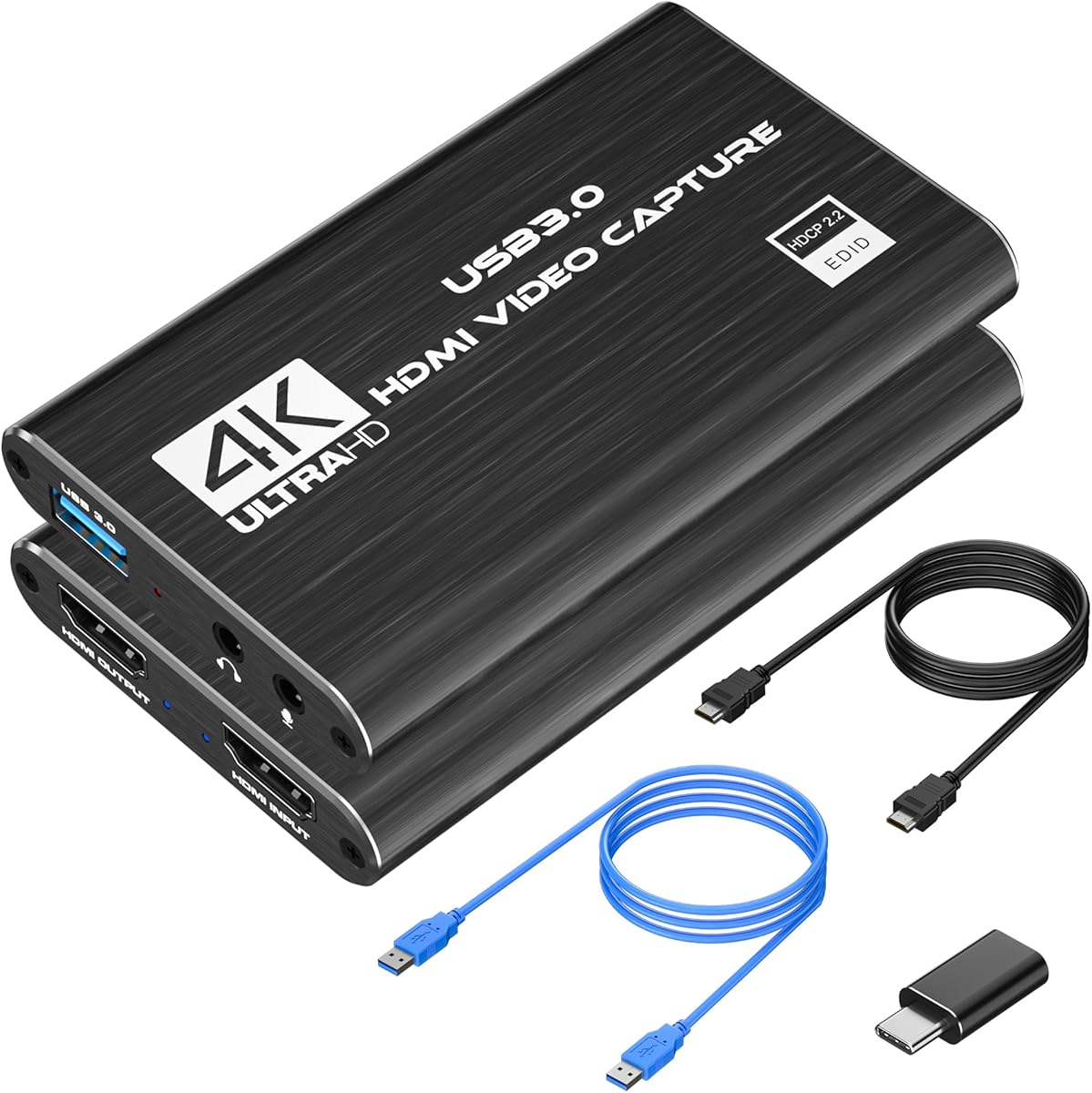


The Rybozen capture card is a well-rounded HDMI-to-USB solution for recording and broadcasting gameplay from consoles, PCs, cameras, and other HDMI sources. Its 4.3 rating reflects a generally positive reception, while the feature set covers the essentials most streamers need without requiring a complex installation.
We may earn a commission when you buy through this link, at no additional cost to you.
Its strongest qualities are straightforward operation and useful flexibility. Capture resolution reaches 1080p at 60FPS, while the HDMI input can accept 4K at 30Hz or 60Hz and high-refresh 1080p signals. The included loop-out lets the player view the source on another display, and the microphone input allows commentary to be added through a compatible 3.5mm TRS headset.
There are some important limits to understand. Output tops out at 2K at 30Hz, and 4K at 120Hz or 144Hz is not supported. It is a capture device rather than a native screen-casting solution, and protected content may still cause black screens in the capture software. Correct source and format settings are important for maintaining a stable feed.
This card is best for a streamer who wants dependable 1080p 60FPS capture, loop-out monitoring, and headset commentary in a compact package. It is a practical middle-ground option for GTA-style gameplay broadcasts when the objective is smooth everyday operation rather than maximum frame rate.
The card's stated 1080p 60FPS capture target is well suited to mainstream gaming broadcasts. It balances clarity and processing demands for a practical high-frame-rate stream.
A dedicated microphone input and HDMI loop-out streamline a console streaming setup, allowing commentary and local game monitoring without several extra workflow steps.
We may earn a commission when you buy through this link, at no additional cost to you.
This USB 3.0 capture card offers a straightforward route to 1080p 60FPS game capture, and its 4.4 rating places it among the more highly rated models in the group. It is designed for streamers who want quick setup and compatibility with familiar capture software.
We may earn a commission when you buy through this link, at no additional cost to you.
The device supports popular HDMI sources, including the Nintendo Switch, PS5, Xbox Series X, DSLR cameras, and PCs. Its seamless passthrough is intended to let the player continue using the source device while OBS Studio, Streamlabs, or XSplit receives the feed. The compact enclosure also makes it convenient for travel, events, and changing gaming locations.
The product listing describes a 4K HDMI input while emphasizing crisp 1080p 60FPS output. That distinction is important: the advertised input ceiling does not necessarily mean the captured file or stream is 4K. Control options and detailed passthrough specifications are not explained as extensively as they are by some premium alternatives.
The card is most appropriate for a new streamer building a straightforward setup. It brings together source compatibility, 1080p 60FPS capture, and portable construction without describing a complicated installation process. Confirm the required cables and source settings before your first broadcast.
No-driver installation reduces setup friction, making the card accessible to creators who want to move from console play to a live OBS workflow quickly.
Support for current consoles, cameras, and PCs makes the device adaptable to gaming streams, events, demonstrations, and other HDMI-based content.
We may earn a commission when you buy through this link, at no additional cost to you.
The Guermok capture card combines 1080p 60FPS capture with 2K 30Hz output and a portable aluminum enclosure. Its 4.4 rating indicates strong user approval, and the stated compatibility with Windows, macOS, Linux, and Android broadens its potential applications.
We may earn a commission when you buy through this link, at no additional cost to you.
A particular strength is its support for both USB-C and conventional USB connections. The included USB 3.0-to-USB-C adapter makes it useful with laptops and other modern systems, while the aluminum construction helps dissipate heat. The device also works with OBS Studio, VLC, PotPlayer, Zoom, and major streaming platforms.
The signal path is strictly one-way from HDMI to USB-C, which is normal for this type of capture device but should not be confused with HDMI-to-HDMI display conversion. The card introduces millisecond-level latency through video decoding, and format and resolution combinations vary. Users should use USB 3.0 wherever possible and reconnect the adapter if a computer identifies it as USB 2.0.
This is a compelling choice for mobile creators, laptop streamers, and anyone who values a small, driver-free unit. Its 1080p 60FPS mode is appropriate for high-frame-rate gameplay, while the broad system support makes it useful beyond GTA gameplay streams.
The small, lightweight enclosure is easy to carry between a home console, a laptop, an event venue, or an outdoor streaming location.
USB-A and USB-C options reduce connection friction, although the included adapter must be oriented correctly to preserve USB 3.0 bandwidth.
We may earn a commission when you buy through this link, at no additional cost to you.
The Kedok 4K capture card is an approachable option for streamers who want 1080p 60FPS capture without installing drivers or connecting external power. The card holds a 4.4 rating and closely resembles the Rybozen model in its core functions.
We may earn a commission when you buy through this link, at no additional cost to you.
Automatic webcam recognition helps software locate the device, while the input and output system is designed to adjust automatically. HDMI loop-out allows the game to remain visible on a second screen, and the 3.5mm TRS microphone input supports live commentary. Sources listed include the Switch, PS4, PS5, Xbox systems, PCs, cameras, and set-top boxes.
The word 4K in the product name refers to accepted HDMI input, not 4K recording. Actual capture reaches 1080p, and the stated output limit is 2K at 30Hz. As with other capture cards, protected game video may need to be handled through the source system's own recording or capture function.
For a first console streaming setup, the Kedok card is easy to recommend. It provides the key capture functions, broad source compatibility, and a simple USB workflow. It is best for 1080p broadcasts where easy setup matters more than high-end 4K capture.
The device identifies itself as a webcam, which helps reduce the number of manual configuration steps required in common streaming software.
Loop-out and microphone input make the card especially useful for console players who want to monitor gameplay and add commentary in one compact setup.
We may earn a commission when you buy through this link, at no additional cost to you.
The PORTTA DX20R is the premium option in this roundup, offering 4K at 60Hz capture and unusually high passthrough limits. Its 4.2 rating is slightly below the leaders, but the specification set is clearly aimed at creators who want more control over high-end console and PC capture.
We may earn a commission when you buy through this link, at no additional cost to you.
Capture can reach 4K at 60Hz, 2K at 144Hz, and 1080p at 240Hz, with YUY2, NV12, and RGB24 formats available. The card supports HDR and Variable Refresh Rate, making it a natural match for modern displays. A smart control interface and ring-light control add convenience for a polished streaming desk.
The PORTTA CapHub Utility expands control over video settings, audio mixing, firmware, EDID, and VRR modes. It supports Windows, macOS, and Linux without driver installation, but this deeper control layer is not identical to a zero-configuration experience. Buyers should ensure their computer, display, and software workflow can accommodate the selected format.
The DX20R is the strongest recommendation for a creator preparing a high-end GTA streaming setup where 4K capture, high-refresh passthrough, and display optimization matter. For a standard 1080p channel, it may offer more capability than necessary, but it is the most ambitious specification package here.
Capturing 4K at 60Hz is the headline advantage, giving creators room for sharper source material than a basic 1080p capture card.
HDR, VRR, EDID, and firmware management are especially valuable for streamers with newer gaming monitors and a desire for precise display behavior.
We may earn a commission when you buy through this link, at no additional cost to you.
The acer USB 3.0 capture card is a polished, portable option centered on 1080p 60Hz capture, clean YUY2 color output, and simple operation. Its 4.4 rating suggests favorable user reception, and the feature set is particularly approachable for streamers creating their first game channel.
We may earn a commission when you buy through this link, at no additional cost to you.
YUY2 is the key technical distinction from cards that emphasize compressed formats. The listing describes it as providing richer colors than MJPEG, which can benefit scenes with detailed environments and strong color contrast. The card also accepts 4K HDMI input, includes a 3.5mm microphone connection, and works without extra drivers or external power.
Compatibility covers major streaming applications such as OBS, XSplit, YouTube, Facebook, Twitter, and VLC. Sources include the Switch and Switch 2, PS4 and PS5, Xbox systems, cameras, PCs, macOS, and Android. The stated output remains 1080p at 60Hz, so buyers should distinguish that from the card's 4K input capability.
This is a well-rounded choice for 1080p GTA gameplay streams where color quality, portability, and uncomplicated setup are priorities. It lacks the DX20R's 4K capture and advanced display controls, but it offers a more specialized focus on clean everyday video than many basic alternatives.
YUY2 support is a meaningful benefit for creators who want a less compressed 1080p workflow and have the processing bandwidth to take advantage of it.
Driver-free operation and direct microphone input make the card convenient for console sessions, classes, and mobile recording arrangements.
We may earn a commission when you buy through this link, at no additional cost to you.
The XIIXMASK USB 3.0 capture card supports up to 4K at 60FPS through USB 3.0 and adds 4K HDMI passthrough. Its 4.2 rating reflects a broadly positive feature set, with particular strength in high-frame-rate capture and external-audio integration.
We may earn a commission when you buy through this link, at no additional cost to you.
Besides 4K60, the card can handle 1080p at 120FPS and supports MJPEG, YUY2, NV12, and XRGB formats. Those choices give creators flexibility when balancing resolution, frame rate, color quality, and processing demand. The separate 3.5mm audio input and microphone output ports support commentary, ambient sound, and headset integration.
Setup requires no drivers or external power, and the device is listed for Windows, macOS, Linux, Android, and iPadOS 17 or later. It is compatible with current consoles, Meta Quest devices, cameras, and common capture applications. As always, the source and computer must support the desired format for the highest settings to remain stable.
The XIIXMASK is a good middle-to-upper-tier option for a streamer who wants 4K capture potential and 120FPS flexibility without moving to the DX20R's advanced HDR and VRR utility suite. It suits creators comfortable choosing a format and verifying the full source-to-software path.
The combination of 4K60 capture and 1080p120 support gives creators two distinct ways to tailor a stream to their source and computer.
Separate audio-in and mic-out connections provide useful routing options for commentary and more involved live-production setups.
We may earn a commission when you buy through this link, at no additional cost to you.
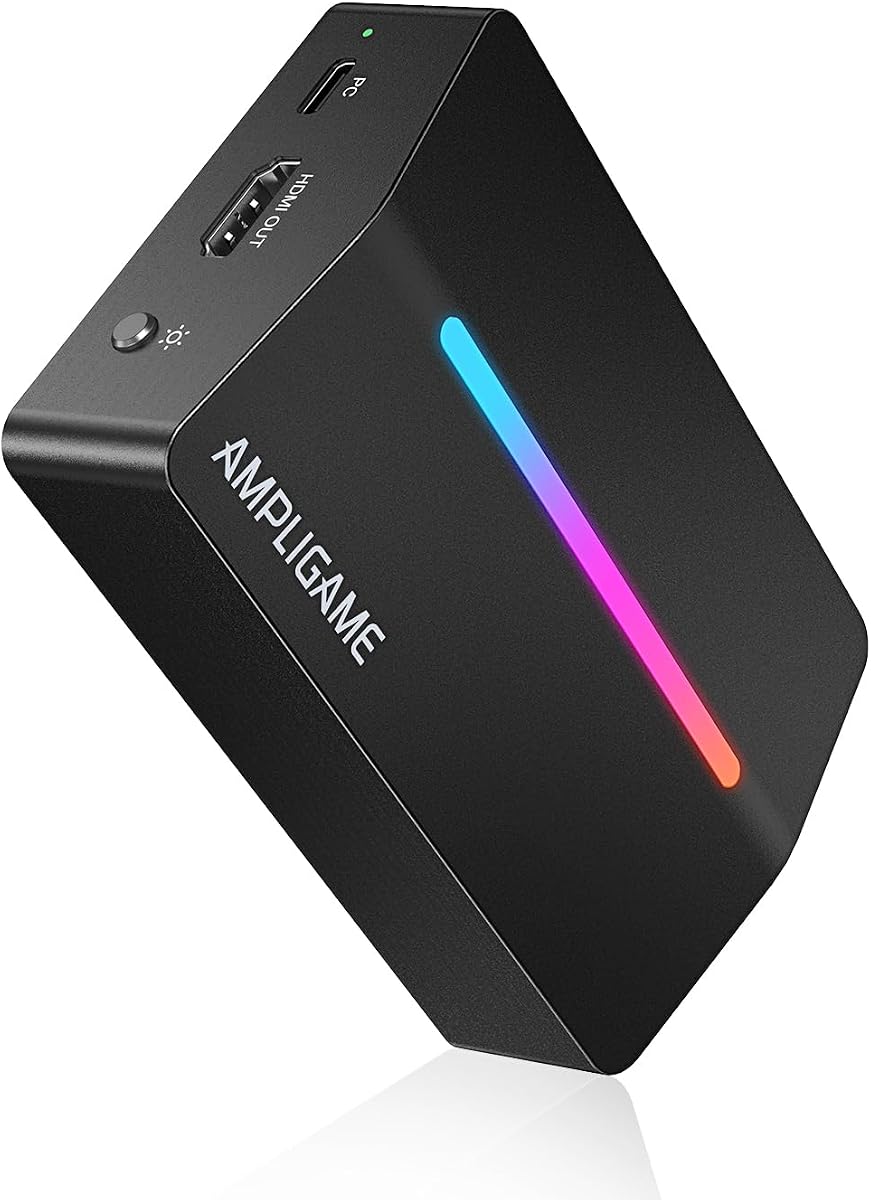
The Fifine AmpliGame capture card combines 1080p 60FPS capture with a 4K 30FPS HDMI loop-out and a gaming-oriented design. Its 3.9 rating is the lowest among the listed products, but the card still offers a useful feature set for console and PC creators.
We may earn a commission when you buy through this link, at no additional cost to you.
Audio connectivity is a major selling point. Line-in and headset ports support commentary and team communication, while the 4K loop-out provides local monitoring. The card works with PS4, PS5, Xbox, Switch, Windows, and Mac systems and is compatible with OBS, YouTube, Twitch, and Discord.
The nine selectable RGB modes distinguish it visually from utilitarian capture cards and may appeal to streamers who want their equipment to fit a gaming setup. However, the listing notes that a lack of screen display may require consulting the manual and troubleshooting guide. Using the original USB cable is also recommended for best performance.
This is a sensible choice for a streamer who values appearance, multiple audio options, and straightforward 1080p capture. It may not be the strongest choice for a creator prioritizing top-tier 4K capture or broad format flexibility, but its gaming focus and distinctive styling give it a clear identity.
Console support, loop-out, and accessible audio connections align closely with the needs of console streamers and competitive gaming broadcasts.
Nine RGB modes let the capture card complement a colorful gaming desk and provide a recognizable visual element on camera.
We may earn a commission when you buy through this link, at no additional cost to you.
The UGREEN 2K@30Hz 1080p 60FPS capture card combines a 4.5 rating with versatile USB connectivity and a broad source list. It offers 2K at 30Hz output or 1080p at 60FPS, making it an attractive budget-oriented choice for a GTA gameplay channel.
We may earn a commission when you buy through this link, at no additional cost to you.
The device accepts 4K at 30Hz input, which preserves source quality for post-production when the source and capture software support it. Its USB 3.0 connection offers a stated transfer speed of 5 Gbps, while USB-A and USB-C interfaces broaden compatibility with laptops, desktops, tablets, phones, and Quest devices.
There are two important constraints. The capture output is not 4K, and the signal path is unidirectional from HDMI to USB. In addition, PS4, PS5, Switch, and Xbox work when HDCP is turned off, so users should be prepared to adjust the appropriate source setting. The aluminum casing and built-in cable are designed for heat dissipation and stable signal transfer.
This is the best budget recommendation for a new streamer who wants a polished 1080p 60FPS workflow, modern dual interfaces, and broad device support without paying for the DX20R's advanced feature set. It is particularly attractive when the computer can make use of the 2K output mode for editing flexibility.
The 2K mode can retain more detail for editing, while 1080p60 remains a practical broadcast format for fast-moving gameplay.
The aluminum housing supports heat dissipation, and the integrated cable with tinned-copper conductors is intended to maintain a stable connection.
We may earn a commission when you buy through this link, at no additional cost to you.
The UGREEN 4K loop-out card is an excellent all-around choice for a console streamer who wants local 4K monitoring and a flexible 1080p 60FPS capture path. Its 4.4 rating and broad compatibility make it one of the strongest general-purpose options in the list.
We may earn a commission when you buy through this link, at no additional cost to you.
It accepts 4K at 30Hz in 4:4:4 and provides a matching 4K loop-out, allowing a game to remain visible on a local display without waiting on the encoded PC feed. Actual capture is limited to 2K at 30FPS, with 1080p60 also available. Creators can select MJPEG for efficient compression or YUY2 for greater clarity.
USB-A and USB-C connections make the device flexible across Windows, macOS, Linux, and Android systems. It is listed for the Switch, Switch 2, PS4, PS5, Xbox Series X, Meta Quest 3 and 2, and common streaming software. PS4 and PS5 support requires HDCP to be turned off, and Fire TV Stick is explicitly not compatible.
The UGREEN card is best for streamers who prioritize immediate game viewing, modern connection options, and dependable console support. It does not record 4K, but its 1080p60 mode is more than sufficient for many live audiences, while the 4K loop-out can make a multi-display gaming setup more convenient.
The 4K loop-out separates local viewing from PC capture, allowing the player to monitor the source directly while the stream is encoded on the computer.
MJPEG and YUY2 support let creators choose between efficient file sizes and a less compressed image according to their recording priorities.
We may earn a commission when you buy through this link, at no additional cost to you.
The right capture card depends on your source device, monitor arrangement, computer, software, and desired output format. Resolution headlines are only the beginning, so the most important factors are practical latency, passthrough, audio routing, and a stable connection path.
For a conventional GTA gameplay stream, 1080p at 60FPS is the most practical target because it provides a familiar high-frame-rate image without imposing as much bandwidth and processing demand as 4K. A card that accepts 4K input but captures only 1080p can still be useful when the source is a modern console, although the higher input ceiling does not make the recorded stream 4K. The PORTTA DX20R is the clearest exception in this group because its stated capture mode reaches 4K at 60Hz.
Passthrough sends the game image to a local display while the capture card also sends a version to the computer. This is valuable in a dual-screen setup because the player does not have to rely on the potentially delayed software preview. Some cards advertise no-delay loop-out, while others acknowledge millisecond-level decoding latency. The distinction matters most to competitive players, who may notice even a small display delay.
USB 3.0 provides the bandwidth needed for the stated high-resolution and high-frame-rate capture modes. A card connected to a USB 2.0 port may be recognized but fail to sustain its best format, so use a USB 3.0 port whenever possible. USB-A and USB-C support improve compatibility with desktops, laptops, tablets, and mobile-oriented setups. Adapters can introduce their own limits, and some products require the correct adapter orientation to preserve full speed.
A card with a 3.5mm audio input can accept game audio, a headset, or a separate microphone, depending on its wiring and software configuration. The Rybozen, Kedok, acer, XIIXMASK, and Fifine cards explicitly include commentary-related connections. Streamers should confirm whether the port is line-in, headphone output, or microphone input, because a shared headset port may require manual audio routing in OBS or a comparable program.
A useful capture card must be recognized by the operating system and streaming software. OBS Studio, Streamlabs, XSplit, VLC, and PotPlayer are repeatedly named across the featured products, while Windows, macOS, and Linux provide the broadest support. Some cards also work with Android and iPadOS, but iPadOS 17 or later is specified for certain devices. Driver-free operation is convenient, though some advanced cards add separate configuration utilities.
Several listings explain that PS4, PS5, Switch, and Xbox sources work when HDCP is turned off. This setting concerns protected content and is not a defect unique to one brand. Because game publishers can change capture policies, a creator should use the source console or PC's supported capture feature when protected video cannot be sent through the card. Avoid assuming that every new game or platform release will behave identically to older titles.
MJPEG is convenient for file-size efficiency and relatively quick processing, while YUY2 generally provides a less compressed image at the cost of greater data transfer. The acer card emphasizes YUY2, and the XIIXMASK supports MJPEG, YUY2, NV12, and XRGB. A streamer who only broadcasts may not notice the distinction, but a creator who records, edits, and re-encodes footage has more reason to choose a format deliberately.
HDR, VRR, EDID controls, firmware updates, and format management are most relevant to advanced setups with modern monitors. The PORTTA DX20R provides the deepest control package in this list, including CapHub software and support for high-refresh passthrough. A streamer using a basic 1080p television may gain little from these features, but a creator with a high-refresh gaming display can use them to align the source, card, and monitor more precisely.
Begin by connecting the source console or gaming PC to the capture card's HDMI input. If you need local monitoring, connect the card's loop-out to a second display. Then connect the card's USB output to a USB 3.0 port on the streaming computer, open OBS Studio or another supported application, and select the capture device. Set the desired resolution and frame rate only after the software recognizes the source correctly.
Audio requires deliberate routing. Connect the game, headset, or microphone according to the card's port labels, then configure the audio source and monitoring options inside the streaming software. If a product requires OBS to be restarted after audio setup, do so before testing. Run a short local recording, check the video format and frame rate, listen for delay or echo, and confirm that the game remains responsive on the passthrough display.
For ongoing care, keep the capture card and cables away from moisture, heavy impact, and obstructed airflow. Do not repeatedly unplug the USB connection while a recording is active, and avoid changing source formats in the middle of a session unless the software supports the transition. If resolution drops or the feed disconnects, restore the intended settings, reconnect the device, and confirm USB 3.0 detection before changing hardware.
It depends on how you play. A modern console or gaming PC may offer its own built-in streaming and recording features, but a capture card is useful when you want more control over your computer workflow, local passthrough, commentary routing, or recording format. Check the source device's native capture quality and protected-content policy before adding hardware.
For many live audiences, 1080p at 60FPS provides a sharp and fluid presentation. The higher resolution offered by some capture cards mainly benefits creators who edit their recordings or operate a high-end viewing setup. Your upload bandwidth, computer performance, and software encoder settings can matter as much as the capture card itself.
4K input means the card can accept a 4K HDMI signal, while 4K capture means the resulting computer feed is also recorded or streamed at 4K. Several featured cards accept 4K input but capture at 2K or 1080p. Always read both the input and output specifications when comparing products.
No. A local HDMI loop-out can keep the game view on a separate display without waiting for the PC's encoded preview, but some capture devices still introduce millisecond-level decoding delay. The amount users perceive also depends on the game, display, system settings, and capture software. Competitive players should test the complete setup before a live session.
The supplied information for several UGREEN models and other cards states that compatible consoles work when HDCP is off. Protected-content policies can vary by source and title, so the best approach is to follow the console's current instructions. If the capture software receives a black or protected screen, use the source device's supported native recording or streaming function.
Yes, provided the source output is compatible with the card's HDMI input. You can switch sources by reconnecting the HDMI cable and adjusting the capture software. This makes a single card useful for console gaming, PC gaming, cameras, and other HDMI sources, although you may need separate cables and a quick source-selection routine.
No. The important factor is that the connection operates at USB 3.0 speed and is connected to a compatible port. A USB-C port may still negotiate a slower speed, while a USB-A port can provide full USB 3.0 performance. Check the connection speed in the operating system, especially when using an adapter.
The UGREEN 2K model is a strong budget starting point because it combines driver-free setup, 1080p60 capture, and both USB-A and USB-C connections. The Rybozen, Kedok, and acer cards are also approachable options with microphone inputs. Whichever you choose, plan a short test recording before broadcasting to verify video, audio, latency, and protected-content behavior.
The UGREEN 2K model stands out as the best budget option, combining a 4.5 rating with 1080p60 capture, 2K output, and modern dual USB interfaces. The UGREEN 4K loop-out card earns the Editor's Choice recommendation for its flexible formats and convenient local 4K monitoring, while the PORTTA DX20R is the premium choice for 4K60 capture, high-refresh passthrough, HDR, and VRR.
Most GTA streamers should prioritize 1080p60 capture, a stable USB 3.0 connection, dependable audio routing, and an HDMI loop-out that fits their display arrangement. More advanced creators may benefit from 4K capture or advanced color formats, but those benefits come with more demanding computer, monitor, and software requirements. Compatibility with the actual console, capture application, and streaming platform is essential.
Before purchasing, verify the current specifications, included cables, source restrictions, and operating-system requirements. Prices and product availability can change, so review the latest listing and ensure that the selected card matches your computer, display, and intended streaming workflow.