
Redants 3 FT Baseboard Heater Covers
4.6Editor score
Includes left and right endcaps
Galvanized powder-coated steel
Oversized ventilation slots
Includes two wall brackets
Explore the best baseboard heater covers for 2026 with comparisons of sizes, steel construction, ventilation, installation, heater compatibility, and safety.
Baseboard heater covers can transform an outdated, rusty, or visually inconsistent heating system without requiring a complete replacement. The best options combine durable metal construction, effective ventilation, clean white finishes, and tool-free installation. A well-fitted cover can also create a safer barrier around hot hydronic elements while helping warm air circulate through the room.
This guide compares ten baseboard heater covers based on the dimensions and materials supplied by each manufacturer, along with installation methods, adjustability, ventilation design, end-cap inclusion, and compatibility with electric or hydronic systems. The selection includes adjustable three- to six-foot designs, segmented steel assemblies, and galvanized covers made specifically for hot-water baseboard heaters.
Each review explains the product's strongest benefits, important fit limitations, and likely installation scenario. Ratings reflect the supplied customer feedback, while the editorial recommendations also consider practical details such as gauge, coating, adjustment range, and access to controls. Product listings, availability, and prices can change, so confirm the current specifications and measurements before purchasing.
4.6Editor score

5.0Editor score

5.0Editor score
The comparison below places all ten covers side by side, focusing on the details that determine fit and daily performance: available length, steel gauge, ventilation, installation style, included hardware, and heater-system compatibility.


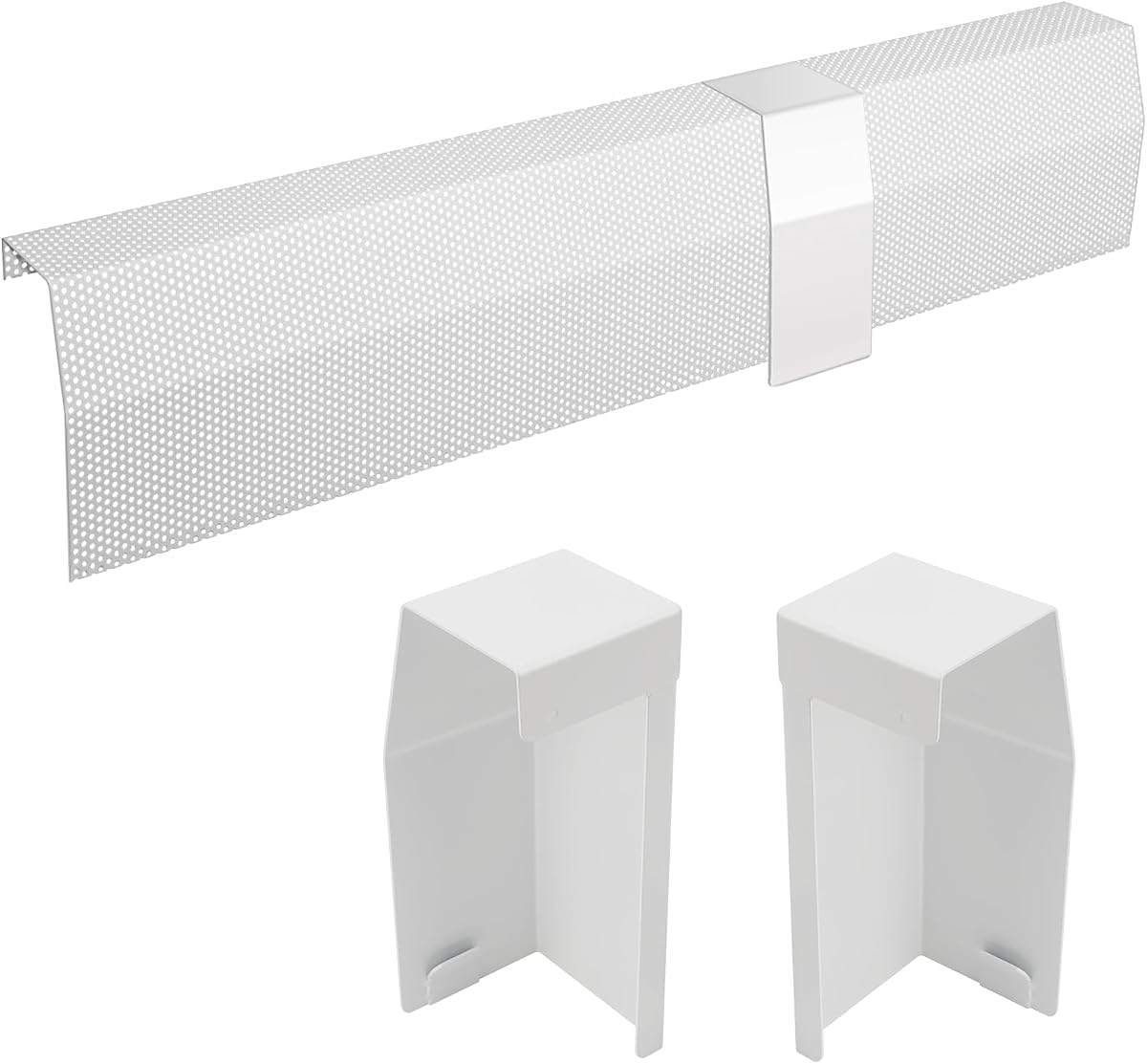


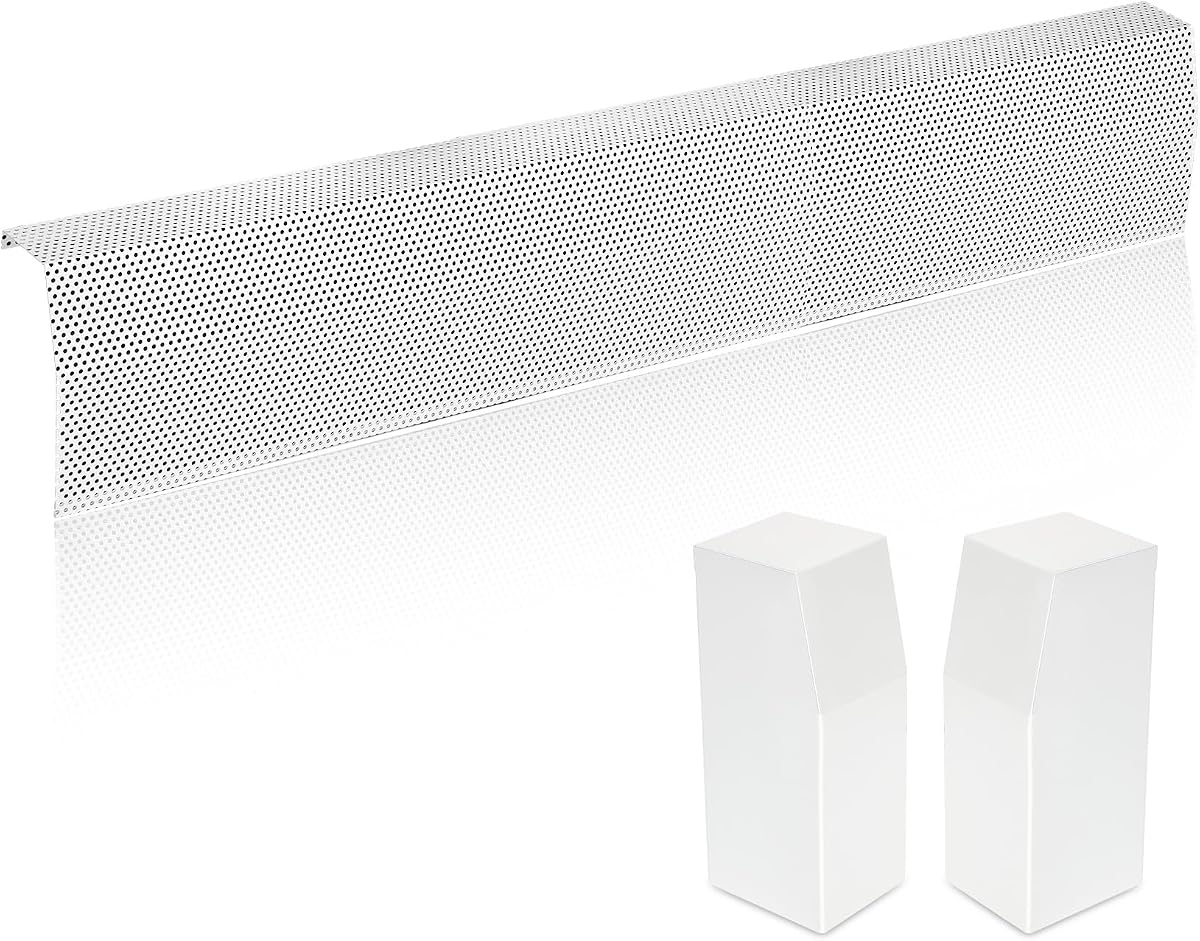
The 6FT Baseboard Heater Cover is a long-form, adjustable solution for replacing visibly worn covers along larger walls. Its supplied rating is 4.4, and its most appealing feature is a stated adjustment range of one to six feet. Rather than cutting a panel to fit, users can size the assembly to the existing run of heating pipe, which is particularly useful when a room contains several standard sections.
We may earn a commission when you buy through this link, at no additional cost to you.
The cover uses a powder-coated white finish described as resistant to rust, corrosion, and dents. Rounded edges and enclosed heating elements create a more finished safety barrier than an exposed radiator front. A perforated metal ventilation system is intended to promote airflow and even heat distribution, while the open space at the bottom can help warm air enter the room. A damp cloth is all the listed care instructions require.
The main trade-off is that the broad claim of fitting most standard pipes and radiant systems should be treated as a starting point rather than a guarantee. Buyers still need to compare the heater's height, depth, backplate, and available wall space with the dimensions shown in the current listing. The cover also adds another metal layer around the heater, so unobstructed ventilation and clean installation remain important.
This is the most flexible choice in the group for a long wall, provided its dimensional range accommodates the existing heater. It particularly suits homeowners who want a consistent white appearance without custom fabrication. Measure the complete installation area first, verify the end-cap arrangement, and choose this model when the available run approaches six feet.
The one-to-six-foot adjustment range is the standout feature, allowing one product family to cover a short room section or a much longer installation. This reduces the need to match a cover to an exact panel length before the installation area has been measured.
Perforated metal and the lower opening are designed to let heated air move into the room while the front panel separates occupants from the hot element. Periodic cleaning of the perforations helps preserve that airflow.
We may earn a commission when you buy through this link, at no additional cost to you.
The 4FT Baseboard Heater Cover offers a practical middle ground for common residential radiator installations. Its supplied rating is 4.2, and it can adjust from one to four feet. That range makes it useful for replacing a single short section or combining panels along a moderate wall, provided the overall heater geometry is compatible with the cover.
We may earn a commission when you buy through this link, at no additional cost to you.
The metal construction is finished with a white powder coating that is described as resistant to rust, corrosion, dents, cracking, and warping under heat. Installation is based on sliding or snapping the cover over the existing baseboard and attaching the end caps, with no drilling, demolition, or professional help stated as necessary. Perforated metal supports the intended circulation of warm air through the enclosure.
Compared with the higher-rated adjustable options, this model offers less flexibility and has the lowest rating in the supplied group. The description mentions standard pipes, radiators, and radiant floor heating systems, but that broad range is not the same as a manufacturer-provided dimensional guarantee. Accurate measurements remain essential, especially around valves, brackets, and irregular wall sections.
Buyers looking for a conventional four-foot replacement with a clean white appearance can find this cover practical, although the three-foot adjustable option may provide a stronger balance of compact size and customer feedback. It is best for a straightforward radiator run where the one-to-four-foot range covers the complete section without modification.
Adjustment makes the cover less dependent on exact panel length, which can simplify replacement of a short radiator section. It also allows the same style to be used across several rooms where the heating runs are not identical.
The white-coated metal and enclosed front give an older radiator a more consistent appearance. Because installation is tool-free, the main work is careful measurement and positioning rather than construction.
We may earn a commission when you buy through this link, at no additional cost to you.
The Redants 3 FT Baseboard Heater Covers are a purpose-built option for hydronic baseboard heaters, and their supplied rating is 4.4. The product is made to slide over the old front plate, conceal a rusty surface, and include both left and right endcaps. Two wall brackets are also supplied for additional stability when needed.
We may earn a commission when you buy through this link, at no additional cost to you.
Its galvanized steel is 24 gauge and powder-coated. Oversized vent slots are intended to reduce the temperature of the outer surface and support air movement around the hot-water element. The description specifically addresses the issue of hidden controls on electric models: the endcap can be removed to adjust a knob or install a wall thermostat, although the cover is designed primarily for hydronic systems.
This model provides clearer fit guidance than many alternatives. It is stated to fit units no taller than seven and one-half inches from the floor to the backplate top and with an element depth under three and one-quarter inches. Those conditions are useful, but a three-foot section still has to match the panel and wall arrangement. The endcap access is an important advantage when a thermostat is mounted on the heater.
This is a strong option for a homeowner replacing the front of a hot-water baseboard system, especially when separate left and right endcaps and optional brackets are useful. It is less suitable for an electric heater with controls that need to remain permanently accessible, and buyers should check the dimensional limits before ordering.
The hydronic focus makes this cover most relevant to homes with boiler-fed or hot-water baseboard heat. Its removable endcap also preserves a practical route to thermostat installation and adjustment.
Oversized slots are intended to support convection and a cooler exterior surface. The supplied wall brackets can improve steadiness, although the installer should ensure they do not obstruct airflow or the original backplate.
We may earn a commission when you buy through this link, at no additional cost to you.
The 5FT Baseboard Heater Cover sits between the shorter and longer adjustable products in this roundup. With a supplied rating of 4.4, it combines a one-to-five-foot adjustment range with the same general powder-coated, perforated, tool-free design found in the related covers. It is aimed at replacing old panels or covering a medium-length radiator run.
We may earn a commission when you buy through this link, at no additional cost to you.
Its white finish is described as resistant to rust, corrosion, dents, and heat-related damage. The endcaps create a more enclosed appearance, and the rounded edges reduce sharp contact points. Perforated metal is used to maximize airflow, while the lower space helps warm air enter and circulate. Installation is presented as a straightforward snap-on process rather than a project involving cutting or drilling.
The trade-off is the narrower adjustment ceiling compared with the six-foot model. The listing also uses general language about standard pipes and radiant systems rather than giving a precise fit guarantee. A buyer should therefore measure the full height, element depth, and panel length, then check whether valves, a thermostat, or existing brackets will interfere with the new enclosure.
For a wall section that needs more range than a three-foot cover but does not require the full six-foot option, this model is a sensible middle choice. It is particularly useful for creating consistent white coverage across multiple medium-sized rooms, provided the manufacturer’s current dimensional information matches the existing heater.
The one-to-five-foot span covers more configurations than a three-foot model while remaining easier to position than a full six-foot assembly. It can suit a single radiator section or several shorter runs in different rooms.
The powder-coated surface is designed for repeated heating cycles and regular cleaning. Its rounded profile and covered element add protection, but the ventilation openings still need routine attention.
We may earn a commission when you buy through this link, at no additional cost to you.
The SDSNTE 5 Ft Steel Baseboard Heater Cover is a segmented alternative for buyers who prefer a fixed-size assembly over a sliding adjustable design. It has a supplied rating of 4.5 and uses durable 21-gauge steel with a white stoving-varnish coating. The endcaps are made from 16-gauge steel, giving the assembly a substantial construction compared with lighter covers.
We may earn a commission when you buy through this link, at no additional cost to you.
The package includes one two-foot panel, one three-foot panel, a coupler, and endcaps. Together, those pieces form the five-foot configuration. The single-panel construction is described as preserving airflow around the element while preventing direct contact. Installation involves removing the old cover, slipping the new pieces over the heater, joining them with the coupler, and attaching the endcaps.
A limitation is that the two-panel layout requires more positioning and alignment than a one-piece adjustable cover. The listing also states that the heater should be less than five feet long, no more than three and one-quarter inches wide, and under a stated height; that height is written with inconsistent unit notation, so it should not be interpreted without checking the product's current dimensions. The fixed length also means less tolerance for an inaccurate measurement.
This model is best for a confidently measured five-foot installation where the installer values heavier steel and reinforced endcaps. It may also appeal to buyers assembling a longer run from separate sections. Verify the actual panel and coupler dimensions, ensure the panels can be joined cleanly, and confirm that the existing heater matches the stated width and height limits.
The 21-gauge face and 16-gauge endcaps are among the heavier specifications in this group. That construction is useful for a permanent cover intended to remain in place through repeated heating seasons.
Using a two-foot and three-foot panel makes the assembly easier to carry and position than one long cover. The included coupler joins the sections, while the separate endcaps complete the enclosure.
We may earn a commission when you buy through this link, at no additional cost to you.
The 4FT Baseboard Heater Cover with Endcap has a perfect supplied rating of 5.0 and stands out for its detailed hydronic-heater design. It adjusts from one to four feet using an L-slot connection, giving the installer more tolerance than a fixed-length panel. The slide-on method is designed to replace old, rusty, or damaged covers without tools.
We may earn a commission when you buy through this link, at no additional cost to you.
The white powder-coated metal is described as durable and resistant to deformation, with a service policy that offers replacement for warping, peeling paint, or rust. A three-millimeter perforation pattern and the gap beneath the cover are intended to support natural convection and even warm-air circulation. Rounded edges and corners enclose the heating elements to reduce direct contact by children and pets.
Its clearest restriction is system type: the cover is made for hydronic hot-water systems and not for electric heaters. That makes it less versatile than the product described as supporting both electric and radiator covers, but it offers more focused guidance for a common residential heating setup. The existing heater must also fall within the listed dimensional range, and the adjustment cannot extend beyond four feet.
This is the top pick for buyers who want a highly rated, adjustable cover and already have a hydronic baseboard system. Its combination of a precise perforation pattern, service support, rounded edges, and a one-to-four-foot range makes it a strong premium choice. Measure first, identify the heating type, and confirm that the backplate and element geometry are compatible.
The stated three-millimeter holes and open lower area are designed to promote natural air movement without leaving the element exposed. Dust can collect around smaller openings, so periodic wiping is advisable.
The L-slot design allows a wider range of final lengths within the stated one-to-four-foot interval. It is especially helpful when an old cover has a slightly irregular footprint or the new installation has more tolerance than an exact fixed panel.
We may earn a commission when you buy through this link, at no additional cost to you.
The 3FT Baseboard Heater Cover is the editor's choice because it combines a perfect supplied rating of 5.0 with a compact, adjustable design and straightforward installation. Its one-to-three-foot range is well suited to short radiator runs, individual room sections, and replacement projects where exact panel sizing would otherwise be inconvenient.
We may earn a commission when you buy through this link, at no additional cost to you.
The white powder-coated cover is described as resistant to rust, corrosion, dents, warping, cracking, and brittleness. Installation is described as a snap-on process with endcaps, requiring no drilling or demolition. Perforated metal promotes airflow, and the enclosure and rounded edges create a barrier between occupants and the heating element. Maintenance is straightforward with a damp cloth.
The primary limitation is capacity: a three-foot maximum cannot cover a long continuous baseboard run unless multiple sections are used. Compatibility language refers to standard pipes, radiators, and radiant floor systems, so buyers should not treat that statement as a precise dimensional promise. Electrical requirements and any local clearance rules should also be considered for the particular installation.
For a homeowner replacing a short, visibly worn heater cover, this is a particularly balanced option. It offers a high customer rating, a useful amount of adjustment, no required cutting, and a simple installation method. It is the pick to favor when the complete section is no longer than three feet and the measured geometry matches the listing.
The one-to-three-foot range is more forgiving than a fixed three-foot panel while remaining compact enough for individual room sections. It is a good match for replacements where the existing section is shorter than the nominal maximum.
The white finish, removable endcaps, and tool-free design can make a substantial visual improvement without a major remodel. Wipe the surface and clear the perforations periodically to maintain appearance and airflow.
We may earn a commission when you buy through this link, at no additional cost to you.
The 6 FT Baseboard Heater Cover for Baseboard Heating is a segmented six-foot solution with a supplied rating of 4.5. It consists of two three-foot panels that can be combined, along with endcaps. Unlike products designed exclusively for hydronic systems, this listing states that it can replace old electric and radiator baseboard covers.
We may earn a commission when you buy through this link, at no additional cost to you.
The panels are made from 24-gauge galvanized steel, while the endcaps use 22-gauge galvanized steel with white enamel coating. The stated material is designed to resist moisture and corrosion. Installation begins by removing the existing endcap and front plate, snapping the new endcaps onto the panels, and pressing the assembly onto the original backplate.
The most valuable feature is the detailed dimensional guidance. The height from the floor to the top of the existing backboard should be between seven and one-half and nine and one-half inches, the element-to-backplate measurement should be between five and six and three-quarter inches, and the depth should be less than three and one-quarter inches. These limits are more specific than many competing descriptions, which makes careful measurement essential.
This model is well suited to a long radiator or electric baseboard run that meets the published dimensions. Its main inconvenience is that the user must align and join two three-foot panels rather than install one continuous cover. Check thermostat placement, endcap clearance, and backplate condition before beginning.
The stated support for electric and radiator heaters makes this a broader choice than the hydronic-specific models. Buyers should still verify the cover's effect on controls and follow the manufacturer's clearance instructions.
Three measurements are provided for the floor-to-backboard height, backplate-to-element position, and total depth. Comparing all three before purchase helps avoid a cover that looks right by length but fails to fit the original assembly.
We may earn a commission when you buy through this link, at no additional cost to you.
The SDSNTE 6 Ft Steel Baseboard Heater Cover is a fixed-length option for a long wall section. Its supplied rating is 4.5. Like the related five-foot model, it uses 21-gauge steel coated with white stoving varnish and stronger 16-gauge endcaps. The package contains two three-foot panels, a coupler, and endcaps, allowing the separate pieces to create a six-foot assembly.
We may earn a commission when you buy through this link, at no additional cost to you.
The single-panel construction is intended to maintain effective airflow around the element while preventing direct contact. The cover is installed without tools by removing the old front, slipping the new panels into place, joining them with the coupler, and fitting the endcaps. This makes it a more substantial alternative to lightweight or thin-gauge options.
The trade-offs are the fixed length and the need to align two sections correctly. The listing asks buyers to ensure the heater is less than six feet long and gives width and height limits, but the height uses an inconsistent unit notation. That value should be clarified through the product listing before installation. A coupler can also create a visible transition if the panels are not positioned evenly.
This cover is best for a confidently measured six-foot installation where the owner values robust steel and a coordinated white finish. It suits a long basement, bedroom, or living-room wall where one continuous visual treatment is desired. Confirm the actual dimensions, make sure the wall and backplate are straight, and ensure the endcaps will not interfere with a thermostat.
The face panels and endcaps use different steel gauges, with the endcaps listed at 16 gauge. That heavier construction is a meaningful distinction for covers exposed to repeated heat and physical contact.
Two three-foot sections reduce the need to maneuver one long panel into place. The included coupler creates the joint, so accurate alignment is the key installation step for a uniform appearance.
We may earn a commission when you buy through this link, at no additional cost to you.
The Redants 3 FT Baseboard Heater Covers are the best budget-oriented pick in this guide, offering a supplied rating of 4.6 and a complete installation package. The set includes left and right endcaps plus two wall brackets for added stability. It slides directly over an old front plate to conceal a rusty or mismatched surface.
We may earn a commission when you buy through this link, at no additional cost to you.
The cover uses 24-gauge galvanized steel with a powder-coated finish described as resistant to chipping, yellowing, and corrosion during hot-water use. Oversized vent slots are intended to lower the exterior surface temperature, create a barrier around the element, and support shorter heating cycles. The manufacturer also states that it will replace a cover if it fails during normal use.
The design is specifically aimed at hydronic baseboard heaters. If used on an electric model, the control knob will be covered, although removing the endcap allows access or installation of a wall thermostat. Its dimensional guidance is clear: the unit should not exceed seven and one-half inches from the floor to the top of the backplate or three and one-quarter inches in element depth.
This is an appealing choice for a short hot-water baseboard section, especially when the owner wants brackets and both endcaps in one package. Its fixed three-foot length and hydronic focus limit broader use, but the clear instructions, ventilation, and complete accessory set make it a strong budget recommendation for compatible installations.
Both directional endcaps and two brackets are included, so the buyer does not need to assemble a separate accessory list. These extras can make a three-foot replacement more secure and visually complete.
The oversized slots are designed to release warm air and reduce the outer surface temperature around the element. Keeping these openings free of dust and debris supports consistent convection.
We may earn a commission when you buy through this link, at no additional cost to you.
The right baseboard heater cover depends on accurate measurements, heating-system type, available length, ventilation, and installation hardware. Use the following factors to narrow the field before comparing the final listing details.
Start by measuring the existing baseboard from its leftmost to rightmost point, then record the height from the floor to the top of the backplate. Measure the depth from the backplate to the front of the heating element and note the distance from the bottom of the element to the top of the backplate. Width, valve projection, thermostat position, and the space available for endcaps can also affect whether the cover will sit correctly. Some listings provide precise ranges, while others use broad compatibility language, so the original heater's measurements should be compared directly with the current manufacturer information rather than relying on nominal room or wall dimensions.
In short, measure length, height, depth, and every visible obstruction before ordering.
Hydronic and electric baseboard heaters can look similar but present different installation concerns. A cover designed for a hot-water system may be made from heavier steel and may enclose the entire element. An electric cover may need to leave a knob accessible, or it may include a removable endcap so a wall thermostat can be installed. Do not assume that a cover for radiators is suitable for every electric or hydronic model. Check the product's system-specific language, the position of the controls, and any clearance or thermostat requirements supplied with the heater.
In short, match the cover to the heat source and ensure controls remain accessible.
Fixed-length covers are appropriate when the existing panel has been measured accurately, but adjustable designs offer useful tolerance. Three-foot options suit short individual sections, four-foot covers provide additional range, and five- or six-foot models address longer runs. A nominal six-foot product is not necessarily six feet of continuously adjustable length: some are assembled from two three-foot panels, while others slide or fold to fit a broader interval. Check whether the stated length is adjustable, fixed, or combined, and make sure multiple covers can be joined cleanly if the installation requires them.
In short, compare the actual adjustment range rather than relying on the number in the title.
Steel construction affects rigidity, dent resistance, and the product's ability to withstand repeated heat cycles. The products in this guide use 21-, 22-, 24-, or 16-gauge components in different locations. Lower gauge numbers generally indicate thicker steel, though the gauge of the face, backplate, and endcaps may differ. White powder coating or enamel is intended to resist rust, corrosion, discoloration, and peeling. A coated finish also creates a more consistent appearance across separate panels, which is especially important when multiple sections meet in one room.
In short, prioritize sturdy coated metal and check whether endcaps are heavier than the face panels.
A cover should create a barrier around the element without preventing heated air from entering the room. Perforated steel, oversized vent slots, and an open lower edge can support natural convection. The opening size and placement should allow air to circulate around the heating element rather than trapping it in a narrow cavity. Ventilation also needs maintenance: dust and debris can reduce the effective opening. Clean the perforations and lower edge periodically, and avoid storing objects against the cover where they could block airflow.
In short, look for open or perforated airflow paths and keep those paths clear.
Most covers in this roundup install without tools, but the exact method matters. A slip-on design may slide over the existing front plate, while a snap-on system may require the front and endcaps to be removed first. Look for an included coupler, directional endcaps, wall brackets, and any L-slot connectors needed to complete the assembly. The Redants models include two brackets, while the modular SDSNTE covers include couplers and separate endcaps. Reviewing the package contents before ordering helps prevent a second trip to the hardware store or an incomplete installation.
In short, confirm the panel count, endcaps, couplers, brackets, and stated tool requirements.
A cover can make an older heating unit look cleaner while also limiting direct contact with the hot element. Rounded edges and corners are useful in family rooms, playrooms, bedrooms, and other spaces where children or pets may approach the wall. Appearance should not be considered separately from safety: a poorly fitted cover can pinch wiring, obstruct a thermostat, or interfere with an element. A smooth white finish works especially well in bright rooms, while the separate endcaps and panels should align closely enough to preserve a consistent appearance across the installation.
In short, favor rounded edges, full enclosure, clean alignment, and unobstructed controls.
A replacement guarantee can be valuable because covers are exposed to heat, moisture, impact, and difficult shipping conditions. Some listings state that the manufacturer will replace a product that warps, peels, rusts, or fails under normal use. This is different from a general warranty and may require contacting the seller. Review the stated terms, the expected response process, and the circumstances covered before installation. Keeping the original packaging and purchase record can make any support request easier to document.
In short, read the replacement policy and retain packaging before beginning installation.
Begin by turning off the heater and allowing it to cool completely. A hot-water baseboard may remain warm for some time after the boiler or heating zone is shut down, so do not remove the old cover immediately. Compare the new cover's dimensions with the old assembly, locate the valves and thermostat, and check that no wiring or piping will be trapped. Clean the existing backplate before installing the replacement so dust and corrosion are not enclosed behind the new panel.
Follow the instructions for the specific design. Slip-on models generally move over the old front plate, while designs that include separate endcaps may require the existing endcaps to be removed first. Adjust the panel to the stated range, engage any L-slot or coupler connection, and press the cover into position without forcing it around a fitting. Attach the correct left or right endcap, then install any supplied brackets. Confirm that the cover is stable, the lower airflow opening is unobstructed, and the thermostat remains accessible.
For routine care, let the cover cool and use a soft damp cloth with mild household cleaner when needed. Avoid abrasive pads, harsh solvents, and flooding the perforations, since residue or moisture inside the enclosure can affect the finish and airflow. Wipe the vents regularly and check the endcaps for looseness, chips, warping, or rust. Periodically inspect that the heating element remains unobstructed and that the cover has not interfered with a thermostat, valve, or adjacent furniture.
A cover intended for a hydronic baseboard heater can be safe when it matches the heater's dimensions and preserves airflow. The supplied hydronic-specific models use vented metal, rounded edges, and open lower areas to support heat circulation. Before installation, confirm the cover is rated for a hot-water system, fits the element depth, and leaves controls or service valves accessible.
It depends on the product's instructions and the electric heater's controls. The Redants cover is designed specifically for hydronic use, although its endcap can be removed on an electric model to reach a knob or install a wall thermostat. Other covers state compatibility with electric and radiator heaters. Never install a cover that blocks a required control or conflicts with the heater manufacturer's clearance guidance.
Measure the heater's full length, the floor-to-backplate height, the backplate-to-element depth, and the element-to-backplate position. Compare every measurement with the cover's stated range rather than relying only on the length in the product title. Also note the space occupied by valves, brackets, wiring, and the thermostat, because these can affect the finished fit.
A properly fitted cover should preserve airflow through its ventilation slots and lower opening, but a tight or poorly ventilated installation can restrict convection. Follow the heater and cover manufacturers' clearance instructions and keep the openings free of dust, furniture, and stored items. If a room heats more slowly after installation, check for blocked vents or an enclosure that does not match the heater geometry.
Adjustable covers are useful when the existing panel has a slightly irregular length or the installer wants more tolerance. Fixed or modular covers can be easier to align and may use heavier steel, but they require accurate measurements and careful joint placement. The best choice depends on measurement confidence, heating type, room length, and whether the cover must fit around valves or existing brackets.
Allow the cover to cool, then wipe it with a soft damp cloth and a mild household cleaner if needed. Avoid abrasive sponges, aggressive chemicals, and high-pressure washing, which can scratch or damage the coating. Clean the perforations and lower edge carefully so detergent and debris do not remain inside the airflow path.
Some slip-on products are designed to slide over the old front plate, which can simplify removal of the rusty exterior. Other assemblies require the old front and endcaps to be removed first. Follow the included instructions, avoid leaving a doubled cover where it would obstruct airflow, and inspect the underlying backplate for corrosion before enclosing it.
Do not force the panel or bend the endcaps to make it fit. Recheck the heater dimensions, wall clearance, and the adjustment settings, then compare those figures with the current product information. A cover that interferes with a bracket, valve, thermostat, or heating element is not properly fitted and should be removed before the heater is operated.
The 3FT Adjustable Baseboard Heater Cover is the editor's choice for its perfect supplied rating, compact one-to-three-foot adjustment, and straightforward installation. The Redants 3 FT Covers earn the best budget designation with their strong 4.6 rating, galvanized construction, oversized vents, endcaps, and wall brackets. For a more specialized premium option, the 4FT Adjustable Slip-On Cover offers a 5.0 rating, precise perforations, rounded corners, and a clearly defined hydronic-heater focus.
For every other selection, prioritize measurement before features. A five- or six-foot cover is not automatically suitable for a long wall, and a compact three-foot assembly can be easier to position in a smaller room. The segmented SDSNTE products may suit buyers who prefer heavier steel and modular panels, while the six-foot galvanized option offers more explicit dimensions and states compatibility with electric and radiator heaters.
Finally, check the latest listing, manufacturer instructions, and product availability before ordering. Prices change over time, as do seller details and included accessories, so rely on the current page for the final specification set. Confirm heating-system compatibility, measure the installation, and select a cover whose length, depth, ventilation, and included hardware suit the particular heater.