
Grandstream HandyTone 801
4.1Editor score
One FXS phone port
Encrypted SIP communications
Three-way voice conferencing
Our Analog Telephone Adapter guide compares ten models for FXS ports, SIP profiles, fax support, security, audio, provisioning, and network needs in 2026.
An analog telephone adapter, or ATA, lets traditional phones, fax machines, and paging devices connect to a VoIP or SIP network. A capable unit balances FXS port count, call quality, security, provisioning, and compatibility with your existing equipment. The right choice can preserve useful hardware while modernizing how calls are delivered.
This guide compares ten analog telephone adapters across the factors that matter most in real deployments. We examine port capacity, SIP support, encryption, voice features, fax handling, network connectivity, and administrative options. The list includes compact one-port devices, two-port business adapters, renewed enterprise equipment, and an eight-port gateway for larger analog needs.
Each review identifies the product's strongest use case and important compromises so you can narrow the field efficiently. Ratings reflect the supplied customer feedback, while feature details are based on the available product information. Prices and availability can change, so compare the current listing, network requirements, and service compatibility before purchasing.
4.1Editor score

4.5Editor score
4.2Editor score
This side-by-side comparison shows the most important differences in FXS capacity, SIP configuration, network options, and specialized features across the ten adapters.


The Grandstream HT802 V2 is a well-rounded analog telephone adapter for small offices, branch locations, and users transitioning from traditional phones to SIP-based calling. Its supplied rating is 4.5 out of 5, reflecting generally favorable customer feedback. The combination of two FXS ports, two SIP profiles, encrypted communications, and extensive provisioning options makes it particularly versatile without moving into a large gateway.
We may earn a commission when you buy through this link, at no additional cost to you.
Its standout strengths begin with flexible line handling. Two SIP profiles can be associated with the two FXS ports, allowing separate accounts or services to be configured. Automatic failover switches to a secondary SIP server if the primary connection is lost, a useful resilience feature for business environments. The adapter also supports three-way voice conferencing, wide-ranging caller ID formats, and T.38 fax for reliable Fax over IP.
Administration is another major advantage. TR-069 and XML configuration files support automated provisioning, while compatibility with the Grandstream UCM series of IP PBXs enables Zero Configuration operation in the right environment. TLS and SRTP protect signaling and media, and physical LED indicators for power, network, and both phones make basic troubleshooting straightforward. The 10/100Mbps Ethernet connection is adequate for two voice lines.
The trade-offs are mostly associated with setup and infrastructure. This is not a turnkey replacement for a consumer analog phone line; it needs a compatible SIP service, PBX, or other VoIP registration. The Ethernet port is not Gigabit, although that limitation rarely matters for typical voice traffic. Grandstream also recommends upgrading the HT802 V2 immediately to firmware version 1.0.19.11 or later. Overall, it is an adaptable and feature-rich choice for organizations that want two analog endpoints with dependable administration and call-control features.
Two FXS ports and two SIP profiles make the HT802 V2 useful for pairing distinct analog devices with separate SIP registrations. It is particularly convenient when a business needs one line for a desk phone and another for a fax machine or secondary handset.
TR-069, XML configuration, and UCM Zero Configuration support reduce repetitive setup work. Automatic SIP server failover adds operational resilience for installations where an interrupted registration would be disruptive.
We may earn a commission when you buy through this link, at no additional cost to you.
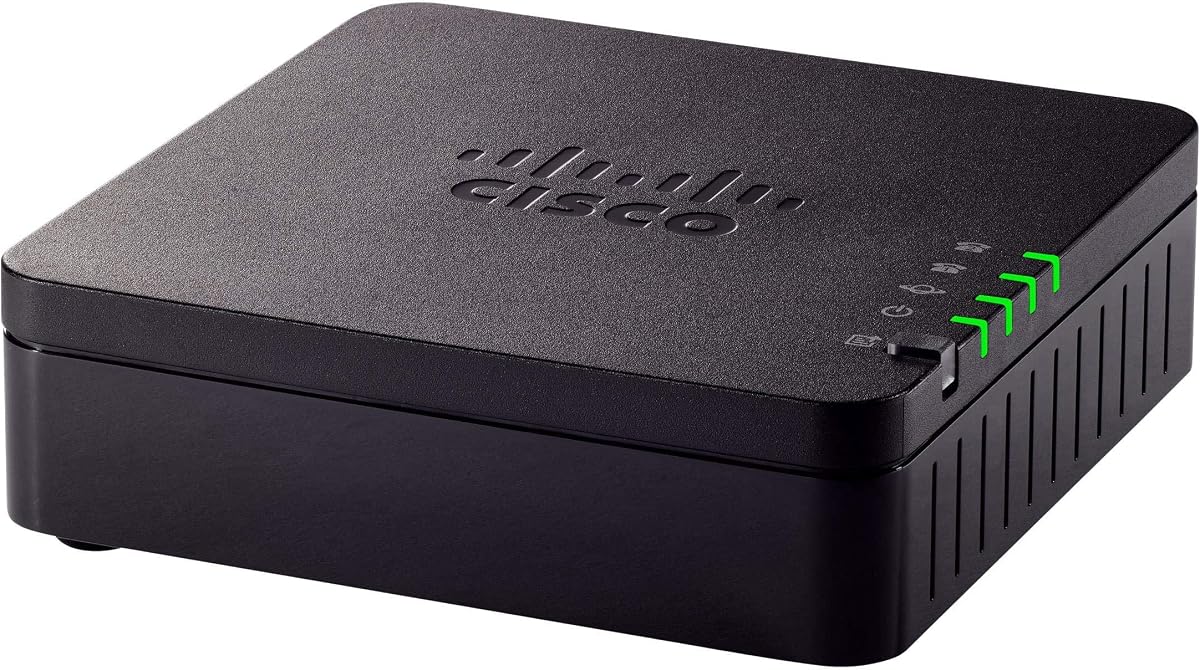
The Grandstream HandyTone 801 is a straightforward choice when one traditional phone needs to operate as a SIP extension. It carries a supplied rating of 4.1 out of 5 and focuses on a deliberately simple configuration: one FXS port, one SIP profile, and one 10/100Mbps Ethernet connection. That limited capacity makes it less suitable for a multi-device office, but it can be an economical match for a home office, reception desk, or single-user installation.
We may earn a commission when you buy through this link, at no additional cost to you.
Despite its compact scope, the HandyTone 801 includes features commonly associated with more advanced business adapters. TLS and SRTP encryption help protect calls and account credentials, while TR-069 and XML file support make it possible to automate configuration in managed environments. Three-way voice conferencing provides a useful calling feature for users who regularly need quick group discussions without calling a separate meeting service.
Its single-port limitation is the central trade-off. There is no room for a second analog phone, fax machine, or paging device, and users with several legacy endpoints will need a multi-port solution. The Ethernet interface is also limited to 10/100Mbps, though it is generally sufficient for voice. As with any ATA, the device also depends on a functioning SIP service or PBX; it does not provide telephone service by itself.
The HandyTone 801 is best recommended for a buyer who values simplicity, secure protocols, and a straightforward way to retain one working corded phone. It is less compelling when future expansion, fax support, or multiple simultaneous analog devices are priorities. For that narrow but common use case, it delivers an uncomplicated bridge between legacy hardware and modern calling.
The HandyTone 801 lets a familiar corded phone become a SIP endpoint without replacing the handset. It is an effective bridge when one analog device remains in daily use and simplicity matters more than expansion.
TLS and SRTP support address signaling and media security. Automated provisioning options also make the adapter easier to deploy and maintain across a managed fleet of single-line users.
We may earn a commission when you buy through this link, at no additional cost to you.
The original Grandstream HT802 offers a balanced way to move two analog devices onto a VoIP network. Its supplied rating is 4.3 out of 5, and its central specifications closely match the needs of small offices: two FXS ports, two SIP profiles, and one 10/100Mbps Ethernet interface. It is a natural option for a desk phone and fax machine, two extension phones, or a phone and paging device.
We may earn a commission when you buy through this link, at no additional cost to you.
The adapter supports TLS and SRTP encryption, allowing signaling and media to be protected when the SIP provider and network configuration support those protocols. Automated provisioning through TR-069 or XML configuration files can simplify deployment across multiple sites. The ability to use distinct SIP profiles for the two lines also gives an installer more freedom than a basic single-account converter.
The chief drawback is that this listing describes an earlier HT802 model rather than the newer V2. The supplied information does not mention T.38 fax support, three-way conferencing, automatic server failover, or a broad caller ID selection for this version. Those omissions may not matter to buyers focused on basic calling, but they distinguish it from the more extensively equipped V2. Firmware management is another consideration because compatibility and support practices can change over time.
This HT802 is a sensible option for users who need two analog endpoints and secure, provisionable SIP connectivity without requiring a larger gateway. It is particularly attractive when its current listing offers a favorable cost compared with newer alternatives. Buyers who need verified fax-over-IP support or detailed voice features should examine the current firmware documentation. Otherwise, it provides a proven, compact path to preserve two analog phones.
The HT802 preserves two analog endpoints in a relatively compact adapter. That makes it useful for small offices where a traditional PBX replacement would otherwise strand phones, fax machines, or paging equipment.
TR-069 and XML configuration support allow administrators to standardize settings. These methods are useful for distributed installations where visiting each adapter manually would add time and operational complexity.
We may earn a commission when you buy through this link, at no additional cost to you.
The Cisco ATA 191 is a premium-oriented option for organizations that place greater emphasis on voice processing, security, and managed network deployment. It has a supplied rating of 4.2 out of 5 and provides two RJ-11 FXS ports plus a 10/100Mbps RJ-45 Ethernet connection. Its multiplatform design is well suited to small offices and branch sites that still depend on analog phones or related equipment.
We may earn a commission when you buy through this link, at no additional cost to you.
The adapter's audio design is a key differentiator. Advanced preprocessing, high-performance echo cancellation, voice activity detection, and comfort noise generation are all intended to improve the perceived quality of conversations. These features are valuable in offices with shared spaces, speakerphones, or varied calling conditions, where echo and inconsistent background noise can quickly undermine a VoIP deployment.
Security support is another reason to consider this model for professional environments. It supports Transport Layer Security, SHA-2, and newer Secure Real-time Protocol cipher suites. The two-port hardware layout allows an installer to retain a phone and another analog endpoint, while the one-year limited hardware warranty provides a defined level of after-sales protection. Its principal disadvantages are the 10/100Mbps Ethernet interface and the higher relative cost of the platform.
The ATA 191 is a compelling recommendation for IT teams that want enterprise call-quality processing and security in a two-port analog bridge. It is less attractive for a casual buyer or a single-phone home office, where the simpler HandyTone 801 would be easier to justify. Still, for professional networks, controlled deployments, and legacy equipment that must remain in service, the ATA 191 offers a strong combination of functionality and support.
Echo cancellation, voice activity detection, preprocessing, and comfort noise work together to produce a more natural soundscape. These capabilities are especially relevant for hands-free phones in shared offices.
TLS, SHA-2, and updated sRTP cipher support help protect SIP signaling and media. Buyers should still verify that their provider, PBX, and network policies support the selected encryption options.
We may earn a commission when you buy through this link, at no additional cost to you.
The FLYINGVOICE FWR8101 is an unconventional analog telephone adapter with built-in wireless networking. Its supplied rating is 3.1 out of 5 is the lowest in this group, but the product serves a noticeably different use case. With one FXS port, one SIP line, 2.4GHz 300Mbps Wi-Fi, AP mode, and repeater mode, it is aimed at mobile professionals, temporary offices, consultants, and business travelers.
We may earn a commission when you buy through this link, at no additional cost to you.
Its strongest feature is the ability to act as more than a voice bridge. In AP mode, it can establish a small wireless network for a co-working space, field location, or temporary office. Repeater mode can extend an existing wireless signal, allowing VoIP communications and network access to coexist in locations where a permanent Ethernet installation is inconvenient. This makes the adapter potentially useful for rapid deployments and portable work arrangements.
The FWR8101 also supports T.30 and T.38 fax transmission over SIP, subject to PBX or ISP registration requirements. That makes fax-capable legacy machines more practical in a VoIP setup. Its one-FXS design remains a limitation for organizations with several analog devices, and the specification says it is intended for business users with PBX or SIP services rather than casual users.
The lower customer rating warrants careful consideration, particularly when purchasing for a critical office. Buyers should verify current firmware, Wi-Fi behavior, SIP interoperability, and configuration support before committing. Even so, the FWR8101 fills a niche that wired-only ATAs do not: a portable adapter with fax support and temporary wireless networking for business users. It is best suited to a well-defined mobile deployment rather than a conventional permanent office.
AP and repeater modes let the unit support temporary or extended wireless connectivity. This is useful where installing Ethernet would be impractical or where a traveling professional needs a controlled local network.
Support for both T.30 and T.38 protocols allows compatible fax machines to operate within a SIP workflow. The PBX or ISP registration requirement makes compatibility verification an essential part of purchase planning.
We may earn a commission when you buy through this link, at no additional cost to you.
The renewed Cisco ATA 192 provides a two-port bridge for organizations trying to move traditional telephone, fax, and overhead paging equipment onto IP networks. Its supplied rating is 4.1 out of 5, and its multiplatform approach supports enterprise networks, small offices, and cloud-based unified communications environments. It is particularly relevant when preserving analog investments matters more than buying newly manufactured equipment.
We may earn a commission when you buy through this link, at no additional cost to you.
The adapter can turn traditional communication devices into IP-connected endpoints, extending the useful life of equipment that would otherwise be replaced during a network transition. Its two-port format permits more than one legacy device to be connected, reducing the number of separate adapters required for a small deployment. The renewed listing includes a one-year limited hardware warranty, offering some coverage despite the refurbished status.
The most important trade-off is condition. Because this is a renewed unit, buyers should review the seller's description, included accessories, return terms, and warranty details carefully. The available product information is also less specific about individual audio, encryption, and provisioning capabilities than the information supplied for the ATA 191. It is therefore best to confirm the exact configuration and current software support.
The ATA 192 Renewed is best suited to an office that already has one or two analog devices to preserve and wants a recognized enterprise platform. It is less appropriate for a buyer who prioritizes the most current feature set or cannot accept refurbished hardware. When the goal is measured migration rather than wholesale equipment replacement, this model can offer a practical two-port path into a modern unified communications network.
The ATA 192 lets phones, fax machines, and paging devices continue operating through an IP network. This staged migration approach can reduce disruption while an organization updates its broader communications system.
The multiplatform design is suited to small offices, enterprise networks, and UCaaS environments. Buyers should still confirm SIP interoperability and required configuration with their chosen platform before installation.
We may earn a commission when you buy through this link, at no additional cost to you.
The renewed Cisco ATA 191 combines the established ATA 191 platform with a more economical route into two-port analog connectivity. It has a supplied rating of 4.3 out of 5, one point higher than the supplied rating for the standard ATA 191 listing. Two RJ-11 FXS ports and one 10/100Mbps RJ-45 Ethernet connection give it the practical layout required for a phone plus another analog endpoint.
We may earn a commission when you buy through this link, at no additional cost to you.
Its voice features distinguish it from basic one-port converters. Advanced preprocessing, high-performance echo cancellation, voice activity detection, and comfort noise generation are intended to support clear, natural conversations. For offices using speakerphones, the echo-control features may be particularly valuable. The adapter also supports TLS, SHA-2, and newer sRTP cipher suites, giving administrators a broader security foundation for SIP deployments.
As a renewed product, the ATA 191 presents a condition-related compromise. Physical appearance, prior usage, included power adapters, and accessory completeness may vary, so the listing details and warranty terms deserve careful review. Its 10/100Mbps Ethernet port is sufficient for ordinary analog voice traffic but is not a Gigabit interface. The model also requires a compatible SIP environment and appropriate endpoint settings.
This renewed ATA 191 is a strong candidate for a controlled business deployment that values two ports, refined call processing, and recognized security support without purchasing a new unit. It is especially suitable for small offices and branch locations that already have reliable analog phones to preserve. Verify the condition, firmware expectations, and provider compatibility before purchase to ensure the renewed unit suits the installation.
Advanced echo cancellation and voice activity detection help manage the most common VoIP quality problems. These features are valuable when a desk phone is used on speakerphone in a shared office.
The renewed status can make a feature-rich two-port adapter more practical for a controlled budget. Carefully examine condition, return rights, and the one-year limited hardware warranty before ordering.
We may earn a commission when you buy through this link, at no additional cost to you.
The ATA 187 is a compact, refurbished analog telephone adapter with a supplied rating of 4.5 out of 5. Its listed hardware is simple: one RJ-45 connection for the network side and support for an analog endpoint. The limited technical description means it is best evaluated as a focused single-line bridge rather than a feature-packed business gateway.
We may earn a commission when you buy through this link, at no additional cost to you.
The product's appeal lies in its simplicity and favorable customer feedback. A traditional phone can be connected to a VoIP network without replacing the handset, and the single RJ-45 connection keeps deployment relatively uncomplicated. RoHS compliance indicates attention to restrictions around certain hazardous substances in electronic equipment, although that designation alone does not determine performance or security capabilities.
The refurbished condition is the most significant practical issue. A buyer cannot assume that the unit's cosmetic condition, firmware state, and included accessories match a new product. The sparse listing information also does not confirm modern encryption suites, audio-processing features, SIP profile count, or provisioning methods. It should therefore be purchased only after the seller confirms the hardware revision and its compatibility with the intended SIP service or PBX.
The ATA 187 is recommended for a buyer who needs one analog phone, values a simple unit, and is comfortable with refurbished equipment. It is less suitable for users who require a current two-port platform, verified fax support, or comprehensive enterprise management features. At 4.5 supplied rating, it has a favorable feedback profile, but the limited documentation makes careful seller communication more important than the star figure alone.
The ATA 187 focuses on connecting one traditional endpoint to the IP side through RJ-45. This limited scope can be useful for a simple office or legacy device that needs a new route to VoIP.
Before ordering, ask about cosmetic condition, firmware, included cables or power supplies, and return coverage. Those details can matter more than the headline rating when documentation is limited.
We may earn a commission when you buy through this link, at no additional cost to you.
The Grandstream eight-port FXS gateway is the high-capacity option in this roundup. It carries the highest supplied customer rating at 5.0 out of 5 and provides eight FXS connections, two RJ-45 network interfaces, Gigabit Ethernet, and integrated NAT router functionality. Where most adapters serve one or two phones, this unit is intended to bring a larger group of analog endpoints onto an IP network.
We may earn a commission when you buy through this link, at no additional cost to you.
Port density is its defining advantage. A school, clinic, warehouse, property manager, or small hospitality operation may have several analog devices that would be costly or inconvenient to replace. Eight FXS ports allow those devices to share one central gateway, with the two RJ-45 connections supporting network integration and a high-capacity uplink. Gigabit Ethernet is also a meaningful step up from the 10/100Mbps ports on many two-port models.
The trade-off is that this gateway is excessive for a household or one-person office. It adds more configuration responsibility, consumes more space, and may cost more than a simple one- or two-port adapter. The listing provides fewer details about specific SIP profiles, voice codecs, encryption, and provisioning than the more detailed product entries, so buyers should request the applicable documentation and confirm exact operating behavior.
This gateway is recommended for organizations with several existing analog phones, fax machines, or paging endpoints that need a coordinated transition to VoIP. Its strong customer rating and generous port count make it especially attractive when replacing each adapter separately would be inconvenient. Treat it as a small analog gateway rather than a general home router, and plan its deployment around the SIP service, cabling, and number of endpoints it must support.
Eight FXS ports provide a much better fit for departments with numerous analog devices. Centralizing those endpoints can simplify cabling and reduce the number of separate adapters needed for the transition.
Gigabit Ethernet and dual RJ-45 connections offer more network capacity than a typical two-port 10/100Mbps ATA. That headroom can be valuable in a gateway intended to serve multiple voice endpoints.
We may earn a commission when you buy through this link, at no additional cost to you.
The Grandstream HT812 V2 is a two-port VoIP ATA aimed at users who want stronger audio quality and a few advanced calling features in a compact unit. Its supplied rating is 4.5 out of 5. It supports two FXS ports, two SIP profiles, wideband HD codec support, T.38 fax, and a high-performance NAT router, making it a notable alternative to the similarly sized HT802 V2.
We may earn a commission when you buy through this link, at no additional cost to you.
Wideband audio is the feature that most clearly distinguishes the HT812 V2. An HD codec can produce a fuller, more natural voice representation than a narrowband-only setup, which may be noticeable on supported networks and compatible endpoints. Three-way voice conferencing is also provided for each port, allowing a basic multiparty conversation without a separate conferencing appliance.
Operational versatility is another strength. T.38 fax support allows compatible fax equipment to send documents reliably over IP, and the integrated high-performance NAT router can support network routing needs around the adapter. Per-unit AES encryption with a security certificate adds a layer of protection, while two SIP profiles provide flexibility for separate registrations. The supplied information does not detail the precise provisioning options, so buyers should verify those against their management requirements.
The HT812 V2 is a strong recommendation for a small office with two analog endpoints where call quality, fax support, and local routing matter. It may be especially attractive for users comparing it with the HT802 V2 and prioritizing wideband codec support. Two ports are not enough for a larger analog estate, but for a phone-and-fax or two-desk-phone installation, this adapter offers a capable and compact bridge to VoIP.
Wideband HD codec support can make conversations sound fuller and more natural when the SIP service, network, and calling endpoint support it. Codec availability should be verified before expecting a consistent result.
T.38 fax, per-port conferencing, two SIP profiles, and integrated NAT routing extend beyond a minimal phone converter. These extras make the HT812 V2 more useful for practical small-office workflows.
We may earn a commission when you buy through this link, at no additional cost to you.
Choosing an analog telephone adapter starts with the legacy devices you need to connect, but SIP compatibility, voice quality, security, and administration determine whether the unit will work smoothly in production. Use the following factors to build a practical shortlist.
An FXS port provides an analog phone interface, so match the adapter's port count to the number of traditional devices that must connect. A one-port model is sufficient for a single desk phone, while two ports accommodate a phone plus fax machine or two separate extensions. The Grandstream eight-port gateway serves a fundamentally different market involving many analog endpoints in one location. Count not only current phones but also paging equipment, fax machines, and likely expansion needs.
Choose just enough capacity for a clear deployment plan. Too few ports can require additional adapters, while excessive capacity may add cost and configuration complexity without a practical benefit.
An ATA normally requires a SIP service, PBX, or another compatible voice platform. Check the provider's registration method, supported SIP versions, codec behavior, and whether the adapter can work with the required number of lines. The FLYINGVOICE FWR8101 specifically requires PBX or SIP service, making this consideration especially important for buyers creating remote offices.
Compatibility also involves the platform's configuration method. Some environments can provision adapters automatically, while others require manual entry of server addresses, credentials, codecs, and routing details. Never assume that an adapter marketed as SIP-capable will work without checking the actual service.
Echo cancellation, voice activity detection, preprocessing, and comfort noise can materially affect calls on speakerphones and in shared offices. The Cisco ATA 191 and renewed ATA 191 listings emphasize these capabilities, while the Grandstream HT812 V2 offers wideband HD codec support. The actual result also depends on the telephone, SIP provider, network conditions, and negotiated codec.
Prioritize voice processing for noisy workspaces or heavy speakerphone use. For a quiet single-user office, the basic three-way conferencing and codec support found in simpler adapters may be sufficient.
TLS and SRTP are important considerations for SIP signaling and media. The Grandstream HT802 V2, HandyTone 801, and original HT802 list TLS and SRTP support, while the Cisco ATA 191 listings add SHA-2 and newer sRTP cipher suites. The HT812 V2 lists AES encryption with a per-unit security certificate. Confirm which methods your provider supports and whether they are enabled automatically or require configuration.
A security feature is useful only when both endpoints support compatible settings. Avoid judging an adapter by protocol names alone; verify authentication, certificate handling, firmware practices, and administrator access as well.
Fax capability is a decisive feature for healthcare, legal, government, and administrative environments. T.38 fax support appears on the Grandstream HT802 V2, the HT812 V2, and the FLYINGVOICE FWR8101, which also lists T.30. Fax still depends on a compatible analog machine, SIP registration, and correct codec or protocol negotiation. If paging, distinctive ring detection, or analog caller ID is required, verify those features explicitly rather than inferring them from general ATA support.
Specialized use cases deserve exact product matching. A model that excels at voice may not handle fax or paging consistently, while a gateway optimized for many endpoints may lack the administrative detail needed for a small remote installation.
Manual configuration can be adequate for one adapter, but distributed deployments benefit from automation. The HT802 V2, HandyTone 801, and original HT802 support TR-069 and XML configuration files, and the HT802 V2 also works with Grandstream UCM IP PBXs for Zero Configuration provisioning. Automatic provisioning reduces repetitive work, standardizes settings, and makes software or configuration changes easier to manage.
Confirm that your existing management platform supports the advertised method. If it does not, choose an adapter with a familiar interface or budget more time for initial and ongoing manual configuration.
Most two-port ATAs use a single 10/100Mbps RJ-45 connection, which is generally adequate for standard voice traffic. The Grandstream eight-port gateway offers Gigabit Ethernet and two RJ-45 connections for higher-capacity use. The FLYINGVOICE FWR8101 is different because it includes 2.4GHz 300Mbps Wi-Fi with AP and repeater modes, making it useful for temporary offices and locations without convenient Ethernet access.
Choose based on the network you actually have, not the highest headline speed. A wireless convenience feature should not be treated as a substitute for a stable wired network in a busy business installation.
New, renewed, and refurbished products require different levels of scrutiny. Renewed Cisco adapters and the refurbished ATA 187 may offer practical economics, but condition, included accessories, firmware, and return terms can vary. The ATA 187 has a supplied rating of 4.5, but its listing provides limited technical detail, making direct seller questions especially important. Newer Grandstream models also benefit from current firmware guidance, including the HT802 V2 recommendation to upgrade promptly.
Check warranty coverage, support availability, firmware access, and compatibility documentation. A modest savings is less attractive if the adapter cannot be provisioned or serviced in the way your organization requires.
Begin by identifying the power, Ethernet, and analog phone connections. Connect the adapter to the SIP service or PBX as directed by the platform, then attach the legacy phone to its FXS port. Use the adapter's web or configuration interface to enter the required SIP server, credentials, transport settings, codecs, and number plan. Test outbound and inbound calls before moving the device into its permanent position.
For deployments with multiple adapters, standardize configuration through TR-069, XML files, or a compatible PBX provisioning method where available. Keep the current Grandstream firmware guidance in mind, especially the HT802 V2 recommendation to upgrade to version 1.0.19.11 or the latest release. Document line assignments, port usage, and network addresses so troubleshooting does not depend on memory.
Place the adapter in a ventilated, dry location away from direct heat and excessive dust. Keep cabling strain-free and do not connect or disconnect the RJ-11 analog equipment while a call is active. For fax users, verify T.30 or T.38 negotiation and use a compatible line configuration. Renewed or refurbished units deserve regular visual and functional checks because component age and previous use can affect long-term reliability.
An analog telephone adapter connects a traditional phone, fax machine, or paging device to a VoIP network. It typically provides an FXS port for the analog endpoint and an Ethernet connection to a SIP service or PBX. This lets organizations retain useful legacy equipment while calls are routed over IP.
Yes, an ATA normally needs access to a SIP service, PBX, or compatible VoIP platform. The adapter converts between the analog endpoint and SIP signaling; it does not create telephone service by itself. Confirm the provider's registration method, supported codecs, and number of simultaneous lines before purchasing.
A one-port ATA can serve one analog device, while a two-port ATA can serve two simultaneously registered analog endpoints. The extra port may be used for a second phone, fax machine, or paging device. A two-port model offers more flexibility, but it also requires suitable SIP profiles and network configuration.
Yes, but the adapter must specifically support fax over IP. The Grandstream HT802 V2 and HT812 V2 list T.38 support, while the FLYINGVOICE FWR8101 lists T.30 and T.38. You will also need a compatible fax machine and a SIP service or PBX that supports the required protocol and negotiation.
It can be worthwhile when the equipment has been inspected, the firmware is current, and suitable warranty or return coverage is provided. Renewed Cisco models and the refurbished ATA 187 may reduce acquisition cost, but the included accessories and physical condition can vary. Review the listing and seller policies carefully before ordering.
Most wired ATAs require an Ethernet connection to the SIP service or PBX. The FLYINGVOICE FWR8101 is an exception because it includes 2.4GHz Wi-Fi with AP and repeater modes, making it useful for temporary or mobile deployments. For consistent business calling, a stable wired connection is generally preferable.
Look for support for TLS and SRTP, then make sure your SIP provider and PBX use compatible encryption settings. Some models add SHA-2, newer sRTP cipher suites, or per-unit AES security certificates. Keep the firmware updated and restrict administrative access, because protocol support alone does not make a poorly configured adapter secure.
It can, but the outcome depends on the adapter, phone, network, provider, and codec. Features such as echo cancellation, voice activity detection, comfort noise, and wideband HD codecs can improve the experience, especially on speakerphones. A basic ATA will generally preserve call quality rather than automatically transform it.
The Grandstream HT802 V2 is the most balanced overall choice, combining two FXS ports, two SIP profiles, encrypted communications, automated provisioning, caller ID support, fax capability, and server failover. The HandyTone 801 suits a simple one-phone deployment, while the Cisco ATA 191 is a premium choice for organizations prioritizing advanced voice processing and enterprise-oriented security.
Prioritize the requirements that cannot be changed after deployment: the number of analog devices, SIP platform compatibility, required fax or paging functions, security standards, and provisioning method. Voice quality deserves close attention in shared offices, while temporary or remote locations may benefit more from a wireless-capable adapter. High-capacity gateways should be reserved for installations with enough analog endpoints to justify their size.
Finally, check the current product listing, seller information, firmware guidance, warranty terms, and compatibility documents before ordering. Customer ratings provide useful context, but the actual fit of an ATA depends on the phone, provider, PBX, and network behind it. Prices and availability can change, so confirm the current offer rather than relying on a previous purchase impression.