
Radial Mix 2:1
4.8Editor score
Two passive mono inputs
One mono summing output
Simple analog signal path
Our analog summing mixers guide compares ten models for studio summing, monitoring, live mixing, and DJ workflows, including features, ratings, and routing
Analog summing mixers combine multiple audio paths through discrete circuitry, adding warmth, interaction, and the practical character of traditional mixing consoles. A strong model can serve as a studio summing hub, a live mixing center, or a focused DJ signal processor, depending on its routing, preamps, filters, and monitoring controls.
We compared all ten products by examining channel count, summing architecture, preamp quality, equalization, filters, effects, monitoring, outputs, and workflow fit. The list includes dedicated studio summing consoles, compact analog mixers, and performance-oriented DJ mixers that share important signal-flow characteristics.
Each pick reveals a different reason to choose analog, from straightforward passive summing to elaborate console-style monitoring and hybrid USB recording. Product ratings and features may change over time, and prices also fluctuate, so readers should verify the latest listing before making a purchase.
The most important distinction is that not every analog mixer on this list performs the same job. Dedicated summing mixers are designed to receive multiple signals and combine them into a stereo master path, while general-purpose mixers add EQ, dynamics, and routing, and DJ mixers prioritize live performance with filters, cueing, and multiple output types.
4.8Editor score

5.0Editor score

The comparison below covers ten analog mixers with distinct roles, from a two-input passive summing box to premium studio consoles and performance mixers. Specifications emphasize practical distinctions in channel capacity, signal routing, processing, and output flexibility rather than treating every model as a direct equivalent.
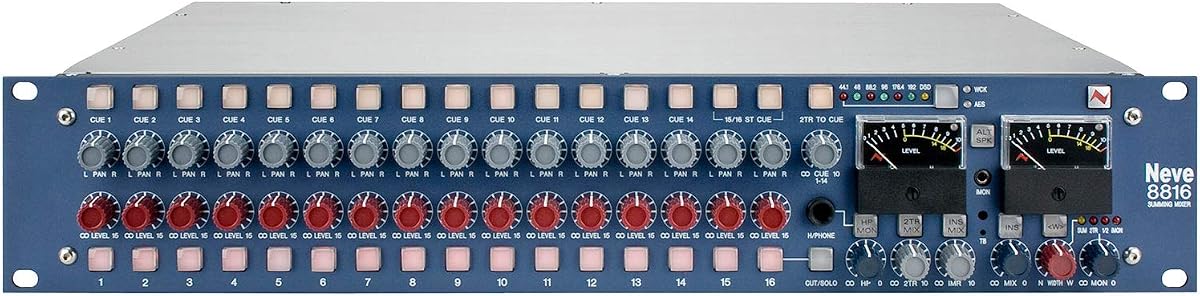




The Neve 8816 is a dedicated 16-channel summing and monitoring system built around transformer-balanced analog mixing. Its defining advantage is focus: rather than asking a general-purpose live mixer to perform a studio summing role, it presents a large input count, flexible output selection, headphone monitoring, and alternate speaker control as core functions. The supplied listing does not show a customer rating, so its reputation should be evaluated from its architecture and intended studio role.
We may earn a commission when you buy through this link, at no additional cost to you.
Sixteen channels make the 8816 useful when several outboard preamps, stereo sources, or separate recording feeds need to converge in one place. The transformer-balanced mixer can give the summed signal a classic console character, while the main and alternate speaker outputs offer practical monitoring choices. Two headphone outputs are particularly valuable for a control room where the engineer and a second listener may need independent access.
The main trade-off is that this is a specialized, high-end piece of studio infrastructure. Its scale makes it more demanding than a compact desktop mixer and inappropriate for someone who only needs to combine two signals. There is also no displayed customer rating in the supplied data, and detailed specifications about individual controls are limited. Even so, the dedicated summing architecture, transformer balance, and monitoring provisions make the 8816 especially compelling for serious multi-source studio workflows.
Choose the Neve 8816 when your priority is a high-capacity analog summing hub with integrated speaker selection and dual headphone monitoring. It is best suited to a professional or project studio that already has strong external preamps and wants the mixer to handle combination, routing, and auditioning rather than basic recording. For a smaller signal count or simpler live setup, a more compact mixer will be easier to operate and more economical.
The 8816 is designed as a summing and monitoring system, making its transformer-balanced 16-channel architecture more relevant to serious signal combination than a conventional live mixing desk. It suits studios that prefer analog summation as the final stage of an outboard-based recording chain.
Main and alternate speaker outputs, a monitoring section, and two headphone outputs make the mixer adaptable to different listening positions. This is especially useful when a second engineer, vocalist, or client needs a reliable cue feed during mixdown.
We may earn a commission when you buy through this link, at no additional cost to you.
The Radial Mix 2:1 is a two-channel passive summing mixer with two inputs, one mono output, and a 4.8 customer rating. It removes almost everything that is unnecessary for basic analog combination, including channel EQ, powered preamps, level meters, and control-room features. What remains is a direct, easy-to-understand tool for combining two signals into one.
We may earn a commission when you buy through this link, at no additional cost to you.
Its passive architecture is the central appeal. There is no power-supply dependency in the signal path, so the mixer can serve as a small summing junction between stereo or mono devices, a passive patch point, or a straightforward way to feed two sources into a single downstream input. The user controls the relative contribution with the source equipment rather than relying on an internal gain stage.
The limitations are equally clear. A mono output cannot preserve a conventional two-channel stereo image by itself, and the absence of EQ, preamps, metering, and independent headphone monitoring means it is not a complete console. Users who expect a full-featured analog mixer may find it too basic. However, those same limitations make it less complicated and more focused for its intended task.
The Radial is a strong choice for a producer who needs to combine two sources quickly, route a passive signal, or add an inexpensive analog summing element to a compact studio. It is not suited to live band mixing, multitrack recall, stereo mixdown, or critical level decisions. For those needs, a larger console offers more control. For the exact two-in, one-out job, however, this mixer is elegantly focused.
Two inputs feeding one mono output make the signal relationship transparent. This is useful when a single downstream device needs to hear both sources, especially if the source mixers already provide the necessary level control and tonal shaping.
The passive format means there are no digital menus, complicated routing screens, or power-management concerns. It can function as a small piece of infrastructure that stays out of the way while solving a basic signal-combination problem.
We may earn a commission when you buy through this link, at no additional cost to you.
The Rupert Neve Designs 5059 Satellite in its Shelford Edition is a dedicated 16 x 2+2 analog summing mixer. The format is tailored to a particular professional workflow: receiving multiple analog channels, combining them, and providing stereo plus additional output flexibility. The supplied listing does not include a numerical customer rating, but the product's design clearly places it among the premium choices in this guide.
We may earn a commission when you buy through this link, at no additional cost to you.
A 16 x 2+2 architecture can accommodate numerous premixed or individual sources without forcing the user into a conventional live console workflow. The Shelford Edition label is central to its identity, signaling a deliberate premium implementation rather than a repurposed compact mixer. That focus is valuable for engineers who want a dedicated final summing stage rather than treating a live board as a temporary solution.
As with other specialized studio hardware, the trade-off is cost and the need for a coherent surrounding system. The 5059 is most compelling when the rest of the studio uses quality outboard signal paths and the owner values a dedicated analog endpoint. It may offer less visible value than a general mixer for someone who also needs microphones, per-channel EQ, effects, and live input management. It also does not come with a displayed rating in the provided data, so buyers should examine the current product listing closely.
We recommend the 5059 for a serious analog or hybrid studio seeking a high-grade summing centerpiece. It is particularly convincing for users who value Rupert Neve Designs' premium analog approach and need more than the handful of inputs a basic passive box can handle. If the main goal is live sound or all-in-one recording, one of the more general mixers will offer a better fit.
The dedicated 16 x 2+2 format places the 5059 squarely in the role of a studio summing endpoint. It is an appealing centerpiece for outboard chains where several stereo and mono paths need to converge before a final master-bus or recording stage.
The Shelford Edition implementation adds a clear product identity to what might otherwise be a generic channel count. Buyers attracted to premium analog circuitry are buying a particular signal flavor and design philosophy, not merely extra inputs.
We may earn a commission when you buy through this link, at no additional cost to you.
The Headliner R4 is a four-channel analog rotary DJ mixer with a 4.8 customer rating and a built-in filter. It belongs in this guide because its signal flow and four-channel analog construction overlap with the broader appeal of multi-input mixing, although its primary purpose is DJ performance rather than studio summing. Its strengths are immediate source control, expressive filtering, and flexible output routing.
We may earn a commission when you buy through this link, at no additional cost to you.
Each stereo channel includes gain, a peak LED, a three-band isolator EQ, a generous volume control, and a filter activation switch. The high-pass and low-pass filter offers frequency and resonance adjustments, allowing performers to shape transitions and create movement across the frequency spectrum. Four line inputs, three phono inputs, and two microphone inputs provide broad compatibility with turntables, media players, and microphones.
Its main limitation is purpose. The R4 lacks the kind of dedicated studio monitoring section, talkback features, multi-track recording, or mastering-oriented signal chain that a true summing mixer would normally provide. Rotary controls may also feel less immediately familiar to engineers accustomed to vertical faders. On the other hand, those traits are deliberate for live DJ use, where smooth control and rapid expression matter more than mixdown recall.
The R4 is best for DJs who want four stereo sources, performance-oriented filters, and independent booth and master outputs without moving into a substantially larger console. It should not be selected simply because the keyword contains analog mixing; choose it when the DJ feature set, rotary format, and filter controls match your performance style. For project-studio summing, the Neve, Rupert Neve Designs, or SSL options are more direct choices.
The dedicated filter section includes high-pass and low-pass modes, frequency adjustment, and resonance control. These controls can transform the tonal character of a channel during a transition, making the R4 more than a straightforward four-input blend.
Line, phono, and microphone connections allow a DJ to combine playback devices, turntables, and vocal sources. Independent master and booth level controls simplify the transition between a main system and a separate monitor system.
We may earn a commission when you buy through this link, at no additional cost to you.
The Mackie Onyx Series 16-Channel Premium Analog Mixer is a broad all-in-one option with a 4.4 rating. It combines a traditional analog channel surface with USB multitrack recording, direct SD card capture, an effects engine, and Bluetooth streaming. It is not a minimalist summing mixer, but it gives a home or project studio an efficient way to combine many sources, shape them, and capture the result.
We may earn a commission when you buy through this link, at no additional cost to you.
High-resolution 96 kHz, 24-bit recording to Mac or PC is the standout feature for hybrid production. Direct stereo recording and playback to an SD card adds a useful alternative when a computer is not part of the immediate workflow. Four Onyx preamps with up to 60 dB of gain and Perkins-style equalization give the mixer stronger standalone recording and live-mixing capabilities than a basic analog summer.
The trade-off is that the product does many things rather than excelling only at passive or dedicated summing. A user who wants a pristine, simple analog endpoint may prefer the lower complexity of the Radial or a more specialized console. USB setup, computer compatibility, and storage management also add variables that are irrelevant in a fully analog session. Nevertheless, the combination of channel count, recording, and familiar live-mixer ergonomics is unusually versatile.
Choose this Mackie when you need a central mixer for rehearsals, small sessions, live performance, and multitrack capture. It is especially useful for a project studio that wants analog mixing at the core but still expects to record directly from the console. For a large professional control room with specialized outboard monitoring, a premium dedicated summing mixer will better match the task.
Sixteen analog channels, multitrack USB, SD recording, and an effects engine make this a practical center for rehearsal, live use, and hybrid production. It reduces the need for separate pieces when one console can combine the signal path and capture the session.
Direct digital capture of the mixer output can complement an analog workflow. It does not turn the console into a full digital mixer, but it provides a practical bridge for taking a final performance or mix into a computer-based editing session.
We may earn a commission when you buy through this link, at no additional cost to you.
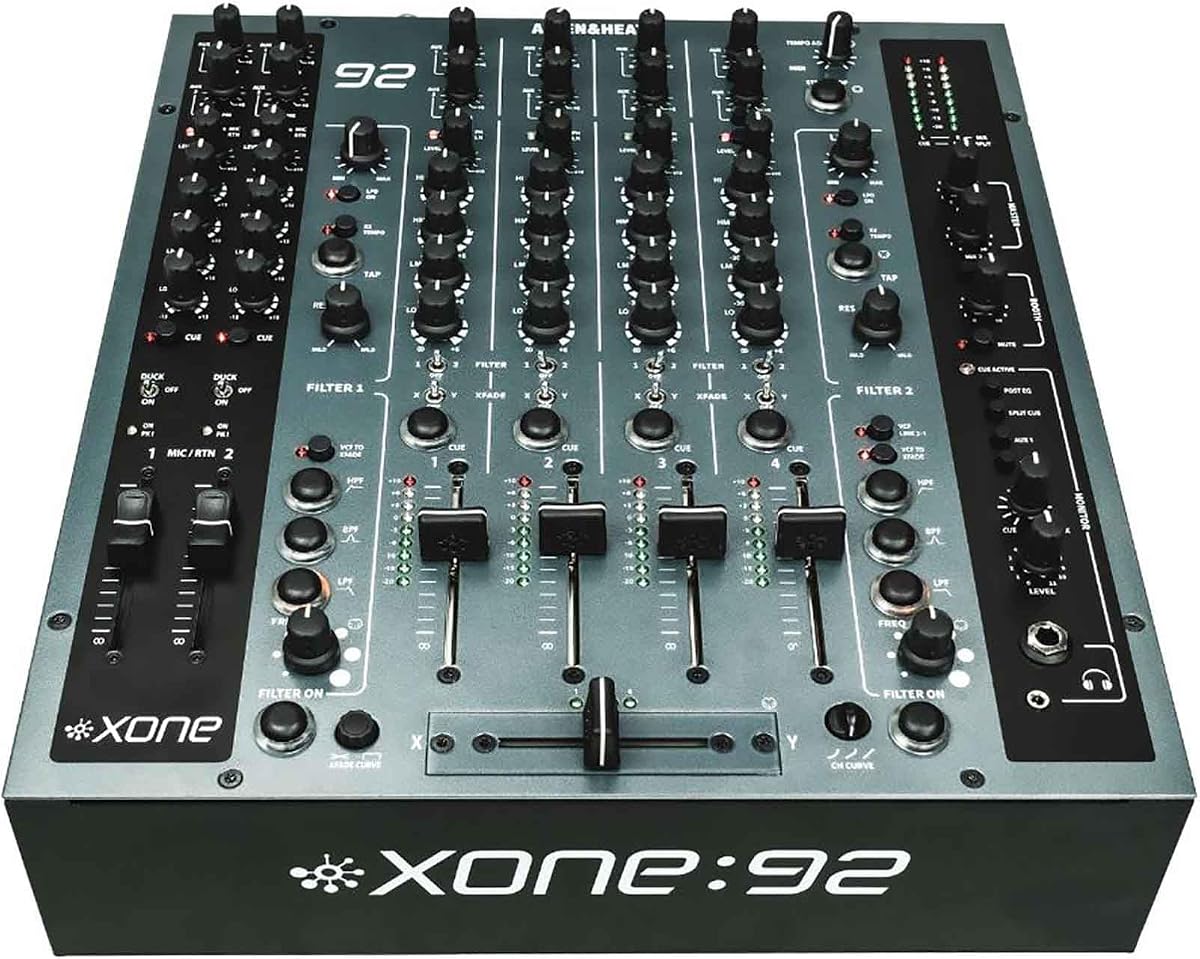
The Allen & Heath Xone:92 Mk2 is a four-channel analog DJ mixer centered on performance flexibility. The supplied listing does not show a customer rating, but its feature set gives it a clear role: a premium live mixing surface for DJs who need multiple filter options, external effects integration, and flexible auxiliary routing.
We may earn a commission when you buy through this link, at no additional cost to you.
The headline control is Xone:VCF switching, supported by two multimode filter sections. These filters can shape channel sound during a transition, while two stereo auxiliary connections and two send-and-return paths create room for external processing. Two microphone inputs support announcements or performance vocals, and the four-channel format is enough to blend multiple playback devices or decks.
As a studio summing option, it is less conventional than a dedicated console. The feature emphasis is on live performance, not mastering, talkback, or multitrack capture. Some users may also find the layout more demanding if their primary activity is stationary mixing. Those caveats are reasonable because the Xone:92 Mk2 is optimized for DJs who value a serious analog signal path and flexible real-time control.
The right buyer is a working DJ who wants a four-channel analog mixer with more performance-oriented options than a basic club mixer. It is also useful for a rehearsal or education setup where filter experimentation and external effects are central. For conventional studio summing, choose one of the dedicated Neve, Rupert Neve Designs, SSL, or compact Mackie options instead.
Two multimode filter sections give performers more ways to alter a channel's tonal behavior. This is valuable for transitions that need to evolve in real time rather than relying only on gain and EQ changes.
Two stereo auxiliary connections and two send-and-return paths give external processors multiple roles. That flexibility is useful for DJ effects, loop devices, and studio-style outboard treatments within a performance setup.
We may earn a commission when you buy through this link, at no additional cost to you.
The Allen & Heath Xone:43 is a 4+1-channel analog DJ mixer with a 5.0 customer rating. Its design balances performance features with a relatively compact channel count, making it an attractive option for DJs who need reliable source control, expressive filtering, and external effects support without an oversized console.
We may earn a commission when you buy through this link, at no additional cost to you.
The Xone Voltage Controlled Filter system includes high-pass and low-pass modes, resonance control, and filter-frequency adjustment. Individual send-and-return connections, along with a dry/wet level for each channel, make it easier to blend an external effects unit into the performance without rebuilding the signal path. Dedicated booth and record outputs provide practical control over monitoring and capture destinations.
Its primary limitation is that a 4+1 layout is designed around a DJ workflow rather than broad studio channel management. It does not offer the per-channel EQ, auxiliary buses, and multitrack connectivity of a conventional console. The perfect rating is encouraging, although it should be understood as the supplied listing's customer feedback rather than a guarantee of performance in every setup.
Choose the Xone:43 for a focused DJ rig that values filter control, external effects, and clean output routing. It can also support a small rehearsal or multimedia setup where four main channels plus one auxiliary channel are sufficient. Buyers seeking a dedicated analog summing station should look toward a model with more inputs and studio monitoring provisions rather than interpreting the 4+1 arrangement as general-purpose mixing.
The voltage-controlled filter system gives each mixing task an expressive performance control. Frequency and resonance adjustments can create focused sweeps, tonal removals, or dynamic changes that complement conventional gain and EQ operation.
Dedicated booth and record outputs separate the needs of a performer, a monitor system, and a capture device. That routing clarity can make a compact DJ setup easier to manage in rehearsal, small venues, or streaming-oriented setups.
We may earn a commission when you buy through this link, at no additional cost to you.
The Mackie 1202VLZ4 is a compact 12-channel analog mixer with a 4.9 rating. It is not a dedicated summing console, but it is one of the most balanced general-purpose options in this guide, offering enough preamp quality, equalization, routing, and monitoring for small studios, rehearsals, broadcasts, and live events.
We may earn a commission when you buy through this link, at no additional cost to you.
Four Onyx microphone preamps provide a 60 dB gain range and phantom power for condenser microphones. Twelve high-margin line inputs support instruments, playback devices, and preamps, while each channel has a three-band EQ and a 75 Hz low-cut filter. The specification highlights distortion below 0.0007 percent from 20 Hz to 50 kHz and a 128.5 dB dynamic range, making it more technically ambitious than a basic compact mixer.
Routing is the feature that makes the 1202VLZ4 useful for summing-related tasks. Two auxiliary sends, per-channel level, pan, and solo PFL controls, two stereo feedback channels, a stereo 3/4 ALT bus, and a control and headphone section provide many ways to organize sources. The trade-off is complexity relative to a pure analog summer, and the lack of a built-in recording interface means computer capture requires separate equipment.
The Mackie is a good match for a home studio, rehearsal room, or small live event that needs more than passive combining but does not require a premium summing console. Its 12 channels can collect microphones, instruments, and playback devices into a coherent mix, while the 4.9 rating suggests strong buyer satisfaction. For high-end mastering or large control rooms, the dedicated Neve, Rupert Neve Designs, or SSL remains the more specialized choice.
Auxiliary sends, ALT stereo, feedback, and per-channel PFL options enable a compact mixer to function as more than a basic blend. These controls help isolate sources, build monitor mixes, and organize effects without moving to a much larger console.
Four Onyx microphone preamps, phantom power, low-noise performance, and a generous gain range give the mixer a credible foundation for recording and live microphones. Line inputs and per-channel filtering complete a versatile package for small-scale sessions.
We may earn a commission when you buy through this link, at no additional cost to you.
The Solid State Logic BiG SiX combines a SuperAnalogue mixing console, an 18-input mixdown summing path, and a 16-channel USB audio interface. Its 5.0 customer rating and unusually complete feature set make it our Editor's Choice for users who want analog summing and computer-based production to coexist in one system.
We may earn a commission when you buy through this link, at no additional cost to you.
The console includes four console-grade SuperAnalogue microphone preamps, four stereo line inputs, and two external inputs. Three-band equalization and dynamics are available as channel processing, while a stereo master-bus compressor and a listen-microphone compressor on the talkback input expand the control beyond basic mixing. The 24-bit, 96 kHz converters and USB connectivity make the unit relevant to both studio and stage production.
Most importantly for this category, the 18-input summing at mixdown provides real capacity for combining tracks or submixes. The comprehensive monitoring section adds another layer of utility, enabling more deliberate signal auditioning than a compact live mixer permits. This combination is more versatile than a simple passive summer, although the footprint and feature density can feel excessive if the task is merely to blend two channels.
The BiG SiX is our top all-around recommendation for a project studio, production room, or hybrid live environment that wants substantial analog summing alongside multitrack connectivity. It is also a compelling choice for an engineer who needs microphone capture, talkback, processing, and monitoring from a single central surface. Buyers should confirm their computer workflow and room requirements, but for broad capability, the feature balance is exceptional.
The 18-input mixdown section allows multiple analog paths to converge in a dedicated endpoint while the USB interface handles multitrack transfer. This makes the console practical for projects that begin as live sessions and continue as detailed mix work.
Microphone preamps, channel EQ, dynamics, master compression, talkback processing, and comprehensive monitoring extend far beyond simple summing. The result is a central surface for hybrid production rather than a narrow utility box.
We may earn a commission when you buy through this link, at no additional cost to you.
The Yamaha MG10 is a 10-input standalone analog mixer with a 4.7 rating. It does not attempt to be a premium dedicated summing console, but it offers one of the most approachable ways to combine, shape, and control a modest collection of analog sources in a home studio, rehearsal space, or small live setup.
We may earn a commission when you buy through this link, at no additional cost to you.
Its headline feature is the use of discrete class-A D-PRE preamps with an inverted Darlington circuit. Yamaha describes the result as fat, natural-sounding bass and smooth, soaring highs, while the actual character will depend on the rest of the signal chain and the source material. Three-band EQ and high-pass filters allow each input to be corrected, and one-knob compressors make it easy to add controlled density to vocals, guitars, bass, or drums.
The trade-offs are straightforward. There is no USB recording, no integrated effects engine, and only ten inputs, so the MG10 is a mixer rather than a hybrid production console. A user who needs digital capture will need an external interface, and a larger project may eventually exceed the available input count. The compact format, however, keeps the surface manageable and the signal flow understandable.
The Yamaha is a good recommendation for a beginner building a first analog mixing setup, a musician rehearsing a small ensemble, or a creator who wants a reliable ten-channel center without digital complexity. It can also serve as a basic studio summer for several already-conditioned sources. For those who need more routing, multitrack capture, or dedicated monitoring, a larger model offers a better long-term fit.
Three-band EQ, high-pass filtering, and one-knob compression give each source a manageable set of tonal and dynamic tools. The layout is approachable enough for new users while remaining useful for quick, repeatable decisions.
The impact-resistant powder-coated metal chassis is designed for repeated transport and setup. With no USB connection or effects engine to manage, the mixer remains a straightforward analog tool that can be used quickly.
We may earn a commission when you buy through this link, at no additional cost to you.
The right analog summing mixer depends on whether you need a simple passive junction, a hybrid recording console, a performance mixer, or a premium studio endpoint. Channel count, signal routing, preamp quality, monitoring, and physical workflow should be evaluated before choosing a model.
Begin by identifying what the mixer must do. A dedicated summing mixer receives several sources and combines them into a stereo or master path, while a live mixer manages microphones, instruments, monitors, and effects. A DJ mixer adds filters, cueing, phono inputs, and performance outputs. Choosing the wrong category can mean paying for useful features you will never use or lacking controls required every day.
Select a dedicated summer for high-end studio combining, a compact analog mixer for small sessions, and a DJ model for performance. The final decision should follow the workflow rather than the product label.
A nominal input count can be misleading because line, microphone, phono, channel, and auxiliary connections serve different purposes. Count every source that must remain available simultaneously, then add a small amount of headroom. For a basic stereo combination, two inputs may be enough; for stems, submixes, live microphones, and instruments, twelve or more channels may be more realistic.
Count the sources you need at once, not the number you might use in separate sessions. Choose enough useful inputs for the real workflow without paying for capacity that adds unnecessary complexity.
A passive mixer has no powered gain stage and generally cannot restore lost level. It is excellent for transparent combination when downstream equipment can handle the resulting signal, but poor level matching can cause overload or an unexpectedly weak output. Active mixers use powered circuitry, preamps, and gain controls, providing more control over the final level and often more processing.
Choose passive for simplicity and direct routing; choose active when level control, gain staging, EQ, or preamp capability matters. Verify whether the passive output preserves the signal level you need.
Preamp quality is critical when microphones or low-level instruments enter the mixer. Look for usable gain range, low noise, phantom power, and an input format that matches your sources. Dedicated summing mixers may assume external preamps and concentrate instead on combination, while all-in-one models need to cover the entire capture path.
Match preamp specifications to the source. Use high-quality external preamps with a summing console, but favor a model with capable built-in preamps when the mixer must handle microphones directly.
Outputs determine how the mixed signal moves into the rest of the studio. Look for balanced connections, appropriate channel format, main and alternate speaker selections, independent headphone feeds, talkback, auxiliary buses, and external effect returns. A DJ mixer needs booth outputs and cue controls, while a studio console may need multiple monitor destinations and a record feed.
Map the intended signal path from every input to its final destination. Proper output routing matters more than a long feature list when the goal is dependable, repeatable monitoring.
Analog mixers vary widely in tonal tools. EQ, high-pass filters, compressors, isolators, and effects can help shape sources before summing, but they may also be unnecessary if external processing already handles those tasks. Dedicated premium summers often minimize active processing and preserve a straightforward signal path.
Choose processing based on the least-effort workflow. If every session begins by treating individual channels, select a console with robust EQ and dynamics; if sources are already finished, favor a simple dedicated summer.
Monitoring quality affects every decision made at the mixer. Solo, PFL, cue, talkback, headphone outputs, and alternate speaker switching are especially valuable for comparative listening and troubleshooting. A passive summer offers none of these features, which is acceptable only if another component manages monitoring.
Prioritize independent headphone access and flexible source auditioning for serious studio work. For live use, cue mixing, booth control, and split monitoring may matter more than alternate studio speakers.
A large feature set can make a mixer more versatile, but it also increases cost, learning time, and desk space. The premium Neve and Rupert Neve Designs models target dedicated studio summing, while the Radial solves a much smaller problem. General mixers such as the Yamaha, Mackie, and SSL provide broader functionality. Consider how often each feature will be used before deciding that more is better.
Buy the smallest mixer that reliably covers the required inputs, routing, and monitoring. Save budget for a better signal chain or room when a simpler console already provides the necessary control.
Begin by planning the signal path before connecting anything. List each source, its output type, the gain required, and where the combined signal will go. Connect powered equipment first, mute outputs while setting levels, and make sure the destination can accept the summed signal without clipping. For passive models, verify that the downstream input can handle the combined level.
Set source levels conservatively, bring the mixer or destination faders to a safe position, and then raise the mix. If the mixer has EQ, filters, dynamics, cue, solo, or auxiliary controls, bypass them initially so the original levels and tonal balance can be evaluated. Add processing in small steps, compare the processed and unprocessed paths, and use headphones or alternate monitoring when available.
Care for the console by keeping it dust-free, avoiding cables that pull on connectors, and ensuring ventilation if it uses an external power supply. Clean control surfaces with a dry, soft cloth rather than aggressive liquid cleaners, and avoid placing heavy objects on the surface. For valuable studio equipment, use proper environmental control, secure the connections, and periodically inspect cables and power supplies for damage.
An analog summing mixer combines multiple audio signals into a shared output, commonly a stereo master path. It can be used with finished stems, analog submixers, outboard preamps, or individual studio sources. Dedicated models are especially useful when the goal is a clean, centralized analog endpoint rather than a full digital mixing workflow.
Neither is inherently better; each suits a different task. A passive mixer is simple, compact, and effective when the downstream equipment can handle the combined level. An active mixer provides gain control, preamps, EQ, and other processing, making it more practical for varied sources. The right choice depends on signal levels, routing, and the amount of control required.
It can, particularly when the console offers enough inputs, suitable outputs, and monitoring. A dedicated summing model may provide a cleaner premium signal path and simpler mixdown workflow, however. A DJ mixer generally lacks studio-oriented monitoring, talkback, and multitrack features, so it should not be selected solely for its analog topology.
That depends on the sources. A dedicated summer often assumes that external preamps have already converted microphones or instruments to line level, which can preserve flexibility and reduce console complexity. An all-in-one mixer with quality built-in preamps can be more convenient for live or small-studio use. Confirm the expected input level before making a purchase.
Count the signals that must remain independent at the summing stage. Two channels can combine a stereo pair, while four, eight, or sixteen may be needed for stems, drum submixes, or multiple outboard sources. Include extra headroom for temporary routing and future expansion, but avoid paying for channel count that will remain unused.
The character depends on the circuit, components, gain structure, and external processing, so analog is not automatically warmer or more detailed. Passive summing can be very transparent, while transformer-balanced and premium analog circuits may add specific tonal traits. Compare the actual signal path and use familiar material when evaluating a console.
You can use its channel inputs and outputs, but its monitoring, cueing, and filter design are optimized for live performance rather than critical mixdown. If you need talkback, alternate speakers, flexible monitoring, and a larger input count, a studio mixer will usually be more efficient. A DJ mixer remains appropriate when performance-oriented features are part of the intended use.
Verify input and output formats, channel requirements, preamp performance, gain range, monitoring options, and the physical space available. Also determine whether you need USB recording, SD capture, balanced connections, external effects loops, talkback, or a specific number of stereo outputs. Finally, confirm the current product listing, warranty information, and any updated specifications.
The best choice depends heavily on the role you need. The Radial Mix 2:1 is the most focused budget option for combining two signals, while the Yamaha MG10 and Mackie 1202VLZ4 provide approachable general-purpose analog mixing. The Mackie Onyx 16-Channel and Solid State Logic BiG SiX add more capable recording or hybrid workflows, and the Neve 8816 and Rupert Neve Designs 5059 target premium dedicated studio summing.
Prioritize the features that appear in every session. A two-channel solution should not be penalized for lacking talkback, but a larger studio should not compromise on input count, output routing, or monitoring. For DJs, filters, cue systems, booth outputs, and performance ergonomics matter more than mastering-oriented features. For studio engineers, passive transparency, transformer balance, preamp quality, and control-room integration deserve the most attention.
Ratings, product details, and prices can change, so check the current listing before ordering. Confirm connector types, dimensions, included accessories, warranty coverage, and the latest specifications against your existing equipment. With a clear signal-flow plan, the right analog mixer can become a dependable centerpiece for combining sources, controlling a mix, and preserving the character of an analog workflow.