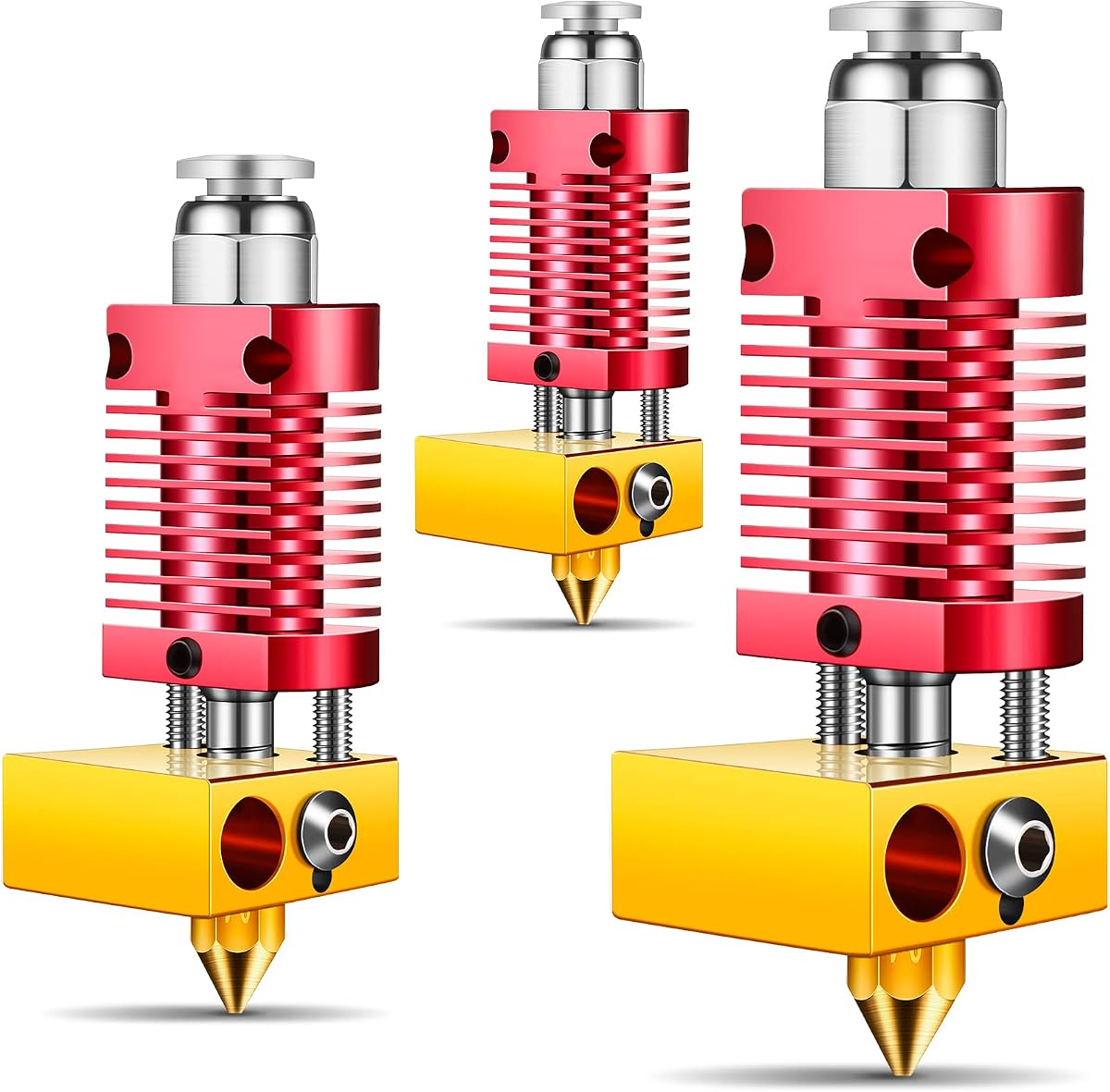
Flutesan 3 Pcs Metal Hotend Kit
4.3Editor score
Three-piece kit selection
Preassembled for simple installation
Supports high-temperature filaments
Explore the best all metal hotends for 3D printers with expert comparisons of compatibility, heat breaks, flow, temperature handling, materials, and installatio
All metal hotends remove the PTFE-lined temperature ceiling found in many entry-level 3D printers, making them practical for engineering polymers, composites, and demanding production work. A quality hotend must manage heat creep, maintain smooth filament flow, match the printer’s mounting system, and provide enough thermal capacity for the materials you intend to print.
The products in this guide were compared using their published specifications, supported printer models, included components, nozzle construction, heat-break design, and customer ratings. The list covers budget conversion kits, established all-metal assemblies, high-flow Volcano-style designs, Prusa V6 options, and specialty hotends for Creality, Wanhao, Voron, and related platforms.
Each review explains the strongest reason to consider the product, along with compatibility limitations and missing components that may affect installation. The first three entries receive the guide’s top awards, while prices and availability can change, so confirm the current listing and printer configuration before ordering.
4.3Editor score

4.4Editor score

4.2Editor score
This side-by-side comparison evaluates each all-metal hotend by printer fit, heat-break construction, thermal capability, flow characteristics, and the components included with the purchase. It also highlights important omissions such as heaters, thermistors, PTFE tubing, and mounting hardware so buyers can compare complete upgrades rather than only headline features.
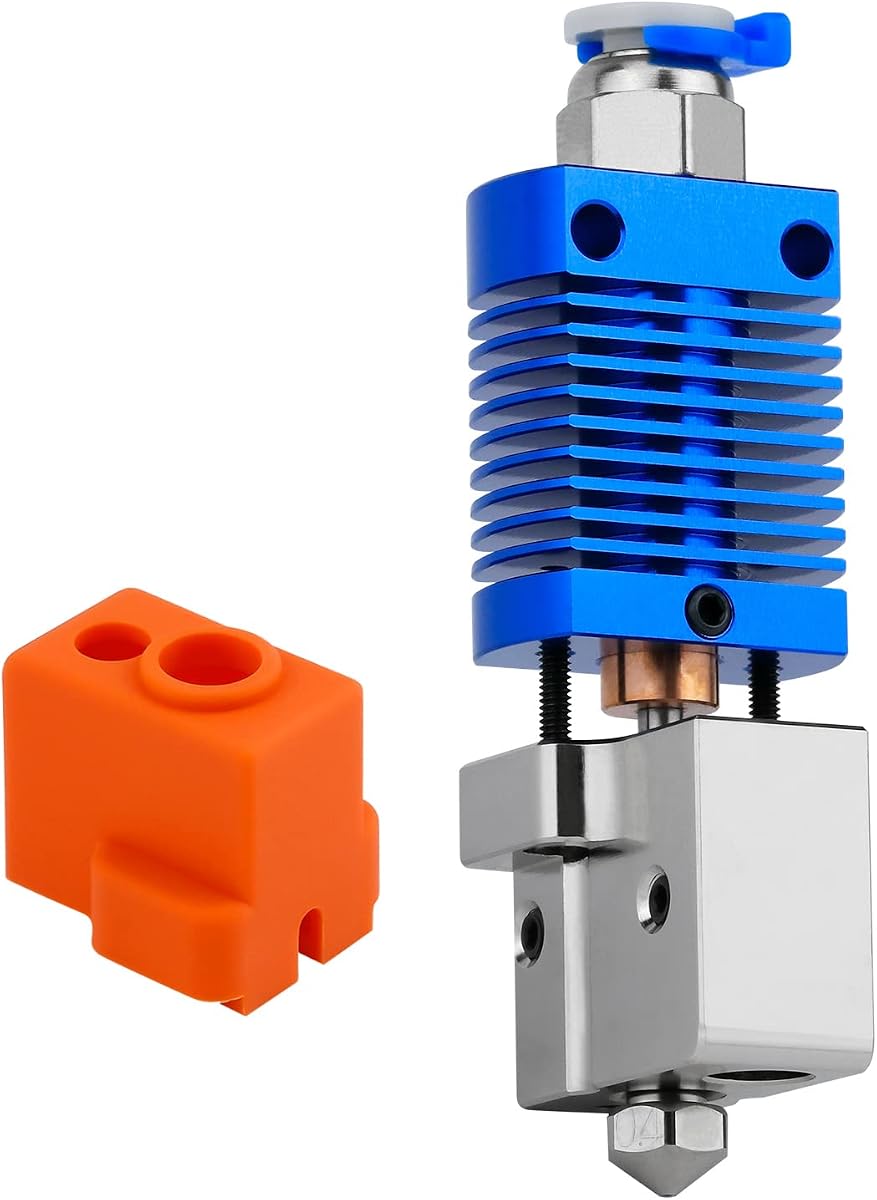

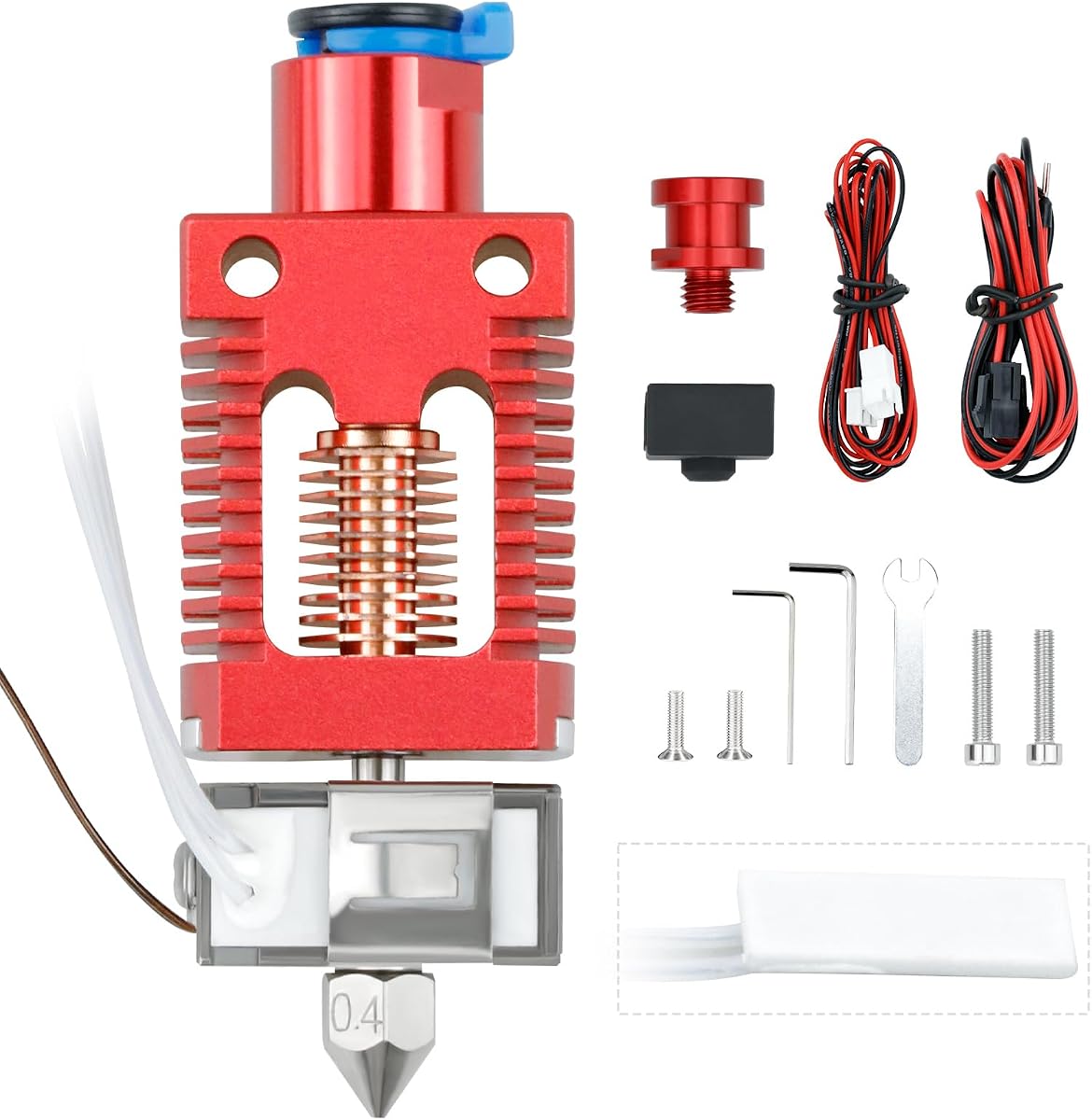

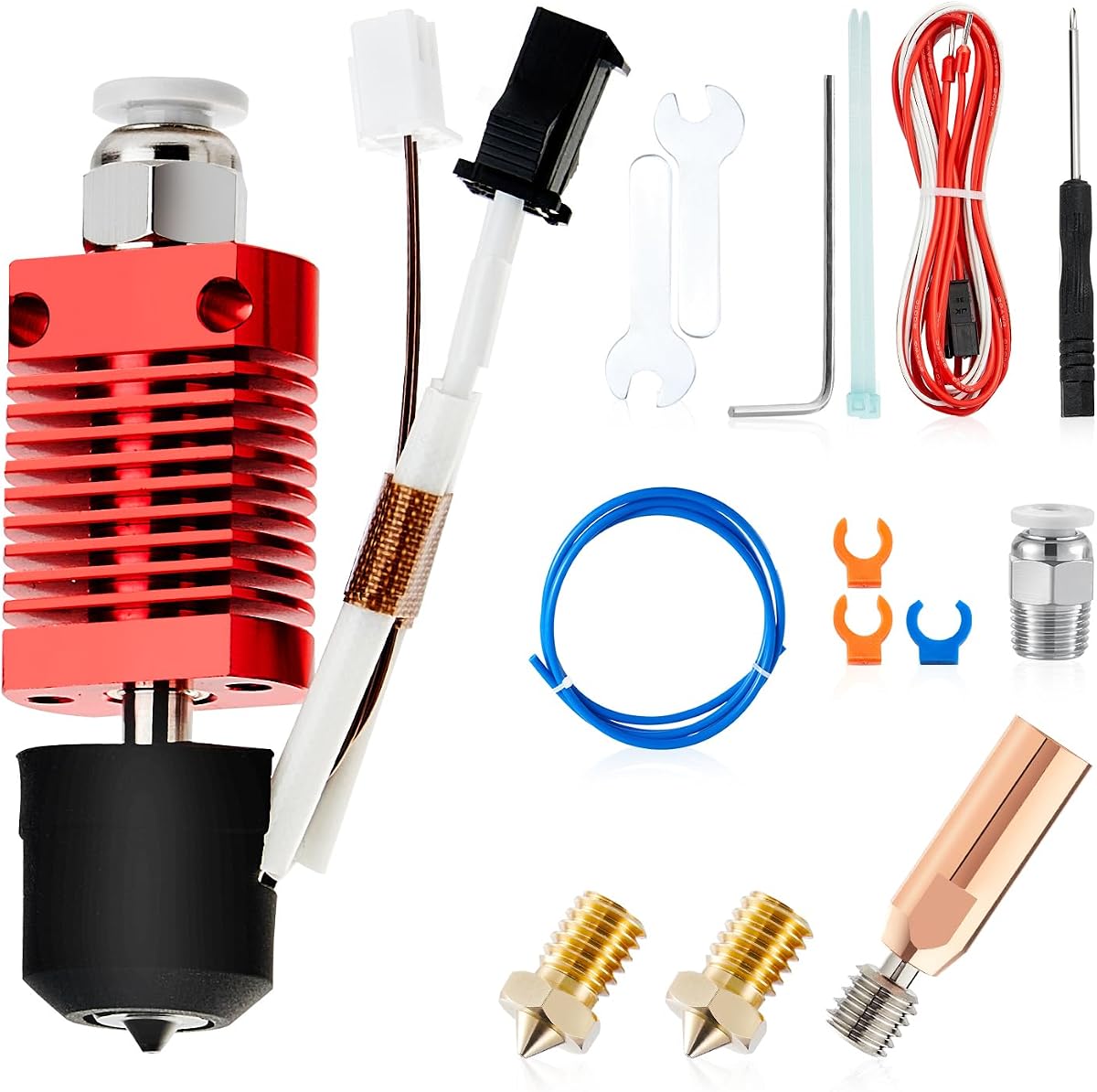

The Microswiss All Metal Hotend Kit earns the Editor's Choice position because it combines broad compatibility with a thoughtfully specified set of thermal components. Its 4.4 rating reflects generally favorable customer feedback, while the included Grade 5 titanium heat break, aluminum heater block, cooling block, plated brass nozzle, and silicone sock make it a practical conversion for many Creality platforms.
We may earn a commission when you buy through this link, at no additional cost to you.
Compatibility is the kit's main advantage. The listed fit includes the CR-10 family, CR-10 Mini, Ender 2, Ender 3, Ender 3 Pro, and Ender 5. Rather than treating all-metal capability as a small tube replacement, Microswiss provides a coordinated drop-in system intended to reduce the temperature-related weaknesses of an original PTFE-lined assembly. The titanium heat break is particularly relevant for users planning to print ABS, nylon, polycarbonate, or other elevated-temperature materials.
There are still practical limitations to consider. A drop-in description applies to supported models, but mechanical revisions can affect whether mounting holes, cable routing, fan clearance, and electrical connectors align perfectly. The package centers on a 0.4mm nozzle, so owners seeking other nozzle diameters or a different mounting format may need additional parts. It is also a Creality-focused design rather than a universal E3D or Voron hotend.
This is the strongest general choice in the guide for a Creality owner who wants a documented, relatively complete all-metal conversion. Buyers should confirm the exact printer model and revision before purchase, retain the original heater and thermistor unless the existing parts are incompatible, and check that the supplied silicone sock and cooling arrangement are correctly installed. For the supported machines, it offers a persuasive balance of thermal performance, component quality, and straightforward conversion.
The kit's appeal also comes from the design choices that remain relevant after the upgrade. Aluminum is used where rapid heat dissipation is useful, the brass-plated MK8 nozzle provides a wear-resistant starting point, and the silicone sock helps protect the cold side from radiant heat and incidental contact. Those details make it more than a bare heat-break-and-nozzle assortment.
The Grade 5 titanium heat break is the kit's defining component. By reducing heat transfer toward the cooling side, it helps limit heat creep and supports more stable extrusion with materials that require higher nozzle temperatures.
The aluminum cooling block, heater block, plated nozzle, and silicone sock provide the principal parts needed for a standard Creality conversion. Buyers should still inventory screws, fasteners, wiring, and any model-specific adapter hardware before dismantling the original hotend.
We may earn a commission when you buy through this link, at no additional cost to you.
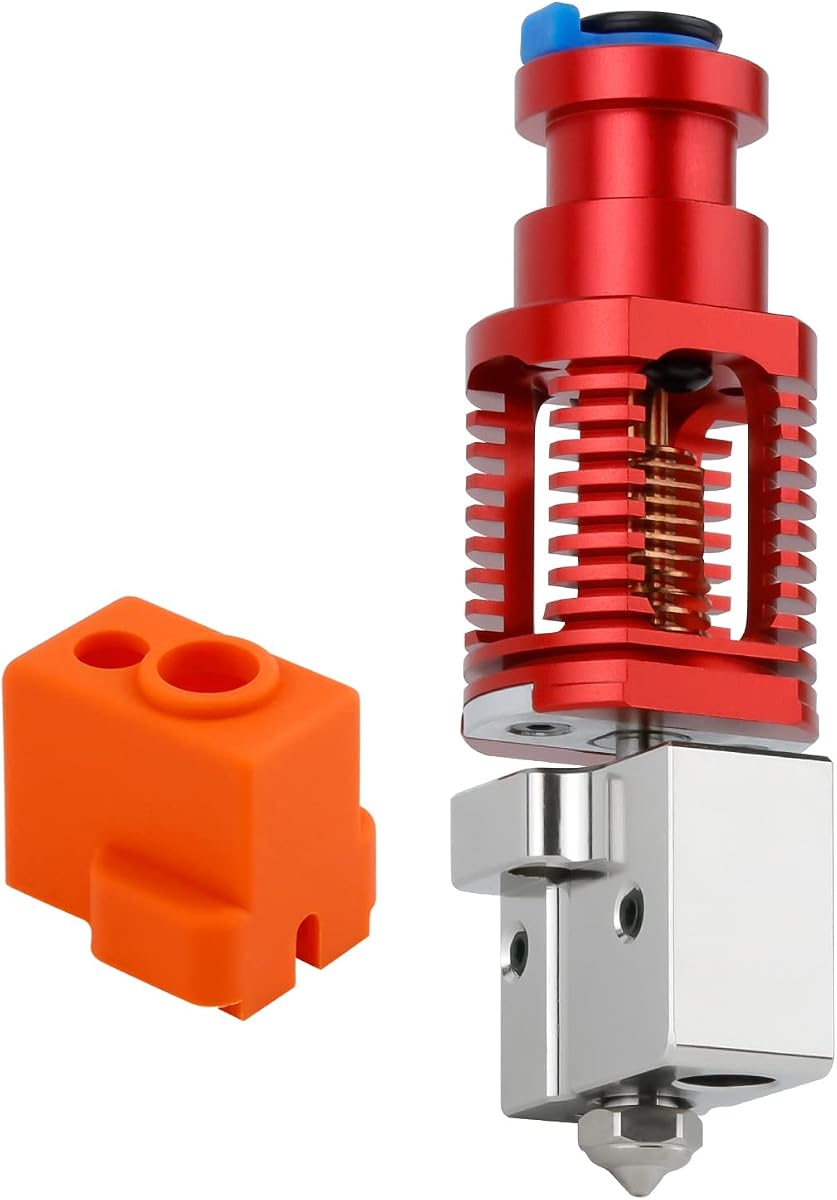
The Flutesan Three-Piece Metal Hotend Kit is the budget-focused option in this lineup, combining a 4.3 rating with a preassembled design intended for common Ender and CR-10 machines. Its core appeal is accessibility: users can replace a temperature-limited hotend without sourcing each small component separately, while the anodized aluminum shell offers a rigid, wear-resistant structure.
We may earn a commission when you buy through this link, at no additional cost to you.
The listed compatibility covers Ender 2, Ender 3, Ender 5, CR-10, CR10, and CR10S variants. Because the hotend is preassembled, installation can be more approachable for first-time builders, although connector orientation, mounting geometry, and fan clearance still need to be checked against the exact printer. Its integrated construction is also described as allowing disassembly, repair, and reassembly, which is helpful for routine maintenance.
The main caveat appears directly in the product information: the kit does not include heating elements. Installation positions are reserved, allowing buyers to select heaters according to the printer's electrical system, but that adds a compatibility and safety decision. It should not be assumed that a replacement cartridge, heater block, thermistor, or wiring harness will be interchangeable without checking voltage, wattage, resistance, physical dimensions, and connector type.
For an owner who already understands the basics of hotend maintenance, this is a practical way to introduce metal construction. The heat-break design is intended to reduce clogging and uneven extrusion, and the absence of a PTFE tube in the hotend makes it more suitable for high-temperature filaments than a conventional PTFE-lined assembly. Nevertheless, a hotend can only perform as intended when paired with a correctly rated heater and reliable temperature sensing.
Overall, the Flutesan kit ranks as the best budget choice for supported Creality models. It is most attractive to owners who value preassembly, multiple included pieces, and low-cost access to higher-temperature printing. Those who need a comprehensive, model-specific conversion with every heater and sensor included may prefer a more specialized package, but this product delivers a useful core platform when paired carefully with compatible components.
A factory-assembled hotend can be especially useful for buyers who do not want to assemble a heat break, heater block, nozzle, and cooling section independently. It does not eliminate the need to verify wiring, connectors, and physical fit before powering the printer.
Since heating elements are excluded, match the cartridge to the printer's voltage, wattage, cartridge dimensions, and mounting arrangement. Confirming the original electrical specification is more reliable than assuming every Creality-compatible hotend uses identical components.
We may earn a commission when you buy through this link, at no additional cost to you.
The POLISI3D Upgrade All Metal Ender 3 Volcano Hotend is designed for users who want more melt capacity than a conventional small-volume hotend can deliver. With a 4.3 rating, it combines a Volcano-style layout, a TC4 titanium and copper bi-metal heat break, and a nickel-plated copper heater block and nozzle for demanding applications.
We may earn a commission when you buy through this link, at no additional cost to you.
Flow and temperature capability are the product's defining aims. A larger melt chamber and wider nozzle format can support faster movement and higher volumetric output, while the copper heater block promotes rapid heat response. The titanium portion is intended to reduce upward heat conduction, and the copper component supports heat transfer. The manufacturer lists the heater block and 0.4mm nozzle as nickel-plated premium copper rated for temperatures up to 550°C.
Compatibility is broad but not indiscriminate. Listed models include the CR-10 series, CR-10 Mini, CR-20 and CR-20 Pro, Ender 2, Ender 3, Ender 3 V2, Ender 3 Pro, and Ender 5. The geometry of a Volcano-style assembly can require different cooling clearance or mounting adaptations than the original hotend, so the exact printer model and revision should be checked before removing existing components.
A notable inclusion is an extra titanium heat break with a 4.1mm inner hole. That additional part can provide useful configuration choices, although it should not be treated as a reason to install a different heat break without considering nozzle diameter, heater block geometry, and thermal expansion. The silicone cover may arrive in black or orange, with the color selected randomly; that is cosmetic rather than functional.
This is a compelling choice for high-speed or high-flow Creality builds, particularly where a larger nozzle and larger melt zone are priorities. Its premium materials and extra heat break distinguish it from basic conversion kits, while the listed range of compatible models broadens its usefulness. It is less appropriate for someone seeking a simple, unmodified replacement on a printer outside the stated fit list.
The Volcano-style format is intended to accept greater melt volume than a standard 0.4mm hotend. This can be useful for high-speed layers, larger extrusion widths, and workloads where the original melt chamber becomes a bottleneck.
The heat break combines TC4 titanium and copper so that the titanium section limits heat migration while copper supports heat transfer. The included alternative heat break may be useful for users experimenting with nozzle or chamber configuration.
We may earn a commission when you buy through this link, at no additional cost to you.
The V6 All Metal Hotend for Prusa printers is designed as a direct replacement or upgrade for the i3 MK2S, MK2.5, MK3, and MK3S+. Its 4.0 rating places it behind several higher-rated alternatives, but the key appeal is a V6-style package for a well-defined group of Prusa machines without a stated need for printer modification.
We may earn a commission when you buy through this link, at no additional cost to you.
Its construction centers on a brass 0.4mm nozzle, a V6 heater block, and a copper-titanium bi-metal heat break. The titanium section is intended to reduce heat conduction toward the cold side, while copper promotes heat dissipation. The product information also emphasizes CNC machining, smoother inner walls, improved thread precision, and a smoother interface intended to support consistent feed and reduce clogging risk.
Buyers must pay close attention to the exclusions. The heater cartridge and thermistor sensor are not included. This can be advantageous for owners who intend to reuse functioning, validated components, but it can also make the purchase less complete than an all-in-one kit. Electrical requirements, sensor type, wiring, and connector arrangement should be confirmed before installation.
The product is presented as suitable for conventional materials including PLA, ABS, TPU, PA, and other common filaments. While the all-metal path removes a PTFE tube from the melt zone, real material capability still depends on the installed heater, sensor, temperature control, cooling, and correct assembly. Its thermal separation can help reduce heat creep, improving consistency and protecting print resolution.
For a Prusa owner seeking the familiar V6 architecture and a broad range of supported MK-series printers, this is a viable choice. It is particularly attractive when the existing heater and sensor are known to be in good condition. The lower rating and missing electrical components make it less convincing for buyers who prioritize a complete, low-risk package above all else.
The stated fit across MK2, MK2.5, MK3, and MK3S+ printers makes this useful for owners who want a common hotend architecture across several machines. Verify the specific revision and inspect cable routing and connector clearance before installation.
Because the heater cartridge and thermistor are excluded, existing components can be reused if they are physically and electrically compatible. Replacement parts should match the voltage, wattage, dimensions, resistance, and sensor type used by the printer.
We may earn a commission when you buy through this link, at no additional cost to you.
The Ender 3 Ceramic Heating Core Hotend is a metal upgrade aimed at the large Creality entry-level printer market. Its 3.6 rating is the lowest among the ten products, so buyers should examine fit, included electrical parts, and temperature requirements carefully. Its strongest features are the ceramic heating core, tri-metal thermal break, and stated support for temperatures up to 300°C.
We may earn a commission when you buy through this link, at no additional cost to you.
The hotend is listed for the Ender 3, Ender 3 Pro, Ender 3 V2, Ender 3 Max, Ender 3 S, CR-10, and Voron-style installations. The product information specifically notes separate installation connectors for Voron 2.4 and Ender 3 arrangements. That attention to different mounting arrangements is useful because similar-looking Creality hotends can differ in hole spacing, cable placement, and fan positioning.
The thermal strategy combines copper, titanium, and aluminum. Titanium is used to reduce upward heat transfer, copper is intended to reduce heat loss and accelerate transfer, and aluminum forms part of the heat-sink structure. An aluminum-alloy bracket secures the heating block with two steel screws, which is intended to improve stability and reduce the chance of material leakage around the heater block and nozzle connection.
The ceramic heating core is the notable upgrade over many basic hotend designs. It is presented as supporting high-speed operation and temperatures up to 300°C, with an integrated structure that also mentions assembly stability. Although that ceiling is substantial, it is below the 500°C or 550°C figures claimed by several other products, so users of PEEK, PEI, or other particularly demanding polymers should confirm that the complete temperature system can support the chosen filament.
This product is most reasonable for a compatible Ender or CR-10 owner seeking a ceramic-core upgrade and a tri-metal heat break. Its lower rating places more emphasis on buyer diligence, particularly regarding exact revision compatibility and the completeness of the package. It can be a practical option when the listed connector arrangement and thermal specification match the printer and material.
The ceramic heating core is intended to respond quickly and maintain stable heat. Rapid heat-up can improve workflow efficiency, while steady temperature delivery is valuable when working with materials that maintain a narrow acceptable extrusion range.
Ender and CR-10 families have many revisions with subtle geometry changes. Verify hole spacing, board clearance, fan position, and the appropriate installation connector before selecting this kit for a particular machine.
We may earn a commission when you buy through this link, at no additional cost to you.
The Phaetus Dragonfly BMS Hotend is a high-temperature all-metal option for compatible Creality printers. Its 4.3 rating and association with the Phaetus brand make it appealing to users who want a performance-oriented printhead rather than a basic PTFE replacement. The product data emphasizes a copper-alloy heater block, a smooth heat-break channel, and capability up to 500°C when the heater and sensor support it.
We may earn a commission when you buy through this link, at no additional cost to you.
The 0.4mm plated copper nozzle is designed for 1.75mm filament and is listed as compatible with PLA, ABS, PETG, TPU, PP, PC, nylon, PEEK, PEI, and abrasive composites containing carbon fiber, steel, wood, boron carbide, tungsten, or phosphorescent pigment. That broad list describes potential material compatibility, not a guarantee that every machine can run every material without tuning, a suitable chamber, and an appropriate temperature-control system.
The heat-break construction uses a conical fit between the heat break and aluminum heat sink, which is presented as improving heat dissipation. Its inner hole has an Ra 0.3 finish, and the product information associates that smoother channel with more consistent filament flow. The heater block is mainly copper alloy, providing the rapid heat response sought by users working with demanding polymers.
Important exclusions include the heater tube and thermistors. Existing components can be reused if they match the electrical and physical requirements, but the purchase should not be treated as a complete electrical upgrade without inspection. The silicone cover may be red or black, with the color assigned randomly. For the Ender 3 V2, the listing directs buyers to Phaetus adapter information, signaling that this revision needs more attention than the basic supported models.
This is a strong choice for users of CR-10, Ender 3, and Ender 5 series machines who want a refined all-metal hotend with serious temperature capability and a plated copper nozzle. The main constraint is compatibility precision, especially for V2 and other revised platforms. Confirm the mounting holes and obtain the appropriate adapter before ordering, and match the heater and sensor to the printer's requirements.
The plated copper nozzle and smooth heat-break bore are intended to support stable flow with both standard and abrasive filaments. A 0.4mm nozzle remains a practical general-purpose starting point, particularly for users who print a mixture of materials.
Dragonfly can fit several Creality families, but revised boards and frames may require adapters. The explicit Ender 3 V2 guidance is a reminder to check the exact machine rather than relying on the broad family name.
We may earn a commission when you buy through this link, at no additional cost to you.
The CHC Ceramic Core Ender 3 Hotend stands out as a comparatively complete all-metal upgrade package. It carries a 4.4 rating and includes a 24V 60W ceramic heater core, bi-metal heat break, 0.4mm hardened steel nozzle, PTFE tube, extended cables, a spare tube connector, brass nozzles, and a screw kit. That inventory is particularly helpful for first-time builders.
We may earn a commission when you buy through this link, at no additional cost to you.
The ceramic heater is described as reaching 200°C in 15 seconds and maintaining consistent heat without temperature dropout. The bi-metal heat break is advertised as suitable for temperatures up to 500°C, although the heater and sensor ultimately determine the practical operating limit. The supplied HRC62 hardened steel nozzle provides abrasion and corrosion resistance, making it a sensible choice for filled or otherwise demanding filaments.
Compatibility is broader than the product name suggests, extending across Ender 3, Ender 3 Pro, Ender 3 V2, Ender 5 Pro, Ender 5 Plus, Ender 6, CR-10, and listed VoXLAB Aquila variants. The assembled design and included hardware simplify installation, but the electrical specification still matters. A 24V 60W heater should not be connected to a system with a different voltage or insufficient power capacity.
There is an important distinction between the high temperature the heat break can tolerate and the temperature the included heater can sustain. The product information describes the standard kit as suitable for PLA and ABS below 250°C, while the heat-break design itself is presented as capable of much higher temperatures. Users intending to print exceptionally demanding polymers may need to verify the heater, sensor, thermal fuse, wiring insulation, and printer control system as a complete system.
This is a strong recommendation for a supported Creality or Aquila user who wants a ready-to-install package with a ceramic heater and hardened nozzle. It balances compatibility, included accessories, and customer feedback better than many bare hotend options. The essential caveat is electrical: confirm that the printer's supply and control arrangement are genuinely compatible with a 24V 60W cartridge before installation.
The included PTFE tube, extended cables, connectors, spare brass nozzles, and screws reduce the number of extra items needed for a typical installation. This makes the kit attractive for a builder assembling a new printer or replacing a failed hotend with limited supporting stock.
A heat break that tolerates extreme temperatures does not automatically make the entire printer ready for them. Verify heater wattage, sensor accuracy, wiring, thermal protection, and the rated temperature range of every connected component.
We may earn a commission when you buy through this link, at no additional cost to you.
The Microswiss All Metal Hotend with Slotted Cooling Block has the highest customer rating in the guide at 4.6. It targets the Wanhao i3, Monoprice Maker Select v2, and Cocoon Create, making it a refined option for owners of those specific machines who want more than a minimally modified original hotend.
We may earn a commission when you buy through this link, at no additional cost to you.
Its defining mechanical feature is the slotted cooling block and clamping system. Instead of relying on a set screw that could contact and damage the thermal barrier tube, the design uses a slot to constrain the tube. The stated benefit is improved heat transfer and more reliable clamping. That focus on a small but consequential interface makes the product feel carefully engineered for its supported printers.
The kit includes a thermal barrier tube, plated 0.4mm nozzle, and slotted cooling block. The nozzle uses a high-lubricity, wear-resistant TwinClad XT coating and is intended to handle standard filament while resisting wear over time. The product is also stated to be made in the United States by Microswiss, which may appeal to buyers who prioritize identifiable construction and component design.
Platform specificity is the primary limitation. Unlike kits marketed across a broad Ender and CR-10 range, this one is intended for a compact group of printers, and a different mounting layout may require different hardware. The package also centers on a 0.4mm nozzle, so users with other diameter requirements need to confirm availability separately. Owners should still match the heater, thermistor, fan arrangement, and wiring to their specific printer.
Within the supported ecosystem, this is a premium selection rather than a generic all-metal assembly. The higher customer rating, specialized cooling-block design, wear-resistant nozzle, and established Microswiss name make it an attractive option for Wanhao i3-family upgrades. It is best suited to a builder who values fit, clamping reliability, and a refined mechanical design over broad universal compatibility.
The slotted cooling block holds the thermal barrier tube without a conventional set screw pressing against it. Avoiding direct set-screw contact can reduce the chance of scoring, flattening, or damaging the tube during installation.
The supported list includes the Wanhao i3, Monoprice Maker Select v2, and Cocoon Create. Confirm the exact revision because small frame, board, or mounting differences can determine whether all connections align correctly.
We may earn a commission when you buy through this link, at no additional cost to you.
The Red Lizard K1 Volcano All Metal Hotend is intended for builders using Voron 2.4, Prusa i3 MK3 and MK3S, DDB Titan Extruder, and V6-style setups. Its 4.1 rating is moderate, but the product occupies a useful position for users seeking a high-flow, high-temperature design across several more advanced printer platforms.
We may earn a commission when you buy through this link, at no additional cost to you.
The heater block and 0.4mm nozzle are made from premium copper with nickel plating and are listed as rated to 550°C. Copper is used to promote rapid heating and heat dissipation, while the nickel-plated surface is intended to resist sticking and maintain a smooth nozzle. The manufacturer describes the product as suitable for basic PLA through demanding materials such as medical-grade PAEK, subject to the limits of the full printer system.
Its heat break is more substantial than a simple one-piece tube. A three-part TC4 titanium and copper assembly is tightly connected and non-detachable, with a fixing block and radiator thread. Titanium limits heat transfer toward the cold side, while copper assists heat conduction and dissipation. The fixed direction prevents rotation, which can simplify repeated assembly and maintain a predictable heat-break orientation.
The product is not a universal drop-in despite its broad list. Volcano geometry, heater block design, cable routing, cooling clearances, and mounting patterns can differ among Voron, Prusa, and other toolheads. Even when a seller identifies a platform as compatible, the exact extruder revision and existing mounting hardware should be inspected. The 550°C material claim also does not replace appropriate heaters, sensors, insulation, and temperature-control calibration.
This hotend is most suitable for an experienced builder who wants a large melt zone, premium copper thermal components, and a fixed integrated heat-break design. It is particularly interesting for Voron owners considering a high-flow configuration. The main caution is the need to verify geometry and electrical compatibility before ordering, as the broad platform list does not eliminate revision-specific differences.
The listed support for Voron, Prusa MK-series machines, DDB Titan, and V6-style tools makes this useful for builders working across more than one ecosystem. Physical verification remains necessary because a shared hotend format does not guarantee identical mounting and cable arrangements.
The Volcano-style chamber and copper heater block are designed to melt larger volumes efficiently. The nickel-plated 0.4mm nozzle provides a wear-resistant starting point for both ordinary filaments and more demanding workflows.
We may earn a commission when you buy through this link, at no additional cost to you.
The Genuine E3D V6 All-Metal HotEnd is the guide's premium ecosystem pick, built around a widely recognized V6 format. Its 4.2 rating reflects steady customer feedback, while the 12V full-kit configuration and universal Bowden approach make it appealing to builders creating or updating a compatible 12V V6 system.
We may earn a commission when you buy through this link, at no additional cost to you.
E3D describes the V6 as its flagship all-metal hotend, emphasizing high-temperature performance and broad filament versatility. The product is intended for advanced materials as well as common materials and different print resolutions. The 3mm universal Bowden format indicates that it uses the familiar V6 mounting and extrusion geometry, allowing it to suit systems built around that ecosystem rather than requiring a completely new toolhead design.
A full kit is particularly valuable for a new build because it can reduce the need to source a heater, thermistor, heater block, nozzle, heat break, cooling hardware, and tubing separately. The Bowden format also separates the hotend from the extruder, offering flexibility in printer layout. As with any complete hotend package, the buyer must confirm that 12V matches the printer's heater supply and control board.
The 3mm designation refers to the Bowden tube format, not the nozzle diameter. The V6 ecosystem supports multiple nozzle sizes, which is useful for balancing resolution, layer time, and material type. It is also a sensible platform for users who want readily understood service procedures and widely available compatible components, although the exact included contents should be checked against the listing before installation.
For builders with a 12V V6-compatible architecture, this is the most complete premium-focused package in the guide. Its main limitation is that a V6 is not automatically compatible with every modern printer, and a 24V system may require different electrical components. Match the mounting pattern, voltage, heater rating, sensor type, cooling arrangement, and Bowden path before purchasing.
The V6 format is valued for its established mounting geometry and broad accessory ecosystem. This can simplify parts selection and maintenance for builders already familiar with E3D-style Bowden configurations.
This specific kit is 12V, so it should not be connected blindly to a 24V control system. Verify the printer's supply, heater cartridge specification, thermistor type, and wiring before installation.
We may earn a commission when you buy through this link, at no additional cost to you.
Choosing an all-metal hotend involves balancing printer fit, heat isolation, melt capacity, included electrical components, and the materials you expect to print. The most important step is to identify the exact printer and toolhead revision before comparing general compatibility lists.
Start with the full model name and revision rather than a broad family label. Ender 3, CR-10, Prusa MK-series, Voron, Wanhao i3, and Aquila machines can share visual similarities while differing in mounting-hole spacing, board position, fan clearance, cable routing, and hotend geometry. A hotend that fits one version may require a different connector or even a frame adaptation on another. Compare the product's stated fit list with the printer's exact specification, then look for photographs or dimensions that correspond to the revision in front of you.
Verify the mechanical fit, electrical connections, and cooling path before ordering. The hotend should attach without forcing, the nozzle should align with the build chamber, the cooling fan should direct air across the intended surfaces, and the heater and sensor wiring should reach the board without tension.
The heat break separates the heated nozzle region from the cold side of the hotend. In a PTFE-lined hotend, the PTFE tube itself limits the usable temperature. An all-metal assembly removes that polymer from the melt zone, but the design still determines how readily heat travels toward the extruder. Titanium and copper combinations are common because titanium offers low thermal conductivity while copper conducts heat rapidly through the heated region. A well-designed heat break can reduce heat creep, extrusion inconsistency, and the need for constant cold-side cooling.
Look for a clear explanation of the heat-break materials and their purpose. Also consider assembly quality, because a poorly fitted heat break may leak or transfer heat more effectively than intended. The best choice is not simply the one with the most sophisticated materials, but the one that can be assembled cleanly and maintained in your printer.
Brass nozzles are economical and offer good thermal conductivity, making them a common choice for general printing. Plated copper or nickel-plated copper blocks can improve heat response and support demanding materials, while hardened steel is especially useful against abrasive filaments. A Volcano-style heater block and large melt chamber can increase volumetric flow, but the mounting system, cooling, and printer motion must also be capable of feeding that larger melt volume. Match the nozzle material to the filament rather than paying for a specialized block that the user will never need.
For standard PLA, PETG, and ABS work, a reliable brass nozzle is usually sufficient. Carbon-fiber composites, glow-in-the-dark pigments, metal-filled filaments, and other abrasive mixtures are stronger reasons to consider plated copper or hardened steel. Also confirm the stated nozzle diameter because 0.4mm is a general-purpose choice rather than a requirement for every printer.
A product's maximum temperature is meaningful only when the heater, thermistor, wiring, thermal protection, and control board can support it. High figures such as 500°C or 550°C describe component capability, not an automatic guarantee that the assembled printer is safe or calibrated for those materials. The nozzle's rating, heater block, sensors, and filament specifications all matter. For ABS, nylon, PC, and similar materials, verify the temperature range required by the filament manufacturer and ensure that the hotend remains stable without heat creep.
Treat a high rating as one part of the system rather than a standalone buying point. A balanced setup with a properly rated heater and sensor is more useful than an extreme advertised ceiling achieved with incompatible electrical components. For routine high-temperature printing, a proven 300 to 400°C-capable configuration may be more appropriate than chasing the largest number available.
Products range from core heat-break assemblies to nearly complete hotend kits. Some include the heater block, nozzle, heater cartridge, thermistor, cooling block, silicone sock, and fasteners; others omit the heater and sensor while reserving mounting positions. A complete package can simplify a new build, whereas reusing known-good original electrical parts may be preferable during a repair. Check the package list carefully and avoid assuming that a picture showing every possible component means those parts are included.
For an existing printer, compare the original heater cartridge and thermistor dimensions, resistance, voltage, wattage, and connector type. A kit that omits these parts may ultimately require separate purchases. For a new build, a fuller package usually offers better convenience, but every included electrical component still needs to match the power supply and control system.
A standard V6-style hotend serves many practical applications, while a Volcano-style design is intended for higher melt volume and faster extrusion. Larger flow capacity can improve throughput, but it may expose weaknesses in the motion system, cooling, feeder, and extruder. The nozzle diameter and layer width also influence the required flow. Avoid choosing a high-flow hotend solely because it sounds faster; estimate the real printing demand and ensure the rest of the printer can sustain it.
Match the format to the existing toolhead. A larger melt chamber changes cooling volume, heat dissipation, and mounting demands. For high-speed work, confirm that the heater can recover quickly and that the cold side is adequately cooled. For standard projects, a compact and well-supported V6-style package may be easier to tune and maintain.
A preassembled hotend can reduce setup errors, while a modular design may be easier to disassemble for cleaning or replacement. Look for clear instructions, stable threaded interfaces, accessible screws, and a mounting arrangement that leaves the blower and wires undisturbed. Sealed or integrated structures can simplify the exterior, but their serviceability depends on the manufacturer's design. Owners should also consider replacement parts: a widely supported format generally makes nozzles, heaters, sensors, silicone socks, and cooling parts easier to obtain.
Choose the product that matches your practical skill level. A complex premium hotend still requires careful alignment and leak checking. A simpler preassembled kit may be better for a first conversion, provided the user can complete the electrical and thermal checks before powering the machine.
The best-documented product is often easier to install than the one with the most dramatic specifications. Check whether the seller identifies the printer models clearly, lists included parts, and provides guidance for revisions requiring adapters. A product with a 4.4 or 4.6 rating and a focused fit list may offer greater confidence than a broadly compatible listing with little detail. Customer feedback can also reveal recurring issues such as leaking, difficult wiring, or missing hardware, although individual experiences vary.
Read the recent feedback while focusing on installation and long-term use rather than initial appearance. Confirm that the claimed accessories, mounting connectors, and supported models match what is actually shipped. Clear documentation does not replace verification, but it reduces the number of surprises during installation.
Before installation, disconnect the printer from its power source, allow the hotend to cool, and photograph the existing wiring and mounting arrangement. Compare the replacement's mounting holes, connector types, fan direction, and heater block position with the original. Remove incompatible PTFE-lined components from the melt zone, clean away old filament, and inspect the new heat break and nozzle threads for damage before assembly.
Follow the hotend manufacturer's assembly sequence and tighten fasteners evenly rather than overloading one side. Confirm that the nozzle and heater block are seated correctly, the heat break is secure, the cooling fan moves freely, and the heater and thermistor are connected to the correct board connections. A common all-metal conversion also requires a suitable Bowden tube or PTFE-lined tube that stops at the heat break, with the tube kept away from the hot zone.
After installation, perform a cold check of every screw, wire, and fitting, then conduct a controlled test with the normal filament and a conservative temperature. Watch for leaks, unusual noises, inconsistent extrusion, and temperature fluctuations. Once calibrated, clean the nozzle regularly, inspect the heat break and silicone sock, keep the cooling path free of dust, and replace a worn nozzle before burrs or particles begin affecting surface quality.
No. An all-metal hotend removes the PTFE temperature limit from the melt zone, but the heater, thermistor, wiring, cooling system, control board, and printer mechanics must also support the material. ABS, nylon, PC, PEEK, and composite filaments may require chamber temperature control, stronger hardware, tuned cooling, and an appropriate nozzle. Always follow the filament manufacturer's temperature and enclosure recommendations.
A V6-style hotend uses a comparatively compact melt chamber, while a Volcano-style hotend is designed around a larger chamber and nozzle for greater potential flow. The larger format may support faster printing, but it also changes cooling and mounting requirements. It is not a direct drop-in replacement unless the printer's toolhead geometry and electrical arrangement are designed for it.
They often use the same physical thread and diameter, but their thermal and wear characteristics differ. Brass is economical and suitable for many standard filaments, copper supports rapid heat response, and hardened steel is valuable for abrasive composites. Always confirm nozzle diameter, thread, hex or mounting geometry, and the heater block's melting-zone dimensions before changing materials.
No. Several kits include only the hotend body, heat break, heater block, nozzle, and cooling components, while heater cartridges and thermistors must be reused or purchased separately. Others provide a fuller package. Before ordering, check the package list and match any replacement heater to the printer's voltage, wattage, physical length, resistance, and connector.
Start with a properly fitted heat break, secure thermal barriers, and correctly directed cooling airflow. Verify that the part-cooling fan and hotend blower operate, and check for heat creep near the extruder entrance. If extrusion becomes uneven as the chamber warms, improve cooling or reduce chamber temperature before blaming the filament or feeder.
Not necessarily. An all-metal hotend primarily addresses temperature limitations and heat management; it does not fix mechanical issues such as a worn extruder gear, tangled filament, clogged feeder path, misaligned gantry, or poor Z calibration. Check those systems independently and confirm the hotend is mounted correctly before attributing extrusion problems to the upgrade.
Printers within the same family can have different hole spacing, board locations, fan mounts, cable connectors, and frame geometry. A broad compatibility label may include several revisions but exclude important exceptions. Compare the manufacturer's fit list with the exact model on the printer's original packaging or documentation, and look for any required adapter before ordering.
A silicone sock is often useful, but it is not a universal requirement for every all-metal assembly. It can reduce exposed heat and help contain minor contact, while correct heat-break design and active cooling remain more important. Follow the hotend's instructions, avoid blocking the cooling path, and inspect the sock periodically because a worn or incorrectly fitted sock can affect cooling or fit.
The Microswiss Creality kit stands out as the most complete general conversion for its supported models, the Flutesan set offers the most accessible budget route into metal construction, and the genuine E3D V6 package delivers the most established premium ecosystem. Each serves a distinct need, so the strongest choice depends more on exact printer compatibility and included components than on a universal ranking.
Prioritize the toolhead format your printer was designed around, then confirm the heat-break design, nozzle material, electrical specifications, and mounting details. High-flow Volcano options make sense for greater output, but a standard V6-style hotend is often easier to integrate and maintain. Regardless of the product, match the heater and thermistor correctly and verify the complete temperature system before printing advanced polymers.
Prices, stock, and seller bundles can change, and some listings may include different accessory combinations over time. Review the current product page, package list, compatibility notes, and recent customer feedback immediately before purchasing. A careful model-and-revision check can prevent most installation disappointments and help ensure the chosen all-metal hotend works as intended.