
Catchmaster GRO Yellow Sticky Traps
4.4Editor score
Seventy-two double-sided traps
Up to one year of use
Water and UV resistant
Works across three canopy zones
Best Squash Bug Traps guide compares 10 sticky and monitored pest traps for gardens, greenhouses, potted plants, orchards, and targeted flying-pest control.
Squash bug traps work best when they fit the pest, the plant, and the growing environment, but many products marketed for bug control target flying insects rather than squash bugs specifically. A useful trap should capture pests without harming beneficial insects, remain effective outdoors, and be positioned where activity is most likely.
We compared ten traps based on their stated target pests, adhesive design, placement options, weather resistance, coverage, and suitability for gardens, greenhouses, orchards, and potted plants. The list includes yellow sticky cards, stake traps, hanging traps, a lure-compatible monitoring board, and specialized beetle traps.
Each pick highlights a distinct use case, from broad plant-pest monitoring to reusable beetle capture. Product ratings and features are based on the supplied listings, while prices and availability can change, so shoppers should compare current details before deciding which option fits their garden.
4.4Editor score
4.5Editor score

4.4Editor score
The table below compares all ten traps by format, intended pests, placement method, and practical limits, helping readers distinguish general plant-pest monitors from species-specific capture systems.


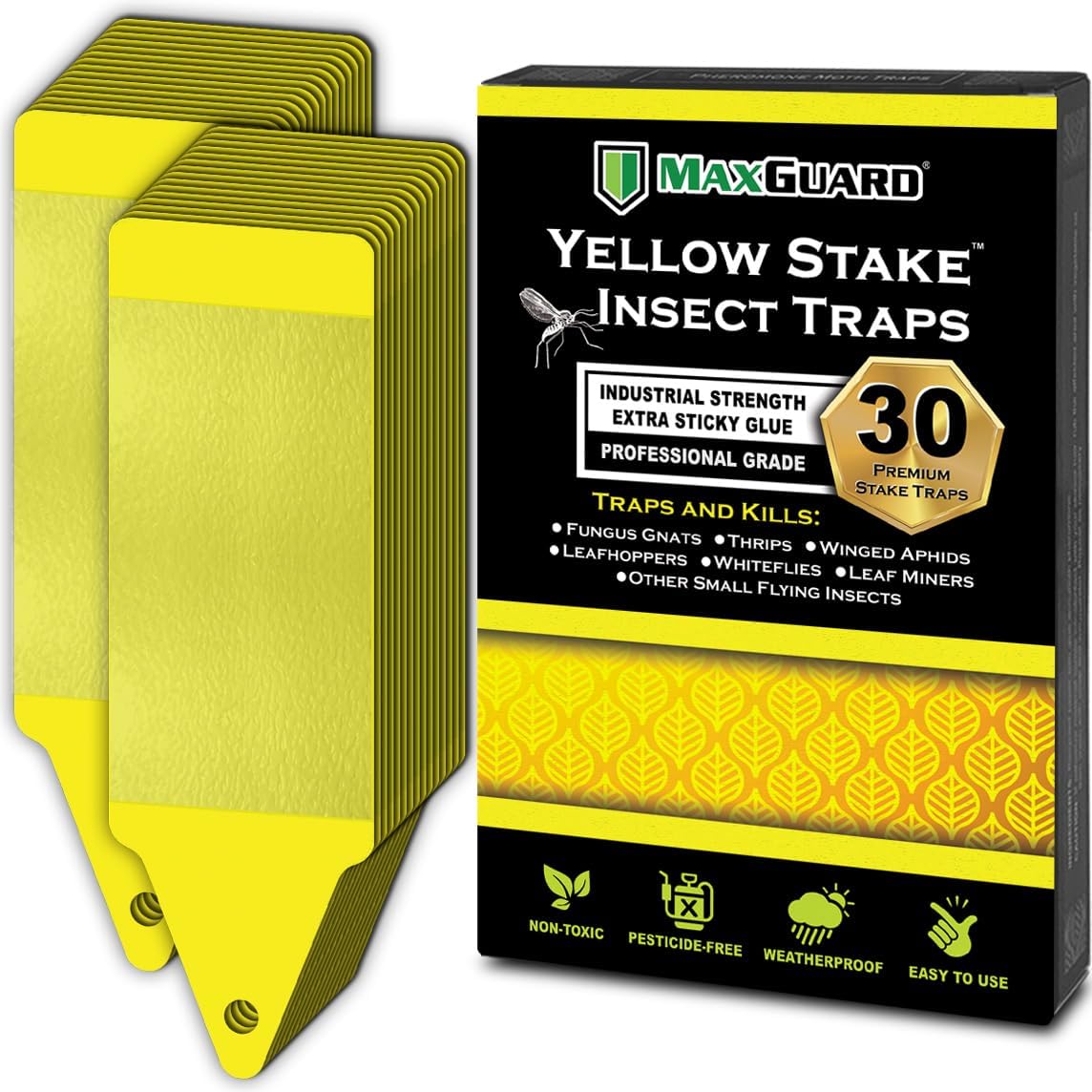
The MAXGUARD 30-pack combines a familiar yellow sticky-trap format with a practical garden stake and an optional hanging method. Its 4.5 rating reflects a well-regarded general-purpose option for catching flying plant pests. It is especially convenient when you want to monitor potted plants, vegetable beds, greenhouse benches, or trees without handling sprays.
We may earn a commission when you buy through this link, at no additional cost to you.
The main strength is placement flexibility. Users can remove the backing, push the stake into a pot or garden bed, or suspend the trap using the included twist tie. Both sides carry adhesive, increasing the available capture area. The listing describes the surface as industrial-grade, toxin-free, and capable of remaining effective for up to six months, although actual service life depends on weather, dust, and insect density.
The important limitation is pest specificity. Although the listing names fungus gnats, whiteflies, mosquitoes, aphids, and leaf miners, it does not claim that this trap is designed to lure or reliably capture squash bugs. Squash bugs are primarily ground-dwelling, sap-feeding insects, so this trap is better viewed as a complementary garden monitoring tool than a standalone solution for an active squash bug infestation.
This is a strong choice for gardeners who want many inexpensive monitoring points, flexible mounting, and long-lasting adhesive. Place traps where flying pests move, inspect them regularly, and use other integrated measures if you find squash bugs on the undersides of leaves or around plant crowns.
The stake design keeps the trap upright near foliage, while the twist tie allows the same card to hang near greenhouse racks or trees. This versatility makes one format useful across containers, raised beds, and conventional garden rows.
The adhesive is described as remaining sticky through rain or shine for up to six months. Clean surfaces and light insect pressure will generally support longer use, while heavily soiled or saturated traps should be replaced sooner.
We may earn a commission when you buy through this link, at no additional cost to you.
This 72-pack of Catchmaster GRO regular double-sided cards is designed for broad pest monitoring around plants. It carries a 4.4 rating and stands out for its large quantity, clean installation, and extensive list of flying plant pests. Gardeners can use the cards in homes, farms, gardens, greenhouses, hydroponics, and aeroponics.
We may earn a commission when you buy through this link, at no additional cost to you.
Its defining feature is the three-zone placement strategy: one card below the canopy, one in the middle, and one above it. That approach gives pests several interception points as they move around a plant. The cards may also be placed against walls, along pathways, staked in soil, or tied around plants and trees. They are described as odorless, water-resistant, UV-resistant, and capable of remaining effective for up to one year when kept clean.
Because these are flat, double-sided cards, placement quality matters. A card that hangs outside the path of flying insects may remain largely empty, while one positioned within that path can provide useful monitoring. Dirt, dust, and weathering also reduce adhesion and visibility, so the one-year lifespan should be understood as a best-case figure rather than a guarantee.
The product is a strong option for farms, greenhouses, and extensive gardens that need numerous monitoring points. It is less suitable as a dedicated squash bug trap because the product description does not identify squash bugs among its targets, but it remains a valuable companion to crop scouting and other pest-control methods.
Placing traps below, within, and above the canopy creates a simple monitoring framework. This is especially useful for detecting small flying pests before they become difficult to manage.
The cards work in conventional gardens, indoor plant collections, greenhouses, barns, composting areas, and hydroponic systems. Their broad environmental compatibility makes them useful for property-wide monitoring.
We may earn a commission when you buy through this link, at no additional cost to you.
This set contains ten heavy-duty sticky replacement boards for lure-based moth monitoring systems. Its title mentions squash vine borer, but the product description focuses on fruit-tree moth monitoring, including codling moth activity in apple and other fruit trees. It has a 2.2 rating, the lowest among the selected products, and that mixed purpose is important to consider.
We may earn a commission when you buy through this link, at no additional cost to you.
The boards use a high-tack wet-glue coating to capture insects that make contact. Users can pair them with a preferred pheromone attractant selected for the pest and season. No pesticides, chemical sprays, or pheromones are included. Twenty twist ties simplify hanging, while the ten boards can serve as seasonal replacements when surfaces become saturated, dusty, or weathered.
The product is best for growers who already understand lure-based orchard monitoring and need dependable replacement surfaces. It is not a complete trap on its own, and its low rating may reflect expectations created by the broad title. Buyers should examine the included components carefully and confirm compatibility with their existing trap system before purchasing.
This set can help monitor adult moth activity and support timely orchard decisions, but it should not be treated as a ready-to-use squash bug solution. For a home squash garden, a general sticky card or close inspection of vines may be more practical unless a compatible squash vine borer lure and trap are already in use.
Because the lure is sold separately, growers can match the attractant to the target moth and local monitoring program. This flexibility is useful for orchard professionals but adds an extra purchasing and setup step.
The boards are intended to maintain monitoring setups when older sticky surfaces become dirty, saturated, or degraded. Their cardboard format allows quick unfolding and replacement with the included ties.
We may earn a commission when you buy through this link, at no additional cost to you.
The Gideal 20-pack consists of six-by-eight-inch yellow cards with adhesive on both sides. It has a 4.2 rating and is designed to attract flying plant insects in bright indoor and outdoor locations. The traps are intended for whiteflies, fungus gnats, blackflies, thrips, fruit flies, midges, and similar pests.
We may earn a commission when you buy through this link, at no additional cost to you.
The package is thoughtfully equipped for placement. It includes twenty twist ties and two trap stands, giving users several ways to position the cards around houseplants, garden plants, balconies, or windowsills. The waterproof construction and ability to withstand temperature fluctuations make the cards more practical for changing outdoor conditions than a basic untreated card.
As with other yellow sticky traps, their effectiveness depends on flight patterns and placement. The cards need to interrupt the movement of small flying pests rather than simply sit somewhere in the garden. Squash bugs do not generally behave like the listed flying insects, so this product should be used as a general crop-monitoring companion rather than the primary means of squash bug removal.
The Gideal set is attractive for gardeners who want a simple, reusable-format monitor around multiple small plants. It is less suitable for large-scale coverage because twenty modest cards can be spread quickly, and it offers no specialized attractant for squash vine borers.
Twist ties and included stands let users suspend or support the cards without permanent installation. That makes the traps easy to reposition as plants change or seasonal conditions shift.
The yellow surface uses color to attract susceptible flying insects. Positioning in bright locations helps the cards remain visible and gives small pests a clearer interception point.
We may earn a commission when you buy through this link, at no additional cost to you.
This 36-pack uses small butterfly- and tree-shaped yellow traps for fruit flies, fungus gnats, and other flying plant pests. The product listing provides no numerical customer rating, so its reputation is less transparent than that of the rated alternatives. Its strongest appeal is discreet, convenient placement around compact indoor or outdoor plants.
We may earn a commission when you buy through this link, at no additional cost to you.
Each trap has a stake that allows direct insertion into a pot or garden, avoiding the need for separate ties or hanging hardware. The adhesive is described as odorless, non-toxic, UV-resistant, and waterproof. The small shapes are especially practical for windowsills, kitchen plants, and containers where larger cards could obstruct the plant's appearance.
The main drawback is limited coverage. Small traps are well suited to individual pots, but a vegetable bed with sprawling vines may require many units to create a meaningful monitoring network. More importantly, the product targets small flying insects and does not claim to attract or capture squash bugs. It should not be expected to solve a heavy ground-level infestation by itself.
This is a good choice for homeowners who value appearance and simple installation while managing fruit flies or fungus gnats. Gardeners focused on squash vines should use these as supplemental monitors and inspect plant crowns, leaf undersides, and surrounding soil for squash bug activity.
Butterfly and tree shapes blend more naturally with decorative containers than rectangular monitoring cards. Their compact size also prevents them from dominating small indoor plant arrangements.
The integrated stake allows immediate insertion after peeling the protective layer. That simple setup is useful for users who want to establish monitoring points quickly.
We may earn a commission when you buy through this link, at no additional cost to you.
The 40-pack of fruit fly and fungus gnat traps combines a useful quantity with double-sided adhesive and integrated wire stakes. Its 4.4 rating places it among the strongest general-purpose options. The leaf-and-arrow silhouette is designed to blend into plant decor, making the traps suitable for houseplants, patio pots, windowsill herbs, and gardens.
We may earn a commission when you buy through this link, at no additional cost to you.
Installation is straightforward: remove the protective film and insert the wire stake into soil, or use it to hang a trap near vulnerable plants. The double-sided design expands the capture area from multiple angles, while the waterproof construction supports indoor and outdoor use. The product is described as odorless and non-toxic for use around children, pets, and food-producing plants.
These traps are not advertised as squash bug traps. Squash bugs often hide in sheltered plant structures and feed near the base of cucurbit vines, so a trap intended for small airborne insects should not be considered a direct answer to that behavior. Nevertheless, a broad network of monitors can help identify other pests that may be confused with or contributing to plant stress.
For value-conscious gardeners who want lots of inconspicuous monitoring points, this set is difficult to overlook. It also works particularly well for common indoor plant pests. Use it alongside direct plant inspection and appropriate cultural controls rather than relying on it alone against a confirmed squash bug problem.
Forty traps make it practical to monitor numerous containers or create several interception points around larger plants. The broad quantity also makes regular replacement less disruptive.
Adhesive on both faces lets the trap capture pests approaching from more than one direction. This increases practical coverage without changing the compact stake-style format.
We may earn a commission when you buy through this link, at no additional cost to you.
The MAXGUARD hanging traps use an integrated hook, making them especially convenient for greenhouse racks, larger plants, and fruit trees. With a 3.9 rating, they offer a distinct alternative to the stake design from the same brand. The trap is marketed for fungus gnats, whiteflies, mosquitoes, aphids, leaf miners, and other flying insects.
We may earn a commission when you buy through this link, at no additional cost to you.
Installation requires no clips or twist ties. Users peel the backing from both adhesive sides and hang the trap by its lower hook. The listing describes the glue surface as four times thicker than other yellow sticky traps and states that it can remain effective for up to six months through rain or shine. The card is also described as toxin- and insecticide-free.
The principal trade-off is that hanging requires a suitable overhead support. In an open garden, fine twine may be more practical than placing a trap over the plant itself. The product is also not marketed to attract squash bugs, and squash bug activity concentrated at soil level or beneath foliage may not bring many insects into the card.
Choose this set when you want convenient suspended monitoring around greenhouse benches, fruit trees, or houseplants without managing loose ties. It is a good supplementary tool for general flying-pest detection but should not replace close inspection of squash vines and other integrated controls.
The integrated hook eliminates the need to attach clips or twist ties. That streamlined setup is valuable in greenhouses and growing areas where numerous monitors need to be repositioned frequently.
The manufacturer describes the adhesive card as four times thicker than other yellow sticky traps. A thicker body may also make the hanging trap easier to handle without touching the glue.
We may earn a commission when you buy through this link, at no additional cost to you.
These pre-cut yellow cards are shaped to slip around a plant stem, making them different from conventional flat monitoring cards. The 50-pack carries a 4.2 rating and is intended to intercept crawling plant pests in homes, gardens, greenhouses, hydroponics, and aeroponics. No cutting, bait, or assembly is required.
We may earn a commission when you buy through this link, at no additional cost to you.
The center hole is the defining feature. It allows the card to surround a stem or trunk while presenting an adhesive surface along the plant's lower structure. The listing identifies fungus gnats, whiteflies, fruit flies, aphids, thrips, leaf miners, and sciarid flies among potential targets. It also recommends placement below, within, and above the plant canopy.
Because the traps use a single adhesive face, they depend on directional positioning. Users should place the sticky surface where crawling pests are likely to travel. The product is water-resistant, UV-resistant, odorless, and mess-free, with an advertised use period of up to one year when the surface stays clean. A central opening may make these less convenient for flat walls or pathways.
This option suits growers seeking a ready-made trap that can be fitted directly around vegetation. Although it is labeled for crawling insects, the listed targets are not squash bugs, so it is better used as an additional monitoring card than a dedicated squash bug solution.
The pre-cut center opening allows quick placement around stems without scissors or separate fasteners. This makes the cards useful for repeated monitoring of container plants and greenhouse crops.
The traps require no bait and need no further preparation. Their simple design is helpful for gardeners who want a repeatable monitoring method rather than a complex trapping system.
We may earn a commission when you buy through this link, at no additional cost to you.
The RESCUE! VisiLure TrapStik is a specialized trap for wasps, mud daubers, and carpenter bees rather than squash bugs. Its 4.2 rating and distinctive visual-lure system make it valuable for homeowners dealing with stinging insects around structures, plants, or nesting areas. The pack includes two traps.
We may earn a commission when you buy through this link, at no additional cost to you.
The trap uses an appealing color and multidimensional pattern to draw target insects toward the sticky surface. Once contact occurs, the insects become stuck. Glue guards help reduce accidental captures of non-target creatures, while the absence of odors, chemicals, or sprays distinguishes it from aerosol treatments. The listing states that it can catch queens and workers from spring through fall.
Its narrow target range is both its main strength and its main limitation. It should not be selected for a garden because of its price, appearance, or pack quantity; it simply does not target squash bugs. It is most appropriate when a property has a confirmed problem with wasps, mud daubers, or carpenter bees and the goal is non-spray interception.
For a squash garden, consider this only as a separate pest-management purchase if those larger flying insects are also a concern. It does not replace sticky plant monitors, visual crop checks, egg removal, sanitation, or other steps relevant to squash bugs.
The visual pattern targets wasps and similar large flying insects without relying on an odor or spray. This makes the trap an option for areas where chemical treatments may be undesirable.
Unique glue guards form a protective barrier around portions of the sticky surface. That physical separation helps limit contact with non-target insects while target insects reach the capture area.
We may earn a commission when you buy through this link, at no additional cost to you.
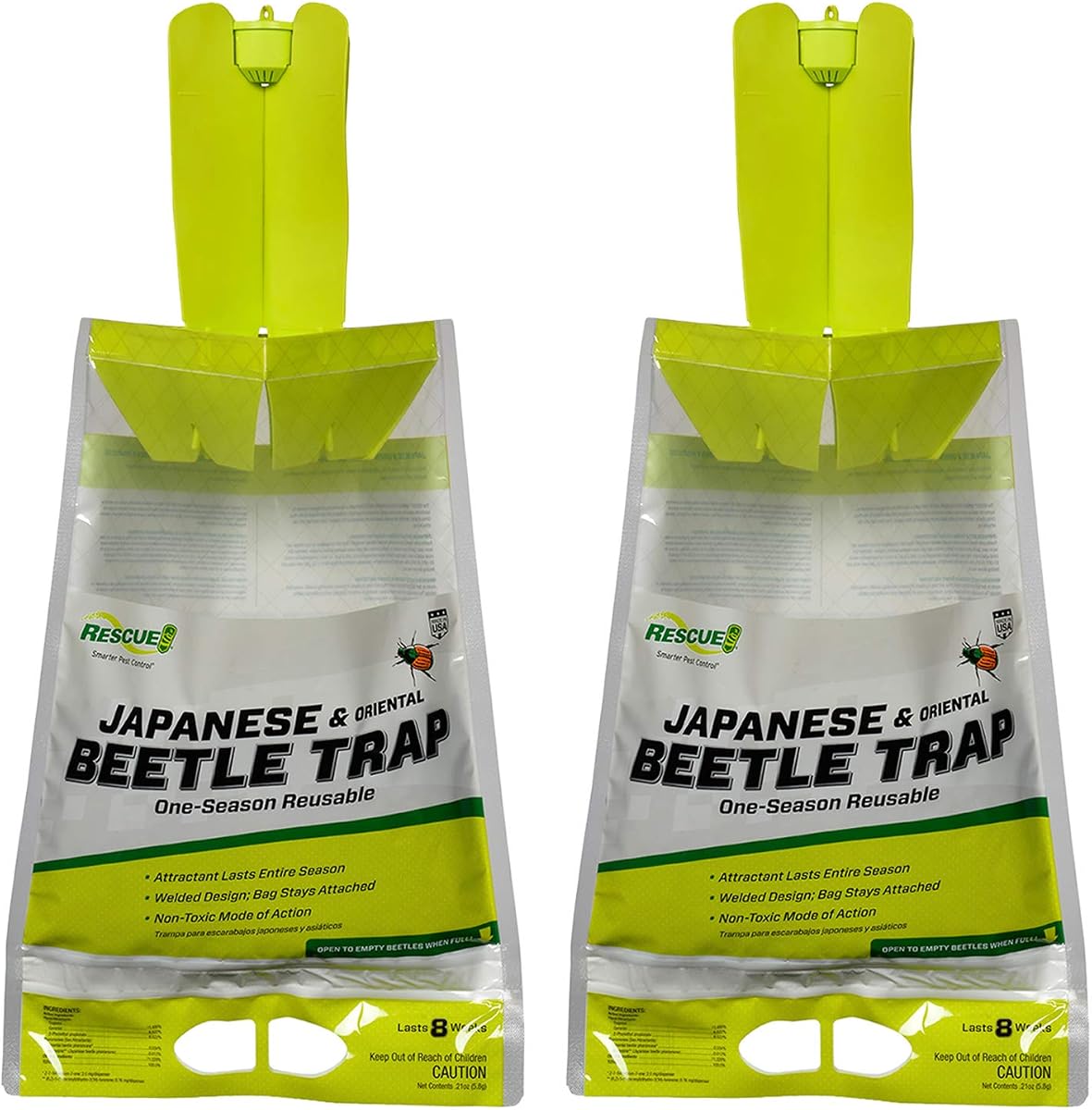
The RESCUE! Japanese Beetle Trap is a reusable, species-specific system for Japanese and Oriental beetles. It has a 4.3 rating and includes two traps with green panels, attached collection bags, and attractant cartridges. Although it appears in this roundup because beetle pressure can sometimes be confused with other plant damage, it is not a squash bug trap.
We may earn a commission when you buy through this link, at no additional cost to you.
Pheromone scent attracts beetles to the large green panels. Impact stuns them, causing them to fall into the attached bag, where they cannot fly out. The included attractant is described as lasting an entire season. When the bag fills, the easy-lock bottom allows it to be emptied and the trap reused, making the system more sustainable than replacing an entire disposable unit.
Placement is the most important instruction. The listing recommends positioning the traps at least 30 feet from ornamental plants so beetles are drawn away from vegetation where they cause damage. This makes the trap best suited to properties with space for a separate capture zone, rather than tightly confined gardens or containers.
Choose this product when Japanese or Oriental beetles are a confirmed problem and a dedicated, reusable attract-and-bag system is desired. It should not be purchased as a primary solution for squash bugs because its attractant targets beetles rather than squash bug adults, nymphs, or eggs.
The attached bags and easy-lock bottom let users empty captured beetles and reuse the trap. That design reduces the need to replace the entire unit throughout the active season.
Placing traps away from valuable ornamentals helps pull beetles away from plants where their feeding causes damage. Users should preserve that separation and follow the placement guidance consistently.
We may earn a commission when you buy through this link, at no additional cost to you.
The best trap depends on whether you need direct pest-specific capture, general plant monitoring, or protection against a different insect that resembles a squash bug problem. Format, target species, placement, weather exposure, and maintenance should guide the decision.
Start by separating a true squash bug problem from damage caused by other insects. Squash bugs are shield-shaped, sap-feeding pests that often gather on leaf undersides, plant crowns, vines, and sheltered soil areas. Most yellow sticky traps in this roundup target small flying plant pests instead. A trap only becomes a reliable squash bug solution when its instructions or attractant specifically identify squash bugs or squash vine borers as the target.
Stake traps sit in soil and work well around potted plants and garden rows. Hanging traps offer vertical placement near greenhouse racks, trees, and upper foliage. Flat cards can be placed against walls, along paths, or around plant canopies, while center-hole cards slip around stems. Lure-compatible boards require a separate attractant and compatible trapping system. Match the physical format to the location where you can realistically inspect and maintain it.
Double-sided traps provide more interception area and can capture pests approaching from either face. Single-sided center-hole cards can still work when their orientation directs crawling insects onto the glue. The listing should also indicate whether the adhesive is waterproof, UV-resistant, and suitable for outdoor weather. Look for a design that allows you to handle the edges without accidentally touching the sticky surface.
A larger pack makes it easier to establish several monitoring points, rotate clean traps into service, or cover multiple beds and containers. More traps do not automatically mean better control, especially if they are poorly positioned. Review the dimensions and mounting accessories before estimating how many units a planting area needs. Specialty two-packs may be sufficient for isolated insect problems, while broad garden monitoring benefits from dozens of cards.
Outdoor traps face rain, sunlight, dust, and temperature changes. Products described as waterproof and UV-resistant are better suited to exposed positions, while indoor cards can focus on houseplants, kitchens, and greenhouse benches. Even durable adhesive traps need replacement when the surface becomes dirty, covered, dry, or difficult to read. Check the stated service life while treating it as an estimate based on environmental conditions.
Yellow color and adhesive are appropriate for many small flying plant pests but do not guarantee capture of every species. Pheromone or other lure systems can make a trap more selective, although the attractant may be sold separately and require an appropriate compatible setup. A specialized lure can also draw pests toward a trap away from plants, but placement must follow the manufacturer’s distance guidance to avoid concentrating damage near valuable vegetation.
Sticky traps should be positioned where people, pets, and beneficial insects are unlikely to contact the adhesive. Look for descriptions that emphasize odorless, non-toxic, toxin-free, or insecticide-free construction. Protective glue guards are useful on traps designed to catch larger insects because they reduce accidental contact with non-target creatures. Keep traps away from food, children's play areas, and frequently handled surfaces.
Consider how often you will inspect the sticky surface and what happens when it becomes unusable. Replacement should occur when insects cover the available area, dirt reduces adhesion, rain washes the surface, or the trap no longer intercepts pests. Wear gloves when handling saturated cards, seal used traps in a bag, and dispose of them in accordance with local waste guidance. Reusable systems should be emptied according to their specific instructions.
Begin by identifying the affected plant and inspecting it carefully, especially leaf undersides, tender stems, plant crowns, and the soil near the base of squash vines. Sticky cards can support monitoring, but they do not replace inspection for squash bug eggs, nymphs, and adults. Remove the trap's protective backing without touching the adhesive, then place it where the target pest is likely to travel.
For stake-style traps, insert the stake into the soil near the plant without crowding stems or damaging roots. Hang cards near greenhouse benches, tree branches, or upper plant growth where supported. Position cards at multiple heights and around the canopy, and orient the adhesive side toward likely flight or travel paths. Replace lures only with compatible attractants and follow the placement distance required by specialized traps.
Inspect each trap on a regular schedule, particularly after rain, strong wind, heavy irrigation, or rapid pest activity. Replace a card when it is full, dirty, dry, warped, or no longer positioned correctly. Handle adhesive traps with gloves, place used traps in a sealed bag, and clean or empty reusable units as directed. Continue using crop monitoring and appropriate integrated pest management because no sticky trap should be treated as a complete control program.
Most yellow sticky traps in this guide target fungus gnats, whiteflies, fruit flies, and similar small flying insects rather than squash bugs. The most relevant option is the lure-compatible sticky board that mentions squash vine borer, but it requires a compatible trap and a separately purchased attractant. For dependable results, choose a product specifically labeled for the pest you have and combine it with regular plant inspection.
A yellow trap may capture an adult if it happens to contact the adhesive, but color alone is not a dependable squash bug lure. Squash bugs often travel close to the ground, along stems, and beneath foliage, where a suspended or above-canopy card may receive little contact. Place traps near actual pest activity and use them as one part of a broader management plan.
Place monitoring cards at several heights around the plant, including near the canopy base, within the canopy, and above it. Put additional traps near pathways, posts, or neighboring plants where insects may travel. For a specialized beetle trap, follow the manufacturer's spacing instructions because the trap should be positioned far enough from ornamentals to draw beetles away from them.
Replace a trap when its surface is covered, dirty, washed out, dried, warped, or otherwise no longer sticky. The listed products claim service periods ranging from several months to as long as a year, but actual performance varies with weather, insect pressure, and exposure. Frequent inspection is more useful than relying on a printed replacement estimate.
Most of the selected products are described as odorless, non-toxic, toxin-free, or insecticide-free. They can still be a nuisance if people or pets brush against the adhesive, so place them away from doors, play areas, high-traffic surfaces, and reachable decorations. Keep used traps sealed and dispose of them responsibly.
Sticky traps alone are rarely a complete solution, particularly because most yellow traps target flying pests other than squash bugs. Effective management requires regular inspection, removal of eggs and nymphs where practical, sanitation, monitoring, and appropriate treatment when the infestation warrants it. Use traps to detect activity and reduce exposed pests, not as the only control step.
Only use a trap in the environment for which it is designed. Products described as indoor and outdoor use should tolerate normal exposure, but outdoor cards still need regular checks after rain or dust. A trap intended for enclosed greenhouse monitoring may not have the same resistance to direct sunlight, irrigation, or weather as a purpose-built outdoor trap.
A yellow sticky trap uses color and adhesive to intercept small flying insects that contact it. A pheromone trap uses a species-specific scent to attract target insects, often in a more selective trapping system. Pheromone products can be more targeted, but they require compatible hardware, careful placement, and separate attractant purchasing when the attractant is not included.
The MAXGUARD stake pack is the most versatile all-around choice because it supports both soil placement and hanging, while the 72-pack Catchmaster GRO cards offer the broadest plant-monitoring coverage. The 40-pack fruit fly and fungus gnat traps is a budget-friendly option for creating numerous small monitoring points, and the lure-compatible boards may appeal to growers with established moth-monitoring equipment.
Prioritize accurate pest targeting before considering quantity. If you have confirmed squash bugs, use a trap explicitly designed for them and combine it with regular inspection of plant undersides, stems, fruit, and soil. For general garden monitoring, the yellow cards are useful, but they should be understood as flying-pest tools rather than complete squash bug solutions.
Before buying, compare the current product details, included accessories, dimensions, placement requirements, and current ratings. Prices and availability can change over time, so verify the live listing and make sure the selected format fits both the pest and the area you intend to monitor.
