
POWR LABS Bluetooth ANT+ Heart Rate Monitor Chest Strap for Garmin, Peloton
4.0Editor score
Dual Bluetooth and ANT+
Adjustable 24–61 inch strap
400+ hour battery life
Explore the best heart rate monitor for Peloton, comparing chest straps and armbands for accuracy, comfort, connectivity, and ease of use.
A heart rate monitor for Peloton can turn every ride into a more informative workout by adding live pulse data, heart-rate zones, and fitness metrics to the experience. The right device should pair reliably, remain comfortable through intense intervals, and deliver consistent readings without interfering with your cadence or form.
This guide compares ten external heart rate monitors designed for Peloton and other fitness platforms. We evaluated chest straps and optical armbands by considering their supported connections, measurement features, battery life, water resistance, sizing, app compatibility, comfort, and practical limitations using the supplied product information.
Each review explains how the monitor fits into a Peloton training setup and which riders may benefit most from it. Rankings reflect the overall balance of useful features, compatibility, convenience, and construction, while current prices and availability can change at any time.
4.0Editor score
4.1Editor score

4.1Editor score
The comparison covers ten external monitors in two main formats: chest straps that take an electrical reading from the torso and armbands that use an optical sensor. Ratings, connectivity, power systems, water resistance, and special metrics help distinguish the strongest choices for Peloton riders.


The POWR LABS Bluetooth ANT+ Heart Rate Monitor Chest Strap is a budget-focused route to live Peloton heart-rate data. It carries a 4.0 rating and distinguishes itself with a very long advertised battery life, dual ANT+ and Bluetooth support, a broadly adjustable design, and the ability to track heart rate, heart-rate variability, and calories through compatible applications.
We may earn a commission when you buy through this link, at no additional cost to you.
Its strongest appeal is the combination of connection flexibility and charging independence. The supplied information states that the strap can sync with Peloton, cycling computers, smartwatches, Garmin, Wahoo, Polar, and more than 400 fitness apps. A replaceable battery is included, and the stated 400-plus-hour runtime removes the routine inconvenience of finding a cable or charging the sensor between rides. Its seamless fabric is also designed to resist chafing and slipping.
The main trade-off is that this is a conventional chest strap, so it may not appeal to riders who dislike pressure across the chest. It must also be worn before pairing, and the electrical nature of chest sensing means sweat and skin contact are part of normal operation. The advertised clinical-style accuracy claim and broad ecosystem support make it compelling, although actual results can vary with fit, placement, and use.
This monitor is a sensible choice for Peloton riders who want dependable heart-rate, zone, and calorie information without investing in a premium ecosystem. It is especially useful for people who ride frequently and dislike charging accessories. Choose it over an armband when precise torso-based readings and long battery life matter more than the convenience of automatic wear detection.
The stated 400-plus-hour replaceable-battery system is particularly attractive for daily training. It allows riders to keep monitoring across many sessions without planning around regular charging, although the battery should still be replaced correctly when its useful life ends.
Bluetooth and ANT+ support makes the monitor useful beyond a single Peloton account. The claimed compatibility with cycling computers, watches, and hundreds of fitness apps also allows riders to reuse the same sensor across indoor and outdoor training.
We may earn a commission when you buy through this link, at no additional cost to you.
The Polar H10 is a premium chest strap for riders who prioritize established heart-rate monitoring precision and connection flexibility. It has a 4.1 rating, and its feature set includes Bluetooth, ANT+, and 5 kHz transmission options, simultaneous connections, a fully waterproof body, and internal memory for recording multiple hours of activity.
We may earn a commission when you buy through this link, at no additional cost to you.
Polar describes the H10 as its most accurate heart-rate sensor to date, with improved electrodes, a straightforward buckle, and silicone dots intended to reduce interference and improve comfort. Its connectivity is particularly flexible: Bluetooth and ANT+ can operate at the same time, as can two Bluetooth connections. That makes it suitable for a Peloton ride while also supporting watches, computers, and other compatible equipment.
The premium position is accompanied by a higher cost and a battery system that must be handled correctly. Only a CR2025 button cell should be used; other battery formats may damage the sensor or cause malfunction. It is also still a chest strap, so riders sensitive to pressure or moisture will need to consider an optical armband instead.
The H10 is best for serious Peloton users who want proven precision, a durable waterproof design, and seamless movement between connected devices. It is also attractive for outdoor athletes because the internal memory can preserve workouts. For a rider seeking a premium, no-fuss electrical monitor with broad radio support, it remains one of the strongest selections in this guide.
The ability to use Bluetooth and ANT+ simultaneously is a meaningful advantage for multi-sport users. A Peloton rider can retain access to a watch or cycling computer while also recording with a phone or training application.
Improved electrodes and silicone contact points are designed to support stable transmission while reducing irritation. The combination of precision claims, internal memory, and full waterproofing gives the H10 a broad feature set for serious riders.
We may earn a commission when you buy through this link, at no additional cost to you.
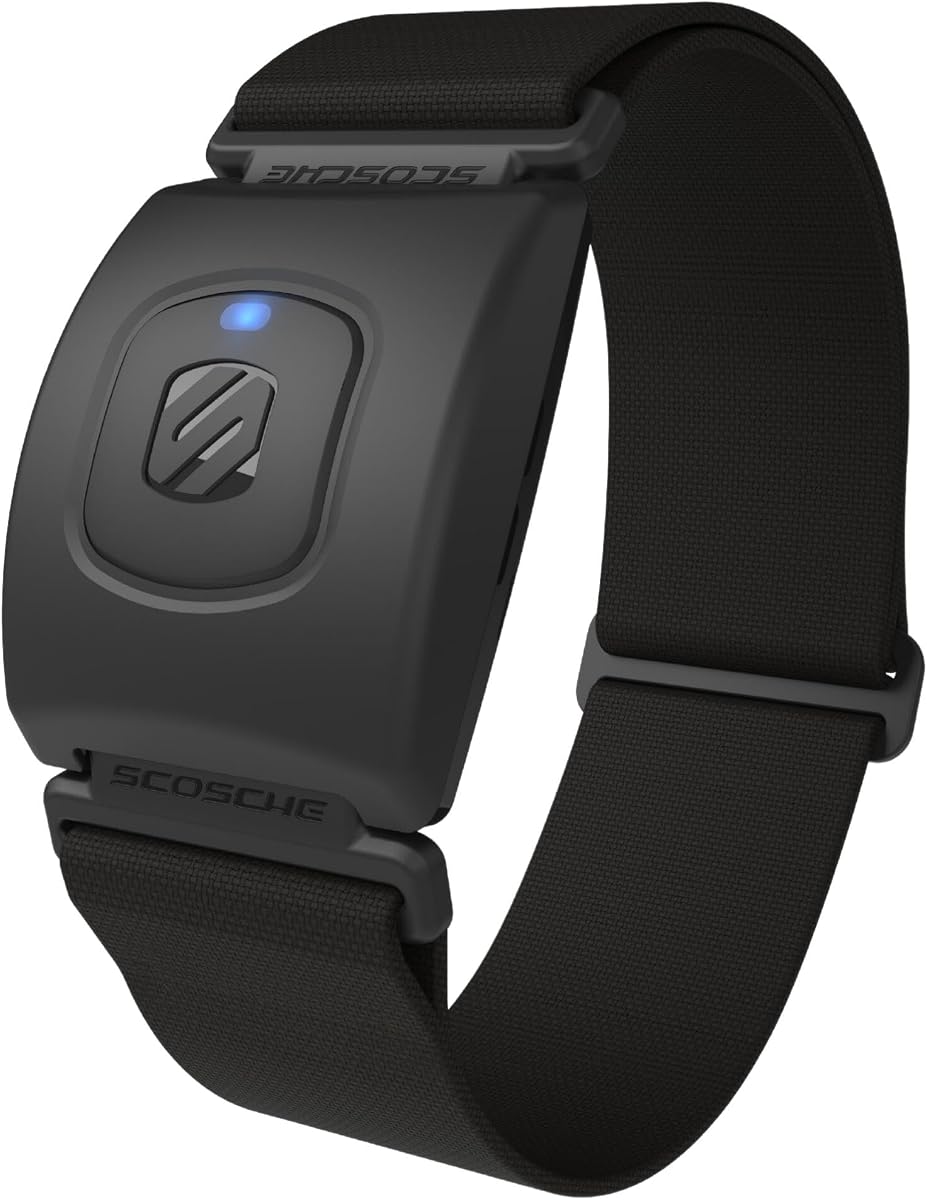
The Scosche Rhythm+ 2.0 is the most versatile armband in this comparison and an especially practical choice for riders who dislike chest straps. It has a 4.1 rating, uses an optical sensor on the upper arm, and supports both Bluetooth and ANT+ connections for Peloton and a wide selection of watches, computers, equipment, and fitness applications.
We may earn a commission when you buy through this link, at no additional cost to you.
The supplied information highlights RR interval capture, which can provide heart-rate variability data for applications such as HRV4Training, Morpheus Training, and Welltory. Its breathable band can be worn on the forearm, bicep, or tricep, and the adjustable design is intended to remain secure during demanding workouts. An advertised 24-hour battery supports continuous use, while an IP68 rating helps it withstand sweat and rain.
As an optical armband, it does not avoid every potential measurement issue associated with movement, although a secure fit can improve consistency. It also needs regular charging, unlike monitors with replaceable batteries. The product is therefore not ideal for riders who want a completely maintenance-free sensor or who prefer the established electrical measurement approach of a chest strap.
The Rhythm+ 2.0 is our choice for riders seeking one comfortable monitor that works with Peloton and a broad range of training tools. It is especially appealing when HRV information, flexible wearing positions, and freedom from chest pressure are priorities. It also makes a practical second sensor for travel or workouts where packing a minimal kit matters.
The adjustable breathable band can sit on several parts of the arm, giving riders more freedom than a fixed chest strap. This design is valuable during Peloton classes when a sweaty, tight contact point would otherwise feel distracting.
RR interval streaming adds value for riders interested in heart-rate variability. Compatibility with multiple HRV applications gives the armband more analytical depth than a device limited to a simple live pulse display.
We may earn a commission when you buy through this link, at no additional cost to you.
The Garmin HRM 600 has the highest listed rating in this guide at 4.5 and stands out for its rechargeable design, two-month battery life, and extensive activity recording. It sends real-time heart rate and heart-rate variability information to compatible Garmin devices, fitness equipment, and apps, making it a natural fit for riders who use Garmin hardware.
We may earn a commission when you buy through this link, at no additional cost to you.
Its capabilities extend well beyond a simple Peloton connection. With a compatible Garmin smartwatch, it supports running dynamics such as step-speed loss, stride length, vertical oscillation, and ground-contact-time balance. It can also record standalone workouts, including heart rate, calories, speed, and distance, then sync them to Garmin Connect, while storing swim data for later transfer.
The richest features depend on having compatible Garmin devices and applications, so a Peloton-only rider may not access much of the advanced data. The strap is offered in XS–S and M–XL sizes, which means fit should be checked carefully, and the rechargeable battery still introduces a charging cycle that replaceable-battery straps avoid.
This monitor is recommended for a Peloton rider who already uses Garmin watches or cycling computers and wants one sensor to support both indoor rides and a wider training program. Its strong rating, lengthy battery life, washable strap, and detailed metrics make it particularly compelling for a connected Garmin ecosystem.
Real-time heart rate and heart-rate variability data can move to compatible Garmin watches, cycling computers, and applications. This ecosystem integration is the core advantage for riders who want Peloton metrics to become part of a broader Garmin training history.
Standalone recording, swim storage, daily metrics, and advanced running dynamics extend the device well beyond class-based cycling. Riders can use one sensor across running, swimming, and indoor training while keeping the data in Garmin Connect.
We may earn a commission when you buy through this link, at no additional cost to you.
The COOSPO HW706 Armband combines an optical sensor, dual-radio connectivity, and a generous battery life in a convenient upper-arm format. Its 4.1 rating and extensive app support make it a practical option for Peloton riders who also train with GPS bike computers, Garmin or Wahoo watches, and popular phone-based fitness platforms.
We may earn a commission when you buy through this link, at no additional cost to you.
The device provides real-time heart rate, training-zone information, and calorie tracking through compatible apps. Its Bluetooth 4.0 and ANT+ radios allow use with Peloton equipment, smartphones, tablets, Garmin watches, and Wahoo sports watches. The rechargeable battery is advertised at more than 25 hours, and the package includes two fabric straps, which is useful for sharing or keeping a spare on hand.
Its IP67 construction is designed to handle rain and sweat, but the supplied information specifically says not to use it for swimming. The older Bluetooth 4.0 specification may also appear less future-facing than newer standards, although it remains adequate for the listed equipment. A firm but comfortable fit is important because optical accuracy and secure placement are closely connected.
The HW706 suits riders who want more than a basic pulse display without moving to a premium multi-sport sensor. It is a good match for people who cycle indoors and outdoors, need calorie and zone information, and value a generous battery plus replacement straps. The simple button controls and LED heartbeat indicator also make operation straightforward.
ANT+ and Bluetooth connections allow the armband to serve both dedicated cycling computers and general-purpose training devices. That versatility is useful for riders who alternate between Peloton classes and outdoor rides.
A stated battery life exceeding 25 hours means most riders can complete multiple sessions between charges. Two included straps also improve the package's long-term convenience and make it easier to keep a clean replacement available.
We may earn a commission when you buy through this link, at no additional cost to you.
The COOSPO H6 is a straightforward chest strap designed to deliver live heart-rate data to Peloton and a wide range of connected equipment. Its 4.2 rating, claimed ±1 BPM performance, and advertised 300-hour battery life make it an appealing option for riders who want accurate torso-based readings without frequent charging.
We may earn a commission when you buy through this link, at no additional cost to you.
Bluetooth and ANT+ provide flexible connectivity to Peloton bikes, Concept2 equipment, treadmills, Bowflex machines, Echelon devices, GPS computers, and sports watches. The sensor also works with numerous training applications, including Strava, Wahoo Fitness, Polar Beat, DDP Yoga, Zwift, Runtastic, and CooSpoRide. The replaceable CR2032 battery further reduces interruptions between classes.
Proper preparation is important. The plastic electrode areas should be moistened before wearing the strap, and additional moisture may be needed in dry conditions. The product is rated IP67 for rainy-day training and sweat exposure, but it should not be soaked or used for swimming. Riders should also separate the sensor from the strap after exercise for upkeep.
The H6 is best for Peloton users who prefer the consistency and established design of a chest monitor and want long battery life. It is particularly compelling for people who use multiple fitness machines or training applications, since its dual-mode radio support and broad compatibility are central strengths.
The stated 300-hour runtime makes the H6 easy to maintain as a permanent piece of training equipment. Riders can keep it ready for regular sessions and replace the CR2032 cell when needed rather than following a strict charging schedule.
Moistening the electrodes is essential because sweat and moisture help the electrical sensor maintain a consistent contact. Learning this small step, choosing the correct strap position, and drying the equipment afterward helps preserve dependable performance.
We may earn a commission when you buy through this link, at no additional cost to you.
The COOSPO HW9 is an optical armband built around training zones, calorie information, and newer Bluetooth connectivity. It carries a 4.0 rating and supports Peloton through Bluetooth while also offering ANT+ for bike computers, sports watches, and other compatible devices.
We may earn a commission when you buy through this link, at no additional cost to you.
Its five-color LED indicator displays the current heart-rate zone, allowing riders to gauge intensity without constantly checking a phone. The Heartool and CooSpoRide applications can customize a maximum heart-rate value, and the armband can vibrate when that threshold is exceeded. It also supports heart-rate variability, calorie tracking, and simultaneous Bluetooth connections.
The rechargeable design provides an advertised 35 hours of use and includes a magnetic charger. Charging should be performed with a 5-volt power adapter or a computer USB port. The zone warning, customizable maximum value, and multiple status lights may feel excessive for someone interested only in basic pulse tracking, but they add value for structured interval training.
The HW9 is a strong recommendation for Peloton riders who want an armband that makes intensity easy to monitor. It is especially useful during climbs, sprints, and threshold work, where immediate zone feedback can help riders pace themselves. Newer Bluetooth 5.0 support, a long battery, and strong multi-device compatibility further improve its appeal.
Five colored LEDs communicate intensity without interrupting the workout. This visual feedback is a practical alternative to opening the Peloton app between intervals or relying on a watch that may not be used during class.
Custom maximum-heart-rate settings make the zone system more relevant to an individual. The vibration warning offers a quick indication when the selected threshold is exceeded, although riders should use their own established limits rather than relying solely on a generic setting.
We may earn a commission when you buy through this link, at no additional cost to you.
The COOSPO HW807 is a lightweight optical armband for riders who want immediate zone feedback, broad compatibility, and freedom from a chest strap. Its 4.0 rating and support for Peloton, Polar, Wahoo, Strava, DDP Yoga, and more than 200 listed applications make it a flexible option for mixed training.
We may earn a commission when you buy through this link, at no additional cost to you.
The sensor claims ±1 BPM monitoring during exercise and provides color-coded heart-rate zones, heart-rate variability information, and calorie data. Bluetooth 5.0 and ANT+ allow it to work with smartphones, Garmin, Wahoo sports watches, GPS bike computers, Peloton bikes, Concept2 equipment, treadmills, Bowflex machines, iFIT equipment, and Echelon products.
Its stated 20-hour battery is shorter than that of the HW9, so riders with several classes per day may need to charge more regularly. The IP67 rating supports rainy-day and sweaty workouts, but the product is not recommended for swimming. Optical measurements also depend on keeping the armband in a secure, suitable position.
The HW807 is best for everyday riders who want visible zone information and broad device support without maintaining a chest strap. It works well for anyone balancing Peloton with outdoor cycling or other gym activities. Riders seeking the longest runtime among the COOSPO armbands may prefer the HW9, while this model offers a simpler, more compact alternative.
Color-coded LEDs provide a quick view of the current heart-rate zone. That makes the HW807 useful for effort control during classes without requiring a separate screen or a disruptive app check.
Support for more than 200 applications, sports watches, and common gym machines means the armband can remain useful across a full fitness routine. Bluetooth 5.0 and ANT+ cover both modern app-based devices and dedicated ANT+ cycling computers.
We may earn a commission when you buy through this link, at no additional cost to you.
The Garmin HRM 200 is a durable chest monitor with a 4.3 rating, a user-replaceable battery, and an advertised battery life of up to one year. It transmits real-time heart rate and heart-rate variability data to compatible Garmin smartwatches, cycling computers, fitness equipment, and apps, including compatible Peloton setups.
We may earn a commission when you buy through this link, at no additional cost to you.
Garmin's simple design emphasizes dependable daily use. The machine-washable strap is offered in XS–S and M–XL sizes for a closer fit, while a 3 ATM water rating adds durability for demanding training environments. The replaceable battery means riders do not need a proprietary charging cable, which is a significant convenience advantage over rechargeable armbands.
The monitor is less elaborate than the HRM 600, offering fewer of the stated advanced running and standalone activity features. Its best performance also comes through when paired with compatible Garmin hardware or applications. A user who wants no screen-free stand-alone training storage may find a different device better suited to those needs.
The HRM 200 is an excellent option for Peloton riders who prefer a traditional chest strap, minimal charging, and long-term durability. It is particularly suitable for anyone already using Garmin equipment or wanting a simple sensor that transmits core metrics to a broad range of compatible platforms.
The claimed one-year battery life substantially reduces maintenance compared with most rechargeable monitors. A user-replaceable cell also avoids dependence on a proprietary charger, making the HRM 200 easy to keep ready between training blocks.
A machine-washable strap suits a monitor that will be worn through frequent, sweaty sessions. Regular washing and complete drying help maintain hygiene and make it easier to keep the sensor in regular rotation.
We may earn a commission when you buy through this link, at no additional cost to you.
The Rechargeable Heart Rate Armband stands out for its automatic wear detection, which activates the sensor when it touches skin and removes the need to press a power button or begin a repeated pairing ritual. It has a 3.9 rating and supports Bluetooth and ANT+ connections for Peloton, Wahoo, Strava, Zwift, Garmin Connect, Apple Health, Google Fit, Polar Beat, and DDP Yoga.
We may earn a commission when you buy through this link, at no additional cost to you.
Its optical sensor is designed to provide consistent readings, while a soft-touch silicone band is intended to remain stable without bouncing, pinching, or sliding. The ability to connect to as many as three devices simultaneously is useful for riders who want a Peloton workout reflected in a watch, cycling computer, and health platform at once.
The lowest rating in the list suggests that its overall customer satisfaction is not as strong as that of the leading selections. It is also rechargeable, so a complete wireless routine is offset by the need to replenish power. Optical monitoring can be affected by placement and movement, making correct positioning important.
This armband is best for riders who prioritize effortless startup and broad device support. It can be especially convenient in a home-gym setup because putting it on may be all that is required before a class. Riders seeking a chest strap, long replaceable-battery life, or a stronger listed rating should examine the other leading options.
Skin-contact detection allows the monitor to activate when the rider puts it on. This removes a recurring source of friction, particularly when someone is rushing to begin a scheduled Peloton class.
Three-device connectivity is a notable feature for data-focused riders. Simultaneous connections can support a broader training setup, although users should still confirm that each destination and application handles overlapping broadcasts as expected.
We may earn a commission when you buy through this link, at no additional cost to you.
Choosing a Peloton heart rate monitor involves balancing measurement style, connection reliability, comfort, power management, and the broader training platforms you use. The most important distinction is whether you prefer a chest strap or an optical armband.
Choose a chest strap for established torso-based training and a long replaceable-battery option. Choose an armband when easy clothing, quick startup, or freedom of movement matters most.
Prioritize dual-radio support if you use several devices. Confirm that the monitor and each destination app are compatible before purchasing.
Choose the format you can position correctly every time. For chest straps, moisten the electrodes; for armbands, keep the sensor stable and snug.
Choose replaceable batteries for low-maintenance endurance. Choose rechargeable power when simplicity and automatic operation matter more.
Prioritize a secure, nonrestrictive fit. A monitor that stays comfortable is more likely to be worn consistently and used correctly.
Check the exact rating and manufacturer guidance. Sweat-resistant models are not necessarily suitable for swimming or direct soaking.
Prioritize metrics you will actually review. More data is useful only when it integrates cleanly with your preferred training platform.
Verify size, care instructions, and battery format. Follow cleaning guidance to preserve comfort, fit, and measurement quality.
Before the first ride, charge the device if it is rechargeable and install the correct battery if it uses a replaceable cell. Fit the monitor according to its instructions, power it on when required, and complete the pairing process through the Peloton app or the app connected to your bike, watch, or computer. Wear the sensor in the intended position before pairing when the manufacturer specifies that sequence.
During a workout, keep the chest strap centered and snug, or secure the optical armband at the recommended upper-arm position. Lightly moisten chest electrodes if needed, especially in dry conditions, and check that the display or app shows a live and stable heart-rate reading. Use zones and calorie values as guidance rather than medical conclusions, and stop if the reading seems implausible or physical discomfort develops.
After training, disconnect the sensor, remove sweat, and dry the band and electronics thoroughly. Wash compatible fabric parts according to the care instructions, remove the sensor from a chest strap when directed, and never soak a product that is only rated for sweat or rain. Store the device dry, replace the battery when needed, and periodically confirm that it still pairs and transmits correctly.
It depends on your goals. Peloton can provide valuable workout metrics without an external monitor, but a separate device may offer more continuous or accurate heart-rate data, zone guidance, calorie estimates, or integration with other training apps. Riders pursuing structured threshold work, heart-rate training, or a broader multi-device setup are likely to benefit most from an external monitor.
Chest straps are often preferred for traditional live training because they measure the heart's electrical signal directly. Armbands are more convenient and can feel less restrictive, but optical accuracy depends heavily on fit, movement, blood-flow conditions, and placement. The most effective option is the one that the rider wears correctly and consistently.
Bluetooth is the most common connection for Peloton and general fitness apps, while ANT+ is common among dedicated cycling computers and sports watches. A dual-band monitor provides greater flexibility. Always check the current Peloton app and the specific bike or accessory you own before purchasing.
Yes, if the monitor supports the connection used by your outdoor setup. Models with both Bluetooth and ANT+ can work with many phones, watches, and bike computers. You may need to reconnect the sensor or select the correct device before each activity, and the pulse reading should be compared with your usual chest-strap data to confirm a stable fit.
Clean the wearable parts after sweaty workouts, following the manufacturer's washing instructions. A damp strap and trapped sweat can cause irritation and affect the sensor's contact. Remove the electronics before washing unless the instructions explicitly permit immersion, and let every part dry fully before use or storage.
The most common causes are poor electrode contact, an incorrect fit, a low battery, or moisture that has dried out. Lightly moisten the electrodes, center the strap, and tighten it enough for stable contact without restricting breathing. If the signal remains unreliable, test the sensor with another app or connected device to determine whether the issue lies with the monitor or the destination software.
Bluetooth is sufficient for many Peloton riders who also use a phone or standard fitness app. ANT+ is worth considering for dedicated bike computers and many sports watches. Dual-band support offers the broadest compatibility and is especially useful for people who alternate between connected indoor sessions and outdoor training.
No. A monitor is most valuable when heart rate, zone information, or calorie data contributes to the training plan. Casual riders may use it selectively, while riders following a specific heart-rate-based program may prefer consistent wear. Keeping the same placement and pairing routine also makes trends easier to compare from session to session.
The POWR LABS chest strap offers an approachable combination of dual-band connectivity, extensive platform support, and an exceptionally long replaceable-battery system. The Polar H10 stands out for established precision, simultaneous radio connections, internal memory, and full waterproofing, while the Scosche Rhythm+ 2.0 is the most compelling all-around armband for riders who value comfort, HRV data, and broad app compatibility.
When choosing, begin with the format you will actually wear. Choose a chest strap when consistent torso-based readings and low-maintenance battery life come first. Choose an optical armband when comfort, quick setup, visible zones, and freedom from chest pressure matter more. Then confirm dual-radio support, the specific apps you use, sizing, and the required maintenance routine.
Prices, promotions, availability, and Peloton software behavior can change over time, so check the current product listing and compatibility information before ordering. The best monitor is not necessarily the one with the longest specification list; it is the one that delivers useful data, pairs reliably, fits comfortably, and supports the way you train.