
Soundcore by Anker Q20i
4.5Editor score
Hybrid four-microphone ANC
Forty-hour ANC battery life
Two-device Bluetooth switching
Explore the best ANC headphones for podcasts, comparing noise control, microphone quality, comfort, battery life, connectivity, and listening features.
ANC headphones for podcasts must do more than block noise. They need to preserve vocal clarity, capture a clean recording in shared rooms, support long editing sessions, and remain comfortable through extended listening. The strongest models balance all of these priorities rather than specializing in only one.
This guide compares ten active noise-cancelling over-ear headphones using their published ratings, noise-control features, microphone systems, battery claims, connectivity options, comfort details, and app-supported functions. It covers practical choices for listeners, remote interview participants, video editors, and creators working from home, offices, or busy travel environments.
Each review reveals a different balance of features, from highly adjustable ANC and dual-device switching to sophisticated call processing and app-based personalization. Ratings and product details reflect the supplied information, while prices and availability can change, so readers should verify current listings before purchasing.
4.5Editor score
4.4Editor score

4.5Editor score
The comparison below highlights the most relevant differences for podcast listening and creation, including noise cancellation, microphone performance, battery endurance, device connectivity, comfort, and listening controls.



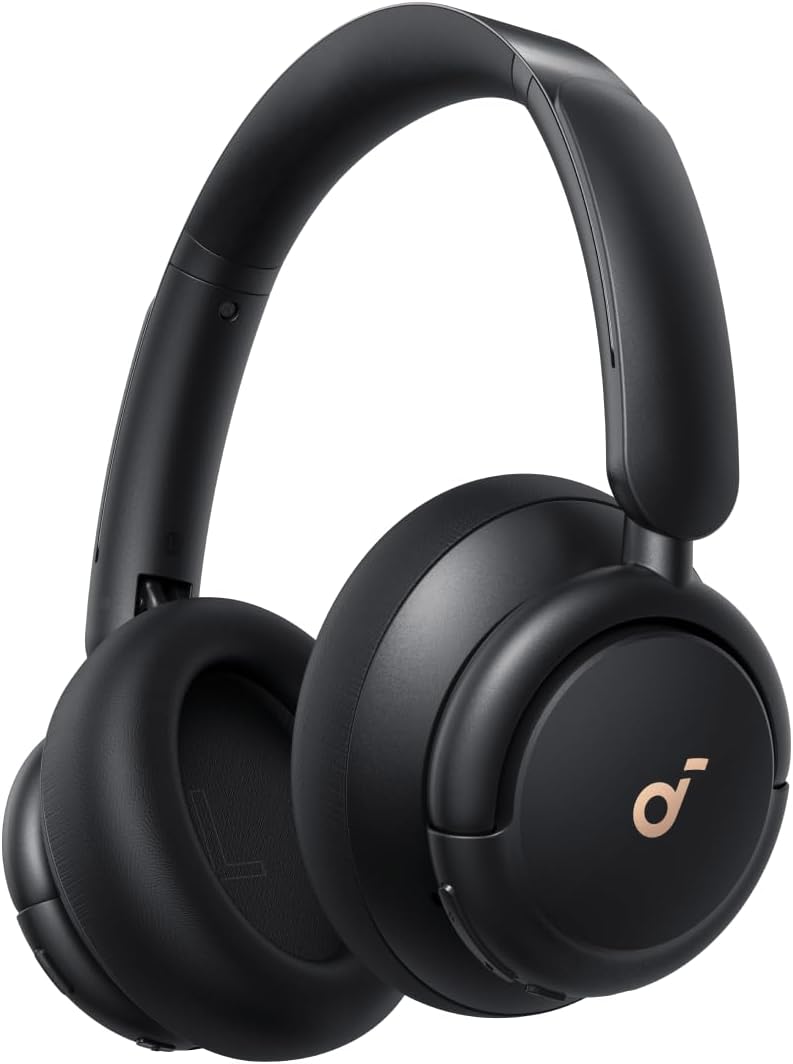
The Soundcore by Anker Q20i combines hybrid active noise cancellation, generous battery life, and broad app support at a budget-minded tier. Its 4.5 rating reflects a favorable balance of features, making it a practical option for podcast listeners who want fewer distractions without paying for a premium over-ear model.
We may earn a commission when you buy through this link, at no additional cost to you.
Four microphones—two internal and two external—work together to reduce ambient noise, with Soundcore stating that the system can reduce external noise by up to 90 percent. The app provides ANC, Normal, and Transparency modes, so a podcaster can move from focused recording to hearing a colleague enter the room. Dual-device switching is especially useful for jumping between a laptop running an interview app and a phone receiving calls.
Sound quality comes from oversized 40mm dynamic drivers with BassUp processing, while customizable EQ and 22 presets provide room to shape voices and reduce harshness. The battery is rated for 40 hours with ANC on and 60 hours in normal mode, and a five-minute charge adds four hours of listening. The main limitation is that its strongest selling points concern general listening and productivity rather than specialized podcast capture controls.
This is a compelling choice for a new podcaster working from a noisy home, a student balancing classes and interviews, or anyone who wants long wireless sessions with dependable ANC. It is also well suited to listeners who enjoy customizing sound through an app. For those seeking the most capable budget ANC model, the Q20i offers an unusually complete package.
Switching among ANC, Normal, and Transparency modes makes the Q20i adaptable to different recording conditions. ANC is useful against steady background sound, while Transparency helps users remain aware of announcements, traffic, or nearby conversations.
Bluetooth 5.0 dual connections allow the headphones to remain associated with two devices and switch between them automatically. Podcasters can move between a laptop and phone without manually reconnecting for every task.
We may earn a commission when you buy through this link, at no additional cost to you.
The JLab JBuds Lux ANC is a wireless over-ear model with active noise cancellation and a 4.5 customer rating. On the surface, it belongs in a podcast-headphone comparison because it combines a familiar form factor with the core noise isolation expected by listeners working around household or office distractions.
We may earn a commission when you buy through this link, at no additional cost to you.
The supplied product information confirms the wireless over-ear design, ANC feature, graphite color, ASIN, and customer rating, but it does not provide additional technical descriptions. That makes the JLab appealing to buyers who want a straightforward ANC headset and a strong rating without needing to navigate a lengthy list of specialized playback features.
Because microphone configuration, battery duration, codec support, charging behavior, multipoint pairing, and app controls are not specified in the available data, those features should be verified on the current listing before purchasing. This caution is particularly important for podcasters who depend on a headset for live interviews, because ANC alone does not establish microphone capture quality.
The JBuds Lux ANC is best considered for listeners and occasional podcasters who prioritize wireless freedom, an over-ear format, and noise cancellation. It earns a place in the roundup, but buyers making a professional recording decision should examine the latest product page for microphone and connectivity information.
Its wireless over-ear construction gives listeners a convenient way to consume interviews, episodes, and recorded material without a cable. The active noise cancellation feature can help reduce competing environmental noise during playback.
The available information does not confirm advanced microphone processing, multipoint pairing, or battery figures. Podcasters should verify those details against the current listing before making a purchase decision.
We may earn a commission when you buy through this link, at no additional cost to you.
The Soundcore by Anker Q30 is the most balanced all-around model in this guide, earning a 4.4 rating and the Editor's Choice designation. It is designed for long listening sessions and combines hybrid noise cancellation, context-specific modes, generous battery life, and comfortable protein-leather earcups with memory-foam padding.
We may earn a commission when you buy through this link, at no additional cost to you.
Its three ANC modes address common podcasting environments directly: Transport targets airplane engine noise, Outdoor reduces traffic and wind, and Indoor dampens background conversation. Dual noise-detecting microphones filter low-frequency ambient sound, while 40mm drivers with flexible silk diaphragms target clear vocals, crisp treble, and thumping bass. Battery life reaches 50 hours with ANC on and 70 hours in standard mode.
A five-minute charge provides four hours of playback, which is useful when the headphones are used for both work calls and entertainment. The main technical limitation is explicit: ANC does not work when connected by AUX cable. Also, the fixed mode structure is less granular than the adjustable ANC levels offered by some newer models, but it makes operation straightforward for most users.
The Q30 is ideal for remote podcasters, commuters, and long-session editors who want one pair of headphones to handle noisy environments, comfortable wear, and extended playback. It may not be the first choice for users who require a wired ANC connection or a multi-device workflow, but its overall balance makes it an easy recommendation.
Transport, Outdoor, and Indoor modes simplify the decision-making process. Each preset targets a different category of persistent noise, helping creators maintain focus whether they are commuting or working near a busy household.
Ultra-soft protein leather earcups and memory-foam padding support comfortable long sessions. The lightweight construction also reduces the fatigue associated with wearing over-ear headphones while reviewing an episode or editing a lengthy interview.
We may earn a commission when you buy through this link, at no additional cost to you.
The JBL Tune 780NC stands out for communication features, including two beamforming microphones, background-noise reduction, multipoint pairing, and Smart Ambient control. Its 4.1 rating is the lowest among the ten listed models, but the specification set is particularly relevant to podcasters who alternate between remote interviews and everyday listening.
We may earn a commission when you buy through this link, at no additional cost to you.
The microphones are intended to capture speech while filtering background noise, making the headphones more compelling for calls and teleconferences. Adaptive noise cancelling offers distraction reduction, while Smart Ambient lets users remain aware of their surroundings when needed. Two devices can be connected through Bluetooth 6.0, allowing a laptop and phone to remain available with effortless switching.
Audio performance is supported by custom 40mm drivers, JBL Pure Bass Sound, and JBL Spatial Sound. An included USB-C-to-3.5mm cable enables the stated Hi-Res listening experience. Battery life reaches 50 hours with ANC on and up to 76 hours with it off, plus a five-minute speed charge for another five hours. A caveat is that the charging cable is not included.
Choose the Tune 780NC if clean voice pickup, straightforward device switching, and awareness controls are priorities. Its rating may not lead the field, but the combination of call-oriented microphones, multipoint connectivity, and long battery life makes it a well-rounded option for mobile podcasters and hybrid workers.
The two-microphone system is designed to capture speech while reducing ambient noise. That focus makes the Tune 780NC especially relevant for teleconferences, guest interviews, and everyday calls conducted from busy locations.
Two-device pairing lets users switch between a computer and phone. Bluetooth 6.0 is also presented as supporting high-quality streaming, lower power use, and reduced latency.
We may earn a commission when you buy through this link, at no additional cost to you.
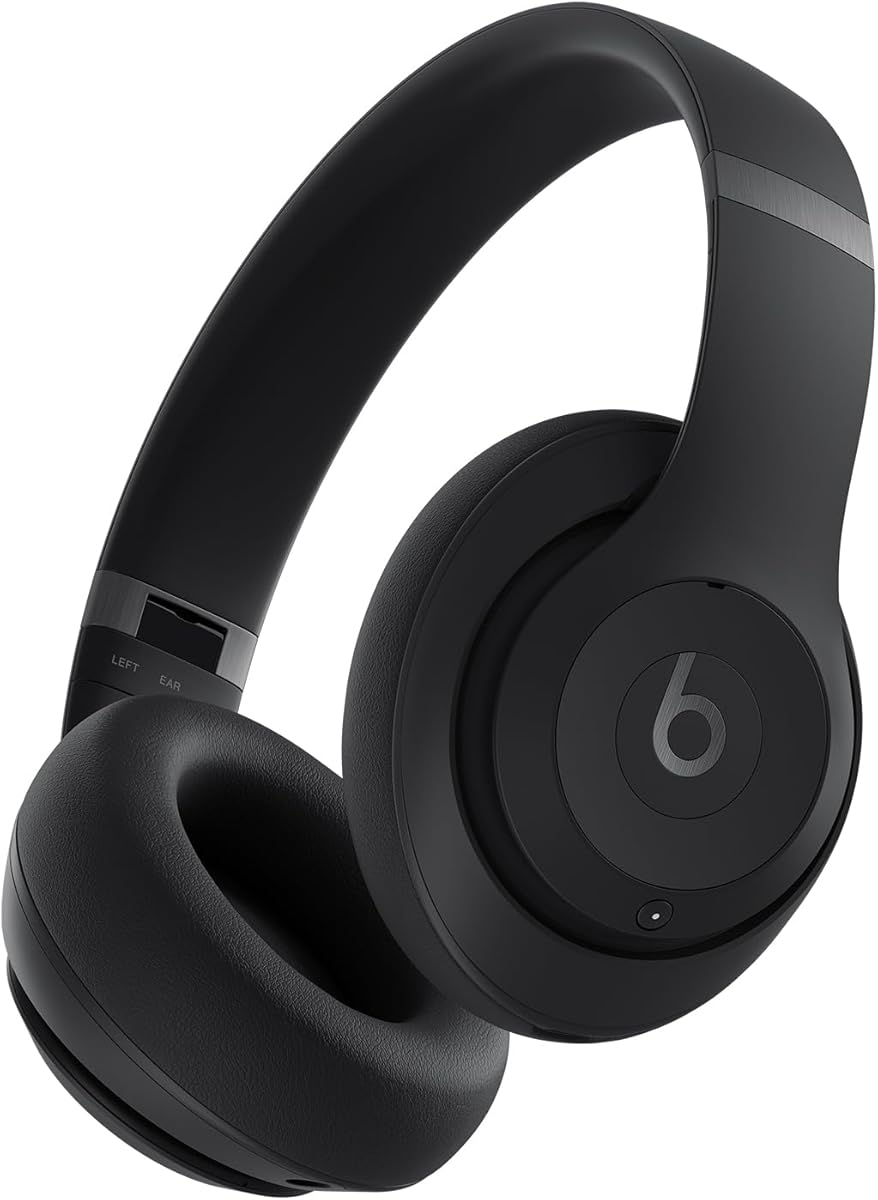
The Beats Studio Pro combines a polished 4.5 rating with a strong emphasis on balanced sound, active noise cancellation, wireless convenience, and immersive features. Its custom acoustic platform is designed to support music, calls, and everyday listening, making it appealing to podcasters who want a refined listening experience beyond basic utility.
We may earn a commission when you buy through this link, at no additional cost to you.
USB-C lossless audio and device-specific sound profiles offer a higher-quality listening route, while a standard 3.5mm connection is available through the included cable. Active noise cancellation helps reduce distractions at work, during flights, and while commuting. Transparency mode lets environmental sound mix with the audio when awareness is required.
For voice communication, voice-targeting microphones are designed to reduce background noise during office and travel calls. Personalized dynamic head tracking and 360-degree spatial audio create an immersive presentation for compatible content, although the full effect depends on the connected device and source. The battery lasts up to 40 hours, and Fast Fuel provides four hours from a ten-minute charge.
This is a good choice for podcaster-listeners who appreciate polished aesthetics, lossless wired listening, spatial audio, and straightforward Apple and Android pairing. The included woven carrying case adds travel utility. It may be less compelling for users who want extensive manual EQ or several ANC levels, but its balanced presentation and strong rating give it broad appeal.
USB-C lossless audio provides a direct path for higher-quality playback, and the included 3.5mm cable supplies a standard analog option. These choices are useful for creators comparing tracks or productions through more than one connection method.
Personalized dynamic head tracking anchors sound as the listener moves, while 360-degree presentation adds depth for music, movies, and other immersive material. Support varies depending on the device and content.
We may earn a commission when you buy through this link, at no additional cost to you.
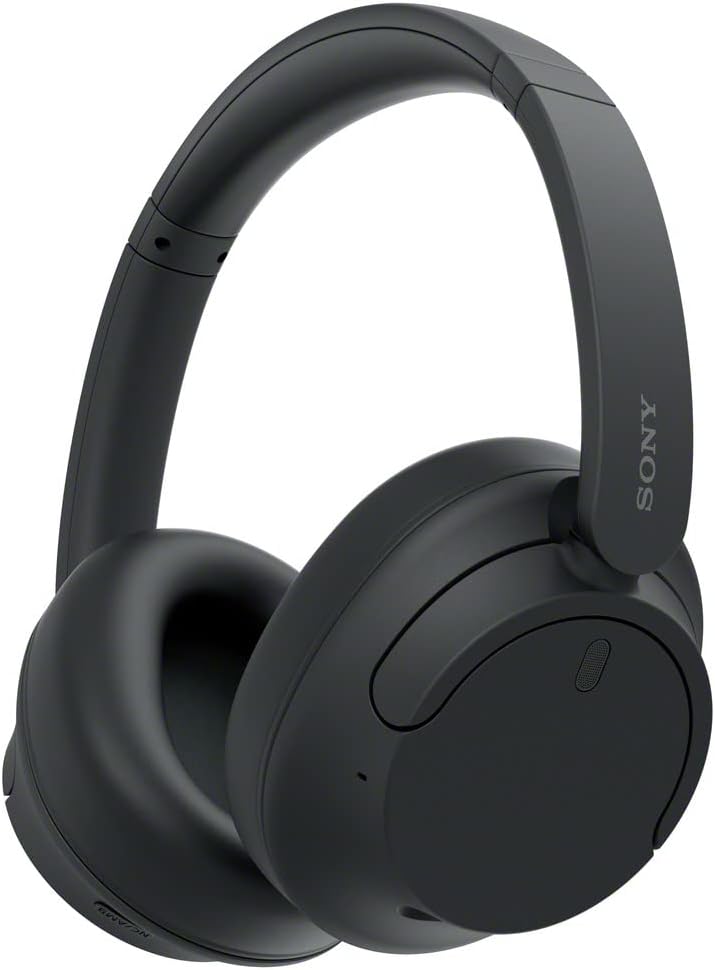
The Sony WH-CH720N weighs just 192g, making it the lightest model in this roundup and a strong option for creators who dislike the weight of larger over-ear headphones. Its 4.3 rating is supported by dual noise-sensor technology, the Integrated Processor V1, multipoint connectivity, and a lightweight, comfortable design.
We may earn a commission when you buy through this link, at no additional cost to you.
Adaptive Sound and adjustable Ambient Sound controls let users tailor how much outside noise is present. Sony's processing is designed to create natural vocals, clear sound, and balanced tuning, while DSEE is intended to improve compressed music files. Precise Voice Pickup Technology uses beamforming microphones to capture the user's voice clearly during hands-free calls.
Battery life reaches up to 35 hours, with a three-minute charge supplying one hour of playback. That figure is shorter than the strongest battery claims elsewhere in the list, but the low weight and multipoint connection make the WH-CH720N convenient for mobile interviews and hybrid work. The trade-off is a feature set that emphasizes simplicity and portability over extensive app-based equalization.
This Sony model is best for podcaster-listeners who will wear headphones for long periods, need to switch between a computer and phone, or want reliable voice pickup without a heavy frame. It is also suitable for commuters who want a lighter alternative to bulkier studio-style headsets.
At 192g, the WH-CH720N is positioned as Sony's lightest wireless noise-cancelling headband model. Its low weight can reduce pressure during lengthy interviews, editing sessions, and extended commute listening.
Adjustable Ambient Sound and Adaptive Sound features allow listeners to balance isolation with awareness. This flexibility suits users whose environments change between a home office, shared workspace, and public transit.
We may earn a commission when you buy through this link, at no additional cost to you.
The Skullcandy Crusher 1080 ANC is the most distinctive option here, combining Bose-licensed QuietControl ANC, TrueSpatial audio, and SpeechClarity with Skullcandy's adjustable Crusher bass system. Its 3.7 rating trails the field, but the physical bass control and extensive feature set make it worth considering for listeners who want unusually strong control over their listening profile.
We may earn a commission when you buy through this link, at no additional cost to you.
Six microphones and adaptive processing drive the noise-cancellation system, while Stay-Aware Mode adjusts how much outside sound is heard. Bose TrueSpatial creates a wide, speaker-like soundstage with added depth, and head tracking helps keep the presentation anchored as the listener moves. The Crusher wheel can move bass from subtle low-end resonance to heavy impact or be adjusted through the Skullcandy app.
The app also supports a personal sound profile, five-band EQ, custom button settings, and other features. Battery life reaches 50 hours with ANC on and 60 hours with it off, with four hours of playback from a ten-minute charge. Wear detection pauses audio when the headphones are removed. The chief concern for podcast use is that aggressive bass could obscure quieter voices unless the control is reduced.
Choose the Crusher 1080 ANC for entertainment, mixing-reference experimentation, or listening where user-adjustable bass is especially valuable. Podcasters who prioritize neutral vocal presentation should keep the Crusher wheel conservative. Its advanced ANC, call processing, and connectivity still make it a capable choice despite its lower aggregate rating.
The on-board Crusher wheel gives listeners a tactile way to change bass intensity without opening an app. A restrained setting can preserve podcast clarity, while a higher setting adds impact for music and entertainment.
Bose SpeechClarity is designed to reduce background noise so the user's voice sounds clear and natural. This makes the model relevant for calls recorded in offices, outdoors, and transit environments.
We may earn a commission when you buy through this link, at no additional cost to you.
The Marshall Monitor III ANC earns the Best Premium distinction with a 4.5 rating, upgraded active noise cancellation, three ANC levels, and exceptional stated battery endurance. Its rugged, foldable design and premium hard case also make it a distinctive choice for creators who travel between recording locations.
We may earn a commission when you buy through this link, at no additional cost to you.
Advanced technology continuously measures ambient noise, allowing users to select among three cancellation levels or switch to Transparency mode when they need to hear their surroundings. Dynamic Loudness adjusts treble, mids, and bass at different volume levels, helping maintain a balanced presentation whether voices are quiet or emphatic.
The headline endurance figure is 70 hours of wireless playback with ANC enabled and 100 hours without it. That makes the Monitor III ANC especially suitable for long editing days, frequent travel, and users who do not want to recharge frequently. Soft ear cushions support all-day wear, while the folding structure and hard case improve portability.
This is a strong premium recommendation for podcast listeners who value endurance, tactile design, and adjustable isolation. Soundstage spatial audio adds a wider presentation for immersive content. The available information does not highlight multipoint connectivity or extensive equalizer controls, so buyers seeking those functions should check the current listing.
A 70-hour ANC battery claim reduces charging interruptions during extended editing, interviewing, and listening schedules. The 100-hour figure without ANC adds further convenience for users who switch modes frequently.
The foldable structure and premium hard case make the headphones easier to protect during travel. That portability is valuable for podcasters who record away from a permanent studio setup.
We may earn a commission when you buy through this link, at no additional cost to you.
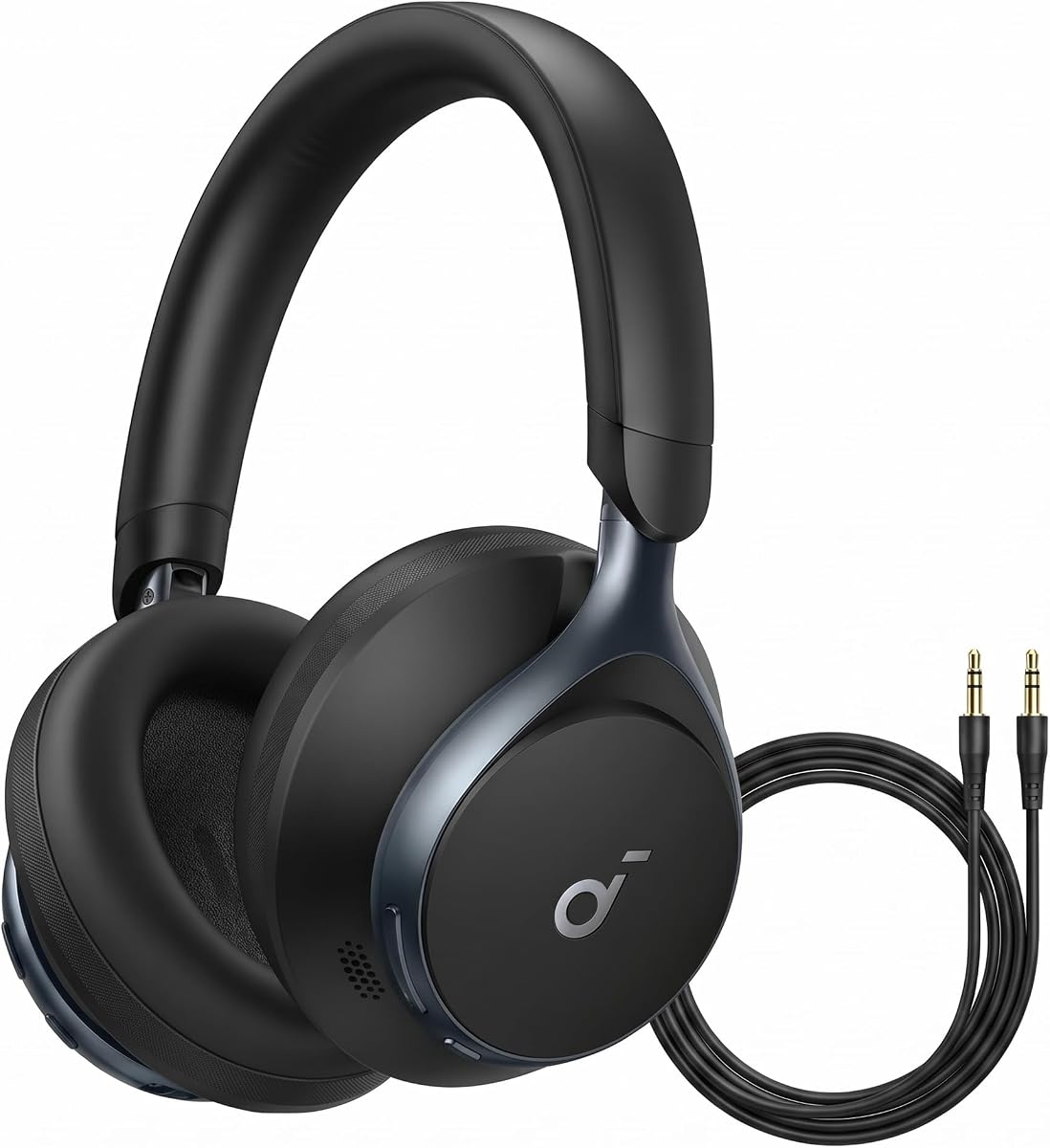
The Soundcore Space One differentiates itself through granular noise control and personalized listening, earning a 4.4 rating. It offers five ANC levels, adaptive recalibration, LDAC support, and HearID tuning through the Soundcore app, making it a strong option for creators who want to tune their environment precisely.
We may earn a commission when you buy through this link, at no additional cost to you.
The adaptive system detects surrounding noise and sound leakage, then recalibrates to improve reduction. Soundcore specifically emphasizes its performance against steady low-frequency sounds such as engine hums, air-conditioning drones, and train rumbles. Users can select among five ANC levels in the app rather than relying only on fixed environmental presets.
Customized 40mm dynamic drivers support LDAC for high-resolution wireless audio, and HearID creates a personal sound profile. The battery is rated at 40 hours with ANC engaged and 55 hours with ANC off. App support also provides EQ modes, Spatial Audio, adjustable ANC settings, software updates, and firmware updates.
The Space One suits podcasters who work in several noisy environments and value precise control over the degree of isolation. LDAC performance depends on a compatible source device, while HearID and EQ features require the app and a short setup period. For users who want those advanced tools without choosing the most premium models, it offers a compelling balance.
Five ANC levels provide finer control than the basic preset systems found on many competitors. Users can reduce the depth of cancellation when awareness matters or crank it up against persistent engine and climate-control noise.
HearID personal tuning and EQ modes let users shape the presentation to their preferences. LDAC can carry high-resolution wireless audio, although playback benefits require compatible source hardware.
We may earn a commission when you buy through this link, at no additional cost to you.
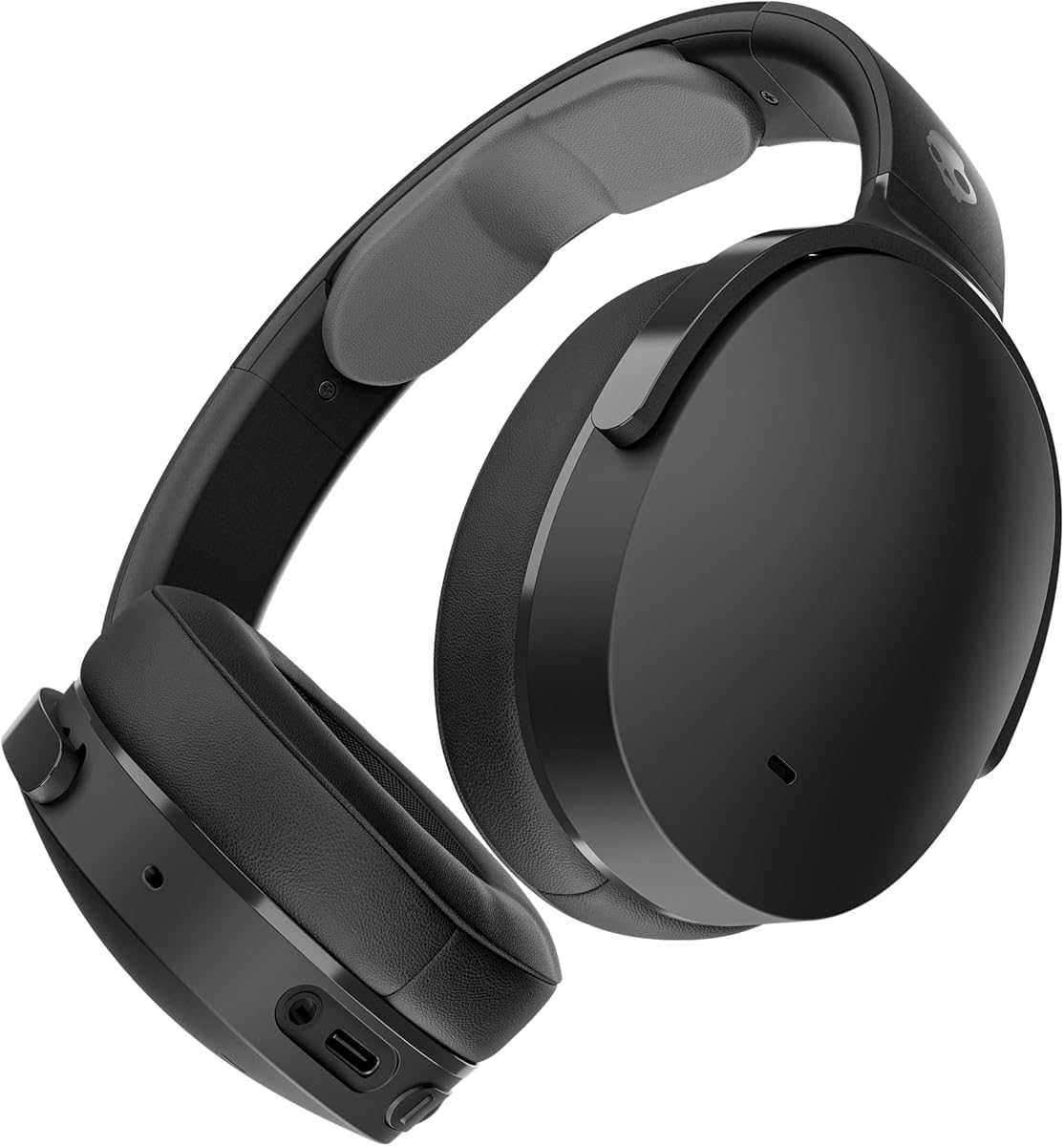
The Skullcandy Hesh ANC carries the highest rating in the comparison at 4.6, making it a notable choice for podcast listeners and mobile creators. Its four-microphone active noise cancellation is explicitly designed for music, movies, and podcasts, while the flat-folding structure supports travel and compact storage.
We may earn a commission when you buy through this link, at no additional cost to you.
The microphone-based ANC system helps users focus on spoken content without adding excessive bulk. Convenient buttons handle calls, volume, track skipping, and repeat functions, allowing a creator to control playback without opening a companion app. This direct control can be useful during editing or when reviewing a podcast episode on the move.
Battery life reaches up to 22 hours, with Rapid Charge providing three hours of listening from a ten-minute charge. That endurance is lower than several premium alternatives in the list, so heavy users may need to charge more often. Built-in Tile finding technology helps locate the headphones near or far after registration in the Tile app.
The Hesh ANC is a compelling recommendation for anyone who prioritizes customer satisfaction, portability, physical controls, and straightforward noise cancellation. It is especially attractive for commuters and podcast listeners who move between locations. Users with demanding all-day battery needs should account for its shorter stated runtime when comparing it with the Q30, Tune 780NC, or Marshall Monitor III ANC.
Buttons for answering or rejecting calls, adjusting volume, skipping forward, and repeating tracks make everyday operation straightforward. Physical access can be preferable when a podcaster is editing or moving between tasks.
The flat-folding, collapsible form is easier to pack than many full-size headphones. Built-in Tile support adds a practical way to locate a misplaced pair after registering the product in the Tile app.
We may earn a commission when you buy through this link, at no additional cost to you.
The right podcast headphones depend on whether you mainly listen, record, edit, or travel. Noise control, microphone behavior, comfort, battery life, connectivity, and sound customization should be weighed according to your workflow rather than by feature count alone.
Effective active noise cancellation is valuable in offices, shared homes, aircraft, and other places where low-frequency sound can intrude on a recording or interview. A hybrid system with external and internal microphones can detect environmental noise and reduce it before it reaches the listener. Podcasters should also consider whether the headphones offer fixed presets for transport, outdoor, and indoor use or adjustable ANC levels for finer control.
A headphone can cancel incoming noise while still capturing a compromised voice for an online interview. Beamforming microphones, precise voice pickup, and dedicated background-noise reduction are therefore important for podcasters who conduct remote calls. The best workflow is to use the headphones for monitoring and communication while relying on a dedicated microphone when the recording demands studio-level voice quality.
Podcast listeners need intelligible dialogue, so extreme bass can be counterproductive even when it sounds exciting with music. Look for balanced tuning, adjustable EQ, and a comfortable level of low-end. Models with several EQ presets or personal tuning profiles give users more ability to accommodate different voices, recording conditions, and personal hearing preferences.
Editing a full episode, joining several remote interviews, or listening to a long documentary can involve many hours in the same headphones. Lightweight construction, soft earcup materials, memory foam, and a padded headband all affect fatigue. The stated weight and cushioning materials should be considered together because a well-padded but heavy design may still become tiring over time.
Battery life becomes more important when ANC is used throughout the day, especially during travel or long editing sessions. Compare the rated duration with ANC on rather than relying only on the maximum figure obtained in normal mode. Quick-charge claims are useful for short gaps, but they do not replace a full charge between major sessions.
Dual-device or multipoint Bluetooth can simplify a podcast workflow by keeping a computer and phone connected simultaneously. Wired listening may be useful for studio equipment or lossless playback, but some ANC implementations stop working in wired mode. Check whether a USB-C audio cable, 3.5mm cable, or digital connection is included, and confirm which functions remain available through each path.
An app can provide useful controls for ANC intensity, EQ, presets, sound profiles, firmware updates, and device management. However, deeper customization is not automatically better; podcasters who want simple operation may prefer a model with limited adjustments. Users should also consider whether the required app is compatible with their computer or mobile device and whether they are comfortable configuring it.
Portable headphones should protect the ear cups and survive repeated packing. Flat-folding structures, included cases, collapsible hinges, and location-tracking features can improve the travel experience. Durable materials matter for creators who regularly move between locations, while a hard case provides additional protection for premium models.
Begin by fully charging the headphones, pairing them with your primary computer or phone, and checking the available app for firmware updates. For podcasting, set a moderate ANC level or select the mode that matches your room, then adjust the input volume separately from the headphone monitoring volume. This prevents your voice from being recorded at an excessively high level while still allowing you to hear playback clearly.
Test the microphone in the application you use for interviews before recording an important episode. Speak at a natural distance from the headset and listen to a short playback, then compare it with a recording made by your dedicated microphone. If your software supports separate input and output levels, use the headphones only for monitoring while routing the primary recording to a dedicated microphone for the cleanest final voice track.
Store the headphones in a protective case or on a stable surface with the ear cups protected. Clean the cushions and headband with a soft, slightly damp cloth, avoid pushing moisture into the controls, and keep the charging port free of debris. Follow the manufacturer's guidance for battery care and software maintenance, and update the app or firmware when new improvements are available.
ANC headphones can be useful for monitoring and reducing distractions, but they do not automatically provide broadcast-quality microphone audio. For important episodes, use a dedicated microphone for recording and reserve the headphones for playback or communication. Test both devices in the same software before recording to confirm that levels and latency behave as expected.
The best mode depends on the environment. Indoor settings may benefit from a preset designed for speech and office noise, while travel settings can reduce engine rumble. Adjustable ANC levels are useful when a fixed mode feels too intense or leaves too much background sound, but the voice should always be captured separately at a controlled level.
Comfort depends on weight, padding, fit, and the length of the session. The Sony WH-CH720N is notably light at 192g, while several other models emphasize soft cushions and memory foam. A properly fitted pair should distribute pressure well, but taking short breaks and adjusting the headband can further reduce fatigue.
Several models in this guide support dual-device or multipoint Bluetooth, including the Soundcore Q20i, JBL Tune 780NC, Sony WH-CH720N, and Skullcandy Crusher 1080 ANC. The feature is particularly useful for moving between a laptop and phone. Always check the current product listing because connection behavior and supported source devices can vary.
Not always. The Soundcore Q30 explicitly states that ANC is not compatible with AUX cable connection, while other models provide wired listening for purposes such as lossless audio. Users who depend on ANC during wired monitoring should verify compatibility before purchasing and keep a Bluetooth fallback option in mind.
Spatial audio is more relevant to music, movies, and immersive entertainment than to standard spoken-word podcasts. It can make voice listening feel more open on compatible devices, but clarity, microphone quality, and reliable ANC remain more important for podcast work. Treat spatial features as a listening enhancement rather than a core recording requirement.
No. Ratings provide a useful general signal, but they do not reveal microphone performance in a particular room, comfort for your head shape, or app reliability. The Skullcandy Hesh ANC has the highest rating in this comparison, while other models may offer more detailed ANC controls, longer battery life, or communication-focused processing.
It depends on your workflow and whether one pair meets both monitoring and communication needs. A dedicated studio headphone can provide flatter response and a more consistent review experience, while premium ANC models offer portability and distraction reduction. Many creators use ANC headphones for travel and calls and keep a separate studio pair for final mixing.
The Soundcore Q20i is the most budget-conscious overall choice, combining four-microphone hybrid ANC, long battery life, dual-device switching, transparency mode, and extensive app customization. The Soundcore Q30 is the strongest all-around recommendation, with context-specific ANC modes, comfortable memory-foam cushions, balanced 40mm drivers, and up to 50 hours of playback with ANC enabled.
For premium listening, the Marshall Monitor III ANC stands out with three adjustable cancellation levels, 70 hours of stated ANC endurance, rugged folding construction, and Dynamic Loudness. Prioritize the features your specific workflow needs: voice-oriented microphones for remote interviews, granular ANC controls for unpredictable spaces, lightweight comfort for long editing days, or multipoint connectivity for frequent device switching.
Before purchasing, verify the current product listing for microphone specifications, codec compatibility, included cables, app requirements, and the exact behavior of wired and wireless modes. Prices and availability change regularly, and current manufacturer or retailer details should guide the final decision.