
Adaptiv Technologies TPX Pro
4.2Editor score
Purpose-built motorcycle detection
Waterproof and vibration resistant
Front-mounted daylight-visible display
Our Radar Detector for Motorcycle guide compares 10 leading options for police radar alerts, rear radar, blind spot warnings, weather resistance, display
A motorcycle radar detector should do more than announce police radar: it should fit the bike cleanly, remain readable in changing light, resist weather, and provide warnings riders can understand at a glance. Motorcycle-specific units add vibration resistance, glove-friendly controls, sealed construction, and mounting options that ordinary automotive devices may lack.
The products in this guide cover two distinct needs. Dedicated police radar and laser detectors help riders recognize speed-measurement signals, while motorcycle blind spot and rear radar systems warn of vehicles approaching from the sides or behind. We compared detection coverage, alert methods, power requirements, display design, mounting approach, weather resistance, and rider-focused features.
Each review explains the product's strongest benefits, practical limitations, and ideal use. The ordering reflects the supplied product data, while our top selections distinguish purpose-built motorcycle equipment from conventional car detectors and rear-awareness systems. Features and availability can change, and current prices should be checked before buying.
4.2Editor score

4.3Editor score

4.6Editor score
This side-by-side comparison separates police radar and laser detectors from rear blind spot radar systems, then compares the most important distinctions in coverage, alerts, construction, connectivity, and installation.

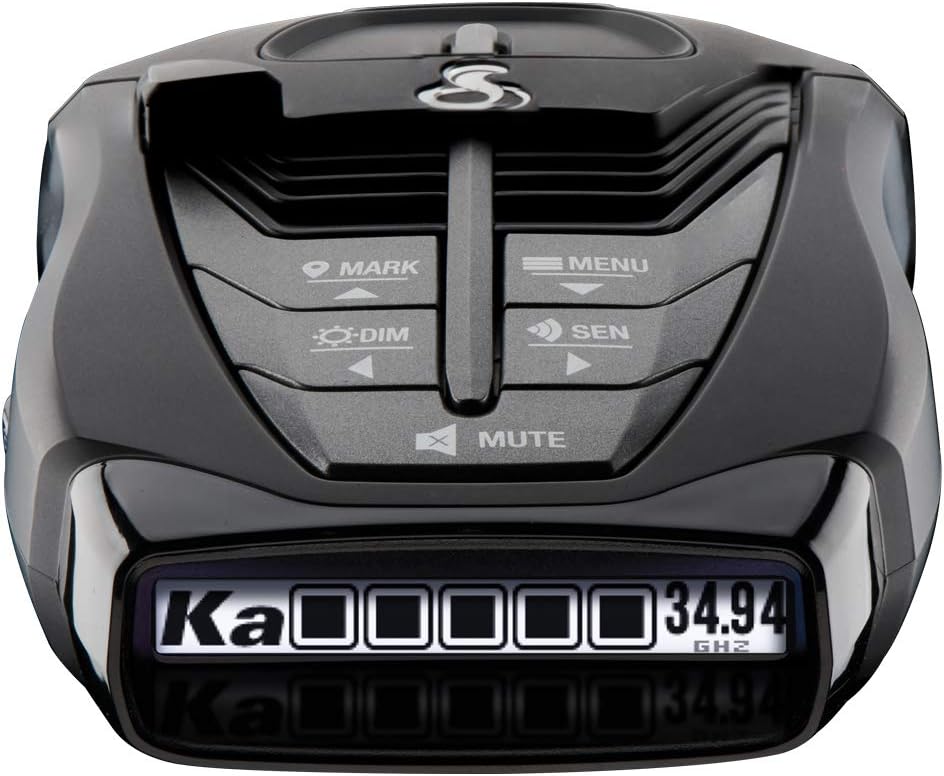


The Adaptiv Technologies TPX Pro is a purpose-built police radar and laser detection system for motorcycles. Its 4.2 rating reflects a practical package that addresses common motorcycle-specific concerns, including vibration, rain, theft exposure, limited control sizes, and the difficulty of adapting car detectors. Its strongest feature is the front-mounted, daylight-visible LCD, which keeps operating information visible without forcing the rider to look down for long periods.
We may earn a commission when you buy through this link, at no additional cost to you.
The TPX Pro detects all police radar and laser bands and provides 360-degree radar and laser protection. It also includes red-light and speed-camera data points with free updates, while an adjustable ultra-bright LED gives the rider a clear visual indication when a signal is detected. The angled LCD placement, large backlit buttons, and included wiring harness make the system more thoughtfully adapted to a bike than a compact automotive detector.
Installation is designed around a quick-release plate and compatibility with AdaptivMount or another suitable motorcycle mount. The unit is also waterproof and vibration resistant, two meaningful advantages in an exposed cockpit. The trade-offs are that it takes more planning and wiring than a USB-powered blind spot sensor, and the listed feature set does not emphasize the app-based shared alerts or customizable color displays found in some premium car-oriented units.
This is the most convincing choice for a rider who specifically wants police radar and laser alerts rather than rear blind spot warnings. It suits touring riders, commuters, and anyone who wants a visible display and motorcycle-specific physical protection. Riders should confirm that their preferred mounting position remains visible, their wiring route is secure, and their local traffic enforcement uses compatible radar or laser technology.
The TPX Pro directly addresses rain, vibration, theft, and tiny-button concerns. Its quick-release mechanism also makes it easier to remove the unit when the motorcycle is unattended, an important consideration for a device that must live in an exposed riding environment.
A front-mounted angled LCD, an ultra-bright adjustable LED, and large backlit controls make information easier to interpret while moving. The optional audio output jack also leaves room for compatible sound or communication-system integration.
We may earn a commission when you buy through this link, at no additional cost to you.
The TPX A-01-01 Version 2.0 is a motorcycle-oriented radar and laser detector with a 4.4 rating. It focuses on the essentials riders are most likely to need: detection across all listed police radar and laser bands, 360-degree protection, a waterproof housing, and a straightforward installation process. It is a simpler proposition than the TPX Pro and appeals to buyers who want essential motorcycle radar protection without a long list of integration features.
We may earn a commission when you buy through this link, at no additional cost to you.
The supplied product information highlights top-rated sensitivity and an included ultra-bright LED with adjustable output. That combination can be especially useful on a motorcycle, where a compact warning light mounted within the rider's field of vision is often easier to interpret than a dense dashboard display. The system's motorcycle-specific design also reduces the need to improvise mounting, weather sealing, and power connections for a device designed for cars.
The main limitation is the comparatively sparse feature description. It does not mention GPS, camera databases, Bluetooth connectivity, directional arrows, audio output, or a specific display layout. As a result, riders who want detailed threat information or seamless app features may find the TPX Pro more informative. Those seeking a simple, waterproof, plug-and-play system may find this version more approachable.
Choose the A-01-01 when dependable police radar and laser detection, physical motorcycle suitability, and uncomplicated setup are the priorities. It is well suited to riders who want an integrated visual alert without investing time in a complex menu system. Before purchase, verify the included mounting hardware, power connection, and local compatibility with the enforcement technology used in the areas where you ride.
The Version 2.0 system avoids unnecessary complexity by concentrating on band detection, broad directional coverage, a bright alert, and straightforward installation. That makes it easy to understand before the first ride.
A waterproof housing helps the detector cope with rain and road spray. The compact warning-light approach also reduces cockpit clutter, although the supplied information does not specify a full multi-function screen.
We may earn a commission when you buy through this link, at no additional cost to you.
The Cobra RAD 480i is a connected automotive radar detector whose LaserEye technology is designed to detect signals from both the front and rear. Its 4.2 rating, Bluetooth support, and shared-alert community make it a compelling feature set for riders willing to adapt an automotive unit. However, it is not described as motorcycle-specific, so mounting, power, vibration resistance, and weather exposure need careful consideration.
We may earn a commission when you buy through this link, at no additional cost to you.
Digital Signal Processing is used to process incoming laser signals quickly, while the updateable IVT Filter and advanced anti-falsing circuitry help suppress signals from blind spot monitoring and other vehicle-avoidance systems. That filtering is valuable on a motorcycle because dense traffic can generate many warnings. Bluetooth connectivity also allows shared alerts from other drivers, and compatibility with CarPlay and Android Auto can present route and alert information on a compatible vehicle display.
Its limitation is the installation gap between a car detector and a motorcycle. The included accessories are a 12-volt power cord, a suction cup windshield mount, and hook-and-loop dash material. Riders would need a suitable motorcycle power connection, a stable weather-resistant mount, and an alert method that can be perceived safely while riding. Vibration and exposed weather are not among the stated strengths of this model.
The RAD 480i is best for a technically confident rider who values front-and-rear detection, fast processing, and connected community alerts more than a purpose-built motorcycle enclosure. It may also appeal to owners of multiple vehicles who want one detector for different environments. Confirm your bike's electrical system, available cockpit space, and chosen mounting solution before relying on it in wet or rough conditions.
Bluetooth shared alerts can add information beyond directly detected radar or laser signals. The companion ecosystem is especially useful for long-distance riders, provided phone handling remains minimal and legal under local traffic rules.
The updateable IVT Filter and anti-falsing circuitry are designed to reduce warnings caused by modern vehicle systems. On a motorcycle, fewer irrelevant alerts can make the remaining warnings easier to notice and interpret.
We may earn a commission when you buy through this link, at no additional cost to you.
The Uniden R8W combines dual Blackfin digital signal processors, dual antennas, GPS, Wi-Fi, and Bluetooth in its flagship detector design. Its 4.3 rating and directional-arrow system make it one of the most information-rich products in this comparison. The central advantage is 360-degree awareness with voice alerts that identify the direction of a threat, the signal band, and its strength, helping a rider understand a warning without studying a display.
We may earn a commission when you buy through this link, at no additional cost to you.
Built-in GPS creates a persistent record of common false-alert locations along regularly traveled routes. That means the detector can automatically mute recurring signals such as retail-store door alarms after it has learned them. It also includes preloaded red-light and speed-camera locations with free database and firmware updates, adding useful context beyond basic radar and laser detection.
The important caveat is that the R8W is presented as a portable windshield-mount automotive detector, not a motorcycle-specific product. Its size, power needs, display visibility, vibration exposure, and weather resistance must therefore be addressed by the rider. Voice output is a strong motorcycle advantage because it reduces the need to look down, but the device still needs a secure, unobstructed placement and a reliable power connection.
This model is a strong choice for riders who want detailed, directional police radar information and are prepared to adapt it to a motorcycle. It suits tech-oriented users who value GPS auto-mute, camera databases, and programmable voice alerts. Those needing a sealed bike-specific unit should favor the Adaptiv TPX Pro, while riders focused only on vehicles behind them should consider a blind spot radar system.
Dual antennas provide awareness from all four directions, while the arrows and voice reports clarify where a signal originates. For motorcycle use, that combination can turn a generic warning into a more actionable alert without requiring constant screen monitoring.
Auto-mute memory is particularly useful on familiar routes. Once a persistent non-police signal has been learned, the detector can reduce repeat interruptions while continuing to monitor for genuine threats.
We may earn a commission when you buy through this link, at no additional cost to you.
The Extreme Long-Range Radar/Laser Detector with GPS and Threat Detector earns a 4.6 rating, the highest among the supplied products. It combines four-direction detection, directional arrows, GPS memory, a large multi-color OLED display, and red-light and speed-camera alerts. The result is a feature-rich police radar detector whose strongest selling point is the amount of information it can present at once.
We may earn a commission when you buy through this link, at no additional cost to you.
Its dual-antenna arrangement supports 360-degree radar protection, and the display can show information for up to four signals simultaneously. Each alert can include the threat direction, band, and signal strength, making the system useful in traffic where several sources of radar are present. GPS remembers common false alerts along familiar routes, while free database and firmware updates keep the included camera locations current.
As with other premium windshield-mount detectors, motorcycle adaptation is the central question. The product information does not claim a waterproof or vibration-resistant motorcycle housing, and the large OLED may take more cockpit space than a purpose-built bike unit. A motorcycle power source, secure mount, and glare management will need attention. Its rich display is excellent for stationary review and glanceable warnings, but the rider should select a location that does not invite frequent downward glances.
Choose this detector when comprehensive signal awareness, a high-capacity OLED, and premium directional information matter most. It is best suited to a rider with a suitable mounting setup and a preference for detailed displays. Riders seeking a fully motorcycle-specific product can choose the TPX Pro, while those who need only rear proximity information may find a blind spot radar more aligned with their actual requirement.
The multi-color OLED can display up to four signals concurrently. This helps riders distinguish multiple active sources without relying exclusively on a sequence of spoken warnings.
Directional arrows, band identification, and signal strength give the display greater context. That detail can be valuable, although a compact purpose-built motorcycle screen may be easier to interpret at a glance than a dense automotive interface.
We may earn a commission when you buy through this link, at no additional cost to you.
The 24GHz Rear Radar Blind Spot Detection System is a motorcycle safety aid rather than a police radar detector. Its 4.9 rating is the highest in the supplied set, and its defining feature is a compact set of directional lights that identify traffic in the left rear, right rear, and directly behind the bike. The IP69K weather-resistant housing is designed for rain, fog, snow, and regular outdoor use.
We may earn a commission when you buy through this link, at no additional cost to you.
The radar monitors approaching traffic up to 98 feet away across an approximately 130-degree sensing area. A dedicated USB cable can draw power from a compatible motorcycle USB port, which reduces wiring compared with systems connected directly to battery and accessory circuits. A target-speed filter prevents the alert from activating for objects traveling slower than 1.9 mph, helping reduce irrelevant warnings from cluttered surroundings.
The system does not scan for police radar or laser, so it should not be evaluated as a substitute for a speed-signal detector. Its warnings are also visual and must be mounted where the rider can see them, potentially near the mirrors. USB compatibility, cable routing, and indicator placement should all be checked before installation, particularly on motorcycles with crowded handlebars or protected accessory outlets.
This is an attractive option for commuting, touring, and multi-lane riding where rear visibility is difficult. It gives riders an additional awareness tool without introducing a large screen. Choose it when the goal is blind spot and rear traffic warnings, not police signal detection. Pair it with one of the dedicated police radar systems only if both forms of protection are desired.
Yellow indicators identify the left or right, while red indicators identify a vehicle directly behind. This approach minimizes cockpit clutter and provides information that can be understood with a brief glance.
The rear radar and weather-resistant housing are intended to support awareness when mirrors are less effective. It remains important for riders to keep normal visual checks and not treat the warning lights as a replacement for safe following distance.
We may earn a commission when you buy through this link, at no additional cost to you.
The Weuaste BSD01 uses 24GHz multi-antenna millimeter-wave radar to monitor the motorcycle's blind spots and provide rear collision warnings. Its 4.5 rating reflects a robust, purpose-built package with simultaneous three-direction detection, dual-stage visual warnings, and a housing designed to tolerate difficult weather and broad temperature ranges. It is intended to help riders identify surrounding vehicles when mirrors alone cannot provide sufficient coverage.
We may earn a commission when you buy through this link, at no additional cost to you.
The stated operating range reaches 30 meters, with approximately 130-degree rear blind spot coverage and automatic object recognition inside that perimeter. The alert only activates when a detected target travels faster than 10 km/h, which is intended to reduce interference from clutter. The LED indicators provide visual warnings without requiring a separate display, making the system practical for a motorcycle cockpit.
Installation is less plug-and-play than the USB-based system, requiring the positive lead to connect to the motorcycle's ACC circuit and the negative lead to the battery. That arrangement allows the system to power on and off with the motorcycle without draining the original battery, as stated in the product information. The IP69K enclosure and stated tolerance from minus 40 to 176 degrees Fahrenheit make it well suited to year-round outdoor use.
The BSD01 is best for riders who want a robust rear-awareness system and are comfortable installing a wired accessory circuit. It is not a police radar detector and will not announce speed-measurement signals. Before buying, confirm that your motorcycle has an accessible ACC connection and that the indicator placement remains visible from the normal riding position.
Simultaneous left, right, and rear detection gives the rider information across the motorcycle's most vulnerable surrounding areas. Multi-antenna radar is intended to improve coverage and help riders evaluate a lane change with greater context.
The IP69K housing and wide operating-temperature specification support use in rain, fog, dust, and seasonal heat or cold. A durable enclosure is especially important when the sensor is permanently exposed behind a motorcycle.
We may earn a commission when you buy through this link, at no additional cost to you.
The Cobra RAD 700i is a premium connected radar detector with a 4.2 rating, a five-color OLED, and a more refined feature set than the RAD 480i. Its new antenna platform and digital signal processing are designed to process incoming laser signals quickly and trigger accurate alerts. LaserEye technology extends detection to both the front and rear of the vehicle, providing broader directional coverage.
We may earn a commission when you buy through this link, at no additional cost to you.
Built-in GPS and advanced filtering work with AutoLearn Intelligence to reduce false signals. The system is also compatible with the Drive Smarter shared-alert community and supports Apple CarPlay and Android Auto displays. The five-color OLED lets riders match the display to their vehicle's interior lighting, a useful aesthetic feature that may be less relevant on a motorcycle cockpit.
The core limitation remains its automotive orientation. Motorcycle riders need to solve power delivery, secure mounting, vibration exposure, weather protection, and screen readability before the product's sophisticated software becomes practical. CarPlay and Android Auto integration also depends on the rider's phone, vehicle interface, and safe operating setup. The detector should never be operated in a way that competes with riding tasks.
The RAD 700i suits a rider who prioritizes fast processing, refined false-alert filtering, a customizable display, and shared connectivity. It is a credible choice for a carefully adapted motorcycle installation, but the purpose-built TPX Pro offers less guesswork. Choose the Cobra when connected features and a premium automotive display are worth the adaptation effort.
GPS-based automatic learning can reduce repeat false alerts as the detector adapts to regularly encountered locations. That helps preserve the importance of warnings that represent meaningful changes in the environment.
Five display colors give the unit more visual flexibility than a single-color screen. On a motorcycle, riders should still prioritize a readable size, minimal glare, and a position that does not obscure instruments or road signs.
We may earn a commission when you buy through this link, at no additional cost to you.
The 24GHz Millimeter Wave BSD Indicator System provides rear and side awareness for motorcycles, bicycles, and e-bikes. Its 4.0 rating is the lowest in the supplied group, but the product remains straightforward and focused. It continuously monitors traffic approaching from behind, covers left and right rear areas, and uses compact directional indicators rather than a screen.
We may earn a commission when you buy through this link, at no additional cost to you.
The stated monitoring distance is up to 98 feet across an approximately 130-degree field. A dedicated USB cable powers the system from a compatible motorcycle USB port, and the indicators can be mounted near the mirrors or another visible position. The alert activates only when a target is moving faster than 6.21 mph, filtering out slower objects that may generate unwanted warnings.
Compared with the closely related 24GHz Rear Radar product, this model uses a higher target-speed threshold. That may reduce clutter, but riders should understand that faster, low-closing-rate objects can still require ordinary mirror checks. The IP69K weather-resistant housing is appropriate for outdoor use, and the low-profile design helps preserve the motorcycle's appearance without adding a large display.
Choose this system when uncomplicated installation and rear directional warnings are the priority. It is suitable for riders who have a compatible USB outlet and want additional awareness during commuting, highway travel, or lane changes. It does not detect police radar, so it should be viewed as a blind spot aid rather than a full radar detector.
Compact LED indicators can sit near the mirrors or another visible area. This gives riders basic directional information without requiring a permanently mounted screen in the center of the cockpit.
The speed threshold helps suppress warnings from slow-moving targets and environmental clutter. Riders should still use standard lane checks and mirrors, particularly when preparing to change lanes in dense traffic.
We may earn a commission when you buy through this link, at no additional cost to you.
The Garmin zūmo R1 Radar is a motorcycle-specific rearview and blind spot radar designed to increase situational awareness around the bike. Its 3.4 rating is the lowest in the set, but its design is notably integrated with the riding experience. The unit mounts discreetly near the license plate, while side-facing amber lights, an optional rear-facing red light, and heads-up indicators communicate nearby vehicles.
We may earn a commission when you buy through this link, at no additional cost to you.
Nearby vehicles can be viewed on a compatible zūmo XT2 motorcycle navigator or a mounted smartphone through the zūmo Radar app. Audio alerts can also be paired with a headset through the app, allowing the rider to keep looking ahead. These options make the system more versatile than a basic LED-only blind spot detector and place it closer to a complete motorcycle awareness ecosystem.
The Garmin explicitly cautions that adverse weather and wet roads may interfere with operation, so riders must not treat it as a guarantee of continuous detection. The need for a compatible navigator, mounted phone, or headset also creates additional setup considerations. The 3.4 rating may reflect variable experiences or the product's early-stage compatibility, and it warrants more caution than the higher-rated systems.
The zūmo R1 is best for a Garmin-oriented rider who already uses compatible navigation hardware or is prepared to add a mounted smartphone and headset integration. Its external lights and discreet plate-area mount suit motorcycle ownership well. Riders should verify compatibility before purchase, keep normal awareness practices in wet conditions, and ensure the system is mounted without interfering with the plate or rear visibility.
The license-plate-area mounting, external lighting, and heads-up indicators are designed around motorcycle visibility and ergonomics. That integration makes the system feel more purpose-built than an automotive detector placed into a bike cockpit.
Riders can use external lights, heads-up indicators, a compatible navigator, a mounted smartphone, and optional headset audio. The variety supports different preferences, although the simplest experience depends on which compatible Garmin components the owner already owns.
We may earn a commission when you buy through this link, at no additional cost to you.
Choosing motorcycle radar equipment begins with defining the threat you want to address, then matching power, mounting, alert, and environmental requirements to the motorcycle and riding conditions.
Police radar detectors and motorcycle blind spot systems solve different problems. A police detector is intended to identify speed-measurement radar or laser signals and may also provide camera-location alerts. A blind spot radar monitors vehicles approaching from the sides or behind. Buyers who need warning of speed enforcement should choose a detector in the first category; commuters focused on lane changes and surrounding traffic may prefer rear radar instead.
Decide which function is essential before comparing features. A rider wanting both can install separate systems, but must consider cockpit space, wiring, power draw, and whether multiple visual alerts will be confusing.
Motorcycle equipment is exposed to vibration, rain, road spray, temperature changes, and constant movement. A purpose-built unit may provide waterproofing, vibration resistance, sealed controls, and a quick-release mount. Automotive detectors can perform well, but the rider must independently address weather protection, secure attachment, and electrical compatibility.
Prefer a motorcycle-specific system when it will be mounted permanently. For an adapted automotive unit, confirm that its housing and display can tolerate the chosen placement and that the wiring can be secured away from hot, moving, or sharp components.
Coverage should match the intended alert. Police detectors may monitor 360 degrees or use separate front-and-rear antennas, while blind spot systems typically cover left, right, and directly behind the motorcycle. Range figures can be useful, but they do not guarantee performance in every weather, traffic, or installation condition.
Look for clearly defined sensing areas and directional identification. A system that tells a rider which side holds the threat is often more useful than one that simply sounds a generic alarm.
Motorcycle electrical systems vary, so riders should determine how the unit will receive power before purchasing. USB systems are attractive when a protected or compatible USB outlet is available. Direct ACC and battery connections offer another approach but require more careful wiring and correct placement of the positive and negative leads.
Look for automatic power behavior, secure cable routing, and instructions that match the motorcycle's electrical layout. A low-draw system that powers down with the bike can simplify daily use, but every connection should still be checked for weather exposure and accidental disconnection.
The best alert is the one a rider can understand quickly without compromising control of the motorcycle. Directional LEDs are simple and glanceable, voice alerts can explain a signal's direction and strength, and detailed OLED screens offer the most context but may require more deliberate viewing.
Consider visibility in direct sunlight, night glare, helmet peripheral vision, and the amount of cockpit space available. Test indicator positions and audio levels when parked, and choose settings that communicate an urgent warning without creating alarm fatigue.
Bluetooth, Wi-Fi, GPS, companion apps, shared alerts, and automatic filtering can improve a detector, but they also add setup and compatibility requirements. GPS is especially useful for remembering recurring false alerts and maintaining camera databases. Shared community alerts can provide early information beyond directly detected signals.
Riders should assess whether these features solve a real problem. A simpler standalone system may be more dependable for someone who wants minimal screen interaction, while a connected device may be worthwhile for long-distance travel and regular route use.
Rain, fog, snow, and reduced contrast can affect both sensors and rider perception. Weather-resistant housings, sealed controls, and bright displays help, but no system should be treated as a guarantee of detection in adverse conditions. Camera systems may also lose precision when the lens is obscured.
Choose a housing rated for outdoor exposure, maintain visible indicators, and keep sensors clean. The Garmin zūmo R1 explicitly notes that adverse weather and wet roads may interfere with operation, a reminder that environmental conditions remain the rider's responsibility.
A detector should be securely mounted where the rider can perceive it without blocking instruments, controls, lights, or the license plate. Front radar devices need a stable bracket and an unobstructed view. Rear systems may be easier to install near the plate or handlebars, while LED indicators should be visible in the rider's normal sightline.
Quick-release mechanisms can improve security by allowing the unit to be removed with the motorcycle. Before purchase, compare the included hardware with the motorcycle's available mounting points and confirm that cables can be routed without creating sharp bends or moving hazards.
Before installation, read the included instructions, identify the motorcycle's power source, and choose a mounting location that keeps controls, indicators, and sensors visible without obstructing steering, braking, lighting, or the license plate. Test the unit on the accessory circuit or compatible USB supply before the first full ride.
Power the system according to its design, route cables securely, and confirm that the radar housing or sensor is not blocked by luggage, bodywork, grime, or an improperly fitted cover. For GPS-based police detectors, complete the initial updates and allow the system to learn common false-alert locations along frequently traveled routes.
Clean the display and sensor lens with a soft, nonabrasive cloth, keep electrical connections dry, and periodically inspect the mount for looseness. Use the lowest practical alert brightness and volume, retain normal mirror checks, and never treat a warning light as permission to change lanes without verifying the surrounding road.
Yes, many automotive radar detectors can operate on a motorcycle if the rider provides a suitable power connection, secure mount, and weather protection. The main challenges are vibration, rain exposure, compact cockpit space, and the visibility of the display. Purpose-built motorcycle systems reduce those uncertainties, while adapted car units may offer more advanced connectivity and display features.
A police radar detector is designed to recognize speed-measurement radar or laser signals and may include camera-location alerts. A blind spot radar detects vehicles approaching from the sides or behind. They are complementary tools rather than equivalents, so riders should choose according to whether they want enforcement awareness or surrounding-traffic awareness.
Weather-resistant systems are designed to operate in challenging outdoor conditions, but performance can still be affected by heavy rain, fog, snow, road spray, or obstructed sensors. Their alerts should supplement normal mirror checks and careful observation. No system guarantees that every approaching vehicle will be detected in every environment.
It depends on the model. Some systems use a dedicated USB cable and compatible USB outlet, while others connect to the motorcycle's ACC line and battery negative terminal. A direct ACC connection can allow automatic power cycling, whereas USB installation may be simpler but requires confirmation that the outlet is suitable and protected.
Mount it securely where it does not obstruct the handlebars, instruments, lights, view, or license plate. The display or indicators should be visible from the normal riding position without encouraging repeated downward glances. The sensor also needs an unobstructed field, and all wiring should be secured away from moving and hot components.
Many GPS-equipped police radar detectors remember common false-alert locations and mute them after learning a route. Some premium models also use advanced filtering and automatic learning. Blind spot systems commonly reduce irrelevant warnings by requiring a detected target to exceed a specified speed threshold.
Voice alerts can be useful because they communicate information without requiring the rider to look at a display. The audio should be set low enough to remain comfortable and should not mask important sounds from the environment. Safe operation and local traffic laws should always take priority over reviewing device information.
No. Radar, laser, blind spot, and rear collision systems can improve awareness, but they may not detect every signal or vehicle. Riders must continue using mirrors, checking over the shoulder, maintaining adequate spacing, and making only safe lane changes. Every alert should be confirmed visually before taking action.
The Adaptiv Technologies TPX Pro stands out as the most motorcycle-focused all-purpose choice, combining police radar and laser detection with waterproof, vibration-resistant construction, a readable front display, and quick-release mounting. The Uniden R8W and Extreme Long-Range Detector lead the premium feature set with dual antennas, directional awareness, GPS filtering, camera alerts, and more detailed displays.
If the real need is awareness of vehicles beside and behind the motorcycle, the 24GHz BSD systems or Garmin zūmo R1 may be more appropriate. Prioritize warning direction, power compatibility, mount security, weather resistance, and alert clarity over feature count. A simpler system that is correctly installed and consistently noticed can be more useful than a complex device that is poorly positioned.
Product specifications, software, compatibility, and prices can change over time. Before purchasing, verify the current listing, included mounting hardware, electrical requirements, supported displays or apps, and local enforcement technology, and compare the current price with the value each feature provides.