
Polar H10 Heart Rate Monitor Chest Strap
4.1Editor score
ANT+ and Bluetooth connectivity
Fully waterproof construction
Internal workout memory
Comfortable silicone-dot electrodes
Our expert guide compares the best heart rate monitor for pickleball, evaluating accuracy, comfort, connectivity, battery life, and workout tracking.
A heart rate monitor can turn an informal pickleball session into a more useful workout by showing how hard you are working, how your heart rate responds to rallies, and how recovery changes between games. The right device should deliver stable readings without distracting you from movement, positioning, and shot selection.
We compared ten chest straps and armbands based on the supplied information, focusing on connection options, heart rate and HRV features, battery life, water resistance, comfort, supported equipment, and ease of care. The list includes budget models, premium sensors, and options for users who prefer different styles of wearable technology.
Each review highlights the strongest reason to consider a monitor, along with practical trade-offs involving fit, compatibility, and outdoor use. Rankings are designed to help readers narrow the field according to their equipment and training priorities. Product specifications, features, and availability can change, so confirm compatibility and current details before buying.
4.1Editor score

4.5Editor score

4.2Editor score
The table below compares all ten monitors by form factor, connectivity, notable tracking features, and water-resistance level, making it easier to match a sensor to your watch, app, and playing conditions.


The Garmin HRM 600 is the most complete option in this guide for players who want more than a live heart rate display. It carries a 4.5 rating, sends real-time heart rate and heart rate variability data to compatible equipment, and can record a workout independently when a watch is impractical. Those abilities make it especially useful for pickleball players who alternate between organized games, solo drills, and informal court sessions.
We may earn a commission when you buy through this link, at no additional cost to you.
Its standout strength is flexibility. The monitor works with compatible Garmin smartwatches and cycling computers, fitness equipment, and apps. It also records data during activities when a watch cannot be worn, then syncs the workout to Garmin Connect. Supported information includes heart rate, calories, speed, and distance. Swimming data can be stored and synced after saving the workout, while indoor track and treadmill activities can send pace and distance to a compatible smartwatch.
The monitor also goes beyond basic workout recording. Compatible Garmin smartwatches can use information such as step speed loss, stride length, vertical oscillation, and ground contact time balance to add running-form context. While those running metrics are not central to pickleball, they demonstrate the sensor's broader tracking capability. Daily metrics such as estimated steps, heart rate, and calories burned can also sync to Garmin Connect when the device is used as part of a broader wearable setup.
There are trade-offs. The HRM 600 costs more than several basic chest straps, and its most advanced features depend on compatible Garmin hardware. It is also a rechargeable model, whereas many lower-cost alternatives use replaceable coin cells. Even so, the two-month stated battery life, machine-washable two-size strap, and ability to record standalone workouts justify the premium for serious players. It is our top overall pick for users who want accurate, versatile training data without requiring a watch for every session.
The ability to record a workout directly to the sensor is valuable when you play without a smartwatch or want to capture a session that begins before your watch is ready. Afterward, the data can sync to Garmin Connect through the associated workflow.
Live heart rate, HRV, calories, speed, distance, swimming data, and daily metrics create a broader training record than a simple live sensor. The result is useful for judging intensity across both competitive games and recovery days.
We may earn a commission when you buy through this link, at no additional cost to you.
The Polar H10 is a premium chest strap built around measurement precision, dependable construction, and broad connectivity. Its 4.1 rating reflects its established position in the heart-rate-monitor market, while the supplied specifications emphasize compatibility with heart-rate-capable equipment. For pickleball, that matters because players may move between a smartwatch, cycling computer, fitness app, and other training hardware without wanting to keep changing sensors.
We may earn a commission when you buy through this link, at no additional cost to you.
Connectivity is the H10's major appeal. It supports Bluetooth, ANT+, and 5 kHz, giving it more ways to link with compatible devices. Bluetooth and ANT+ can be used simultaneously, and it is also possible to maintain two Bluetooth connections at once. That flexibility can simplify pairing with multiple screens or apps. The chest strap uses improved electrodes, an easy-to-use buckle, and silicone dots intended to improve comfort and reduce unwanted interference.
The H10 is fully waterproof, which is a meaningful advantage for outdoor courts, weather changes, and sweaty sessions. It also includes internal memory for storing multiple hours of activity. This makes it more resilient to a dropped wireless connection than a device that depends entirely on an active link. The included CR2025 button cell is designed for the sensor, and the manufacturer warns against substituting other battery sizes.
The main compromises are practical rather than performance-related. The H10 is more expensive than many generic chest straps, and users may need to replace its coin cell eventually. It also lacks the extensive on-device workout ecosystem associated with the Garmin HRM 600. Even so, the Polar H10 is an excellent premium choice for players who prioritize accurate chest-based readings, flexible multi-device connections, water resistance, and dependable data capture.
Bluetooth, ANT+, and 5 kHz support gives the H10 unusually broad pairing options. Simultaneous connections can also reduce the friction of using a watch and phone app during the same pickleball session.
Full waterproofing offers more confidence for outdoor play than basic sweat-resistant models. Internal memory adds another layer of protection by retaining activity data if a wireless connection is interrupted.
We may earn a commission when you buy through this link, at no additional cost to you.
The Garmin HRM 200 offers a relatively focused route into chest-strap monitoring. It carries a 4.3 rating and transmits real-time heart rate and heart rate variability information to compatible Garmin smartwatches, cycling computers, fitness equipment, and apps. For a pickleball player who already uses one of those systems, its feature set covers the essentials without requiring the more elaborate recording tools found in the Garmin HRM 600.
We may earn a commission when you buy through this link, at no additional cost to you.
Battery convenience is a clear strength. The replaceable battery is rated for up to one year of use, which removes the need for routine charging and avoids the charging cable dependency of some premium rechargeable sensors. That makes the HRM 200 attractive for people who store equipment in a gym bag, play several times a week, or do not want to remember a recharge schedule between outdoor games.
Fit and maintenance are also well considered. The strap is available in XS–S and M–XL sizes, allowing users to select a fit based on body type. It is machine washable for convenient cleaning, and its 3 ATM water rating gives it a useful level of sweat and rain resistance. That durability is more than enough for many regularly scheduled pickleball sessions.
The limitation is that it focuses on live monitoring and sends data to another device rather than recording entire activities on the sensor. Users who need offline workout capture should look toward the Garmin HRM 600, while those wanting the broadest platform flexibility may prefer the Polar H10. Even so, the HRM 200 is a compelling pick for Garmin users who value simple operation, a long-lasting replaceable battery, and low-maintenance care.
A replaceable battery rated for up to one year is convenient for regular court use. It lets users keep the sensor ready without completing a full charge cycle between games or weekly sessions.
Live heart rate and HRV information can flow to compatible Garmin watches, cycling computers, fitness equipment, and apps. This makes the monitor particularly natural for players already invested in the Garmin ecosystem.
We may earn a commission when you buy through this link, at no additional cost to you.
The COOSPO H808S is a budget-oriented chest strap that packs in several useful features for pickleball training. It has a 4.0 rating and is specified to provide accurate real-time heart rate data with a stated error of plus or minus one BPM. That kind of live feedback is useful for recognizing whether a long rally or series of quick movements is pushing you into a desired training zone.
We may earn a commission when you buy through this link, at no additional cost to you.
The H808S supports Bluetooth 4.0 and ANT+, so it can serve a variety of sports watches, bike computers, and fitness equipment. Its listed compatibility includes platforms such as Peloton, Strava, Wahoo Fitness, Polar Beat, DDP Yoga, HR Monitor, Openrider, Zwift, and Runtastic. This broad third-party support is one of the sensor's most compelling features for someone who does not want to remain inside one manufacturer's ecosystem.
A built-in LED light provides connection feedback, and the device includes a ringtone reminder. The supplied guidance notes that a blue light indicates Bluetooth connection while green shows disconnection. The sensor is also IP67 rated, making it suitable for sweat and rainy-day use, and its replaceable battery is stated to last as long as 300 hours under the described usage pattern.
Users should follow the preparation instructions carefully. The plastic electrode zones need to be moistened before wear, and the sensor should be connected through the relevant app rather than the phone's standard Bluetooth menu. COOSPO also recommends replacing the strap every six months or after approximately 300 washes. Those details slightly reduce the convenience, but the H808S remains a capable, widely compatible option for players who want dependable chest-based readings and long battery life without moving into premium hardware.
The LED indicator and ringtone make it easier to confirm that the sensor is operating and connected. This is particularly helpful when pairing before a game and needing to resolve a dropped connection quickly.
Support for both major wireless protocols and a long list of popular fitness platforms gives the H808S unusual versatility. Players can use it with existing apps instead of replacing their entire training setup.
We may earn a commission when you buy through this link, at no additional cost to you.
The COOSPO H6 is a straightforward chest strap for players who want real-time heart rate data, broad equipment support, and long intervals between battery changes. It has a 4.2 rating and is specified to monitor heart rate during exercise with a plus-or-minus-one-BPM accuracy claim. The design works particularly well for users who want to pair a sensor with a sports watch, bike computer, treadmill, or popular fitness app.
We may earn a commission when you buy through this link, at no additional cost to you.
Bluetooth and ANT+ dual-mode connectivity provides flexibility across device types. The supplied information lists compatibility with Strava, Wahoo Fitness, Polar Beat, DDP Yoga, HR Monitor, Openrider, Zwift, Runtastic, and Coosporide, along with Garmin and CooSpo bike computers. It also names gym equipment such as Peloton bikes, Concept2, Nordic treadmills, Bowflex Max Trainer, select Pro-Form and iFIT treadmills, and Echelon machines.
The H6 uses a replaceable CR2032 battery and is stated to offer up to 300 hours of use under the described exercise schedule. Its IP67 rating is appropriate for sweat and rainy-day training, though the manufacturer specifically says not to use it for swimming or soak it in water. That distinction matters for triathletes or swimmers but rarely affects outdoor pickleball.
Moistening the plastic electrode areas before wear helps establish a stable signal, especially in dry indoor environments where courts can be cool and air-conditioned. The sensor and strap should also be separated after each session. These care steps are simple but important. For players seeking an affordable, versatile chest monitor with a replaceable battery, the H6 is one of the strongest options in the guide.
Compatibility with gym machines, bike computers, and numerous apps means the H6 can gather data in more settings than a watch-only setup. It is particularly useful for solo drills on equipment that accepts external heart rate sensors.
A replaceable battery, two wireless protocols, and a stated accuracy specification create a strong feature set for the category. The small care requirements are a reasonable trade-off for this level of affordability and flexibility.
We may earn a commission when you buy through this link, at no additional cost to you.
The POWR LABS chest strap is designed around comfort, simple care, and an unusually long stated battery life. Its 4.0 rating reflects a practical product aimed at regular training, and the supplied information describes soft, seamless fabric that is intended to resist chafing and slipping during longer sessions. That focus makes it appealing for pickleball players who dislike the feeling of a rigid chest sensor.
We may earn a commission when you buy through this link, at no additional cost to you.
Fit is another advantage. The strap adjusts from 24 to 61 inches, giving it a broad size range. The soft construction and adjustable design are particularly useful during extended tournaments, league nights, or practices with repeated overhead swings, lateral movement, and changes of direction. The goal is to keep the sensing area in a consistent position without creating a distracting pressure point.
The monitor uses both ANT+ and Bluetooth and is described as compatible with cycling computers, smartwatches, Garmin, Wahoo, Polar, Peloton, and a large selection of fitness apps. A replaceable battery is included, and the stated 400-plus-hour battery life means users can train for extended periods without charging or carrying a cable. Heart rate, heart rate variability, and calorie information can be tracked with compatible apps.
The listed IPX67 rating covers sweat and water resistance, including heavy rain and swimming under a wetsuit. For pickleball, the key benefit is dependable performance through perspiration and changing weather. The trade-off is that it does not provide a broad on-device workout ecosystem or the extensive standalone data handling of the Garmin HRM 600. It is instead a comfortable, low-hassle live sensor for players who want long battery life and compatibility across many platforms.
The seamless, soft fabric and wide adjustment range help reduce the discomfort often associated with chest straps. This makes the monitor easier to wear through a league night or a long practice without shifting position.
A replaceable battery and 400-plus-hour stated runtime remove charging from the routine. Players can keep it ready in a bag and rely on it across many sessions without extra equipment.
We may earn a commission when you buy through this link, at no additional cost to you.
The GEOID HS500 is notable for its stated 800-hour battery life, making it a practical choice for players who do not want to think about battery maintenance. It has a 4.2 rating, a replaceable CR2032 battery, and low-energy operation. Under the manufacturer's stated usage pattern of one hour per day four times per week, that runtime can extend across a lengthy period before a replacement is needed.
We may earn a commission when you buy through this link, at no additional cost to you.
The HS500 uses a newly designed sensor and algorithms intended to reduce noise caused by movement and sweating. Its wake-up time is listed at less than one second, which is helpful when starting a match quickly. A flashing front LED confirms heart rate and connection status, while the red light indicates that the monitor is ready to use. These details support a smoother transition from putting on the strap to beginning a recorded session.
Connectivity includes ANT+ and Bluetooth. The listed ANT+ partners include Wahoo, IGPSPORT, Bryton, and Black Bird, while Bluetooth applications include Zwift, Onelap, Strava, Kinomap, Wahoo Fitness, TrainerRoad, Rouvy, Fulgaz, Nike Run Club, and Openrider. It can also connect with smartphones, tablets, sports watches, bike computers, treadmills, and other fitness equipment.
The HS500 carries an IP67 water-resistance rating, but swimming is not recommended. For outdoor pickleball and gym play, that still provides useful sweat and rain protection. Pairing should be completed through the relevant app rather than the phone's native Bluetooth menu. GEOID also provides a one-year limited warranty and customer support. Overall, the HS500 is a strong pick for value-conscious players who prioritize battery longevity, quick startup, and broad connection support.
The 800-hour stated runtime and replaceable CR2032 battery are the defining advantages. A user who plays several times a week can keep the monitor on hand without establishing a frequent charging or replacement schedule.
A sub-one-second wake-up time and clear status light help reduce delays before a match or drill. The monitor is well suited to quick, on-demand sessions as well as scheduled league play.
We may earn a commission when you buy through this link, at no additional cost to you.
The COROS Heart Rate Monitor is the leading armband option in this guide, offering an alternative for pickleball players who find chest straps uncomfortable. It has a 4.2 rating and uses a soft, breathable fabric band around the upper arm. Because it is designed for sports and activities rather than everyday heart-rate tracking, it focuses on workout measurement and is not intended to serve as a general daily tracker.
We may earn a commission when you buy through this link, at no additional cost to you.
The band includes automatic wear detection. It powers on when worn and powers off when removed, then reconnects to paired devices whenever a workout starts. This removes several small annoyances that are common with wearable sensors. A magnetic charging cable is included, while a Type-C adapter is not, so users may need access to a suitable USB power source or computer port for charging.
The monitor is designed to pair with COROS watches and apps and can maintain simultaneous connections with up to three devices. Supported examples include sports watches, indoor trainers, bikes, bike computers, phones, apps, treadmills, and indoor rowers. Connectivity is through Bluetooth only, however, which is a significant limitation for people whose equipment depends on ANT+.
The included band is the Large size, specified for arm circumferences from 9.4 to 16.9 inches, or 24 to 43 centimeters. It fastens with a textured surface and sliding buckle that allows users to adjust tension. The sensor can be removed for quick cleaning. With up to 38 hours of full operation and 80 days in standby, the COROS is best for Bluetooth-centered users who prioritize comfort, automatic operation, and multi-device connectivity over ANT+ flexibility.
The soft, breathable upper-arm band offers a less restrictive alternative for players who dislike the sensation of a strap across the chest. Adjustable tension helps keep the sensor stable during movement.
Built-in detection powers the monitor on and off based on use and reconnects it when a workout begins. This convenience reduces preparation time and avoids unnecessary battery use.
We may earn a commission when you buy through this link, at no additional cost to you.
The COOSPO HW9 is an upper-arm optical heart rate monitor that emphasizes training intensity. It has a 4.0 rating and is specified to provide heart rate and calorie data with a stated monitoring error of plus or minus one BPM. For pickleball, the most interesting feature is its five-color LED indicator, which displays the current heart rate zone at a glance without requiring a watch screen.
We may earn a commission when you buy through this link, at no additional cost to you.
The zone system can be personalized through the Heartool or Coosporide app. Users can customize their maximum heart rate value, with a default of 200 BPM, so zones better reflect the athlete. The band can also vibrate when heart rate rises above the configured maximum. These features make it more than a simple data transmitter, particularly for interval drills, drills that alternate between rallies and rest, and high-intensity game days.
Connectivity is more versatile than many armbands because the HW9 supports Bluetooth 5.0 and ANT+. It can connect with GPS bike computers, fitness devices, running watches, and more than 200 listed applications, including Wahoo Fitness, Strava, Polar Beat, DDP Yoga, HR Monitor, Coosporide, and Elite HRV. Two simultaneous Bluetooth connections are also supported. The device also supports HRV tracking.
The band is soft, breathable, and adjustable, giving it more appeal than a rigid arm sensor. Its rechargeable battery is stated to last up to 35 hours and uses a magnetic charger. A USB wall adapter or computer port is recommended for charging. The HW9 is an excellent choice for players who want zone guidance, audible warnings, ANT+ and Bluetooth support, and the freedom of an armband without giving up advanced intensity features.
The five-color LED display makes current intensity visible without pulling out a phone or watch. It is a practical feature for drills, conditioning, and court sessions where rapid feedback matters.
A customizable maximum-heart setting and vibration alert add a safety-oriented layer to standard monitoring. Players can create thresholds that reflect their own training profile rather than relying on a fixed default.
We may earn a commission when you buy through this link, at no additional cost to you.
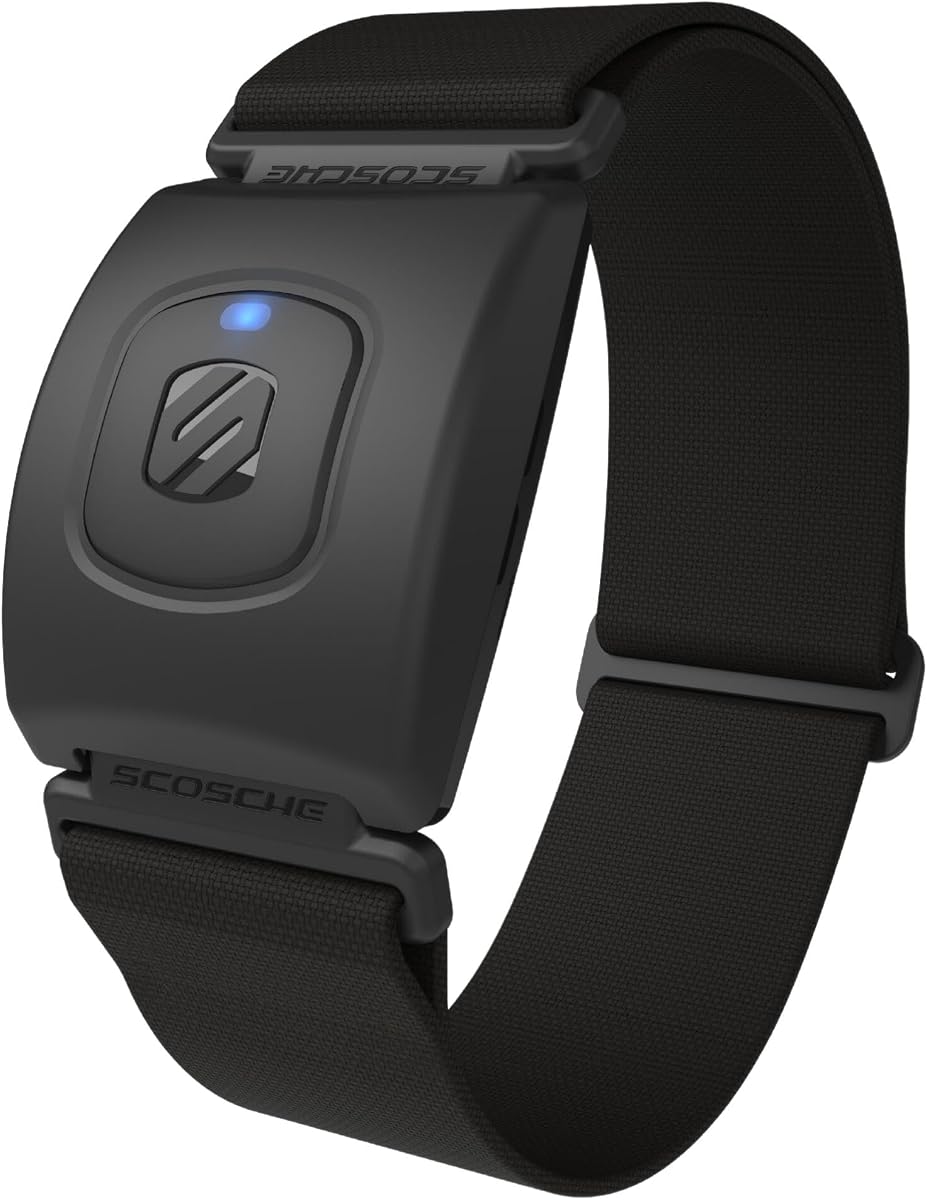
The Scosche Rhythm armband stands out for its emphasis on recovery insights in addition to live workout heart rate. It has a 4.1 rating and tracks real-time activity for running, gym workouts, and indoor or outdoor cycling. Bluetooth and ANT+ support allows it to pair with sports watches, fitness equipment, or training apps, making it flexible for a variety of pickleball training setups.
We may earn a commission when you buy through this link, at no additional cost to you.
Its HRV mode captures RR interval data derived from subtle changes between heartbeats. That information can be streamed to apps including HRV4Training, Morpheus Training, and Welltory. The feature is particularly relevant to players who want to examine recovery between hard games, balance demanding sessions, and understand changes in their readiness over time.
The lightweight, breathable strap can be worn on the forearm, bicep, or tricep, giving users several placement options. Its adjustable design is intended to remain secure during intense exercise while avoiding the restriction of a chest strap. An IP68 rating helps protect the unit from sweat, rain, and demanding training conditions.
Battery life is the main compromise. Up to 24 hours of continuous operation is less than the stated endurance of the chest straps and longer-lasting armband alternatives, so regular charging is part of the routine. Even so, the Scosche Rhythm is a good pick for players who want dual-radio connectivity, flexible arm placement, and deeper RR interval support in a comfortable wearable format.
RR interval streaming gives recovery tools richer information than a basic live heart rate display. It is useful for tracking changes between sessions and understanding the effect of game intensity over time.
The adjustable band can sit on the upper arm, biceps, triceps, or forearm. This gives users a way to find the most comfortable and stable location for their body and playing style.
We may earn a commission when you buy through this link, at no additional cost to you.
The right heart rate monitor depends on your training goals, existing devices, preferred fit, and the conditions in which you play. These factors help separate basic live sensors from more advanced systems built for recovery, independent recording, or multi-device use.
Chest straps generally sit closer to the heart and are the conventional choice for detailed workout intensity. They may feel restrictive or cause chafing during long sessions, so comfort and fit deserve attention. Upper-arm bands offer a lighter alternative, while optical sensors read changes in blood flow through the skin. Pickleball involves constant arm movement, so whichever form you select should remain stable without interfering with your swing.
Check whether your watch, bike computer, treadmill, or preferred app accepts Bluetooth, ANT+, or both. Some products, including the COROS armband, offer Bluetooth only, while most of the chest straps in this guide support dual-radio connectivity. Pairing procedures also vary. Some manufacturers require connection through the fitness app rather than through the phone's native Bluetooth menu, so verify the setup process before your first game.
A monitor is only useful when its readings remain stable during quick lateral movement, repeated swings, and changing levels of exertion. Several products state plus-or-minus-one-BPM accuracy, while the Polar H10 is described as having top measurement precision. Chest straps are often preferred for this reason, but fit, electrode preparation, and signal interference can affect results. Make sure the strap sits correctly and remains snug throughout play.
A basic monitor sends heart rate to a connected watch or app in real time. That is enough for zone work and live intensity guidance. The Garmin HRM 600 goes further by recording complete sessions, storing swimming data, and syncing metrics to Garmin Connect. Players who only want a quick effort check can prioritize simplicity, while coaches, competitive athletes, and dedicated trainers may value complete session history.
Replaceable coin-cell batteries are convenient because they can be swapped without a proprietary charger, and several chest straps advertise hundreds of hours of stated use. Rechargeable monitors avoid battery purchases but need a cable or compatible power source. The COROS monitor includes a magnetic cable but not a Type-C adapter, while the Garmin HRM 600 uses a rechargeable battery with a two-month stated life. Think about charging access and how often you play.
Outdoor pickleball can expose the monitor to perspiration, rain, and wet court surfaces. A model with at least IP67 or 3 ATM protection is suitable for typical training conditions, but ratings are not interchangeable. Some manufacturers explicitly recommend against swimming even when a product is water resistant. Match the stated limits to your activities and follow instructions about soaking, rinsing, and drying the device.
Heart rate variability can provide context about recovery and the way your cardiovascular system responds to training. The Garmin HRM 200 and HRM 600 transmit HRV, the COOSPO HW9 includes HRV functionality, and the Scosche Rhythm can stream RR interval data to specialized recovery apps. These features are most useful if you already review that information; otherwise, stable live heart rate may provide enough value.
A sensor that shifts, twists, or becomes uncomfortable can undermine the accuracy of a session. Look for adjustable straps, suitable size choices, soft materials, and electrodes that can be moistened when the environment is dry. Machine-washable straps are easier to maintain, while some products require separation of the sensor and band after use. Choose a care routine you can realistically follow between games.
Before putting the sensor on, check that the electronics are dry, the battery is secure, and the strap is clean. For chest straps with plastic electrode zones, lightly moisten the areas as directed by the manufacturer. This can improve signal transmission in dry conditions. Position the strap around the upper chest or in the recommended location, tighten it evenly, and confirm that the sensing area does not shift when you bend, swing, or move laterally.
Pair the monitor before the match begins. Depending on the device, you may need to wear it during pairing, open the relevant fitness app, and select the sensor from the app's device menu. Confirm that live heart rate is updating before you start. A watch, bike computer, or app may support different protocols, so check Bluetooth and ANT+ availability and avoid assuming every device can connect at the same time.
After the session, disconnect the sensor, switch it off if required, and remove the strap. Separate the electronics from the strap when the manufacturer instructs you to do so. Wipe sweat from the unit, allow it to dry, and wash the band according to the care instructions. Recharge when needed or replace the coin cell only with the specified battery type, and store the monitor away from moisture and extreme heat.
A chest strap is usually the better choice when you want highly detailed, real-time intensity data and already use compatible fitness equipment. An armband is more comfortable for players who dislike the feel of a chest strap or want quicker on-and-off operation. The best option depends on your device ecosystem, training goals, and sensitivity to comfort during long sessions.
No, heart rate data is optional, but it can help quantify workload, recovery, and consistency between games. It is particularly useful for players following structured training, trying to control intensity, or balancing demanding court sessions with recovery. Skill work, movement quality, shot selection, and overall conditioning should remain central to your development.
Look for a live heart rate value on the paired watch or app and check the sensor's status indicator. If no value appears, confirm that the app is open, the sensor is worn properly, and the correct Bluetooth or ANT+ mode is selected. Some devices must be paired through the fitness app rather than the phone's native Bluetooth menu.
Yes, provided its stated water-resistance level is appropriate for the conditions. Most models in this guide are designed to handle sweat, and several are also suitable for rainy-day training. Do not assume that a monitor can be soaked or submerged, because some product instructions prohibit swimming even when the device carries a water-resistance rating.
HRV data can help show how your cardiovascular system responds to training and recovery. It may be used alongside heart rate, sleep, soreness, and match workload to identify patterns over time. It should not be treated as a medical diagnosis or as the only factor deciding whether you are ready for hard play.
Choose both if you want maximum flexibility across watches, bike computers, and fitness apps. Bluetooth is common for phones and consumer wearables, while ANT+ is widely used by sports and cycling hardware. If your current setup supports only one protocol, verify that the monitor includes it before purchasing. The COROS armband in this guide is Bluetooth-only.
Replacement depends on wear, hygiene, and the manufacturer's guidance. COOSPO specifically recommends replacing its H808S strap every six months or after approximately 300 washes. Inspect the strap for stretched fabric, damaged fasteners, or persistent signal problems, and replace the band when it no longer holds the sensor securely.
Not necessarily. Live heart rate and reliable zone feedback are the core features for most players. HRV, calories, speed, distance, and running-form metrics can add context, but their usefulness depends on your goals and the compatible device. Begin with accurate live data, then add advanced metrics only if you have a clear reason to review them.
The Garmin HRM 600 is the strongest all-around choice for players who want live monitoring, HRV, and the ability to record complete sessions even without a watch. The Polar H10 stands out as a premium option for broad multi-device connectivity, water resistance, internal memory, and established measurement precision, while the Garmin HRM 200 offers a simpler Garmin-focused design with a convenient replaceable battery.
For players seeking a less expensive chest strap, the COOSPO H6 and H808S provide dual-radio connectivity, long battery life, and broad app support. The POWR LABS monitor emphasizes soft, comfortable construction, while the GEOID HS500 offers exceptional stated endurance. If you prefer an armband, the COROS monitor prioritizes automatic wear detection and comfort, the COOSPO HW9 adds visible zones and vibration warnings, and the Scosche Rhythm focuses on RR interval recovery data.
Before buying, confirm the connection protocol of every watch and app you intend to use, check the stated size and water restrictions, and consider whether you need live readings alone or complete workout recording. Specifications, features, and availability can change over time, so review the current product listing and official instructions before making a final selection.
