
Lepro LED Headlamp
4.5Editor score
300-lumen maximum output
Up to 30-hour runtime
Five practical lighting modes
IPX4 splash resistance
This headlamp for trekking guide compares 10 leading models for brightness, runtime, comfort, charging, weather resistance, fit, and trail versatility in 2026.
A headlamp for trekking should provide dependable illumination without interfering with your stride, pack balance, or use of trekking poles. Beam control, runtime, comfort, weather resistance, and charging convenience all matter because trails can range from shaded forest paths to exposed ridges where changing light levels are common.
This guide compares ten headlamps using the specifications and features available for each model. It covers output, beam reach, lighting modes, battery options, weight, durability, fit, and practical functions such as motion sensing, red light, and USB charging, helping readers match a headlamp to different trekking styles.
Each review reveals which product stands out for brightness, efficiency, versatility, or value, while also noting relevant compromises. Ratings reflect the published product information available when this guide was prepared. Product availability and prices can change, so readers should confirm current listings and specifications before purchasing.
4.5Editor score

4.8Editor score

4.4Editor score
The comparison below organizes all ten models by maximum output, power system, portability, and outdoor protection, making it easier to identify the most suitable option for long treks, overnight hiking, emergency preparation, or regular trail use.




The LHKNL Headlamp Flashlight is a feature-rich trekking option with a 4.5 rating and a listed weight of just 1.87 ounces. Its most distinctive characteristic is the combination of conventional button control and motion sensing, allowing users to illuminate or darken the lamp without reaching for the switch when their hands are cold, muddy, or occupied.
We may earn a commission when you buy through this link, at no additional cost to you.
The lighting system is particularly versatile for trail travel. It includes strong and weak main beams, strong and weak side beams, a red beam, an SOS red strobe, and motion-controlled access to the main and side strong beams. The 60-degree adjustable lamp head helps direct illumination toward the path, nearby vegetation, the ground, or a tent without requiring the wearer to move the entire headband.
Its built-in 1500mAh rechargeable battery is rated for approximately four to ten hours depending on the selected mode. A battery indicator helps hikers monitor remaining capacity, and the ability to operate while charging offers useful flexibility during long stops. The long-press shutdown prevents the lamp from being turned off accidentally while also eliminating the need to cycle through every mode.
The primary limitation is its IPX4 rating, which is suited to rain and splashing but does not promise the same level of protection as higher-rated models. The two-headlamp set can also take more space than a single lamp. Nevertheless, trekkers who prioritize many modes, hands-free control, low weight, and flexible recharge options will find this a capable choice.
This is a practical all-purpose headlamp for hikers who want more control than a basic five-mode design provides. It is particularly attractive on cold mornings, during camp setup, or whenever reaching for the button would be inconvenient. For technical mountaineering, the more robust Nitecore models may be better suited, but for general trekking this model offers an unusually broad feature set.
Waving a hand to switch the lamp on or off is useful when trekking with poles, handling a map, or tending to gear. It reduces contact with the housing and is especially handy when fingers are cold or covered with mud.
Main and side beams cover different needs, from focused path illumination to broader campsite visibility. Red and SOS modes add discreet light and an emergency signaling option without relying on the primary white beam.
We may earn a commission when you buy through this link, at no additional cost to you.
The Petzl ACTIK CORE is the premium selection in this guide, combining a 4.4 rating with a mixed-beam design, continuous red light, a rechargeable power option, and a washable headband. Its product title lists 650 lumens, while the supplied feature description states 625 lumens and 88 grams, so buyers should consult the current listing for the definitive output figure.
We may earn a commission when you buy through this link, at no additional cost to you.
The mixed beam is the model’s defining strength. It combines proximity and distance illumination rather than forcing trekkers to choose between a wide flood and a narrow spot. Three white levels provide a balance of output and runtime, while the red mode is useful for preserving night vision and avoiding unnecessary glare when a group is resting together.
A tilting plate allows the lamp to point upward when the headband is worn around the neck, adding flexibility for campsite tasks. The symmetrical headband is made from recycled materials, can be removed and washed, and can be replaced. A battery charge indicator provides a welcome check on power status whenever the lamp is switched on or off.
Compared with the ultralight Nitecore choices, the Petzl carries more listed weight and depends on a proprietary CORE rechargeable battery. That is the main trade-off for hikers who want refined beam quality, modular comfort, and a more established accessory ecosystem. Weather resistance is also rated IPX4 rather than IP66 or IP67.
This headlamp is best for trekkers who frequently move between narrow trails, open terrain, and campsite tasks. It is especially attractive for users who value red light, mixed-beam flexibility, washable components, and the ability to switch between rechargeable and conventional battery setups. Those priorities justify choosing it over lighter models.
The mixed pattern is valuable on routes that alternate between close forest paths and longer views across clear ground. Users can select an appropriate white level without repeatedly changing between fundamentally different beam shapes.
A removable, washable, replaceable headband is valuable over repeated multi-day trips. The symmetrical adjustment also makes it easier to center the lamp correctly when worn over a hat or beneath a hood.
We may earn a commission when you buy through this link, at no additional cost to you.
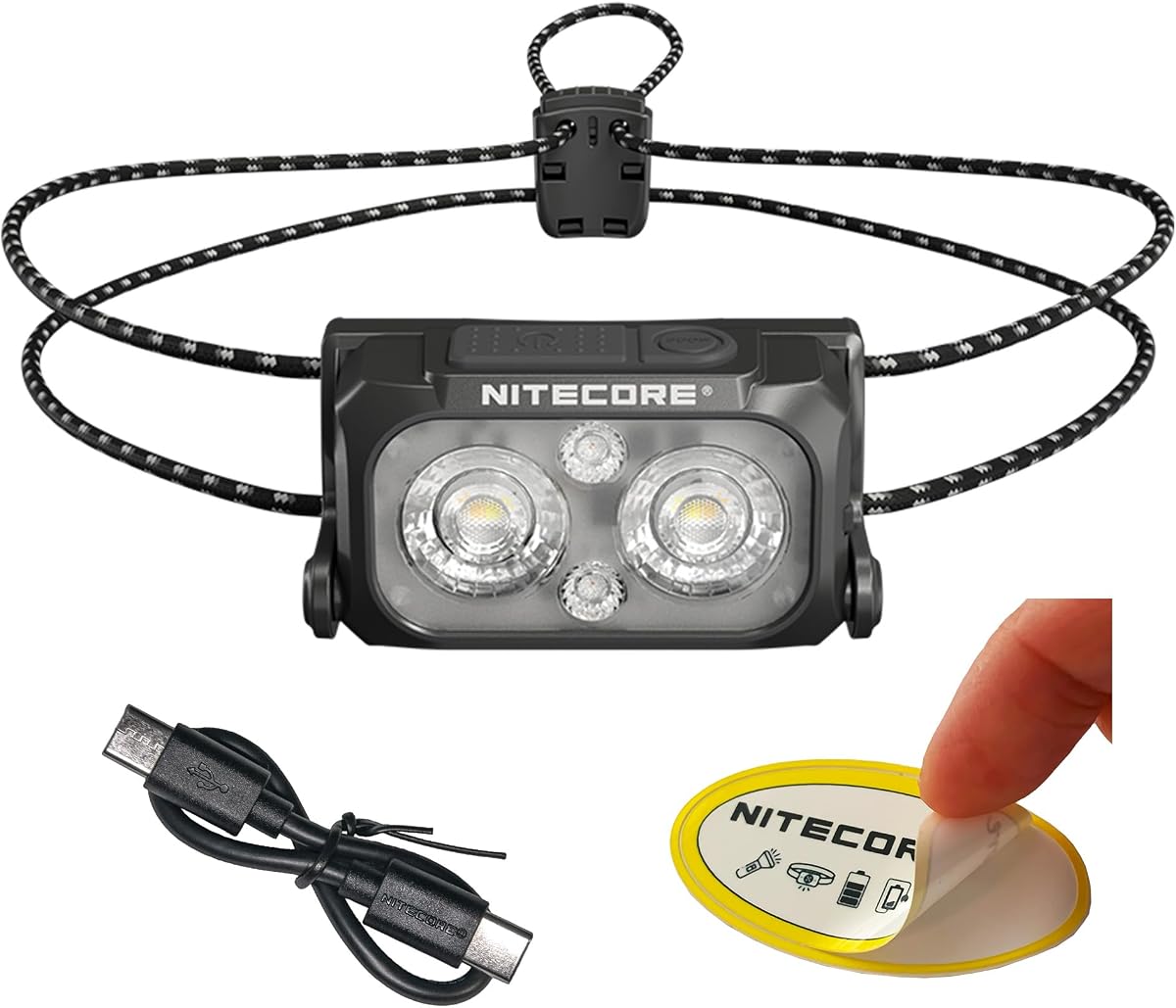
The Nitecore NU25 MCT UL earns a 4.7 rating by combining 400 lumens, a listed weight of 1.65 ounces, and an unusually thoughtful range of beam colors. It is among the most balanced choices for trekking because it can provide warm light in fog, natural white for routine tasks, and cool white for enhanced outdoor contrast.
We may earn a commission when you buy through this link, at no additional cost to you.
The maximum beam distance of 144 yards gives the lamp enough reach for trail navigation and campsite awareness. Four principal outputs are supplemented by SOS, beacon, and an auxiliary red light with three output levels. These options let a trekker preserve battery capacity, signal in an emergency, or maintain dark-adapted vision without carrying a separate light.
USB-C charging is a major convenience for anyone already carrying the same cable for a phone or power bank. The stated runtime reaches 45 hours, while recharging takes just over an hour. A power status indicator helps avoid surprises, and the included headband, bracket, cable, diffuser, and stuff sack make the package ready for field use.
Its PC housing is rated IP66 for waterproof protection and impact resistance up to one meter, giving it an advantage over the IPX4 models in sustained rain, spray, or dusty terrain. The trade-off is a more complex interface than simpler five-mode headlamps offer. Trekkers who value physical simplicity may prefer the NU20 Classic instead.
The NU25 MCT UL is a strong recommendation for travelers who want one headlamp to cover changing weather, trail visibility, campsite work, and signaling. It is particularly well suited to backpackers and fast hikers who value low weight, USB-C convenience, strong weather resistance, and deliberate control over beam color.
Warm light is gentler in fog and rain, natural white supports clear close-range work, and cool white helps accentuate terrain contrast. These choices are more useful on a trek than selecting maximum brightness for every situation.
The IP66 housing is built for demanding outdoor conditions where spray, rain, and dust are likely. That protection makes the model more reassuring for exposed ridges, wet forests, and changeable mountain weather.
We may earn a commission when you buy through this link, at no additional cost to you.
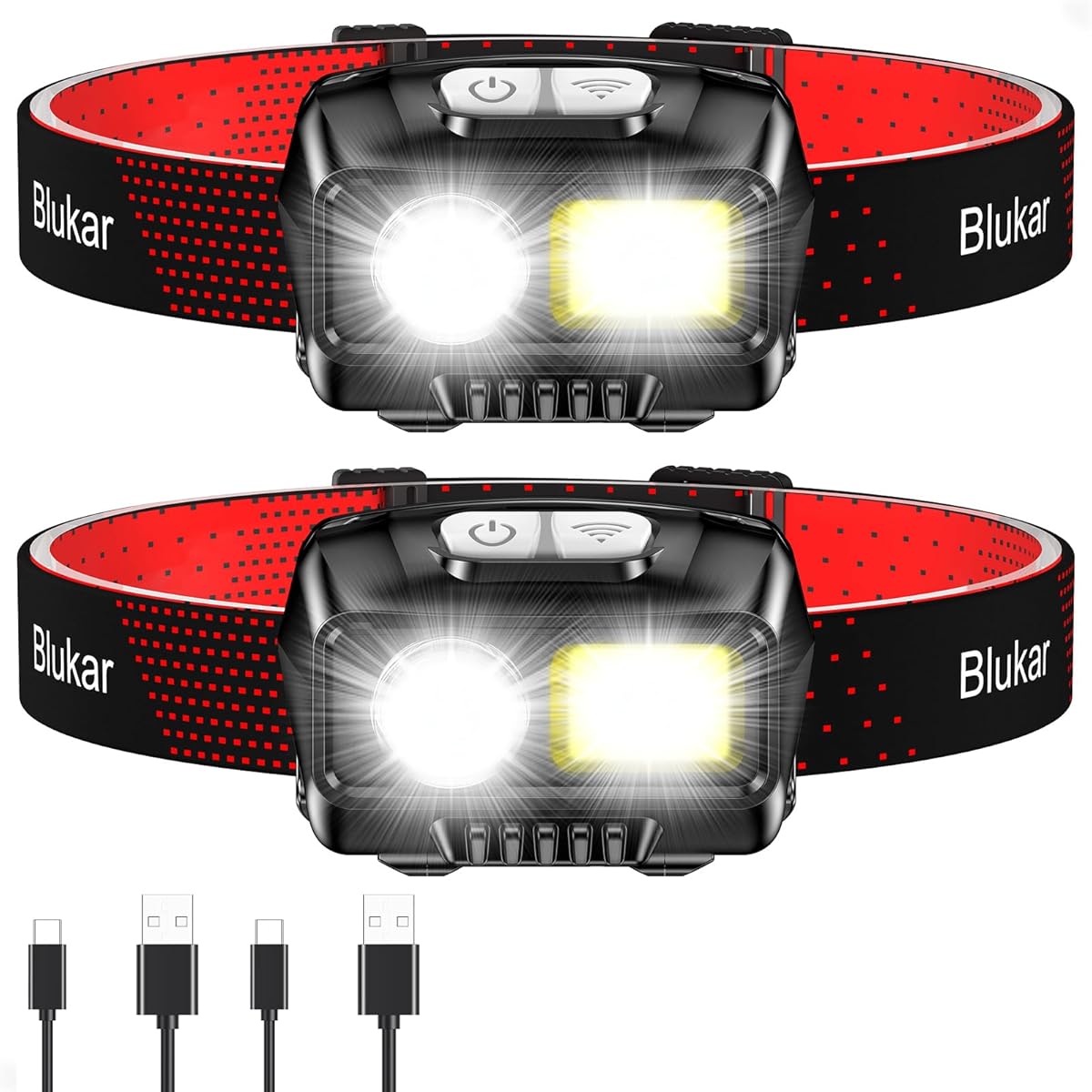
The Blukar LED Headlamp is a 4.5-rated model aimed at hikers who want precise brightness control and flexible operation. It combines XPG and COB LEDs with stepless dimming from full output down to 30 percent, allowing users to select a level that better matches close campsite work or long-distance trail visibility.
We may earn a commission when you buy through this link, at no additional cost to you.
The control layout is unusually extensive. Five normal modes cover XPG white, COB white, combined XPG and COB white, COB red, and a COB red strobe. Three additional sensor modes provide motion-controlled versions of the white lighting patterns. A short press can turn the lamp off directly, avoiding unnecessary mode cycling.
Its built-in 1200mAh battery recharges through USB-C, and the included cable makes the system easier to use with existing charging equipment. An IPX5 rating offers protection against rain and snow, while the 45-degree adjustable lamp head can point light toward the trail or the ground. The removable, washable elastic band is another practical feature.
At 2.96 ounces, the headlamp is not as ultralight as the leading Nitecore models. The IPX5 rating also falls short of IP66 or IP67 protection, so it should not be treated as a submersible light. Nevertheless, its brightness adjustment, broad mode selection, and motion control justify its place for general trekking and campsite use.
This is a good choice for users who regularly need different light levels during a single outing. The ability to dim gradually makes it easier to preserve the battery and avoid dazzling companions, while sensor control is useful when both hands are occupied. For runners focused strictly on minimum weight, a lighter option may be preferable.
Moving continuously between 100 and 30 percent gives walkers a better match between ambient darkness and required visibility. Fine control is helpful when reading maps, checking equipment, or approaching other members of a trekking group.
Motion operation is convenient with trekking poles, gloves, or wet hands. Direct shutdown further simplifies daily use, while red and strobe patterns cover low-vision and signaling needs.
We may earn a commission when you buy through this link, at no additional cost to you.
The BLACK DIAMOND Cosmo 350 is a rugged trekking choice with a 4.6 rating, up to 350 lumens, and the strongest conventional waterproof specification in this group. Its IP67 rating means it is designed to withstand submersion in water up to one meter for 30 minutes, provided it is dried afterward.
We may earn a commission when you buy through this link, at no additional cost to you.
Dual-fuel compatibility gives it unusual flexibility. It runs on three included AAA batteries or can use the rechargeable BD 1500 lithium-ion battery. This lets a trekker carry disposable batteries when simplicity is more important or add a rechargeable battery for repeated trips and consistent output.
The interface includes dimming, strobe, and red night-vision settings, covering close tasks, emergency signaling, and low-light campsite use. A low-profile housing and adjustable headband keep the lamp stable and comfortable on hikes, climbs, and runs. These qualities make it practical for routes where durability matters as much as raw brightness.
The main inconvenience is the weight and bulk of AAA batteries over a multi-day journey. The optional rechargeable battery and charger are separate purchases, and the rechargeable option may be a better choice for frequent users. Still, the ability to fall back on widely available cells is valuable when charging access is uncertain.
The Cosmo 350 is well suited to wet-weather trekkers, travelers who want a replaceable-cell option, and anyone who values physical protection. It is less compelling for ultralight backpackers but offers dependable versatility for demanding campsites and variable mountain conditions.
AAA cells provide a familiar backup when a charger is unavailable or the rechargeable pack has depleted. The rechargeable option reduces recurring battery use for regular trekkers, while familiar disposable cells remain a practical emergency reserve.
A high waterproof rating offers confidence in heavy rain, snow, spray, and accidental immersion. The model should still be dried after wet use, as its manufacturer specifically recommends allowing it to dry completely.
We may earn a commission when you buy through this link, at no additional cost to you.
The Nitecore NU20 Classic is the efficiency leader in this guide, combining the highest listed rating of 4.8 with a listed weight of just 1.34 ounces. It produces up to 360 lumens and reaches 119 yards, offering a capable balance for trekking without the bulk associated with larger lamp housings.
We may earn a commission when you buy through this link, at no additional cost to you.
Runtime is its defining advantage. The low setting can operate for up to 97 hours, making it attractive for long walks, multi-stage hikes, and emergency kits. USB-C recharging takes just over an hour, and a battery indicator helps users judge when the lamp needs charging. A full charge also makes the lamp convenient to keep in a pack for emergencies.
The white main LED provides three brightness levels, supplemented by SOS, a beacon, a soft reading light, and an auxiliary red mode. This range supports trail navigation, camp tasks, low-light reading, and emergency signaling. The PC housing carries IP66 waterproof protection and impact resistance up to one meter, making it suitable for rain, dust, and rough terrain.
Its maximum output is lower than that of the Petzl ACTIK CORE, BLACK DIAMOND Storm 500-R, and Spot 400, and its IP66 rating does not match the Cosmo 350's IP67 specification. For extremely dark trails, users may want more reach. Nevertheless, the efficient low mode compensates with endurance and the 1.34-ounce weight minimizes fatigue.
The NU20 Classic is an excellent recommendation for long-distance trekkers, fast hikers, and anyone who wants a lamp to carry every day. It is particularly suited to trips where battery management matters more than maximum brightness. Its combination of minimal weight, long runtime, useful safety modes, and durable construction makes it one of the most complete options here.
A 97-hour low-mode runtime is especially useful for long routes and emergency reserves. It allows the lamp to remain available in a pack without demanding frequent charging, while a status indicator helps preserve that advantage by showing remaining power.
At a listed 1.34 ounces, the lamp is among the lightest selections in the guide. Lower head weight reduces the cumulative discomfort of wearing any headlamp for hours, especially across steep climbs and descents.
We may earn a commission when you buy through this link, at no additional cost to you.
The BLACK DIAMOND Storm 500-R is a high-output option with a 4.4 rating and up to 500 lumens. Its integrated 2400mAh lithium-ion battery and rugged housing make it well suited to trekkers who prioritize dependable brightness and a rechargeable design over the absolute minimum weight.
We may earn a commission when you buy through this link, at no additional cost to you.
Full-strength output is useful on exposed trails, during descent, and when searching a campsite. Dimming preserves the lower beam for map reading and tasks around camp. Strobe and red night-vision modes add emergency signaling and discreet illumination, allowing the lamp to serve several purposes without requiring another light in the pack.
The micro-USB charging system is the principal compatibility consideration. It is a widely used connector, but USB-C models are more convenient for travelers who want to carry a single cable for their headlamp, phone, and power bank. A dedicated rechargeable design avoids disposable batteries but requires access to suitable charging equipment.
The compact housing and adjustable headband are designed for secure, all-day wear. The stated weather resistance supports use in rain, snow, and challenging outdoor environments. Although the 4.4 rating is slightly below several alternatives, it reflects a capable package for users who need more maximum output than the lighter models provide.
Choose the Storm 500-R when illumination strength and rechargeable endurance matter most. It is a convincing choice for rugged hikes, high-contrast trails, and campsite searches where 500 lumens provides a useful margin. Travelers who carry fewer cables or want the lightest possible headlamp may prefer a USB-C ultralight alternative.
A 500-lumen maximum provides a strong beam for open terrain, steep descents, and campsite searches. The dim setting allows users to reduce glare and conserve power when close-range light is sufficient.
The 2400mAh rechargeable battery removes the need to carry spare cells and provides a straightforward way to prepare for repeated trips. The fixed connector should be considered when deciding which charging cable to pack.
We may earn a commission when you buy through this link, at no additional cost to you.
The BLACK DIAMOND Spot 400 combines a 4.6 rating with up to 400 lumens and flexible power options. It runs on three included AAA batteries and can be upgraded with the rechargeable BD 1500 lithium-ion battery and a separate charger, making it suitable for both spontaneous trips and regular outdoor use.
We may earn a commission when you buy through this link, at no additional cost to you.
Its lighting controls include multiple brightness settings and proximity modes. These help users move from a full-power spotlight to softer ambient light as conditions change. A red night-vision mode supports dark-adapted vision, while the broad use cases include camping, night running, hiking, skiing, reading, household work, and vehicle emergencies.
The rounded housing is described as rugged and waterproof, giving the headlamp a durable feel for rain, snow, and general trail wear. A simple button interface reduces the learning curve, and the adjustable low-profile headband distributes the lamp comfortably without adding much bulk.
The standard AAA configuration is the main drawback for long treks because disposable cells take up space and add weight. Users planning regular use may prefer to add the rechargeable battery after purchase. That extra flexibility is also an advantage for group trips, where some hikers can charge while others carry conventional cells.
The Spot 400 is a good recommendation for trekkers who value immediate operation, straightforward controls, and the option to move toward rechargeable power later. It also works for anyone who wants one headlamp for outdoor activities and practical household tasks. Buyers seeking maximum battery endurance should examine the Nitecore alternatives more closely.
Included AAA batteries make the model usable without a separate charging purchase, which is useful for occasional hikes and emergency kits. A compatible rechargeable battery provides a better long-term option for regular trekking.
Multiple brightness and proximity modes let the wearer select appropriate illumination for trails, close campsite work, reading, or low-light movement. Red mode adds discreet visibility without relying on a bright white beam.
We may earn a commission when you buy through this link, at no additional cost to you.
The PETZL Actik Lamp is a straightforward trekking headlamp with a 4.7 rating, 350 lumens, and a listed weight of 86 grams. Its flood and mixed beam patterns, several white brightness levels, and red lighting give it enough flexibility for proximity work, distance vision, and movement along trails.
We may earn a commission when you buy through this link, at no additional cost to you.
A single button keeps operation simple. The LOCK function prevents the lamp from switching on accidentally during transit or storage, a useful detail when the headlamp is packed alongside clothing or trekking gear. The reflective headband adds passive visibility, while the detachable band can be washed for long trips.
Its hybrid design is the most appealing feature. Three standard AAA batteries are included, but the lamp can also use a compatible CORE rechargeable battery. It accepts alkaline, lithium, and Ni-MH rechargeable cells, giving users more freedom than models tied to one charging standard. Mounting accessories also allow attachment to helmets or bicycles.
The IPX4 rating means it is weather-resistant but not built for submersion. The included standard battery configuration also adds weight compared with an integrated rechargeable system, and the CORE battery is a separate accessory. These limitations matter most for wet-weather specialists and ultralight hikers.
The Actik Lamp is best for recreational trekkers who value clear controls, flexible batteries, reflective details, and broad accessory support. Its 4.7 rating reflects a well-balanced package rather than a class-leading output. For simple day hikes, camping, and occasional travel, it remains a convincing all-around option.
The included AAA batteries allow immediate use, while compatibility with a CORE rechargeable battery supports regular trips. Support for several cell types is useful for travelers who already carry alkaline, lithium, or rechargeable batteries.
Accidental activation can waste battery or illuminate a pack during transport. The dedicated lock is a thoughtful safeguard for a headlamp that may sit among clothing, food, and shared travel gear.
We may earn a commission when you buy through this link, at no additional cost to you.
The Lepro LED Headlamp is the value-focused choice in this guide, earning a 4.5 rating while offering five useful modes, 300 lumens, and up to 30 hours of continuous light. It is well suited to everyday trekking, short hikes, campsite tasks, and emergency kits where simplicity and low weight matter.
We may earn a commission when you buy through this link, at no additional cost to you.
The main LED provides high, low, and strobe settings, while two red modes offer steady illumination and flashing. Red light is valuable for preserving night vision and checking equipment without waking sleeping companions. Its listed reach of up to 500 feet is sufficient for paths, campsites, and household work.
The rechargeable design uses a supplied USB-C cable and works with a five-volt DC adapter, although no adapter is included. A 45-degree adjustable angle directs the beam as needed, while the sweat-resistant elastic band weighs 2.86 ounces and is described as comfortable for adults and children.
The maximum output trails the brighter premium models, and IPX4 protection is limited to splashing water rather than immersion. Users trekking through sustained heavy rain may favor an IP66 or IP67 alternative. The polyethylene coating is intended to resist drops and scratches, adding some everyday durability.
The Lepro is a sensible first headlamp and a convenient backup. It covers the essential trekking functions without requiring a separate red light or complicated menu. For users who need 30 hours of stated runtime, a light 2.86-ounce body, and straightforward charging, it delivers an effective package at an accessible position.
Three white outputs and two red patterns provide enough control for navigation, visibility, signaling, and low-light campsite work. The simple structure makes the lamp approachable for casual hikers and families.
USB-C charging allows the headlamp to share a widely used cable setup. The included cable means users can begin charging without finding a separate lead, although they must supply an appropriate five-volt adapter if they do not already have one.
We may earn a commission when you buy through this link, at no additional cost to you.
The right trekking headlamp depends on route length, weather exposure, pack weight, and the kinds of terrain encountered. Brightness matters, but beam control, battery strategy, comfort, and durability often have a greater effect on daily usability.
Maximum lumens describe peak output, but they do not tell the entire story. A trekking headlamp should illuminate the immediate path, obstacles, and surrounding terrain without creating excessive glare. Models offering 300 to 400 lumens can handle many trails, while options reaching 500 lumens or providing a 144-yard beam distance offer more reach for open routes, descents, and campsite searches. Beam shape matters as much as output: a mixed pattern can serve both close and distant viewing, while flood and spot patterns are better for specialized tasks.
Trekking routes can last well beyond a single evening, so battery planning deserves close attention. Runtime figures vary by mode, and the longest published runtimes generally occur at low output. A lamp lasting up to 97 hours on low is useful for a long journey, while a 30-hour option may suit day hikes. USB-C charging is convenient when a phone or power bank uses the same cable, whereas micro-USB requires a separate lead. Integrated rechargeable batteries reduce clutter, while models accepting AAA cells provide easy backups in remote areas.
A headlamp is worn continuously, so even a modest weight difference can become noticeable over a long day. Options listed between 1.34 and 1.87 ounces are especially light, while designs around 86 to 88 grams or nearly three ounces may be more substantial. Look for a balanced housing, adjustable band, and stable low-profile shape. A washable or replaceable band is valuable on multi-day trips, and sweat-resistant materials help during strenuous climbs. Users who wear a hat should confirm that the headband can sit securely over or beneath it.
Water-resistance ratings describe very different conditions. IPX4 models are intended to withstand splashing water and light rain but are not submersible. IPX5 offers somewhat stronger water protection, IP66 handles heavy rain, spray, and dust while remaining sealed against powerful jets, and IP67 can withstand temporary immersion. Ratings alone do not cover every real-world situation, so a higher rating is still sensible for exposed mountains, river crossings, and changeable weather. Always follow the manufacturer’s drying and care instructions after wet use.
Trekking rarely requires only one kind of light. A dim white mode preserves battery and helps with map reading, a high white mode illuminates the trail, red light supports night vision, and a strobe provides a visible emergency signal. Motion sensing can turn the lamp on or off without touching the housing, which is convenient with trekking poles, cold hands, or dirty fingers. Some advanced models add selectable warm, neutral, and cool white light. These color temperatures can make fog, rain, and terrain contours easier or harder to perceive depending on conditions.
A trekking headlamp should be easy to operate without looking directly at it. A single-button system and direct shutdown are convenient, while longer menu navigation may be less useful when moving quickly or wearing gloves. Long-press shutdown helps prevent accidental activation during transport, and a lock function is useful for a lamp stored in a pack. Battery indicators, clearly separated red and white modes, and tactile buttons can improve daily usability. The best interface is not necessarily the most complex one; it is the one a user can reliably operate in darkness and changing conditions.
A versatile headlamp can serve trekking, camping, running, cycling, reading, repairs, and emergencies, but a lamp with helmet or bicycle mounting points is more adaptable than one designed only for head wear. Check whether the headband is removable, washable, or replaceable. Some models include a diffuser, bracket, cable, or storage sack, which can be useful but may add bulk. Because shared headlamps are also used for close household tasks, a soft reading mode and red light can prevent eye strain and disturb others less.
Before a trek, charge a rechargeable model fully and learn its controls in a dark room. Identify the high, low, red, sensor, and emergency modes, then practice changing brightness without looking at the lamp. Check the headband, adjustment points, battery compartment or charging cover, and cable. A fresh battery backup is prudent for long routes, especially when using a model that accepts standard cells.
On the trail, use the lowest mode that provides safe visibility and reserve maximum output for open terrain, descents, or campsite searches. Aim the beam slightly below eye level to reduce glare and improve the visibility of roots, rocks, and uneven ground. Use red light around sleeping companions or when preserving night vision, and avoid shining bright white light into another trekker’s eyes. Motion sensing should be disabled or tested carefully if accidental activation would waste battery.
After use, switch the lamp off, disconnect any charging cable, and remove disposable batteries if the model allows it. Keep charging contacts dry and inspect the housing and seal for dirt or damage. Let wet lamps dry completely before storage, especially models with higher waterproof ratings. Wipe the band and housing with a lightly damp cloth, allow them to air-dry, and store the headlamp in a dry place away from prolonged direct sunlight.
For most forest paths, campsites, and general hiking, 300 to 400 lumens provides ample brightness when paired with a suitable beam pattern. Open ridges, steep descents, and large camps may benefit from 500 lumens or a model with a longer stated beam distance. Maximum output alone does not determine usefulness, so consider dimming, beam shape, battery efficiency, and red-light controls as well.
Rechargeable models are usually easier for regular trekkers because they reduce disposable battery waste and make charging part of the normal preparation routine. AAA-compatible lamps remain valuable for occasional trips and emergencies because spare cells are easy to find. A hybrid design offers both advantages, although rechargeable batteries and chargers may need to be purchased separately.
IPX4 indicates protection against water splashing from multiple directions. It is generally suitable for light rain, trail spray, and ordinary outdoor use, but the lamp should not be submerged. For exposed routes, frequent rain, river spray, or demanding conditions, an IPX5, IP66, or IP67 model provides a higher level of protection.
Red light is useful when preserving dark adaptation, checking equipment, or moving quietly around other people who are trying to sleep. It usually provides less visible detail than white light, so trekkers should switch back to a low white mode when safely navigating technical terrain. The availability of red mode in the selected headlamp is a meaningful convenience on shared routes.
Look for a physical lock function, long-press shutdown, or a covered power button. A model that can be switched off directly is also convenient because it avoids cycling through every mode. Check the setting before packing the lamp, and remove disposable batteries if the design allows it. A short test in a dark area can confirm that the chosen control method works with your gloves.
Lower weight can improve comfort over long distances, but brightness, battery life, weather protection, and fit still need to be balanced. A very light lamp that runs out too quickly may be less useful than a slightly heavier model with efficient low modes. The best trekking headlamp is the one that stays secure, provides adequate light, and can support the planned duration without requiring unnecessary spare batteries.
Motion sensors can turn a lamp on or off without touching it, which is convenient while holding trekking poles, wearing gloves, or handling wet or dirty equipment. They are not essential, and some users may prefer a tactile button for precise control. Testing the sensitivity and range before a trip helps prevent unexpected activation or switching.
Turn it off, disconnect the charger, and allow the housing and headband to dry fully in a ventilated place. Do not store the lamp while it is damp, particularly if the charging port is exposed or the battery may retain moisture. Once dry, check the seals and contacts before packing it for another trip.
The Nitecore NU20 Classic stands out for the best overall balance, combining a 4.8 rating with very low weight, a 97-hour low-mode runtime, USB-C charging, and IP66 protection. The Petzl ACTIK CORE is the premium choice for mixed-beam control, red lighting, and a washable modular headband, while the Lepro LED Headlamp provides the most straightforward budget package.
Prioritize the features that match your route. Long-distance hikers should examine efficient low modes and charging convenience, exposed trekkers should seek stronger waterproof ratings, and users carrying gear with both hands occupied may value motion sensing. Fit and weight deserve equal attention because a headlamp must remain comfortable through many hours of use.
Before purchasing, confirm the current product listing, included accessories, battery requirements, and charging cable. Specifications and prices can change, and availability may also vary. Checking those details at the time of purchase ensures that the selected trekking headlamp still meets the route, weather, and power needs you have identified.


