
300W 110V to 12V Diesel Heater Power Converter
5.0Editor score
300W conversion capacity
5kW and 8kW support
11–13V, 25A output
Over-voltage and short-circuit protection
Compact 0.5-pound housing
Running a diesel heater usually means deciding between a vehicle battery, a portable auxiliary battery, or household power. The right battery-related solution depends on heater voltage, current draw, operating location, and whether you need the heater to remain mobile. A suitable system should deliver stable power without creating avoidable drain or unsafe wiring assumptions.
This guide compares ten supplied products according to their role in diesel-heater power systems, electrical output, installation requirements, portability, safety features, and intended environment. Most selections are 110V-to-12V converters that let compatible heaters operate without continuously drawing from a vehicle battery. The remaining products are supporting fuel-transfer, engine-warming, and heavy-duty battery-cable options rather than direct heater-power substitutes.
Each review explains what the product can realistically do, highlights the specifications that matter, and identifies any important limitations. The top selections show the strongest combinations of compatibility, convenience, output stability, and ease of use. Product availability, ratings, and market conditions can change, so shoppers should confirm current specifications and suitability before ordering.
5.0Editor score

4.8Editor score

4.6Editor score
As an Amazon Associate we earn from qualifying purchases.
The comparison separates direct heater-power converters from supporting battery, fuel-transfer, and cold-weather products, because only the converters can directly replace a vehicle-battery supply for a compatible 12V diesel heater.




This compact converter is the strongest direct match for someone searching for a way to run a diesel heater without continually draining a vehicle battery. It converts household 110V AC into an 11–13V DC output rated at up to 25A and is advertised for compatible 5kW and 8kW diesel air heaters. Its 5.0 rating and broad compatibility claims make it an appealing first choice.
We may earn a commission when you buy through this link, at no additional cost to you.
The main advantage is the balance between useful capacity and portability. A 300W conversion capacity is enough to cover the listed heater classes, while the compact 0.5-pound housing is easier to move between an RV, camper, workshop, garage, or emergency location. Fire-resistant materials and triple protection against over-voltage, short circuits, and overheating add practical safeguards for a device expected to remain connected during extended heating sessions.
The trade-off is that this is a wall-powered solution, not a portable battery pack. It cannot heat a vehicle far from an outlet, and it provides no energy reserve if household power fails. The listed operating environment spans approximately -20°C to 50°C, but it should not be assumed to be weatherproof. Users should also respect the converter's maximum output and confirm that the heater's starting and operating demands fall within the stated limits.
This is the best overall option for RV owners, campers, tradespeople, and workshop users who want simple setup without a vehicle battery. It is particularly attractive when a standard wall outlet is available and the heater's documented requirements match the 12V, 25A output. For mobile use without grid access, a dedicated battery and appropriate charging equipment would be more suitable.
The converter removes the need to leave a car, truck, or RV battery supplying the heater while it operates. That can reduce starting concerns and repeated charge-discharge cycles, especially during long stationary-heating sessions where the alternator may not fully replace the energy used.
Its low weight and small housing make it practical to pack for a trip or keep in a workshop. The main requirement is proximity to a compatible 110V outlet, with extension practices that preserve electrical safety.
We may earn a commission when you buy through this link, at no additional cost to you.
This adapter offers a direct route to operating a compatible 12V diesel heater from household electricity without a car battery. It accepts a broad 110V–245V AC input and supplies a constant 12V output at up to 25A. Its 4.6 rating reflects a generally positive reception, while its strongest selling point is flexibility across RV, trailer, mobile-home, and garage applications.
We may earn a commission when you buy through this link, at no additional cost to you.
Unlike a converter restricted to a single nominal mains voltage, the broad input range provides more room when using different outlets or regions. The stated plug-and-play approach is valuable for temporary setups: connect the red lead to positive, the black lead to negative, and use a standard 5-15 outlet. The adapter is also useful for outdoor workers who need a portable diesel heater indoors without keeping a vehicle battery connected.
The responsibility still falls on the user for correct polarity and load limits. The instructions specifically warn against exceeding maximum output, and the heater's wiring and current requirements should be checked before connection. This product is not a substitute for a battery when the operating location has no reliable AC supply. It also does not provide backup power during an outage, so continuous indoor heating should never depend on a wall outlet without considering an alternate safe plan.
Choose this model when broad input compatibility and a stable 12V, 25A output matter most. It is a strong choice for people moving a compatible heater among an RV, garage, workshop, or temporary indoor location. The setup is especially practical when avoiding battery drain is more important than mobile operation.
A 110V–245V input range can simplify planning around different household outlets and electrical environments. It does not make the adapter suitable for every mains system, so local voltage and the heater's own requirements should still be confirmed.
Keeping a vehicle or auxiliary battery connected for hours can be undesirable when the heater is stationary. This adapter shifts the source to household electricity, allowing the heater to operate without drawing from that battery.
We may earn a commission when you buy through this link, at no additional cost to you.
This power supply is a particularly versatile option for anyone operating a compatible diesel air heater from a wall outlet. It accepts 110V–240V AC at 50/60Hz, converts that input to 12V DC, and provides 25A. Unlike several competing converters, its stated compatibility includes 2kW, 5kW, and 8kW parking heaters, giving it broader coverage across common unit classes.
We may earn a commission when you buy through this link, at no additional cost to you.
The fanless design is a meaningful distinction for indoor and workshop use. Without a cooling fan producing mechanical noise, the adapter can be more suitable for a quiet garage, camper, or occupied temporary space. Its compact construction also allows fixed or portable deployment, while the ability to use household power instead of continuously drawing from a vehicle battery makes it attractive for longer parked heating.
The setup remains more involved than simply plugging a heater into a wall. Compatible heater power leads must be connected to the 12V output with correct positive and negative polarity, after which the adapter can be connected to AC power. It is important to verify the heater's voltage, current, and wiring before use. The broad wattage labels do not mean every heater within a broad class is automatically safe; actual startup and operating requirements still need to fall within the converter's capacity.
This is the best fit for buyers comparing compatibility, quiet operation, and broad input voltage in one package. It suits RV, camper, truck, garage, workshop, and cabin users with access to mains electricity. For true remote operation, pair the heating requirement with a correctly sized battery system instead of relying on this converter alone.
The absence of a built-in cooling fan removes one source of continuous mechanical noise. That is helpful in occupied rooms, camper interiors, and workshops where converter noise would be noticeable.
Support for 2kW, 5kW, and 8kW units makes this converter easier to consider when the exact heater class may vary. Confirm actual current requirements and manufacturer instructions rather than relying on wattage labels alone.
We may earn a commission when you buy through this link, at no additional cost to you.
This 110V-to-12V adapter is designed for compatible 5kW and 8kW diesel air heaters, allowing household power to replace a continuously connected vehicle battery. It includes both a converter and a power cord, and its straightforward installation is aimed at RV, trailer, camper, garage, and outdoor-worker applications. It is a practical direct-power option, although no customer rating is supplied.
We may earn a commission when you buy through this link, at no additional cost to you.
The advertised 12V, 25A output is designed to provide consistent heater operation and is paired with safety mechanisms for over-voltage, short circuits, and overheating. The ability to plug into a standard 5-15 outlet makes it especially useful for temporary or stationary heating. Because the heater can be deployed without hunting for an RV outlet or running a generator, it offers convenience in fixed indoor spaces.
Buyers should still observe the stated maximum-output limitation and connect the red wire to positive and the black wire to negative. The listing does not give the same degree of detail about enclosure weather resistance, cooling, or environmental limits as some competing products. It should therefore be treated as an indoor or sheltered adapter unless the manufacturer explicitly permits wet-weather use.
This adapter is worth considering when a straightforward, cord-included setup for a 5kW or 8kW heater is the priority. It suits garages, workshops, RVs, and temporary indoor heating arrangements where wall power is dependable. Because it lacks a published rating, its warranty, current availability, and included documentation deserve closer attention before purchase.
The adapter can power a compatible heater from a standard outlet, avoiding continuous discharge from a vehicle or auxiliary battery during long stationary use.
Including the converter and power cord simplifies packing and deployment. The heater-side connection still requires careful attention to polarity and load limits.
We may earn a commission when you buy through this link, at no additional cost to you.
This diesel heater power adapter is designed to provide constant 12V and 25A output from household electricity without an external battery. Its 4.2 rating is lower than those of the leading converters, but its component upgrades give it a distinct appeal: insulated ABS plastic, a larger capacitor, pure copper coils, extra wiring insulation, and waterproof terminals.
We may earn a commission when you buy through this link, at no additional cost to you.
Those changes are most relevant in relatively humid environments where basic electrical construction may be less forgiving. The improved current flow and heat dissipation claimed for the copper coils should support steadier operation, while the extra insulation layer helps protect the wiring assembly. It remains suitable for RVs, mobile homes, garages, temporary dwellings, and vehicles used by outdoor workers.
The manufacturer is clear that rain use is not recommended. Brief operation while sheltered may be possible, but the unit should not be treated as a rainproof outdoor appliance. Its 12V, 25A output still has to match the heater's requirements, and users should confirm appropriate wiring and extension practices. The absence of a detailed output wattage figure in the listing also makes careful comparison important.
Choose this converter when its upgraded wiring and terminal construction are more important than having the highest customer rating. It is a sensible wall-powered option for a RV, garage, or temporary indoor setup, particularly in locations where humidity could challenge a less robust connection. It does not solve off-grid power needs by itself.
The larger capacitor, copper coils, and added wire insulation are designed to promote stable current flow and improve heat dissipation. These upgrades may be valuable in a converter expected to stay connected for extended periods.
Waterproof terminals and improved insulation make the product more considered for humid sheltered spaces, but the explicit warning against rain use means outdoor protection must still come from placement and a cover.
We may earn a commission when you buy through this link, at no additional cost to you.
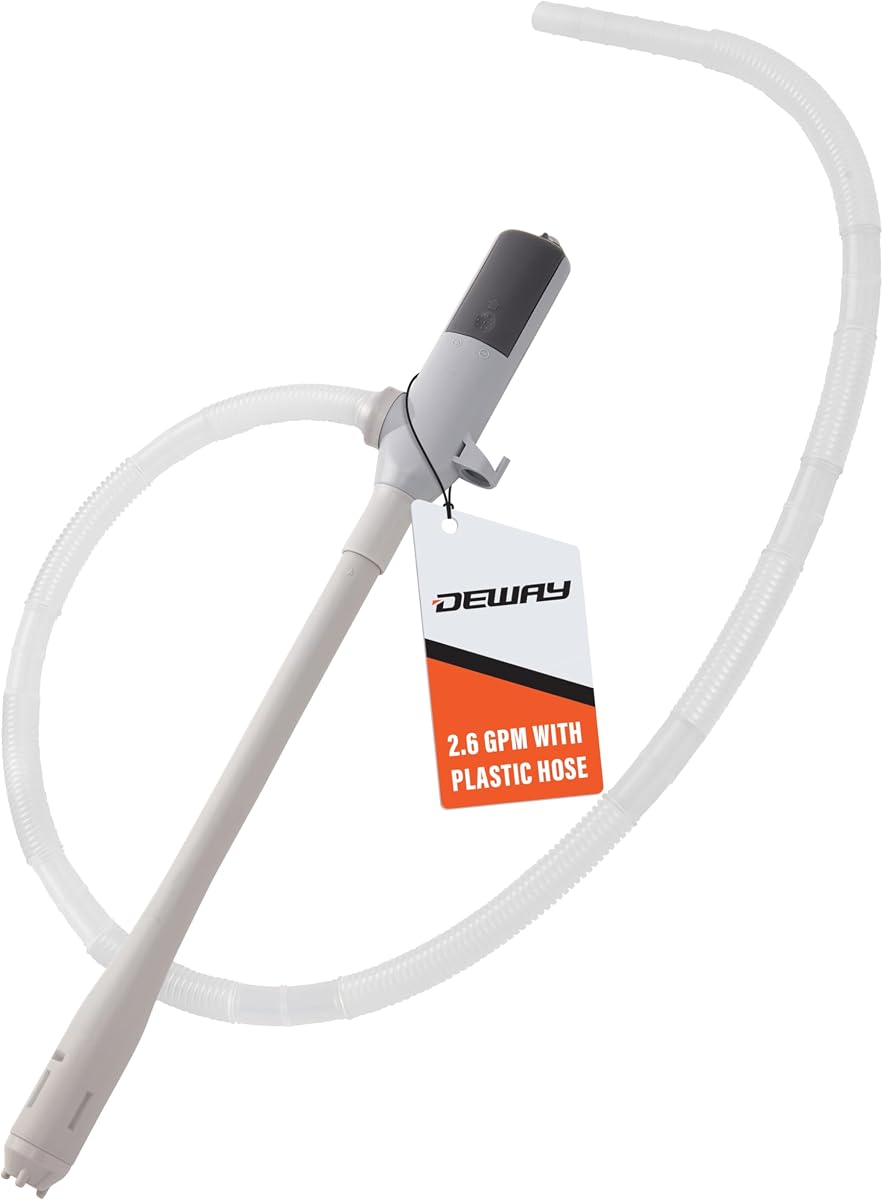
The Deway stick transfer pump is not a power supply for a diesel heater, so it should not be confused with one of the direct converters in this guide. It is a supporting product for moving diesel, kerosene, gasoline, light oils, water, mild acids, or antifreeze between containers. Its 4.1 rating and AA-battery design make it relevant to users maintaining the fuel side of a heater system.
We may earn a commission when you buy through this link, at no additional cost to you.
A slim suction stick fits inside high cans and large jugs, while the 39-inch discharge hose makes transferring liquid without repeatedly lifting heavy containers more convenient. It moves approximately 2.6 gallons per minute and can operate for hours on two AA batteries. The extended hose and included storage clip also make it suitable for generators, lawn equipment, ATVs, motorcycles, cars, and RVs.
Its limitations are important. The pump has no auto-stop, so flow must be turned off manually with the on/off switch, and the two AA batteries are not included. It is rated for non-corrosive liquids and fuels but not strongly corrosive or high-heat materials. Most importantly, it supplies no electrical output to a heater and cannot replace a converter, vehicle battery, or auxiliary battery.
Buy this product if the main need is portable diesel-fuel transfer for a heater or generator. Do not choose it when the question is how to provide 12V power to a diesel air heater. Its value is complementary: cleaner and easier fuel handling can support a reliable heating setup, but the heater still needs a correctly matched electrical source.
The narrow stick and long hose reduce the need to tip and carry large fuel containers. This can make routine transfers safer and more convenient around a vehicle, RV, or generator.
Because there is no automatic stop, the operator must switch the pump off when the destination is full. It is a simple design, but attention is required to prevent overflow.
We may earn a commission when you buy through this link, at no additional cost to you.
This silicone oil pan heater is a cold-weather engine accessory rather than a device that powers a diesel air heater. It uses 120V and 150W to warm engine oil overnight, and its 5.0 rating makes it one of the stronger supporting products in the supplied selection. It can ease hard cold starts and reduce stress on batteries, starters, and internal engine components.
We may earn a commission when you buy through this link, at no additional cost to you.
The four-by-five-inch flexible pad uses a self-adhesive backing rather than drilling, making it suitable for curved oil pans, transmission housings, and diesel tanks after the metal surface is cleaned. A built-in thermostat helps prevent overheating, while oil- and acid-resistant silicone is intended to tolerate greasy engine-bay conditions. It can also be used in snow and cold conditions to improve snowmobile and track operation.
This product does not replace the heater's 12V electrical supply, and it does not warm a camper interior. A 120V connection is required, so users who rely exclusively on a vehicle battery or remote campsite will need an appropriate outlet or compatible power arrangement. Its value lies in improving engine warm-up and cold-start behavior, which can complement—but not replace—a properly powered parking heater.
Consider this pad for a diesel vehicle that is parked where 120V power is available and needs help starting in freezing conditions. It is especially useful for owners who want to reduce unnecessary idling during warm-up. For running a diesel heater itself, select one of the 12V converters or establish a correctly sized battery and charging system.
Warming engine oil beforehand can reduce the difficulty of cold cranking and the load placed on starters and batteries. It is a separate benefit from heating a vehicle cabin with a diesel air heater.
Cleaning the metal surface and attaching the flexible pad takes less effort than a drilled installation. Users should still position the pad where it can make proper contact and where wiring will not be exposed to moving parts.
We may earn a commission when you buy through this link, at no additional cost to you.
This adapter directly addresses the need to run a compatible 5kW or 8kW all-in-one diesel heater without a vehicle battery. It converts 110V–220V household AC into stable 12V DC, with a maximum output of 200W and 16A. No customer rating is supplied, so the technical claims and product fit should receive more attention than social proof.
We may earn a commission when you buy through this link, at no additional cost to you.
The all-aluminum alloy casing is a notable construction feature because it promotes heat dissipation and resists impact better than a basic lightweight enclosure. Built-in overload, overcurrent, short-circuit, and over-voltage protection gives the unit several layers of electrical safeguards. The product is positioned for garages, indoor spaces, RVs, workshops, and parked SUVs, pickups, or utility vehicles where household power can replace the vehicle battery.
The important limitation is its 16A output, which is lower than the 25A claimed by several competing converters. A heater may be marketed as 5kW or 8kW while having different actual fuel and electrical requirements, so compatibility should be confirmed with the heater's documentation rather than inferred solely from its label. The unit also needs a wall outlet and should not be treated as a mobile battery system.
Choose it for a compatible all-in-one heater that operates within a 200W, 12V, and 16A supply envelope, particularly when rugged construction and heat dissipation are priorities. The absence of a rating makes the written protections and metal housing appealing, but checking current demand remains essential. It is a capable direct option, not an automatic match for every high-output heater.
The aluminum alloy casing is designed to spread heat and withstand impacts. That makes it a sensible choice for repeated service in a workshop, garage, or vehicle-oriented setup.
The stated 16A maximum is the central specification to compare. If the heater's startup or sustained current demand exceeds the converter's rating, it should not be used with that unit.
We may earn a commission when you buy through this link, at no additional cost to you.
This heavy-duty battery cable kit is not a converter or portable power source, but it can improve the battery-to-starter and grounding side of a diesel vehicle's electrical system. Its 4.8 rating and use of 3/0 pure copper wire make it a strong cold-start accessory for the specified Dodge RAM 2500 and 3500 models with the 6.7L Cummins diesel from 2007.5 through 2009.
We may earn a commission when you buy through this link, at no additional cost to you.
The kit includes a heavy 3/0 battery-to-starter cable, 2/0 battery-to-battery and engine-negative cables, military-style terminals, locknuts, anti-corrosion washers, loom, and zip ties. The wire meets or exceeds SAE J1127 specifications for SGX high-temperature insulation, offering conductivity and resistance to oil, chemicals, and heat. Corroded factory cables can otherwise undermine cranking and grounding performance in severe cold.
It is strictly an upgrade for a battery-powered starting system, not a substitute for a diesel air heater's dedicated 12V supply. It also does not include alternator or grid-heater wires, so those must be sourced separately if needed. Compatibility should be checked carefully because the listed fitment covers a limited model-year range. Installation must avoid interference with moving components, exhaust heat, and routing areas.
Choose this kit when corroded factory cables are affecting the cranking performance of the specified diesel RAM and the goal is a direct battery-cable replacement. It is not relevant to a heater that runs from a wall-powered converter. It may indirectly support cold-weather reliability, but the heater still requires its own correctly rated 12V source and protected wiring.
Corrosion or undersized cables can reduce the voltage available to the starter. Large-gauge pure copper cables provide a direct upgrade for the specified battery-to-starter and grounding connections.
The stated Dodge RAM and Cummins fitment narrows the application but reduces ambiguity. The absence of alternator and grid-heater wires means the kit should not be treated as a complete rewiring package.
We may earn a commission when you buy through this link, at no additional cost to you.
The TERA PUMP is another supporting fuel-management product rather than a direct battery solution for a diesel heater. It transfers diesel, gasoline, kerosene, e15, e85, and non-potable water at up to 2.4 gallons per minute. Its 4.4 rating and automatic shutoff feature distinguish it from a basic manually controlled transfer pump.
We may earn a commission when you buy through this link, at no additional cost to you.
The built-in sensor stops the pump when the receiving container is full and sounds a beep to alert the operator. A locking clip secures the nozzle for a hands-free transfer, while the hose holder keeps the 23.5-inch discharge hose organized. A roughly 15.25-inch suction tube fits common three-gallon and five-gallon cans and many Jerry cans, reducing the need to lift heavy containers.
The pump requires two D batteries, which are sold separately, and uses a straightforward on/off slide switch. While the auto-stop feature reduces overflow risk, operators should still monitor the transfer and ensure the receiving container is suitable for the liquid. Like any fuel-transfer accessory, it must be used with compatible containers and in a ventilated area away from ignition sources. It provides no electrical output for a heater and cannot replace a converter or battery.
Buy this pump for convenient diesel or other fuel transfers around a farm, workshop, industrial vehicle, or RV. It is especially useful where automatic shutoff is preferable to manually stopping flow. For the heater's electrical needs, however, select one of the dedicated 12V power supplies or a correctly sized battery system.
The sensor-driven shutoff responds when the receiving container becomes full and provides an audible warning. This is more convenient than relying entirely on the operator to switch the pump off in time.
Two D batteries make the pump easy to carry between vehicles and work areas without a mains connection. The batteries must be supplied separately, and the pump remains intended for liquid transfer rather than heater operation.
We may earn a commission when you buy through this link, at no additional cost to you.
The right choice starts with distinguishing a true heater-power solution from a supporting battery, engine-warming, or fuel-transfer accessory. Voltage, current, heater type, connection method, and operating location should be evaluated before making a purchase.
Diesel air heaters commonly use low-voltage DC, but compatibility should never be assumed from the fuel type or broad heater category. Check the heater's label, manual, power-lead instructions, and manufacturer requirements for operating voltage, current draw, and startup behavior. The converters in this guide provide 12V outputs, generally at either 16A or 25A, while advertised heater classes range from 2kW to 8kW.
Match the actual electrical demand to the converter's rating rather than relying on the wattage printed on a retail listing. A higher heater classification does not automatically mean a higher electrical input, so the most reliable evidence is the heater's own documentation.
A 110V-to-12V converter is ideal when the heater will be used near household power. It avoids continuous vehicle-battery discharge and is simpler than maintaining a separate battery, charger, and cable system. A dedicated battery-based setup is more appropriate for remote camping, travel, or emergencies where no reliable outlet is available, but it requires sufficient capacity, correct charging, and protected connections.
The phrase battery to run a diesel heater can therefore describe two very different solutions: avoiding a vehicle battery with a converter, or powering a heater from a portable battery. Clarifying which outcome is needed prevents an unsuitable purchase.
Output voltage and maximum current are the most important specifications for a wall-powered adapter. A 12V, 25A converter offers more current headroom than a 12V, 16A model, while a stated 300W or 200W figure provides another way to assess capacity. Confirm that the heater's normal and initial demand remain within the converter's limits.
The 25A adapters are more consistent with the requirements of the listed 5kW and 8kW heater classes, but only the heater manufacturer's information can establish true compatibility. Never connect a heater whose demand exceeds the adapter's rating.
The listed converters accept different household input ranges. Most focus on 110V, while others accept ranges beginning at 110V or 120V and extending to 240V or 245V. A broader range can make the adapter more adaptable, but it does not replace checking local outlet type, frequency, grounding, and heater requirements.
For cross-border use, confirm every electrical specification rather than assuming an adapter is suitable simply because its label includes a high input voltage.
Over-voltage, over-current, overload, and short-circuit protection can reduce the consequences of wiring mistakes or abnormal demand. A metal housing may improve heat dissipation, while fanless construction removes mechanical noise but makes correct load selection and placement even more important. Insulation quality, capacitor design, and terminal construction also matter in humid or enclosed environments.
Choose protection appropriate to the installation and keep ventilation around the unit. A converter should never be used to compensate for undersized wiring or an unknown heater load.
Some adapters are marketed for RVs, garages, workshops, and temporary indoor spaces, but their listings do not all make the same weather-resistance claims. Keep units away from standing water, direct rain, excessive heat, and combustible materials unless the manufacturer specifically permits the environment. Extension cords and outdoor connections require suitable ratings and secure, dry connections.
Vehicle-only users should also consider vibration and movement. A converter that stays inside a camper or workshop is fundamentally different from equipment that must tolerate road conditions.
Most of the adapters require a positive and negative connection to the heater rather than a simple reversible plug. Follow the supplied instructions, confirm the heater's lead arrangement, and avoid making assumptions based only on wire color. Disconnect power while wiring and verify that the converter is not overloaded.
Correct polarity, insulation, strain relief, and secure connections are as important as the adapter itself. Poor connections can produce voltage drop, heating, or damage even when a quality converter is used.
A heater installation may involve more than the power converter. Fuel-transfer pumps simplify moving diesel into a suitable tank, oil pan heaters can improve engine cold starts, and heavy-gauge battery cables address cranking and grounding. These products are useful in a broader cold-weather system, but they do not power a 12V air heater.
Separate direct-power requirements from supporting tasks. Buying a transfer pump and calling it a heater adapter will not run the heater; buying a cable kit will not replace the correct 12V converter or battery arrangement.
Before connecting anything, identify the heater's required voltage, current, polarity, and power-lead configuration. Compare those figures with the adapter's output rating, and confirm that the intended heater falls within the stated compatibility range. Inspect the converter, leads, outlet, and heater cable for damage before use.
For a wall-powered adapter, switch the power off, connect the heater's positive lead to the adapter's positive output and the negative lead to the corresponding negative output. Check polarity against the heater instructions rather than assuming the wire colors are universal. Once the heater-side connection is secure, connect the adapter to a properly grounded wall outlet, then power up and observe the heater for normal operation.
Keep the converter uncovered, away from water, and within a well-ventilated area. Do not exceed its output rating, use damaged wiring, or connect more loads than it is designed to support. Unplug the unit when it is not in use, inspect connections periodically for heat, discoloration, looseness, or corrosion, and contact the seller or a qualified technician if abnormal behavior appears.
Yes, if the heater is compatible with a properly rated 12V converter and a reliable household outlet is available. The converter replaces the vehicle battery as the power source during stationary operation. The heater's actual current requirements must remain within the converter's limits, and the correct polarity and wiring must be used.
A converter rated for the heater's actual 12V current draw is necessary, rather than relying on the 5kW label alone. Many of the suitable products in this guide provide 12V and 25A, while one provides 12V and 16A. Check the heater manual or manufacturer for startup and operating demand before selecting a converter.
They can be suitable for indoor use when installed according to the manufacturer's instructions, with proper ventilation and away from moisture or combustible materials. The heater itself also has installation and exhaust requirements that must be followed. A converter does not make an unsafe heater installation safe, and indoor exhaust must never be routed into an occupied space.
Only if the heater and converter are designed for that environment and suitable power is available. Most of the listed converters require a 110V household outlet, so they are most appropriate while parked near a campground, residence, garage, or workshop. Traveling without grid access generally requires a correctly sized auxiliary battery, charging system, fusing, and secure wiring.
A separate battery is a common solution when the heater must operate away from mains electricity, but its capacity must be sized for the heater's load and desired runtime. The battery also needs a suitable charger and protected wiring. A wall-powered converter avoids the battery entirely when an outlet is available.
No. A fuel transfer pump moves diesel or another liquid and does not provide 12V power to the heater. Pumps such as the Deway and TERA models can support the fuel-handling portion of a setup. The heater still requires a compatible converter, vehicle electrical system, or auxiliary battery.
It means the heater is drawing energy from a vehicle or auxiliary battery faster than the charging system can replenish it, particularly during long stationary operation. Repeated deep discharge can reduce battery life and may leave insufficient charge for starting. A converter can eliminate this issue when wall power is available.
No. An oil pan heater warms engine oil to assist cold starting, while an air heater powers a diesel heater that supplies warm air to a vehicle or space. The oil pan heater may complement the system, but it cannot replace the air heater's required 12V power supply.
The 300W 110V-to-12V converter stands out as the most balanced overall choice because it combines a 5.0 rating, stated support for 5kW and 8kW heaters, 11–13V and 25A output, several protections, and a portable 0.5-pound design. The 110V–240V converter earns the Editor's Choice distinction for its broader heater-class coverage and fanless construction, while the 110V–245V adapter provides a wide input range and dependable 12V, 25A output.
Prioritize the heater's actual voltage and current requirements first, followed by the location where it will operate. A wall-powered converter is the simplest way to avoid continuous vehicle-battery drain, while a properly engineered battery system is necessary for genuinely off-grid heating. Fuel pumps, engine heaters, and battery cables can support a broader cold-weather setup, but they are not substitutes for the correct heater-power converter.
Ratings, availability, and product details can change over time, so check the current listing before purchasing. Verify the heater's manual, adapter output, connection polarity, environmental limits, and included components, and compare the current product with your planned runtime and power source. That final compatibility check is the most important step in avoiding an unsuitable purchase.