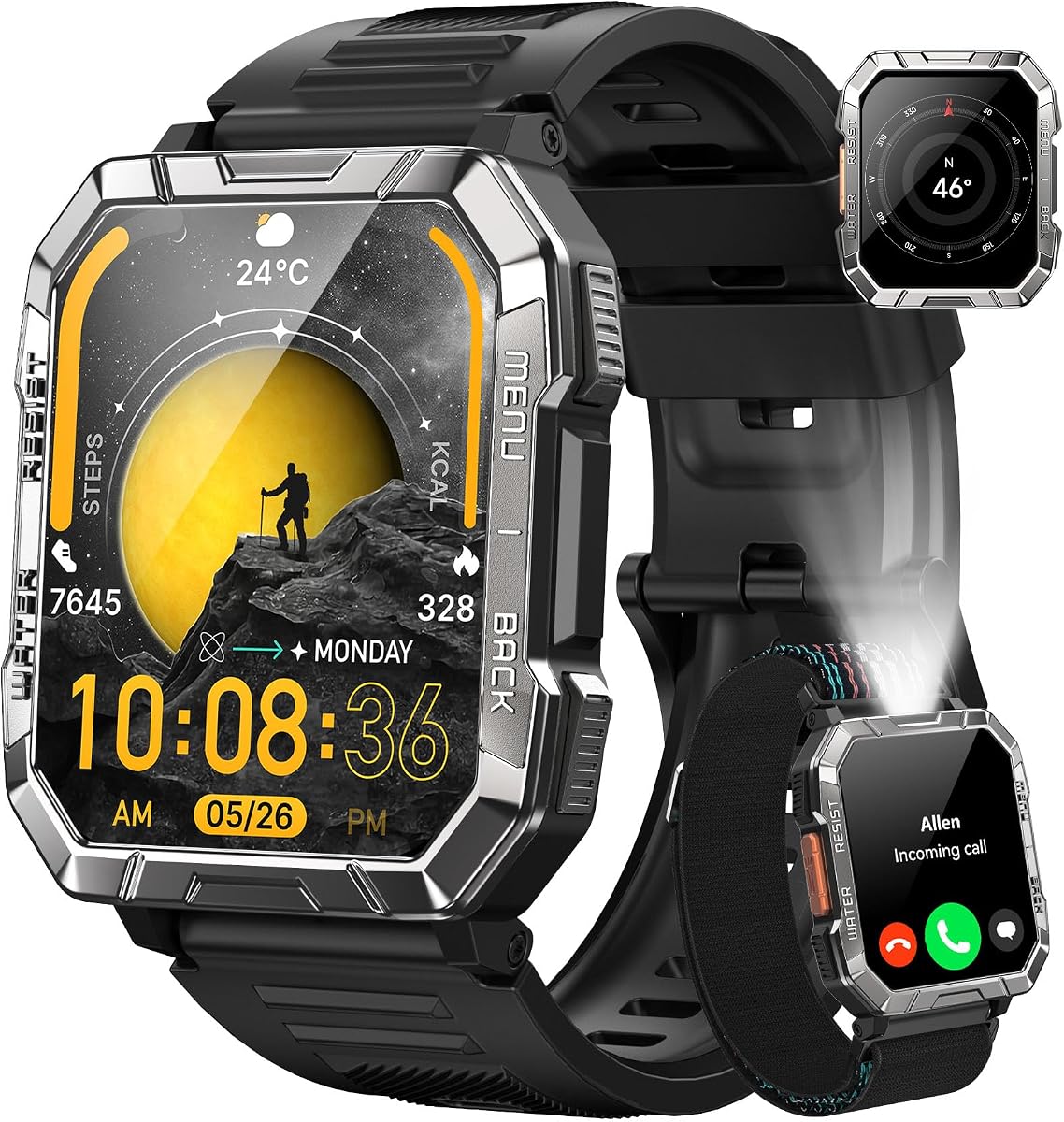
Military Smart Watch for Men with 100-Day Standby/Flashlight/Compass
5.0Editor score
120 sports modes
30-day daily battery
Built-in compass and flashlight
A smartwatch for rock climbing should do more than count steps. It should track demanding sessions, remain readable outdoors, preserve battery life, and provide dependable navigation without distracting you from the wall or the crack above your head. Rugged construction, weather resistance, route data, and recovery insights all matter.
This guide compares 10 smartwatches selected for different climbing priorities, from inexpensive all-round fitness trackers to premium multisport models with advanced navigation and satellite communication. We evaluated the supplied specifications for location tracking, activity profiles, battery life, display quality, health sensors, connectivity, and outdoor-oriented features.
Each review explains where a watch fits best, along with its meaningful trade-offs. The recommendations range from budget trackers with climbing modes to rugged Garmin models built for remote routes. Product availability and prices change, so confirm the current specifications, connectivity requirements, and fit before purchasing.
5.0Editor score

4.6Editor score

4.1Editor score
As an Amazon Associate we earn from qualifying purchases.
The table below compares all 10 smartwatches by their most useful climbing-related characteristics, including location tracking, ruggedness, battery endurance, display size, and available activity profiles.





This military-style smartwatch combines an unusually long battery specification with a large touchscreen, 120 sports modes, and a companion app, earning a 5.0 rating in the supplied data. Its climbing mode and outdoor tools make it a credible choice for gym sessions, bouldering, hiking approaches, and multi-day trips where charging access may be limited.
We may earn a commission when you buy through this link, at no additional cost to you.
The most persuasive feature is endurance: the listed battery figures reach 30 days of daily use and 100 days of standby. A 2.01-inch full-touch TFT display should make timer, distance, heart rate, and map-related information easy to inspect, while the flashlight and compass add practical value during approaches or emergencies. Two adjustable straps—one silicone and one nylon—also allow climbers with sensitive skin to choose a lighter option.
Its limitations are important. Route tracking relies on GPS through the phone and the GloryFitPro app rather than independent satellite positioning. The IP68 rating is for dust and everyday water exposure, but the specifications expressly exclude hot water, swimming, and diving. Health readings are estimates rather than medical measurements, so serious climbers should use them for general trend awareness rather than training decisions based on a single reading.
This is the best budget smartwatch for rock climbing for anyone who values long battery life, a big screen, and outdoor utilities over advanced navigation. It also works for climbers who primarily train indoors and use their phone at the base. For remote crag trips without phone reception, however, a model with standalone GPS would be a more dependable choice.
The 30-day daily-use claim gives climbers room between charges, even with frequent workout tracking. Standby endurance is particularly useful during travel, camping, and multi-day climbing objectives where a compact charging setup matters.
The dedicated LED flashlight and magnetically resistant compass extend the watch beyond basic fitness tracking. Neither replaces a proper headlamp or navigational instrument, but both can be useful supplements during approaches and early starts.
We may earn a commission when you buy through this link, at no additional cost to you.
The Garmin vívoactive 5 in ivory is a polished health and fitness smartwatch with a 4.3 rating in the supplied information. It is less overtly expedition-focused than a rugged outdoor watch, but its recovery metrics, sleep coaching, wrist heart-rate tracking, and 30-plus indoor and GPS sports apps make it a useful companion for climbers balancing hard sessions with rest.
We may earn a commission when you buy through this link, at no additional cost to you.
Body Battery monitoring gives climbers a way to interpret energy alongside sleep, stress, naps, and recent workouts. A sleep score, personalized sleep coaching, HRV status, and a morning report can help identify fatigue before a demanding outdoor day. The AMOLED display remains bright and colorful, while an 11-day smartwatch battery is sufficient for several climbing sessions between charges. Offline music and wireless headphone support are welcome after a long approach.
The compromise is specialization. Although the vívoactive 5 tracks many activities, the supplied specifications do not identify a dedicated climbing profile, advanced topographic mapping, a barometric altimeter, or a built-in flashlight. Its case and general positioning also lean more toward everyday fitness than harsh crag hardware. Garmin characterizes its health figures as close estimates rather than medical results.
Choose the ivory vívoactive 5 if recovery, sleep, and training-load awareness matter more to you than maximum outdoor toughness. It suits indoor climbers, coached training, and climbers who want one watch for travel, workouts, and daily life. Remote climbers should instead prioritize a model with specialized navigation, expedition battery life, or independent GPS.
Workout benefit and recovery-time estimates can help indicate how demanding a session has been. For climbers, that context is useful because repeated hard sessions can accumulate fatigue faster than a simple workout log reveals.
The 42mm case is less bulky than many expedition watches, and the 11-day battery provides ample time between charges. That makes it convenient for climbers who want continuous daily wear without removing the watch before sleep.
We may earn a commission when you buy through this link, at no additional cost to you.
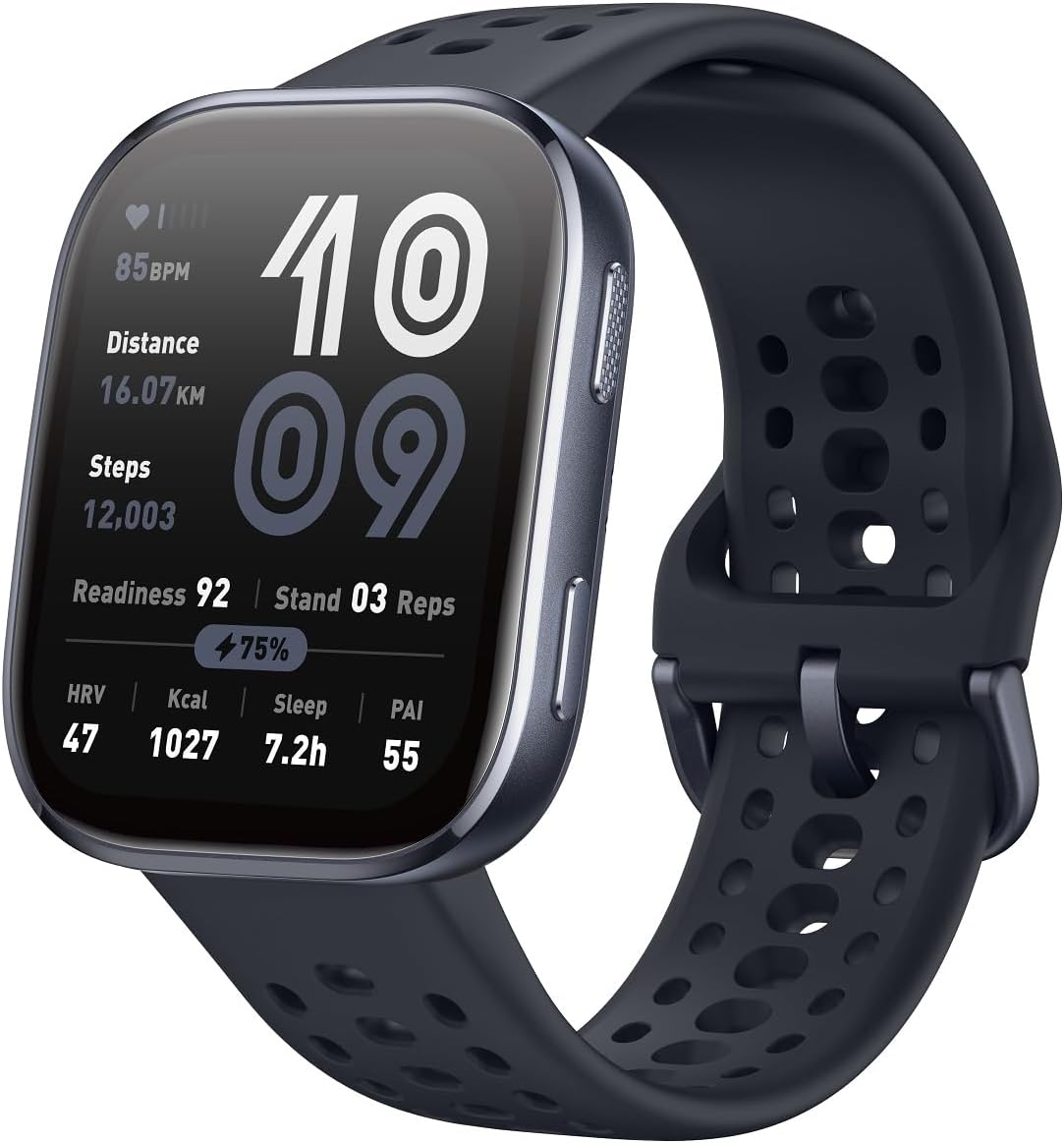
The Amazfit Bip 6 combines a lightweight aluminum body, a 1.97-inch AMOLED display, standalone GPS, navigation, and an advertised battery life of up to 14 days. Its 4.2 rating reflects a strong all-round feature set, although the supplied specifications do not identify a climbing-specific activity mode.
We may earn a commission when you buy through this link, at no additional cost to you.
Its navigation is the most important feature for climbing approaches. The watch supports five satellite systems, offers free downloadable maps, and provides turn-by-turn directions. Climbers can therefore check a route to the crag without displaying a phone screen for the entire walk. More than 140 workout modes, personalized AI coaching, heart-rate monitoring, sleep data, blood-oxygen tracking, and stress monitoring make it useful both outside and between sessions.
The main caution is water resistance. The stated 50-meter rating is suitable for general sporting use but should not be confused with the IP68 designation found on some military-style watches. There is also no listed titanium case, sapphire lens, barometric altimeter, or integrated flashlight, so it is not the strongest option for technical mountaineering or remote navigation. Health readings should also be treated as fitness estimates.
The Bip 6 is a strong choice for climbers who want a lightweight navigation watch with long battery life and broad fitness tracking. It works particularly well for route approaches, local crag trips, and users who dislike the bulk of a 50mm expedition watch. If durability and altitude instrumentation are priorities, a rugged Garmin model offers a more specialized feature set.
Standalone GPS and downloadable maps reduce the need to keep a phone visible on the approach. Turn-by-turn guidance also makes the watch useful for reaching less familiar crags and returning safely after poor light.
The listed 14-day battery life supports continuous wear and regular workouts without nightly charging. It is especially convenient for climbing trips where carrying a dedicated charging cable would add unnecessary bulk.
We may earn a commission when you buy through this link, at no additional cost to you.
The Garmin Forerunner 165 is a lightweight running smartwatch with a 4.6 rating in the supplied data. While it is not marketed as a climbing watch, its built-in GPS, adaptive workout suggestions, recovery guidance, incident detection, and 43mm case make it useful for climbers who train through running, cycling, and conditioning.
We may earn a commission when you buy through this link, at no additional cost to you.
Personalized daily suggested workouts adapt to performance and recovery, while Garmin Coach and race-adaptive plans can structure preparation. More than 25 built-in activity profiles cover running, cycling, HIIT, and strength. The morning report combines sleep, recovery, training outlook, weather, and HRV status, giving climbers a convenient way to decide whether a session should be ambitious or restorative.
Safety tools add value outdoors. Incident Detection and Assistance can send a message containing a live location to emergency contacts during selected activities when the paired phone has network coverage. The AMOLED touchscreen is paired with traditional buttons, which can be easier to operate with chalky or sweaty fingers, and the 19-hour GPS specification is adequate for long approaches and training days.
This Forerunner works best for performance-focused climbers who want structured training and recovery information in a relatively compact watch. It is less suitable as a primary crag navigator because the supplied features do not mention topographic maps, a barometric altimeter, a compass, or a flashlight. Choose it for training analysis, then pair it with a phone map when navigating unfamiliar terrain.
Daily suggestions and race-adaptive plans can organize running and cross-training around a goal. Climbers can use them alongside strength sessions to balance technical practice, aerobic development, and recovery.
Incident Detection and Assistance can improve emergency communication during compatible outdoor activities. It still depends on a paired smartphone and network coverage, so it should complement rather than replace a dedicated safety plan.
We may earn a commission when you buy through this link, at no additional cost to you.
This 1.96-inch smartwatch receives a 4.8 rating in the supplied data and stands out because rock climbing appears directly in its list of 113-plus sports modes. That makes it a straightforward choice for gym climbers who want the session categorized correctly without investing in a specialist multisport watch.
We may earn a commission when you buy through this link, at no additional cost to you.
The large HD color screen should display timers, heart rate, steps, and workout information clearly, while more than 220 cloud-based watch faces add personalization. Bluetooth calling allows answers and calls from the wrist, and notifications for popular messaging applications keep the phone stowed during approaches or rest periods. Health tracking covers real-time heart rate and sleep stages, which can help establish routines before intensive training blocks.
Its IP68 rating covers everyday sweat and water exposure, and the listed active battery reaches seven days. However, the supplied description does not identify standalone GPS, downloadable maps, a barometric altimeter, or a compass. Climbers should therefore treat it as a workout and communication device rather than a dependable navigation instrument. The title's misspelling and the broad positioning also offer less specialist confidence than the established outdoor models in this list.
Choose this watch if you climb indoors, want a recognizable climbing mode, and prefer a large screen with calling and notifications at an accessible tier. It also works for outdoor fitness sessions when your phone is nearby and handles navigation. For remote approaches, multi-day objectives, or routes beyond phone coverage, choose a watch with independent GPS and stronger outdoor hardware.
A named rock-climbing profile makes workout organization more convenient. It is particularly useful for gym sessions, structured bouldering circuits, and repeatable training sessions that climbers want to review consistently.
Bluetooth calling and message alerts reduce the need to remove a phone from a pack or chalk bag. The watch remains a phone-dependent device, so reception and compatible smartphone support still matter.
We may earn a commission when you buy through this link, at no additional cost to you.
The Garmin fēnix 9 Pro is the most expedition-focused model in this roundup, combining a titanium case, sapphire lens, built-in flashlight, multisport GPS, and optional satellite communication. Its 4.1 rating is accompanied by a premium feature set that goes beyond basic climbing metrics toward remote-route safety and extended adventure use.
We may earn a commission when you buy through this link, at no additional cost to you.
The watch supports more than 100 activity profiles and enhanced stamina tools, including stamina curves and zones. These metrics may help climbers understand how much capacity remains during a long approach or demanding multipitch day. LTE connectivity permits calls, messaging, and LiveTrack sharing without carrying a phone. The 1.5-inch AMOLED display and integrated flashlight improve visibility, while the titanium case is designed to balance durability and weight.
The defining advantage is inReach satellite connectivity. It can transmit messages, share location check-ins, and trigger an interactive SOS response when configured with an active plan. There are important limits: coverage varies, satellite connection may be unavailable in some situations, and local regulations can restrict satellite communication devices. A subscription and compatible service are therefore part of the ownership equation.
This is the best premium smartwatch for rock climbing when you tackle remote crags, alpine routes, or objectives where communication and navigation reliability justify the large footprint. The 51mm case may feel cumbersome beneath a cuff and is not ideal for minimalist everyday wear. For most local crag days, a smaller rugged Garmin provides a more balanced experience.
inReach can send messages, location check-ins, and interactive SOS requests when cellular service is absent. It is a major advantage for remote objectives, provided the device has the required plan and legally permitted coverage.
Enhanced stamina metrics visualize how far, how fast, and how long a climber may sustain activity based on fitness and training history. They are most useful for long approaches and full days of movement rather than short bouldering sessions.
We may earn a commission when you buy through this link, at no additional cost to you.
The Garmin Instinct 3 AMOLED is an especially well-balanced outdoor watch, earning a 4.6 rating in the supplied information. Its rugged 45mm case, multi-band GPS, 18-day smartwatch battery, barometric altimeter, compass, and flashlight cover the most important needs of climbers moving between the gym, trailhead, and crag.
We may earn a commission when you buy through this link, at no additional cost to you.
The fiber-reinforced polymer case and metal-reinforced bezel are designed for demanding conditions without the bulk of a 51mm expedition watch. Multi-band GPS with SatIQ is particularly valuable in canyons, wooded valleys, and steep terrain where reflections or tree cover can weaken conventional positioning. A 3-axis compass and barometric altimeter add orientation and elevation context, while the AMOLED display provides bright outdoor readability.
The integrated flashlight offers variable intensities and strobe modes, making it useful for early approaches, belay preparation, and checking equipment in darkness. Health features include wrist heart rate, advanced sleep monitoring, and Pulse Ox, with the usual reminder that these readings are estimates and may not be available in every country. The 18-day smartwatch battery is excellent for continuous wear and multi-day climbing trips.
The Instinct 3 AMOLED is our top overall smartwatch for rock climbing because it balances navigation, durability, endurance, display quality, and wearable size better than the alternatives here. It lacks the fēnix 9 Pro's satellite communication and does not list a dedicated climbing profile, but those omissions do not undermine its role as a dependable daily crag watch.
Multi-band GPS with SatIQ can improve accuracy and optimize battery use across challenging environments. For cliff approaches, narrow canyons, and mixed tree-and-rock terrain, dependable positioning is more valuable than a specialized activity label.
The 45mm case and reinforced bezel offer outdoor durability while remaining more wearable than the 51mm fēnix. It is a strong choice for climbers who need one watch for travel, training, and multi-day cragging.
We may earn a commission when you buy through this link, at no additional cost to you.
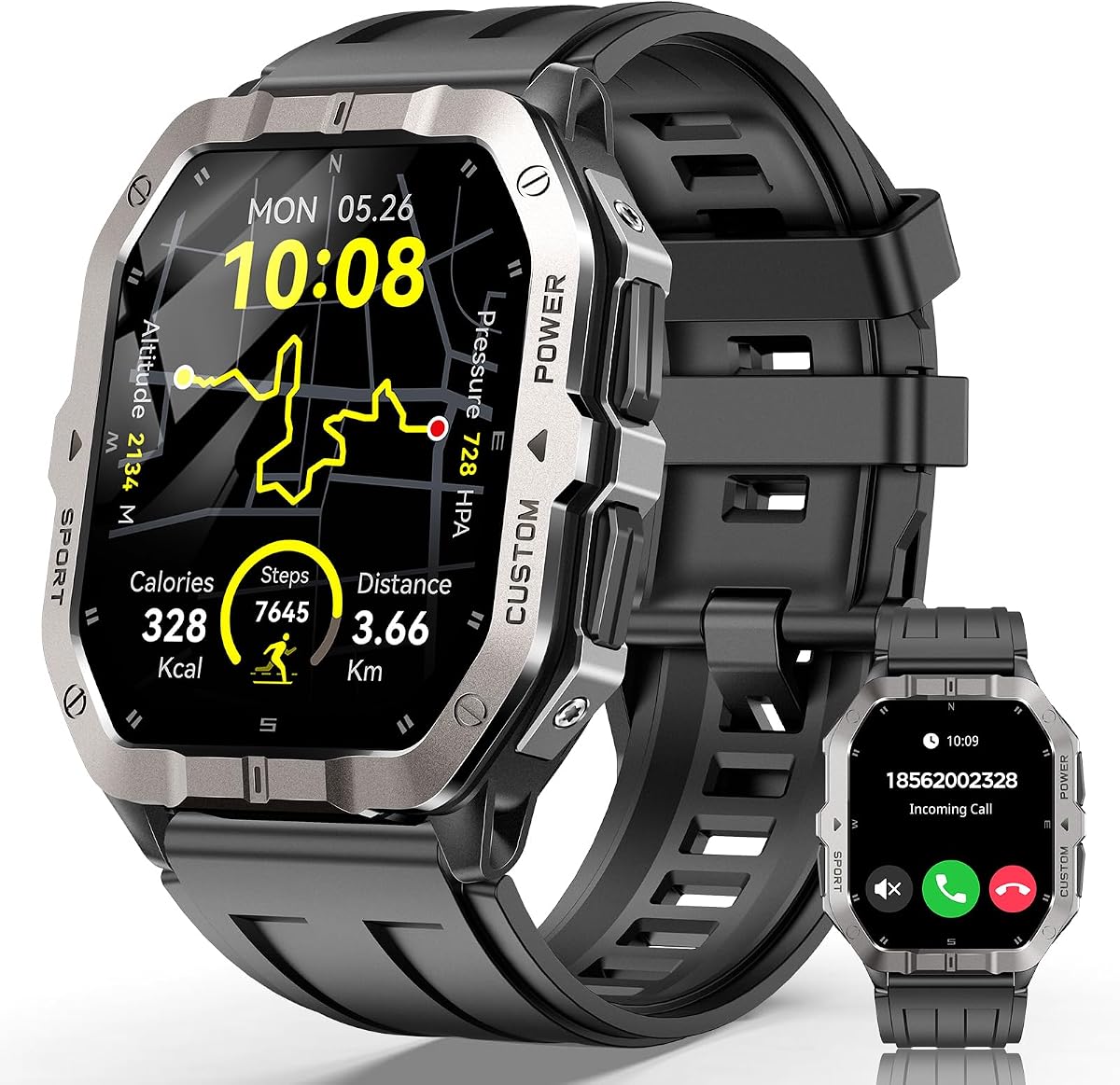
This military-style smartwatch pairs a 2.02-inch full-touch display with built-in GPS, a compass, an altimeter, and a barometer. Its 5.0 rating reflects an attractive combination of standalone outdoor tracking, extensive sport modes, and rugged-material claims for a value-oriented design.
We may earn a commission when you buy through this link, at no additional cost to you.
Built-in GPS records pace, distance, and routes without requiring a phone, a meaningful distinction for climbers exploring crags beyond cellular coverage. The compass, altimeter, and barometer provide additional orientation and environmental context. A large display with enlarged fonts and strong contrast should remain useful while climbing or checking data at the base, and tempered glass adds everyday scratch protection.
The stated military-grade testing includes resistance to heat up to 187.96°F and cold down to -82.78°F, along with waterproof, low-pressure, and dust-proof claims. More than 170 sport modes support broad activity tracking, while Bluetooth calling and notifications handle communication. The listed active battery reaches 12-plus days with calling enabled. As with similar budget devices, the specifications do not identify a dedicated climbing profile or advanced topographic navigation.
Choose this watch when independent GPS is essential but a premium outdoor smartwatch is outside your preferred spending range. It is a good match for local crags, hiking approaches, camping, and users who want a large screen and compass. The trade-off is a bulkier military aesthetic and fewer advanced training tools than the Garmin alternatives, so it is less compelling for detailed performance analysis.
Standalone route tracking continues without a paired phone, helping climbers retrace approaches and record distance beyond cellular coverage. The companion app can then organize the recorded activity after the session.
The compass, altimeter, and barometer complement GPS by providing directional and environmental readings. Together they make the watch more useful when moving through unfamiliar or steep terrain.
We may earn a commission when you buy through this link, at no additional cost to you.
The black Garmin vívoactive 5 offers the same core health and fitness platform as the ivory version but in a more discreet color for climbers who prefer a watch that works with everyday clothing. Its 4.3 rating and extensive recovery features make it a credible training and lifestyle choice.
We may earn a commission when you buy through this link, at no additional cost to you.
Body Battery, sleep coaching, HRV status, automatic nap detection, and the morning report help climbers monitor fatigue and readiness. The watch includes more than 30 indoor and GPS sports apps, while training benefit and recovery time show how a workout affected the body. Its AMOLED display is easy to read, the 42mm case remains relatively compact, and the 11-day battery supports regular overnight wear.
The trade-off is that it lacks the overtly rugged feature set associated with outdoor-focused watches. There is no listed flashlight, barometric altimeter, compass, sapphire lens, or satellite communication. A dedicated climbing activity is also not identified in the supplied features. The vívoactive 5 is consequently better as a recovery and training watch than as a primary expedition instrument.
Pick the black model if you climb at a local gym, train on a schedule, and want a watch that can move seamlessly between the office and the crag. It also suits climbers who care about sleep and stress trends more than technical navigation. For remote terrain or harsh outdoor use, the Instinct 3 AMOLED or fēnix 9 Pro is the more capable choice.
The black finish and 42mm case are less conspicuous than bright tactical designs. This makes the watch easy to keep on throughout the day, which can improve the consistency of sleep, stress, and activity insights.
Workout benefit and recovery time translate sessions into broader fitness context. They offer a simple way for climbers to adjust intensity while avoiding the larger case and specialized controls of expedition watches.
We may earn a commission when you buy through this link, at no additional cost to you.
The Blackview military smartwatch combines a 960mAh battery, a flashlight, compass, 120 sports modes, and health tracking in a straightforward package. Its 5.0 rating makes it one of the strongest budget choices for climbers who want long operating intervals and useful outdoor hardware.
We may earn a commission when you buy through this link, at no additional cost to you.
The listed battery figures exceed 100 days of standby and 30 days of daily use, reducing the need to carry charging cables for climbing trips. The 1.45-inch TFT display uses tempered glass and PET film for scratch and interference resistance. A high-brightness flashlight activates from a single button, while the compass is described as precise and useful during nighttime hiking, camping, mountaineering, and military training.
Route recording depends on GPS through the phone and the Da Fit app, so it cannot provide the same independence as a watch with built-in GPS. The IP68 rating supports everyday dust and water protection, but swimming, diving, saunas, and hot tubs are expressly excluded. Although health monitoring includes heart rate, blood oxygen, stress, and sleep stages, the readings are for reference and not medical diagnosis.
This is a strong value pick for gym climbers, casual outdoor sessions, and travelers who value battery life above all else. The smaller display is less expansive than the 2.01-inch and 2.02-inch alternatives, but it may appeal to users who prefer a less bulky watch. Choose a standalone-GPS model when navigating remote crags is the priority.
The 960mAh capacity and listed daily-use endurance are particularly attractive for climbing weekends, camping, and travel. Climbers can maintain workout and health tracking without planning around a frequent charging routine.
The one-button LED light and compass cover two common outdoor needs at dusk, on early approaches, or while organizing gear. They should still be treated as backup tools alongside a headlamp and navigational knowledge.
We may earn a commission when you buy through this link, at no additional cost to you.
The best smartwatch for rock climbing balances navigation, endurance, durability, fit, and useful workout feedback. Consider where you climb, how long you stay away from power, and whether the watch must function without a phone.
GPS is essential for recording approaches, locating crags, and retracing routes, but the implementation matters. The Garmin Instinct 3 AMOLED uses multi-band GPS with SatIQ, while the fēnix 9 Pro provides a premium multisport platform. The military watch with built-in GPS also records routes independently. By contrast, the Blackview watches use their phone's GPS through their companion applications, which works well near the car but becomes less useful beyond reliable reception.
Choose standalone GPS for remote crags, wilderness approaches, and multi-day objectives. Phone-connected tracking is adequate for indoor climbing and established local trails. Multi-band positioning can be advantageous in steep canyons, forests, and urban areas with tall structures.
Climbing days often begin before dawn and may include long drives, approaches, and no convenient place to recharge. The Blackview models list up to 30 days of daily use and more than 100 days of standby. The Amazfit Bip 6 claims up to 14 days, the Garmin Instinct 3 AMOLED lists 18 days in smartwatch mode, and the vívoactive 5 models provide up to 11 days.
Prioritize battery life when the watch must support several days of travel and climbing. For shorter local sessions, GPS endurance and screen use may matter more. Always distinguish smartwatch-mode battery life from continuous GPS performance, which is generally shorter.
Watch cases and bezels should tolerate contact with rock, grit, chalk, and accidental knocks. The fēnix 9 Pro uses titanium with a sapphire lens, the Instinct 3 AMOLED uses a fiber-reinforced polymer case with a metal-reinforced bezel, and the military-style options emphasize aluminum alloy, composite materials, or zinc alloy components. Display size and case thickness also influence snag risk and sleeve clearance.
Choose a robust case when climbing on rough terrain or carrying the watch through multipitch approaches. Lightweight everyday models remain suitable for gym sessions. Sapphire or hardened display materials offer added scratch resistance but may not eliminate the need for careful handling.
Sweat, rain, chalk wash, and splashes are normal in climbing. Several watches carry IP68 protection, which is useful for ordinary outdoor exposure but does not mean every watch is suitable for swimming, diving, hot tubs, or saunas. The Blackview models specifically warn against hot water, swimming, and diving. The Amazfit Bip 6 lists 50-meter water resistance, while the vívoactive 5 and Forerunner 165 include swimming among their broader sports options.
Check the exact restrictions for the model you buy. If you routinely swim, shower with the watch, or visit wet climbing areas, favor a model whose listed activities and water rating match those habits. Rinse sweat and dirt away and dry the watch after prolonged exposure.
A compass, barometric altimeter, topographic maps, and turn-by-turn directions can each fill a different navigation need. The Instinct 3 AMOLED includes a compass and altimeter. The Amazfit Bip 6 offers downloadable maps and turn-by-turn directions. The military-style watches include compasses, while some also add altimeters and barometers. The fēnix 9 Pro supports expedition-oriented navigation and satellite connectivity.
Match navigation tools to the terrain. A phone-connected map is convenient for known approaches, but remote crags justify a compass, independent GPS, downloadable maps, or satellite communication. Check map availability and regional coverage before an important trip.
A large screen can show route data, timers, heart rate, and navigation prompts more clearly, but oversized cases may catch on rock, restrict wrist movement, or interfere with chalk bags. Screen figures in this guide range from 1.45 inches to 2.02 inches, with AMOLED and TFT options. Physical controls, touch responsiveness, and readable text matter when fingers are dusty, chalked, or wet.
Try wearing the watch with climbing shoes and your normal sleeve to assess bulk. Choose a size that leaves enough room to move your wrist comfortably. A bright display is valuable outdoors, while touch controls should remain responsive in the conditions you expect.
Climbers can use heart rate, HRV, sleep, stress, and recovery data to understand training demands. The Garmin models provide the most detailed recovery ecosystem in this group, including Body Battery, sleep coaching, morning reports, workout benefit, and recovery time. Amazfit and military-style watches offer real-time heart rate, sleep, blood-oxygen, and stress tracking. Garmin notes that many metrics are close estimates rather than medical measurements.
Choose advanced health features if you want to adjust session intensity based on fatigue. Keep in mind that consumer wrist sensors are not medical devices, and environmental factors can influence readings. Trends over multiple days are generally more useful than isolated values.
Bluetooth calls, message notifications, music control, and phone-free connectivity are useful during approaches. The fēnix 9 Pro goes further with LTE and optional inReach satellite messaging, including interactive SOS functionality when an active plan and coverage are available. The Forerunner 165 offers incident detection and Assistance, but it requires a paired smartphone with network coverage.
For remote climbing, verify service availability, coverage, legal restrictions, and subscription requirements before relying on emergency connectivity. Bring a dedicated communication and navigation plan even when the watch has advanced features. Local users can often get adequate value from calls and notifications alone.
Begin by fully charging the watch and installing the correct companion app. Connect it to your phone, configure the user profile, synchronize date and time, and review permissions for location, Bluetooth, notifications, and health data. Check that GPS, compass, altitude, and flashlight functions work before leaving the trailhead. Create a short baseline workout, confirm that the appropriate climbing, hiking, or strength profile appears, and learn how to pause or end a recording without fumbling with touch controls.
Before a climbing day, clear unnecessary notifications, download any required maps, verify satellite or cellular service where applicable, and set an appropriate battery and screen mode. Test the route from the parking area and keep the phone accessible when the watch depends on it. During the ascent, use the watch for elapsed time, heart rate, navigation prompts, and safety functions rather than constantly opening other applications. Take readings while stationary when accuracy matters, especially near cliffs where multipath errors can affect GPS positions.
After the session, rinse sweat, dust, and chalk from the watch with fresh water, avoiding powerful jets at the ports, and dry it fully with a soft cloth. Keep the watch within its stated temperature and water-resistance limits, and do not use it in hot tubs, saunas, or diving if the manufacturer prohibits those activities. Inspect the strap, bezel, buttons, and sensor area for damage. Review route, recovery, and health trends periodically, and update the app and firmware when recommended so navigation and device behavior remain dependable.
Built-in GPS is highly useful for remote crags, long approaches, and routes where you may lose phone reception. It allows route recording, location sharing, and navigation without draining or relying on the phone. For indoor climbing or established local trails, phone-connected GPS can be sufficient. The Instinct 3 AMOLED, fēnix 9 Pro, and built-in-GPS military watch are stronger choices for independent positioning.
It depends on your priorities. A rugged watch generally offers stronger case materials, navigation sensors, longer outdoor endurance, and a more practical display. A fitness smartwatch may be lighter and better for sleep, stress, and recovery coaching. Climbers who lead, travel to remote crags, or train over multiple days generally benefit more from the added outdoor hardware.
Yes, as long as the watch records heart rate, elapsed time, active time, and calories in a way that fits your training needs. The budget watch with a dedicated rock-climbing mode is particularly convenient for gym users. Models with strength, HIIT, and general activity profiles can also work, although they may not capture vertical movement or climbing-specific effort in detail.
Look for enough endurance to cover a full climbing day plus several days of travel without emergency charging. The listed battery figures range from seven active days on the budget calling watch to 30 days on the Blackview models. GPS-heavy use consumes more power than smartwatch mode, so compare the relevant operating mode rather than relying on standby claims.
Consumer smartwatch readings should generally be treated as fitness estimates rather than medical measurements. The Garmin and Blackview descriptions specifically caution against using the data for diagnosis or professional medical comparison. A clinician or qualified medical device is more appropriate when a decision depends on an exact heart-rate, blood-oxygen, or stress reading.
A smaller case is usually more comfortable for long bouldering sessions and easier to wear beneath a sleeve or with a chalk bag. A larger display can improve timer, map, and workout-data visibility. The Instinct 3 AMOLED offers a 45mm middle ground, while the 51mm fēnix 9 Pro is better for users who prioritize expedition features over minimal bulk.
Not necessarily. A water-resistance rating protects against specified everyday exposures, but it does not automatically make a watch safe for every aquatic activity. Both Blackview military models explicitly exclude swimming, diving, hot tubs, and saunas. Check the exact restrictions, particularly if your climbing routine includes swimming or frequent water exposure.
It is not essential for most local crags, but it can be valuable for remote objectives or routes with unreliable cellular coverage. The fēnix 9 Pro supports inReach satellite messaging and SOS functions when an active plan is available. Coverage limitations and local regulations apply, so satellite communication should be part of a broader emergency plan rather than the only safety measure.
The Garmin Instinct 3 AMOLED is the strongest all-round recommendation because it combines a rugged 45mm case, bright AMOLED display, 18-day battery, flashlight, compass, altimeter, and advanced multi-band GPS. The fēnix 9 Pro takes the lead for remote expeditions, adding titanium construction and optional satellite communication. For budget-conscious climbers, the Blackview 100-Day Standby watch offers exceptional endurance, a large screen, and useful outdoor tools.
Prioritize the features your actual climbing requires. Gym climbers may need little more than a climbing activity mode, heart rate, and long battery life. Outdoor climbers should give more attention to independent GPS, maps, a compass, altimeter, water restrictions, and case size. Remote routes may justify satellite messaging and emergency features, while frequent travelers should account for charging access and wrist comfort.
Before buying, verify the current specifications, smartphone compatibility, included straps, subscription requirements, and current prices. Availability can also change, and manufacturer updates may alter battery or feature details. Confirm that the selected watch fits your wrist and matches the conditions in which you climb rather than choosing solely by the number of advertised sports modes.