
58 Pack Yellow Sticky Gnat Traps
4.4Editor score
58 assorted decorative traps
Dual-sided full-face adhesive
Stake and hanging wire included
Waterproof and UV resistant
Fungus gnat traps for plants compared by pack size, adhesive design, placement options, weather resistance, ease of setup, and indoor or outdoor suitability.
Fungus gnat traps offer a simple, physical way to monitor and reduce fungus gnats, fruit flies, whiteflies, and other small flying pests around plants. The most useful options combine an attractive yellow or discreet green surface, reliable adhesive, easy soil-level placement, and enough traps to cover multiple pots, windowsills, greenhouses, or garden beds.
We compared the ten products in this guide on trap format, quantity, adhesive coverage, intended pests, installation method, weather resistance, decor, and suitability for indoor or outdoor plant care. The list includes both low-profile sticky cards and plug-in flying-insect traps, giving readers practical options for different levels of clutter, convenience, and targeted pest control.
Each review explains the strongest features, realistic limitations, and best placement for that particular product. Ratings and product details reflect the supplied information, while availability and pricing can change, so readers should confirm the latest listing details before purchasing.
4.4Editor score

4.5Editor score

4.5Editor score
The comparison covers trap quantity, setup method, adhesive coverage, and the environments each product is designed to serve. Sticky cards are best for distributed plant monitoring, while the two Zevo devices offer a more enclosed and continuously powered alternative.
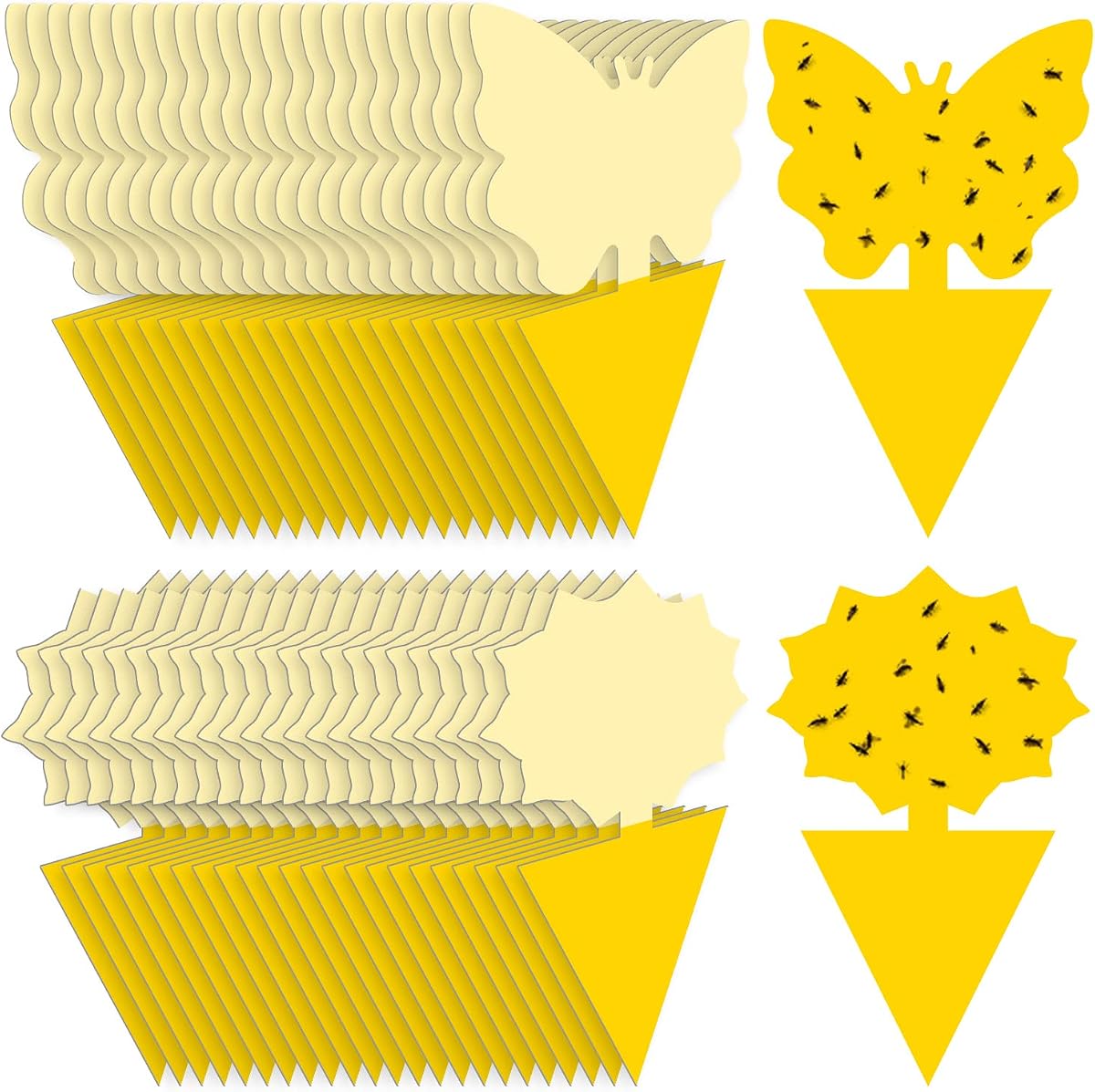



This 58-trap set offers one of the most versatile ways to deal with fungus gnats and other small flying plant pests. Its 4.4 rating reflects a broadly useful package with a large quantity, two decorative shapes, adhesive on both sides, and two deployment methods. The traps are designed for potted plants, garden beds, hanging baskets, window herb gardens, and seedling trays.
We may earn a commission when you buy through this link, at no additional cost to you.
The strongest feature is the combination of 29 sunflower-shaped and 29 butterfly-shaped cards with a pointed plastic stake and included wire. The rigid stake keeps a soil-inserted card upright, while the wire creates an option for baskets or trays where there is no soil. Peeling away the protective films exposes a full adhesive face on both sides, allowing the trap to catch insects approaching from either direction.
The adhesive is described as strong enough to hold through outdoor rain and regular watering, and the card is UV resistant for direct sunlight. The product also targets aphids, fruit flies, thrips, and whiteflies in addition to fungus gnats. That broad target list makes it more useful than a narrowly positioned trap, especially in a mixed plant collection.
The main limitation is that exposed sticky cards still need regular inspection and replacement. They are also more visible in a minimalist room than a concealed electronic trap. Even so, the quantity, two placement options, simple setup, and decorative shapes make this a strong pick for readers who want broad plant coverage without maintaining a powered device.
The included stake and wire let one trap work in soil or above it. Use the stake for pots and beds, and the wire near hanging baskets, bare-root trays, and windowsill herb gardens where a soil insertion is not practical.
Because the cards remain visible, they can serve as an early warning system. Check them regularly to see whether insects are being caught and replace a card when its surface becomes too crowded.
We may earn a commission when you buy through this link, at no additional cost to you.
This 48-pack of yellow sticky traps focuses on uncomplicated pest monitoring and capture. The product carries a 4.4 rating and is marketed for fungus gnats, fruit flies, and other flying insects near indoor and outdoor plants. Its chemical-free, odorless adhesive approach is suitable for houseplants, herbs, vegetables, and areas where sprays would be inconvenient.
We may earn a commission when you buy through this link, at no additional cost to you.
Setup requires only peeling and sticking the cards near a plant or an area with a pest problem. Two-sided adhesive expands the usable catching area, while the bright yellow color and sunflower or butterfly shape help the cards blend with many plant displays. The product is particularly attractive for readers who want a quick solution without batteries, liquid bait, or recurring power use.
The adhesive is described as extra-strong and long-lasting, allowing a trap to remain useful for weeks when it is not overwhelmed. That makes routine replacement less demanding than with a trap that captures only a small number of insects. As with any exposed sticky card, though, it should be checked in areas where children or pets might brush against the adhesive.
This set is best for readers who value quick installation and abundant coverage over elaborate mounting options. It can be placed beside pots, along a windowsill, near herbs, or in a garden, but it does not offer the explicit stake-and-wire versatility of the first product. Its straightforward design nevertheless makes it a practical pick for routine plant pest monitoring.
The traps rely on a physical adhesive surface instead of insecticide sprays or scented attractants. This makes them convenient around houseplants, edible plants, and indoor living areas where a low-odor treatment is preferable.
A large quantity allows coverage across several pots and plant shelves. Peel one card at a time, position it near the affected plant, and check it as part of a regular plant-care routine.
We may earn a commission when you buy through this link, at no additional cost to you.
With 100 traps, this is the largest package in the guide and the natural choice for a greenhouse, orchard, tea garden, backyard, or a collection containing many pots. It has a 4.4 rating and is designed for fungus gnats, fruit flies, and other small flying plant pests. The emphasis is on broad coverage rather than decorative variety.
We may earn a commission when you buy through this link, at no additional cost to you.
Each card has a thickened, double-sided adhesive coating that is described as UV resistant and waterproof. Setup involves removing the protective covers from both sides and inserting the card into soil. This gives the user a large sticky surface and allows access from either direction without requiring clips, wires, or batteries.
The package is especially useful when one trap per pot or monitoring point is the preferred strategy. Its large count can also make it easier to refresh cards frequently, including in outdoor beds exposed to rain and sunlight. The same design works for greenhouse rows, patios, windowsills, and houseplants, although the most benefit comes from environments where many traps can be distributed.
For a small indoor collection, 100 cards may be more than necessary. The bright yellow color and simple card shape are also less decorative than the sunflower, butterfly, leaf, or green designs offered by other picks. Even with those qualifications, this product is a strong option for anyone who wants a large, durable monitoring network in a broad growing area.
A large pack makes it practical to place a fresh trap at every pot, bed edge, greenhouse row, or other high-activity location. The size of the surface also helps preserve usable coverage when several insects are captured at once.
The waterproof and UV-resistant construction is useful outdoors where cards may be hit by rain or direct sunlight. Maintain the cards as directed and replace any that become heavily covered or lose adhesion.
We may earn a commission when you buy through this link, at no additional cost to you.
This 40-pack is designed to balance pest coverage with a less distracting appearance. Its 4.4 rating reflects a versatile set of yellow sticky traps intended for fruit flies, fungus gnats, whiteflies, aphids, midges, and other small flying insects. The leaf-and-arrow silhouette is more understated than a basic rectangular card.
We may earn a commission when you buy through this link, at no additional cost to you.
The traps can be inserted into soil or suspended with the included wire. That flexibility makes them useful for potted plants, patio containers, windowsill herbs, greenhouses, and garden areas. Double-sided adhesive captures approaching insects from both sides, while the bright yellow color helps draw attention to the cards and makes captured pests easier to identify.
The product is described as non-toxic and odorless, with waterproof construction for variable conditions. A pointed stake keeps soil-mounted cards upright, and the wire provides a practical alternative for hanging or elevated locations. This makes the set more adaptable than models that offer only peel-and-stick placement.
Its yellow surface and exposed adhesive mean it will not completely disappear into a room, even though the shape is designed to complement plant decor. Users also need to replace cards as they fill. Even so, the balance of 40 traps, dual mounting options, and a decorative form makes this an appealing all-around option for home and garden plants.
The decorative silhouette is intended to blend into a plant display rather than resemble a purely industrial pest card. It remains practical for monitoring while looking more intentional near attractive pots and windowsills.
Push the stake into soil for a stable upright position, or use the wire to hang the trap near a basket, shelf, or tray. Choose the method that puts the sticky surface closest to the pest activity.
We may earn a commission when you buy through this link, at no additional cost to you.
This 40-pack earns the highest rating among the sticky-card options in the guide, with a 4.5 rating. It is a direct, uncomplicated answer to fungus gnat and fruit fly problems around houseplants. The traps use bright yellow surfaces and strong adhesive to catch fungus gnats, whiteflies, mosquitoes, and other small flying insects.
We may earn a commission when you buy through this link, at no additional cost to you.
A pointed lower section makes installation direct: remove the protective films and push the card into the soil around the plant. No separate tie, hook, or mounting block is required. The double-sided design and strong adhesive support long-lasting use, while UV-resistant and waterproof construction allow the cards to function indoors or outdoors.
The product emphasizes odorless, non-toxic physical trapping, which makes it suitable for homes with pets, children, herbs, and vegetables when used as directed. There is no spray, bait, or electrical component. The main strength is the balance between easy setup, durable construction, and a pack size sufficient for many plants.
The limitation is mounting flexibility: the supplied design focuses on soil insertion and does not list an included hanging wire. The cards can also be conspicuous because of their bright color. Even so, this is a balanced, highly rated option for readers who want direct plant placement, dependable adhesive, and simple maintenance.
The pointed stake enters loose or standard potting soil without tools. If the mix is dense or rocky, making a small pilot hole first can help keep the card upright and prevent bending.
The strong, weather-resistant adhesive is designed to remain effective until the card is heavily covered. Regular inspection still matters, especially during a fast infestation, because a crowded surface has less room to catch new insects.
We may earn a commission when you buy through this link, at no additional cost to you.
The Zevo Flying Insect Trap provides a powered alternative to cards stuck in soil. It has a 4.2 rating and uses blue and UV light to attract house flies, fruit flies, gnats, and other flying insects. The device operates continuously, making it appropriate for indoor areas where insects gather around plants, fruit bowls, trash bins, kitchens, bathrooms, or enclosed patios.
We may earn a commission when you buy through this link, at no additional cost to you.
Insects are caught on a disposable adhesive cartridge, where a wall-facing pad helps conceal captured bugs. A no-mess tab allows the used cartridge to be removed for disposal. The design is spray-free, zap-free, odor-free, and quiet, avoiding the noise and odor associated with some other flying-insect devices.
Its main advantage is that it works without daily surface inspection. A blinking blue light serves as a reminder to check the cartridge, and the product data recommends checking approximately every six weeks. This makes it convenient for a plant room, kitchen, or other indoor hotspot where a visible sticky card would be inconvenient.
The trade-offs are practical rather than functional. A plug-in location and nearby outlet are required, and the cartridge eventually needs replacement. Light from windows or other bright fixtures can compete with the trap's attraction. For readers who prefer a less visible, continuously operating indoor solution, this is a strong alternative to loose plant cards.
Place the trap near the source of activity, such as houseplants, fruit bowls, or waste containers. Reducing competing light around the device can help its blue and UV attraction work more effectively.
The wall-facing adhesive pad conceals most captured insects, while the removal tab helps simplify replacement. Check the cartridge periodically and swap it when catch capacity declines.
We may earn a commission when you buy through this link, at no additional cost to you.
This 64-pack has a 4.6 rating, the highest numerical rating among the ten products. It is designed for fungus gnats, fruit flies, aphids, mosquitoes, and other small flying insects around indoor and outdoor plants. The set emphasizes chemical-free, odorless, double-sided cards and straightforward soil insertion.
We may earn a commission when you buy through this link, at no additional cost to you.
The yellow color attracts a range of flying insects, while strong adhesive on both faces provides a broad catching area. Cards can be used in gardens, kitchens, greenhouses, and potted plants. This environmental range makes the set useful for readers who want a consistent monitoring method in several different parts of the home or property.
One useful detail is the recommendation to cool the cards before installation in warmer weather. This can make the adhesive easier to handle and may reduce the chance of the card sticking awkwardly during setup. The product does not require tying or complex installation because the cards are inserted directly into the soil.
Unlike some competing designs, the cards are not offered in decorative shapes, so their visual appeal depends on the plant setting. The 64-card quantity may also exceed the needs of a small collection. Still, the strong rating, broad placement options, and high-volume format make this an attractive choice for extensive monitoring.
The quantity makes it easy to distribute cards among multiple pots, greenhouse benches, kitchen plants, and garden beds. A regular inspection schedule can reveal where insect activity is concentrated.
Cooling the cards before use is a simple preparation step for hot weather. Follow the guidance to make handling more comfortable and support a cleaner installation around each plant.
We may earn a commission when you buy through this link, at no additional cost to you.
The compact Zevo is designed for readers who want continuous plant-pest protection without displaying adhesive cards around their plants. It has a 4.5 rating and uses a plug-in base with blue and UV light to attract fungus gnats, fruit flies, house flies, and other flying insects.
We may earn a commission when you buy through this link, at no additional cost to you.
Its compact proportions suit shelves, kitchens, bathrooms, mudrooms, RVs, and other tight spaces. The product information specifically recommends avoiding competing light from windows or grow lights, which is an important placement detail for light-based traps. Positioning near the source of insect activity is more useful than placing the device in a random open area.
The curved shield and Trap + Lock design keep trapped insects behind a surface the user does not touch. A mess-free tab assists with cartridge removal, and the package includes three refills. It is also described as plant-safe, with no sprays or insecticides, and is suitable around children and pets when used as directed.
This is a premium-style choice because it combines a dedicated powered base, enclosed cartridges, and a particularly tidy replacement process. It still requires a power outlet and periodic cartridge changes, and it may not perform as well in a brightly lit area. For compact spaces where a visible sticky card would be intrusive, however, it offers the most polished setup in the guide.
The compact base can sit close to a plant shelf or kitchen work area where larger fly traps may be inconvenient. Keep it away from bright competing light and position it near the likely gathering area.
Three cartridges are included, reducing the need for an immediate refill purchase. The shielded design keeps insects hidden and the removal tab streamlines the change when a cartridge reaches capacity.
We may earn a commission when you buy through this link, at no additional cost to you.
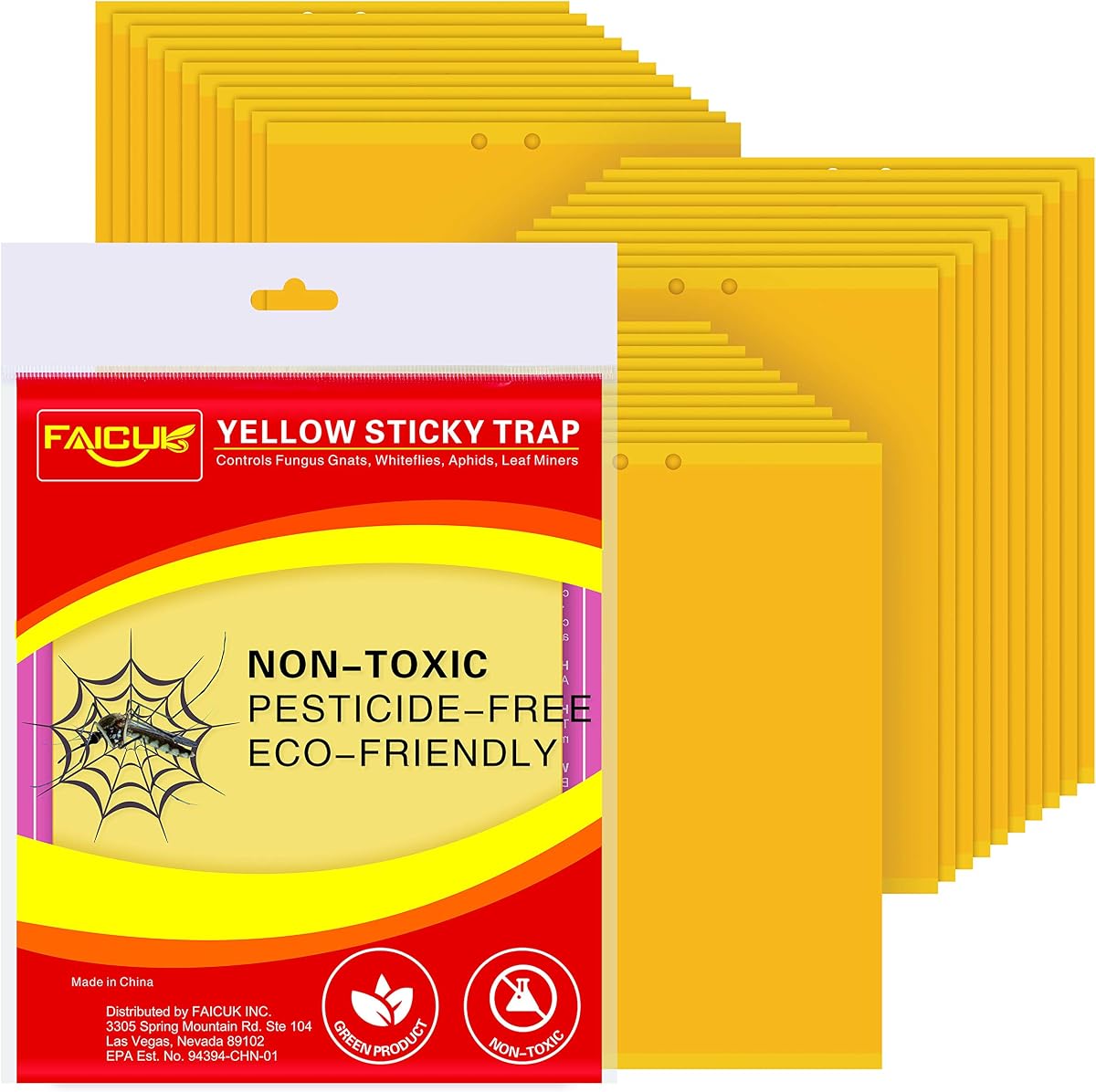
The Faicuk set takes a different approach by providing large, cuttable cards rather than pre-shaped plant stakes. Its 4.4 rating and 30-piece package make it a practical monitoring option for houseplants, gardens, and other areas where a larger catching surface or custom shape would be useful.
We may earn a commission when you buy through this link, at no additional cost to you.
Each card measures six by eight inches and can be cut to a size or shape suited to the location. The included wire ties allow a card to be secured where simply inserting it into soil is not possible. This gives users more control over coverage, particularly around dense foliage, hanging containers, or unusual planting arrangements.
The yellow dual-sided adhesive is designed for a wide range of flying plant pests, including fungus gnats, aphids, leaf miners, thrips, whiteflies, black flies, mosquitoes, and midges. The visible catches also provide useful information about pest numbers and types, allowing the traps to function as monitoring tools rather than only as passive controls.
The extra step of cutting and tying can make setup less convenient than using a trap with a built-in stake. Readers who value a standard one-piece design may prefer one of the pointed or self-adhesive options. For flexible sizing and visible pest monitoring, though, this remains a distinctive and useful choice.
Cut larger cards to cover a broad open area, or trim smaller sections for crowded shelves and compact pots. Make clean cuts around the adhesive border so the exposed surface remains even.
The caught insects remain visible, allowing owners to compare catches across rooms or plant groups. This can help identify concentrated problem areas and guide where additional traps should be placed.
We may earn a commission when you buy through this link, at no additional cost to you.
This 58-pack is the guide's most discreet decorative option, using a natural green color designed to blend into plant displays. It has a 4.4 rating and targets fungus gnats, fruit flies, whiteflies, aphids, thrips, and midges. The set is intended for houseplants, herb pots, vegetable gardens, patios, outdoor beds, and greenhouses.
We may earn a commission when you buy through this link, at no additional cost to you.
Each trap has adhesive on both sides, a pointed stake, and a simple peel-before-insert setup. The product data stresses removing both protective liners before placement so the complete catching surface can work. Its waterproof and UV-resistant construction is designed for direct sun, rain, and repeated watering, making the green version more than merely decorative.
The set includes 29 flower-and-cloud traps and 29 sunflower-and-butterfly traps, but the two versions may arrive randomly. For dense, rocky, or chunky soil, the recommended approach is to water first or make a small pilot hole. That extra care helps prevent the stake from bending and the trap from tilting.
A possible drawback is that a green trap can be harder to notice during a routine visual inspection, even though it is more attractive in a finished room. The random shape mix may also be less desirable for carefully coordinated decor. Overall, this product is a strong option for anyone who wants green plant protection that works across both indoor and outdoor spaces.
The green finish is intended to read as part of the plant arrangement rather than as a conspicuous pest-control device. It is particularly useful for living rooms, dining areas, and other spaces where visible yellow cards may feel visually intrusive.
Water compact potting mix lightly before pushing in the stake, or create a narrow pilot hole. This can protect the trap from bending and help it remain upright through later watering cycles.
We may earn a commission when you buy through this link, at no additional cost to you.
The right fungus gnat trap depends on where the pests are active, how much space you want to monitor, and whether you prefer a visible card or a powered device. Comparing format, target insects, mounting method, and upkeep will narrow the field quickly.
Sticky cards are inexpensive, portable, and easy to distribute around pots, garden beds, windowsills, and greenhouses. They work passively, require no power, and can be monitored visually, but their exposed adhesive must be handled carefully and replaced after becoming crowded. A plug-in trap offers continuous light-based attraction and a more enclosed holding area, making it useful in indoor hotspots where a visible card would be inconvenient. The powered option also requires an outlet, cartridge changes, and thoughtful placement away from competing light.
Summary: Choose sticky cards for broad, flexible plant coverage and plug-in devices for discreet, continuous indoor use.
Fungus gnats are the central target for every product in this guide, but many options also catch fruit flies, whiteflies, aphids, thrips, midges, mosquitoes, and other small flying insects. A trap that catches a wider range can be useful in a mixed plant collection or kitchen, while a device intended specifically for plant zones may offer more compact placement. Always review the listed target species and use the trap alongside good plant-care practices rather than expecting a single card to eliminate an entire infestation.
Summary: Confirm that the advertised pest list includes the insects you are seeing and the species most common around your plants.
Pack sizes range from 30 to 100 cards, while the electronic options include one or several replaceable cartridges. One card per pot can create a convenient monitoring layer, and larger counts make it practical to cover multiple rooms, greenhouse rows, or outdoor beds. A 30- or 40-pack is generally convenient for a medium collection, while 58-, 64-, and 100-card sets are better for widespread use or frequent rotation. With plug-in traps, consider both the number of cartridges and the number of separate hot spots you want to monitor.
Summary: Estimate the number of monitoring points first, then choose the pack that can cover them without excessive waste.
Built-in stakes provide stable, upright placement directly in soil, which is ideal for pots and garden beds. Peel-and-stick cards offer more freedom but require a clean, firm mounting surface. Wire ties or included hanging wires extend placement to baskets, shelves, windowsills, and trays without soil. Powered traps need an outlet and should be placed near where insects gather. Whatever the format, the trap should be close enough to the plant or pest activity to intercept insects rather than simply present somewhere in the room.
Summary: Match the mounting method to the planting site, then position each trap as close as practical to the affected area.
For indoor plant care, a strong adhesive and double-sided coverage are usually the most important physical features. Outdoor traps also need resistance to rain, sunlight, and repeated watering. Look for UV-resistant and waterproof construction when a card will remain in a garden, greenhouse, patio, or hanging basket. Keep unused cards stored flat in a cool, dry place, and follow the setup directions because adhesive performance can be affected by dirt, moisture, or handling before installation.
Summary: Prioritize full-face double-sided adhesive for all settings and weather resistance for outdoor placements.
Bright yellow cards are conspicuous and highly visible, which can make monitoring straightforward and help the surface blend into many flowering plant displays. Green cards are less likely to interrupt a coordinated interior, although they may be harder to notice during inspections. Decorative sunflower, butterfly, flower, cloud, leaf, and arrow shapes can improve the appearance of an exposed card. Electronic traps avoid most surface clutter, but their blue light and plug-in base still need to be placed intentionally within the room.
Summary: Choose yellow for visibility, green for discretion, decorative shapes for display plants, or a powered device for minimal surface clutter.
Sticky cards require occasional inspection and replacement, particularly when the adhesive surface becomes densely covered. Keep them away from reachable surfaces where children or pets could contact the glue, and dispose of used traps carefully. Powered traps need less frequent visual checking but still require cartridge replacement, and the light should be kept away from stronger competing sources. Whichever type you choose, adding trap checks to an existing watering or plant-inspection routine makes oversight more consistent.
Summary: Match maintenance effort to your routine, and establish a regular inspection or cartridge-change schedule.
All of the listed options use physical trapping rather than sprayed insecticides. The sticky cards are described as odorless, non-toxic, or chemical-free, and the Zevo products are spray-free and odor-free. Those characteristics can make them preferable around edible plants, kitchens, and family spaces, but safe use still depends on following the manufacturer’s directions. Keep exposed adhesive out of reach, avoid direct skin contact, and position powered devices where they will not create a trip, spill, or electrical hazard.
Summary: Favor odorless physical traps, but follow placement and handling guidance to keep them safely positioned.
Begin by identifying the areas with the greatest activity: the soil surface of an affected pot, the base of stems, a windowsill containing herbs, a hanging basket, or an outdoor bed where small insects gather. Place traps close to that activity rather than spreading them randomly. For cards with pointed stakes, remove both protective films before inserting the trap into loose potting mix. In compact or rocky soil, moisten the mix or make a small pilot hole so the stake stays straight.
For cards intended to hang or attach to a surface, use the supplied wire or mounting method and make sure the sticky area hangs freely without touching leaves. For a powered trap, plug it into a suitable outlet near the pest source, keeping it away from windows, grow lights, and other bright sources that may compete with the trap's attraction. Never reposition a trap by touching the exposed adhesive or the trapped insects on a cartridge.
Inspect sticky cards during regular plant care and replace them when the surface becomes crowded, dirty, or less adhesive. Keep unused cards flat in a cool, dry place. For electronic traps, check the cartridge as directed and replace it with the no-mess tab when catch capacity declines. Keep traps away from children and pets, follow all product-specific directions, and remember that trapping is most useful as part of a broader plant-care routine.
Start with one trap near the soil or base of each affected plant, then increase coverage if insects are still moving between pots. Traps should be close to the activity to be effective, so tall or distant placements may catch fewer insects. Large plant collections benefit from one card per pot, while a greenhouse or outdoor bed may require a grid of monitoring traps.
Most of the sticky cards in this guide are designed for both indoor and outdoor plant use. Outdoor models emphasize waterproof and UV-resistant construction, while indoor models can be placed in pots, kitchens, and windowsill gardens. Keep the cards where rain, direct sun, and irrigation will not dislodge them, and replace any card that becomes wet, dirty, or heavily covered.
Yes, for double-sided traps. Removing both liners exposes the full adhesive surface and allows the card to catch insects approaching from either direction. Peel the films before inserting the stake into soil, because trying to remove liners after installation can bend the card or leave part of the adhesive covered.
The listed sticky traps are described as odorless, non-toxic, or chemical-free, but exposed adhesive should still be treated as a contact hazard. Position traps where children and pets cannot easily touch the sticky surface, and follow the manufacturer's placement and handling instructions. The powered options are also described as family-friendly when used as directed.
Replacement depends on insect pressure, dust, moisture, and how quickly the surface fills. A lightly used indoor card may remain effective for weeks, while cards in a heavily infested greenhouse may need frequent replacement. Check them during normal plant care and change any card that is crowded, dirty, torn, or no longer holding securely.
Plug-in traps are better suited to discreet, continuous indoor monitoring near a concentrated insect source. Sticky cards are usually better for distributed plant coverage, outdoor placement, and locations without an outlet. The electronic devices also require cartridge replacement and more deliberate placement because competing light can reduce their effectiveness.
Traps can catch and monitor flying insects without releasing spray into the air, but they are only one part of effective plant care. Keep traps near the affected soil, inspect plants regularly, and address moisture and plant-health conditions that may support pests. Severe or persistent problems may require a broader integrated pest-management approach.
Place the sticky surface near the basket's soil and foliage, where fungus gnats and fruit flies are likely to gather. If the card has a stake, use a separate supported method such as the included wire. Keep the adhesive from resting against wet foliage, and choose a position that does not allow the card or insects to fall onto the floor.
The 58 Pack Yellow Sticky Gnat Traps are the strongest all-around budget choice because they combine a large quantity, decorative shapes, double-sided adhesive, and both stake and wire placement. The 40 Pack Yellow Sticky Fruit Fly Traps offer a particularly balanced, highly rated everyday option, while the Zevo Compact Flying Insect Trap stands out for discreet, continuously powered indoor use.
Prioritize the format that fits the actual problem. Choose sticky cards for multiple pots, garden beds, and greenhouse monitoring; use green designs where visual discretion matters; select large packs for extensive coverage; and consider a plug-in device for a contained indoor hotspot. In every case, correct placement, regular inspection, and replacement of a saturated trap will matter more than simply having a product present.
Ratings, product details, availability, and pricing can change, so check the current listing before making a final purchase. Review the target insects, mounting method, weather resistance, and safety directions again, and choose the option that makes routine placement and upkeep easiest for your plants.
