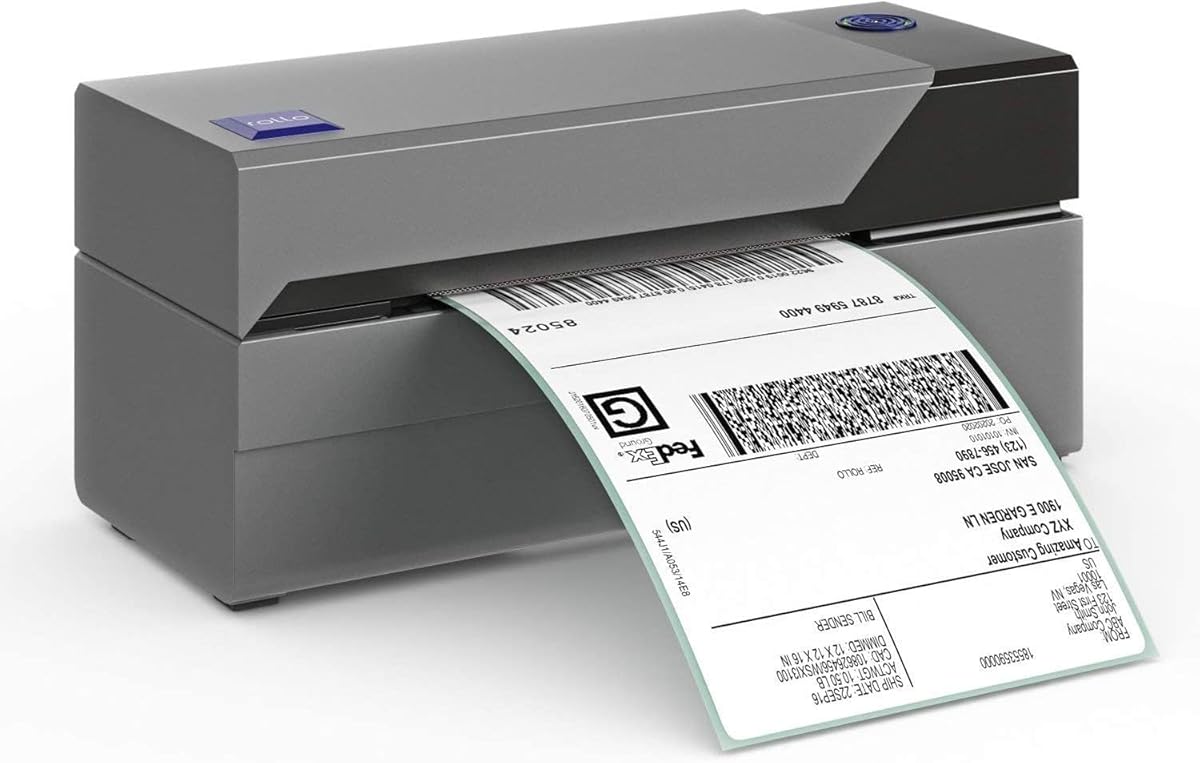
Rollo USB Shipping Label Printer
4.6Editor score
Commercial 4×6 label support
203 DPI thermal printing
Broad shipping-platform compatibility
Label Printers for Mercari compared for connectivity, print speed, label compatibility, portability, shipping-platform support, and ease of use.
A dependable label printer can make Mercari selling faster, cleaner, and more professional. The right device should produce scannable 4×6 shipping labels, work with the devices you already use, and handle every order without frequent paper adjustments or wireless interruptions.
We compared ten thermal shipping label printers on print resolution, speed, supported label widths, Bluetooth and USB options, operating-system compatibility, design resources, platform support, portability, and ease of setup. The list includes wireless models for phone-based workflows and wired options for steadier desk-based printing.
Each review explains where a printer is strongest, where its compromises matter, and which type of Mercari seller it best serves. Ratings and product details reflect the supplied information, while availability, software behavior, and prices can change, so confirm the current listing before buying.
4.6Editor score

4.4Editor score

4.0Editor score
The comparison highlights the differences that matter most for Mercari sellers: how each printer connects, what it can print, its paper-width range, and the flexibility of its design software.


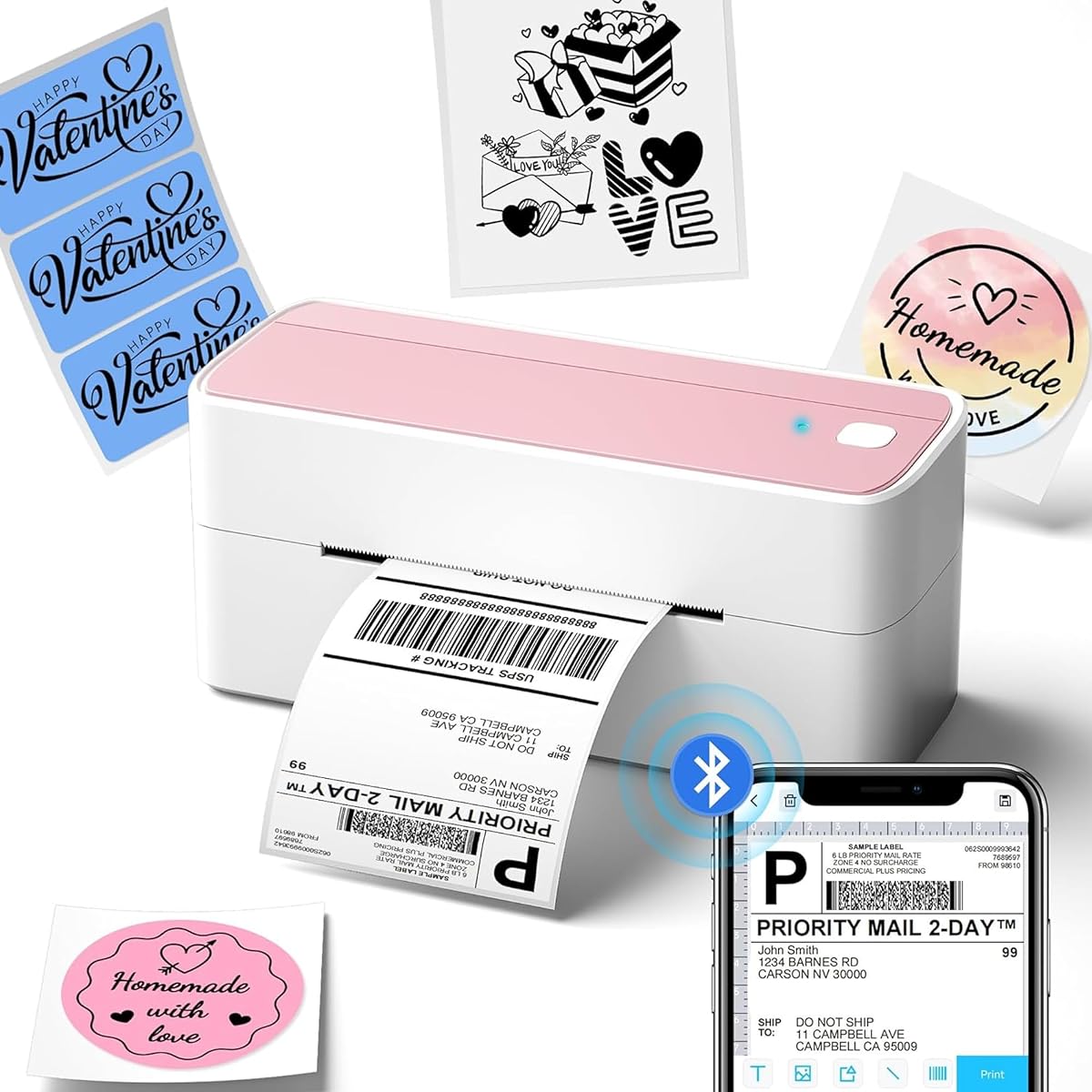

The NULLTONEX Thermal Shipping Label Printer combines flexible connectivity, useful editing resources, and strong core printing specifications, making it the most balanced option in this guide for Mercari sellers. Its 4.4 rating reflects a favorable overall reception, and the supplied information highlights crisp 203 DPI output, a print speed of up to 150 mm/s, and support for standard 4×6 shipping labels.
We may earn a commission when you buy through this link, at no additional cost to you.
Bluetooth is especially useful for sellers who prepare orders on a phone, while USB provides a more stable route for laptop and desktop work. The FlashLabel Pro app includes more than 1,800 templates, over 300 fonts, and multiple editing tools. Its offline capability can also reduce dependence on cloud downloads when space is tight or connectivity is inconsistent.
The trade-offs are straightforward. This is a monochrome thermal printer, so it is intended for black-and-white shipping labels rather than full-color product artwork. Its broad template library also means the workflow depends on a companion app, and a seller should select the correct paper size to avoid scaling or alignment issues.
This is a strong recommendation for individual Mercari sellers, home-based resellers, and small operations that want one printer for both packing and occasional custom labels. Choose it when wireless flexibility, compact construction, and multiple connectivity routes matter more than color printing or a strictly USB-only setup.
Connect through Bluetooth to prepare a label from a phone, or use USB when a wired computer connection is preferable. That flexibility makes the printer useful at a packing table, storage shelf, or shared office station.
The extensive FlashLabel Pro library supports shipping labels, barcodes, mailing labels, and other small-format projects. Offline template storage helps preserve a repeatable workflow between orders.
We may earn a commission when you buy through this link, at no additional cost to you.
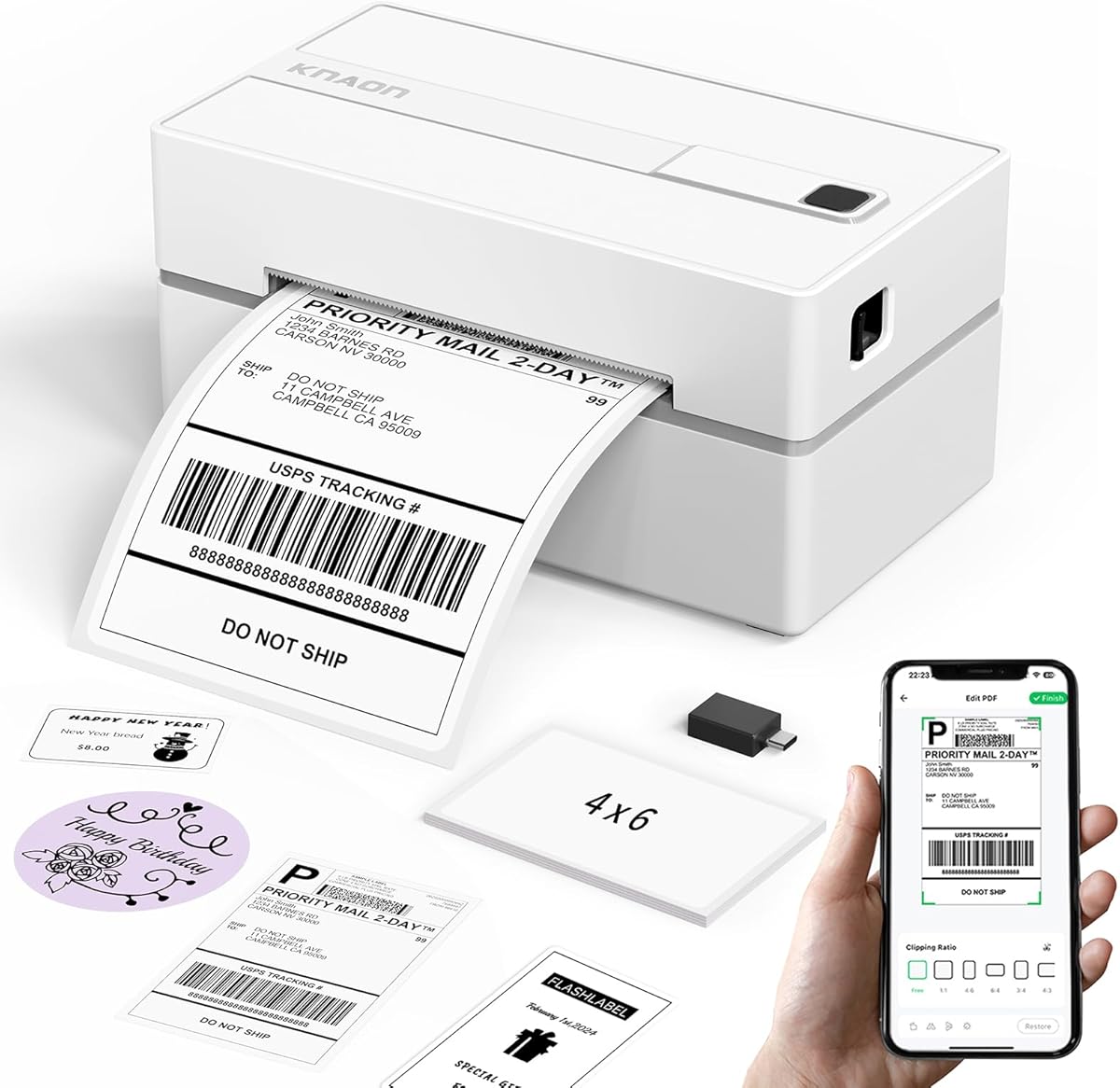
The KNAON Bluetooth Thermal Shipping Label Printer is a strong mobile-first option with a 4.4 rating and an unusually large collection of design resources. Its supplied specifications include a fast printing speed of up to 180 mm/s, support for paper widths from 1.5 to 4.2 inches, and compatibility with iPhone, Android, Windows, and Mac workflows.
We may earn a commission when you buy through this link, at no additional cost to you.
The FlashLabel Pro app provides more than 3,000 templates, over 5,000 icons, and more than 100 fonts. Those resources are useful for Mercari sellers who want to print more than carrier labels, including thank-you labels, name tags, price tags, barcodes, and other small thermal formats. USB adds broad desktop support across macOS, Windows, ChromeOS, and Linux.
There are some workflow limitations. Mobile Bluetooth connections and certain computer connections depend on FlashLabel Pro rather than direct Bluetooth pairing. ChromeOS users also need the FlashLabel extension, making the initial setup slightly more involved than a completely universal plug-and-play experience.
This printer best suits sellers who work primarily from a phone or need a broad collection of templates. It is also attractive for small businesses that want one compact thermal device to cover shipping and supplemental labels without maintaining a separate ink-based printer.
Thousands of templates, icons, and fonts make the companion app useful for both carrier documents and original packaging inserts. The breadth of resources is especially valuable when a Mercari seller wants a consistent visual identity across orders.
USB connectivity works across several major desktop systems, including Windows, macOS, ChromeOS, and Linux. A built-in USB drive with drivers and tutorials helps users find setup resources.
We may earn a commission when you buy through this link, at no additional cost to you.
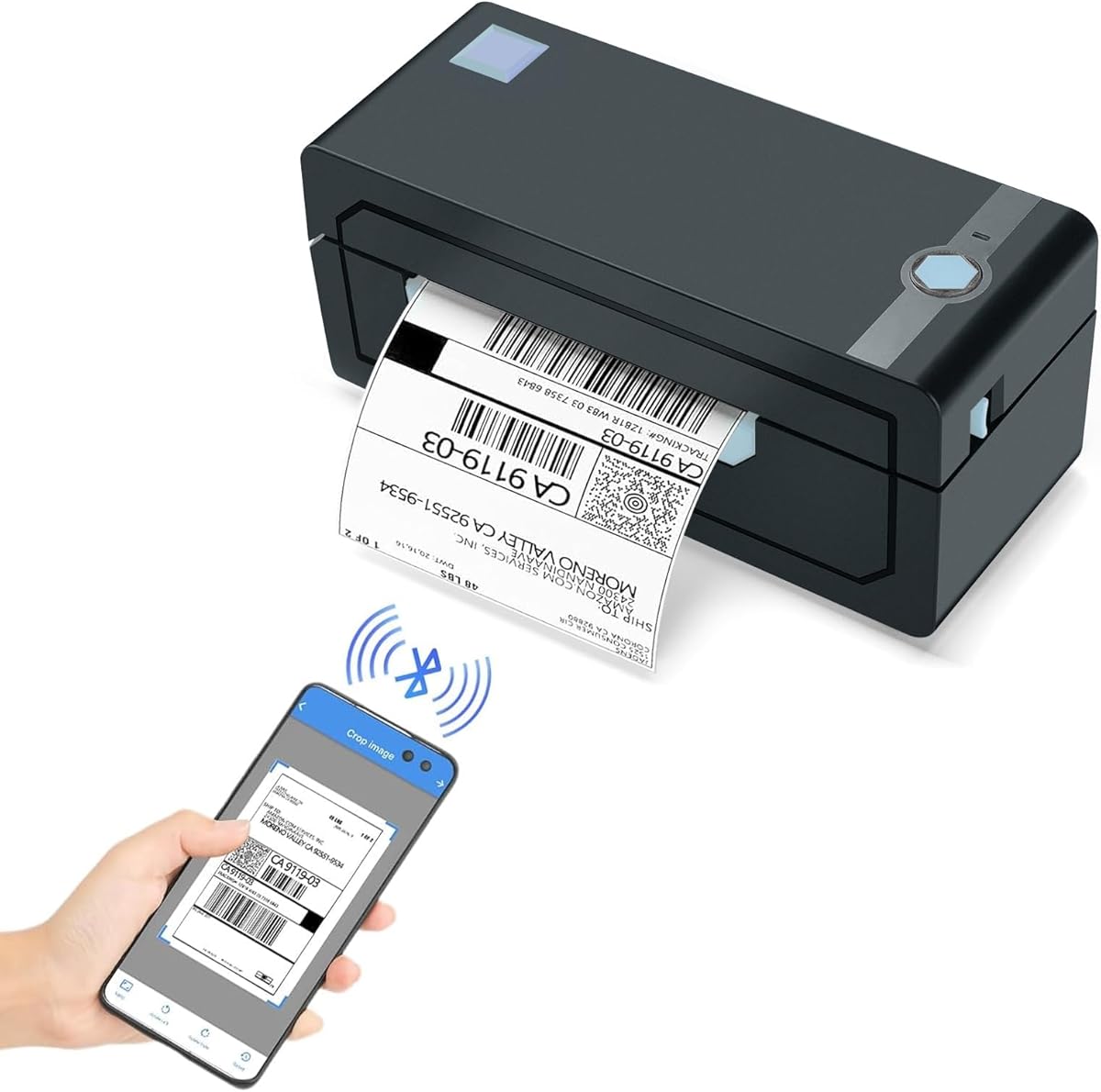
The JADENS Bluetooth Thermal Shipping Label Printer is a practical choice for sellers who need compatibility with established shipping services and a clear support structure. It has a 4.4 rating, a 203 DPI print head, and support for both fanfold and roll labels across widths from 1.57 to 4.1 inches.
We may earn a commission when you buy through this link, at no additional cost to you.
Its strongest feature is broad platform awareness. The supplied information names Endicia, Dazzle, ShipStation, ShippingEasy, Shippo, ShipWorks, Ordoro, eBay, Amazon, and Shopify among compatible services and marketplaces. This makes it a relevant option for Mercari sellers who may also handle orders through several channels.
The setup is convenient but not completely automatic. iOS and Android users must use the Jadens app, while Bluetooth support on computers depends on the operating system. Sellers who change label stock should also long-press the feed button to identify and calibrate the new label size, which helps prevent misaligned output.
JADENS is a good recommendation for a growing seller who values recognizable shipping-platform support, included tutorials, a one-year warranty, and access to email, phone, or remote-control support. It is less attractive for someone who wants effortless direct Bluetooth pairing without an app.
Compatibility with major shipping platforms and marketplaces makes this printer relevant to sellers whose order volume extends beyond Mercari. Keeping one label printer across channels can simplify packing routines.
A one-year warranty, instructional media, and several support channels reduce the risk of a difficult first setup. Periodic calibration after changing labels helps preserve consistent positioning.
We may earn a commission when you buy through this link, at no additional cost to you.
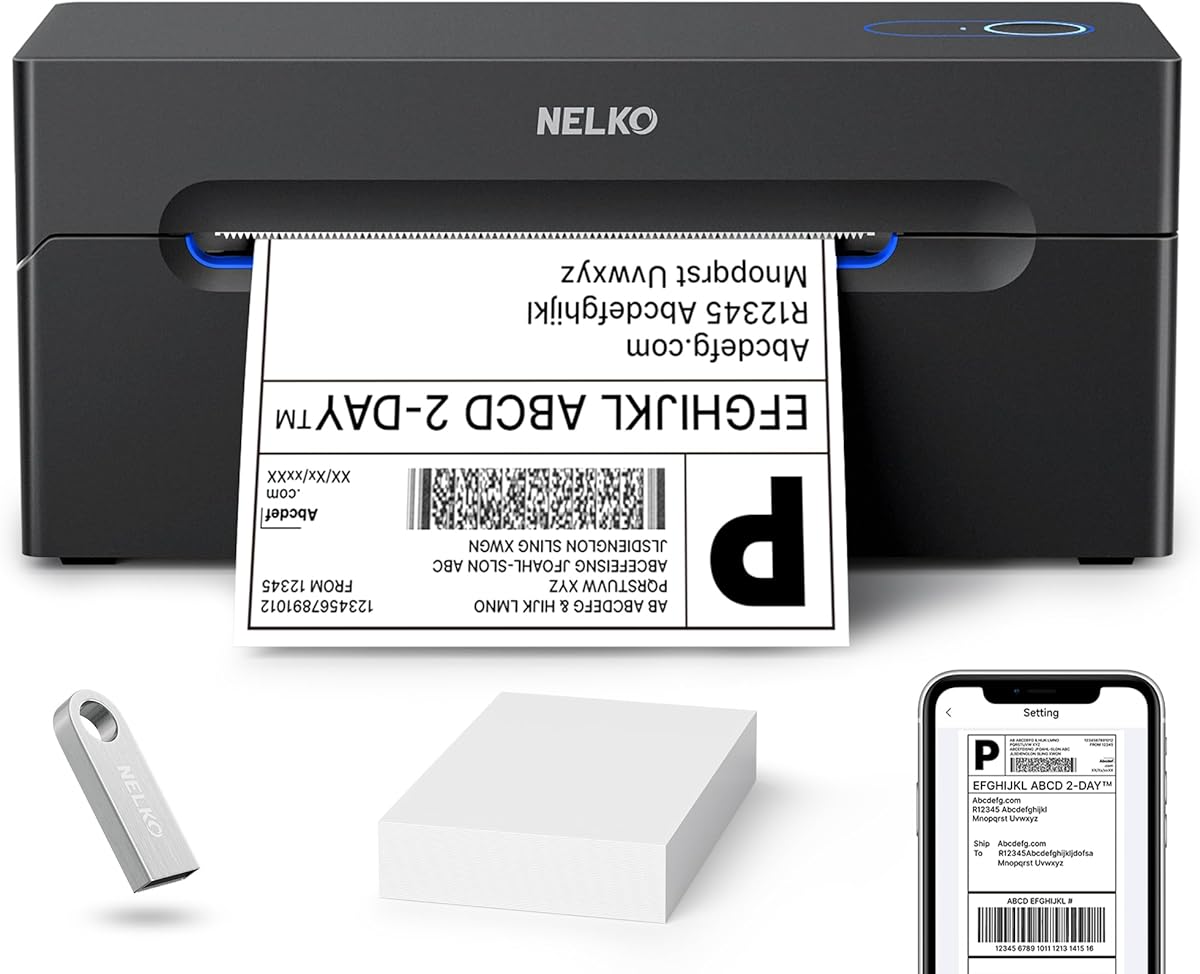
The Nelko Bluetooth Thermal Shipping Label Printer offers a balanced mix of wireless convenience, a compact enclosure, and solid core specifications. It carries a 4.3 rating, prints at up to 150 mm/s, and provides 203 DPI output for standard shipping labels, barcodes, and smaller formats.
We may earn a commission when you buy through this link, at no additional cost to you.
iOS and Android users can print through the Nelko app, while Windows 7 and later systems can also use Bluetooth under the stated conditions. USB remains available for Windows, macOS, and ChromeOS. This gives the printer broad relevance for Mercari sellers who alternate between packing by phone and preparing orders on a computer.
Important limitations remain. Mac systems work through USB rather than Bluetooth, and all Bluetooth access depends on the relevant app. Labels downloaded from shipping platforms are generally saved as PDF files and imported into the app, adding a step to the workflow.
Nelko is well suited to apartment sellers, small studios, and home offices where a large inkjet would be impractical. Its roll and fanfold compatibility, useful media widths, and compact construction make it a versatile choice for frequent 4×6 shipping.
The printer occupies less space than a traditional desktop printer and can sit close to a packing surface. That is useful when every shelf and counter area matters in a home operation.
Support for rolls, fanfold labels, and widths from 1.54 to 4.1 inches accommodates shipping labels, barcode labels, and common smaller formats. Correct media setup remains essential for accurate output.
We may earn a commission when you buy through this link, at no additional cost to you.
The Rongta Bluetooth Shipping Label Printer stands out for automatic label identification, a feature designed to reduce the usual frustration of aligning and feeding new media. Its 4.0 rating is the lowest in the group, but the core specifications remain competitive, including 203 DPI resolution and a print speed of up to 150 mm/s.
We may earn a commission when you buy through this link, at no additional cost to you.
Phone and tablet users can connect through the Rongta app, while Windows and Mac drivers are available for computer workflows. The printer supports ChromeOS and direct thermal labels from 0.98 to 4.37 inches wide, covering 4×6 shipping labels as well as 2×2 circular labels, 2×1 barcodes, and 1×1 QR-code labels.
The main drawback is that the supplied information does not provide the same depth of design resources or platform-specific guidance found with several other picks. The app remains central to the wireless experience, and sellers should check its workflow against their operating system before committing.
This is a good budget recommendation for a new Mercari seller who wants dependable 4×6 printing, automatic media handling, and flexible paper support. It is particularly appealing when switching between shipping labels and smaller custom labels without wanting to repeatedly adjust the media.
Automatic label detection can save time when a seller alternates among several label widths. It reduces the chance that a roll will begin printing in the wrong position.
The broad width range supports more than 4×6 shipping labels, including small barcode and QR-code formats. That flexibility is useful for inventory organization and product marking.
We may earn a commission when you buy through this link, at no additional cost to you.
The Rollo USB Shipping Label Printer is the premium, desk-centered choice in this guide and earns the highest listed rating at 4.6. Built around a 203 DPI thermal print head and a speed of up to 150 mm/s, it is intended for sellers who want reliable one-label-per-second performance and a broad shipping-platform ecosystem.
We may earn a commission when you buy through this link, at no additional cost to you.
USB works with Windows XP and newer as well as Mac 10.9 and newer. The printer supports labels from 1.57 to 4.1 inches wide and can create shipping, warehouse, barcode, sticker, thank-you, and QR-code labels. Compatibility includes FedEx, UPS, USPS, ShipStation, ShippingEasy, Shippo, ShipWorks, Amazon, Shopify, Etsy, and eBay.
Its main limitation is the absence of Bluetooth phone printing. A Mercari seller must prepare and print from a laptop or desktop through USB rather than sending labels directly from a phone. This makes the Rollo less flexible for mobile packing, but the wired route can be steadier in a permanent workstation.
Choose the Rollo when order volume is consistent, your packing station has a computer, and dependable commercial-grade output matters more than wireless convenience. It is also a logical option for sellers who want to consolidate Mercari and marketplace shipments without relying on a general-purpose inkjet.
A stated rate of one 4×6 label per second supports batch packing and steady order flow. The 203 DPI print head produces clear text and barcodes for daily shipping use.
Beyond carrier labels, the Rollo app supports thank-you stickers, QR codes, product labels, and name stickers. That makes it useful for packaging presentation as well as dispatch.
We may earn a commission when you buy through this link, at no additional cost to you.
The ETIKEZ Bluetooth Thermal Label Printer is a compact, app-guided option with a 4.4 rating. It supports 203 DPI output, 4×6 shipping labels, and widths from 1.57 to 4.1 inches, covering many of the media sizes a Mercari seller is likely to use for shipping and inventory work.
We may earn a commission when you buy through this link, at no additional cost to you.
Mobile printing runs through the Labelnize app on Android or iOS 13 and later. The setup sequence is unusually direct: install the app, allow wireless data access, connect to the PL50E printer, select the paper gap or size, and then choose the document to print. Computers use USB with a driver rather than Bluetooth.
This split connection model is both a strength and a limitation. It keeps mobile printing straightforward while reserving the more stable wired route for computers. However, direct Bluetooth pairing is unavailable, and choosing the wrong paper size can reduce print quality or produce misplaced content.
ETIKEZ is a sensible recommendation for a mobile-first seller who wants guided instructions, a small footprint, and support for major marketplaces and couriers. It is also appropriate for freight or storage tasks where compact equipment and straightforward document selection matter more than advanced template libraries.
The Labelnize setup process uses clear in-app steps and makes the printer discoverable by model. It is approachable for first-time thermal-printer users.
The printer is designed to fit in limited spaces such as studios, home storage rooms, and small packing corners. It remains practical for the label volume of many individual Mercari sellers.
We may earn a commission when you buy through this link, at no additional cost to you.
The black KNAON Shipping Thermal Label Printer combines fast output with a substantial editing library and a broad supported paper range. Its 4.3 rating reflects a generally favorable reception, while the listed specifications include up to 180 mm/s printing and support for widths from 1.38 to 4.41 inches.
We may earn a commission when you buy through this link, at no additional cost to you.
FlashLabel Pro provides more than 3,000 templates, over 5,000 icons, and more than 100 fonts. A Mercari seller can use it for shipping labels, thank-you labels, name tags, price tags, mailing labels, and barcodes. Unlike some smaller designs, its dimensions still allow it to serve as both a shipping printer and a general small-label tool.
The connection story is flexible but app-dependent. iOS and Android users work through FlashLabel Pro, while compatible Windows computers can use Bluetooth with the latest driver. Macs with M1, M2, M3, or M4 processors can also connect through the app. USB supports macOS, Windows, ChromeOS, and Linux, with a Chrome extension required for ChromeOS.
This printer is a good fit for sellers who care about presentation and customization as much as dispatch speed. Choose it when you want a large selection of ready-made designs, a fast printer, and enough paper-width flexibility to cover both shipping and supplementary labels.
The extensive icon and font library helps create consistent thank-you cards, product identifiers, and package inserts. Those details can make a Mercari seller's brand feel more polished without a separate sticker printer.
Support for current Apple processors and several desktop systems makes the printer relevant to a mixed device household. USB provides the most consistent route when Bluetooth is unavailable or inconvenient.
We may earn a commission when you buy through this link, at no additional cost to you.
The Phomemo Bluetooth Thermal Label Printer is a versatile option for Mercari sellers who want to print not only shipping labels but also forms, text documents, photos in monochrome, QR codes, and barcode materials. It carries a 4.4 rating and is supplied with 20 labels, which helps buyers begin packing immediately.
We may earn a commission when you buy through this link, at no additional cost to you.
The Labelife app supports iOS and Android, while computer users can use a driver or USB connection. The supplied information covers Windows, Mac OS, ChromeOS, and Linux, with a Chrome extension required for ChromeOS. Label widths from 1 to 4.6 inches offer ample flexibility for shipping and other direct-thermal formats.
Color is the key limitation. The printer produces black-and-white output, and the mention of compatible thermal color paper does not turn it into a general-purpose color printer. The product also recommends genuine Phomemo thermal paper for the most consistent clarity and longevity, which may narrow media choices.
Phomemo is a strong recommendation for sellers who want one compact device for a mix of shipping labels, forms, and visual documents. It is less suitable for anyone expecting full-color label artwork, but it offers a generous supported width and useful cross-platform connection options.
Text, forms, QR codes, barcodes, and monochrome photos expand the device beyond courier labels. This makes it useful for inventory cards, package inserts, and identification tasks.
A supported width of 1 to 4.6 inches covers common shipping formats and many small-label projects. Choosing compatible thermal stock helps preserve sharp text and barcodes.
We may earn a commission when you buy through this link, at no additional cost to you.
The white Rongta Shipping Thermal Label Printer offers a simple wireless proposition for Mercari sellers who primarily need 4×6 labels. Its 4.1 rating places it near the lower end of the group, but the supplied feature set confirms Bluetooth phone printing, USB computer printing, multiple label sizes, and inkless thermal output.
We may earn a commission when you buy through this link, at no additional cost to you.
Mobile users can download the Rongta app and connect to the printer through Bluetooth. Computer users can obtain a driver and print through USB, covering Windows and macOS environments as stated in the product title. Direct thermal technology removes the need to maintain ink or toner cartridges.
Compared with the other Rongta model in the guide, the supplied information here is more concise, so it does not offer the same level of detail about resolution, speed, or exact media-width limits. A careful buyer should verify those specifications in the current listing and compare them with the needed label stock.
This printer is a reasonable choice for a simple seller who values wireless phone printing, a straightforward thermal process, and support for standard shipping labels. It may also suit a buyer who prefers the other Rongta model's higher rating and more detailed automatic media detection, which should be weighed against current availability and features.
Bluetooth printing from a phone removes the need to move every shipping file to a desktop. That convenience is valuable for sellers who pack orders in different parts of a home or studio.
Inkless direct thermal technology keeps the consumable requirements simple. Label media remains the primary operating supply, and a computer remains available as a wired alternative.
We may earn a commission when you buy through this link, at no additional cost to you.
The right label printer depends on how you pack, which devices you use, and how many orders you print. Consider connectivity, media handling, output quality, software, and the level of support you need before choosing a model.
Bluetooth gives a Mercari seller the freedom to prepare and print labels from a phone without moving to a computer. It is especially convenient for casual packing, market trips, and home businesses that store orders in multiple locations. The trade-off is that most Bluetooth printers require a manufacturer app, and Bluetooth support differs among desktop operating systems. USB offers a steadier connection and is available on every model in this guide, but it requires a nearby computer and usually a driver.
Prioritize Bluetooth if mobility matters most. Prioritize USB if you print in batches, use a permanent computer station, or want fewer wireless interruptions.
Standard 4×6 thermal labels are the most important format to verify for parcel shipments. Every model in this comparison supports 4×6 labels, but the broader paper range determines whether one printer can also handle 2×2 product stickers, inventory labels, barcodes, or QR codes. Sellers who only prepare parcels may prioritize straightforward media loading, while sellers who print inserts and product tags will benefit from a wider supported range.
Check both the minimum and maximum width. A wide range is useful when your workflow changes, but accurate loading remains more important than an exaggerated specification.
A 203 DPI print head provides a useful balance of clarity and practicality for shipping labels, addresses, barcodes, and QR codes. Faster output can improve throughput when a seller prints many orders consecutively, but the difference between 150 and 180 mm/s may matter less than reliable media handling. Thermal printers generally do not need ink warm-up time, making them well suited to intermittent order volume.
Look for 203 DPI output and sufficient speed for your expected daily workload. Correct calibration matters more than a small speed difference when label alignment is inconsistent.
Automatic detection and feed features can save time when a seller alternates between rolls, fanfold stock, and several widths. A printer that identifies the media correctly is less likely to waste a partially printed label or place the address too far from the edge. The Rongta model with automatic label identification is particularly relevant here, although other printers can also perform well after their initial media calibration.
Favor automatic setup if you change labels frequently. If you use one media size consistently, a manual calibration process may be perfectly manageable.
A companion app can make a modest thermal printer feel much more useful. Large template collections, fonts, icons, and editing controls help with thank-you labels, name tags, QR codes, and branded inserts. The KNAON models stand out with more than 3,000 templates, while the NULLTONEX model offers more than 1,800 templates and offline storage. A larger library is valuable, but easy navigation and correct paper-size selection remain essential.
Choose a rich app when custom labels are part of your normal workflow. For shipping-only use, platform compatibility and reliable document importing may matter more.
Check compatibility with the exact device and operating system you plan to use. Some printers support Bluetooth on iOS and Android but require USB on Mac, while others support Mac Bluetooth only through the app and on particular processor generations. ChromeOS may require a browser extension. Windows 7 or later is frequently supported, but the exact Bluetooth driver requirements can differ between models.
Make a short list of your devices before shopping. Read the current system requirements and do not assume that every device will make the same direct connection.
For Mercari, the key workflow is often to save or download a shipping label as a PDF and then import it into the printer's app. Broad support for USPS, UPS, FedEx, DHL, Shopify, eBay, Etsy, and other services gives a seller room to expand across channels. However, the label file itself may be monochrome, and some services can change their generated formats or carrier requirements over time.
Confirm that the printer supports your chosen carrier and the size of the purchased labels. Keep the current platform workflow in mind rather than relying only on a broad compatibility statement.
A compact thermal printer is usually easier to live with than a large inkjet, but dimensions still vary. The smallest options can fit in a drawer or on a crowded counter, while the Rongta model with a 10.2 by 7.4 by 5.3-inch body offers a more substantial desktop footprint. Portability also depends on whether the printer is intended to travel with a seller or remain in a fixed packing area.
Measure your available surface before buying. Choose a smaller unit for shared spaces and a larger one when stability, paper handling, or high-volume output is the priority.
Begin by installing the manufacturer's app or computer driver, then connect the printer using the route appropriate for your device. For Bluetooth models, open the app, enable the printer, and select its model from the device list. For USB models, connect the cable first, install the supplied or downloaded driver, and then add the printer through the computer's settings.
For a typical Mercari order, purchase or load the correct 4×6 thermal labels, select the matching media size in the app, and print a test page before processing a batch. Import a carrier label saved as a PDF, preview it for margins and orientation, and print one copy. Calibrate the media or use automatic detection when changing between roll and fanfold labels or when the alignment appears wrong.
Keep the printhead and feed path clean, and use compatible thermal media. Store labels in a dry area away from direct heat and sunlight, and avoid pulling labels forcefully from the roll. If output fades, smudges, or develops vertical lines, check the media, clean the printhead according to the manual, and confirm that the selected paper size matches the installed stock.
A thermal label printer becomes more useful as your order volume increases or when package presentation matters. It can print carrier labels, address labels, barcodes, and product stickers consistently without ink or toner. A casual seller with few shipments can start with standard labels, but regular sellers usually benefit from a dedicated unit that reduces formatting errors and speeds up packing.
Yes, if the printer supports Bluetooth and its companion app is available for your phone. Most models in this guide require printing through the manufacturer's app rather than direct Bluetooth pairing. You generally need to download the carrier label as a PDF, import it into the app, choose the correct paper size, and then send it to the printer.
Choose Bluetooth if packing flexibility and phone printing are important. Choose USB if you print from one computer, handle batches of orders, or prefer a consistent wired connection. Several printers offer both, giving you the convenience of mobile preparation and the stability of a fixed packing station.
Most thermal shipping label printers discussed here produce black-and-white output. Special thermal media may create the appearance of color, but it is not equivalent to a standard inkjet or dye-sublimation printer. If you need full-color product stickers or decorative labels, choose a separate color-capable device for those jobs.
Most compatible rolls fit, but the printer's width range, media type, and calibration should be checked first. The label dimensions should match the setting selected in the app. Print a test after loading a new roll, especially when switching between fanfold labels, rolls, or different widths.
The usual causes are an incorrect paper-size setting, inaccurate media calibration, dirty printhead, unsuitable labels, or a partially opened media roll. Confirm the selected size, run the printer's calibration or automatic detection procedure, and inspect the printhead and labels. If the problem continues, test a fresh compatible roll and review the manufacturer's troubleshooting guide.
No. Direct thermal printing uses heat to darken a chemical coating on the label, so these printers do not consume ink or toner. You still need suitable thermal label media, and using the recommended stock can help maintain clear barcodes, sharp text, and better resistance to fading or smudging.
Yes, when its supported media width includes the formats you want to print. Models with ranges near 4.1 or 4.37 inches can cover standard 4×6 shipping labels and many smaller barcode, QR-code, price, or product formats. Select the exact media size for each job and avoid stretching a template beyond its intended label dimensions.
The NULLTONEX Thermal Shipping Label Printer offers the most balanced overall package, combining Bluetooth and USB, a capable app, offline template storage, and broad media support. The Rollo USB Shipping Label Printer is the premium pick for a dedicated computer-based packing station, while the Rongta Bluetooth Shipping Label Printer with automatic detection is the budget-friendly choice for sellers who value straightforward media handling.
Before choosing, prioritize the workflow you will actually use. Phone-heavy sellers should value a mature app and clear Bluetooth instructions, while higher-volume sellers may prefer stable USB printing, fast output, and broad carrier compatibility. Media width, automatic calibration, and operating-system support can be more consequential than small differences in advertised speed.
Finally, confirm the current listing, label requirements, driver availability, and price before purchasing. Product details and software compatibility can change over time, so checking the latest information helps ensure that the printer fits your Mercari packing process.