
Line 6 Spider V 20 MKII
4.5Editor score
Sixteen versatile amplifier presets
Three simultaneous onboard effects
Built-in tuner and tap tempo
Remote app editing and recording
A 20W guitar amp is a versatile choice for bedroom practice, lessons, small rehearsals, and modest performance spaces. The best models balance useful tone-shaping controls, clean and overdrive channels, practical connectivity, and a speaker capable of filling a room without overwhelming nearby listeners.
This guide compares ten amplifiers using the information supplied for each model, focusing on output, speaker configuration, channels, effects, equalization, input options, portability, and included accessories. It also considers which design is best suited to beginners, home players, teachers, and guitarists who want more advanced tone control.
Each review highlights the features that distinguish one 20W guitar amp from another, while also identifying sensible compromises and ideal users. Ratings reflect the supplied customer feedback, and product prices can change, so readers should confirm current availability and specifications before purchasing.
4.5Editor score

4.7Editor score

4.6Editor score
As an Amazon Associate we earn from qualifying purchases.
The table below compares all ten amplifiers by output, speaker, channel design, connectivity, and practical extras, making it easier to identify the model that best matches your playing environment and preferred workflow.
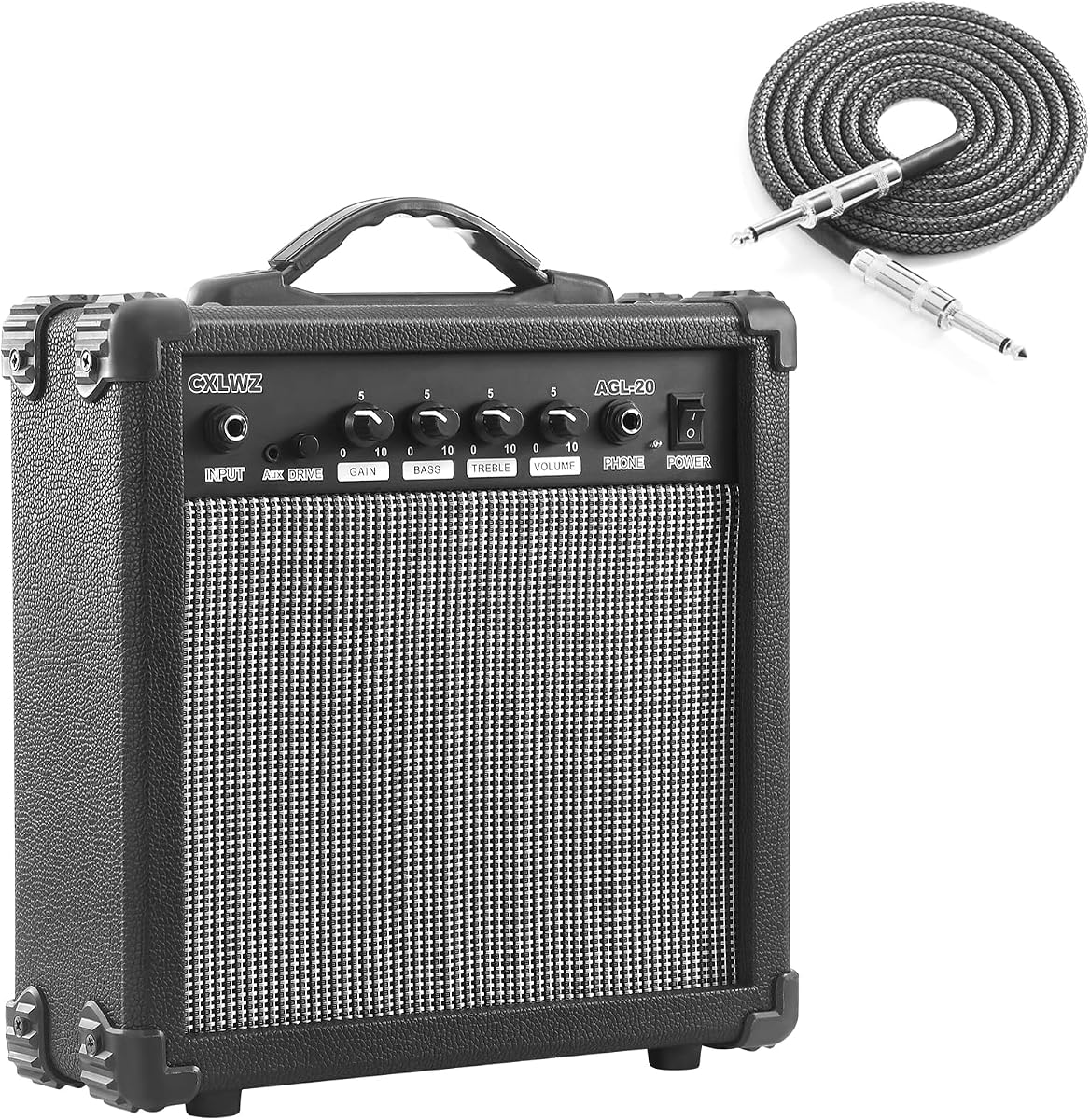




This portable 20W electric guitar amplifier has a 4.4 customer rating and is designed for players who want a straightforward amp for practice, lessons, and small settings. Its defining combination is twenty watts of output, simple tone controls, headphone and auxiliary connections, and a supplied 6.35mm noise-shielded cable.
We may earn a commission when you buy through this link, at no additional cost to you.
The amplifier provides separate knobs for gain, bass, treble, and volume, allowing a guitarist to move from cleaner sounds to driven textures without relying on external effects. The upgraded circuitry and shielding are intended to reduce distracting background hiss, while the AUX input supports playing along with music from a phone or MP3 player.
Its strongest practical advantage is portability. At 6.2 pounds, the amp is light enough to move between a bedroom, garage, lesson, or rehearsal, and the integrated handle makes carrying easier. Thickened edges, edge binding, rubber feet, and a stable footprint also make it more practical for a device that may be transported frequently.
This is a sensible choice for a beginner, traveling player, or guitarist seeking a simple practice amp without digital modeling. It is less compelling for someone who prioritizes extensive built-in effects, app-based editing, or wireless streaming, but for portable, no-fuss daily use, it covers the essential functions well.
The compact enclosure and integrated handle make the amp easy to carry between rooms or locations. Rubber base pads help keep it stable during practice, while the relatively low weight reduces the burden of transporting it for lessons, busking, or small engagements.
Separate gain, bass, treble, and volume controls provide enough range for common practice routines. The headphone jack supports quiet playing, while the auxiliary input lets a guitarist rehearse against backing tracks without requiring a full-size amp or external sound system.
We may earn a commission when you buy through this link, at no additional cost to you.
The Rockville G-AMP 20 carries a 4.5 rating and stands out as the most connectivity-focused model in this group. Its 20-watt output, 6.5-inch speaker, Bluetooth support, and dual guitar inputs make it especially useful for lessons, rehearsals, and practice sessions involving backing tracks or multiple players.
We may earn a commission when you buy through this link, at no additional cost to you.
Bluetooth is the defining feature because it removes the need for a cable when playing along with music from a compatible phone or other device. The included built-in delay can add ambient depth without an external pedal, while the clean and overdrive channels allow players to shift between different styles using the same guitar.
A three-band EQ with treble, mid, and bass controls provides practical tonal adjustment, and the headphone jack allows quieter practice. The LED status light, carry handle, and metal corner protectors make the amp easy to identify, move, and protect, although the relatively compact 6.5-inch speaker is naturally better suited to rooms than larger stages.
The dual inputs are a notable advantage for teachers, duos, or band rehearsals, though the single-channel architecture means the two guitars share the same channel settings. Buyers who value wireless playback, immediate effect access, and multi-guitar flexibility will find this model more useful than one designed purely around basic tone shaping.
Wireless streaming is convenient for rehearsing with songs, lessons, or backing tracks because the player does not need to connect an auxiliary cable. It also reduces cable management around a busy practice space and makes the amp convenient for casual sessions at home.
Two guitar inputs let a teacher demonstrate a part or two players work through arrangements without repeatedly unplugging instruments. Although the shared channel limits independent tone settings, it is still a useful feature for instruction, duo practice, and informal band rehearsals.
We may earn a commission when you buy through this link, at no additional cost to you.
The Leo Jaymz 20W Electric Guitar Amplifier has a 4.4 rating and offers a conventional solid-state design for practice rooms, studios, and small spaces. Its 6.5-inch speaker, separate clean and distortion channels, and three-band equalizer cover the fundamentals without asking the player to navigate a complex control panel.
We may earn a commission when you buy through this link, at no additional cost to you.
The two channels make it easy to move between clean and distorted playing. A dedicated three-band equalization section adjusts treble, middle, and low frequencies, while the CD line input and 6.5mm AUX jack allow the amplifier to accompany existing music. These are useful features for rehearsing alone or preparing with a teacher.
The listing describes a soft but solid fixing, a comfortable handle, and a leather surface, all of which support frequent handling. As a relatively compact combo, it is also easier to position than a full-size amplifier. The trade-off is a modest feature set compared with digital amps that offer presets, tuning, and app-based effects.
This model appeals to a player who wants understandable physical controls and two familiar amp voices. It may be especially appropriate for a student, a small rehearsal room, or anyone who prefers analog-style adjustment over navigating presets and menus.
A clean channel handles open chords, jazz voicings, and brighter lead work, while the distortion channel adds edge for rock and heavier styles. Keeping those sounds separate reduces the need for repeated knob changes during a rehearsal.
The three-band EQ gives players direct access to the tonal balance of the amplifier. It is simple enough for beginners yet provides useful control when moving between genres, backing-track practice, and rehearsal settings.
We may earn a commission when you buy through this link, at no additional cost to you.
The Orange Crush 20 earns the highest listed rating in the group at 4.7, making it a strong all-around choice for a home practice amplifier with occasional small-room use. Its 20-watt output, 8-inch loaded speaker, two-channel preamp, and high-gain design offer more authority than many similarly compact alternatives.
We may earn a commission when you buy through this link, at no additional cost to you.
Two channels provide a clear path between clean and high-gain sounds, while the three-band EQ provides familiar control over the overall character. The cabinet-loaded speaker arrangement is intended to deliver a more integrated result than a basic practice amp, and the 8-inch format should project better in a bedroom or garage than a smaller speaker.
Auxiliary input and a phones output make the amplifier adaptable to both loud and quiet sessions. The main compromise is that it does not list digital effects, a built-in tuner, Bluetooth, or remote app support. Players focused on modeled tones and preset recall may prefer the Line 6 Spider V 20 MKII instead.
For most players seeking a straightforward, durable-feeling combo with both clean and high-gain channels, the Orange Crush 20 is the most balanced recommendation here. It is particularly well suited to rock-focused players who want meaningful gain without navigating complicated menus.
The separate high-gain channel gives the amplifier a dedicated path for sustained distortion and lead playing. Working from the clean channel for rhythm and switching to gain for solos can make everyday practice sound more convincing.
An 8-inch cabinet-loaded speaker gives this model more visible low-end authority than a 6.5-inch practice combo. It remains compact enough for home use while being better suited to filling a room when a little more projection is needed.
We may earn a commission when you buy through this link, at no additional cost to you.
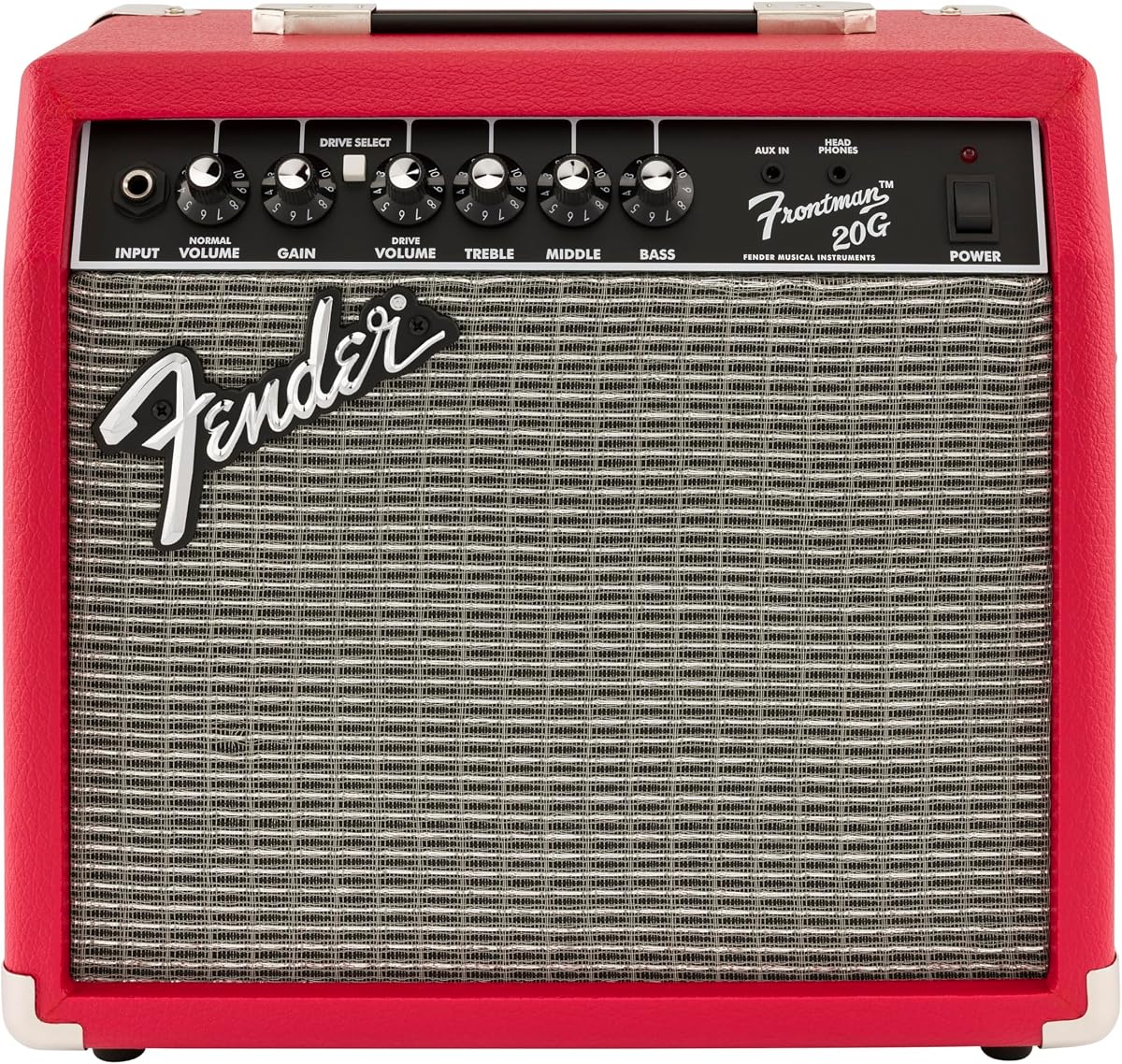
The Fender Frontman 20G in red has a 4.6 rating and offers an approachable control layout for beginners and experienced players who value familiar Fender styling. It delivers 20 watts through a Fender special design speaker and separates clean and switchable Drive channels for easy tone changes.
We may earn a commission when you buy through this link, at no additional cost to you.
The clean channel includes volume and three EQ knobs for straightforward tonal shaping, while the Drive channel has its own volume. This layout lets a player preserve a preferred clean setting and switch into a more aggressive sound without rebuilding the entire control configuration.
An eighth-inch auxiliary input allows playback of favorite songs, and the headphone jack supports quiet practice. The amp's 10-by-16-by-16-inch dimensions keep it relatively manageable, though its single-speaker format is intended for practice and small performances rather than overpowering a larger venue.
Fender backs the amplifier with a two-year limited warranty against defects in materials and workmanship. The absence of a larger onboard effects suite is the primary distinction from digital models, but for straightforward clean-and-drive playing, the Frontman 20G is an appealing and approachable option.
The interface is designed to be learned quickly, which makes the Frontman 20G useful for a new guitarist. A player can move from a clean channel to Drive with a switch, then adjust the level and three tone controls without navigating presets.
Auxiliary playback and a headphone output address two common needs: practicing with tracks and keeping late-night sessions quiet. The clean visual design and Fender branding also make the amp easy to recognize as a traditional home practice combo.
We may earn a commission when you buy through this link, at no additional cost to you.
This portable 20W practice amp has a 4.2 rating and is positioned as a compact option for beginner practice, travel, lessons, and band rehearsals. Its 6.5-inch speaker, lightweight body, integrated carry handle, and leather covering make it easy to treat as a grab-and-go practice unit.
We may earn a commission when you buy through this link, at no additional cost to you.
The control panel includes gain, bass, treble, and volume, plus a drive or distortion option for moving from cleaner sounds to gritty tones. A guitar input, auxiliary jack, and headphone output cover the standard connections needed at home, with the headphone output particularly useful for quiet late-night practice.
Its strongest distinction is the included accessory package. The supplied set includes a 3-meter noiseless cable, a 6.5mm-to-3.5mm headphone adapter, an auxiliary cable, earphones, and guitar picks. That combination can be useful for a new player who wants several connection options immediately available.
The 4.2 rating is the lowest among the listed models, and the product title provides fewer clear details about channel architecture and internal effects. Nevertheless, the amp remains appealing for buyers who prioritize portability and included accessories over advanced digital features or a larger speaker.
The included instrument cable, headphone adapter, auxiliary cable, earphones, and picks cover a broad range of setup tasks. This makes the package convenient for a beginner who may not yet know which adapters are required for different practice arrangements.
The carry handle, compact dimensions, corner protection, and leather covering support regular transport. It is a practical option for moving between a home, lesson, or rehearsal space without treating the amplifier as permanent furniture.
We may earn a commission when you buy through this link, at no additional cost to you.
The black Fender Frontman 20G bundle has a 4.6 rating and is an appealing starter package for a guitarist who wants a capable practice amp without adding several separate accessories to the order. It combines the Frontman 20G with an instrument cable and an Austin Bazaar exclusive 12-pack of picks.
We may earn a commission when you buy through this link, at no additional cost to you.
The amplifier produces 20 watts and uses an 8-inch Fender special design speaker, giving it more speaker surface than the 6.5-inch combos in the group. It includes an overdrive switch for contrasting clean and distorted tones, while gain, volume, treble, and bass controls provide direct adjustment.
Auxiliary input and headphone output are valuable for playing along with songs and practicing quietly. The supplied instrument cable means the core setup is ready for use, while the extra picks provide a simple supply for lessons and daily practice.
The bundle does not include a tuner, digital effects, or app compatibility, so it is most appropriate for a player who wants traditional amp controls. Within that category, the 4.6 rating, practical 8-inch speaker, overdrive circuit, and included essentials create a well-balanced budget package.
An instrument cable and a 12-pack of picks remove two common early purchases for a new guitarist. The result is a package that can support lessons and practice immediately after the amplifier is set up.
The 8-inch Fender special design speaker is relatively substantial for a 20-watt combo. It should serve bedroom practice, lessons, and small rehearsals while remaining within the portable category of practice amplifiers.
We may earn a commission when you buy through this link, at no additional cost to you.
The Fender Champion II 25 is a compact 25-watt digital combo with a 4.6 rating, placing it just above the nominal output of the other models. It combines an 8-inch Fender special design speaker with a large built-in effects suite, making it attractive for players who want more sonic options in a home amp.
We may earn a commission when you buy through this link, at no additional cost to you.
Reverb, delay or echo, chorus, tremolo, Vibratone, and additional effects are available directly on the amplifier. The TAP button can set delay times and tremolo speeds to a song's tempo, which is particularly helpful for rehearsing arrangements and matching rhythmic movement.
Connectivity is unusually broad for the category. It includes an eighth-inch auxiliary input, headphone output, rear-panel USB port, and single-channel design. USB expands the options for connected-device use, while the headphone jack is useful for bedroom practice and late sessions.
The 25-watt output means it is not an exact match for a strict 20-watt shopping requirement, but it remains highly relevant to anyone seeking a compact home amplifier. The two-year limited warranty adds confidence, and the effects suite makes this an excellent choice for guitarists who want creative tools without depending on a phone for every preset.
Reverb, delay, chorus, tremolo, and Vibratone cover common needs for practice and songwriting. Having them built in makes it easy to explore different sounds without additional floor pedals or complex setup chains.
The TAP control can match delay times and tremolo speeds to a song's tempo. That synchronization is useful when learning a specific arrangement, rehearsing with a metronome, or recreating the movement of a recorded performance.
We may earn a commission when you buy through this link, at no additional cost to you.
The Line 6 Spider V 20 MKII is the most advanced option in this roundup, earning a 4.5 rating and the Best Premium designation for its extensive digital features. It remains a 20-watt practice amplifier, but its amp and effects modeling gives it far more sonic variety than a conventional two-channel combo.
We may earn a commission when you buy through this link, at no additional cost to you.
Sixteen presets are available onboard, and three effects can be used simultaneously with independent reverb. Easy-to-use tone and effects controls make the amp approachable despite its broad capabilities. A new classic speaker mode is also included to provide an alternative character and feel.
The built-in tuner and tap-tempo function remove the need for separate tools during basic setup. More importantly, the free Spider V remote app provides access to more than 200 amps and effects, along with editing and recording capabilities on Mac, PC, iOS, and Android devices.
This is the strongest recommendation for a guitarist who wants to explore different amp voices, record ideas, or build a repeatable preset library. The digital interface requires more initial learning, but it rewards that effort with flexibility that a simple solid-state amplifier cannot match.
Sixteen onboard presets provide a strong starting point, while independent reverb and three simultaneous effects expand the tonal combinations. The classic speaker mode adds another layer of variation for players who want to move beyond a single fixed cabinet character.
Compatible mobile and desktop devices can be used to edit sounds and record performances through the free remote app. This turns the amplifier from a fixed practice combo into a more flexible creative tool for capturing ideas and refining presets.
We may earn a commission when you buy through this link, at no additional cost to you.
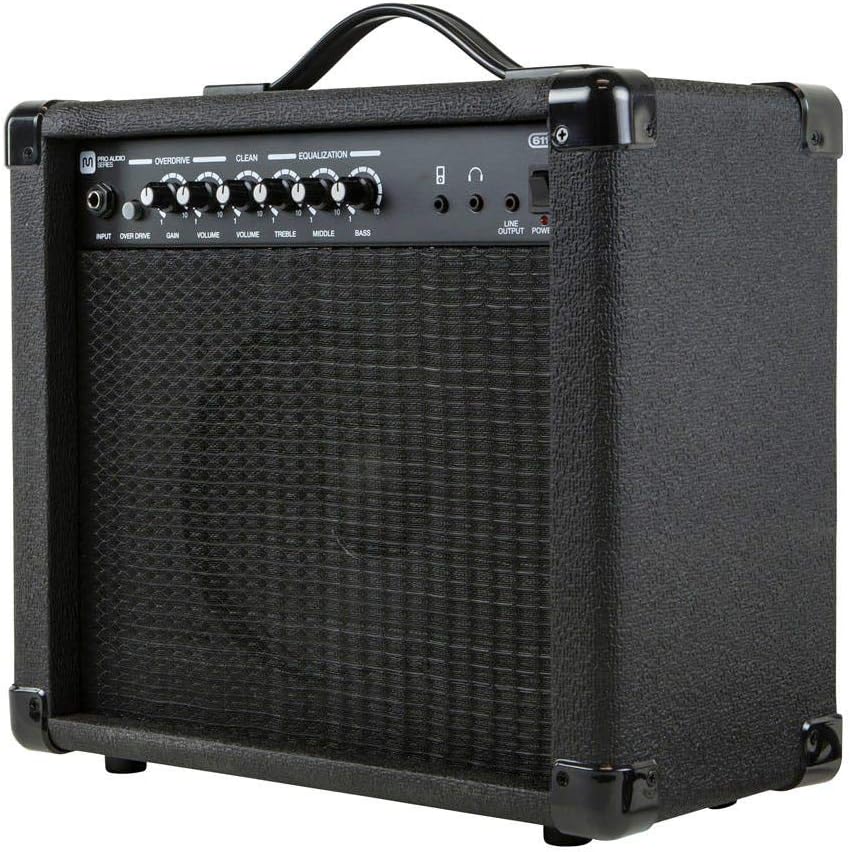
The Monoprice 1×8 Guitar Combo Amplifier has a 4.5 rating and offers a useful combination of practice features and external output options. Its 20-watt power, 8-inch 4-ohm speaker, and 86dB of gain provide the foundation for both clean and overdriven playing.
We may earn a commission when you buy through this link, at no additional cost to you.
The most notable feature is the line-level output, which can send the amplifier signal to a recorder or mixing board. This makes the combo more relevant to a home recording setup than many basic practice amps. A 3.5mm auxiliary input allows an MP3 player or compatible source to supply tracks, and a 3.5mm headphone output supports quieter practice.
The quarter-inch guitar input and 8-inch speaker provide a conventional combo layout, while the 86dB gain specification indicates a readily available overdrive character. A guitarist can move from clean playing into distortion without depending on the digital modeling found in higher-feature models.
This amplifier is a strong choice for a player who wants to practice, play along with tracks, and capture output through another device. It lacks a large effects library, app support, and multi-channel flexibility, but its line output gives it a practical role in a compact home recording setup.
The line-level output can feed a recorder or mixing board, allowing the amplifier to become a source within a larger audio setup. That feature is particularly valuable for home musicians who want to capture amplifier output without relying on a computer microphone.
The 86dB gain circuit gives the amplifier a readily accessible overdrive voice. A 3.5mm auxiliary input adds backing-track flexibility, while the headphone output provides a quieter way to rehearse without external speakers.
We may earn a commission when you buy through this link, at no additional cost to you.
Choosing a 20W guitar amp means balancing tone, room size, control style, connectivity, and portability. The most important step is to identify how and where you will use the amplifier, then choose the feature set that solves that specific need.
A 20W amplifier is generally most appropriate for a bedroom, practice room, lesson, or small rehearsal area. Its level should be sufficient for personal practice and modest settings without pretending to replace a larger system for a busy venue. Think about the room's size, your normal playing volume, and whether you need to hear the amp clearly while other instruments are present. A model with a larger speaker may project more effectively in a garage or teaching room even when its wattage remains modest.
The models in this guide use either 6.5-inch or 8-inch speakers. A 6.5-inch speaker keeps the enclosure smaller and is well suited to close practice, while an 8-inch speaker generally has more physical surface area and can deliver more visible low-end response. Speakers also contribute heavily to an amp's character, so the same circuit can sound different with a different cabinet design. Consider both the diameter listed in the specifications and the player's preferred balance of clarity, punch, and portability.
A clean channel supports clear acoustic-style passages, jazz chords, and open rock tones, while a drive, distortion, or overdrive channel adds sustain and edge. Separate channel controls make switching more predictable than relying on one shared gain knob. Most conventional 20W combos provide a three-band EQ for treble, midrange, and bass. Digital models add more tonal choices, but physical gain, volume, and EQ controls remain valuable for quickly adapting to a song or instrument.
Onboard effects can make a small amplifier more versatile without requiring extra pedals. The Fender Champion II 25 includes reverb, delay, chorus, tremolo, Vibratone, and other effects, while the Line 6 Spider V 20 MKII provides modeled presets, simultaneous effects, and app-based editing. A player who changes styles often may value these features, but someone focused on basic clean and overdrive practice may prefer a simpler analog control layout.
Auxiliary inputs are useful for playing along with songs, and headphone outputs support quieter practice. Bluetooth adds wireless convenience, while a USB port or line-level output can connect the amplifier to a recording device, mixing board, or computer workflow. Check the connector types before buying, especially if your existing music player or recording setup uses a particular standard. The Monoprice 1×8 stands out for its line output, while the Line 6 provides app-based recording support.
Weight, handle placement, and protective features matter when an amp moves between a bedroom, garage, lesson, or rehearsal. The included 6.35mm cable, handle, rubber feet, and corner protectors can improve the daily experience, although they do not guarantee protection against severe impact. Consider where the amplifier will live and how often it will be carried. A player who only practices at home can favor speaker size and sound quality, while a regularly mobile guitarist should give careful attention to weight and enclosure dimensions.
A bundled cable, picks, headphone adapter, earphones, or auxiliary lead can make an amplifier easier to start using. The Fender Frontman 20G bundle includes an instrument cable and a 12-pack of picks, while the portable 20W practice amp includes several connection accessories. Do not judge sound quality by the number of included items, but do consider whether the package contains the cable types and adapters required for the intended setup.
A 20W amp is available across several price points, with established-brand models and accessorized starter packages occupying different parts of the market. Compare the controls, speaker, warranty, and included equipment rather than relying on the lowest listing price alone. The Orange Crush 20 and Fender Frontman 20G have the highest supplied customer ratings, and both Fender Frontman listings include a two-year limited warranty. Confirm the latest price, warranty terms, and product availability before making a final decision.
Place the amplifier on a level surface with its rear ventilation area unobstructed, and allow some space around it for airflow. Connect the guitar using a suitable instrument cable, begin with the volume and gain controls lowered, and then raise the level gradually. For headphone practice, connect headphones before turning up the amp and use a lower master volume because headphone output levels can seem more intense than speaker levels in a room.
Use the clean channel as the starting point for clear passages, then switch to the drive, distortion, or overdrive channel when a song calls for more compression and sustain. Adjust EQ gradually, making small changes and listening at several volumes. When using AUX input, keep the source level moderate to prevent distortion, and use the amplifier's volume as the main control. Players using digital presets should save important sounds and maintain a written record of their settings.
To extend the life of the amplifier, unplug it before cleaning and avoid exposing it to moisture, excessive heat, dust, or direct sunlight. Wipe the cabinet with a soft, dry cloth, keep the speaker grille clear of debris, and avoid pushing the amp into tight spaces where cables may be pulled. Check cables and connectors regularly, transport the unit by its handle, and follow the manufacturer's warranty and safety instructions.
A 20W amplifier is generally well suited to bedroom practice, lessons, and small rehearsal rooms. It can provide a clearly audible guitar sound without the level demands of a larger performance system. For a busy venue or loud band rehearsal, a higher-output or larger amplifier may be needed. Room acoustics and the player's position also affect perceived volume.
Most of the listed models provide a headphone output, including the Orange Crush 20, Fender Frontman 20G, Rockville G-AMP 20, and several portable practice models. The Monoprice 1×8 also includes a 3.5mm headphone output. The exact connector size can vary, so check the product specifications and bring the correct adapter if necessary.
Several choices support track playback through an auxiliary input. The Rockville G-AMP 20 is distinctive because it also includes Bluetooth, while the Fender Frontman 20G and Champion II 25 use an eighth-inch auxiliary connection. The Monoprice 1×8 provides a 3.5mm AUX input, and the portable 20W practice amp includes an auxiliary cable among its accessories.
It depends on the player's priorities. A digital modeling amp offers more presets, connected-device features, and recording tools, making the Line 6 Spider V 20 MKII especially versatile. A conventional solid-state combo usually provides simpler physical controls and a straightforward playing experience. New guitarists who want uncomplicated clean and overdrive tones may not need the additional complexity.
Yes, but the character and amount of available gain vary by model. The Orange Crush 20 has a high-gain preamp, the Monoprice 1×8 provides 86dB of gain, and the Fender Frontman 20G includes overdrive. Players seeking more sustained or extreme distortion may still need an external pedal, a louder amplifier, or a higher-gain modeling unit.
The explicitly portable models are the 20W Electric Guitar Amp at 6.2 pounds and the Portable 20W Practice Amp with its lightweight carry handle. Among the larger combos, the Fender Frontman 20G and Champion II 25 remain compact, but their included handles and listed dimensions should be checked against your transport needs. The size of the guitar case and vehicle also affects convenience.
An external pedal is optional rather than necessary for many practice situations. The Fender Champion II 25 includes several effects, and the Rockville G-AMP 20 provides a built-in delay. However, players wanting specific pedal sounds, advanced distortion, or a broader effects chain may still choose an external pedal. A model with a headphone or line output can also be recorded more easily.
The Monoprice 1×8 includes a line-level output that can feed a recorder or mixing board. The Line 6 Spider V 20 MKII supports editing and recording through its remote app on compatible Mac, PC, iOS, and Android devices. Other models with headphone outputs may also be recordable, but the exact connection requirements should be verified before purchase.
The Orange Crush 20 stands out as the strongest all-around recommendation because its 4.7 rating, high-gain two-channel design, 8-inch loaded speaker, and familiar EQ offer an effective balance of features. The Fender Frontman 20G bundle is the best budget-oriented starter package, while the Line 6 Spider V 20 MKII is the premium choice for extensive presets, simultaneous effects, and app-based recording.
Prioritize the features that directly support your routine. Choose a simple two-channel combo for clean and overdrive practice, a Bluetooth model for wireless tracks and dual-guitar use, or a digital model when recording and sound exploration matter. Speaker size, headphone support, portability, and included accessories should be weighed alongside the controls and tonal range.
Finally, check the latest specifications, availability, warranty information, and current price before ordering. Product listings and prices can change, and the included bundle accessories may also vary. Comparing the final options against the intended room, playing level, and connectivity needs will lead to the most satisfying 20W guitar amplifier choice.