
3 in 1 Lightning USB C 3.5mm to 2 RCA Audio Cable for Car Amplifier
4.5Editor score
Three source connector options
Gold-plated shielded construction
Double-braided 20,000-bend design
Discover the best Lightning to RCA cables for car stereos, home theaters, amplifiers, and speakers, with expert comparisons of compatibility, sound, durability
A Lightning to RCA cable provides a convenient way to send audio from an iPhone, iPad, or iPod to a car stereo, home receiver, powered speaker, amplifier, or other equipment with red and white RCA inputs. A quality cable should offer stable stereo transmission, clear left and right channels, durable construction, and broad enough device compatibility for your setup.
We compared all ten products using the information supplied for each listing, including supported connectors, audio features, construction, length, device compatibility, and practical use cases. The list covers dedicated Lightning cables as well as 3-in-1 alternatives that add USB-C and 3.5mm connections for users who switch between phones, tablets, and other audio sources.
Each review explains the product's strongest benefits, limitations, and ideal buyer, while the comparison table offers a quick side-by-side view. The top picks highlight especially useful combinations of versatility, construction, and compatibility. Product ratings and availability can change, and current prices should be checked before purchasing.
4.5Editor score

4.8Editor score

4.4Editor score
This side-by-side comparison highlights connector flexibility, supported devices, cable length, construction, and stereo-audio features. Use it to narrow the field according to your source device, destination equipment, and need for a dedicated or multi-device cable.


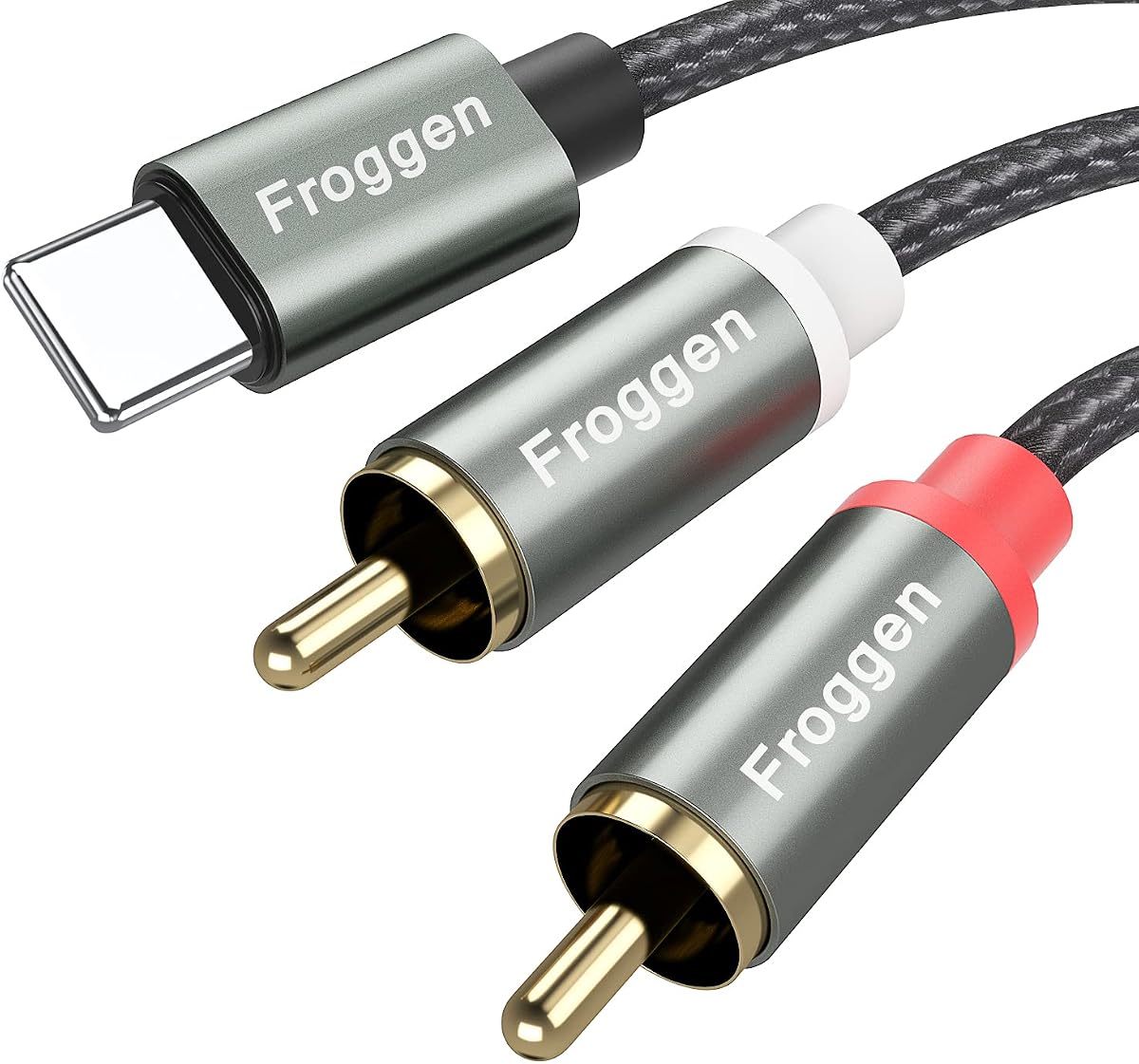
This 3-in-1 Lightning, USB-C, and 3.5mm to two-RCA cable combines several useful connection formats in one design. Its 4.5 rating reflects a strong balance of versatility and physical construction, while the stated compatibility with iPhones, iPads, USB-C phones, car auxiliary systems, amplifiers, receivers, and home-theater equipment makes it relevant to a wide range of older and newer audio setups.
We may earn a commission when you buy through this link, at no additional cost to you.
The cable's strongest feature is its ability to serve more than one kind of source device. The Lightning input supports compatible iPhones and iPads, while USB-C expands the options to modern phones and other compatible hardware. Its 3.5mm connector can be used with compatible phones, tablets, and music players. On the output side, gold-plated RCA connectors and an oxygen-free copper core are designed to support clear stereo audio, while dual shielding helps reduce outside interference.
Construction is another meaningful advantage. The double-braided nylon jacket is intended to resist bending, remain flexible, and resist tangling. A stated bend life of more than 20,000 cycles gives this product a durability-oriented position in the list. The trade-off is that buyers wanting only a simple Lightning connection may find the 3-in-1 design less streamlined than a dedicated cable, and users with a case around their phone should confirm that the relevant connector can fit.
This is an excellent choice for a household, car, or travel setup that includes both Apple and USB-C devices, or for someone who wants one cable to cover several source standards. It also suits users who want direct RCA connections to a stereo, television, amplifier, or speaker without installing apps or drivers. For those priorities, its combination of connector choice, shielding, and rugged construction makes it the most versatile option in this roundup.
The Lightning, USB-C, and 3.5mm inputs make this cable useful when audio sources change regularly. Rather than maintaining several adapters, a user can select the appropriate built-in connector and connect to the same red and white RCA outputs.
The double-braided jacket and stated 20,000-plus bend rating target a cable likely to be moved, coiled, and routed around a car or entertainment center. Its flexibility also helps reduce the pressure and strain associated with tightly packing a stiffer cable.
We may earn a commission when you buy through this link, at no additional cost to you.
This six-foot Lightning to two-RCA cable is a straightforward option for connecting compatible iPhones, iPads, and iPod models to a car stereo, home receiver, speaker, or power amplifier. It carries a 4.4 rating and focuses on the core task: carrying left and right audio from a Lightning device to a conventional stereo input without requiring another adapter.
We may earn a commission when you buy through this link, at no additional cost to you.
Its six-foot length is one of the most useful practical details. That length gives a phone enough reach to sit on a seat, table, or shelf while the RCA plugs connect to equipment that may be positioned farther away. Gold-plated connectors and copper are used to support conductivity and durability, while the product's broad device list covers numerous iPhone generations and several iPad families.
The main limitation is its narrow input format. Because it is designed specifically for Lightning, it will not serve as a USB-C or 3.5mm cable, and a buyer with a newer USB-C iPhone will need a different option. The listing also specifies support for iOS 17 and earlier, so buyers should verify recognition and compatibility with their current software environment. It is designed to work without an app, which keeps setup uncomplicated.
This cable is best for a user who owns one or more Lightning devices, wants a direct RCA connection, and values cable length without paying for a multi-connector design. It is also well suited to temporary use, such as taking an iPhone into the car or linking it to a home music system. For those needs, it offers useful length, straightforward setup, and solid compatibility at a budget-focused position in the guide.
A six-foot lead provides practical placement flexibility when the phone must remain visible or accessible while the RCA plugs reach a receiver or amplifier. It can reduce the need for an extension or an awkwardly short connection.
The dedicated Lightning connector and no-app design make this an uncomplicated choice for compatible Apple devices. Users only need to connect the Lightning end and place the red and white plugs into matching stereo inputs.
We may earn a commission when you buy through this link, at no additional cost to you.
This MFi Certified Lightning to RCA cable focuses on dependable connectivity between compatible Apple devices and conventional stereo equipment. Its 4.2 rating places it slightly below the leaders in the list, but the certification and clearly defined left and right outputs make it an appealing option for buyers who prioritize a recognized connection standard.
We may earn a commission when you buy through this link, at no additional cost to you.
The product is designed to work without additional hardware or app installation. Its listing highlights HIFI sound, gold-plated connectors, and an oxygenated copper core, all of which are intended to support stereo transmission and reduce the chance of unwanted noise. The red and white RCA plugs map clearly to right and left channels, making setup less prone to connection errors in a car receiver, home theater, speaker, or amplifier.
Compatibility is broad across older and newer Lightning-era iPhones, iPads, and iPod touch devices, although the stated support for iOS 14 and earlier is a meaningful limitation for November 2026 buyers. Software requirements can affect whether a product is recognized, and potential users should verify their device and operating system against the listing. The product also lacks the USB-C and 3.5mm alternatives offered by several three-in-one competitors.
This cable is a sensible choice for a compatible Lightning iPhone or iPad owner who values MFi certification, a simple direct connection, and no-app playback. It fits especially well when the destination equipment has clearly accessible red and white RCA inputs. Buyers who need USB-C support or want to use a recent USB-C iPhone should choose a more flexible model instead.
MFi certification provides a specific compatibility framework for accessories intended to work with Apple devices. It is particularly relevant for buyers who want a clearly identified cable rather than a generic Lightning accessory with broad or ambiguous compatibility language.
Using the conventional red for right and white for left arrangement reduces setup errors. The two outputs support a standard stereo connection, which is useful when the destination amplifier or receiver exposes separate channel inputs.
We may earn a commission when you buy through this link, at no additional cost to you.
This 3.3-foot MFi-certified Lightning to RCA cable is a compact option for connecting Apple devices close to a stereo receiver, amplifier, speaker, television, or car radio. It has a 4.5 rating, matching the leading product in the list, and its compact length may be especially convenient for storage, travel, and neatly arranged home-audio equipment.
We may earn a commission when you buy through this link, at no additional cost to you.
The construction details emphasize signal transfer. Gold-plated connectors and copper are used to support conductivity and durability, while the listing describes the goal as clean, low-interference stereo sound. Compatibility is extensive across iPhone 12 through 14 families, earlier Lightning iPhones, several iPad categories, and iPod touch. Setup requires only the Lightning connection and the red and white RCA plugs, with no app to install.
The principal compromise is reach. At 3.3 feet, the cable works best when the source device and destination input are near one another. It may be less convenient for a phone on a workbench, a device on a couch, or a car installation in which the stereo sits farther from the phone. It also has only a Lightning input, so buyers with USB-C phones or a mixed-device household will receive less flexibility from this cable.
This is a good selection for close-range use in a tidy home setup, a compact office speaker arrangement, or a car where the device can sit near the RCA input. Buyers who prioritize a short, portable cable and MFi certification will find it especially practical. Those needing more length or multiple input formats should compare it with the longer or three-in-one alternatives in this guide.
A 3.3-foot cable is easier to coil, carry, and place behind equipment than a longer lead. That makes this model a practical fit for users who want direct connectivity without a cable occupying excess space around a compact audio setup.
Gold-plated connectors and copper construction support the product's goal of reliable stereo transmission. MFi certification adds a clear compatibility identifier for buyers using compatible Lightning-based Apple hardware.
We may earn a commission when you buy through this link, at no additional cost to you.
This six-foot 3-in-1 RCA audio cable combines Lightning, USB-C, and 3.5mm inputs with a pair of RCA outputs. Its 4.4 rating and broad source-device support make it a practical choice for anyone alternating between an iPhone, an Android phone, a laptop, a tablet, or another compatible 3.5mm audio source.
We may earn a commission when you buy through this link, at no additional cost to you.
Its defining advantage is convenience. One cable can function as a Lightning-to-RCA adapter, a USB-C-to-RCA cable, or a 3.5mm-to-RCA aux cable. The product requires no apps or drivers, and its six-foot length provides extra freedom for a car audio setup, a living room system, or a DJ booth. Red and white outputs preserve conventional left and right stereo connections.
Users should consider the trade-offs of a multi-purpose cable. It may be bulkier than a dedicated Lightning lead, and compatibility depends on selecting the correct source connector. Modern iPhones that use USB-C rather than Lightning will need the USB-C branch, while users who only require one connection type may find a simpler dedicated cable easier to carry. The listing's mention of clean, stable sound is useful, but actual results also depend on the source, amplifier, and settings.
This model is best for mixed-device households, mobile presenters, or anyone who wants a single RCA cable for several source standards. It also suits drivers who may alternate between an iPhone, Android device, and a separate music player. If broad input choice and generous reach matter more than having the smallest dedicated adapter, it provides a convincing balance of convenience and features.
The three built-in source connectors make the cable practical for households that do not rely on one device type. It can serve Apple, Android, and other compatible sources without requiring separate RCA leads for each.
Six feet allows a source device to remain comfortably placed while still reaching a stereo, amplifier, or speaker. This is especially helpful in vehicles and temporary event or DJ arrangements where exact equipment positions can change.
We may earn a commission when you buy through this link, at no additional cost to you.
This three-in-one cable offers the strongest overall combination in the group, earning the highest listed rating at 4.8. It supports Lightning, USB-C, and 3.5mm sources while terminating in conventional red and white RCA connectors. That makes it especially valuable in 2026, when a household may include an older Lightning iPhone, a newer USB-C iPhone, Android devices, tablets, and MP3 players.
We may earn a commission when you buy through this link, at no additional cost to you.
The construction details reinforce its strong rating. Gold-plated connectors and a quality build are designed to support stable stereo transmission with less unwanted interference. A braided exterior, sturdy metal connector housings, and flexible strain-relief sections are intended to withstand regular plugging, unplugging, and bending. Its 4.92-foot length adds practical placement flexibility without becoming difficult to manage.
Compatibility is a notable strength, with the listing specifically covering Lightning iPhones, USB-C devices including recent iPhone and Galaxy series, Google Pixel models, and 3.5mm-equipped phones, tablets, and players. The product works with home amplifiers, stereo receivers, powered speakers, car systems, home theaters, and PA systems. The only meaningful source limitation is that the Lightning input itself does not serve Lightning iPhones replaced by the USB-C format.
This cable is the strongest recommendation for a buyer who wants flexibility, clear channel labeling, modern connector coverage, and reassuring physical construction in one product. It works particularly well for travelers, car-audio users, and mixed-device households. Even a buyer who currently owns only one device type benefits from having ready connections for the next upgrade or borrowed source.
Supporting both Lightning and USB-C addresses two eras of mobile hardware while the 3.5mm option covers traditional headphone outputs. That breadth reduces the need to replace an RCA cable whenever the user's primary device changes.
Braided insulation, metal connector housings, and flexible strain relief target the points where cables commonly weaken. These details are valuable for a lead that may be plugged and removed frequently in a car, office, or home entertainment area.
We may earn a commission when you buy through this link, at no additional cost to you.
The AGVEE 6.6-foot MFi Certified Lightning to RCA cable places unusual emphasis on connector engineering and signal handling. Its 4.3 rating reflects a well-specified product aimed at buyers who want more detail from the physical interface than a basic molded adapter provides.
We may earn a commission when you buy through this link, at no additional cost to you.
The listing identifies six-gap, high-elastic pure copper plugs designed to lower contact resistance and signal loss. It also describes an MFi chip supporting iOS 16 and earlier, along with an aluminum alloy shell treated by a micro-arc oxidation process. These details indicate an emphasis on contact durability, stable connections, and a housing designed to withstand handling and wear.
The cable also receives 15,000-plus bend testing, while the stated TPE material is designed to remain flexible in extreme temperatures. A nylon fabric exterior adds another layer of protection. Its main limitation is compatibility: it offers a dedicated Lightning input and is not a three-in-one design. In addition, the specified iOS 16 and earlier support should be checked against the user's current software, particularly if recognition is important.
This cable is best for a Lightning-device owner who appreciates a longer cable, MFi certification, and thoughtfully described connector materials. It can be useful in a home-theater, powered-speaker, or car arrangement where cable reach is valuable. The recommendation is strongest for buyers willing to verify software and device support before use rather than those who need USB-C compatibility out of the box.
The six-gap pure copper plug design is presented as a way to improve contact area and reduce resistance. For an analog stereo connection, consistent contact and shielding can help preserve the intended signal between the source and amplifier.
Aluminum alloy housings offer a rigid point of protection around the plug ends, while the stated TPE and nylon construction target flexibility and tensile durability. These features are useful when the cable is routed around a dashboard, entertainment unit, or amplifier.
We may earn a commission when you buy through this link, at no additional cost to you.
This ten-foot 3-in-1 cable is built for extended reach, offering Lightning, USB-C, and 3.5mm source connections with red and white RCA outputs. Its 4.4 rating and lengthy design make it a practical choice for installations where the source device must sit well away from the amplifier, receiver, television, or powered speakers.
We may earn a commission when you buy through this link, at no additional cost to you.
The ten-foot length is the defining feature. It allows a phone or tablet to remain on a table, couch, counter, or different shelf while the RCA plugs reach a more distant stereo component. The cable also supports a wide range of devices, including iPhone, Galaxy, LG, and Pixel phones, MP3 players, and iPad, Galaxy, and Fire tablets. Destinations include receivers, speakers, amplifiers, televisions, cars, and other RCA-equipped equipment.
Signal construction is designed for stable stereo playback. The product description identifies a double-shielded, gold-plated connector, an oxygenated copper core, and a double nylon braid. A stated 10,000-plus bend life supports regular use, while connector handles are intended to make the RCA plugs easier to insert and remove. The main trade-off is bulk: ten feet is excellent for reach but can be inconvenient to pack and may create excess slack in a compact setup.
This model is best for a car with widely separated source and receiver positions, a home room where the device is played away from the stereo, or a temporary event setup needing generous cable distance. It is less attractive for travelers who value a compact bundle. If reach is your primary requirement, however, its three input formats make it a strong and flexible choice.
Ten feet provides considerable placement freedom between a source device and the RCA-equipped system. It can be particularly valuable when the listener does not want to sit directly beside the receiver or speaker.
RCA connector handles are designed to make insertion and removal easier, particularly when plugs are mounted closely together. The red and white color coding also reduces confusion when identifying left and right channels.
We may earn a commission when you buy through this link, at no additional cost to you.
This 3.4-foot Lightning to two-RCA Y-adapter is aimed at owners of Lightning-era iPhones, iPads, and iPod devices who need a short direct connection to a sound box, amplifier, or home-theater system. It has a 4.3 rating and emphasizes a compact braided cord, plug-and-play use, and broad compatibility across older supported devices.
We may earn a commission when you buy through this link, at no additional cost to you.
The cable uses a gold-plated RCA connection, oxygen-free copper wire, shielding, and an upgraded MFi-certified chip according to the supplied listing. Its nylon outer layer is intended to provide tensile strength, softness, light weight, and resistance to tangling. Red and white RCA plugs identify the right and left channels, and no app installation is needed for playback.
Compatibility is the central concern. The product explicitly states that it cannot be used with iPhone 15 and later models, which use a USB-C connection instead of Lightning. It also cannot be used with an iPod case, and the listing advises trying to upgrade the iPhone's iOS version if the cable is not recognized. The cable cannot directly drive a passive speaker without an amplifier, an important distinction for buyers assembling a new audio system.
This is a suitable choice for someone with an older Lightning iPhone or compatible iPad who wants a short, protected cable for an existing amplifier or home-theater receiver. It is less suitable for recent iPhone owners or people who need direct speaker operation without amplification. Checking the device, case, and software details before ordering will prevent avoidable compatibility problems.
At 3.4 feet, the adapter keeps the phone close to the connected stereo system. It can simplify a tidy desktop, shelf, or car arrangement where a long cable would be unnecessary.
A phone-to-RCA cable sends an audio signal but does not provide the power needed to operate passive speakers. The destination should therefore be an amplifier, receiver, active speaker, or another system with its own amplification.
We may earn a commission when you buy through this link, at no additional cost to you.
This three-foot Lightning to RCA adapter provides a simple path from compatible iPhones to a car stereo, home receiver, power amplifier, or speaker. Its 4.3 rating and dedicated design make it a practical option for users who do not need USB-C or 3.5mm flexibility and want a compact stereo connection.
We may earn a commission when you buy through this link, at no additional cost to you.
Gold-plated connectors and copper are used to support conductivity and durable stereo transmission. The product is designed for direct playback without additional hardware, apps, or software. Its compatibility information covers numerous iPhone families, including the 5, 6, 7, 8, X, XR, XS, 11, and 12 series listed by the manufacturer, and it is also described as compatible with more than 90 percent of cars.
The three-foot length is the main practical limitation. It is suitable when the phone and the amplifier or receiver are close together, but it may offer insufficient reach in a larger room or an installation where the device is placed on a distant table. A dedicated Lightning connector also makes it unsuitable for current USB-C iPhones. The cable is an audio adapter, not an amplifier, so passive speakers still require an appropriate powered system.
This cable is best for a compatible Lightning iPhone owner seeking a no-nonsense connection to a nearby car stereo, amplifier, receiver, or speaker. It is also useful as a simple backup cable for trips or older vehicles. Buyers should choose a multi-input option if they expect to connect a USB-C device, and a longer model if the source and destination will not be positioned close together.
The dedicated Lightning-to-RCA format is easy to understand and use. A compatible iPhone connects at one end, while the red and white plugs attach to the vehicle's available RCA input.
Gold-plated connectors and copper provide the physical basis for a dependable analog connection. The compact design also makes the cable easy to place in a center console, near a receiver, or beside a compact amplifier.
We may earn a commission when you buy through this link, at no additional cost to you.
The right Lightning to RCA cable depends on your devices, destination equipment, required reach, and tolerance for a dedicated versus multi-purpose design. Review connector formats, channel configuration, construction, and compatibility before ordering.
A dedicated Lightning cable is the simplest option for older iPhones, many iPads, and some iPod devices, but it cannot connect a phone that uses USB-C. The supplied listings include several Lightning-era iPhone generations, while one explicitly excludes iPhone 15 and later. Products with both Lightning and USB-C inputs are safer for long-term mixed-device use, and USB-C-only Lightning adapters are increasingly important for current iPhone owners.
A 3-in-1 cable includes Lightning, USB-C, and 3.5mm source connections, allowing one lead to serve phones, tablets, and traditional audio equipment. This is useful for households with Apple and Android devices or for users who travel with a media player. The trade-off is additional bulk, so a dedicated Lightning cable may be easier to manage if you know exactly which source you will use.
Most home and car receivers use separate red and white RCA sockets for right and left channels. Color-coded plugs make setup easier and reduce the chance of reversed channels. Make sure the destination provides a stereo RCA input rather than a single combined connector, and connect red to right and white to left.
Compact cables of roughly three feet suit close-range use and travel, while six feet provides more freedom in a car or living room. Ten-foot options can reach across a larger space but may create excess slack and take up more room when stored. Measure the intended route from the phone to the receiver or amplifier and choose enough length to avoid a strained connection.
Quality construction can help preserve a clean stereo signal. Gold-plated connectors, copper or oxygen-free copper conductors, and shielding are recurring features among the stronger listings. These details are especially relevant near car power systems, home theater equipment, and other electronics. No cable can compensate for an unsuitable or underpowered destination, however, so the amplifier and source settings remain important.
Braided nylon or similar outer jackets can resist abrasion, reduce tangling, and make a cable easier to handle. Several products also state bend-test figures ranging from 10,000 to more than 20,000 cycles. These claims do not guarantee a specific service life, but they provide a useful indication of the manufacturer's durability focus. Reinforced strain relief near the connectors deserves similar attention.
MFi certification is a useful identifier for Lightning accessories designed to meet Apple compatibility requirements. It should not replace checking the current product listing and operating-system requirements, since some supplied descriptions mention support only through older iOS versions. If recognition warnings appear, updating the device software may help, but incompatible connectors will not be solved by a software update.
A Lightning to RCA cable carries an audio signal; it does not normally provide the amplification required to drive passive speakers. Look for powered speakers, a stereo receiver, an amplifier, or a car system with compatible RCA inputs. Active speakers can work directly because they contain their own amplification, while passive bookshelf or floor-standing speakers need a suitable amplifier.
First, identify the correct source branch on the cable. If you are using a Lightning device, connect the Lightning plug directly to the port without forcing it. USB-C and 3.5mm users should select their corresponding input. Inspect the source and destination connectors for dust or debris, and make sure the phone is not in a case that obstructs the plug.
Next, locate the stereo RCA input on the car stereo, amplifier, receiver, powered speaker, or other destination. Connect the white plug to the left channel and the red plug to the right channel. Turn the source volume down before making the connection, then start playback at a low level. If there is no sound, check that the correct input is selected on the receiver and that the destination is powered.
For care, unplug the cable by holding the connector rather than pulling on the wire. Coil it loosely instead of creating a sharp bend, and keep the braid and strain relief away from hot surfaces or pinching points. When the Lightning end is not in use, protect it from moisture and dust, and replace the cable if a plug becomes loose, the jacket is visibly damaged, or the audio develops persistent interference.
It connects a compatible Lightning iPhone, iPad, or iPod to equipment with red and white RCA stereo inputs. Common destinations include car stereos, home receivers, amplifiers, powered speakers, and home-theater systems. The cable carries analog audio and does not normally provide speaker amplification.
Most dedicated Lightning cables cannot connect directly to iPhone 15 or later models because those phones use USB-C. Look for a cable with a USB-C input branch instead, or use an appropriate USB-C-to-RCA cable. A passive USB-C adapter alone may also require a separate USB-C audio adapter that explicitly supports audio.
It works when the car stereo has an available red and white RCA input, usually labeled AUX, and the phone has a compatible connector. One product in the guide claims compatibility with more than 90 percent of cars, but the actual vehicle should be checked for RCA sockets and supported input sources.
Passive speakers require an amplifier or receiver that supplies power. Powered or active speakers contain their own amplification and can be connected more directly. A Lightning to RCA cable transports the audio signal but does not replace the power needed to drive passive speakers.
Check that the red and white plugs are seated, the correct input is selected on the amplifier or car stereo, and the destination is powered. Also confirm that the phone's software is current and that the connector is fully inserted. Some listings note that older iOS versions may prevent recognition, while a case that is too thick can also obstruct the connection.
A 3-in-1 cable is more flexible because it can accept Lightning, USB-C, and 3.5mm audio sources. It is especially useful for mixed-device households and current USB-C iPhone owners. The trade-off is that it may be bulkier than a dedicated Lightning cable, so the best choice depends on whether versatility or a compact dedicated connection matters more.
MFi certification indicates that an accessory has been designed to meet Apple's compatibility requirements for supported devices and accessories. It can provide greater confidence in basic device recognition. Buyers should still check the listing's current iOS requirements because certification does not make a Lightning connector compatible with a USB-C iPhone.
Store it loosely coiled in a dry, protected location. Avoid tight loops, sharp bends, and places where the connector can be pulled or crushed. Keeping the Lightning plug covered also helps prevent dust and moisture from collecting around the contact points.
The 3-in-1 Lightning, USB-C, and 3.5mm to RCA cable is the strongest premium-style choice for users who want broad source compatibility, gold-plated connectors, shielding, and rugged braided construction. The more compact three-in-one model earns the strongest overall recommendation because it combines the highest listed rating with modern connector coverage and reinforced strain relief. The six-foot dedicated Lightning adapter stands out as a budget-conscious option for compatible Apple devices.
The most important choice is connector compatibility. Verify whether your device uses Lightning or USB-C, confirm that the destination has red and white RCA inputs, and decide whether a short or long cable better suits the layout. Buyers who share equipment among several device types should favor a 3-in-1 design, while dedicated Lightning users can focus on length, MFi certification, shielding, and construction.
Ratings, software support, product availability, and prices can change, so check the current listing and customer feedback before ordering. Also confirm the destination system's power requirements and keep the cable within its stated compatibility. With those checks completed, the right Lightning to RCA cable can provide a straightforward, durable route from a phone or tablet to a car stereo, receiver, amplifier, or powered speaker.