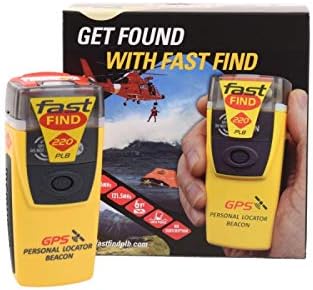
McMurdo FastFind 220
4.5Editor score
US-programmed registration
Simple three-step activation
No subscription required
Our expert Satellite Messenger Personal Locator Beacon guide compares emergency beacons, tracking devices, and satellite communicators for coverage, features
A satellite messenger personal locator beacon can provide a critical lifeline when cellular service disappears, but the best device depends on the journeys you take. Important differences include registration rules, emergency coverage, position accuracy, battery life, return-link confirmation, two-way communication, weight, and whether a subscription is required.
This guide compares ten leading safety beacons and satellite communicators, including dedicated personal locator beacons from ACR, Ocean Signal, McMurdo, and Jotron alongside Garmin inReach models. The evaluation focuses on the supplied specifications, including satellite systems, waterproofing, GNSS capabilities, strobes, operating life, messaging functions, and intended use.
Each review shows how a product fits into different safety plans, from minimalist emergency alerts to interactive communication and location sharing. Ratings and product details may change, so readers should verify current specifications, regional registration requirements, service requirements, and listing details before making a final purchasing decision.
4.5Editor score

4.8Editor score

4.7Editor score
The comparison below highlights the major differences among dedicated personal locator beacons and subscription-based satellite communicators, including alert confirmation, positioning systems, battery expectations, lighting, messaging, and physical portability.


The McMurdo FastFind 220 Personal Locator Beacon is a focused emergency device for travelers who want satellite distress alerts without a monthly communications service. It carries a 4.5 rating and stands out for its uncomplicated activation process: deploy the antenna, remove the anti-tamper seal, and press the ON button. That simplicity is valuable when an accident, injury, or sudden disappearance leaves little time or attention for a complicated interface.
We may earn a commission when you buy through this link, at no additional cost to you.
This listing is programmed for registration in the United States. Although the beacon can function internationally, the initial emergency contact would be the US Search and Rescue authorities with which it is registered. The listing also notes that a separate rest-of-world option is available and that a reprogramming service is included with that alternative. Buyers outside the US should therefore confirm the correct registration configuration rather than assuming the US-programmed unit is appropriate for their location.
The main trade-off is intentional simplicity. The FastFind 220 sends an emergency distress signal but does not offer the two-way text conversations, location sharing, weather forecasts, or interactive coordination found in Garmin satellite communicators. It should be viewed as a rescue beacon rather than a general-purpose satellite communication device. Registration is also legally required in most countries, and the product should only be activated in situations of grave and imminent danger because false alerts can divert rescue resources.
The FastFind 220 is a strong choice for hikers, boaters, and travelers seeking a simple, subscription-free emergency backup. It is particularly attractive for people who may struggle with smartphone menus or who want a dedicated device with as few functions as possible. Register it correctly, carry it where it remains accessible, and understand that activation sends an emergency alert rather than a casual status update.
The antenna, anti-tamper seal, and ON button create a short activation sequence that can be followed even under stressful conditions. There is no need to unlock a screen, connect a phone, select contacts, or type a message before the distress function becomes available.
Registration links the beacon to the owner and any supplied travel information, which can help rescuers begin a response more quickly. The listed model is configured for the US, while international travelers may need the separately programmed regional version or the available reprogramming service.
We may earn a commission when you buy through this link, at no additional cost to you.
The ACR ResQLink View RLS PLB is the strongest all-around dedicated personal locator beacon in this group. Its 4.8 rating reflects a well-rounded feature set, including Return Link Service, a digital display, GPS and Galileo GNSS, MEOSAR compatibility, built-in buoyancy, a multifunction clip, and more than 24 hours of operational life. It also operates without a subscription, so users do not need a continuing service to keep the emergency function available.
We may earn a commission when you buy through this link, at no additional cost to you.
Return Link Service is the defining benefit. Rather than leaving the user uncertain about whether the distress alert reached the rescue network, the beacon confirms that Search and Rescue has received the signal. That feedback can provide substantial reassurance after activation, although it should not be mistaken for the same continuous interaction offered by a staffed satellite monitoring service.
The display and infrared strobe improve visibility and usability. The digital display offers a clear way to review status, while the infrared strobe supports signal detection in emergency situations. The compact, lightweight form includes buoyancy, which is especially useful around water, and the multifunction clip makes it easier to attach to clothing, a lifejacket, or outdoor gear. The trade-off is that this remains a personal locator beacon rather than a messaging terminal, and the display may be more than a traveler needs who prioritizes minimal size.
This is an excellent recommendation for hikers, paddlers, boaters, climbers, and international travelers who want confirmed distress transmission without a subscription. It combines positioning, visibility, attachment versatility, and return-link feedback in a purpose-built device. Those who need to contact friends, exchange information, or coordinate a detailed rescue plan should consider a Garmin inReach communicator instead.
Return Link Service sends confirmation that the emergency distress signal has been received by Search and Rescue. This closes an important feedback gap left by beacons that transmit without telling the user whether the alert was accepted.
Compatibility with GPS, Galileo GNSS, and MEOSAR supports accurate location acquisition and links the device to a broad satellite rescue network. These standards make the unit well suited to travelers moving across regions and international borders.
We may earn a commission when you buy through this link, at no additional cost to you.
The ACR ResQLink 400 PLB is a dependable satellite emergency beacon for users who prioritize broad rescue coverage and clear nighttime visibility. Its 4.7 rating reflects a mature feature set built around 406 MHz distress and 121.5 MHz homing signals, global Cospas-Sarsat and MEOSAR support, GPS and Galileo GNSS, and both LED and infrared strobes.
We may earn a commission when you buy through this link, at no additional cost to you.
The dual strobes are especially useful after dark. The bright LED helps rescuers identify the device visually, while the infrared strobe enhances detection in low-light and nighttime conditions. A homing signal can also assist rescuers in finding the beacon when they are already near the distress location. Together, these features make the ResQLink 400 well suited to hiking, paddling, mountaineering, and other activities where finding a person quickly matters.
The device works with international government rescue satellite infrastructure and requires no ongoing subscription, which simplifies ownership compared with a satellite communicator. Its limitation is functional focus: it is built to transmit a distress alert rather than support two-way conversations, daily check-ins, photo sharing, or weather requests. It also does not provide the Return Link Service confirmation available in the View RLS and ResQLink 410 RLS, so buyers who value visible confirmation may prefer one of those alternatives.
The ResQLink 400 is a strong choice for global travelers and outdoor users who want a dedicated, subscription-free beacon with robust positioning and visibility. It is best suited to people who already have a separate method for routine communication and only need the device for emergencies. Register it for the appropriate region, carry it consistently, and include it in a broader trip plan.
The combination of LED and infrared strobes supports both direct visual detection and low-light rescue. This dual-light approach is valuable when weather, terrain, or the time of day makes the wearer difficult to see.
Because the beacon operates without a subscription, owners can keep emergency coverage available without a recurring service charge. Its support for Cospas-Sarsat and MEOSAR networks makes it relevant to international travel.
We may earn a commission when you buy through this link, at no additional cost to you.
The Ocean Signal rescueME PLB1 is designed for travelers who want a very small emergency beacon that can be carried without becoming a burden. At just four ounces, it is among the most portable options in the guide, and the supplied information says it is 30 percent smaller than the maker's next-smallest beacon. Its 4.6 rating reflects a capable combination of compact construction, one-handed operation, GPS reception, waterproofing, and long battery life.
We may earn a commission when you buy through this link, at no additional cost to you.
The mounting clip makes the unit particularly natural for a lifejacket, while its small size suits backpacks, pockets, and safety harnesses. It can be operated with one hand, an important feature when the user is injured, wearing gloves, or otherwise unable to manage a complex device. A 66-channel GPS receiver supports location acquisition, and the one-candela high-intensity strobe improves visibility if rescuers reach the wearer before seeing the beacon.
Water resistance extends to 49 feet, which gives the PLB1 a reassuring level of protection for marine and wet-weather use. The seven-year battery and more than 24 hours of operating life support long-term readiness, while international government rescue satellites provide the alert route without a subscription. The main disadvantages are the lack of Return Link Service and the absence of two-way messaging, so the device offers less feedback and interaction than some alternatives.
The rescueME PLB1 is an excellent match for minimalists, solo travelers, paddlers, and anyone who prioritizes low weight and intuitive activation. It is less appropriate for users who need to communicate with family before an emergency, exchange trip details, or confirm that the distress alert was received. For a small, durable, service-free beacon, however, it offers a particularly balanced feature set.
The four-ounce housing and 49-foot waterproof capability make the PLB1 easy to integrate into a lifejacket or other wet-weather kit. Its size encourages consistent carrying, which can matter as much as technical capability in a real emergency.
The seven-year battery and subscription-free operation simplify long-term ownership. International rescue satellites provide the emergency pathway, making the beacon practical for travelers who want the function without a recurring communication service.
We may earn a commission when you buy through this link, at no additional cost to you.
The Jotron Tron SA20 PLB combines traditional emergency signaling with convenient digital status checks. Its supplied specifications identify 406 and 121.5 MHz emergency frequencies, Return Link Service, integrated Near-Field Communication, GPS and Galileo GNSS, waterproof construction, SOLAS approval, and a programmed option for US registration. No customer rating is supplied, so buyers should evaluate its documented capabilities rather than relying on a numerical review history.
We may earn a commission when you buy through this link, at no additional cost to you.
The NFC feature is a useful middle ground between a basic beacon and a fully interactive communicator. Users can apparently obtain a status readout through a compatible smartphone without needing a separate subscription for that readout function. Return Link Service adds another layer of confidence by indicating when the distress signal has been received and the location identified.
The listed 11-year battery lifespan is especially notable for a device intended to remain ready for long periods. Its compact and lightweight design supports regular carrying, and the emergency frequencies allow it to serve both maritime and land-based use. The principal drawback is that it remains a personal locator beacon rather than a general satellite communicator. Users who need ongoing two-way contact, location sharing, or weather information will need a different device class.
The Tron SA20 is well suited to travelers who want simple emergency signaling plus modern status convenience. US buyers can use the programmed listing, while the product information states that free reprogramming is available after purchase when needed. Those who value a long battery life, receipt confirmation, and phone-assisted checks without a full communications subscription should give this model careful consideration.
Integrated Near-Field Communication allows status information to be read through a compatible smartphone. This offers a convenient way to check the beacon without turning it into a full satellite messaging terminal.
The stated 11-year battery lifespan supports the idea of maintaining a dedicated emergency device for many years. Always confirm the battery condition, registration, and self-test status before remote travel.
We may earn a commission when you buy through this link, at no additional cost to you.
The ACR ResQLink View PLB425 is a versatile personal locator beacon with a 4.6 rating and a broad collection of attachment methods. Once activated, it sends an SOS distress signal with a GPS position to Search and Rescue worldwide through the 406 MHz emergency signal, supplemented by a 121.5 MHz homing signal. It does so without requiring a subscription for the core rescue function.
We may earn a commission when you buy through this link, at no additional cost to you.
The included clips are a notable strength. The product supplies a belt clip, oral inflation tube clip, straps, and lanyards, allowing the beacon to be worn or secured in several ways. Buoyancy and rugged, lightweight construction also make it suitable for paddling, boating, and other activities where a device may end up in water. The bright LED strobe and infrared strobe improve the chance of visual detection once rescuers arrive.
Optional 406Link testing functionality can send pre-canned non-emergency self-test and GPS test messages to multiple contacts by SMS or email with a customized message. This can be useful for scheduled checks, but the testing subscription is separate from the core emergency operation. The beacon still does not provide interactive conversations with rescuers, so it should be considered a dedicated alert-and-location tool rather than a satellite phone.
This model is an excellent fit for active outdoor users and families who want one beacon that can be carried in several ways. Its varied attachment system, buoyancy, global satellite support, and dual strobes make it especially adaptable. Travelers who require daily messaging or confirmed return-link reception should compare it with the View RLS and Garmin alternatives, but for a flexible dedicated beacon, the PLB425 is highly capable.
Belt, lanyard, strap, and oral inflation tube clips make it easier to keep the beacon positioned where it suits the activity. Consistent, convenient attachment can improve the likelihood that a user reaches the device promptly.
The optional 406Link service supports non-emergency self-tests, GPS tests, and customized messages to selected contacts. It can help owners verify operation, although the core alert function does not depend on the testing subscription.
We may earn a commission when you buy through this link, at no additional cost to you.
The ACR ResQLink 410 RLS is built around a clear promise: transmit an emergency distress signal and confirm that Search and Rescue received it. The device has a 4.5 rating, operates without a subscription, and offers more than 24 hours of operational life alongside a five-year battery life. It also supports GPS, Galileo GNSS, and MEOSAR for positioning and rescue-network compatibility.
We may earn a commission when you buy through this link, at no additional cost to you.
Return Link Service is the central feature. The alert owner can receive confirmation when the distress signal reaches the responsible rescue channel, providing useful evidence that the emergency message was not sent blindly. Built-in buoyancy, a small and lightweight form, and both visible and infrared strobes make the beacon suitable for environments where visibility and water exposure are concerns.
The multifunction clip system allows attachment to a lifejacket, belt, pack, or other gear. That versatility is useful for users who move between hiking, boating, and general travel rather than specializing in one activity. Compared with a Garmin inReach communicator, however, the ResQLink 410 RLS offers much less routine communication. It cannot provide weather forecasts, check-ins, text exchanges, or location sharing for followers, so its appeal is concentrated on emergency performance.
The ResQLink 410 RLS is a strong recommendation for users who want a dedicated global beacon with signal-receipt feedback and no ongoing communication charge. It is particularly attractive to travelers who already carry separate navigation and everyday communication tools. For those needs, pairing it with a phone, paper map, and appropriate trip plan provides a more complete safety setup.
Return Link Service tells the owner that Search and Rescue received the distress signal. That confirmation can make the response process feel less uncertain, although emergency services should still determine the appropriate rescue action.
GPS and Galileo GNSS improve positioning options, while MEOSAR compatibility links the beacon to satellite-based rescue infrastructure. Built-in buoyancy adds protection for travelers operating around water.
We may earn a commission when you buy through this link, at no additional cost to you.
The Garmin inReach Mini 3 Plus is the most capable all-in-one communications device in this guide, combining a personal locator beacon with two-way messaging, interactive SOS support, tracking, weather information, and smartphone features. Its 4.7 rating reflects a broad feature set, while the global Iridium network allows operation in places without cellular coverage.
We may earn a commission when you buy through this link, at no additional cost to you.
An interactive SOS message can include location coordinates and reach a 24/7-staffed international coordination center, creating a more conversational rescue process than a conventional distress-only beacon. Users can also exchange photos, texts, and voice messages through the Garmin Messenger app. LiveTrack lets friends and family follow a journey and see information such as distance, elapsed time, and elevation, which gives loved ones a better picture of a traveler's progress.
The rugged high-resolution touchscreen is scratch-resistant and has an IP67 water rating. The internal rechargeable battery can support up to 350 hours with 10-minute tracking or up to 95 hours in performance messaging mode. A major consideration is the active satellite subscription requirement. Users must also check local restrictions because some jurisdictions regulate or prohibit satellite communication devices. The touchscreen and app-based workflow are more capable but also more complex than a basic PLB.
The inReach Mini 3 Plus is ideal for travelers who want routine communication and emergency coordination in one device, especially those taking multi-day trips where check-ins and weather forecasts are valuable. It is less appropriate for someone seeking the smallest possible service-free beacon. Garmin Explore integration, voice commands, weather requests, and phone-free satellite reception make it a strong choice for active users who value flexible connectivity.
The interactive SOS function sends location information to a 24/7-staffed Garmin response center. This creates a channel for further coordination that a one-way distress beacon cannot provide.
Two-way texts, voice messages, photos, weather reports, and LiveTrack turn the device into a practical travel companion. An active satellite subscription is required for these network-dependent functions.
We may earn a commission when you buy through this link, at no additional cost to you.
The Garmin inReach Messenger is built for travelers who want dependable two-way communication in areas without cellular coverage. It carries a 4.5 rating and uses the global Iridium satellite network to send and receive texts through the Garmin Messenger app. Group messaging, threaded conversations, preset check-ins, and GPS location sharing make it more useful for routine trip coordination than a conventional personal locator beacon.
We may earn a commission when you buy through this link, at no additional cost to you.
The device also supports an interactive SOS that connects with a 24/7-staffed monitoring and coordination center. That means users can initiate a location-bearing emergency request and then potentially exchange information about their situation. It also pairs with select smart devices, other Garmin handhelds, wearables, and marine equipment, giving it useful value for people already invested in the Garmin ecosystem.
The internal rechargeable battery can last up to 28 days in 10-minute tracking mode, and it can provide safety charging for a depleted phone. The trade-offs are service dependence and the need for an active satellite subscription. The product information also notes that some jurisdictions regulate or prohibit satellite communication devices, so travelers should verify local rules. Compared with the Mini 3 Plus, the Messenger emphasizes simple text-centric communication rather than a larger touchscreen experience.
The inReach Messenger is a compelling option for hikers, boaters, families, and international travelers who want to check in before an emergency occurs. It is particularly useful for groups that need group chats and shared location updates. Choose it when communication flexibility matters more than having the smallest possible dedicated beacon, and keep the subscription active whenever the device's network functions are needed.
The ability to send and receive messages distinguishes the Messenger from a conventional PLB. Group threads and preset check-ins make it useful for coordinating with several people before conditions become dangerous.
A stated battery life of up to 28 days in 10-minute tracking mode supports extended journeys. Actual runtime varies with use, and the device requires an active satellite subscription for network communications.
We may earn a commission when you buy through this link, at no additional cost to you.
The Garmin inReach Messenger Satellite Communicator Bundle pairs the core communicator with several practical travel accessories. The package includes the handheld, a 10-foot USB Type A to USB Type C cable, USB charging adapters, a USB car adapter, a 6Ave microfiber cleaning cloth, and a P-Bank portable battery charger. Its supplied 5.0 rating makes it an attractive complete-kit option, although buyer experiences with bundled items can vary.
We may earn a commission when you buy through this link, at no additional cost to you.
The communicator itself provides global two-way text messaging, threaded conversations, group chats, check-ins, location sharing, and interactive emergency response through a 24/7-staffed coordination center. It can switch between cellular and satellite networks for optimal connectivity, confirm message status, and read responses directly on the device. These capabilities make it a strong travel communications hub rather than merely a distress beacon.
The bundle's value lies in having the charging and cleaning equipment available from the beginning. The portable battery charger and car adapter are particularly relevant for extended trips, while the cable and USB adapters support a range of charging arrangements. Detailed weather updates and TracBack navigation back to the starting point add further utility. As with the standard Garmin models, an active satellite subscription is required, and local restrictions may apply.
This bundle is best for new owners who want a complete initial setup, particularly travelers who will use the device for multi-day communication and emergency planning. Those who already own suitable cables and chargers may find the standard device more streamlined. Either way, the core combination of messaging, location sharing, weather information, and interactive SOS makes this a versatile option for remote travel.
The included cables, adapters, car charger, cleaning cloth, and portable battery provide a convenient starting point. These accessories can be particularly helpful on long trips where charging opportunities are limited.
Threaded and group messaging, direct message-status confirmation, location sharing, weather updates, and TracBack navigation make the communicator useful beyond emergency response. Network functions still require an active satellite subscription.
We may earn a commission when you buy through this link, at no additional cost to you.
The right safety device depends on your activities, location, emergency expectations, and willingness to maintain a satellite service. Consider the distinction between a dedicated alert beacon and an interactive communicator before comparing the technical details.
A dedicated personal locator beacon is designed primarily to transmit an SOS distress alert and position information. It usually offers simple activation, long battery readiness, and no recurring subscription, but it may not provide two-way conversations, weather reports, or routine location sharing. An interactive satellite communicator uses a cellular or satellite network to send and receive messages and can connect users with a staffed response center. That extra functionality is useful for check-ins and detailed emergencies, but it introduces a service requirement.
Most countries require personal locator beacons to be registered, and registration links the device to the owner's identity and relevant travel information. The McMurdo FastFind 220 and Jotron Tron SA20 listings shown here are programmed for US registration, with alternative regional or reprogramming information noted in their product details. Before buying, verify the correct country code, register the device through the applicable authority, and update the registration whenever your contact information or travel plans materially change.
Look for support for the satellite systems relevant to your travel area. Dedicated beacons commonly use Cospas-Sarsat and MEOSAR networks, while Garmin communicators use the global Iridium network. Modern GPS and Galileo GNSS support can improve positioning options, and some models also report that their location has been identified through Return Link Service. Consider where you will travel, whether you cross borders, and whether you need precise positioning in canyons, forests, or open terrain.
Emergency equipment is most useful when it is charged, current, and carried. Devices such as the Ocean Signal rescueME PLB1 and Jotron Tron SA20 list multi-year battery lifespans, while the ACR models specify five-year battery life and extended operating periods. Garmin communicators use rechargeable batteries with substantial tracking runtimes. Pay attention to the difference between total battery lifespan, emergency operating duration, and battery performance in tracking or messaging modes. Periodic self-tests remain important even for units with long advertised service lives.
A beacon that is too bulky may be left behind, while one that is difficult to reach in a lifejacket or backpack can be slow to activate. The rescueME PLB1 weighs four ounces and includes a mounting clip. The ACR ResQLink View PLB425 offers belt, oral inflation tube, strap, and lanyard options. Other models use multifunction clips. Choose a size and carrying method that suit your activities, and ensure the device remains attached but remains easy to reach during an emergency.
Positioning tells rescuers where you are, but visibility can help them find you once they are close. The ACR models include combinations of LED and infrared strobes, while the rescueME PLB1 has a one-candela high-intensity strobe and a stated waterproof capability of 49 feet. Boaters and paddlers should prioritize buoyancy and water resistance, while climbers, skiers, and night hikers should examine strobe visibility. A rugged exterior is also useful for equipment bags and outdoor storage.
Dedicated personal locator beacons in this guide generally operate without a subscription, while Garmin inReach devices require an active satellite subscription for messaging, tracking, and interactive SOS functions. This difference affects preparation: a beacon may remain ready with little ongoing attention, whereas a communicator needs a valid service plan whenever the user expects it to work. Review the service's coverage, permitted uses, and local regulatory status before leaving the country. Never assume that a previously active device will provide network functions without current service.
Emergency controls should remain understandable under pressure. The FastFind 220 uses a three-step sequence involving its antenna, anti-tamper seal, and ON button, while the rescueME PLB1 emphasizes one-handed operation. Garmin units add app-based workflows, screens, and configurable interactions. New owners should learn the relevant controls before travel, avoid performing an actual emergency alert during practice, and use official self-test procedures. A device is only as useful as the owner's understanding of how and when to use it.
Before any trip, read the device's official instructions, confirm that it is registered to the correct user and region, and complete the manufacturer's recommended self-test. Check that the battery is charged or within its stated service life, update the emergency contact and travel information stored during registration, and confirm that the enclosure, antenna, clip, and buttons show no damage. For a subscription-based communicator, verify that the service is active and that the paired smartphone app and account are ready for use.
Carry the unit in the manner suggested for the activity and make sure it is accessible without unpacking your entire kit. On dedicated PLBs, deploy the antenna as directed, remove the anti-tamper protection where specified, and press the activation control in a calm, deliberate sequence. Learn the differences between an actual SOS alert, a self-test, a GPS test, and ordinary messaging. Never activate a real distress alert merely to test the unit, because false alerts can divert rescue personnel and create serious disruption.
After activation, keep the device accessible, preserve battery power, and avoid moving far from the registered or last known location unless safety demands it. If the unit offers Return Link Service, use the confirmation to understand whether the alert was received, but continue to follow instructions from emergency authorities. Following an emergency, inspect and dry the device, replace the battery if needed, and ensure the SOS mechanism is reset correctly. Serviceable models should be inspected by the manufacturer or an authorized specialist before being relied upon again.
A personal locator beacon primarily sends a distress alert and position to rescue authorities, usually with simple activation and no recurring service. A satellite messenger also supports routine two-way messages, check-ins, location sharing, weather information, and often an interactive SOS service. The messenger is more versatile but normally requires an active satellite subscription and more user interaction.
Registration is legally required in most countries and is essential even where it is not enforced in the same way. It links the device to the owner's identity and may provide rescuers with travel information. Users should register for the appropriate region, keep contact details current, and confirm whether a beacon requires annual or periodic renewal.
The listed McMurdo FastFind 220 can function worldwide, but its initial emergency contact and registration are configured for the US. The product information points international buyers to a separate rest-of-world listing that includes a reprogramming service. Travelers should confirm regional programming, register the exact serial number properly, and understand how the beacon will be identified locally.
The network-dependent features described for the Garmin models require an active satellite subscription. That includes two-way messaging, location sharing, tracking, weather services, and interactive emergency response. A dedicated ACR, Ocean Signal, McMurdo, or Jotron personal locator beacon in this guide does not rely on a recurring subscription for its core emergency alert function.
Return Link Service provides confirmation that Search and Rescue has received the distress signal and can indicate that the beacon's location has been identified. It adds useful feedback after activation but does not replace the rescue process or guarantee that a particular response time will be achieved. Models such as the ACR ResQLink View RLS, ResQLink 410 RLS, and Jotron Tron SA20 include this feature.
Many are designed for marine use, but buyers should check the specific model's buoyancy, waterproof rating, attachment method, and SOLAS status. The Ocean Signal rescueME PLB1 is stated to be waterproof to 49 feet, while ACR models include built-in buoyancy. A lifejacket clip and suitable location remain as important as the device's water-resistance rating.
Follow the manufacturer's stated self-test schedule and test before an extended trip, after long storage, or whenever the device has been exposed to impact, moisture, or temperature extremes. Use only the approved self-test function and never send a real distress alert as a test. For Garmin communicators, also confirm that the subscription, app pairing, account, and location settings are working.
A satellite messenger can provide valuable two-way communication, but a dedicated personal locator beacon offers a simpler emergency path with long battery readiness and no recurring service in most cases. Some travelers carry both: the beacon as a straightforward emergency backup and the communicator for daily check-ins, weather, navigation, and detailed coordination. The right combination depends on the trip, participants, and service reliability.
The ACR ResQLink View RLS is the best overall choice for a dedicated personal locator beacon because it combines subscription-free operation, Return Link Service, a visibility display, multi-constellation positioning, buoyancy, and dual strobes. The ACR ResQLink 400 is a strong alternative for travelers who prioritize global rescue coverage and nighttime visibility, while the McMurdo FastFind 220 offers a straightforward, service-free emergency beacon for US buyers.
Choose according to the communication you need. Pick a compact dedicated PLB when the primary goal is an uncomplicated distress alert, and consider the Ocean Signal rescueME PLB1 for low weight. Choose a Garmin inReach model when check-ins, two-way messages, location sharing, weather, and interactive response are important, while accounting for the active service requirement. Registration, regional programming, attachment, battery readiness, and local regulations deserve attention before departure.
Product specifications, customer feedback, and listing contents can change over time, so review the current product page and official documentation before purchasing. Confirm the exact model, regional registration process, battery status, included accessories, service terms, and current availability. A final live check ensures that the device and its support services are appropriate for the specific journey.