
Epson FastFoto FF-680W
4.5Editor score
One photo per second
Single-pass photo capture
Wireless photo organization
A scanner for calligraphy should preserve fine strokes, subtle ink variations, paper texture, and the overall character of a finished piece without introducing unnecessary sharpening or color changes. The best choice depends on whether you work with loose sheets, bound references, photographs, negatives, or large collections of artwork and supporting documents.
We compared all ten products according to the information supplied for this guide, focusing on scan speed, resolution, paper handling, image-enhancement features, connectivity, OCR, and support for photographs or older media. The list includes document feeders, flatbed scanners, film scanners, a light pad, and a barcode reader so readers can identify the right type of tool for different archival and creative workflows.
Each review explains the product's strongest capabilities, practical limitations, and most suitable user. Ratings and technical details reflect the supplied listings, while availability and pricing can change; readers should confirm the current specifications, accessories, software compatibility, and latest cost directly with the seller before purchasing.
4.5Editor score

4.3Editor score
4.1Editor score
As an Amazon Associate we earn from qualifying purchases.
The comparison below covers document-focused, photo-focused, film-scanning, and specialty devices. The distinctions show why some options suit active calligraphy collections, while others are better for digitization, reference documents, or older photographic material.



The ScanSnap iX2500 is the strongest all-around option in this guide for calligraphers who regularly digitize loose artwork, practice sheets, reference documents, and correspondence. Its supplied rating is 4.3, and the device combines a large touchscreen, 45-page-per-minute duplex scanning, a 100-sheet feeder, and both wireless and wired connectivity in a modern package.
We may earn a commission when you buy through this link, at no additional cost to you.
Its greatest strength is workflow control. Users can select personalized profiles on the touchscreen and route files to a computer, Mac, mobile device, cloud service, or favorite application through the Quick Menu. Automatic optimization, naming, and sorting reduce the work required after scanning, while document, receipt, photo, and business-card support broadens its usefulness beyond finished calligraphy pieces.
The paper-protection system is particularly reassuring for an active collection. A brake roller feeds pages smoothly, a multi-feed sensor identifies sheets stuck together, and skew detection helps prevent physical damage and lost data. Those features matter when repeatedly feeding finished artwork, handwritten notes, or mixed paper sizes through an automatic feeder.
The main limitation is its document-scanner format. It is not a flatbed and is not designed to capture bound manuscripts, three-dimensional objects, or oversized sheets. Even so, for a calligrapher with a large volume of loose pages, it offers the best combination of speed, capacity, organization, and connectivity in the list, making it our top overall recommendation.
Personalized touchscreen profiles and automatic naming make it easier to save calligraphy consistently by project, client, style, or date. Cloud and computer destinations also support a repeatable workflow that can grow with a larger body of work.
The brake roller, multi-feed detection, and skew protection help reduce jams and page damage. These safeguards are useful when originals vary in thickness or when a large batch needs to be processed in one session.
We may earn a commission when you buy through this link, at no additional cost to you.
The Epson Workforce ES-50 is a practical choice for calligraphers who travel, teach remotely, attend workshops, or want a compact scanner that can move between a home office and a shared studio. It carries a supplied rating of 4.3 and is built around portability, quick one-page scanning, and straightforward operation.
We may earn a commission when you buy through this link, at no additional cost to you.
The scanner can digitize pages up to 8.5 by 72 inches, making it more useful for calligraphy than its small footprint initially suggests. Long exercises, instructional sheets, and vertically arranged practice pages can be captured in a single scan. It also handles receipts and identification cards, while USB power removes the need for batteries or an external supply.
Epson ScanSmart provides a guided workflow for scanning, reviewing, and saving files. Nuance OCR can create searchable PDFs and editable Word or Excel documents, and the included TWAIN driver broadens compatibility with imaging software. Automatic feeding mode also combines inserted pages into a single file, reducing the need to merge individual scans manually.
Its limitations are equally clear: the ES-50 accepts only one sheet at a time, and its standard connection is USB rather than wireless. It is therefore better suited to deliberate, portable capture than high-volume office processing. For artists who value flexibility and long-sheet support over feeder capacity, it remains one of the most useful products here.
Its compact body and USB-powered operation make the ES-50 easy to carry between classes, meetings, and studios. A Mac or Windows computer provides the processing power, while no separate battery or external power adapter is required.
Support for sheets up to 72 inches is valuable for extended writing samples and instructional exercises. This reduces the need to join several narrow scans when documenting a long continuous piece.
We may earn a commission when you buy through this link, at no additional cost to you.
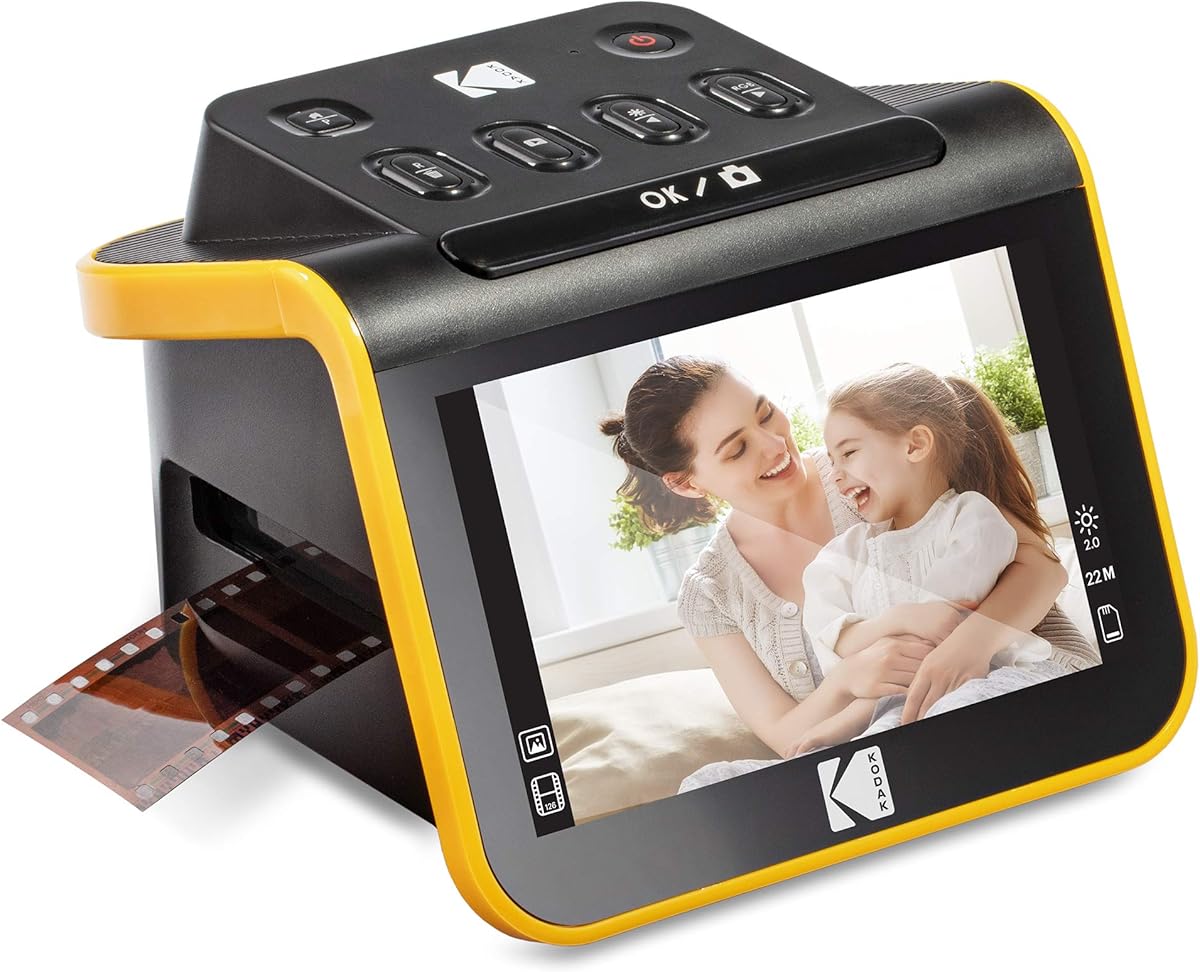
The KODAK Slide N Scan is built for photographic and film material rather than conventional sheets of calligraphy. It earns a place in this guide because calligraphers often document finished pieces, studio scenes, reference photographs, and historical visual material. The supplied rating is 4.3, while the headline feature is 22-megapixel film capture.
We may earn a commission when you buy through this link, at no additional cost to you.
Its five-inch LCD provides an immediate way to frame, view, edit, and share images. Holders and adapters support 135, 110, and 126mm negatives as well as 50mm slides. Quick-feed inserts support continuous loading, and the included USB and HDMI cables make connection to a computer or display straightforward.
Capture software simplifies the process by providing choices for film type, color and brightness adjustments, date and time assignment, resizing, and conversion. Output can be saved directly to an SD or SDHC card, although a card up to 32GB is not included. USB Type-C support allows use with compatible computers.
This is not a document scanner, so it cannot replace a feeder or flatbed for preserving handwritten sheets. Its value lies in a different part of the creative archive: digitized photographs and negatives. Calligraphers with meaningful slide collections or analog visual references will find its preview screen and format support especially useful.
The built-in LCD makes it possible to check framing and image quality before accepting a scan. That immediacy is valuable when preserving negatives or photographs that cannot easily be rescanned.
Support for 135, 110, and 126mm negatives plus 50mm slides broadens the device beyond modern standard formats. The included holders make it easier to handle several kinds of archival material.
We may earn a commission when you buy through this link, at no additional cost to you.
The Brother DS-640 prioritizes portability and a small footprint. Its supplied rating is 4.3, and at less than one foot long and about 1.5 pounds, it can fit into a bag or other compact working setup. It is designed for calligraphers who need to capture loose sheets away from a permanent desk.
We may earn a commission when you buy through this link, at no additional cost to you.
Scans can reach 16 pages per minute, with color scanning operating at the same stated speed as black-and-white capture. The included micro USB cable powers the device from a computer or laptop, eliminating the need for a wall outlet or separate battery. That makes it convenient for travel, appointments, and pop-up studio sessions.
The Brother iPrint&Scan application supports destinations including a computer, network, cloud services, email, and OCR. Compatibility extends across Windows, Mac, and Linux, with TWAIN, WIA, ICA, and SANE support. Automatic color detection, rotation, bleed-through prevention, background removal, text enhancement, and color drop help improve output with minimal manual intervention.
The DS-640 does not offer the large touchscreen or automatic feeder of desktop workflow scanners, and its stated speed is modest compared with higher-volume models. Nevertheless, for a traveling artist who values size, broad operating-system support, and flexible destinations, it is a capable compact companion.
The DS-640 occupies very little desk or carrying space while still supporting OCR and cloud workflows. It is a practical option for quick captures between larger archival sessions.
Color detection, rotation, text enhancement, background removal, and bleed-through prevention help produce cleaner files. These adjustments are particularly useful for mixed batches of artwork notes, worksheets, and correspondence.
We may earn a commission when you buy through this link, at no additional cost to you.
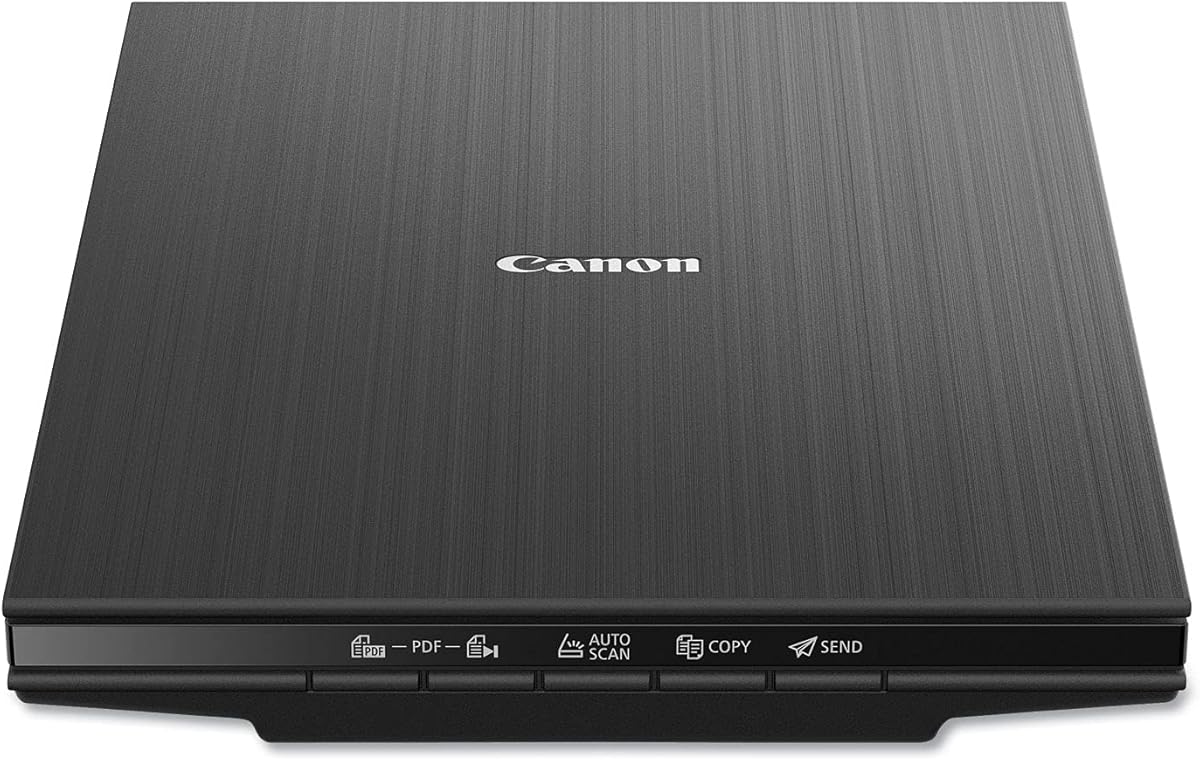
The Canon CanoScan LiDE 400 is an approachable flatbed option for calligraphers who want to scan both finished artwork and traditional paper photographs. It has a supplied rating of 4.1 and stands out through its 4800 by 4800 dpi resolution, slim body, and dedicated photo-enhancement features.
We may earn a commission when you buy through this link, at no additional cost to you.
Its flatbed design allows loose sheets to be placed directly on the glass, which suits individual compositions, lettering samples, cards, and photographs. The scanner can also automatically detect the document type. Dedicated PDF buttons help save editable and searchable multi-page files, reducing some of the effort involved in organizing smaller collections.
For visual material, 4800 dpi provides substantial detail, while color restoration and dust removal can improve older or imperfect images. The included USB Type-C cable handles both data and power, simplifying connections with compatible computers and reducing cable clutter.
The trade-off is manual page placement and the absence of an automatic feeder. It is better suited to selective, detail-oriented capture than rapid batch processing. Even so, its resolution, photo features, and approachable design make it a sensible value choice for beginners and occasional calligraphers.
Placing a finished piece directly on the glass provides a simple way to capture it without feeding it through rollers. The 4800 dpi resolution is especially useful for fine strokes and compact lettering samples.
Color restore and dust removal help older photographs retain a more presentable appearance. These features extend the scanner beyond written artwork to support a broader studio reference archive.
We may earn a commission when you buy through this link, at no additional cost to you.
The Slide Viewer Light Pad is a compact backlight designed for photographing slides and film negatives with a phone or camera. Its supplied rating is 4.4, and while it is not a conventional document scanner, it offers an accessible way to digitize transparent visual references that can complement a calligraphy collection.
We may earn a commission when you buy through this link, at no additional cost to you.
The illuminated working area measures 12.2 by 8.2 inches, while the entire unit is only 0.27 inches thick. Three brightness levels help control exposure, and the white LED color temperature is listed between 10,000 and 12,000K. The flat, even light source helps reduce the shadows and uneven illumination that can appear when photographing mounted material.
A USB cable is included, and the pad can draw power from a computer, laptop, mobile power source, adapter, or hub. Two magnets help hold slides or negatives in place, reducing the need to flatten curled film. A scale along the edge assists with measurement and setup.
The light pad relies on a compatible app to capture and edit images. The supplied listing mentions a free app as well as SlideScan and FilmBox options. For calligraphers, it can also serve as a tracing, painting, sketching, or observation light, although it should not be confused with a full-resolution document feeder.
The slim illuminated surface gives slides and negatives a consistent background for camera capture. Its compact size makes it far easier to store or carry than a conventional enclosed scanner.
Beyond photography, the pad can support tracing, painting, sketching, and close observation. Calligraphists can use it as a portable tracing surface when working from a physical reference.
We may earn a commission when you buy through this link, at no additional cost to you.
The Epson FastFoto FF-680W is the premium choice in this guide, with a supplied rating of 4.5. It is optimized for photographers and visual artists who want to preserve large batches of photographs efficiently, while its duplex capability can also capture handwritten notes on the back of a photo.
We may earn a commission when you buy through this link, at no additional cost to you.
At 300 dpi, the scanner can process as many as 36 photos in a batch at approximately one photo per second. Supported items include Polaroid photographs, panoramas, postcards, and prints up to 8 by 10 inches. Single-step technology captures the image and writing on the reverse in one pass, preserving context that a conventional single-sided photo scan could lose.
The image engine includes auto enhancement, color restoration, red-eye reduction, de-skewing, cropping, and rotation. Users can choose 300 dpi for sharing, 600 dpi TIFF for archiving, or 1200 dpi for enlargement. The FastFoto app also allows voice and text additions and slideshow creation, while Dropbox and Google Drive support easier sharing and backup.
A carrier sheet and microfiber cloth are included for handling delicate photographs, and the supplied information notes the inclusion of Safetouch technology. It also handles documents up to 240 inches and supports OCR. Its specialized photo workflow and protective requirements make it less general-purpose than a simple flatbed, but it is an exceptional choice for a substantial visual archive.
Capturing the image and its reverse in a single pass keeps handwritten notes, dates, and provenance with the original. That makes the scan more useful as an archival record than a one-sided image alone.
A batch capacity of 36 photos and a one-photo-per-second rate suit large archives. FastFoto software and mobile organization reduce the manual effort involved in preparing a collection for sharing.
We may earn a commission when you buy through this link, at no additional cost to you.
The Tera Barcode Scanner is a specialized inventory device rather than an image scanner. It has a supplied rating of 4.4 and earns inclusion because calligraphy studios, workshops, and small art businesses may need to track packaged prints, kits, supplies, or client assets using barcode-based systems.
We may earn a commission when you buy through this link, at no additional cost to you.
It supports 2.4GHz wireless communication through a USB receiver, with a stated barrier-free range of up to 328 feet. A USB 2.0 wired connection is also available, giving operators a way to continue working when wireless conditions are unsuitable. Setup is plug-and-play, and no driver installation is required.
The extended, widened handle and smooth trigger are designed for comfortable repeated use. A battery indicator shows remaining charge, while an orange silicone cover helps protect against scratches, friction, and drops from as much as 6.56 feet. IP54 protection adds resistance to dust in a busy studio environment.
It supports a broad range of 1D symbologies, including common retail, industrial, and book-related codes, and the listing says it can read damaged, fuzzy, reflective, or smudged labels. It cannot digitize calligraphy, so it should only be considered when inventory management is the actual goal.
A cordless reader allows staff to move around shelves and worktables without remaining tethered to a computer. The wired option provides flexibility for fixed packing stations.
The protective cover, dust resistance, and battery indicator support dependable daily use. The grip and trigger are shaped for repeated scanning rather than occasional document capture.
We may earn a commission when you buy through this link, at no additional cost to you.
The ScanSnap iX1300 is a compact duplex document scanner aimed at users who want fast digitization without dedicating substantial desk space. Its supplied rating is 4.1, and it can scan up to 30 pages per minute while automatically correcting skew, optimizing color, and removing blank pages.
We may earn a commission when you buy through this link, at no additional cost to you.
The space-saving design makes it attractive for a compact calligraphy workspace. It handles documents, photographs, cards, and thicker items, which gives it enough versatility for lettering samples, mounted pieces of suitable thickness, business materials, and supporting paperwork. The QUICK MENU supports scanning and dragging files directly into favored computer applications.
Connectivity includes USB and Wi-Fi. Files can be sent to a Mac, PC, mobile device, or cloud service, and the device can be used without a computer. ScanSnap Home software organizes documents, receipts, business cards, photos, and other scanned material, making it easier to maintain a mixed creative archive.
Compared with the iX2500, the iX1300 provides less processing power and no large touchscreen, although it remains fast and compact. It is a good fit for a home studio or small office where desk space is important and duplex automation is sufficient.
The compact body is useful in studios where scanners compete with pens, inks, cutting mats, and reference books. It can remain available for quick digitization without taking over the work surface.
USB, Wi-Fi, mobile-device, and cloud options support different working patterns. ScanSnap Home adds centralized organization for photos, receipts, cards, and standard documents.
We may earn a commission when you buy through this link, at no additional cost to you.
The Epson Workforce ES-400 II is a high-speed desktop document scanner for calligraphers who also manage a busy administrative workflow. Its supplied rating of 4.5 is among the highest in the group, while the 50-sheet automatic document feeder and duplex scanning make it efficient for repetitive work.
We may earn a commission when you buy through this link, at no additional cost to you.
Epson ScanSmart supports previewing, automatic file naming, email delivery, cloud uploads, and simple storage and sharing. OCR creates searchable PDFs and converts documents into editable Word or Excel files. Direct scanning to services such as Dropbox, Evernote, Google Drive, and OneDrive reduces the number of steps between capture and filing.
Image-processing features include automatic cropping, blank-page removal, and background removal. The feeding system uses ultrasonic double-feed detection and dynamic skew correction to help prevent missing or damaged pages, making it well suited to mixed batches of handwritten notes, invoices, client forms, and practice pages.
The ES-400 II is not a flatbed, so it cannot capture bound journals or oversized calligraphy directly. It also centers on wired office integration rather than wireless mobility. Nevertheless, for an established studio that values dependable high-volume document capture and searchable output, it is a strong finishing choice.
Automatic naming, email output, cloud destinations, and Office conversion help move scanned material into active business systems. This is valuable for client records and commission documentation.
Ultrasonic double-feed detection and dynamic skew correction help identify feeding problems before they compromise a page. These features make the scanner suitable for mixed stacks of studio paperwork.
We may earn a commission when you buy through this link, at no additional cost to you.
The right scanner depends on the physical form of your work, the volume of material, and how you want to use the resulting files. Resolution, handling, software, and workflow should be considered together rather than in isolation.
Choose by artwork format first, then by volume. Use a feeder for loose-sheet archives and a flatbed for fragile or mounted originals.
Higher resolution is useful for fine strokes and small compositions. Choose the lowest level that still serves the intended output.
Match capacity to the size of your archive. Prioritize page detection and correction features when scanning mixed originals.
Choose USB for simplicity or Wi-Fi for placement flexibility. Confirm that destination software supports your operating system.
OCR improves business documents but may struggle with ornate scripts. Verify important text against the original image.
Use a flatbed for fragile originals and protective sheets for photographs. Inspect originals before automated capture.
Evaluate the complete software workflow, not only the hardware. Make sure its exports and organization tools suit your files.
Begin by sorting originals before scanning. Separate loose pages, mounted artwork, photographs, slides, negatives, and delicate pieces so that each device receives materials within its intended format. Clean the glass or feeder area, confirm that the correct paper guide or carrier is installed, and connect the scanner using the supplied or recommended cable. For wireless models, complete the stated Wi-Fi setup before handling a large batch to avoid losing time if a destination or computer is not available.
Capture a representative test rather than immediately processing the entire collection. Inspect fine strokes, faint ink, color balance, page order, and the edges of the image. For calligraphy, compare the scan with the original under normal viewing light and look for unwanted sharpening, color shifts, or missing texture. OCR results should also be checked on any page where exact wording matters. Save an initial file in a suitable working format before creating additional copies for editing, sharing, or archiving.
After use, remove originals gently, clean the glass and rollers according to the manufacturer guidance, and store the scanner in a dry area. Protect digital files by keeping organized backups in more than one location, and include a simple naming system for dates, projects, styles, and formats. Slide and negative holders should be kept clean and dry, while camera-based light-pad workflows should preserve the original unedited capture alongside any enhanced version.
The Canon CanoScan LiDE 400 is the most relevant flatbed in this list for individual paper pieces. It captures loose pages directly on the glass and offers 4800 dpi resolution, photo enhancement, and automatic document detection. A feeder model may be faster for archives, but careful flatbed placement is generally preferable for fragile, mounted, or visually important work.
Higher resolution is valuable when the piece contains fine strokes, small details, or dense scripts that will be enlarged. Resolution requirements vary by purpose, so higher is not always necessary for ordinary reference notes. Check that the device captures enough detail at the intended output size without applying excessive automatic enhancement.
The feeders in this guide are generally intended for loose sheets, and forcing a bound journal through one can damage the binding or artwork. For bound material, photograph each page carefully or use a flatbed where the page can be opened safely and captured in sections. The Canon is the clearest flatbed choice among the listed products.
The ScanSnap iX2500 is built for volume, with 45-page-per-minute duplex scanning, a 100-sheet feeder, and automatic organization. The Epson ES-400 II is also suitable for office archives, with a 50-sheet feeder, searchable PDFs, and direct delivery to email or cloud services. Both are more appropriate for batch processing than the portable single-sheet models.
A document scanner captures paper pages, photographs, and cards through a flatbed or feeder. A film scanner is designed for transparent negatives and mounted slides, often with a preview screen and format-specific holders. The KODAK Slide N Scan and Epson FastFoto serve visual-archive needs, while the ScanSnap, Epson, Brother, and Canon models focus primarily on paper documents.
Wireless scanning can be useful when it lets the device sit closer to artwork, shelves, or worktables without forcing a long cable across the workspace. It also simplifies sending files to mobile devices or cloud destinations. Wired USB remains useful for fixed setups, so the best choice depends on studio layout and software preferences rather than wireless alone.
OCR is most dependable on conventional printed text and consistently formed handwriting. Highly connected letters, unusual letterforms, flourishes, ink variation, and textured paper can reduce recognition accuracy. Treat OCR as a convenience for search and editing, then verify important passages against the scanned image.
Organize by stable, searchable criteria such as year, project, client, style, medium, and original format. Consistent file names and folder structures make large collections easier to browse and back up. Keep the original scan alongside any edited version, and use more than one storage location to protect the archive from device failure.
The ScanSnap iX2500 is the best overall recommendation because it combines fast duplex throughput, a generous feeder, touchscreen profiles, wireless and wired connections, and automatic organization. The Epson FastFoto FF-680W is the premium choice for large photographic and visual collections, while the Canon CanoScan LiDE 400 provides the strongest value-oriented flatbed option for individual artwork and paper photographs.
Your priorities should determine the category. Choose a feeder for high-volume loose pages, a flatbed for carefully placed originals, and a film scanner or light pad for slides, negatives, and transparent references. The Epson ES-50 and Brother DS-640 serve portable workflows, while the ES-400 II and iX1300 fit established office and home-studio systems.
Before ordering, confirm the physical size and condition of your originals, current software compatibility, included accessories, and the type of output you need. Ratings and specifications provide a useful starting point, but the latest product details, availability, and cost can change. Check the current listing for the final purchasing decision.
