
ACR ResQLink View RLS PLB
4.8Editor score
Return Link Service confirmation
No subscription required
Five-year battery life
Discover the best Personal Locator GPS Beacon options, comparing registration, satellite coverage, battery life, portability, visibility, and emergency
A personal locator GPS beacon provides an independent way to send an emergency alert when a phone has no signal and conventional rescue methods fail. The best models combine reliable satellite positioning, long battery life, simple activation, visible strobes, and proper registration with the appropriate rescue authorities.
This guide compares ten beacons and satellite communicators using the supplied specifications, ratings, feature descriptions, and intended use cases. It examines satellite systems, registration needs, operational life, physical design, visual signals, messaging capability, and the extra survival equipment included with selected bundles.
Each review identifies the qualities that make a product distinctive and the limitations worth considering before purchase. The overall ranking reflects the information available for this edition rather than personal field testing. Product specifications, availability, and pricing can change, so readers should verify current details before buying.
4.8Editor score

4.6Editor score
4.5Editor score
The comparison below places all ten options side by side, focusing on the features that affect emergency signaling, portability, registration, battery endurance, positioning, and visibility. It also distinguishes dedicated distress beacons from a two-way satellite communicator included for broader outdoor messaging.


The ACR ResQLink View RLS PLB is a feature-rich emergency beacon rated 4.8, placing it at the top of this ranking. Its standout advantage is Return Link Service, which confirms that Search and Rescue has received the distress signal. That feedback reduces the uncertainty an emergency user may otherwise face while waiting for help.
We may earn a commission when you buy through this link, at no additional cost to you.
Positioning is handled through GPS and Galileo GNSS, with MEOSAR compatibility supporting global rescue coverage. The digital display helps users interpret the device, while the infrared strobe and regular visual display improve visibility to rescuers. A five-year battery life and more than 28 hours of operational life support long-term readiness without a subscription requirement.
The device also has built-in buoyancy and a lightweight, compact enclosure. Its multifunction clip can support several ways of carrying it, making it suitable for boating, hiking, and other outdoor settings. The tradeoff is that it is not as minimalist as some dedicated beacons, and buyers seeking the smallest possible emergency device may prefer a more compact model.
This is the strongest all-around choice for users who value confirmation that an alert reached the rescue network. It suits travelers who want detailed status information, broad satellite compatibility, and a generous readiness period without recurring fees. For those priorities, the View RLS PLB is a particularly complete and reassuring package.
The Return Link Service feature confirms receipt of the emergency distress signal by Search and Rescue. In a survival situation, that indication can provide meaningful reassurance while the user remains in the location where activation occurred.
GPS, Galileo GNSS, MEOSAR compatibility, a digital display, and an infrared strobe work as complementary systems. Together, they help establish a position and make the user easier for rescuers to identify when sightlines and weather permit.
We may earn a commission when you buy through this link, at no additional cost to you.
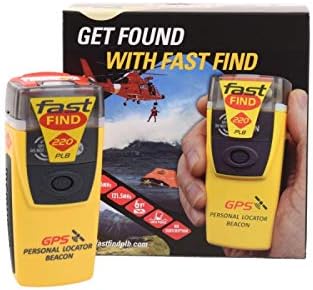
The McMurdo FastFind 220 is a focused personal locator beacon with a 4.5 rating and an emphasis on straightforward emergency use. Its three-step activation process—deploying the antenna, pulling the anti-tamper seal, and pressing the ON button—reduces the amount of decision-making required when conditions are poor.
We may earn a commission when you buy through this link, at no additional cost to you.
This listing is programmed with the US country code. It can function internationally, but the initial emergency point of contact is the US Search and Rescue authority associated with the registration. The product data also notes that registration is required by law in many countries, making proper setup essential rather than optional.
The main limitation is regional programming. Travelers outside the United States should confirm whether this listing matches their registration country or choose a version programmed for their region. A false activation can also disrupt rescue services, so the device should be reserved for grave and imminent danger rather than used casually.
The FastFind 220 is a strong budget-oriented option for users who want a simple, portable beacon without paying for a display and a broad collection of status features. It is particularly suitable for domestic trips where the US-programmed registration is appropriate.
Deploying the antenna, removing the anti-tamper seal, and pressing the ON button gives the user a clear emergency sequence. This direct design is useful when cold, injury, darkness, or panic may complicate operation.
The registered owner and emergency contacts provide rescuers with vital information. The supplied description explains that missing details can delay a search-and-rescue operation, making registration one of the most important setup tasks.
We may earn a commission when you buy through this link, at no additional cost to you.
The ACR ResQLink View PLB425 earns a 4.6 rating and stands out as a compact, buoyant beacon for land and marine adventures. Once activated, it sends an SOS distress signal with a GPS position through the 406 MHz emergency distress system, supported by a 121.5 MHz homing signal.
We may earn a commission when you buy through this link, at no additional cost to you.
The device uses the three COSPAS-SARSAT satellite constellations to reach Search and Rescue agencies worldwide without requiring a rescue monitoring center. A bright LED strobe and infrared strobe provide additional visual signals, while the buoyant housing and included clips make it particularly relevant to boaters as well as hikers and campers.
Optional 406Link testing functionality permits non-emergency self-tests and GPS tests to be sent to multiple contacts by SMS or email with a customized message. That capability depends on the optional subscription, so users should distinguish it from the core distress function, which does not require a subscription.
The PLB425 is a well-rounded recommendation for users who want buoyant construction, global positioning, and several wearing options in one device. It may be especially attractive to families preparing separate emergency kits because its attachments support belts, straps, lanyards, and inflation-tube clips.
Built-in buoyancy makes the PLB425 a natural choice for boating and other environments where a beacon may end up in water. Its attachment clips also allow it to remain connected to personal gear rather than sitting loose in a pocket.
The bright LED strobe supports ordinary visibility, while the infrared strobe offers a complementary signal for nighttime or low-light conditions. Neither replaces positioning, but both can help rescuers detect the user more quickly.
We may earn a commission when you buy through this link, at no additional cost to you.
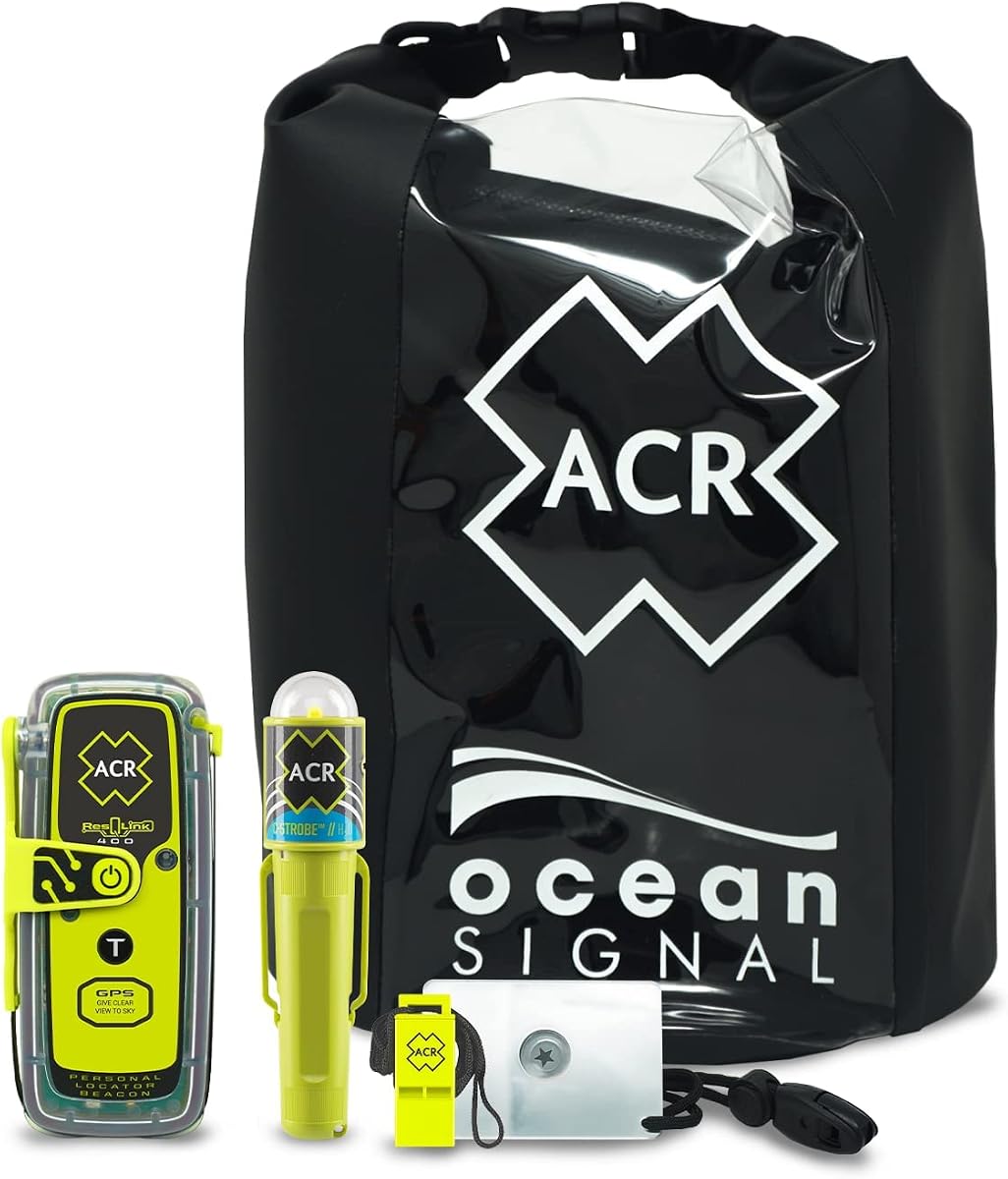
The ACR ResQLink 400 Survival Kit combines a GPS personal locator beacon with several traditional rescue tools. Its 4.7 rating reflects a package that goes beyond satellite distress signaling, giving the user several ways to become visible or audible during an emergency.
We may earn a commission when you buy through this link, at no additional cost to you.
The C-Strobe H2O rescue light provides a waterproof, high-visibility LED signal for day or night. A Res-Q Whistle can attract nearby attention, the RapidDitch drybag protects essential gear from water, and the signal mirror can reflect sunlight toward rescuers over a long distance.
The primary beacon supplies GPS tracking, a bright strobe, and the core emergency signaling expected from the ResQLink 400. Compared with a bare beacon, however, this package is bulkier and may duplicate equipment already present in a prepared emergency kit. Users should assess what they already carry before deciding.
This bundle is well suited to hikers, campers, and roadside travelers who want a ready-made collection of survival signals. It is a particularly convenient starting point for someone building a kit for the first time, while experienced outdoorspeople may prefer the individual accessories that best match their equipment.
A satellite beacon can transmit a precise distress message, while the light, whistle, and mirror can help someone locate the user nearby. These complementary methods are useful if the beacon is damaged, its signal is not yet received, or rescuers have arrived but need to pinpoint a position.
The RapidDitch drybag keeps emergency equipment dry and accessible. Protecting the beacon and nearby essentials can be particularly important in wet environments where moisture could affect usability or organization.
We may earn a commission when you buy through this link, at no additional cost to you.
The Ocean Signal rescueME PLB1 is built around portability and simple emergency activation. At four ounces, it is small enough to take up little room in a backpack and includes a mounting clip for attaching it to a lifejacket. Its 4.6 rating reflects a capable dedicated beacon rather than a general communications device.
We may earn a commission when you buy through this link, at no additional cost to you.
The one-hand operating design is intended to make activation easier under difficult conditions. A 66-channel GPS receiver supports positioning, and a 1-candela high-intensity strobe provides visibility. The housing is waterproof to 49 feet, extending its practical relevance to boating and other wet environments.
Its seven-year battery life and more than 24 hours of operational life offer a strong readiness balance. The device uses international government rescue satellites and requires no subscription. It is designed primarily to send an SOS distress alert, so travelers expecting routine two-way conversations, tracking screens, and media sharing should look elsewhere.
The rescueME PLB1 is an excellent choice for paddlers, boaters, hikers, and skiers who prioritize low weight and uncomplicated operation. Its restrained feature set keeps the emergency process clear, which can be valuable when the wearer is injured, wearing gloves, or dealing with harsh conditions.
A beacon is only useful if it is present when an emergency occurs. The PLB1's four-ounce weight, compact proportions, and lifejacket clip make it practical to carry continuously rather than leave at home or in a vehicle.
The PLB1 prioritizes distress signaling, positioning, and visibility. That focus makes it dependable for its intended purpose, although it does not replace a satellite communicator for everyday check-ins, detailed weather information, or interactive group messaging.
We may earn a commission when you buy through this link, at no additional cost to you.
The ACR ResQLink 400 PLB 2921 is a capable no-subscription distress beacon with a 4.7 rating. It sends 406 MHz distress and homing signals through Cospas-Sarsat and MEOSAR satellite systems, giving it a broad international rescue framework without a recurring communication plan.
We may earn a commission when you buy through this link, at no additional cost to you.
GPS and Galileo GNSS support accurate positioning, while the LED strobe and infrared strobe improve visibility in low-light and nighttime environments. These features make the beacon a solid core option for hiking, boating, climbing, camping, and other activities where cellular service is absent or unreliable.
The product is deliberately more focused than a satellite communicator. It does not advertise the kind of two-way texting, group messaging, or media-sharing experience available from devices such as the Garmin inReach Mini 3 Plus. Buyers who want ordinary satellite communication in addition to emergency alerting should account for that distinction.
The ResQLink 400 PLB is a compelling choice for someone who wants an established emergency beacon without another subscription. Its straightforward role, broad coverage, and dual strobes provide a useful balance for travelers who already have separate communication tools or who primarily need a distress signal.
Cospas-Sarsat and MEOSAR compatibility broadens the rescue infrastructure available to the beacon. Combined with GPS and Galileo GNSS positioning, the system is well suited to international travel where the user may be far from ordinary communications infrastructure.
Without an ongoing subscription, the main ongoing tasks are registration, battery checks, and periodic testing. This keeps ownership straightforward for users who want emergency coverage rather than a broader satellite data service.
We may earn a commission when you buy through this link, at no additional cost to you.
The ACR ResQLink View Survival Kit pairs a display-equipped ResQLink View beacon with a C-Strobe H2O rescue light, Res-Q Whistle, RapidDitch drybag, and signal mirror. The result is a broad emergency bundle with a 4.7 rating, suitable for users who want both a satellite beacon and immediate local signaling tools.
We may earn a commission when you buy through this link, at no additional cost to you.
The main beacon provides GPS tracking, a visual display, and a bright strobe to support rapid rescue communication and positioning. The rescue light adds a waterproof LED signal for day or night, while the whistle and mirror provide simple methods for attracting attention without relying on electronics.
The drybag protects essential gear from rain, spray, and wet conditions. It also gives the kit a more organized structure, which matters when equipment must be located quickly. As with any bundled survival package, some buyers may already own equivalent items and may prefer to assemble a more personalized kit.
This set is a strong pick for travelers building an emergency package for a vehicle, day hike, or recreational boating trip. It balances advanced satellite positioning with inexpensive backup signals, giving the user more than one way to call attention to an emergency.
A visible display can present positioning and status information more directly than a display-free beacon. The View model is therefore useful for users who prefer to see device feedback without relying entirely on audible cues.
The light, whistle, mirror, and drybag cover visibility, sound, reflected sunlight, and weather protection. This makes the bundle convenient for someone who wants a practical emergency foundation without selecting each item separately.
We may earn a commission when you buy through this link, at no additional cost to you.
The ACR ResQLink 410 RLS combines a compact buoyant enclosure with Return Link Service and global satellite compatibility. Its 4.5 rating reflects a dependable emergency-focused design, particularly for users who want confirmation that a distress signal has reached Search and Rescue.
We may earn a commission when you buy through this link, at no additional cost to you.
GPS, Galileo GNSS, and MEOSAR compatibility support positioning and rescue coverage. The device also includes visible and infrared strobes, a multifunction clip for different carrying arrangements, and built-in buoyancy. A five-year battery life and more than 24 hours of operational life support dependable readiness.
The RLS feature distinguishes this model from simpler beacons because it can notify the owner that the emergency distress signal has been received. It does not, however, turn the beacon into a two-way satellite communicator or eliminate the need to register the device appropriately.
The ResQLink 410 RLS is an attractive middle ground for hikers, paddlers, and international travelers who want signal confirmation without a large display. It is especially useful when the user wants a compact package with broad compatibility and a reassuring indication that help has been alerted.
Return Link Service provides an indication that Search and Rescue has received the distress signal. This is valuable feedback in a remote situation, especially for an owner who may otherwise wonder whether the transmission succeeded.
Built-in buoyancy makes the device relevant on the water, while the multifunction clip supports varied attachment methods. Its small, lightweight construction supports comfortable continuous carrying.
We may earn a commission when you buy through this link, at no additional cost to you.
The ACR ResQLink 400 No Display is a straightforward version of the well-known 2921 beacon platform. It carries a 4.8 rating, the highest among the listed products, and appeals to users who want dedicated GPS emergency signaling without adding a display to the enclosure.
We may earn a commission when you buy through this link, at no additional cost to you.
The listing identifies it as the ACR ResQLink 400 Personal Locator Beacon without a display, manufactured under part number 2921. It also provides seller information, damaged-or-defective return shipping coverage, and authorized-dealer status. These details support confidence in the listing, although the product-specific facts supplied are more limited than those for several other entries.
Its display-free format may be attractive to people who prefer less complexity, a compact profile, or an uncomplicated device that does not need regular screen interaction. The tradeoff is fewer visual status cues. Users who want to verify signal reception, position information, or detailed operating status may find a display-equipped model more informative.
The ResQLink 400 No Display is best considered by buyers who already understand the model and prioritize a simple dedicated beacon. Its high rating and authorized-dealer presentation are positive indicators, but purchasers should review the current manufacturer specifications and confirm all desired functions before finalizing the purchase.
Removing the display reduces the number of user-interface elements that need attention. For someone who mainly wants a dependable emergency transmitter, that focused design may be preferable to a feature-rich unit.
The product name is abbreviated and includes fewer specifications than most entries. Buyers should confirm that model 2921, the lack of a display, included accessories, registration requirements, and current manufacturer details align with their requirements.
We may earn a commission when you buy through this link, at no additional cost to you.
The Garmin inReach Mini 3 Plus is not a conventional personal locator beacon; it is a feature-rich satellite communicator with interactive emergency response. Its 4.7 rating makes it an important option for users who want routine check-ins, group communication, and emergency coordination rather than only a one-way SOS distress signal.
We may earn a commission when you buy through this link, at no additional cost to you.
Through the Iridium satellite network, it supports text, voice, and group messages. When paired with a compatible smartphone, it can also send photos through the Garmin Messenger app. The interactive SOS feature contacts Garmin Response, a 24/7 staffed emergency coordination center, shares the user's location, and supports two-way crisis communication.
The color touchscreen and IP67 durability suit demanding outdoor conditions, while app integration adds trip planning, weather forecasts, LiveTrack sharing, distance, time, elevation, voice commands, and preset messages. The internal rechargeable battery can provide up to 350 hours in 10-minute tracking mode or up to 95 hours in performance messaging mode.
This device is ideal for hikers, field workers, travelers, and expedition groups that value communication between check-ins. Its interface, app ecosystem, and ongoing satellite service make it broader and more complex than a dedicated PLB. It should be evaluated on the need for everyday connectivity as well as emergency response.
Text, voice, group messaging, photos, weather information, and location sharing make the Mini 3 Plus useful during the entire trip. Users can send planned updates without waiting for a crisis, helping contacts monitor progress and coordinate when conditions change.
Garmin Response is a 24/7 staffed emergency coordination center that receives location information and communicates with the user during a crisis. This differs from a basic distress beacon that primarily transmits an SOS alert and supporting location information.
Garmin Messenger and Garmin Explore support messaging, planning, forecasts, and LiveTrack location sharing. Preset messages and voice commands can reduce typing effort, while a compatible smartphone can facilitate photo sharing.
We may earn a commission when you buy through this link, at no additional cost to you.
Selecting a personal locator GPS beacon requires balancing emergency performance, registration, carrying method, satellite coverage, battery endurance, and the type of communication required. The most important distinction is whether you need a focused distress beacon or a full-featured two-way satellite communicator.
A dedicated personal locator beacon is designed primarily to send an SOS alert, transmit a location, and provide a visible signal after activation. These products are generally simpler and offer a clear emergency purpose. A satellite communicator adds two-way messages, group communication, tracking, weather information, and in some cases interactive emergency coordination. The Garmin inReach Mini 3 Plus is the clearest communicator in this list, while the other nine products are presented as dedicated personal locator beacons. Buyers who want routine check-ins may prefer the broader functionality, whereas users seeking simple emergency coverage may find a dedicated device less complicated.
Registration is essential because it links the beacon to an owner, emergency contacts, and the appropriate search-and-rescue authority. The FastFind 220 listing is specifically programmed for the US country code, although it can operate elsewhere. Travel internationally or buy for a family member living in another country, and confirm that the product is programmed for the correct region. Registration laws and procedures vary, so use the applicable official process and update contacts and travel details as necessary. An unregistered beacon may not provide responders with the information required to begin an efficient search.
Look for compatibility with established rescue-satellite systems such as Cospas-Sarsat and MEOSAR. Several products in this guide also support GPS and Galileo GNSS, giving the receiver access to multiple positioning constellations. More satellite compatibility can improve location acquisition and support international coverage. The distinction between distress coverage and general communication is also important: rescue systems are designed to relay emergency alerts, while a satellite communicator uses a commercial network for broader messaging. Consider where you travel and whether global positioning and rescue coverage are essential.
Compare both the storage or service life of the battery and the operational life after activation. A five-year or seven-year battery specification can support long-term readiness, while more than 24 hours of operating life is common among the featured beacons. Rechargeable communicators offer different usage patterns, such as extended tracking or performance messaging modes. Check whether the stated duration depends on a particular mode and inspect the battery before every trip. Familiarity with the power reserve, charging needs, and low-battery indicators is essential when conditions prevent timely recharging.
The best beacon is the one you will actually carry. The rescueME PLB1 weighs four ounces and offers a lifejacket clip, while several ACR models include multifunction or wearable clip systems. Buoyancy is especially valuable for boating and water activities, but all users should consider where the device will remain during normal movement and sleep. A compact unit is easier to keep on a lifejacket, belt, lanyard, or pack, reducing the chance that it will be left behind. Balance size with display readability, attachment security, and glove-friendly controls.
Once rescuers arrive, a visual signal can help them identify you in vegetation, darkness, fog, or uneven terrain. LED and infrared strobes improve visibility, while the rescue light, whistle, and signal mirror in the survival bundles provide additional backup methods. A high-intensity strobe should be visible without being mistaken for an everyday indicator. Traditional sound and reflected-light tools remain valuable when a satellite alert has not yet produced a response. A comprehensive kit can therefore offer more resilience than a beacon used as the only emergency device.
Return Link Service adds a useful confirmation layer by indicating that Search and Rescue has received the distress alert. The ACR ResQLink View RLS PLB and ResQLink 410 RLS include this feature. Displays on View models can also provide positioning or operating information, while display-free models preserve simplicity and may be more compact. Decide whether status feedback is important enough to justify the additional interface. If yes, a View or RLS model may be more reassuring; if not, a basic beacon can provide a more direct emergency workflow.
The ResQLink 400 Survival Kit and ResQLink View Survival Kit add a rescue light, whistle, signal mirror, and waterproof drybag. These packages are convenient for first-time kit builders, but they can duplicate gear you already own. A drybag is particularly useful for protecting the beacon, batteries, documents, and other essentials during wet trips. Review each included item, compare it with your current equipment, and consider whether a custom kit would be lighter or better organized. The goal is a compact setup that remains accessible under stress.
Register the beacon through the applicable official process before traveling. Enter accurate owner and emergency-contact information, verify the correct regional programming, and update the details when your travel plans or contact list change. For a Garmin communicator, activate the appropriate service and configure the Garmin Messenger and Garmin Explore apps so family members can receive the location information they expect.
Before every trip, inspect the device for physical damage, confirm that the battery meets its advertised readiness or operating specification, and verify that the enclosure and attachment remain secure. Test the unit according to the manufacturer's instructions. Activate the GPS and self-test functions where available, but do not trigger a real SOS or 406 MHz distress alert during a routine check. False alerts can divert rescue resources and create genuine danger.
In an emergency, stay with the beacon, deploy its antenna if required, and follow the labeled activation sequence. For example, the FastFind 220 uses antenna deployment, removal of the anti-tamper seal, and pressing the ON button. Protect the device from impact and moisture, keep it visible when possible, and avoid moving unnecessarily if your location affects the search. After rescue, follow local instructions for reporting the activation, servicing the unit, and replacing consumable or registered components.
The dedicated beacons featured here are described as operating without a subscription, including the ACR models, the McMurdo FastFind 220, and the Ocean Signal rescueME PLB1. Their emergency signals use public or government-supported rescue-satellite systems. The Garmin inReach Mini 3 Plus is different because it provides broader satellite communications and interactive emergency coordination through an associated service. Confirm current service terms and activation requirements before purchasing any communicator.
Yes, registration is required by law in many countries and is highly important for practical rescue operations. It links the distress alert to the owner and gives Search and Rescue personnel information about emergency contacts and travel plans. The FastFind 220 listing is programmed for the US country code, so travelers elsewhere should confirm the appropriate regional listing. Complete registration before the device is relied upon in an emergency.
Most of the dedicated PLBs listed are designed for international operation through global rescue-satellite coverage. However, programming and registration may still direct the initial response to a particular country's rescue authority. The FastFind 220 can function around the world but is programmed for the US, with an alternative Rest of World listing mentioned in its supplied description. Travelers should verify both regional programming and registration before departure.
A personal locator beacon primarily transmits an SOS distress alert and location while providing a visual signal for rescuers. A satellite communicator supports routine two-way messaging, group communication, tracking, weather data, and sometimes photos, along with emergency coordination. The dedicated ACR, McMurdo, and Ocean Signal products in this guide focus on distress signaling, while the Garmin inReach Mini 3 Plus offers the broader communicator experience.
Periodic testing is advisable because it can reveal battery, GPS, antenna, or configuration problems before an emergency. Use the manufacturer's self-test and GPS test procedures, including the optional testing functions described for the ResQLink View PLB425. Never perform a full activation merely to test the product, as a real distress alert can divert Search and Rescue resources. Review the manual and local regulations to distinguish a harmless test from an actual emergency transmission.
Buoyancy is not essential for every hiking trip, but it adds protection if a pack, boat, or person enters water. The ResQLink View PLB425, ResQLink 410 RLS, and rescueME PLB1 offer relevant water-resistance or buoyancy characteristics. Hikers near rivers, lakes, flood zones, or coastal routes should pay particular attention to water protection. Users in dry terrain may prioritize weight, display options, or attachment convenience instead.
Look for both a long service life before use and sufficient operating life after activation. Products in this list advertise operating endurance ranging from more than 24 hours to more than 28 hours, along with five-year or seven-year battery life on several models. Those figures may depend on the beacon model and operating conditions. Users should check the manufacturer's current specifications, inspect the battery before each trip, and replace or recharge it according to the published instructions.
A beacon should be supported by basic survival equipment appropriate to the activity. The included survival kits add a waterproof rescue light, whistle, signal mirror, and drybag, demonstrating the value of redundant signaling methods. Appropriate clothing, navigation tools, a map, food, water, and first-aid supplies also matter. The exact kit should reflect the route, season, weather, and whether you are traveling on foot, in a vehicle, or on the water.
The ACR ResQLink View RLS PLB leads the guide because it combines a 4.8 rating, Return Link Service, no subscription requirement, broad positioning compatibility, a five-year battery life, and useful visibility features. The McMurdo FastFind 220 is the budget-oriented option for buyers who want simple activation and appropriate US programming, while the ACR ResQLink View PLB425 is a balanced, buoyant choice with global coverage.
Prioritize correct registration, genuine emergency capability, and a device you will carry on every relevant trip. Dedicated PLBs offer focused distress signaling and are often simpler to operate, while the Garmin inReach Mini 3 Plus provides extensive two-way messaging and interactive coordination for people who also want routine satellite communication. Survival bundles can add useful redundancy, but only if their accessories complement the gear you already own.
Before purchasing, confirm the current model, regional programming, registration procedure, included accessories, battery condition, and manufacturer specifications. Product listings and market conditions change, and current prices should be checked on the linked Amazon pages. Taking the time to prepare and test the device is just as important as choosing a capable beacon.