
DJI Mini 4K
4.5Editor score
Under 249 g weight
4K UHD stabilized video
Up to 93-minute option
A lightweight DJI drone can turn a vacation, family outing, or everyday walk into polished aerial footage without the burden of transporting a bulky aircraft. The best options balance portability, image quality, flight stability, intelligent features, and dependable obstacle sensing while remaining practical for pilots who want to launch quickly.
This guide compares ten DJI models selected for travelers, beginners, creators, and experienced pilots seeking capable sub-249-gram aircraft. We evaluated the supplied specifications for camera resolution, sensor size, maximum flight time, control methods, tracking, safety systems, wind resistance, storage, and included accessories rather than claiming hands-on testing.
Each review identifies the features that distinguish its drone from the alternatives and also explains where another model may be a better fit. Rankings reflect the supplied data and overall balance of capabilities. Availability, package contents, regulations, software, and prices can change, so verify current listings and local flying rules before purchasing.
4.5Editor score

4.4Editor score
4.6Editor score
As an Amazon Associate we earn from qualifying purchases.
The comparison highlights each aircraft's weight, imaging, flight duration, safety hardware, and headline automation, making it easier to match a compact DJI drone to a particular travel style and creative goal.




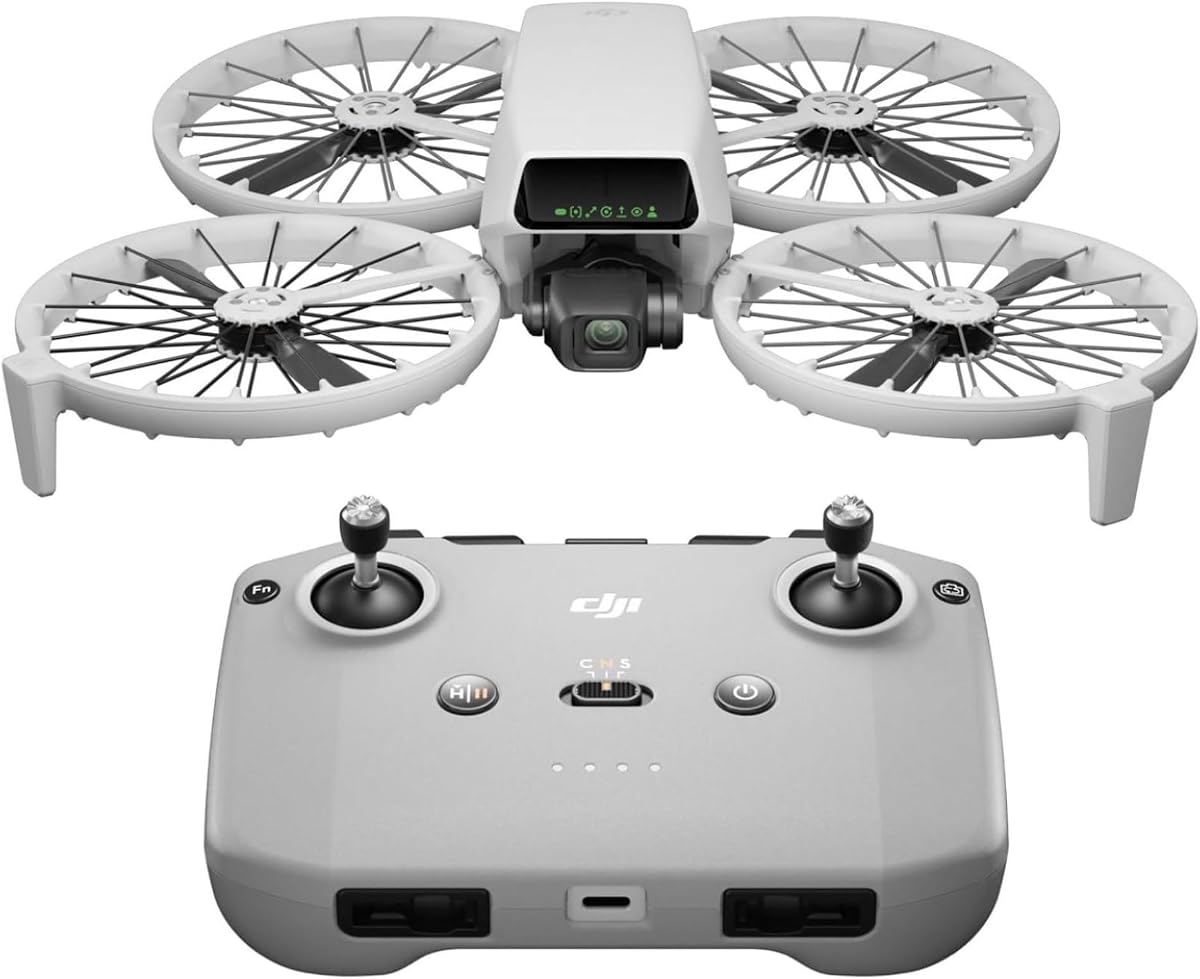
The DJI Mini 4K combines an under-249-gram body with a stabilized 4K UHD camera, making it one of the most practical choices for travel and everyday aerial photography. Its supplied rating is 4.5, and the specification balance is particularly attractive for pilots who want a real three-axis gimbal without moving into a larger advanced drone.
We may earn a commission when you buy through this link, at no additional cost to you.
The mechanical gimbal reduces shake and helps produce cinematic-looking movement, while the camera can capture 4K footage for social posts, vacation memories, and short-form video. Level 5 wind resistance gives it practical credibility outdoors, and the listed takeoff altitude extends to 4,000 meters. One-tap takeoff and landing, stable hovering, GPS Return to Home, in-app lessons, and five QuickShots modes make the aircraft approachable for new pilots.
Its main limitation is the absence of a sophisticated omnidirectional obstacle-detection system. That means pilots should plan routes carefully, maintain clear sight lines, and avoid treating Return to Home as a substitute for situational awareness. The app compatibility notice is another consideration because DJI Fly may need to be downloaded directly from DJI's official website rather than through the usual mobile app marketplace.
The Mini 4K is a strong recommendation for beginners, vacationers, and anyone who values a stabilized camera and easy handling more than advanced collision avoidance. It is also a sensible first drone for learning composition, manual movement, and responsible flight planning. Buyers should choose the appropriate battery package based on how much flying time they realistically need.
The folding, sub-249-gram design is easy to carry, while the three-axis gimbal provides a meaningful advantage over many basic sub-250-gram drones. It is especially useful for walking shots, scenic reveals, and handheld-looking footage captured from the air.
QuickShots, stable hover, one-tap controls, and Return to Home reduce the learning curve. The in-app guidance also gives beginners a structured way to practice basic flight movements before attempting more ambitious sequences.
We may earn a commission when you buy through this link, at no additional cost to you.
The DJI Mini 5 Pro brings advanced imaging and obstacle awareness to an approximately 249.9-gram foldable design. Its 4.4 supplied rating reflects a highly capable package, but the major attractions are the one-inch CMOS sensor, 4K/60fps HDR recording, and omnidirectional sensing that includes forward-facing LiDAR.
We may earn a commission when you buy through this link, at no additional cost to you.
True vertical filming and 225-degree gimbal rotation are particularly useful for creators publishing to social platforms. The upgraded ActiveTrack 360° system supports customizable tracking and stable following of moving subjects. Thirty-six minutes of maximum flight time provides a reasonable balance between endurance and portability, while 42GB of internal storage provides a useful alternative to relying entirely on a memory card.
This is not the simplest ultra-compact aircraft on the list. It offers more features, greater imaging potential, and more sophisticated safety hardware, but those benefits also make it less appropriate for buyers working with a strict budget. Local regulations may restrict night flying, and the forward LiDAR and vision system should be treated as assistance rather than permission to fly without attention.
Overall, the Mini 5 Pro is the strongest all-round choice for creators who want near-professional camera performance without leaving the lightweight DJI category. It suits travel cinematographers, social content producers, and pilots who value obstacle sensing and subject tracking. The included RC-N3 controller and one battery provide a ready-to-fly starting point, though additional batteries would improve a multi-location shooting day.
The one-inch CMOS sensor is a major step up for a compact aircraft, supporting sharp 4K/60fps HDR footage with vibrant color. Flexible gimbal rotation broadens framing options, while internal storage helps ensure that a full card does not immediately end a flight.
Forward-facing LiDAR and vision sensors create an omnidirectional obstacle-sensing system. It can improve confidence near buildings and during return-to-home routes, although the pilot must still account for thin objects, reflective surfaces, and changing conditions.
We may earn a commission when you buy through this link, at no additional cost to you.
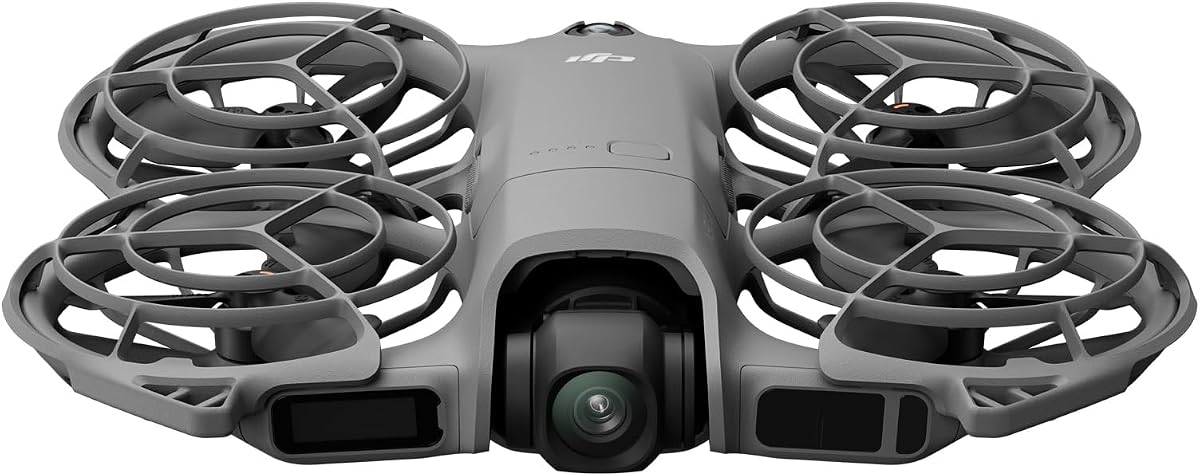
The DJI Neo 2 stands apart with a 151-gram weight, making it one of the smallest and easiest to carry among the advanced models listed. It has the highest supplied rating in the group at 4.6 and combines a 4K camera, omnidirectional obstacle sensing, ActiveTrack, palm launch and landing, and full-coverage propeller guards.
We may earn a commission when you buy through this link, at no additional cost to you.
The combination of low mass and guarded propellers makes the Neo 2 approachable for social gatherings, family activities, and short travel assignments. Gesture control adds another way to operate it, while SelfieShot provides a quick route to self-recorded clips. Apple Watch support can show the live feed, display flight status, and offer voice control for tracking adjustments, which is a distinctive convenience for compatible users.
This listing is for the drone only, so pilots should not assume that a controller is included. The package contains the aircraft, one battery, propeller guards, and other included essentials, but users who prefer physical stick control may need to source a compatible controller separately. The app availability notice also applies, requiring users to obtain the latest DJI Fly software through DJI's official website.
The Neo 2 is our premium compact pick because it delivers an unusually sophisticated feature set for a 151-gram aircraft. It is a particularly strong choice for beginners who prioritize automatic operation, safety sensors, and effortless transport over maximum flight duration or a large camera sensor. It also works well for spontaneous filming because palm launch and landing reduce setup time.
At 151 grams, the Neo 2 is easy to place in a small day bag and comfortable to carry between locations. Its compactness does not require sacrificing modern conveniences such as active subject tracking, gesture controls, and omnidirectional obstacle sensing.
Palm takeoff and landing reduce the usual takeoff and recovery routine, while SelfieShot targets quick personal clips. Together, they make the drone practical for social content when the operator wants to remain in the frame.
We may earn a commission when you buy through this link, at no additional cost to you.
The original DJI Neo is defined by its 135-gram weight, controller-free operation, and approachable feature set. It carries a 4.4 rating and is built around the idea that a small drone can still produce stabilized 4K UHD footage while following a subject, executing automated moves, and launching directly from a user's palm.
We may earn a commission when you buy through this link, at no additional cost to you.
The aircraft supports voice control in English and Chinese, a mobile app, and an optional remote controller. That range of choices is useful for households or travel groups with different levels of experience. Subject tracking and eight QuickShots modes simplify the creation of vlog-style footage, while full-coverage propeller guards offer reassurance when the drone is used around people or near branches.
Stabilization, level-four wind resistance, and 4K UHD recording make the Neo more capable than its basic appearance suggests, but it does not offer the sensor size, obstacle awareness, or long-range flexibility of the Mini 5 Pro. It must also be activated through DJI Fly, and the supplied notice indicates that users may need to download the app from DJI's official site.
Choose the Neo when its core strengths matter most: extremely low weight, minimal setup, and the ability to fly without carrying a controller. It is ideal for casual travel footage, family moments, and quick social clips. Buyers seeking finer manual control or stronger low-light performance should move up to a Mini-series model.
The Neo is unusual among compact DJI drones because it can operate controller-free, through voice commands, a mobile app, or a compatible remote. This makes it flexible for different operators and locations without forcing everyone to learn the same control method.
Full-coverage propeller guards make the Neo feel appropriate for close-to-home flying, gatherings, and moving around people. They do not eliminate the need for open space and responsible operation, but they add a physical layer of protection around the rotors.
We may earn a commission when you buy through this link, at no additional cost to you.
This DJI Mini 5 Pro Fly More Combo is one of the most complete lightweight packages in the selection. It combines the Mini 5 Pro's one-inch sensor, 4K/60fps HDR video, 50MP stills, 10-bit color options, and obstacle sensing with four batteries, the RC 2 controller, a charging hub, a backpack, a landing pad, a memory card, and an extended protection pack.
We may earn a commission when you buy through this link, at no additional cost to you.
The imaging specification makes the bundle appropriate for creators who want room to crop, color grade, or capture social formats without immediately upgrading to a much larger aircraft. True Vertical Shooting and 225-degree gimbal rotation speed up vertical delivery, while ActiveTrack 360° assists with moving subjects. The four-battery configuration is the standout practical feature for travel, allowing multiple flight sessions without returning to a wall outlet.
Compared with the standard Mini 5 Pro listing, this package carries a substantially higher overall cost and includes several accessories that not every pilot needs. Its 26-month protection bundle and third-party accessories may also be unnecessary for someone who already owns a suitable controller, card, bag, and charging equipment. Check the package contents carefully because different Mini 5 Pro listings can include different accessories.
This is the best choice for a creator or dedicated traveler who wants the full lightweight imaging experience immediately. The four-battery package supports longer location days, while the RC 2 and accessory set reduce setup needs. It is less compelling for occasional pilots, but for frequent flying the convenience can justify the additional bulk and expense.
The included backpack, landing pad, card, controller, hub, propellers, and four batteries cover many immediate needs. That completeness is valuable when moving between locations where charging access and spare storage may be limited.
A one-inch sensor, 50MP stills, 4K/60fps HDR video, and 10-bit color provide a strong foundation for polished edits. The sensor advantage is particularly relevant when a creator wants more flexibility than a basic fixed-range compact drone can offer.
We may earn a commission when you buy through this link, at no additional cost to you.
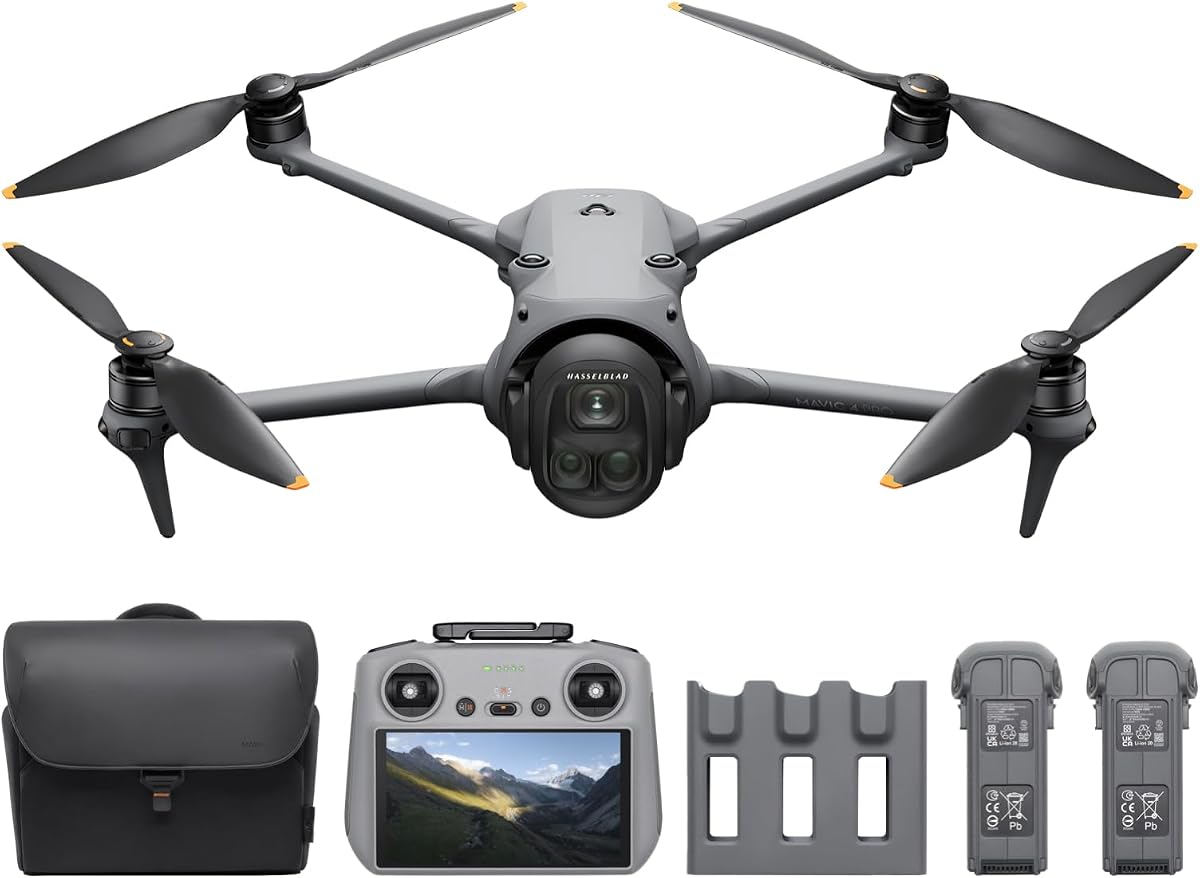
The DJI Mavic 4 Pro Fly More Combo is the flagship option in this guide, bringing a 100MP Hasselblad main camera, 6K/60fps HDR video, and dual tele cameras to an aerial platform designed for serious production work. It has a 4.4 supplied rating and stands apart through its image quality, 51-minute flight time, and long-range video transmission.
We may earn a commission when you buy through this link, at no additional cost to you.
Three cameras give pilots more compositional choices without changing aircraft, while the 360-degree Infinity Gimbal supports dynamic movement. Nightscape omnidirectional obstacle sensing is specified for low-light operation down to 0.1 lux, and the O4+ system provides 30-kilometer video transmission with 10-bit HDR. The included RC Pro 2 has a bright 7-inch rotatable display, which is useful for framing larger professional projects.
This is the least minimalist drone in the group. Its cost, size, and complexity exceed those of the Mini and Neo models, and pilots need to account for the demands of professional-grade operation. Remote-ID requirements, flight authorizations, local restrictions, and insurance considerations can also differ from sub-250-gram recreational aircraft. The camera system's capabilities should not be confused with unrestricted flight permission.
The Mavic 4 Pro is the strongest match for commercial filmmakers, advanced photographers, and production teams that value image quality, lens flexibility, endurance, and professional monitoring. It can produce a wider range of professional results than the sub-249-gram alternatives, but it is not the right choice when minimizing packed size and cost is the primary objective.
The 100MP Hasselblad main sensor and dual tele cameras give editors different perspectives from the same flight. That flexibility can reduce the need for multiple aircraft or separate lens changes, particularly for documentary, commercial, and cinematic work.
The 51-minute maximum flight time, 30-kilometer O4+ transmission, and 7-inch RC Pro 2 display are designed around longer professional sessions. Operators should still verify local restrictions and avoid equating transmission range with legal flight range.
We may earn a commission when you buy through this link, at no additional cost to you.
The DJI Air 3S Fly More Combo offers a balanced production setup with a one-inch primary camera, a separate tele camera, 4K/60fps HDR recording, and three intelligent flight batteries. Its 4.5 rating and 45-minute flight time make it a compelling travel option for pilots who want more capability than a Mini model without moving to the full Mavic platform.
We may earn a commission when you buy through this link, at no additional cost to you.
The primary camera's one-inch sensor is described as delivering improved detail in low-light scenes, while the 14-stop dynamic range preserves cloud texture and highlight detail during sunrise and sunset. Wide and medium tele panorama modes broaden the available compositions. Forward-facing LiDAR and additional sensors support nightscape obstacle sensing, and upgraded algorithms help Return to Home select a suitable route even with weak GPS signals.
The package includes the RC-N3 controller, three batteries, a charging hub, an ND filter set, and other accessories. However, the battery charger is sold separately, and the recommended DJI 65W Portable Charger should be considered when planning purchases. The Air 3S also occupies more space than the Mini range, which matters for backpack-based travel.
Choose the Air 3S for creators who want a tele-camera perspective, dependable battery redundancy, and sophisticated safety functions in a travel-oriented package. It is a particularly useful middle ground between the ultra-compact Mini models and the much larger Mavic 4 Pro. Confirm battery charging accessories and local registration obligations before traveling.
The wide primary camera covers landscapes and general storytelling, while the tele camera helps isolate distant subjects. Dual-camera flexibility can make a single trip more productive without requiring a second aircraft for every perspective.
Three batteries are useful for extended location work, but the charger is not included. A proper charging plan prevents an otherwise capable package from losing valuable flight time during a multi-day assignment.
We may earn a commission when you buy through this link, at no additional cost to you.
The DJI Mini 3 Bundle combines an under-249-gram foldable aircraft with a 1/1.3-inch CMOS sensor, 4K HDR capture, up to 38 minutes of flight, and 10-kilometer video transmission. It has a 3.8 supplied rating, lower than the other models here, but the specification and included accessories make it worth considering as a well-equipped travel package.
We may earn a commission when you buy through this link, at no additional cost to you.
The 1/1.3-inch sensor produces sharp images with accurate color and balanced highlights and shadows, while 38 minutes of flight time gives the Mini 3 a practical advantage over many entry-level compact drones. The bundle includes a DJI RC remote, 64GB microSD card, sling backpack, landing pad, card reader, cleaning kit, and memory card wallet, reducing the need to buy basic accessories separately.
The main drawback is the absence of the advanced obstacle-sensing and LiDAR systems found on the Mini 5 Pro and Air 3S. Its lower rating also means buyers should examine the current listing closely for any changes to package contents, warranty terms, or included accessories. A bundle can be convenient without always being the most streamlined setup.
This Mini 3 bundle is best for a new pilot who wants a capable camera drone, a physical controller, and essential travel accessories in one purchase. It may also suit a creator who values the longer battery duration and transmission range over collision detection. For advanced safety features, consider the Mini 5 Pro; for an even simpler package, the Mini 4K may reduce accessory complexity.
The backpack, landing pad, card reader, cleaning kit, and memory card wallet cover many common travel needs. Including these items can be convenient, although buyers who already own equivalent gear may prefer a simpler aircraft-only package.
The Mini 3 sits between ultra-basic sub-250-gram drones and advanced creator models. Its sensor size, flight duration, and transmission range provide a capable foundation without the complexity of a tri-camera flagship platform.
We may earn a commission when you buy through this link, at no additional cost to you.
This DJI Mini 5 Pro with RC2 listing provides the same core technology emphasized by the standard Mini 5 Pro: a one-inch CMOS sensor, 4K/60fps HDR video, flexible vertical filming, LiDAR-equipped omnidirectional obstacle sensing, and ActiveTrack 360°. It is aimed at creators who want high-end imaging in a foldable, approximately 249.9-gram aircraft.
We may earn a commission when you buy through this link, at no additional cost to you.
The RC2 controller gives pilots a dedicated screen and physical controls, reducing dependence on a phone during flights. True Vertical Shooting and the gimbal's 225-degree roll rotation make it easier to frame social content, while 42GB of internal storage provides useful flexibility. The obstacle system and tracking features make the aircraft better suited to dynamic shooting than a basic fixed-angle compact drone.
The supplied rating is listed as unavailable, so this listing does not provide the same customer-rating signal as the rest of the selection. The description also emphasizes one battery rather than a multi-battery bundle, which may be a limitation for extended location work. Buyers should verify the exact package contents and compare them with the standard Mini 5 Pro and Fly More listings.
The Mini 5 Pro with RC2 is a strong recommendation for a creator who prefers an integrated-screen controller and wants flagship-style imaging in a compact package. It bridges the gap between entry-level Mini drones and larger professional aircraft. Confirm the battery count, accessories, warranty, and availability before ordering.
The RC2 controller provides a dedicated display for live viewing and flight information. That can make a compact drone feel more self-contained and less dependent on phone notifications, storage, or app performance during a shoot.
The one-inch sensor, flexible gimbal, internal storage, tracking, and omnidirectional sensing are all meaningful additions for a sub-250-gram aircraft. The result is better suited to deliberate content creation than simple point-and-shoot flying.
We may earn a commission when you buy through this link, at no additional cost to you.
The DJI Flip with RC-N3 is designed around convenient, social-first flying. It weighs under 249 grams, includes a three-axis gimbal, supports palm takeoff, and records 4K/60fps HDR video through a 1/1.3-inch CMOS sensor. Its 4.4 rating reflects a balanced package for casual creators and travelers.
We may earn a commission when you buy through this link, at no additional cost to you.
The foldable format and 13-kilometer video transmission support spontaneous shooting at a reasonable distance, while the 31-minute maximum flight time is adequate for many day-trip assignments. Subject tracking helps keep moving people or activities framed, and automatic return adds a useful safety layer. Full-coverage carbon fiber propeller guards protect the aircraft and make it more approachable around people.
The package includes the DJI Flip, RC-N3 remote controller, one intelligent flight battery, and other essentials. Thirty-one minutes is shorter than the endurance of the Mini 4K's 31-minute base configuration only in the sense that other options in the list provide considerably more, while the Air 3S reaches 45 minutes and the Mavic 4 Pro reaches 51 minutes. The Flip also lacks the sophisticated LiDAR-based obstacle system found on higher-end lightweight models.
The Flip is most appropriate for users who want a conventional remote, palm-launch convenience, a stabilized 4K camera, and easy social content capture. It is a good first step for social creators, but pilots who regularly work around obstacles or require extended endurance should consider the Mini 5 Pro or Air 3S instead.
Palm takeoff reduces setup time, while subject tracking and a stabilized camera simplify filming people and activities. The combination is ideal for short clips that need smooth movement without complicated manual camera work.
The RC-N3 gives pilots dedicated physical controls, and carbon fiber guards add protection without destroying the aircraft's sub-249-gram portability. It offers a middle ground between controller-free novelty drones and fully advanced creator platforms.
We may earn a commission when you buy through this link, at no additional cost to you.
The right lightweight DJI drone depends on how much you value portability, camera capability, automation, obstacle awareness, endurance, and included equipment. Reviewing these factors before buying can prevent an attractive but unsuitable package from becoming a frustrating first or professional flight platform.
Weight is the defining characteristic of this category, but two sub-250-gram drones can feel very different in a bag. The DJI Neo weighs 135 grams, the Neo 2 weighs 151 grams, and the Mini 5 Pro is approximately 249.9 grams. The standard Mini 4K and DJI Flip are also under 249 grams, while the Air 3S and Mavic 4 Pro provide more capability with a larger physical footprint. For frequent travel, consider the entire package rather than the aircraft alone: controllers, protected propellers, batteries, a charging hub, cards, and a landing pad can consume more room than the drone itself.
In short, choose the lightest aircraft that still provides the camera and controls you need. A 135- or 151-gram model is easier to carry casually, while a nearly 250-gram aircraft may still meet sub-250-gram regulatory thresholds without feeling equally compact.
Resolution is only one part of image quality. Sensor size, stabilization, HDR capability, color depth, and low-light performance determine whether footage looks refined or merely adequately detailed. The DJI Mini 4K has a 4K UHD camera on a three-axis gimbal, the Mini 3 and Flip use 1/1.3-inch sensors, and the Mini 5 Pro uses a one-inch CMOS sensor. The Mavic 4 Pro goes further with a 100MP Hasselblad main camera and dual tele cameras. For travel highlights, the Mini 4K can be sufficient. For cropping, color grading, portraits, or low-light scenes, prioritize a larger sensor and the Mini 5 Pro or Mavic 4 Pro.
In short, match the camera to the expected editing workload. Social clips may need only stabilized 4K, while commercial work benefits from sensor flexibility, raw creative latitude, multiple lenses, and high-resolution stills.
Maximum flight time is only useful when you have a way to charge batteries and enough time to use them. Listed endurance ranges from 31 minutes for the DJI Flip and the Mini 4K's base configuration to 36 minutes for the Mini 5 Pro, 38 minutes for the Mini 3, 45 minutes for the Air 3S, and 51 minutes for the Mavic 4 Pro. The Mini 4K also has two- and three-battery configurations extending its combined endurance to 62 or 93 minutes. The Mini 5 Pro Fly More Combo includes four batteries, as does the Mavic 4 Pro package, while the Air 3S includes three. Account for battery degradation, wind, temperature, altitude, and conservative return reserves.
In short, prioritize spare batteries and a compatible charger for serious location work. More batteries usually create a more useful shooting day than a long stated duration from a single pack.
Obstacle detection can provide useful warnings and automated avoidance, but it does not make a drone safe by default. The Mini 5 Pro, Mini 5 Pro bundle, Neo 2, Air 3S, and Mavic 4 Pro feature sophisticated sensing systems, with LiDAR adding low-light awareness on several models. The Mini 4K, original Neo, Mini 3, and Flip offer a more limited safety toolkit and place more responsibility on the pilot. Even sensor-equipped drones can struggle with thin wires, reflective surfaces, fast-moving objects, uncertain GPS, and poorly defined edges. Keep visual contact with the aircraft whenever regulations and conditions require it, and use open areas for learning.
In short, advanced sensing is a meaningful advantage, not a guarantee. Pilots flying close to buildings should still create escape routes, maintain altitude awareness, and follow every local operating rule.
DJI offers several ways to interact with its compact drones. The original Neo can fly controller-free, respond to voice control, operate through the DJI Fly app, or work with a remote controller. The Neo 2 adds palm takeoff, palm landing, gesture control, and Apple Watch features. The Mini 4K and DJI Flip use dedicated controllers, while the Mini 5 Pro packages use either the RC-N3 or RC 2 depending on the listing. A dedicated controller usually provides more precise movement and a steadier live-view experience, whereas gesture and controller-free modes are convenient for casual selfies and quick automated shots. New pilots should learn manual controls rather than depending entirely on automation.
In short, choose hands-on control if you expect to learn flying, and choose gesture or controller-free operation if immediacy is the priority. Make sure the chosen package includes the controller style you prefer.
Tracking and QuickShots can create polished results without extensive manual flying. The Mini 4K includes Helix, Dronie, Rocket, Circle, and Boomerang QuickShots. The original Neo supports subject tracking and eight QuickShots modes, while the Mini 5 Pro adds ActiveTrack 360° with customizable modes for activities such as cycling. The DJI Flip includes subject tracking, and the Neo 2 combines ActiveTrack, gestures, and SelfieShot. These features are useful for solo creators because they can maintain framing while the operator moves. They still require a clear subject, adequate light, and a safe surrounding area; automated flight should never be used simply to avoid understanding the controls.
In short, tracking is particularly valuable for cycling, hiking, family activities, and vlogging. Choose the model whose tracking features match the kind of movement you most often need to record.
Internal storage gives a compact drone a useful safety net when a memory card fills or is unavailable. The Mini 5 Pro provides 42GB of internal storage, allowing some media to be captured without inserting a card at all. Other packages may rely on a microSD card, with the Mini 3 bundle including a 64GB card and card reader. A larger card remains important for extended flights, high-resolution recording, and files that need to be transferred or edited from removable media. Buyers should check supported card formats and capacity requirements for the chosen model, and maintain a backup copy of important footage rather than keeping the only copy on the aircraft or card.
In short, internal storage adds convenience, while a reliable card adds capacity. For frequent travel, carry an appropriately rated card, a reader, and a backup storage method for critical footage.
Packages in this category can differ even when they feature the same aircraft. The Mini 4K can come with one, two, or three batteries. The Mini 5 Pro appears in versions with the RC-N3, RC 2, or a large Fly More bundle, and the original Neo is sold in a controller-free configuration. The Air 3S bundle includes three batteries and a charging hub but requires a separate battery charger. The Mini 3 bundle includes a controller, card, reader, backpack, landing pad, cleaning kit, and card wallet. Compare the exact package rather than assuming every listing includes the same battery count, controller, storage, or protection plan. Accessories can be useful, but unused items add cost and bulk.
In short, compare package contents line by line. A pilot with existing gear may prefer a compact core bundle, while a new owner may benefit more from batteries, a controller, storage, and a proper charging solution.
Begin with setup and software rather than launching immediately. Download the latest DJI Fly app and related instructions from DJI's official website, fully charge the aircraft battery and controller, confirm that the propellers and guards are secure, and perform the aircraft's required activation. Learn the controls in an open area with ample clearance, familiar landmarks, and no people, roads, power lines, or sensitive structures nearby. Read the current local regulations and confirm that the site is legal for the intended flight.
Before every launch, inspect the propellers, battery, control links, camera cover, gimbal, and storage. Check the flight area for obstacles and interference, establish a clear return-to-home point, and begin with a conservative altitude and speed. Monitor battery levels, wind, positioning, and the live camera feed. Avoid aggressive turns or sudden direction changes when filming near people, and never rely on tracking or obstacle sensing as a substitute for active observation. Land promptly when the battery, weather, signal, or surroundings become uncertain.
After flying, power down the aircraft before removing the battery, clean the lens and gimbal gently, and inspect for damage or moisture. Store batteries at an appropriate moderate temperature away from direct sunlight, fire, and extreme cold, and recharge them according to DJI's guidance. Keep the propellers clear of dust and debris, update the app and firmware when required, and use the official site for compatible accessories. Back up important footage and follow all local disposal, privacy, and airspace rules.
The supplied listings state that several aircraft under 249 grams do not require FAA registration or Remote ID for recreational use. That does not mean every flight is unrestricted. Operators must still follow FAA rules, avoid restricted airspace, maintain visual line of sight, follow altitude limits, and register when required by the specific operation. Commercial or other non-recreational activities may have different requirements, so check the current FAA guidance before flying.
The DJI Neo 2 is particularly approachable because it weighs only 151 grams and supports palm takeoff, palm landing, gestures, self-recording features, and omnidirectional obstacle sensing. The original Neo is even lighter at 135 grams and can operate without a controller, while the Mini 4K offers a traditional controller and a mechanical gimbal. A beginner should consider not only ease of use but also whether they want manual controls, a protected propeller design, and enough battery endurance for practice.
The Mini 4K is the simpler and generally more economical choice, with a 4K UHD camera, three-axis gimbal, wind resistance, and beginner-friendly flight features. The Mini 5 Pro is the stronger creator option, adding a one-inch sensor, 4K/60fps HDR, flexible vertical filming, LiDAR-based obstacle sensing, internal storage, and advanced tracking. Travelers who mainly need relaxed vacation clips may appreciate the Mini 4K, while those who edit footage or regularly fly near obstacles may benefit from the Mini 5 Pro.
Its 135-gram weight, 4K stabilized video, subject tracking, QuickShots, palm takeoff, and full propeller guards make it well suited to casual filming around people. The Neo 2 goes further with 151 grams, palm landing, gesture control, SelfieShot, and omnidirectional obstacle sensing. Even with guards and tracking, pilots should maintain distance, choose open areas, avoid flying directly over people, and remain attentive to the aircraft and its environment.
A light drone is defined primarily by low takeoff weight, while a lightweight camera drone adds a capable imaging system, stabilization, and recording features. The lightest models in this list prioritize portability and automated operation, whereas the Mini 5 Pro and Mavic 4 Pro add larger sensors, more advanced video formats, and professional-oriented controls. Your decision should reflect both the aircraft's weight and the image quality and workflow you need.
Extra batteries are highly useful for travel, testing, and multi-location shooting because battery condition, wind, and conservative reserve rules can reduce usable flight time. The Mini 5 Pro Fly More Combo includes four batteries, the Air 3S includes three, and the Mavic 4 Pro package includes three. Some listings include only one battery, and the Air 3S requires a compatible battery charger sold separately. Confirm both the battery count and charging solution before buying additional packs.
The supplied product information notes that DJI Fly has been removed from Google Play because of a platform compatibility issue. Buyers should therefore go to DJI's official website to obtain the current app and user manual. Using only the latest official software is important for activation, firmware compatibility, camera functions, and flight safety. Do not rely on an unofficial app file or an outdated installation when connecting the aircraft.
A sub-249-gram model can produce excellent travel and social footage, but it does not provide every capability of a larger professional platform. The Mavic 4 Pro offers a 100MP Hasselblad camera, multiple tele cameras, 51-minute endurance, professional monitoring, and long-range transmission. The Mini 5 Pro narrows the gap with its one-inch sensor and obstacle sensing. Choose based on image requirements, operating conditions, regulations, and the need for a larger control screen or multiple lenses rather than portability alone.
The DJI Mini 4K is the most balanced budget-focused recommendation, combining an under-249-gram folding body, stabilized 4K camera, strong wind resistance, and beginner-friendly automation. The DJI Mini 5 Pro is the strongest advanced lightweight option because its one-inch sensor, LiDAR-equipped sensing, flexible gimbal, internal storage, and ActiveTrack 360° provide greater creative and operational capability. For exceptional compactness, the 151-gram DJI Neo 2 combines palm operation with 4K capture and omnidirectional obstacle awareness.
Prioritize the feature that most directly matches your flying. Casual travelers may value the original Neo's 135-gram controller-free operation, while social creators might prefer the Flip's traditional controller, palm takeoff, and three-axis stabilization. The Mini 3 bundle is attractive for included accessories, the Air 3S offers dual cameras and longer endurance, and the Mavic 4 Pro serves professional imaging requirements that exceed the compact category. Sensor size, tracking, obstacle awareness, battery quantity, and controller style all matter differently depending on the assignment.
Finally, verify the current listing before ordering because package contents, included batteries, controllers, protection plans, accessories, availability, and prices can change. Download the current official DJI Fly app, review the aircraft's activation steps, and check the latest local airspace and operating rules. Those checks protect your purchase, your footage, and the people or property around you.