
Windows 11 i3 15.6-inch Laptop
4.5Editor score
12GB RAM for active coursework
256GB solid-state storage
Full HD anti-glare display
Backlit keyboard for late study
A college laptop needs to be affordable without making everyday coursework frustrating. The right model should support web-based classes, note-taking, documents, video calls, research, and entertainment while remaining easy to carry between classes, libraries, and dorm rooms.
We compared these ten inexpensive laptops by examining processor capability, memory, storage, display quality, battery claims, ports, portability, operating system, and included productivity features. The list covers Windows laptops for students who need traditional software as well as Chromebooks centered on browser-based work.
Each review explains where a model fits best and where its limitations may matter. Battery figures and configurations can vary by use, so readers should verify current specifications and pricing on the listing before making a final purchase.
4.5Editor score

4.5Editor score

4.3Editor score
As an Amazon Associate we earn from qualifying purchases.
The comparison below highlights the major differences among these ten college laptops, including operating system, processor, memory, storage, display size, battery claims, and portability. It provides a quick way to identify the model that matches your courses, software, and study routine.


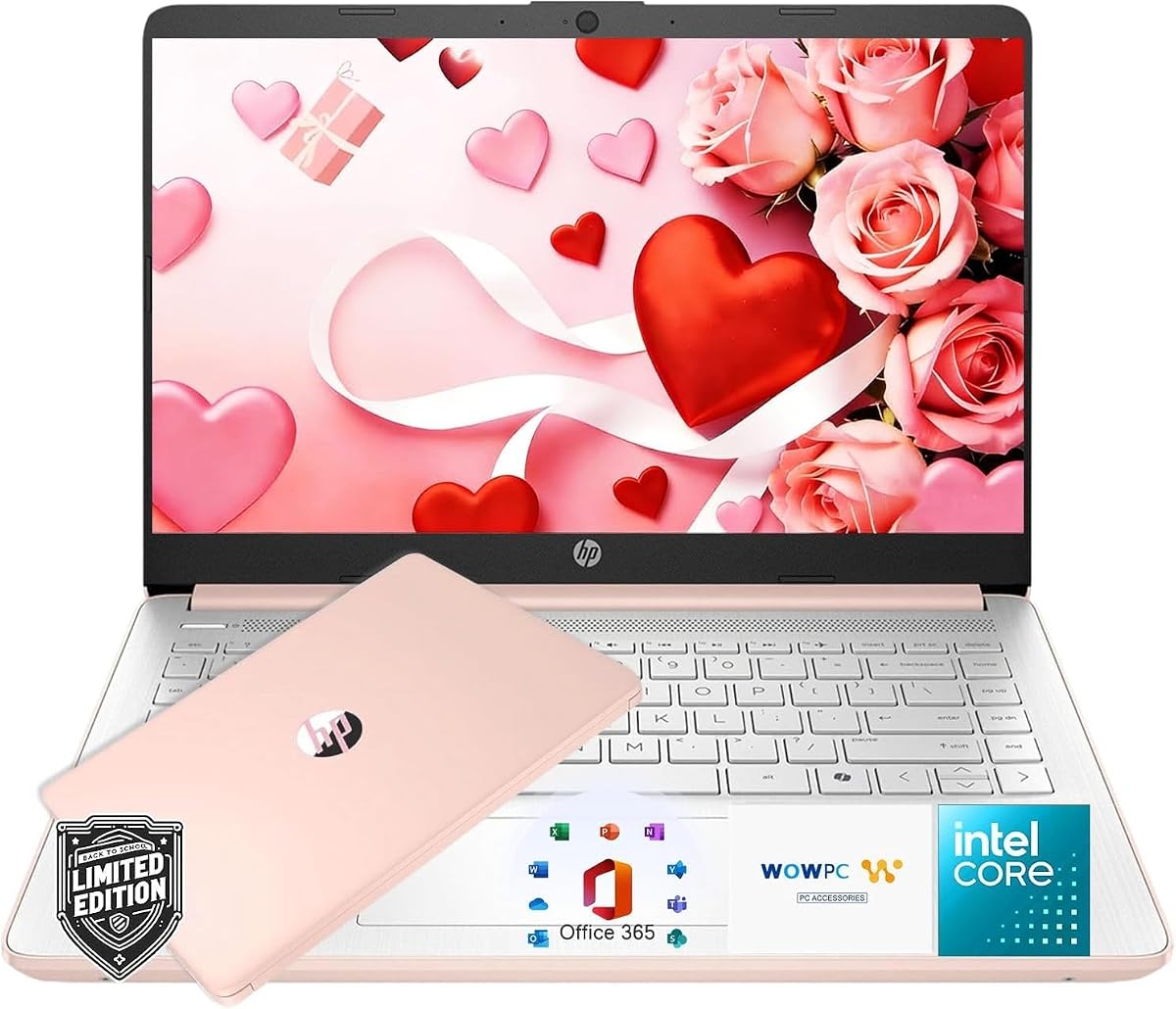


The HP 14-inch N4500 Laptop is a straightforward, inexpensive Windows machine aimed at light academic work. It carries a 4 out of 5 rating and stands out for its long claimed battery life, fast charging, included Office 365 subscription, and unexpectedly broad external-monitor support. Its white finish also gives it a more distinctive appearance than many basic college laptops.
We may earn a commission when you buy through this link, at no additional cost to you.
Its Intel Celeron N4500 and 4GB of DDR4 memory are suited to browsing, online classes, Word and Excel documents, streaming, and video meetings. Storage totals 128GB through 64GB of eMMC plus an included 64GB SD card. The micro-edge anti-glare display should be comfortable for long reading sessions, while Wi-Fi 6E and Bluetooth 5.4 provide current wireless connectivity.
The limitations are important for students who routinely keep many applications open. Four gigabytes of memory is modest, and the eMMC portion of the storage can feel restrictive for large software libraries or media files. The supplied listing describes Windows 11 Home in S mode, which requires switching to the full Home edition for some applications and workflows.
This is a sensible choice for a student whose courses rely on web platforms, Microsoft 365, and light Windows applications. It is less convincing for intensive engineering, video editing, large data projects, or users who want a full Windows installation without restrictions. For basic college needs, however, its long battery claim and practical port selection make it a strong budget-focused option.
The manufacturer advertises up to 12 hours of battery life, making this model attractive for full days of classes when usage is moderate. HP Fast Charge also helps students top up the battery during breaks without waiting through a complete charging cycle.
The laptop can connect to two external monitors through HDMI or USB-C, with support stated up to Full HD at 60Hz. That flexibility is useful for a dorm desk, shared study room, or library workstation.
We may earn a commission when you buy through this link, at no additional cost to you.
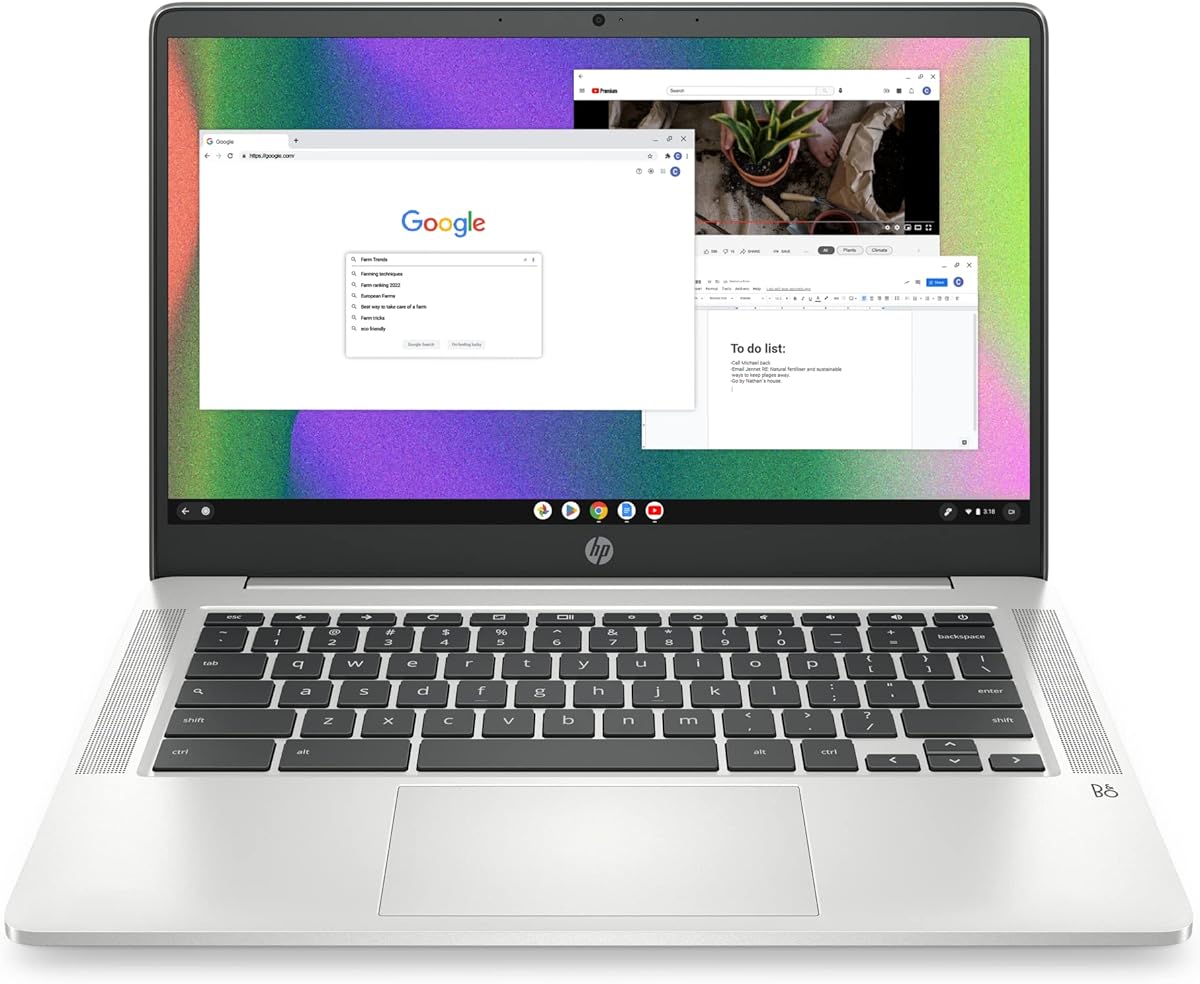
The HP Chromebook 14a-na0226nr is a well-established browser-first option with a 4.3 rating. It is especially compelling for students whose academic day revolves around Google Classroom, web research, Docs, Sheets, Slides, streaming lectures, and online collaboration. Its thin design and claimed battery life make it convenient for carrying between buildings.
We may earn a commission when you buy through this link, at no additional cost to you.
The quad-core Intel Celeron N4120 is designed around efficiency rather than demanding performance. With 4GB of RAM and 64GB of eMMC storage, the Chromebook handles ordinary browsing, multiple tabs, and Android applications from the Google Play Store. The 14-inch anti-glare HD panel reduces reflections, while Intel UHD Graphics 600 can smoothly stream 4K content.
Chrome OS keeps administration simple and automatically maintains the browser and operating system. The downside is reduced flexibility for specialized desktop applications and a small amount of local storage. Students who want to keep extensive media libraries or advanced engineering software offline may find the 64GB capacity restrictive.
For general college work, this Chromebook remains a persuasive value because battery endurance is often more valuable than peak processing power. It works particularly well for writing, research, language learning, video lectures, and collaboration. Buyers should choose it when Chrome OS and Android apps cover their coursework rather than treating it as a replacement for a full desktop software workstation.
With up to 14 hours of stated battery life and fast charging to 50 percent in approximately 45 minutes, the Chromebook is designed to remain usable across lectures, labs, and group-study sessions.
The operating system provides an integrated browser, Android app access, and automatic updates. That simplicity reduces setup and maintenance demands for students who mainly need a dependable internet-connected notebook.
We may earn a commission when you buy through this link, at no additional cost to you.
The HP Stream 14-inch N150 stands apart through its generous accessory and storage bundle. It has a 4.3 rating, an Intel N150 processor, 4GB of DDR4 memory, and a combined storage figure of 1.12TB that includes 1TB associated with the docking station. A one-year Office 365 subscription and AI Copilot support round out the package.
We may earn a commission when you buy through this link, at no additional cost to you.
The purple laptop weighs 3.24 pounds and includes an anti-glare HD display, 720p webcam, Wi-Fi 6, Bluetooth 5.4, USB-C, two USB-A ports, HDMI, a media card reader, and a headphone and microphone combination jack. These details make it a practical companion for lectures, notes, video calls, and document-based assignments.
Its core limitation remains 4GB of RAM. That amount is sufficient for Microsoft 365 and ordinary browser workloads, but it offers less breathing room than the 8GB and 12GB alternatives in this guide. In addition, students should understand that the headline storage total includes the docking station rather than representing internal laptop storage alone.
This Stream configuration is best for students who value storage, included accessories, and a complete ready-to-use package. It is a particularly good match for someone building a dorm or home desk who wants extra file capacity and a seven-port dock without needing to assemble a separate setup. Those needing heavier software should prioritize a model with more memory.
The included seven-in-one docking station adds convenient connectivity and a 1TB storage component. The package also includes a microSD card, adapter, data cable, charging cable, and cleaning cloth, reducing the need for separate accessories.
The Stream combines a 3.24-pound weight with Windows 11, one year of Microsoft 365, and current wireless connectivity. It moves easily between a backpack, dorm, and shared study area while retaining the software expected in a conventional college laptop.
We may earn a commission when you buy through this link, at no additional cost to you.
The HP 14-inch N150 8GB is the strongest all-around value in this roundup for many students. Its 4.5 rating is the second-highest among the listed products, and the combination of 8GB memory, a four-core Intel N150, Wi-Fi 6, and Windows 11 makes it better suited to multitasking than most entry-level alternatives.
We may earn a commission when you buy through this link, at no additional cost to you.
The N150 can reach up to 3.6GHz and handles browsing, document editing, research, communication applications, and video conferencing. A 720p camera supports online classes and study groups, while the 14-inch portable design weighs only 3.24 pounds. Up to 11 hours of claimed battery life helps cover a demanding schedule of classes and assignments.
The primary compromises are the 128GB UFS storage and Windows 11 Home in S mode. Four gigabytes of storage beyond the included basics is not much room for a growing collection of coursework, videos, or projects. S mode also excludes some conventional applications unless changed to the full Home edition, so students should confirm their software requirements.
For general college use, this model makes the most persuasive balance of memory, portability, battery life, and practical features. It is a strong recommendation for students balancing multiple browser tabs, Microsoft Office work, video lectures, and communication tools. Those with specialized software or large media files should plan additional storage.
Eight gigabytes of RAM is the most important advantage in this configuration. It gives students more room to keep a video call, browser tabs, a word processor, and background applications open without relying on the limited memory of a 4GB model.
At 3.24 pounds, the laptop is light enough for daily backpack use, and its claimed 11-hour battery supports a full schedule. USB-C, HDMI, Wi-Fi 6, and a 720p camera cover common campus needs.
We may earn a commission when you buy through this link, at no additional cost to you.
This HP model combines a 4.3 rating with a distinctive willow green finish and a more current component profile. It uses the Intel N150, 4GB of LPDDR5-4800 memory, 128GB of UFS storage, Wi-Fi 6, and Bluetooth 5.4. The configuration is aimed at everyday computing rather than demanding professional workloads.
We may earn a commission when you buy through this link, at no additional cost to you.
Its 14-inch micro-edge anti-glare display has a 1366 by 768 resolution and 250-nit brightness. A 720p camera, dual-array microphones, dual speakers, USB-C with DisplayPort, two USB-A ports, HDMI, and a media card reader create a well-rounded set of study and communication features. The supplied description also lists support for Microsoft 365 and Copilot AI.
The 4GB memory allocation is the main limitation. It may be adequate for a single major class application and several browser tabs, but heavier multitasking will be constrained. The 128GB storage also calls for regular use of cloud storage or an external drive, especially for students downloading lecture videos and keeping multiple large assignments.
This laptop is most appropriate for everyday research, writing, browsing, attendance in online classes, and light productivity. Its 3.24-pound body and stated battery figures of up to 11 hours for video playback make it easy to carry. It is a stylish choice for students who prefer a conventional Windows device but do not need intensive performance.
USB-C with DisplayPort 1.2 support can be useful for a single external display, while dual USB-A ports accommodate wired peripherals. HDMI and the SD card reader add practical options for presentations and file transfers.
The willow green top, silver keyboard deck, and 3.24-pound construction give the model a more personal appearance. Its compact dimensions make it suitable for students who want a larger screen than a small Chromebook without carrying a bulky notebook.
We may earn a commission when you buy through this link, at no additional cost to you.
The HP Everyday Slim 14-inch has the highest listed rating in the group at 5 stars. It is positioned as a polished general-purpose computer with Windows 11 Home, an Intel N150 processor, a 14-inch anti-glare display, a natural silver chassis, and Microsoft 365 included. It is a refined option for students who want more conventional software support than Chrome OS provides.
We may earn a commission when you buy through this link, at no additional cost to you.
The laptop includes Wi-Fi 6, Bluetooth 5.4, USB-C, two USB-A ports, HDMI 1.4b, an SD card reader, a headphone and microphone combination jack, and an AC smart pin. A 720p HP True Vision camera includes temporal noise reduction and dual-array microphones. The dedicated Copilot key and multi-touch HP Imagepad make navigation straightforward.
Storage is listed as 128GB SSD plus 1TB cloud storage, giving the internal drive a modest role while providing online space for coursework. The supplied data does not state the amount of RAM, which is an unusual omission for a buying decision. The HD display also has a basic 1366 by 768 resolution rather than the Full HD panel found in the 15.6-inch i3 option.
This model is best for students who value a clean design, Windows 11 Home, current connectivity, and the bundled productivity subscription. Its stated battery life of up to 11 hours for video playback and 7.5 hours for wireless streaming reinforces its all-day positioning. Confirm the memory specification and storage access policy before purchasing.
The 3.24-pound weight and slim natural silver chassis balance portability with a conventional laptop appearance. Its anti-glare screen is designed for readable indoor use during lectures and extended study periods.
The camera, dual microphones, speakers, and full-size keyboard support video classes and study calls. USB-C and HDMI also provide flexibility when the laptop must connect to a classroom display or personal monitor.
We may earn a commission when you buy through this link, at no additional cost to you.
The Windows 11 i3 15.6-inch laptop is the most capable traditional notebook in this group. It has a 4.5 rating and combines an Intel Core i3 processor, 12GB RAM, a 256GB SSD, and integrated Intel UHD Graphics 620. For a student using demanding browser workloads or multiple applications, the generous memory offers a meaningful advantage.
We may earn a commission when you buy through this link, at no additional cost to you.
Its 15.6-inch Full HD anti-glare display has a 16:9 aspect ratio and thin bezels, providing a roomier canvas for split-screen research, handwritten notes, spreadsheets, and lectures. The backlit keyboard is useful during late-night study. Three USB 3.0 ports, HDMI 2.1, USB-C with PD 3.0 charging, Wi-Fi 6, Bluetooth 5.2, and a card slot create solid connectivity.
Trade-offs include size and battery life. The laptop weighs 3.6 pounds and is 19.5 millimeters thick, making it larger than the HP models. Its stated mixed-use battery figure is approximately seven hours, lower than the longer claims on several ultraportable options. The listing also does not identify a productivity-suite bundle.
This is a compelling recommendation for students who want a larger Full HD workspace, abundant RAM, and solid-state storage without moving into a substantially higher-priced performance category. It should serve general coursework, research, communication, and productivity smoothly. Students carrying it across a full campus day should plan around its shorter stated endurance or keep a charger available.
The Full HD 15.6-inch panel gives documents, video calls, and reference materials more visible area than a standard 14-inch HD display. Its anti-glare finish makes it a practical choice under library or classroom lighting.
Twelve gigabytes of memory is the highest listed figure here. Students can more comfortably retain a browser, spreadsheet, communications app, and video meeting without immediately exhausting available memory.
We may earn a commission when you buy through this link, at no additional cost to you.
The HP 14-inch N4120 Chromebook has a 4.4 rating and focuses on the qualities students often value most in a portable budget device: long claimed battery life, an approachable 14-inch display, and a simple operating system. It is a natural alternative for students who complete most assignments through web-based applications.
We may earn a commission when you buy through this link, at no additional cost to you.
The quad-core Celeron N4120 operates at up to 2.6GHz and pairs with 4GB of LPDDR4x memory and 64GB of eMMC storage. Intel UHD Graphics 600 handles ordinary content, while Chrome OS integrates the browser and Android applications. Two USB-A ports, one USB-C port, HDMI, and a headphone jack cover essential peripherals.
The 64GB storage capacity is one of the most significant constraints, particularly for students who save videos offline or accumulate large project files. The 1366 by 768 display is adequate but less detailed than the Full HD panel offered by the i3 laptop. As with other Chromebooks, specialized Windows software is unavailable.
The model is recommended for writing, web research, attendance tracking, Google-based collaboration, Zoom classes, and media streaming. Its advertised 14-hour battery makes it especially attractive for long days away from an outlet. A student with heavy local-storage needs should choose a Windows configuration instead.
Having both USB-A and USB-C is convenient in an era when students may use older flash drives, newer storage, charging cables, and wired peripherals. HDMI makes classroom projection straightforward.
The Chromebook is designed around cloud-centric use, so students should keep active coursework synchronized and archive larger files externally. Its local capacity is enough for core applications and ordinary class materials but not an extensive offline library.
We may earn a commission when you buy through this link, at no additional cost to you.
The Laptop S7HI 15.6-inch offers a large Full HD IPS display at the lower end of this roundup. Its 4 rating reflects a straightforward design aimed at travel, work, and school. The laptop weighs 3.6 pounds and combines a 15.6-inch screen with an Intel 5205U processor, 4GB RAM, and 128GB internal storage.
We may earn a commission when you buy through this link, at no additional cost to you.
Windows 11 comes preinstalled, allowing students to begin using the machine for assignments, reports, browsing, and communication with familiar desktop software. The Full HD IPS panel should provide a clear and comfortable surface for reading, reviewing slides, and attending online classes. Type-C, HDMI, an SD card reader, dual-band Wi-Fi, and Bluetooth 4.2 provide the core connection options.
The major limitations are 4GB of RAM, modest initial storage, and older wireless hardware. The processor is suitable for ordinary tasks but not demanding software or sustained heavy multitasking. Although an additional 1TB SSD expansion slot is described, buyers should confirm installation details and whether the added drive appears directly in Windows.
This laptop is best for students who prioritize screen size and want a conventional Windows machine without paying for the stronger memory of the i3 model. It is suitable for note-taking, browsing, Microsoft Office, and video conferencing. Students with heavy workloads should consider upgrading memory or selecting a higher-tier configuration.
The 15.6-inch Full HD IPS display gives students more screen area and greater detail than the HD panels in several Chromebooks. That makes it useful for long documents, spreadsheet work, and reviewing online lecture material.
Beyond the included 128GB, an additional SSD expansion slot is advertised for up to 1TB. This makes the laptop more adaptable for students who need room to preserve larger documents, photographs, and course videos.
We may earn a commission when you buy through this link, at no additional cost to you.
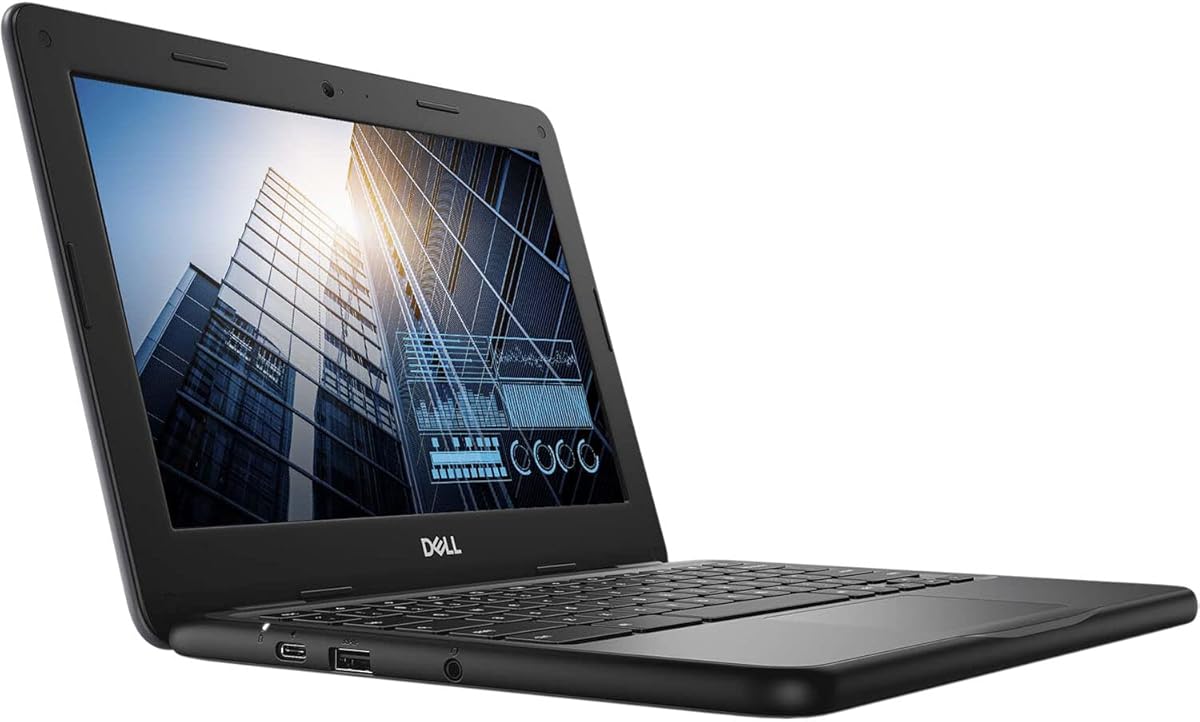
The Dell Chromebook 11 3100 is the most affordable option listed and is likely to appeal to students who need a basic internet-connected computer rather than a conventional Windows notebook. It has a 4.1 rating and uses Chrome OS with an Intel Celeron N4020 processor, 4GB RAM, and 16GB of flash memory.
We may earn a commission when you buy through this link, at no additional cost to you.
Its 11.6-inch screen has a 1366 by 768 resolution, and the integrated Intel HD graphics support everyday browser content. Bluetooth is included, while the compact form makes it easy to carry between classes. For writing, web research, attendance, streaming, and lightweight productivity, the Chromebook can cover the fundamentals at a notably low acquisition cost.
The severe limitation is storage. With only 16GB of flash memory, even basic housekeeping is important, and students must keep most documents and applications in the cloud. The compact HD display also offers less working space than the 14-inch and 15.6-inch alternatives, while renewed condition introduces the usual possibility of cosmetic wear.
This laptop is best for a student with a strict budget, light coursework, and a reliable internet connection. It may also work as a travel companion or secondary device. Buyers should check the renewed condition and available storage at sign-in. Anyone needing offline files, specialized applications, or a large workspace should spend more on a higher-storage model.
The Dell Chromebook provides a complete route to web-based coursework at the lowest acquisition cost in the guide. It is especially practical for students who already rely heavily on cloud documents and online learning platforms.
A 16GB flash drive leaves little room for local files after the operating system and core applications. Students should plan to work primarily online and keep downloads temporary, or use an external drive if their course materials require offline access.
We may earn a commission when you buy through this link, at no additional cost to you.
The best inexpensive college laptop is the one that supports your actual courses without forcing you to compromise on portability, software, or daily usability. Before comparing processors and displays, identify the applications, files, peripherals, and study patterns that matter most to your program.
Choose Windows when compatibility matters more than a minimal maintenance burden. Choose Chrome OS when your work is browser-centered and cloud storage is readily available.
Prioritize an N150 or Core i3 for multitasking. A Celeron is most appropriate for browser-based or otherwise light workloads.
Choose at least 8GB for Windows-based college use when possible. Treat 4GB as a light-workload compromise rather than a long-term multitasking allowance.
Budget based on usable internal storage rather than bundle totals, and choose cloud storage or an external drive if coursework includes large media files.
Prioritize Full HD if detailed reading or spreadsheet work is central. Choose a 14-inch HD screen when portability and lower cost matter more.
Balance stated endurance against actual weight. For all-day mobility, prioritize a lighter chassis, efficient processor, and charging access during the day.
Look for USB-A, USB-C, HDMI, and an audio jack. Display support can add value when you regularly work at a desk with an external monitor.
Test the keyboard if possible, confirm camera quality, and read the warranty terms. Included software and accessories are bonuses rather than substitutes for core performance.
Begin by signing in, connecting to the campus wireless network, and updating the operating system, browser, applications, and device drivers. Create separate folders for each term and back up active coursework to a cloud service or external drive. If the model runs Windows in S mode and your required applications are incompatible, use the activation settings to move to the full Windows 11 Home edition before installing course software.
For daily study, adjust the display brightness and power settings to balance battery life and eye comfort. Use the anti-glare screen at a moderate brightness, keep the keyboard clean, and avoid resting drinks near the machine. When connecting an external monitor, verify the correct USB-C or HDMI function and close unneeded browser tabs to conserve memory and battery. Regular restarts can clear temporary system processes and reduce the effect of an overloaded browser.
Protect the laptop with a padded backpack sleeve and avoid leaving it in a hot car or unattended in a crowded space. Use a surge-protected outlet when charging in older dorm rooms, inspect the charger cable for damage, and do not cover vents while the system is running. Keep the operating system current, review installed applications periodically, and preserve a backup of important notes and presentations so a repair or replacement does not end a semester.
A refurbished or renewed Chromebook is often the lowest-cost option in this roundup because it concentrates on browser-based work and uses less demanding hardware. The Dell Chromebook 11 3100 is the most affordable model listed. Its 16GB storage and 11.6-inch screen make it better suited to cloud-focused coursework than large offline libraries.
A Chromebook is good for writing, research, video lectures, attendance, cloud-based collaboration, and many communication tasks. It can also be an excellent low-cost choice when your courses rely on web applications. Before buying, confirm that specialized software required by your program can run on Chrome OS or a compatible Linux environment.
Eight gigabytes is a sensible minimum for a Windows college laptop because it provides more room for browsers, Office applications, and video calls. Four gigabytes can handle light work but may feel constrained during sustained multitasking. The 12GB configuration in this guide offers even more flexibility for research, spreadsheets, and several simultaneous applications.
It can be enough for a Chromebook used primarily with cloud storage and online coursework. The same capacity is restrictive for a Windows machine that needs room for applications, downloaded videos, and offline assignments. Students should keep files synchronized, remove temporary downloads, and consider an external drive when larger course materials are required.
A 14-inch laptop is usually easier to carry between classes and tends to consume less space in a backpack. A 15.6-inch model offers a larger work area and often a higher-resolution display, which can help with reading and productivity. Choose based on how much you move around and how long you use the screen away from a desk.
Most general college coursework does not require one, and integrated graphics are sufficient for documents, browsing, streaming, and standard video calls. Students in architecture, 3D animation, advanced engineering, or data visualization should ask their program about specialized graphics requirements. For those fields, a basic inexpensive model may need to be supplemented with a more capable computer.
Yes. Actual runtime can differ substantially from the advertised maximum because of screen brightness, wireless activity, browser workload, video playback, sleep settings, and battery age. The listed up-to-14-hour Chromebook claim and up-to-11-hour HP claims are best viewed as comparative maximums rather than guaranteed runtimes for every student.
A padded sleeve, external storage, and a reliable charger are practical additions. A mouse or compact keyboard may improve comfort, while headphones can help in shared spaces. If the laptop has limited USB-A ports or only one USB-C connection, a small hub can simplify use of flash drives, peripherals, and an external monitor.
The HP 14-inch N150 with 8GB RAM is the strongest all-around selection for most students because it balances memory, portability, current wireless connectivity, a capable camera, and strong battery claims. The Windows 11 i3 15.6-inch laptop is the better choice for students who need more memory, a larger Full HD workspace, and solid-state storage, while the HP Stream 14-inch N150 offers the most complete accessory and storage bundle.
Chromebooks remain an excellent way to reduce cost and maintenance when coursework is browser-centered. The HP Chromebook 14a-na0226nr is the most balanced of those models, offering long claimed endurance and a larger screen than the basic Dell, while the Dell Chromebook 11 3100 serves students with the tightest budget and the most modest storage needs. Above all, prioritize software compatibility, adequate memory, and a comfortable daily workload rather than a processor label alone.
Configurations, included subscriptions, and prices can change, so verify the current listing before buying. Check the processor, memory, storage, operating-system mode, battery information, ports, and warranty on the product page, and compare the final cost with the needs of your specific courses. Doing that final check will help you avoid paying for features you do not need while ensuring the laptop can handle the work you actually have.