
TP-Link USB Bluetooth Adapter for PC, Bluetooth 5.3 USB Long Range Receiver
4.4Editor score
Adjustable multi-directional antenna
Bluetooth 5.3 with EDR
Extended coverage for distant devices
Compare the best Bluetooth Dongle for PC options in this expert guide, covering Bluetooth version, range, device support, compatibility, and setup for Windows
A Bluetooth dongle gives a desktop or laptop the wireless connectivity it may lack, allowing peripherals such as keyboards, mice, headphones, speakers, phones, and printers to connect without another cable. A worthwhile adapter should pair reliably, support the peripherals you own, fit without blocking nearby ports, and integrate cleanly with your computer's operating system.
We compared the ten adapters in this guide by examining Bluetooth generation, supported operating systems, stated connection limits, range, antenna design, driver requirements, multi-device support, and physical design. The list covers basic nano receivers, long-range models, newer Bluetooth 6.0 options, and a combined Wi-Fi and Bluetooth adapter for buyers who need both functions.
Each review explains where the adapter stands out, where its specifications impose limits, and which desktop or laptop user is most likely to benefit. Ratings and product details reflect the supplied information, while availability and pricing can change, so compare the current listing and your own device requirements before making a final choice.
4.4Editor score
4.5Editor score

4.4Editor score
The comparison below highlights the major differences among all ten adapters, including Bluetooth generation, supported systems, connection capacity, range or antenna features, and multi-function capabilities.





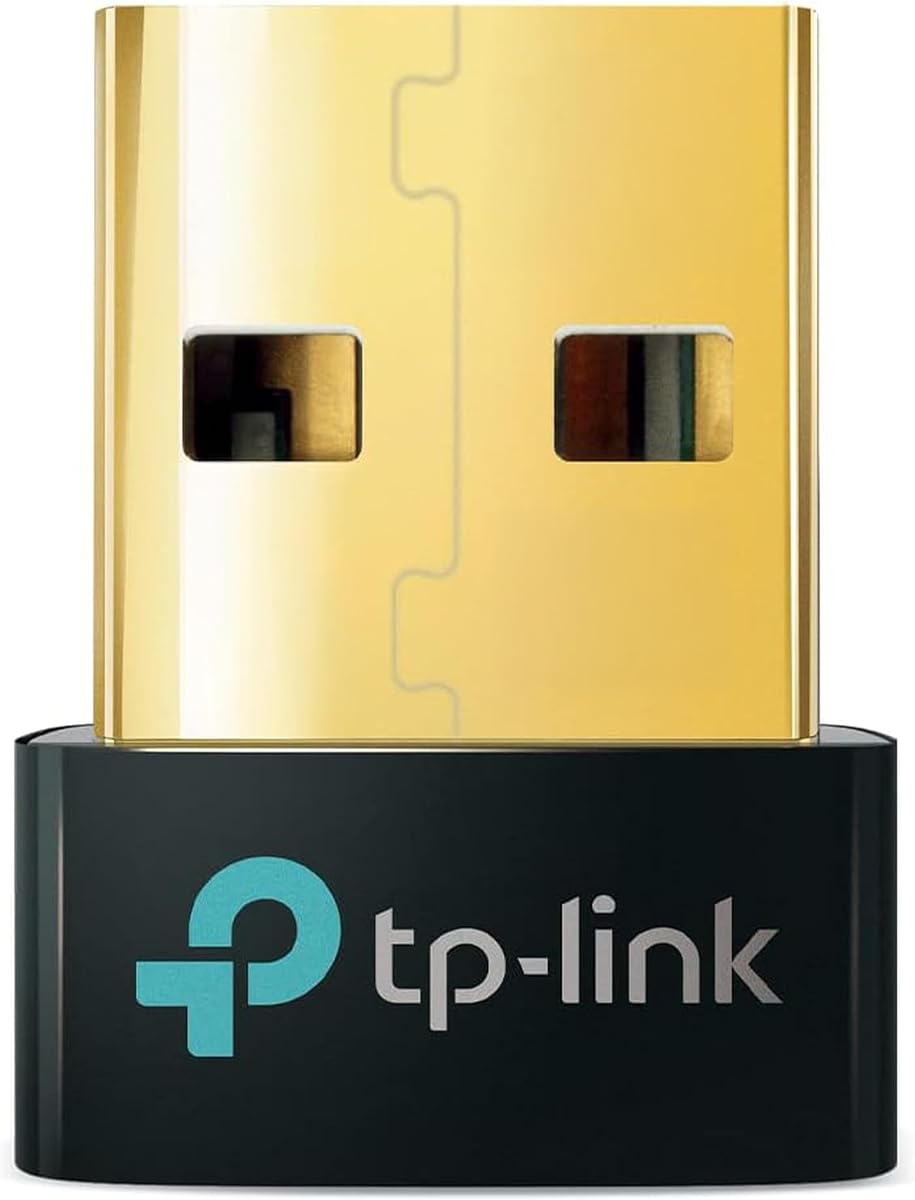
The TP-Link USB Bluetooth Adapter for PC with Bluetooth 5.4 is a strong all-around choice for Windows users who want a compact way to add wireless peripherals. Its stated 4.5 rating reflects a favorable balance of features, while support for enhanced data rate and Bluetooth Low Energy makes it suitable for everyday accessories such as keyboards, mice, phones, printers, and headsets.
We may earn a commission when you buy through this link, at no additional cost to you.
The adapter's principal strengths are its modern Bluetooth generation, backward compatibility with versions ranging from 5.3 to 1.1, and claimed performance of up to twice the data-transfer speed and four times the coverage of Bluetooth 4.0. Its nano-sized body can remain inserted in a USB port without obstructing nearby sockets, making it convenient for travel as well as a permanent desktop setup.
There are important boundaries. This model is designed for Windows PCs and does not support macOS, Linux, televisions, or Windows 8. It also cannot be used directly with a console, although a compatible controller can be connected through a PC. Existing internal Bluetooth hardware should be disabled in Device Manager before setup to avoid driver conflicts.
This is the most balanced recommendation for buyers who want current Bluetooth technology without paying for an antenna-equipped model or a Wi-Fi and Bluetooth combination. Choose it when your system runs a supported Windows version, your peripherals use standard Bluetooth, and a discreet receiver is your priority.
Bluetooth 5.4, EDR, and BLE provide a versatile foundation for peripherals with different demands. The adapter is particularly suitable for reducing cable clutter around a desk while retaining support for common Bluetooth accessories.
Plug-and-play operation is available on Windows 8.1, 10, and 11 with an internet connection, while Windows 7 requires a downloadable driver. Users with built-in Bluetooth should disable that hardware before inserting the receiver.
We may earn a commission when you buy through this link, at no additional cost to you.
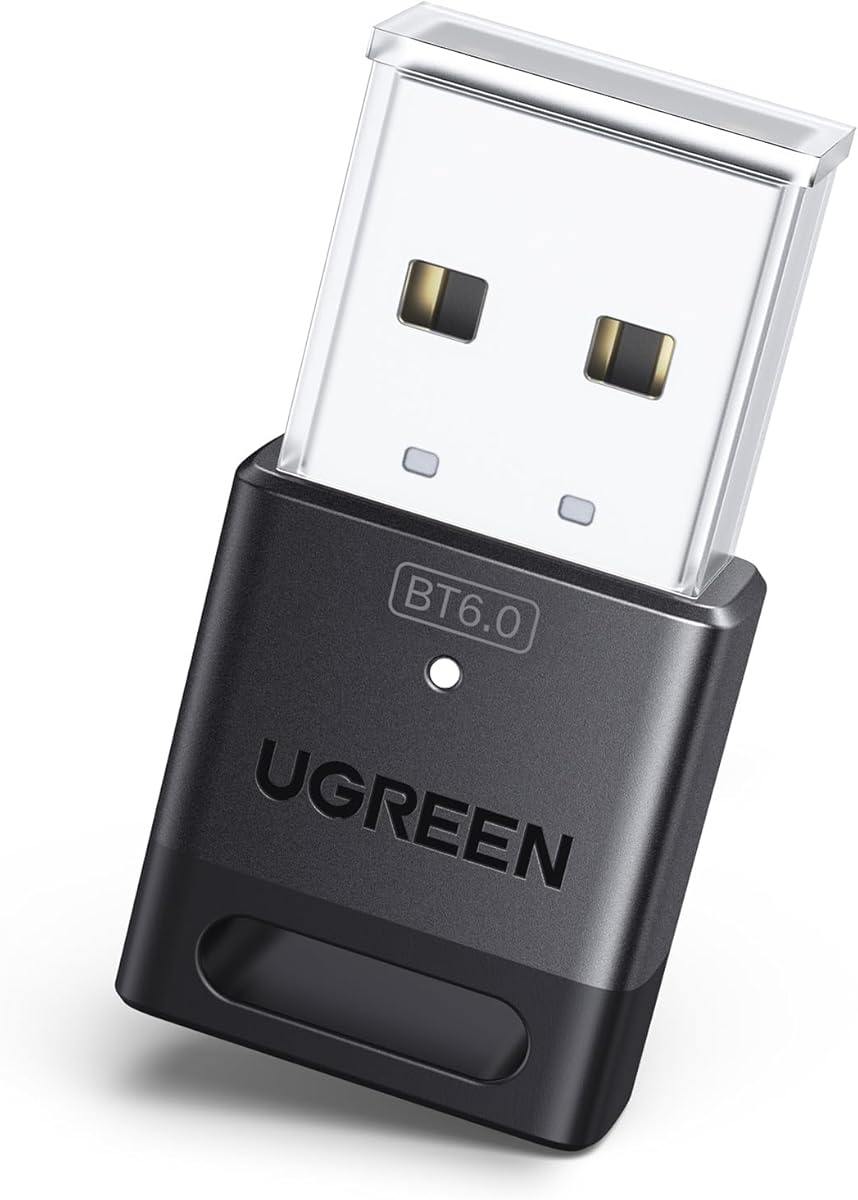
The UGREEN USB Bluetooth 5.3 Adapter is a practical choice for Windows 8.1, 10, and 11 users who regularly connect several kinds of peripherals. Its 4.4 rating indicates a well-received product, and the ability to maintain up to five different device types makes it more versatile than a basic single-purpose receiver.
We may earn a commission when you buy through this link, at no additional cost to you.
The adapter uses Bluetooth 5.3 BR/EDR to improve connection stability, data-transfer performance, interference handling, and power consumption. A mouse, keyboard, phone, and headset can remain connected at the same time, which is useful for a flexible desktop setup. Its mini enclosure is designed to fit into a laptop or desktop without interfering with adjacent USB ports.
Audio remains the main limitation within the advertised multi-device support. The specification states that when two audio devices of the same type, such as two sets of speakers or headphones, are connected, only one can play music. The receiver also has no macOS or Linux support and cannot be used directly with consoles, televisions, or cars.
This adapter is well suited to buyers who want several peripheral categories connected but do not need multiple simultaneous audio outputs. Its receiver-only design, Windows restriction, and instruction to disable existing Bluetooth hardware make it less suitable for mixed-ecosystem computers.
Supporting up to five different device types is helpful for everyday office arrangements. You can combine input devices with a phone or headset without constantly disconnecting and reconnecting accessories.
Windows 11, 10, and 8.1 users can begin without manually installing a driver. If the computer contains another Bluetooth adapter, disabling it in Device Manager prevents an exclamation mark from appearing beside the UGREEN device.
We may earn a commission when you buy through this link, at no additional cost to you.
The TP-Link Bluetooth 5.3 USB Long Range Receiver stands apart with an adjustable, multi-directional antenna. It carries a 4.4 rating and is best suited to desktop users whose Bluetooth accessories sit across a room, behind furniture, or farther away than a tiny receiver can comfortably reach.
We may earn a commission when you buy through this link, at no additional cost to you.
Bluetooth 5.3 and EDR provide the core connection capability, with claimed speeds of up to twice those of Bluetooth 4.0 and coverage stated at up to four times as much. The antenna can be rotated and adjusted to improve reception in different environments, giving the user more control over placement than a fixed nano adapter offers.
The trade-off is size and platform concentration. Unlike the smallest plug-and-stay receivers in this list, this adapter is designed to remain visible and be positioned thoughtfully. It supports Windows 8.1, 10, and 11 with plug-and-play setup when connected to the internet, while Windows 7 requires a driver downloaded from the manufacturer's website.
Choose this model when physical distance or obstruction is the central concern. It is less compelling for a laptop user who values a nearly invisible profile, but it offers a more purposeful antenna solution for a permanent desk.
The rotatable antenna is the defining feature, allowing the receiver to be aimed toward peripherals or adjusted as obstacles and furniture change the signal path. This makes the adapter especially useful in fixed office or media-room arrangements.
The stated coverage improvement over Bluetooth 4.0 gives this adapter an advantage when devices are not immediately beside the PC. Walls and other physical obstructions can still affect real-world performance, so placement remains important.
We may earn a commission when you buy through this link, at no additional cost to you.
The TP-Link Bluetooth 6.0 UB600 combines a very small footprint with support for up to seven different device types. Its 4.2 rating is lower than several alternatives, but the specification still makes it a forward-looking option for Windows users who want a newer standard and a low-profile receiver.
We may earn a commission when you buy through this link, at no additional cost to you.
The stated low-latency positioning is aimed at responsive controls, including game controllers, while the adapter is also described as suitable for audio and video streaming, file transfers, keyboards, mice, smartphones, tablets, and printers. Its nano design is intended to remain in a USB port without blocking neighboring ports or needing removal during travel.
Setup differs slightly by Windows generation. Windows 10 and 8.1 support plug-and-play installation, whereas Windows 11 and Windows 7 users are directed to download the latest driver from TP-Link's official website. That extra setup step on current Windows may be inconvenient, though it is part of the supplied product information.
This is a sensible pick for buyers who want Bluetooth 6.0, a very small form, and room for a broad mix of device categories. Its lower rating and driver requirements deserve more attention than those of the highest-rated options, so it should be selected for its specification set rather than on the basis of customer feedback alone.
The ultra-compact housing can stay attached to a laptop or desktop without interfering with adjacent sockets. That makes the UB600 convenient for users who alternate between a permanent workstation and a travel bag.
Support for up to seven device types allows input devices, phones, controllers, and printers to share the adapter. Specific peripheral support still depends on the protocols and drivers used by each device.
We may earn a commission when you buy through this link, at no additional cost to you.
The UGREEN USB Bluetooth Adapter for PC with Bluetooth 6.0 is a modern receiver for Windows users who want newer wireless performance and several peripheral types connected at once. Its 4.2 rating suggests mixed experiences, while the stated Bluetooth 6.0 EDR specification supports faster transfers, audio and video streaming, and efficient large-file movement.
We may earn a commission when you buy through this link, at no additional cost to you.
The adapter can maintain up to five device types without interference, including a mouse, keyboard, phone, or headphones. It uses enhanced data rate and Bluetooth Low Energy, and it is backward compatible with Bluetooth 5.4 and 5.3 devices. Plug-and-play operation is offered on Windows 11, 10, and 8.1.
As with other compact PC receivers, the system and usage limitations are significant. Windows 7, Linux, and macOS are unsupported, the unit cannot connect directly to game consoles, and it is not compatible with televisions or cars. Physical obstructions, walls, and wireless interference may reduce the transmission range.
This UGREEN model makes sense for a current Windows desktop that uses several Bluetooth categories and values a simple receiver. It is less attractive for older operating systems, mixed-platform setups, or users who require two audio devices to play simultaneously.
Bluetooth 6.0 EDR targets faster data movement, while BLE helps control energy demands. Together they support a versatile adapter for both communication accessories and conventional computer peripherals.
Supported Windows versions require no manual driver installation. As with the UGREEN Bluetooth 5.3 model, any internal Bluetooth device should be disabled in Device Manager before the USB receiver is used.
We may earn a commission when you buy through this link, at no additional cost to you.
The ASUS USB-BT600 is the only product here explicitly listing both Windows and Linux support. Its Bluetooth 6.0 implementation, backward compatibility, and capacity for up to seven device connections make it unusual for buyers whose computers do not all run Windows.
We may earn a commission when you buy through this link, at no additional cost to you.
The adapter's ultra-small body is appropriate for both desktop and laptop use. Bluetooth Low Energy supports energy-conscious accessories, while backward compatibility makes it possible to pair older Bluetooth equipment without requiring every peripheral to use the newest generation.
The principal drawback is its 4.0 rating, the lowest among the ten products. The supplied information gives fewer setup details than many competing listings, so users should confirm driver behavior and device compatibility before purchase. It also lists Windows 10 and 11 rather than the broader legacy Windows range found with some alternatives.
This is the preferred choice in this comparison for a Linux user or a mixed Windows-and-Linux household. Windows-only buyers focused on warranty, software integration, or a highly rated option may find the TP-Link and UGREEN alternatives more familiar, but the ASUS's cross-platform capability is a meaningful distinction.
Linux support distinguishes the USB-BT600 from most of the PC-focused adapters listed here. That makes it a better fit for developers, technical users, and mixed computer environments.
The adapter supports up to seven devices while retaining a compact housing. That balance suits users who regularly switch among keyboards, mice, phones, and audio accessories.
We may earn a commission when you buy through this link, at no additional cost to you.
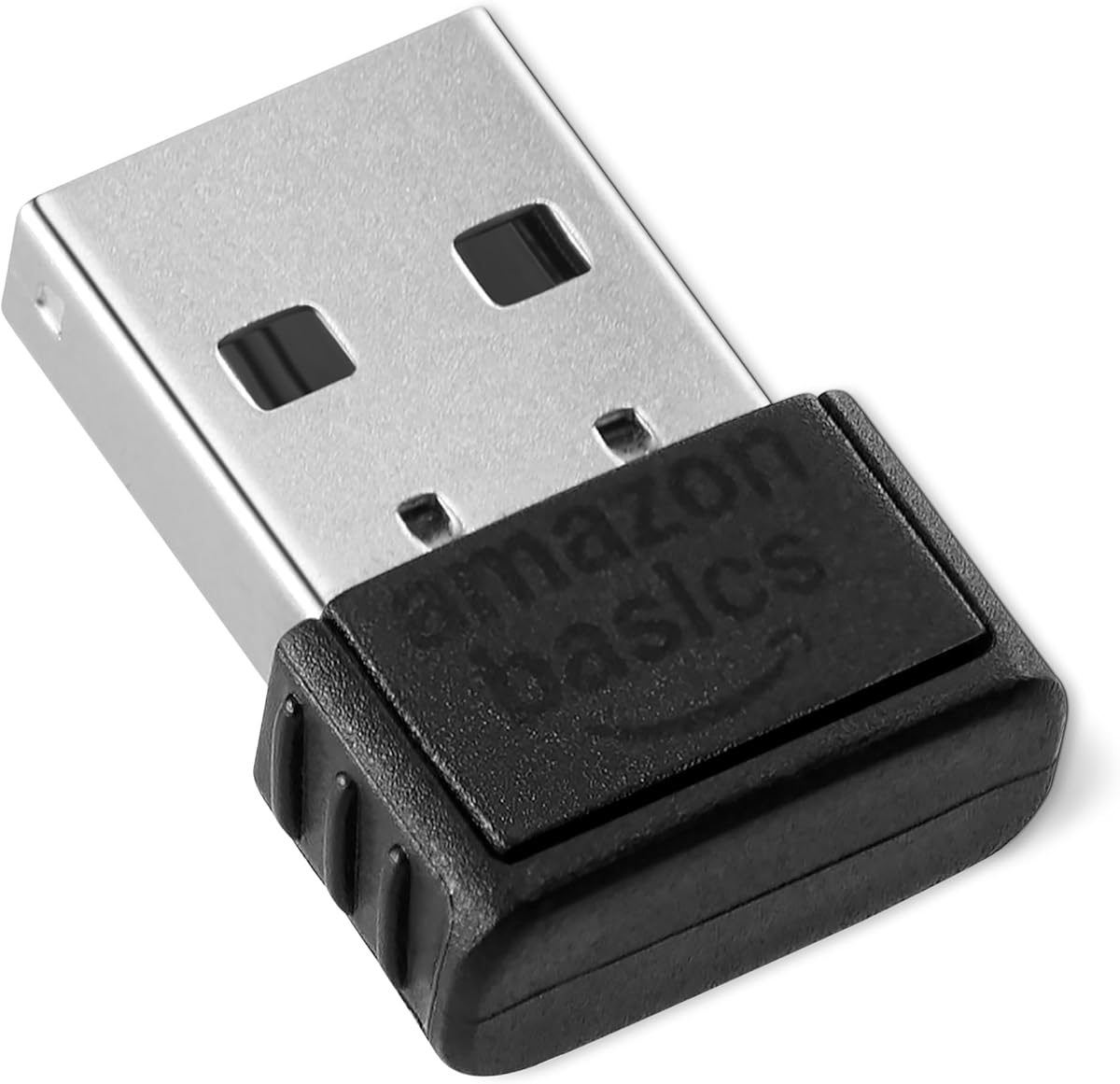
The Amazon Basics Bluetooth 5.4 USB Adapter is a straightforward way to add Bluetooth to a compatible PC. Its 4.3 rating is competitive within the list, and the receiver supports as many as six devices simultaneously, making it appropriate for users who want more than a mouse or keyboard connection.
We may earn a commission when you buy through this link, at no additional cost to you.
Its compatibility list extends backward from Bluetooth 5.4 to versions 5.3, 5.2, 5.1, 5.0, 4.2, 4.0, 3.0, 2.1, 2.0, and 1.1. EDR and BLE provide enhanced transfer rates and lower energy use. A standard USB port is all that is required for the nano receiver to connect to the computer.
The operating-system boundary is strict. The adapter works with Windows 8.1, 10, and 11 but not macOS, Linux, Chrome, Unix, PlayStation systems, or Windows 7 and earlier. The user manual also advises disabling built-in Bluetooth before using the adapter, which is necessary to avoid competition between internal and USB receivers.
Choose this model when you need a modern, widely compatible adapter for standard Windows peripherals and want more simultaneous connections than a typical single-device receiver. It is not the right choice for older Windows installations or computers outside the supported ecosystem.
Support for older Bluetooth generations makes the receiver useful with a mixed collection of peripherals. A keyboard, mouse, phone, or other accessory can connect without requiring every device to share the newest standard.
The standard USB nano receiver format makes installation intuitive. Once supported Windows has detected it and the existing internal Bluetooth radio has been disabled, pairing can proceed through the operating system's Bluetooth settings.
We may earn a commission when you buy through this link, at no additional cost to you.
The TP-Link USB Bluetooth Adapter with Bluetooth 4.0 is the most compelling option for a legacy Windows computer in this comparison. Its 4.4 rating is among the strongest, and support for Windows XP, 7, 8, 8.1, 10, and 11 gives it broader operating-system reach than most current adapters.
We may earn a commission when you buy through this link, at no additional cost to you.
Despite its older wireless generation, the dongle is backward compatible with Bluetooth 3.0, 2.1, 2.0, and 1.1. It provides a stated transmission distance of up to 65 feet, operates from 32 to 104 degrees Fahrenheit, and uses Bluetooth Low Energy for compatible accessories. Its nano housing remains inserted without taking up valuable desk space.
The compromises are inherent to an older standard. It does not offer the newest transfer characteristics or multi-device figures found among Bluetooth 5.x and 6.0 models. It also lacks macOS and Linux support, and two UB400 adapters cannot pair with each other. Existing internal Bluetooth must be disabled before use.
For an old PC that cannot run the operating systems required by current dongles, this adapter fills an important niche. For a modern computer, a newer adapter may be preferable for speed, energy efficiency, and broader device support, but the UB400 remains a strong budget choice for its intended audience.
Support for Windows XP and 7 distinguishes this model from adapters that begin at Windows 8.1. It can add modern peripherals to an aging desktop without requiring a complete computer replacement.
The stated 65-foot transmission distance is useful when a headset is across a room rather than beside the PC. Walls, furniture, and competing wireless signals can still shorten the effective distance in real environments.
We may earn a commission when you buy through this link, at no additional cost to you.
The Bluetooth 6.0 USB Adapter for PC receives the highest stated rating in this comparison at 4.6. It offers a current wireless standard, plug-and-play behavior on Windows 11 and 10, and a claimed range of up to 65 feet in open environments, making it a strong candidate for a room-wide desktop setup.
We may earn a commission when you buy through this link, at no additional cost to you.
The supplied details highlight faster pairing, lower latency, improved anti-interference performance, and more stable connections. It supports keyboards, mice, headphones, speakers, printers, and game controllers, while remaining backward compatible with Bluetooth 5.4, 5.3, 5.2, and 4.0 devices. Its low-profile body stays attached without blocking nearby USB ports.
Windows 7 requires driver installation for audio device support, and Windows 11 and 10 are the systems presented as offering the simplest immediate setup. The specification does not provide a detailed simultaneous-device count, so buyers who need a stated multi-device limit may prefer one of the models that explicitly lists seven, six, or five supported categories.
This adapter is a good general recommendation when strong customer feedback, modern Bluetooth, broad peripheral compatibility, and a stated 65-foot range matter most. Confirm that your operating system and audio hardware are supported before purchasing, especially if Windows 7 or specialized drivers are involved.
The advertised latency improvements can benefit interactive peripherals, while stable connections are important for uninterrupted calls and media playback. Actual results depend on the paired device, distance, and surrounding interference.
The stated 65-foot range provides useful coverage for headphones, speakers, and controllers kept away from the PC. Open areas offer the most favorable conditions, while walls and furniture can reduce effective reach.
We may earn a commission when you buy through this link, at no additional cost to you.
The TP-Link Archer T2UB Nano is different from the dedicated Bluetooth receivers because it combines Bluetooth 4.2 with dual-band Wi-Fi. Its 4.5 rating makes it one of the better-reviewed options here, and it is especially useful for a desktop or laptop that needs both wireless networking and Bluetooth without occupying two USB ports.
We may earn a commission when you buy through this link, at no additional cost to you.
The Wi-Fi side supports 2.4 GHz and 5 GHz bands, with stated rates of 200 Mbps on 2.4 GHz and 433 Mbps on 5 GHz. WPA3 support improves protection for compatible wireless networks. On the Bluetooth side, the adapter is backward compatible with versions 4.0 through 1.1 and can connect a PC to Bluetooth peripherals.
Its combined design creates the need to manage conflicts. The internal Bluetooth function must be disabled when using the adapter's Bluetooth feature, and the internal Wi-Fi adapter should be disabled when using its Wi-Fi function. The Bluetooth portion supports Windows 11, 10, 8.1, and 7, but it does not support macOS, Linux, TVs, or Windows 8.
This is the best choice for a user who needs to repair or expand both networking and Bluetooth on an older Windows PC. If the computer already has reliable Wi-Fi and only lacks Bluetooth, a dedicated Bluetooth 5.x or 6.0 receiver will usually be a more focused solution.
Combining Wi-Fi and Bluetooth reduces port pressure and provides a practical way to modernize a PC with limited connectivity. It is particularly valuable for older desktops that lack either wireless function.
The 2.4 GHz band can serve nearby wireless networks, while 5 GHz offers a higher stated rate for compatible routers and local connections. WPA3 support adds a stronger security option when it is available on the network.
We may earn a commission when you buy through this link, at no additional cost to you.
Choosing a Bluetooth dongle for a PC starts with operating-system support and the peripherals you need to connect. Range, wireless generation, device limits, form factor, installation requirements, and conflict management should then determine which option offers the most useful experience.
Check the adapter's supported operating systems before considering any other feature. Most of the models in this guide support Windows 10, 11, and 8.1, but several exclude Windows 7 or older releases. The ASUS USB-BT600 also lists Linux, while the TP-Link UB400 and Archer T2UB extend Bluetooth support to legacy Windows versions. None of the supplied options explicitly supports macOS, and many listings state that the receiver cannot be used directly with televisions, cars, or consoles.
Bluetooth 6.0 models provide the newest stated platform, while Bluetooth 5.4, 5.3, 4.2, and 4.0 options remain relevant for different needs. Backward compatibility means a newer receiver can generally work with older peripherals, although the exact operation of every device depends on its profiles and drivers. Faster generations may suit frequent file transfers, responsive controllers, or mixed modern accessories, while an older adapter can be sufficient for a basic keyboard, mouse, or headset.
Range matters when headphones, speakers, or controllers are kept across a room or in another part of the office. Two products state a range of up to 65 feet, while the TP-Link UB500 Plus distinguishes itself with an adjustable multi-directional antenna. A long physical distance, walls, furniture, and wireless interference can all reduce actual performance, so antenna placement and environmental conditions remain important even when a generous range is advertised.
The stated multi-device capacity ranges from five device types on the UGREEN adapters to six on Amazon Basics and seven on the TP-Link UB600 and ASUS USB-BT600. This is valuable for users who alternate among input devices, phones, printers, controllers, and audio. A multi-device count does not mean every device can provide audio simultaneously; both UGREEN models specifically note that only one connected speaker or headphone set can play music at a time.
A genuine plug-and-play experience is most useful when setup does not interrupt work. UGREEN's Bluetooth 5.3 and 6.0 adapters, TP-Link's UB500 and UB500 Plus, and the generic Bluetooth 6.0 mini adapter advertise simple setup on supported Windows versions. Other combinations may require a driver downloaded from the manufacturer's website, and Windows 7 audio support on the Bluetooth 6.0 mini adapter requires additional installation. Check the current driver instructions before purchasing an older PC.
Most manufacturers advise disabling a computer's existing Bluetooth radio in Device Manager before using a USB adapter. If both remain active, Windows may show an error, select the wrong radio, or behave inconsistently. This recommendation appears in the TP-Link UB500, UGREEN models, Amazon Basics, and Archer T2UB listings. It is especially important for the Archer T2UB, whose internal Wi-Fi radio should also be disabled when using the external Wi-Fi function.
Nano-sized adapters are easy to leave connected and are especially helpful on laptops with closely packed USB ports. The TP-Link UB500 Plus takes a different approach with a larger adjustable antenna that must be positioned for better reception. Consider how often you move the computer, whether ports are obstructed by other hardware, and whether the receiver will remain permanently attached before deciding which physical design best suits your setup.
A dedicated Bluetooth receiver concentrates its hardware and features on peripherals and leaves Wi-Fi management to the computer's existing networking system. The Archer T2UB Nano is the exception, combining Bluetooth 4.2 with dual-band AC600 Wi-Fi. That combination can conserve a USB port and modernize an older PC, but it introduces separate compatibility requirements and requires internal Wi-Fi to be disabled when the external function is used.
Before inserting the adapter, verify that your computer runs a supported operating system. Open Device Manager and locate any built-in Bluetooth radio, then disable it as directed by the manufacturer. This prevents the internal and external adapters from competing for the same Bluetooth service and is especially important when troubleshooting an unrecognized device.
Insert the USB dongle into an open port. Windows 11, 10, and 8.1 will often recognize compatible models automatically, while some products or legacy versions require a driver from the manufacturer's official website. After installation, open the Bluetooth settings, turn Bluetooth on if prompted, and put your mouse, keyboard, headset, or other accessory into pairing mode. Select the accessory from the available device list and complete any confirmation prompt.
Treat the receiver as a delicate USB device rather than an antenna that can be bent or forced. Keep the nano models seated firmly but avoid pressing on the connector, and reposition the TP-Link UB500 Plus antenna within its intended range. If a connection becomes unstable, move the adapter away from USB hubs, cables, and other wireless equipment, then reconnect the affected peripheral through Windows' device settings.
You can usually use one, but the manufacturer generally recommends disabling the built-in Bluetooth radio in Device Manager first. This prevents driver conflicts and ensures Windows uses the USB adapter consistently. Re-enable the internal radio later if you need it for another purpose or move the dongle to a different computer.
The requirement depends on the model. Most current adapters support Windows 8.1, 10, and 11, while the TP-Link UB400 and Archer T2UB also support older Windows releases, including Windows XP or 7 depending on the function. The ASUS USB-BT600 supports Windows 10, 11, and Linux, so verify the exact operating system before purchasing.
Most of the Windows-focused adapters in this comparison do not support macOS or Linux. The ASUS USB-BT600 is the notable exception because its supplied specifications explicitly list Linux support. For other models, the lack of a stated compatibility claim means you should not assume they will work on those platforms.
The stated capacity depends on the adapter: the UGREEN models list up to five device types, Amazon Basics lists six, and the TP-Link UB600 and ASUS USB-BT600 list seven. These counts apply to different device categories, and two UGREEN audio devices cannot both play music at the same time.
A common cause is active internal Bluetooth competing with the USB receiver. Disable existing Bluetooth devices in Device Manager, unplug the dongle, reconnect it, and let Windows detect it again. If the problem remains, check that your operating system is supported and install the latest driver through the manufacturer's official website when required.
It can, because some desktops and older laptops have limited built-in radio performance or an antenna positioned poorly for the intended listening distance. An adapter with a stated 65-foot range or an adjustable antenna may help, but walls, furniture, wireless interference, and the headset's own radio can still limit the effective connection.
A controller can connect through a compatible PC when the adapter and operating system support the required Bluetooth profiles. The dongles are not intended for direct console use, so check that your console's controller is compatible with the PC and that the Bluetooth adapter is recognized by Windows before starting the pairing process.
Compact nano adapters are designed to remain connected and can usually stay inserted without blocking nearby ports. Leaving them connected makes peripherals immediately available, but you can remove them for transport or when the computer is not in use. Handle the housing and connector gently and avoid bending an exposed antenna.
The TP-Link USB Bluetooth Adapter with Bluetooth 5.4 is the strongest all-around recommendation for supported Windows PCs. It combines a strong rating, modern Bluetooth, backward compatibility, EDR and BLE support, multi-device functionality, and a discreet nano design. The TP-Link UB500 Plus is the premium choice when an adjustable antenna and extended reach are more important than minimal size.
For buyers working within a strict budget or supporting an older Windows system, the TP-Link UB400 provides exceptional value and a strong rating despite its Bluetooth 4.0 foundation. The Bluetooth 6.0 Mini USB Adapter is worth considering for its highest stated rating, claimed 65-foot range, and broad peripheral support, while the Archer T2UB Nano serves buyers who also need dual-band Wi-Fi.
Before making a final purchase, verify operating-system support, existing Bluetooth hardware, the peripherals you intend to connect, and any required driver steps. Prices and listings change over time, so compare current product pages and read recent customer feedback rather than relying solely on the specifications summarized here.