
4"x4" Solar Filter Sheet for Telescopes, Binoculars and Cameras
4.5Editor score
Black polymer solar film
Five-year material guarantee
Suited to custom filter builds
Photographing the sun with a phone requires a purpose-built solar filter, not an improvised lens attachment. A suitable filter should cover the correct camera area securely, provide certified or otherwise clearly documented solar protection, and preserve enough detail to capture eclipses, sunspots, and corona without overwhelming the sensor.
This guide compares ten products based on their stated filter type, safety information, mounting method, supported equipment, image characteristics, and intended use. Because most of the selection consists of general-purpose filters rather than smartphone-specific solar devices, the reviews clearly distinguish direct solar photography from telescope, binocular, DSLR, and circular-polarizer applications.
Each entry explains what the product is best suited for, where it belongs in the comparison, and which photographers may find it useful. Ratings reflect the supplied customer feedback, while prices and availability can change, so readers should confirm current product details, compatibility, and safety information before purchasing or using any solar filter.
4.5Editor score

4.1Editor score

4.5Editor score
As an Amazon Associate we earn from qualifying purchases.
The comparison covers the only explicitly phone-specific solar filter alongside telescope filters, adaptable solar film sheets, and circular polarizers for everyday phone photography. The key distinction is purpose: only options documented for solar observation should be considered for direct sun photography, and even then secure attachment and manufacturer instructions are essential.


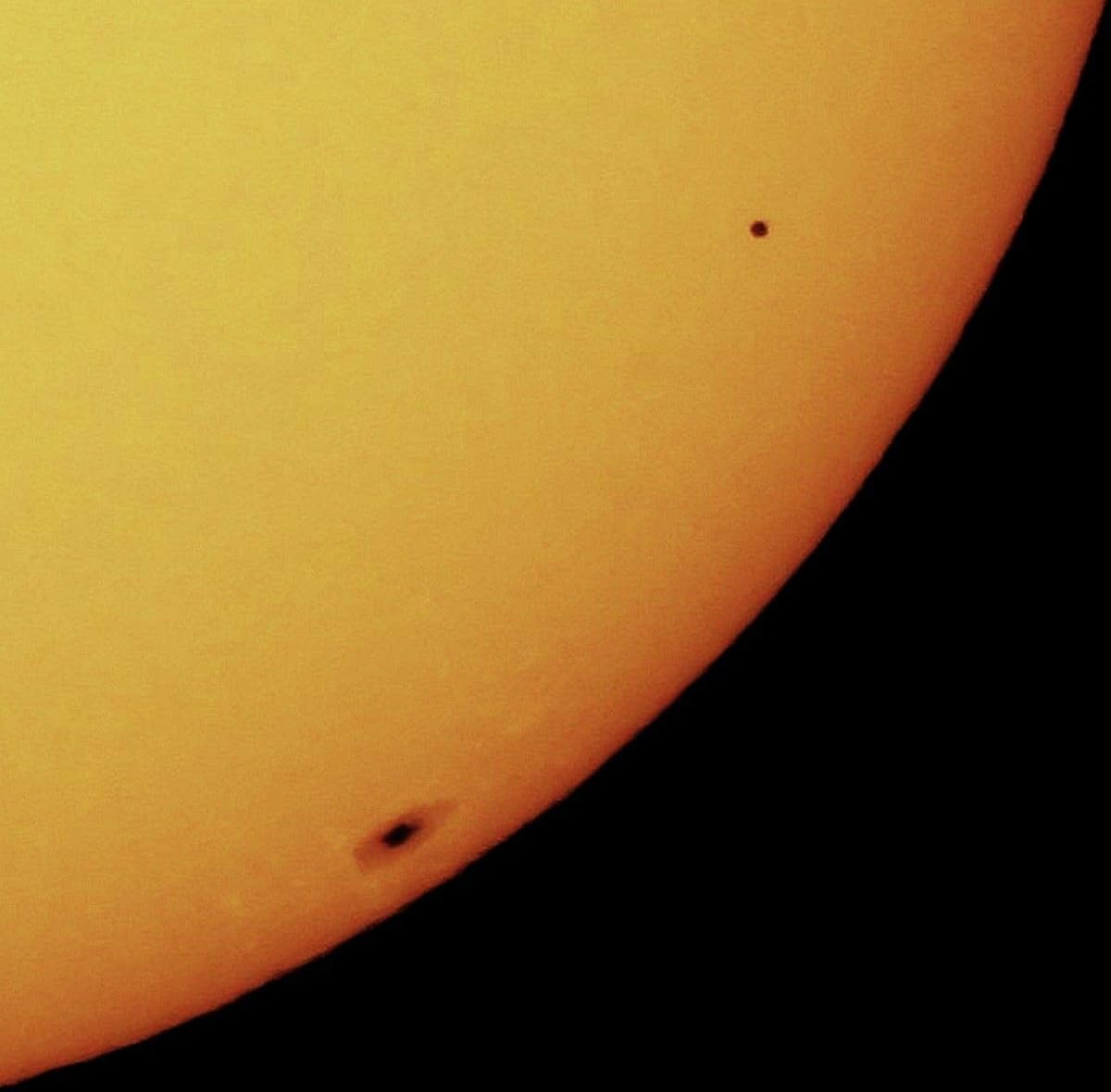


The ALILUSSO Smartphone Camera Lens Filter is the most directly relevant product in this guide for photographing the sun with a phone. It has a 4.1 rating and is explicitly marketed for compatible iPhone, Samsung, Moto, Google, and TCL devices. Its two-pack format gives users a spare or allows two devices to be prepared, while the smartphone-specific design is more relevant than a general telescope accessory.
We may earn a commission when you buy through this link, at no additional cost to you.
The product information emphasizes capturing partial phases, the diamond ring effect, and the corona during totality. It also describes the filter as protecting the phone camera from harmful solar rays, which addresses the central requirement for solar photography: reducing incoming sunlight before it reaches the sensor. The recommended sequence places the filter over the lens, frames and zooms on the sun, locks focus and exposure, and then reduces exposure in the camera settings.
There are important limits to consider. The filter is not designed for direct eye viewing, and the manufacturer warns that looking at the sun through it can cause permanent blindness or eye damage. Its 4.1 rating is respectable but trails several telescope-specific options, and phone camera systems differ in lens placement, processing behavior, and exposure control. Users should remove the phone case as directed and confirm that the filter fully covers the active camera.
This is the most practical selection for a phone owner who wants to document a solar event without building a custom filter holder. It is not appropriate for naked-eye observation, and it should not be used merely because it resembles a camera filter. Subject to correct positioning, complete coverage, and careful exposure reduction, it is the strongest purpose-built phone choice in the supplied selection.
Unlike the universal telescope filters and adaptable film sheets, this accessory is designed around smartphone camera use. Its listed compatibility covers several major device families, making it easier to identify than a generic filter that requires a separate mounting solution.
A solar filter should be paired with conservative exposure settings, and the product guidance specifically recommends reducing exposure after focusing on the sun. This reduces the risk of a bright, overexposed result and helps preserve the phases and detail the filter is intended to reveal.
We may earn a commission when you buy through this link, at no additional cost to you.
The Celestron EclipSmart Universal Solar Filter is built for telescopes, spotting scopes, and DSLR cameras rather than phones. It carries a 4.2 rating and states that it conforms to ISO 12312-2:2015(E) for filters used to view the sun directly. That certification statement gives it a clear safety-focused position among the products that can cover the front of an optical system.
We may earn a commission when you buy through this link, at no additional cost to you.
Its adjustable side panels accommodate objective lenses with an outside diameter from 75mm to 100mm, and an elastic band helps secure the filter. The same mounting approach can therefore cover more than one compatible instrument without the fixed dimensions associated with a telescope-specific cap. Celestron also includes a reusable storage bag and notes that the filter folds flat when it is not being used.
The limitation is obvious but important: this is not a dedicated smartphone attachment. A phone is unlikely to offer a suitable 75–100mm objective diameter, and attempting to improvise a mount could leave an unprotected gap around the camera. Users also need to follow the manufacturer’s solar safety instructions exactly. The orange tint is described as producing a natural appearance for visual observation and telescope or DSLR images.
The Celestron universal filter is an excellent choice for a photographer or observer who already owns compatible astronomical equipment and wants documented ISO compliance. It is not the best phone-specific purchase in this list. For phones, the ALILUSSO option is more relevant, while photographers with a large telescope should consider the dedicated six-inch Celestron model.
The stated ISO 12312-2:2015(E) conformity provides a more defined safety basis than a general camera accessory. Buyers should still follow the latest instructions, inspect the filter before use, and confirm that it is appropriate for their exact optical equipment.
The 75–100mm fitting range makes this filter useful across several telescopes, spotting scopes, and compatible camera lenses. It is a versatile option for an existing optical setup, though that versatility does not extend naturally to a smartphone’s small camera opening.
We may earn a commission when you buy through this link, at no additional cost to you.
The K&F CONCEPT 52mm Clip-on CPL Phone Camera Lens Filter Kit is a circular polarizer designed for travel, street, landscape, time-lapse, wedding, and general outdoor photography. It has a 3.9 rating, the lowest in this selection, but its stated features serve a different purpose from solar imaging. It is included to clarify that a general phone lens filter is not automatically suitable for photographing the sun.
We may earn a commission when you buy through this link, at no additional cost to you.
The filter uses Japanese imported AGC glass and an 18-layer MRC coating, which the manufacturer says reduces reflection and glare while improving saturation and contrast. A rotating clip allows the filter angle to be changed during shooting. For reducing reflections, the guidance recommends holding the lens at 30–40 degrees to the reflective surface, while shooting sideways to the sun can deepen the sky effect.
Its limits should be understood before purchase. Circular polarizers reduce glare from non-metallic materials such as water and glass, but they do not eliminate every reflection and have little effect on metal or mirrors. More importantly, nothing in the supplied information identifies this product as certified for direct solar viewing, so it must not be treated as a solar filter. It also is not compatible with iPhone 18 Pro and 18 Pro Max.
This kit is best for photographers seeking richer skies, reduced glare, and more contrast in ordinary daylight. It can be particularly useful around water, glass, foliage, and landscapes when the camera angle is adjusted correctly. It is not a candidate for direct solar photography, and anyone photographing the sun should select a product explicitly designed and documented for that use.
The effect changes as the filter is rotated and as the phone moves relative to the subject. Adjusting the angle helps control reflection density and sky contrast, although it cannot create a safe solar filter or remove reflections from metal.
The clip-on format makes this product convenient for landscapes, vacations, street scenes, and time-lapse work. The AGC glass and multilayer coating support the intended goal of clearer outdoor images without changing the basic color balance.
We may earn a commission when you buy through this link, at no additional cost to you.
The 6"x6" Solar Filter Sheet for Telescopes, Binoculars and Cameras is a sheet of silver-black polymer intended for creating a custom solar filter. Its 4.6 rating is tied for the highest among the supplied products. Unlike a ready-made filter, it gives knowledgeable users flexibility in size, but that freedom also shifts responsibility for construction and secure attachment to the user.
We may earn a commission when you buy through this link, at no additional cost to you.
Silver-black polymer is described as a common filtering material for observing sunspots and solar granulation. The sheet is large enough to be trimmed for a telescope, binocular, or camera filter and produces an orange appearance when the sun is viewed through it. The stated use includes cameras, which may make it relevant to advanced phone-photography setups, but the listing does not identify it as a phone-specific product.
Safe use depends on the finished assembly. The warning is explicit: the filter must be well attached to the telescope, binoculars, or camera using sticky tape so it cannot fall away while observing. A loose filter in front of an optical device can be extremely dangerous in direct sunlight, and a phone user would also need a rigid holder that fully covers the camera and cannot shift.
This sheet is best for a careful hobbyist who wants to construct a filter for compatible optical equipment and understands the need for a secure front-mounted cell. It is not the easiest choice for a phone user who wants an immediately usable clip-on accessory. Its high rating and adaptable format make it worthwhile for custom builds, provided safety takes priority over convenience.
A sheet can be sized for different optical equipment, which is useful when no ready-made filter matches the required dimensions. The material remains vulnerable to poor mounting, so the holder should be rigid, full-aperture, and incapable of moving during exposure.
The natural orange rendering gives the sun a distinct appearance while allowing solar features such as sunspots and granulation to be observed. The color is an intentional result of the filtering material rather than an adjustable feature.
We may earn a commission when you buy through this link, at no additional cost to you.
The 4"x4" Solar Filter Sheet is a compact sheet of black polymer for observers who want to make a filter for a telescope, binocular, or camera. It has a 4.5 rating and is made by Thousand Oaks Optical, which the product information describes as a manufacturer of safe solar filters for more than 30 years.
We may earn a commission when you buy through this link, at no additional cost to you.
Black polymer is identified as a common solar-filtering material for observing sunspots and granulation. The listing emphasizes that the filtering properties are protected within the substrate, describes the material as stronger than Mylar, and states a five-year guarantee. The sun appears orange through the filter, providing a natural visual result for astronomical observation.
The sheet is not supplied as a finished phone accessory. It must be cut and mounted in a way that keeps it securely positioned over the entire front opening. The instruction to use sticky tape is part of the product warning, but any build should also prevent the filter from shifting, bowing, or being exposed to moisture that could compromise it. A small phone clip alone may not provide enough surface area for a secure cell.
The 4"x4" size makes this product more manageable than a large sheet and potentially useful for smaller custom assemblies. It is a strong choice for a careful observer or astronomy hobbyist who wants a durable, compact solar material with a stated guarantee. Phone owners should regard it as raw material for a proper filter project, not as a plug-and-play solar camera filter.
The filtering properties are described as being protected within the substrate rather than relying on a delicate surface layer. The stated five-year guarantee also provides useful context when comparing this material with other solar film options.
The four-inch square format offers a middle ground between large telescope cells and a small phone-mounted filter. Its usefulness depends on creating a holder that covers the camera opening completely and remains secure throughout the shot.
We may earn a commission when you buy through this link, at no additional cost to you.
The 8"x8" Solar Filter Sheet is the largest flexible sheet in the group and has a 4.6 rating. It is intended for making filters for telescopes, binoculars, and cameras, giving experienced users ample material to cover larger objective diameters or create multiple custom filter elements from one sheet.
We may earn a commission when you buy through this link, at no additional cost to you.
The black polymer filtering material is described as suitable for sunspots and granulation. Like the smaller Thousand Oaks sheet, the product information says the filtering properties are protected inside the substrate, calls the material stronger than Mylar, and states a five-year guarantee. Viewing the sun through a properly constructed filter produces a natural orange color.
Its principal advantage is sizing flexibility rather than convenience. An eight-inch square can be cut down for several applications, but the larger sheet is unnecessary for most phone photographers and can create storage challenges. Whatever size is chosen, the filter must be installed ahead of the optical system and secured with sticky tape or a suitably robust equivalent so it cannot detach.
This product is best for astronomy hobbyists, educators, or custom-build enthusiasts who need a larger quantity of solar film. It is not a ready-to-use answer for someone who simply wants to photograph an eclipse with a phone. For phone use, the finished assembly must be engineered to cover the relevant camera and stay fixed, and a dedicated phone filter is the less complex choice.
The large format provides room to size a filter for a bigger objective or produce several smaller components. That makes it useful for observers building equipment for different telescopes, binoculars, or camera arrangements.
A generous sheet does not automatically produce a safe filter. The finished cell must remain firmly attached over the full optical opening, because any movement or gap could allow concentrated sunlight to reach the instrument or observer.
We may earn a commission when you buy through this link, at no additional cost to you.
The 67mm CPL Filter for Phone/DSLR is a circular polarizer with a universal clip-on mount, and it holds the highest supplied rating at 5.0. The package includes the filter, a secure clip, a protective lens cap, cleaning cloths, and a durable zippered carrying case, making it the most complete conventional phone-filter kit in the comparison.
We may earn a commission when you buy through this link, at no additional cost to you.
The filter is intended to reduce reflections from water, glass, and leaves while deepening sky blue and increasing color saturation and contrast. Users align the filter with the main phone camera and rotate the ring slowly until the desired polarization is reached. It is also compatible with 67mm camera lenses, and the stated dimensions are 2.7 inches wide by 4.1 inches tall.
Despite its phone-specific design, it is not a solar filter. The supplied information does not claim ISO compliance, solar certification, or safe direct-sun use. A circular polarizer can actually make direct views of the sun hazardous and is not designed to attenuate sunlight enough for solar photography. It should therefore be used for ordinary outdoor scenes and kept away from the sun during solar events.
This is an attractive choice for everyday travel, landscape, and architectural photography because the included accessories simplify storage and maintenance. It ranks highly within its category, but its 5.0 rating should not be confused with solar-performance certification. Anyone focused specifically on the sun should choose the ALILUSSO smartphone solar filter or a properly mounted telescope filter instead.
A protective cap, cleaning cloths, and a zippered case make it easier to carry the filter without exposing the optical surface. The accessories also reduce the chance of losing the clip or filter between outings.
The filter ring rotates so users can fine-tune the effect, but alignment with the phone’s main camera must be accurate. Optimal results depend on the relationship among the filter, camera, subject, and sun, so a fixed setting may not work in every location.
We may earn a commission when you buy through this link, at no additional cost to you.
The K&F CONCEPT 67mm Clip-on CPL Phone Camera Lens Filter Kit combines a 67mm circular polarizer with a phone clip and has a 4.0 rating. Like the smaller K&F model, it is designed for outdoor, travel, street, landscape, time-lapse, wedding, and vacation photography rather than solar imaging.
We may earn a commission when you buy through this link, at no additional cost to you.
Its Nano-K series filter uses Japanese imported AGC glass and an 18-layer MRC coating. According to the product information, the coating reduces reflection and glare, while the filter enhances color and contrast. Reflections from water, glass, and other non-metallic surfaces can be reduced, although changing the camera angle or removing the reflective object may be necessary for complete elimination.
A notable convenience is that the clip can accommodate many smartphones even when a case is fitted. The 67mm filter can also be used with a DSLR lens having a 67mm thread. Installation is straightforward: the filter screws onto the clip, the clip is placed over the camera, and the filter is rotated as needed to optimize the effect.
This kit is a good fit for users who want more contrast and controlled glare without removing their phone case. It is not appropriate for photographing the sun because the supplied specifications do not identify it as a solar-safe product. Its role in a solar-filter roundup is educational: it demonstrates the difference between filters that improve ordinary outdoor images and products designed to attenuate intense sunlight.
Supporting use with a fitted case removes a common obstacle to clip-on filters. Users should still confirm the camera position and ensure that the filter is centered over the active lens without intruding on other sensors.
The 18-layer MRC coating is intended to suppress reflection and glare while retaining natural color. This makes the filter useful for vivid skies, clouds, water, and reflective glass when the camera angle supports polarization.
We may earn a commission when you buy through this link, at no additional cost to you.
The Celestron EclipSmart 6" Solar Safe Eclipse Telescope Filter is a purpose-built accessory for compatible Celestron six-inch Schmidt-Cassegrain telescopes. Its 4.5 rating reflects strong customer satisfaction, and its stated ISO 12312-2:2015(E) conformity gives it a clear safety standard for solar viewing through a compatible telescope.
We may earn a commission when you buy through this link, at no additional cost to you.
Two hook-and-loop straps secure the filter to the telescope objective. The solar film is produced in the United States by American Paper Optics, which Celestron identifies as a supplier recommended by NASA and the American Astronomical Society for safe solar viewing. The film is also described as independently tested by a third-party laboratory, and the orange tint is intended to provide a natural appearance for visual observation and images.
The model is specifically tied to Celestron 6-inch Schmidt-Cassegrain telescopes, so it will not fit a phone and may not fit an unrelated six-inch telescope. Users should verify the exact optical model and follow Celestron’s installation instructions. The included two-year warranty and support add reassurance, but they do not remove the need to inspect the attachment before every solar session.
This filter is a premium choice for an owner of the specified Celestron telescope who wants a ready-made, securely retained solar solution. It is not a phone-camera accessory. Phone photographers should look first to the purpose-built ALILUSSO filter, while telescope owners can choose between this fixed fit, the universal Celestron model, or a custom sheet depending on their equipment.
The six-inch design is matched to Celestron Schmidt-Cassegrain telescopes, removing much of the uncertainty associated with constructing a filter cell. Exact model verification remains necessary before installation.
Two hook-and-loop straps help keep the filter positioned over the objective. They should be checked for tension and correct placement, since a filter that shifts even slightly can compromise a solar session.
We may earn a commission when you buy through this link, at no additional cost to you.
The Celestron EclipSmart Solar Filter for AstroMaster 70 Refractor Telescopes is designed for the Celestron AstroMaster 70AZ/EQ and AstroMaster LT 70AZ. Its 4.2 rating is supported by a product design centered on known telescope compatibility, stated ISO 12312-2:2015(E) conformity, and a straightforward three-screw attachment system.
We may earn a commission when you buy through this link, at no additional cost to you.
The three safety screws hold the filter at the front of the telescope objective, helping prevent it from moving during use. A protective cap shields the outside of the filter when it is not in use. Like Celestron’s other solar products, it uses USA-produced Solar Safe film from American Paper Optics and is described as independently tested by a third-party laboratory.
The orange tint is designed to create a natural appearance for visual observation and telescope imaging. Celestron also includes a two-year warranty and support from its US-based team. These features make it a well-specified choice for a compatible refractor, but the fixed model-specific fit means it should not be considered for a phone or an unrelated optical tube.
This filter is best for the narrow group of users who own one of the named AstroMaster 70 telescopes and want a ready-made solar option without building a custom cell. The three-screw retention and included cap are practical advantages. For mobile solar photography, however, it is a specialized telescope accessory rather than a practical phone solution.
The screws distribute retention around the filter cell, helping maintain a consistent position in front of the objective. Users should inspect them before observing to confirm that the filter is firmly seated and cannot rotate.
The outer protective cap helps guard the filter surface between sessions. It should be removed for solar viewing and replaced after use so the filtering material is not unnecessarily exposed.
We may earn a commission when you buy through this link, at no additional cost to you.
The most important buying factor is documented suitability for solar use, followed by complete camera coverage and secure retention. Compatibility, optical design, and ease of setup help refine the choice, but no convenience feature can compensate for using a general polarizing or diffusion filter on the sun.
A filter intended for landscapes, reflections, or general color enhancement is not the same as a solar filter. For direct photography of the sun, look for explicit solar photography instructions, solar-rating claims, or conformity with a recognized standard such as ISO 12312-2:2015(E). The Celestron products provide that type of documented solar positioning, while the ALILUSSO filter is specifically described as a smartphone solar photography filter.
Do not assume that a darker image, a polarizer, or a filter labeled for cameras is safe for the sun. The K&F CONCEPT kits and the 67mm universal CPL are designed for ordinary outdoor photography and should not be pointed at the sun as solar protection.
Phone-specific filters should be checked against the exact phone model and camera position, while telescope filters must match the objective diameter and optical design. The Celestron universal filter covers stated objective diameters from 75mm to 100mm, whereas the six-inch and AstroMaster filters are tied to specific Celestron telescopes. A phone user should verify that a proposed filter covers every active camera intended for use.
Multi-camera phones deserve particular care because filters may need to cover more than one lens or restrict use to the main camera. Never assume that a clip sitting loosely over a camera qualifies as a complete solar filter.
Safety documentation should state what the product is designed to protect, which standard it meets, and how it must be installed. ISO compliance is especially useful for filters intended to be placed in front of a telescope or spotting scope. A purpose-built phone filter should provide equally clear instructions about camera placement, exposure, and safe handling.
Users should also distinguish sensor protection from eye protection. A camera filter may be intended to protect a camera without being suitable for direct viewing, and no visual solar filter should ever be used for naked-eye observation unless it is specifically certified and installed as a complete observing system.
The filter must cover the complete light-gathering area before it reaches the camera. Gaps can allow intense sunlight to enter around the filter, defeating its protective purpose and potentially creating a focused hazard for nearby people. Phone clip filters therefore need accurate alignment, and custom builds need a rigid holder sized larger than the opening.
A filter that can rotate, slide, or fall away is a poor choice. Strong retention is more important than a slim profile, particularly when photographing the sun for an extended period or while adjusting the camera.
Ready-made phone filters are convenient because they use purpose-designed clips, while telescope filters commonly use straps or screws. The sheet products require users to build a custom cell and secure it with adhesive. Celestron’s universal model uses adjustable panels and an elastic band, the six-inch model uses hook-and-loop straps, and the AstroMaster filter uses three safety screws.
Whatever the mechanism, inspect it before every use. Adhesive, fabric fasteners, screws, and clips can loosen over time or shift when a phone or telescope is repositioned.
Solar filters and circular polarizers serve different optical goals. A solar filter is intended to attenuate intense sunlight for safe solar imaging, while a CPL improves contrast and reduces glare from water, glass, and foliage in ordinary scenes. The black and silver-black sheets and the Celestron filters produce an orange solar appearance, whereas the CPL kits aim to deepen sky color and reduce non-metallic reflections.
A circular polarizer cannot remove every reflection and has little effect on metal or mirrors. It may also require a specific angle to achieve the desired result, so it is best judged by practical outdoor image improvements rather than solar performance.
Even a correctly mounted filter requires sensible camera settings. The ALILUSSO guidance recommends locking focus and exposure on the sun and then reducing exposure, which helps avoid a featureless bright image. Brightness also varies among phones, so the best settings can differ by device and scene.
Using a tripod, remote shutter, or other stabilization method can help preserve detail. Avoid digital zoom, bright preview modes, and automatic exposure behavior that could brighten the frame after the filter is in place.
Optical coatings, glass construction, included caps, cleaning cloths, and storage cases affect convenience and long-term usability. The K&F CONCEPT filters use AGC glass and 18-layer MRC coatings, while the 67mm universal CPL includes a protective cap, cloths, and a zippered case. The telescope filters benefit from secure retention hardware, and the sheet products are valued for customizable sizing.
Accessories matter only after compatibility and safety are established. A well-equipped general filter still cannot be repurposed as a solar filter without appropriate documentation and engineering.
Before use, confirm that the filter is explicitly intended for solar imaging, that it fits the relevant camera or optical system, and that its attachment is undamaged. Read the manufacturer’s current instructions, especially for exposure, camera coverage, and mounting. For a phone, remove the case if the guidance calls for it, clean the lens and filter, and align the filter precisely over the active camera before pointing the device toward the sun.
Once the filter is secure, frame the sun, zoom carefully, and lock focus and exposure. Reduce exposure as recommended rather than relying on automatic brightness changes. Stabilize the phone, confirm that the sun is fully behind the filtering material, and take a test image to check exposure before making additional frames. Never remove the filter while the camera remains pointed at the sun, and never look through the phone camera without it.
After the session, remove the filter before storing the phone, then place the filter in a clean case. Wipe optical surfaces gently with a suitable cloth, avoid abrasive or liquids not approved by the manufacturer, and inspect the material for tears, pinholes, warping, or delamination. Store solar film away from heat, humidity, pets, and direct sunlight, and retire any filter whose condition or secure attachment is uncertain.
No. A circular polarizer is designed to reduce glare and improve contrast in ordinary outdoor scenes, not to attenuate direct sunlight to a safe level for a phone sensor. The K&F CONCEPT kits and 67mm universal CPL in this guide should be used for landscapes, reflections, travel, and general photography. Solar imaging requires a filter specifically documented for that purpose.
The ALILUSSO smartphone solar filter is the option explicitly designed for solar photography with compatible phones. It should be aligned over the camera, securely held, and used with reduced exposure. The product is not for eye viewing, so it should never be used as a substitute for certified eclipse glasses or a properly installed telescope solar filter.
Only if a purpose-built, fully covering holder can be created without compromising the filter or exposing the phone camera to a gap. Most telescope filters are too large for a phone, and a loose or partial attachment is unsafe. Phone owners should prefer a phone-specific solar filter unless they are experienced at constructing a rigid, full-aperture filter cell.
ISO 12312-2:2015(E) is the international safety standard cited for solar filters used in front of telescopes and similar optical systems. The Celestron products in this guide state that they conform to it. A compliance claim is a meaningful selection criterion, but users must still follow mounting instructions, inspect the filter, and use it only with compatible equipment.
The sheets can be used to make a custom filter for a camera, but they are not ready-made phone accessories. A phone user would need to cut the material to size and create a strong holder that covers the entire camera opening and cannot shift. The listing’s warning that the filter must be securely attached with sticky tape emphasizes how important retention is.
The camera may be applying automatic exposure that brightens the scene, or the filter may not be covering the correct camera. Reduce exposure as the ALILUSSO instructions recommend, lock focus and exposure, avoid unnecessary digital zoom, and confirm that the filter is properly aligned. Test settings before the main event because phone cameras respond differently.
It depends on the product and case. The ALILUSSO instructions specifically recommend removing the phone case for best results, while the K&F CONCEPT 67mm clip is described as able to work with a case. The deciding factor is whether the filter sits squarely over the camera and remains secure without shifting.
A dedicated solar filter is designed for the sun and may produce very dark or restricted images in ordinary light. The circular polarizers in this guide are much more suitable for landscapes, glass, water, travel, and street scenes, but they must never be treated as solar protection. Keep the two filter types separate and use each only for its documented purpose.
The ALILUSSO Smartphone Camera Lens Filter stands out as the most relevant option for direct phone-based solar photography because it is purpose-built, includes two filters, and provides practical exposure guidance. The Celestron EclipSmart filters lead the telescope side of the comparison through stated ISO compliance, secure retention, and model-specific or universal mounting options, while the Thousand Oaks sheets offer adaptable solar material for experienced custom builders.
The polarizer kits should be evaluated for their actual purpose: reducing glare and enhancing color in ordinary outdoor phone photos, not protecting a sensor from the sun. The most important priorities are explicit solar suitability, complete camera coverage, secure retention, correct dimensions, and conservative exposure control. General photography features such as rotation, coatings, and included cases become useful only after those fundamentals are satisfied.
Prices and availability can change, so check current listings before buying. Also verify the exact phone or optical-device compatibility, read the latest safety instructions, and inspect the selected filter and mount. Careful preparation is just as important as the purchase itself when working anywhere near direct sunlight.