
Anker Nano Phone Charger
4.8Editor score
30W USB-C fast charging
GaN-enhanced compact construction
ActiveShield 2.0 protection
Our Anker USB Charging Block guide compares ten Anker wall chargers for power, port count, portability, safety, and multi-device charging needs at home and
An Anker USB charging block can replace several separate wall adapters while keeping phones, tablets, earbuds, and notebooks powered from a compact outlet-based hub. A useful charger balances total output, port flexibility, physical size, travel convenience, and dependable protection rather than focusing on maximum wattage alone.
We compared ten Anker charging blocks across their stated power ratings, port configurations, charging protocols, safety systems, and intended uses. The list covers compact models for a single phone, two-port options for everyday travel, GaN chargers for higher-powered devices, and desktop hubs for several devices at once.
Each pick below highlights the charging scenario it serves best, along with its important limitations. Ratings and product details reflect the supplied listings, while availability and prices can change, so check the current listing before choosing based on your devices, travel plans, and outlet needs.
4.8Editor score

4.8Editor score

4.6Editor score
The comparison below places all ten Anker charging blocks side by side, focusing on maximum output, port mix, portability, and the types of devices each model is designed to serve.




The Anker Zolo USB C Charger Block is the strongest all-around choice in this guide, combining a 50W maximum output with two USB-C ports and two USB-A ports. Its 4.8 rating reflects a well-regarded balance of charging flexibility, portability, and protection features. It is particularly useful for anyone trying to consolidate several device adapters into one compact unit.
We may earn a commission when you buy through this link, at no additional cost to you.
Its most important advantage is the port selection. USB-C1 can maintain full 30W output even when both USB-C connections are in use, while USB-C2 provides up to 20W. The two USB-A ports add compatibility for older accessories, wired earbuds, power banks, and other devices that have not moved to USB-C. That combination makes it more versatile than a single-port wall charger without turning into a large desktop hub.
The foldable plugs and compact, AirPods-sized form make it practical for travel, although the supplied listing describes a two-pack, so buyers who need only one unit should check the package configuration carefully. A second charger can be useful for separating a work bag from a personal bag, but it is unnecessary for a single outlet or a compact nightstand. Shared power is also divided when several devices connect, so it is not the right choice for demanding simultaneous laptop charging.
This is the best recommendation for a traveler, family member, or everyday desk user who wants broad compatibility in a modest footprint. Choose it when four-device charging, two USB-C connections, and legacy USB-A support matter more than maximum single-port wattage. For a single high-power notebook, the 65W or 67W models in the guide offer a more suitable output profile.
Two USB-C ports and two USB-A ports let the Zolo serve modern phones and tablets alongside accessories that still rely on older connectors. The 30W primary USB-C output is useful for fast phone charging, while the remaining connections cover everyday low-to-moderate power devices.
ActiveShield 4.0 is described as providing 24-hour monitoring and intelligent protection, with the charger also using upgraded GaN architecture. These features make it suitable for routine use in homes, offices, and travel settings where multiple devices may remain connected for long periods.
We may earn a commission when you buy through this link, at no additional cost to you.
The Anker 33W 2-Port Compact USB Charger Block, also identified as the Anker 323, is a focused travel charger for people who regularly carry a phone and one additional accessory. It receives a 4.7 rating and combines a 33W USB-C Power Delivery port with a USB-A port. The result is a simple two-device solution without the bulk of a desktop charging station.
We may earn a commission when you buy through this link, at no additional cost to you.
Its USB-C port is the center of the design and is advertised as charging compatible iPhones, iPads, Galaxy devices, Pixels, and other USB-C products up to three times faster than standard chargers. The foldable plug helps the charger sit more neatly in a bag or pocket, while ActiveShield adds continuous temperature monitoring and intelligent output control for safer charging.
The tradeoff is that two ports and 33W cannot support the widest range of heavy workloads. A phone and lightweight accessory will fit the design well, but a laptop plus a tablet could divide power enough to reduce charging effectiveness. The USB-A port also lacks the high-current emphasis found in Anker's larger multi-port desktop charger, so it is best viewed as a secondary connection for compatible accessories rather than the centerpiece of a high-power setup.
This charger is an excellent pick for a carry-on, weekend bag, or office drawer where the goal is fast phone charging and one extra connection. It gives buyers more capability than a single-port adapter without committing to a larger four- or six-port model. It is especially attractive for users who want USB-C fast charging but still own one or two USB-A accessories.
The 33W USB-C Power Delivery connection is the key attraction. It gives compatible phones and tablets substantially more available power than a basic 5W wall adapter while preserving a compact format for travel.
Adding a USB-A port makes the charger more useful for a wide range of accessories. It is a practical middle ground for a traveler who wants to charge a phone overnight while also replenishing earbuds, a smartwatch, or another compatible device.
We may earn a commission when you buy through this link, at no additional cost to you.
The Anker 2-Pack USB Charger is built around a simple but useful proposition: two compact dual-port wall chargers in one package. It carries a 4.7 rating and is aimed at households that still rely on USB-A accessories or want separate chargers for different rooms. Each unit can power two devices at the same time, creating several convenient charging points without requiring a large desktop hub.
We may earn a commission when you buy through this link, at no additional cost to you.
PowerIQ is the key technical feature, as it detects connected devices and adjusts voltage output accordingly. The chargers are also described as smaller than a golf ball, with foldable plugs that make them more travel-friendly. An 11-point safety system adds overvoltage protection, temperature control, and other safeguards, while the package includes a welcome guide, an 18-month warranty, and customer support.
This is the least future-oriented model in the lineup because it lacks USB-C and tops out at 12W. It also does not support Qualcomm Quick Charge. Newer iPhones with USB-C charging would require an appropriate USB-C cable and a compatible USB-C charger for fast charging, so this set makes more sense for older phones, tablets, accessories, and other USB-powered hardware. The two-pack configuration can also be overkill for one traveler.
Choose this product if your household has multiple USB-A devices, you want a spare adapter for work and home, or you prefer two small chargers over one desktop brick. It is not the best match for modern USB-C laptops or buyers seeking a single-port fast-charging solution. For most newer phone users, one of the USB-C models elsewhere in this guide will offer more useful performance.
A two-pack can be used in separate rooms, kept in separate bags, or placed near different outlets. The approach distributes charging capacity without requiring a larger multi-device hub or a separate extension for each device.
PowerIQ detects the connected device and adjusts the voltage output for a more appropriate charge. Although limited to 12W, this makes the charger useful for many established accessories that rely on standard USB-A connections.
We may earn a commission when you buy through this link, at no additional cost to you.
The Anker 65W Max 3-Port USB C Charger Block, known as the Anker 735 Nano II 65W, is among the most versatile picks here. Its 4.7 rating reflects a capable 65W maximum output, three charging ports, and a body described as roughly the size of an AirPods Pro case. It is aimed at users who want one charger to handle a phone, tablet, and USB-C notebook.
We may earn a commission when you buy through this link, at no additional cost to you.
When connected to a single device, the charger can deliver up to 65W, and the listing specifically notes that this is enough to power a 2020 13-inch MacBook Pro at full speed. When all three devices are connected, output is distributed among the ports. That makes it a flexible travel or desk companion, although users should not expect each connected device to receive the full 65W rating simultaneously.
GaN II technology is central to the compact design. Anker describes a 100% operating-frequency increase, an innovative stacked layout, and an upgraded circuit-board structure that reduce size without lowering maximum power. The trade-off is that this is still a personal three-port charger rather than a desktop hub: it does not offer six connections, the larger aggregate output of the 112W model, or the always-on organization features of a wired charging station.
This is the top choice for a traveler or hybrid worker who alternates between a phone, tablet, and USB-C laptop. It offers more laptop-capable power than the 50W Zolo while remaining smaller and more focused than the 112W desktop charger. Pick it when portability, GaN construction, and three-device flexibility are more important than a large port count or simultaneous high-wattage charging.
A 65W single-device output makes this charger relevant to compatible USB-C notebooks, including the 13-inch MacBook Pro example in the supplied information. It offers a more substantial power ceiling than typical phone-focused wall adapters without the size of a conventional laptop brick.
The compact size is made possible by GaN II components and a revised internal layout. Users who want to carry one charger for several device types can reduce the number of separate adapters without giving up high-power USB-C charging.
We may earn a commission when you buy through this link, at no additional cost to you.
The Anker 112W Desktop Charger is the clear high-capacity option in this guide. It has a 4.7 rating, six total ports, and an aggregate 112W output, allowing it to serve an entire desk of phones, tablets, and accessories. Three USB-C and three USB-A ports provide broad compatibility while keeping the charging setup in one central location.
We may earn a commission when you buy through this link, at no additional cost to you.
The maximum single-port output reaches 30W through USB-C, while a single USB-A connection can provide up to 18W. The listing also states that 30W charging is limited specifically to USB-C1, which is an important detail for buyers who plan to connect more than one higher-power device. The total output is substantial, but the distribution rules matter more than the headline number when six accessories are active.
Anker says the charger can power a MacBook Air to 50% in one hour and 40 minutes and an iPhone 16 Pro Max from zero to 50% in 30 minutes with a compatible single-port connection. A silicone cable organizer is included to reduce desk clutter, while the stated dimensions of 3.0 by 3.2 by 1.3 inches keep the unit relatively restrained. USB-C cables are not included, so suitable cords must already be on hand.
Choose this model for a shared office, home workstation, or charging station where numerous devices need one dependable hub. It is less convenient for minimalist travel because six ports create more bulk and cable management than a two-port adapter. If the goal is charging a single notebook at maximum speed, the dedicated 65W or 67W models are simpler and more portable.
With 112W spread across six ports, this charger is built for more devices than the travel models in the guide. It can maintain a central charging routine for a collection of phones, tablets, earbuds, watches, and other USB-powered accessories.
The included silicone cable organizer is a thoughtful addition for a desktop product. It helps keep frequently connected cables gathered in one area, making the hub more practical for a permanent workstation than a loose collection of wall adapters.
We may earn a commission when you buy through this link, at no additional cost to you.
The Anker 20W USB C Charger Block is a direct, uncomplicated option for everyday phone charging. Its 4.6 rating and 20W maximum output target compatible iPhones, Samsung phones, and other USB-C devices. One USB-C port and one USB-A port allow two devices to charge at the same time, covering the common need for a phone plus earbuds, watch, or another small accessory.
We may earn a commission when you buy through this link, at no additional cost to you.
Unlike some ultra-compact models in this guide, the charger package includes two five-foot USB-C to USB-C cables. That makes the package more immediately useful if you need a spare cable or are charging two USB-C accessories with compatible cables. Anker's safety system includes overvoltage protection, temperature control, and other safeguards intended to protect connected equipment.
The 20W ceiling is sufficient for modern phone fast charging but does not position this as a laptop charger. The listing says the two ports can operate simultaneously without compromising speed or performance, though the available power will still be divided according to connected devices. The single USB-C port also means a phone and a USB-C accessory cannot both receive full USB-C fast charging at the same time.
This is a good pick for users who want a simple two-port charger without paying attention to a larger hub or travel-only design. It is also more practical than a basic single-port adapter when household members share one charging block. Choose it for phone-centered charging and inexpensive everyday use, not for demanding notebook workloads.
Twenty watts is a meaningful upgrade for compatible phones and a straightforward specification to understand. It suits buyers who want modern USB-C speed but do not need the 60W-plus output associated with notebook charging.
Two five-foot USB-C to USB-C cables are included, which is useful for a first-time setup or for keeping one cable at a desk and another in a bag. Buyers who already own suitable cables still gain a compact adapter for a second device.
We may earn a commission when you buy through this link, at no additional cost to you.
The Anker 60W 6-Port USB Charging Hub is a broad compatibility charger for devices that still depend on USB-A. It has a 4.8 rating and supplies a total of 60W across six ports, with up to 2.4 amps available per connection when the allocation permits. It is a natural fit for a family charging area filled with established accessories.
We may earn a commission when you buy through this link, at no additional cost to you.
PowerIQ and VoltageBoost are the key charging technologies, while the unit's UL certification and proprietary safety system add layers of protection. It supports 100–240V input for worldwide use and can charge Android devices, Apple products, laptops, and other USB-powered equipment. A detachable five-foot power cord and an included hook-and-loop strip make it easy to position and organize as a permanent station.
Its limitation is clear: all six ports are USB-A, and Qualcomm Quick Charge is not supported. With 60W spread across six connections, the average allocation is only 10W, although exact output depends on the devices and port allocation. It should therefore be seen as a convenient multi-device hub rather than a fast-charging solution for a single modern phone or a power-hungry notebook.
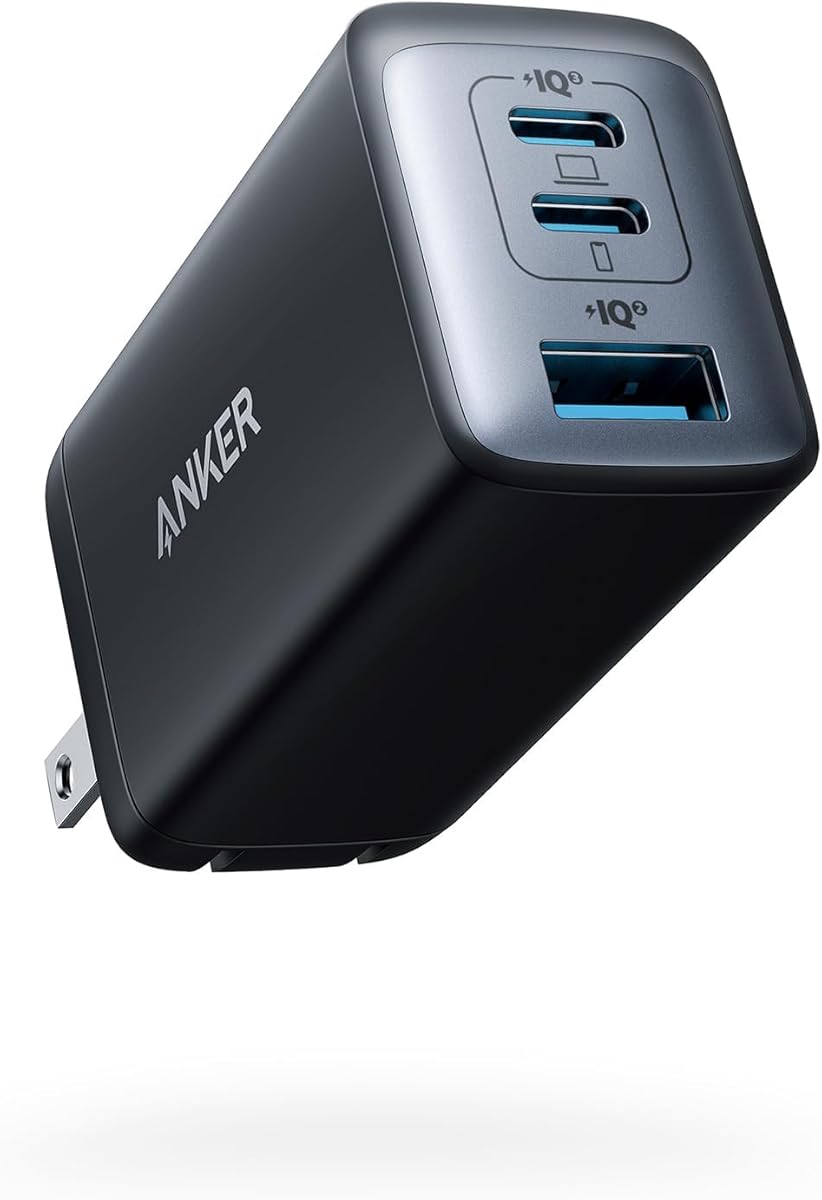
Buy this charger when you have numerous USB-A accessories and want one organized hub for a kitchen, office, classroom, or family nightstand. It is especially attractive for buyers who value a detachable cord and wide voltage support. If most of your devices use USB-C, the 112W six-port Anker or a smaller two-port model will offer a more future-friendly connection mix.
The six-port layout is ideal for charging many small or medium USB-A accessories at once. A single centralized hub reduces the need to keep multiple wall adapters beside the devices they serve.
Support for 100–240V input broadens the hub's usefulness across different regions and travel contexts. The detachable five-foot cord also gives users more freedom in placing the unit than a charger with a permanently attached cable.
We may earn a commission when you buy through this link, at no additional cost to you.
The Anker 67W GaN Wall Charger is the premium pick in this guide because it delivers the highest listed single-device output while retaining three ports. Its 4.6 rating reflects a capable design that can charge a phone, tablet, and notebook together, while a single connected device can receive up to 67W. The charger is part of the Anker Prime line and includes a 24-month warranty.
We may earn a commission when you buy through this link, at no additional cost to you.
Its two USB-C ports and one USB-A port provide a more current connection mix than the older six-port USB-A hub. When both USB-C ports are used, or one USB-C and one USB-A port are used together, the maximum output is 65W. That remains a useful ceiling for a compatible lightweight notebook, although the exact amount delivered to each device depends on the charging configuration.
The compact GaN construction is the major appeal. Anker states that the charger is 51% smaller than its original 67W MacBook charger, making it substantially easier to pack. ActiveShield 2.0 provides built-in protection, including safeguards intended to improve charging reliability. The trade-off is that its three-port design and shared power cannot match the six-port flexibility or 112W aggregate rating of the desktop model.
Choose the 67W charger for a premium travel kit, a compact workstation, or a user who wants one relatively small adapter for a phone, tablet, and compatible USB-C notebook. It is a particularly good fit when maximum output for one device matters more than charging six accessories. Users with simpler phone-only needs can get a more compact and lower-output alternative.
The 67W ceiling and GaN construction make this model well suited to high-power USB-C devices without approaching the bulk of a traditional laptop charger. Its stated size reduction makes it easier to carry alongside smaller everyday adapters.
Two USB-C connections and one USB-A port cover current and legacy accessories in a relatively restrained design. The 65W maximum two-port output preserves useful charging performance when more than one device is connected.
We may earn a commission when you buy through this link, at no additional cost to you.
The Anker 20W Nano Pro is designed for people who want to carry the smallest credible USB-C phone charger. It carries a 4.8 rating and provides up to 20W of output through one USB-C port. The listing specifically highlights full-speed 20W charging for the iPhone 16 and says a compatible phone can reach 50% charge in about 25 minutes.
We may earn a commission when you buy through this link, at no additional cost to you.
PIQ 3.0 helps the charger recognize and deliver appropriate power, while ActiveShield adds a Dynamic Temperature Sensor and a Power Tuner Chip. The Power Tuner adjusts output for the connected device, and the temperature sensor provides ongoing monitoring. These protections are especially helpful because the adapter is small and intended to be carried close to phones and other frequently used devices.
The main limitation is obvious: there is only one port. It cannot charge a phone and earbuds together, and it does not provide enough power for most notebook charging needs. It also does not include a cable. The compact form is therefore most valuable to travelers, commuters, or anyone who wants a dependable second charger for a phone without occupying much space.
This is the best minimalist recommendation for phone-only charging. The 30W Nano offers more headroom and a foldable plug, while the Zolo and 33W models make more sense if two devices must be connected. Even so, the Nano Pro's combination of 20W output, PIQ 3.0, safety monitoring, and exceptional compactness gives it a distinct place in the lineup.
A 20W output gives compatible phones a substantial fast-charging option without moving into the bulk of a laptop charger. The advertised 50-percent charge in 25 minutes demonstrates the value of choosing USB-C Power Delivery over a basic five-watt adapter.
The Dynamic Temperature Sensor watches operating conditions, while the Power Tuner Chip adjusts output to the connected device. Together, these features support a safer and more appropriate charge for frequent mobile use.
We may earn a commission when you buy through this link, at no additional cost to you.
The Anker Nano Phone Charger, also known as the Anker 511 Nano 3 30W, is a strong value-oriented pick for anyone seeking more than basic phone charging in a very small package. It has a 4.8 rating and a 30W USB-C output, which gives it more performance headroom than many similarly compact single-port chargers.
We may earn a commission when you buy through this link, at no additional cost to you.
GaN technology allows the charger to be only 1.12 inches thick and 70% smaller than an original 30W charger. It can charge earbuds, phones, tablets, and even a MacBook Air according to the supplied listing. For a phone, it provides full-speed 30W charging on compatible iPhone 15 Pro and Pro Max models, while Samsung Super Fast Charging at 25W is also supported. An iPad Air can reach 50% in about 45 minutes under the stated conditions.
Its single USB-C port prevents simultaneous charging, and the lack of USB-A excludes older wired accessories. The product also comes without a cable. These trade-offs are reasonable if the goal is a small, modern USB-C charger that can handle more demanding devices than a conventional 20W wall plug, but they make it less flexible than the two-port 33W model.
Choose the 30W Nano when portability and charging speed are both important but you typically carry one primary device. Its foldable plug, compact thickness, and higher output make it a good everyday travel companion. Users who regularly need two connections should look to the 33W 2-Port Compact USB Charger Block instead.
The 30W rating gives the Nano 3 considerably more headroom than a basic five-watt or 20-watt wall adapter. It can serve as a primary charger for compatible phones and tablets without approaching the size of a full laptop brick.
Replacing conventional silicon components with Gallium Nitride enables a charger listed at only 1.12 inches thick. The foldable plug and narrow body also make it convenient to pack in a small tech pouch, pocket, or laptop sleeve.
We may earn a commission when you buy through this link, at no additional cost to you.
The right charging block depends less on headline wattage than on device compatibility, port mix, portability, and whether the charger is intended for a pocket, travel bag, nightstand, or shared desktop.
Start with the charging requirements of the device that matters most. A compact 20W charger is designed around fast charging for compatible phones, while 30W and 33W models provide more headroom for certain tablets and other higher-power devices. If a compatible USB-C notebook is part of your routine, a 65W or 67W charger provides a more appropriate ceiling. Output is shared when several devices are connected, so evaluate realistic combinations rather than the maximum figure alone.
A single-port charger is convenient when you carry one cable and one device. Two-port models can serve a phone and a second accessory at the same time, while six-port hubs are designed for a shared family or office setup. Count both the number and type of connections you need. USB-C handles modern phones, tablets, and notebooks, but USB-A remains important for older accessories, wired earbuds, power banks, and other legacy hardware.
A smaller charger is easier to carry but may offer fewer ports or lower output. Foldable plugs help chargers sit flat and reduce snagging in a bag, while the 30W Nano's stated thickness of 1.12 inches makes it particularly compact. Larger desktop models prioritize capacity and cable organization over minimum dimensions. For a travel bag, the 20W Nano Pro, 30W Nano, 33W two-port charger, or 65W GaN model are more natural choices than a six-port hub.
USB-C and a wattage figure do not guarantee full fast charging unless the charger and device support compatible protocols. Several models in this guide use Power Delivery, while the 20W Nano Pro uses PIQ 3.0, the desktop six-port model uses PowerIQ and VoltageBoost, and the 33W and 65W models emphasize USB-C Power Delivery. Some legacy products explicitly do not support Qualcomm Quick Charge. Check the charging standard of the phone, tablet, or notebook you intend to connect.
Charging several devices at once is convenient, but it changes the performance of each connection. The Zolo maintains 30W on USB-C1 and 20W on USB-C2 when both are used. The 65W and 67W models distribute output across connected ports, and the 112W desktop charger has a stated 30W maximum on USB-C1 and 18W on a single USB-A port. If several devices are always connected, check these allocation details before purchasing.
Every reliable charger should include safeguards against overheating, overvoltage, and improper power delivery. Anker's product descriptions mention ActiveShield, ActiveShield 2.0, ActiveShield 4.0, PowerIQ, or an 11-point safety system depending on the model. The 60W desktop hub also carries UL certification. These claims add confidence, but you should still use certified or reputable cables, avoid exposed or damaged connectors, and unplug the charger if it becomes unusually hot.
Package contents can materially affect value. The 20W two-port charger includes two five-foot USB-C to USB-C cables, the 60W six-port hub includes a detachable power cord and hook-and-loop strip, and the 112W desktop charger includes a silicone cable organizer. The two 20W Nano products and several other models do not include charging cables. Check what you already own so you do not pay for extras you cannot use or mistake an adapter for a complete cable-and-charger set.
A charger used beside a bed, in a travel pouch, or at a shared workstation serves a different role. Single-port and dual-port models are easy to carry and keep beside one device. Desktop hubs are better when you want a permanent collection point, numerous USB-A connections, and included organization accessories. A two-pack can be useful for distributing chargers among rooms or bags. The best choice is the one that fits your routine rather than simply offering the largest specification.
Check the device's charging requirements and use a cable that supports the appropriate USB-C or USB-A connection and fast-charging standard. Connect the charger to a compatible wall outlet, then attach your device. For the highest listed output, use the primary or designated high-power port and avoid adding unnecessary high-draw devices at the same time.
Do not use the charger with a damaged cable, a loose plug, or an outlet that is hot, discolored, or unstable. Keep the charging area ventilated and avoid placing the adapter under pillows, blankets, or other insulating materials. If the charger becomes unusually hot, smells odd, or behaves inconsistently, disconnect it and stop using it until the issue is resolved.
For long-term care, keep the charging block in a dry location and avoid pulling on the attached device cable as a way of removing it. Wipe the exterior with a dry cloth, keep dust away from the plug openings, and retain the warranty information included with the product. Inspect the charger and cables periodically, particularly after heavy travel or frequent use.
The best travel option depends on the devices you carry. The 20W Nano Pro and 30W Nano are among the smallest choices, while the 33W two-port model adds a USB-A connection for a second accessory. Travelers who also charge a compatible notebook may prefer the 65W Nano II for its higher output and three-port flexibility.
Yes, every multi-port model in the guide is designed to charge multiple compatible devices at once. Available power is shared when several devices are connected, so a headline wattage figure does not mean every port receives that amount. Check the individual port limits and the stated multi-device output rules for your intended combination.
The 20W Nano Pro is specifically described as providing full-speed 20W charging for the iPhone 16. The 20W two-port Anker is also designed for fast charging compatible iPhones. You will need a suitable USB-C to USB-C cable and should check the phone's charging requirements and compatibility.
The 65W Nano II, 67W GaN charger, and 112W desktop charger offer the most appropriate high-power options. The 65W and 67W models emphasize a single connected device and portability, while the 112W hub is better for a multi-device desk. Actual charging speed depends on the notebook, cable, protocol, and other connected devices.
No. The 20W two-port model includes two five-foot USB-C to USB-C cables, but several other products list a cable as not included. The adapter and the cable are separate components, so confirm your cable needs before buying and make sure any cable you already own supports the charging protocol and output you require.
Yes, if you own accessories that use USB-A, including older phones, wired earbuds, power banks, and other legacy hardware. The 12W two-pack and 60W six-port hub prioritize USB-A compatibility. For a mixed and future-oriented setup, models combining USB-C and USB-A are generally more versatile.
GaN, or Gallium Nitride, allows charging components to operate efficiently in a smaller package than conventional silicon-based designs. In the products here, it contributes to thinner or more compact chargers while maintaining stated power levels. The benefit is primarily portability, not an automatic increase in charging speed.
Choose a compact wall charger for travel, a bedside outlet, or charging one or two devices. Choose a desktop hub when several people or accessories need a permanent central charging point. The six-port options trade portability for more connections, while smaller models emphasize one or two devices and easier packing.
The Anker Zolo USB C Charger Block is the best balanced option, offering four ports, a 50W ceiling, and broad USB-C and USB-A compatibility. The 30W Nano stands out as the best budget travel choice, while the 67W GaN charger is the premium recommendation for buyers who want more power in a compact three-port design.
Prioritize the devices you actually charge. A 20W single-port model is enough for many phone-centered uses, a two-port charger is more flexible for phone-and-accessory charging, and 65W to 67W models make sense when a compatible notebook enters the picture. A six-port hub is most appropriate for a crowded or shared charging area.
Before purchasing, verify the port types, charging protocols, shared-output behavior, included cables, and warranty details on the current listing. Prices, promotions, availability, and package configurations can change, so the final value depends on what is available when you buy as well as the specifications that suit your devices.