
Uniden BC365CRS
4.2Editor score
500 conventional analog channels
Integrated FM radio alarm clock
Backlit desktop-friendly display
This Fire and Police Scanner for Home Use guide compares 10 analog and digital scanners, focusing on channel capacity, trunking, alerts, programming, and ease
A home fire and police scanner can provide convenient access to local emergency, weather, aviation, marine, and other public-safety transmissions, but choosing the right model requires matching the radio system to your location. The best unit balances compatible technology, useful alerts, manageable programming, and an interface suited to regular home use.
We compared these ten scanners across digital and analog capabilities, channel capacity, trunking support, weather functions, search features, display design, power options, and programming approach. The list includes desktop and mobile models, entry-level analog units, portable digital scanners, and premium base or mobile systems for different monitoring needs.
Each review identifies the product's strongest benefits, limitations, and most suitable buyer. Ratings reflect the supplied customer feedback, while technical details come from the listed product information. Scanner availability and pricing can change, so compare current product pages and local radio systems before purchasing.
4.2Editor score

4.1Editor score

4.5Editor score
This side-by-side comparison highlights each scanner's radio compatibility, capacity, alert functions, programming approach, and physical format, helping home listeners identify the most suitable option for their local systems.




The Uniden BC365CRS is a 500-channel conventional analog scanner designed for straightforward home listening, and its supplied rating is 4.2. It stands out as an affordable all-in-one desktop appliance that combines public-safety scanning with an FM radio, weather alerts, an alarm clock, snooze, and sleep functions.
We may earn a commission when you buy through this link, at no additional cost to you.
Its appeal lies in the combination of capacity and convenience. Presets make it easier to begin exploring police, fire, emergency, marine, aircraft, amateur radio, railroad, and weather services, while up to 30 FM stations can be stored. Priority channels receive a check every two seconds during scanning, improving the odds of catching activity on important frequencies.
The central limitation is compatibility. This model does not receive digital communications such as Project 25, DMR, or NXDN, and it cannot follow digital trunked systems used by some larger public-safety agencies. It is therefore most appropriate in areas where conventional analog transmissions dominate or as a supplementary scanner for secondary systems.
Choose the BC365CRS when you want an uncomplicated desktop unit, useful clock features, and a large selection of analog presets without undertaking complicated programming. For listeners in a modern digital market, it is an excellent budget introduction, but compatibility with nearby systems should be confirmed before buying.
The built-in FM radio and programmable alarm clock make the BC365CRS useful beyond a dedicated scanner. It can wake to scanning, a weather channel, or a favorite local broadcast, while the clear backlit display and arranged buttons support nighttime use.
The scanner's 500 channels and broad presets make conventional traffic accessible, but digital exclusion is significant. Buyers should identify whether their local police and fire departments use digital trunked systems before relying on it as their primary monitor.
We may earn a commission when you buy through this link, at no additional cost to you.
The Uniden BC355N is a 300-channel analog base and mobile scanner with a supplied rating of 4.0. It is built for listeners who want an approachable scanner with flexible power options, close-call signal discovery, and coverage across several conventional service categories.
We may earn a commission when you buy through this link, at no additional cost to you.
Close Call RF Capture Technology is the model's signature feature, tuning rapidly to nearby transmitters to help users discover active frequencies. The scanner also includes service banks for non-digital police, fire, emergency medical services, marine, aviation, weather, and CB frequencies, along with space for 300 saved frequencies.
Its main drawback is the same limitation highlighted repeatedly in the product information: no support for Project 25, DMR, NXDN, or digital trunking. In a service area where agencies have migrated to digital systems, this limitation could outweigh the otherwise useful feature set.
The BC355N suits analog-area listeners who want to begin with preset banks, save discovered channels, and move the same unit between an AC-powered home and a vehicle. It is also a good choice for aviation, marine, railroad, weather, and conventional emergency-frequency monitoring when those services are locally available.
Close Call capture is particularly helpful for users who do not yet have a complete channel list. Its automatic search for nearby transmitters can reveal active frequencies that can then be added to the appropriate memory bank.
The included AC adapter, DC power cable, and automotive outlet plug allow flexible placement. A backlit display helps in dim rooms, while the base-and-mobile format can transition from stationary monitoring to vehicle use.
We may earn a commission when you buy through this link, at no additional cost to you.
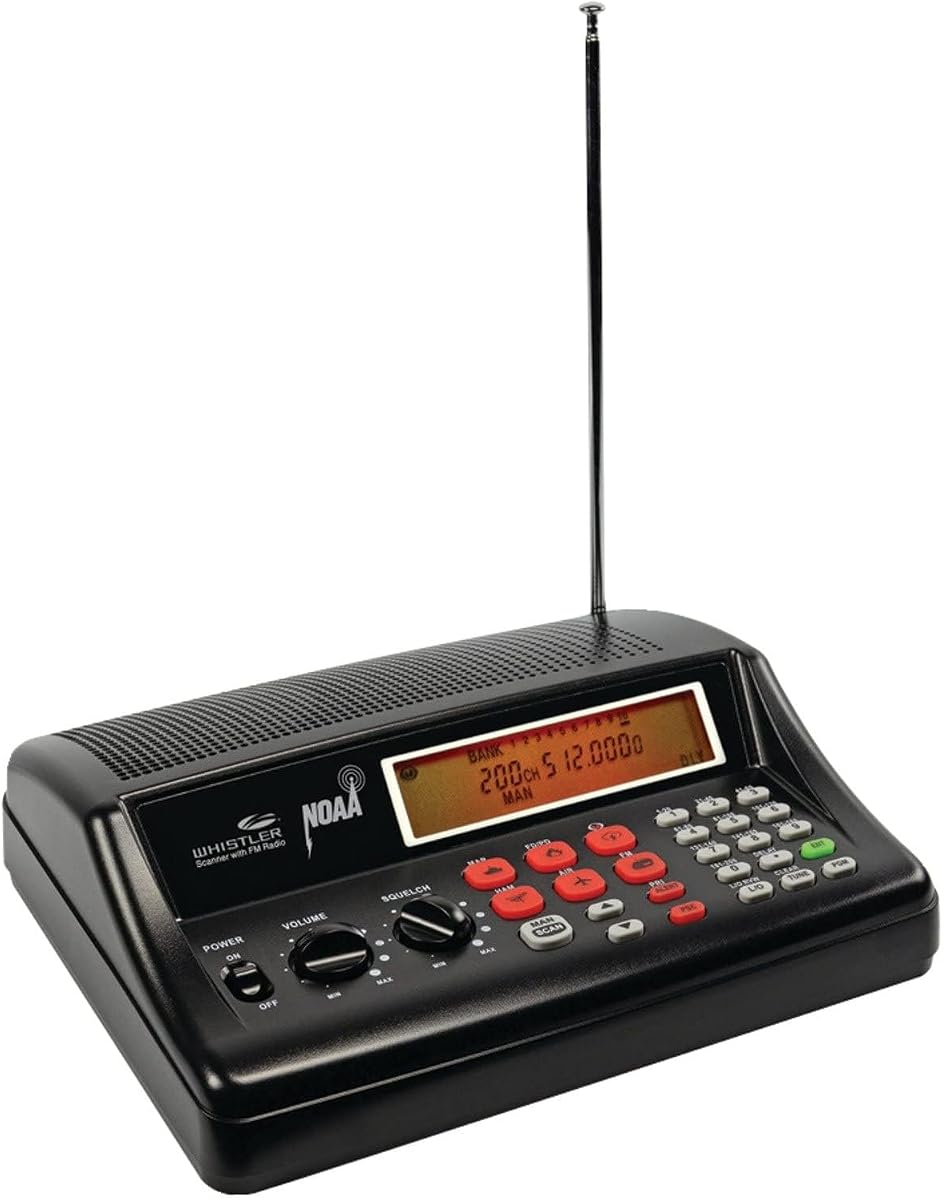
The Whistler WS1025 is a 200-channel analog desktop scanner with a supplied rating of 4.1. It offers a focused home setup for police, fire, weather, and other conventional frequencies, with a backlit LCD and controls designed for straightforward desk placement.
We may earn a commission when you buy through this link, at no additional cost to you.
Its most useful operating features are priority monitoring, a two-second scan delay, and Tune mode. Priority checking gives a selected channel extra attention, the delay reduces the chance of missing an immediate reply, and Tune helps users search for new or unlisted frequencies from a chosen starting point.
Compared with the BC365CRS, the WS1025 offers fewer channels and no alarm-clock or FM-radio integration. The supplied information also recommends it for experienced desktop-scanner users, making it less attractive for someone seeking the gentlest introduction to programming and channel management.
This scanner is best for someone who already understands conventional frequencies and wants a clean desktop unit with programmable memory. It is less suitable for modern digital-trunked areas, and buyers should confirm that local emergency services still broadcast on compatible analog channels.
The configurable scan delay pauses before moving to another channel, giving short replies more time to appear. This is especially useful when monitoring conversations in which one dispatcher immediately answers another party.
Tune mode starts a search from a specified frequency, providing a practical way to locate active channels that are not already in a programmed list. Close Call is not listed for this model, making manual tuning particularly relevant.
We may earn a commission when you buy through this link, at no additional cost to you.
The Whistler WS1065 is a digital trunking desktop scanner with 1,800 memory channels and a supplied rating of 4.2. It is aimed at listeners who need to monitor modern public-safety systems and want finer alert, display, and signal-management options than a basic analog desktop can provide.
We may earn a commission when you buy through this link, at no additional cost to you.
The scanner supports Motorola, EDACS, LTR, and P25 Phase 1 trunked systems, along with talkgroup and individual-call monitoring. Its Automatic Adaptive Digital Tracking adjusts decoding as signals change, while Digital AGC and NAC filtering help manage low audio levels and unwanted transmissions.
Programming is handled through a high-speed USB interface and cloning between units, with the USB cable included. The free-form memory structure allocates space dynamically, reducing waste compared with rigidly banked systems. A signal-strength display, spectrum sweeper, Tune function, programmable color LED, and audible alerts further support dedicated monitoring.
The WS1065 is a strong home choice for users who understand scanner programming and want desktop convenience with advanced digital capability. It is less attractive for a first-time buyer who wants location-based database selection, and compatibility should be checked against the specific systems used nearby.
Automatic Adaptive Digital Tracking is designed to handle changing signals caused by multipath or fading without repeated manual adjustments. Digital AGC similarly responds to low audio levels, improving consistency during digital conversations.
USB transfers and unit-to-unit cloning are listed as substantially faster than older approaches. Menus include built-in help, while the free-form memory structure gives custom channel and system lists greater flexibility.
We may earn a commission when you buy through this link, at no additional cost to you.
The Uniden HomePatrol-2 is a color-touchscreen digital scanner with a supplied rating of 4.1. It combines broad radio-system support with database-based setup, making it one of the most approachable options for a home listener who wants to monitor contemporary public-safety traffic.
We may earn a commission when you buy through this link, at no additional cost to you.
Users can select radio services directly from the touchscreen rather than manually entering detailed trunking data. The included Sentinel software manages favorites lists, database updates, firmware updates, and other setup needs, while the radio receives non-encrypted, non-proprietary systems including APCO P25 Phase 1 and Phase 2, Motorola, EDACS, LTR, and conventional channels.
Its reach extends beyond police and fire to ambulance, aircraft, military, weather, and other public-safety traffic. The database is regularly updated, which is particularly helpful when local systems change. Its main disadvantages are that it belongs to an older hardware generation and that maintaining the database depends on compatible computer software and connectivity.
For most home buyers comparing modern digital scanners, the HomePatrol-2 provides an excellent balance of capability and accessibility. It is a strong recommendation for users who prioritize simple programming, a color screen, broad digital coverage, and a maintained nationwide database over a highly customized interface.
The touchscreen lets users browse radio services and choose what to monitor, removing much of the complexity associated with traditional programming. This makes the scanner especially approachable for listeners building a home monitoring setup.
Support for P25 Phase 1 and Phase 2, Motorola, EDACS, LTR, and conventional channels covers a wide range of systems. Buyers should still verify which unencrypted formats their local agencies use and whether encrypted traffic is relevant to their listening goals.
We may earn a commission when you buy through this link, at no additional cost to you.
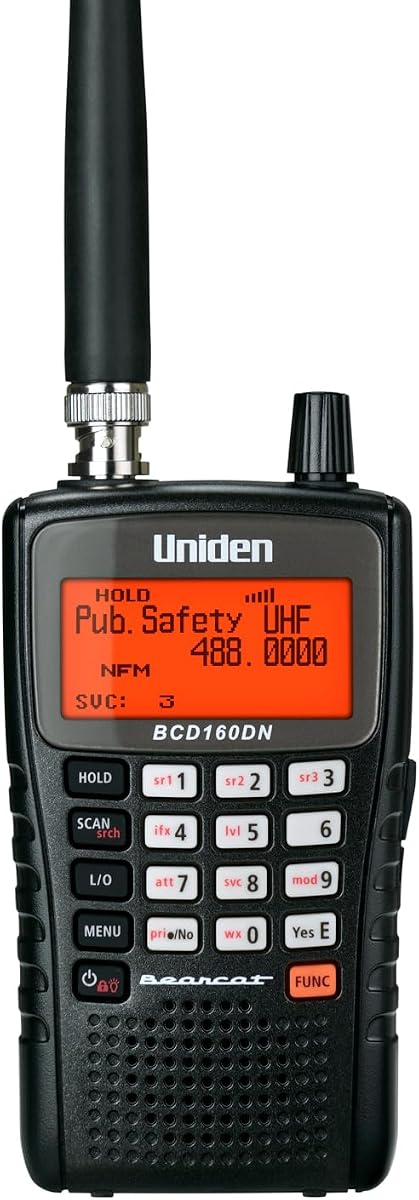
The Uniden BCD160DN is a compact handheld digital scanner with 1,000 channels and a supplied rating of 3.2. Its distinguishing strength is direct support for DMR and NXDN, including preloaded configurations, combined with rapid Band Scope tagging and narrowband reception.
We may earn a commission when you buy through this link, at no additional cost to you.
The radio can detect and display subaudible DCS or CTCSS tones, while custom search begins at the displayed frequency or at a frequency entered by the user. PC software supports management of profiles, favorites lists, databases, and firmware updates, offering more control than a purely database-led device.
The crucial limitation is explicit: trunking and APCO P25 are not supported. As a result, the scanner may not follow some large-city P25 systems even though it handles DMR and NXDN well. Its supplied customer rating is also noticeably lower than those of the other products in this roundup.
Choose the BCD160DN for portable DMR or NXDN monitoring, especially when a compact handheld and quick signal discovery are priorities. It is less suitable as a general all-purpose scanner for a user who needs P25 Phase 1 or Phase 2 coverage, and local compatibility should be verified first.
Band Scope can rapidly tag systems and channel numbers, while DCS and CTCSS rapid decode helps identify tone settings. Together, these tools can shorten the process of locating and understanding active signals.
The scanner accepts two included rechargeable AA Ni-MH batteries or two alkaline batteries. The supplied USB cable charges the rechargeable cells while they remain installed and the unit is turned off.
We may earn a commission when you buy through this link, at no additional cost to you.
The Uniden BCD436HP is a database-oriented digital handheld scanner with a supplied rating of 4.2. It brings HomePatrol-style simplicity to a traditional handheld form, allowing a user to enter a zip code and begin receiving nearby public-safety, aviation, military, weather, and other traffic.
We may earn a commission when you buy through this link, at no additional cost to you.
TrunkTracker V and a radio-system database built around Radio Reference data help identify relevant nearby systems. The scanner can scan at 85 channels per second, while Close Call, GPS connectivity, Discover modes, and Radio System Analysis add discovery and location tools beyond basic channel scanning.
Instant Replay stores up to 240 seconds, or four minutes, of recent transmissions so users can revisit a missed exchange. Custom alerts can respond to channel or unit IDs, Close Call hits, emergency alerts, and tone-outs, with choices among tone patterns, volume levels, colors, and flash patterns.
This is a compelling choice for a buyer who wants database-driven convenience but prefers a portable scanner. Its trade-offs are the smaller controls typical of a handheld and the absence of an included GPS receiver. It is a strong recommendation for travel, flexible placement, and detailed alerts.
Entering a zip code is enough to begin finding local systems, making the scanner more approachable than a manually programmed trunking radio. Database updates and current system information remain important for reliable operation.
Four minutes of instant replay helps recover traffic that began before the user was ready to listen. The alert system is unusually granular, allowing notifications tied to identifiers, emergency conditions, Close Call activity, and tone-outs.
We may earn a commission when you buy through this link, at no additional cost to you.
The Uniden BCD996P2 is a high-capacity digital mobile scanner with 25,000 dynamically allocated channels and a supplied rating of 4.2. It provides extensive conventional and trunked-system support for listeners who want room for large custom databases, local systems, and changing traffic.
We may earn a commission when you buy through this link, at no additional cost to you.
TrunkTracker V handles APCO P25 Phase 1 and Phase 2, X2-TDMA, Motorola, EDACS, LTR, conventional analog, and P25 digital channels. Close Call RF Capture finds nearby transmissions, and a do-not-disturb version checks for Close Call activity during channel reception without constantly interrupting the selected channel.
For home safety, S.A.M.E. weather alerts use a location code to notify the listener of severe conditions in the immediate area. The four-line alpha display makes channel details easier to read, and connection to a compatible GPS receiver can automatically select systems according to the scanner's location.
The BCD996P2 is ideal for a technically comfortable buyer who wants mobile-level capacity and extensive digital compatibility in a base or mobile installation. Its limitations are more involved programming and the need for extra equipment to realize the full benefit of GPS-based selection.
Dynamic allocation gives the scanner 25,000 channels without requiring users to reserve fixed blocks in advance. That makes it useful for large favorites lists, numerous regional systems, and extensive conventional programming.
S.A.M.E. alerts focus warnings on the listener's coded area, while optional GPS support can select and reselect nearby systems. These location features make the unit particularly useful for users who move between home, work, and travel destinations.
We may earn a commission when you buy through this link, at no additional cost to you.
The Uniden BearTracker BCT15X is a compact 9,000-channel mobile scanner with a supplied rating of 4.0. It uses TrunkTracker III to follow Motorola, EDACS, and LTR systems, providing a smaller and potentially less intimidating alternative to a full-size programming-oriented scanner.
We may earn a commission when you buy through this link, at no additional cost to you.
Its dynamic memory system, 100 system Quick Keys, and ten-channel group Quick Keys provide organized access to stored systems. Alpha tagging makes frequencies easier to identify, while state-by-state preprogrammed channels offer quick access to local police, Department of Transportation, and highway patrol frequencies when traveling.
Close Call RF Capture helps locate nearby active transmitters, and location-based scanning can select programmed systems when connected to a compatible GPS receiver. The unit also supports the BC-RH96 remote head and continuous band coverage from 25 MHz to 1.3 GHz, excluding UHF television and cellular frequencies.
Its defining drawback is the explicit statement that it is not a digital scanner. Without P25 support, it is less future-proof for many current public-safety systems. It remains a sensible option for Motorola, EDACS, or LTR environments and for users who prefer compact mobile controls with organized presets.
Quick Keys and dynamic memory help users move through numerous programmed systems without navigating every channel individually. Alpha tagging adds useful context, making the scanner more approachable for regular monitoring.
Preprogrammed state channels provide a convenient starting point when moving around the country. Location-based scanning with compatible GPS equipment can then narrow system selection as the vehicle changes position.
We may earn a commission when you buy through this link, at no additional cost to you.
The Uniden SDS200 is a premium base and mobile digital scanner with True I/Q technology, TrunkTracker X operation, and a supplied rating of 4.5. It is designed for listeners who want sophisticated digital reception, a large color interface, and extensive control over how home monitoring is organized.
We may earn a commission when you buy through this link, at no additional cost to you.
The software-defined radio architecture and True I/Q decoding are intended to provide strong performance on difficult digital simulcast systems. Its 3.5-inch fully customizable color display can show selected or detailed information for each field, while a location can be set using a zip or postal code, GPS coordinates, or automatic location detection.
The HomePatrol database covers known radio systems in the United States and Canada and is updated through Sentinel, with the main database updated weekly. Users can also create favorites lists, scan combinations of lists and the full database, and perform custom programming through Sentinel or ARC-536 software. Direct front-panel programming is also available.
The SDS200 is the premium recommendation for a serious home installation, particularly where simulcast decoding performance and screen customization matter. The included AC adapter, multiple DC cords, stand, bumper feet, antenna, and USB cable create a complete base or mobile package, though the investment and learning curve are higher than for simpler models.
True I/Q decoding and software-defined radio technology are the core advantages of the SDS200. The stated focus on challenging digital simulcast systems distinguishes it from simpler scanners that may struggle when several synchronized transmitters overlap.
The scanner can operate from a regularly updated HomePatrol database, selected favorites lists, or custom programming. This combination gives new users a guided path while preserving deeper control for experienced listeners.
We may earn a commission when you buy through this link, at no additional cost to you.
The best home scanner is the one that can follow the radio systems used by your local agencies and fit your listening habits. Compatibility, programming method, channel capacity, alerts, display, power, and placement should be weighed together.
In short, confirm local radio formats first; a large channel count cannot compensate for an incompatible radio standard.
In short, match every listed protocol against the exact systems found in your area before making a purchase.
In short, beginners should favor database selection, while dedicated enthusiasts may accept more setup for custom control.
In short, choose enough capacity for your planned systems without paying for complexity that your listening habits will not use.
In short, prioritize S.A.M.E. support and location-specific alerts if dependable severe-weather warnings are central to your home setup.
In short, select a display and alert system that remain clear and noticeable from where the scanner will actually sit.
In short, match the form factor to the location: desktop for permanent home use, mobile for flexibility, or handheld for portability.
In short, use search tools to uncover activity, but verify local formats and frequencies to ensure the results can be monitored reliably.
Begin by identifying the radio systems used around your home, then set the scanner's location or enter the appropriate zip or postal code. Update the radio-system database and firmware through the supplied or manufacturer-supported software before creating favorites lists. Start with a few nearby public-safety, weather, and aviation services rather than attempting to scan every available channel immediately.
Place the unit in a stable, unobstructed position with adequate ventilation and use the correct supplied power adapter for home operation. Adjust the volume, squelch, display brightness, priority channels, and alert tones for your environment. For GPS-capable models, follow the manufacturer's instructions for an external receiver and position its antenna where it can obtain a clear signal.
Care for the scanner by keeping it away from moisture, direct heat, and excessive dust, and clean the exterior with a soft dry cloth. Do not open the housing unless you are qualified and comfortable with the associated risks. Review the programming guide before cloning, resetting, or updating a unit, and periodically back up custom lists so a database update or configuration change does not disrupt your setup.
It depends entirely on the systems used by nearby agencies. Many services still include conventional analog channels, while others use digital trunking such as P25, DMR, or NXDN. Check the formats used in your area before buying, and consider a scanner that supports both conventional and digital modes if you want future flexibility.
No scanner can receive every transmission. Some agencies use encrypted communications that consumer scanners cannot decode, and proprietary or unsupported digital formats may also be inaccessible. Scanners are generally designed for unencrypted public-safety and other two-way radio traffic, so compatibility with the local system remains essential.
An analog scanner listens to continuously transmitted frequencies, while a digital trunking scanner follows a changing set of radio channels and talkgroups. Digital systems can support more users and provide features such as unit identifiers, but they require compatible decoding support and may present challenges involving simulcast signals.
Usually, yes. Database-driven models let you enter a location and select nearby systems instead of manually entering every frequency, talkgroup, and system tag. Custom programming still offers more control, but it requires greater knowledge and regular maintenance as local radio systems change.
Many models can receive NOAA weather information, but features differ. S.A.M.E. alerts provide location-specific emergency warnings, while some units also offer programmable tones, LED patterns, channel identifiers, and emergency-alert detection. Confirm the exact alert functions listed for your preferred model.
It depends on your priorities. A handheld is portable and useful in different rooms, while a desktop model usually offers a larger display, fixed power, and simpler continuous operation. Base and mobile scanners provide a middle ground by working with both household power and vehicle power.
Only if you want to use GPS-based system selection while traveling. Several mobile scanners can set their home location by zip code, and some can automatically determine a general location. A separate compatible GPS receiver is needed for precise continuous positioning and automatic reselection in supported models.
Regular updates are advisable because agencies can add channels, change talkgroups, or modify radio systems. Models with weekly database updates make this easier, but users should still install available firmware and radio-system updates and back up custom programming before making significant changes.
The Uniden BC365CRS is the best budget selection for straightforward analog monitoring and useful home extras, while the HomePatrol-2 is the best overall choice for approachable, database-driven digital listening. The Uniden SDS200 stands apart as the premium option for True I/Q performance, a customizable color display, and extensive configuration control.
Prioritize local radio-system compatibility above every other feature. After that, decide whether a guided database, manual programming, compact portability, large memory, S.A.M.E. alerts, GPS, or instant replay best matches your routine. Models such as the BCD436HP, BCD996P2, WS1065, and BearTracker BCT15X offer different strengths for listeners with more specialized requirements.
Finally, check the current listing details, available accessories, system compatibility, and latest price before ordering. Radio markets and product configurations can change, and a scanner that looks ideal on paper will perform best only when it can receive the conventional or digital systems actually used in your area.