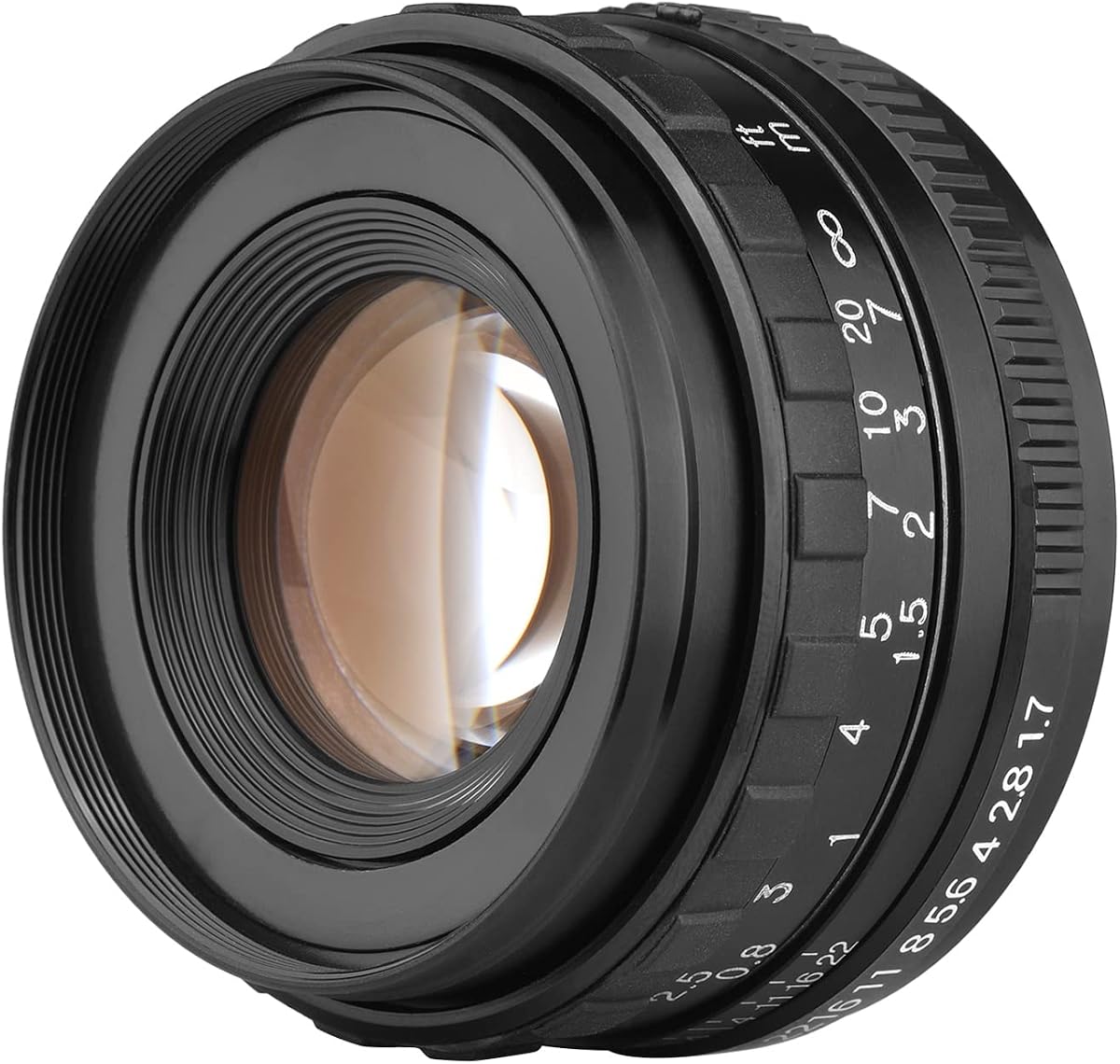
Andoer 50mm F1.7
5.0Editor score
Wide 1.7 maximum aperture
Manual-focus 50mm prime
Pentax K1 compatibility
Discover the best K Mount Lenses for Pentax Camera, with ten options compared for focal length, aperture, autofocus, stabilization, and portability for
K Mount lenses for Pentax cameras cover an unusually broad range of photographic needs, from lightweight standard primes to telephoto zooms built for distant subjects. A useful lens should match your preferred composition style, work with your camera body, and provide focusing and image quality appropriate to the way you shoot.
This guide compares ten K-mount options using their stated specifications, physical characteristics, compatibility, focusing systems, and intended uses. It includes manual-focus primes, autofocus standard lenses, versatile zooms, a telephoto option, and a protective accessory kit, so readers can distinguish genuine lens options from related camera accessories.
Each review explains who the product is likely to suit, the strengths supported by its specifications, and any practical limitations visible in the available information. Ratings and product availability can change, while prices fluctuate over time, so confirm the current listing and camera compatibility before making a purchase.
5.0Editor score

4.6Editor score

4.5Editor score
The comparison below organizes every product by focal length, aperture, focusing approach, key feature, and best-fit use, providing a quick way to narrow the field before reading the complete reviews.


The Andoer 50mm F1.7 is a manual-focus prime built for Pentax K1 and K-1 Mark II full-frame cameras, and it holds a 5.0 customer rating. Its defining attraction is the large F1.7 maximum aperture, which can support shallow depth of field and brighter exposure settings without sacrificing the familiar 50mm field of view.
We may earn a commission when you buy through this link, at no additional cost to you.
A 50mm prime is among the most versatile focal lengths for general photography. It can produce a natural perspective for people, street scenes, travel views, and everyday compositions without the distortion sometimes associated with very wide lenses. Manual focusing may suit photographers who enjoy deliberate composition, use a focusing screen, or want to work without electronic focusing assistance.
The main compromise is that there is no stated autofocus system, so getting a sharp result requires more deliberate focus technique than a conventional camera kit lens. Compatibility information specifically names the K1 and K-1 Mark II, which means buyers using another body should verify fit, functionality, and electronic features before ordering. The lens also lacks a stated minimum-focus specification or stabilization system.
Choose this lens if you want a bright, straightforward 50mm prime and are comfortable focusing manually. It is especially attractive as a first dedicated prime because the focal length is intuitive and the F1.7 aperture supports expressive depth of field. For a photographer who prioritizes fast focusing or broad confirmed body compatibility, one of the Pentax autofocus lenses may be a more practical choice.
The F1.7 opening is the lens's strongest photographic feature. It gives photographers more latitude in dimmer light and can create a visibly shallower field of focus than a slower standard lens, giving the fixed 50mm perspective greater visual separation between the subject and background.
A fixed 50mm focal length keeps composition predictable and makes it easy to build a repeatable approach to photography. Because the lens focuses manually, the photographer gains direct control over focus placement and can work confidently in static street, portrait, and travel situations.
We may earn a commission when you buy through this link, at no additional cost to you.
The Pentax SMC PENTAL-Da 35mm F2.4 is a compact standard prime with a 4.6 customer rating and a long list of useful characteristics. It combines hybrid aspherical elements, a bright F2.4 aperture, Pentax Super Protect coating, and compatibility with in-body shake reduction, making it a compelling general-purpose lens for Pentax K-series photographers.
We may earn a commission when you buy through this link, at no additional cost to you.
Its stated 35mm equivalent focal length gives a moderately wide standard view, useful for landscapes, travel, environmental portraits, and everyday snapshots. Hybrid aspherical optics are designed to correct aberrations and maintain high contrast from minimum to maximum focus distance. The F2.4 aperture also supports easier viewing in the viewfinder and faster shutter speeds in lower light.
Physical portability is another major strength. At about 124 grams and 45 millimeters long, the lens is designed to remain easy to carry. A 0.3-meter minimum focusing distance and 0.17x maximum magnification provide useful close-focusing capability, although a dedicated macro lens would serve more specialized detail work. The lens does not have its own stabilization, but compatible Pentax digital SLR K-series cameras apply shake reduction through the body.
This is the strongest all-purpose recommendation in the group for photographers who value a conventional focal length, effective stabilization, modest weight, and reliable close-focus performance. It may not be ideal if you require autofocus close-ups or need to zoom without changing lenses, but for everyday photography it combines several useful features in a compact package.
Hybrid aspherical elements are intended to address spherical aberration and other optical limitations. The result is a lens designed to retain high delineation and contrast across its focusing range, supporting the PENTAL-Da model's reputation as a general-purpose standard prime.
Because shake reduction is applied by compatible Pentax K-series camera bodies, the lens can benefit from stabilization without carrying a separate stabilization assembly. That helps preserve its compact, lightweight design while giving the photographer additional support at slower shutter speeds.
We may earn a commission when you buy through this link, at no additional cost to you.
The Tamron AF 70-300mm F4-5.6 Di LD Macro, model A17P, is a telephoto zoom designed for Pentax digital SLR cameras. Its 4.1 rating reflects a practical option for photographers who need extended reach, autofocus, and a broad zoom range without moving to a more specialized prime lens.
We may earn a commission when you buy through this link, at no additional cost to you.
The 70-300mm span covers portrait-length perspectives, distant details, wildlife, motorsport, and compressed scenic views. Autofocus is especially relevant when framing subjects that may change position, while the variable F4-5.6 maximum aperture keeps light-gathering expectations aligned with a traditional telephoto zoom design.
A minimum focus distance of 37.4 inches gives the lens more flexibility than many conventional telephoto zooms, and the Macro designation indicates an intended close-focusing capability at the long end. The trade-off is its relatively slow aperture, which can make low-light work more demanding and increase the importance of shutter speed, subject brightness, or stabilization.
Buy this lens when distant framing and subject isolation matter more than maximum aperture or compactness. It is a sensible companion for outdoor and event work, particularly for photographers who already understand telephoto composition. It is less suitable for general indoor candid photography where a faster standard zoom would provide a more adaptable aperture.
Covering 70mm through 300mm gives the photographer considerable framing flexibility without changing lenses. The short end can support traditional portrait compositions, while the long end is better suited to distant subjects, tighter landscapes, and detail-oriented outdoor work.
Automatic focusing is a practical advantage for wildlife, action, and event photography, where subjects rarely hold a perfectly predictable position. The macro designation and 37.4-inch minimum focusing distance provide some flexibility for subjects that are nearer than a typical telephoto setup allows.
We may earn a commission when you buy through this link, at no additional cost to you.
The renewed Pentax SMC 50mm F1.7 is a manual-focus standard prime intended for Pentax K-mount SLR and DSLR cameras. Its 3.0 customer rating places it behind the stronger-rated options in this guide, but the underlying combination of a classic 50mm focal length and F1.7 aperture remains appealing to photographers seeking a bright prime.
We may earn a commission when you buy through this link, at no additional cost to you.
F1.7 gives the lens strong low-light potential and gives portrait photographers considerable control over background blur. The 50mm perspective remains one of the easiest choices for general use, allowing the photographer to move naturally while maintaining a natural-looking field of view. Manual focus is the central trade-off and requires practice, particularly for fast-moving or low-contrast subjects.
The limited product information is another factor. The listing identifies the lens as renewed but does not provide a detailed condition report, optical specifications, minimum focus distance, or included accessories. Condition can therefore vary in ways that are difficult to evaluate from the listing alone, and buyers should look for clear return information and photographs of the actual item.
This lens is most suitable for a buyer who values the 50mm F1.7 design and accepts the uncertainties of renewed equipment. It may serve as a bright portrait or low-light prime for an experienced manual-focus photographer. Someone prioritizing consistent condition, detailed specifications, or a stronger customer rating should examine the purpose-built Andoer alternative or a fuller-featured Pentax lens instead.
A 50mm lens is often chosen for portraits because it produces a natural perspective without the exaggerated perspective of a close wide-angle lens. The F1.7 aperture adds shallow-focus potential, allowing the background to fall away more noticeably while the subject remains the visual priority.
A renewed lens can make a desirable optical design more accessible, but the condition of each example may differ. Review the listing images, stated cosmetic condition, included items, and return policy before purchase, especially when the listing provides few technical details about the lens.
We may earn a commission when you buy through this link, at no additional cost to you.
The Sigma 28-80mm F3.5-5.6 Aspherical Macro HF is a general-purpose zoom listed for Pentax-AF cameras. It combines a broad 28-80mm focal range, variable maximum aperture, aspherical optics, and macro functionality, making it an interesting option for photographers who want one lens to handle several everyday subjects.
We may earn a commission when you buy through this link, at no additional cost to you.
The wide end is suited to landscapes, architecture, group photographs, and close environmental views, while the short end provides more conventional perspective for portraits, events, and street scenes. The macro designation suggests added utility for close subjects, although the listing does not provide a specific magnification ratio or minimum focus distance.
The supplied information is limited, including no customer rating and only a note identifying the product as new. Compatibility is stated for Pentax-AF cameras, so a buyer should confirm the exact mount and intended camera body before proceeding. The variable F3.5-5.6 aperture is less ideal than a fast prime in low light, but it provides a reasonable balance across multiple focal lengths.
For a Pentax photographer seeking a single adaptable zoom, this Sigma offers an attractive combination of range and close-focus capability. Its sparse listing information makes it harder to evaluate than the better-documented Pentax models, so verify the complete specification, physical condition, and return terms. It is a fitting option for travel and everyday coverage rather than low-light specialization.
The 28-80mm range moves from a wide view to a short telephoto perspective without requiring a lens change. That makes the lens practical for trips where carrying a body, zoom, and multiple primes may be inconvenient.
Aspherical elements are used to address optical aberration, while the macro designation expands the lens beyond distant scenes. The listing would need fuller specifications to determine the exact degree of close-focusing benefit, so prospective buyers should examine those details before finalizing their choice.
We may earn a commission when you buy through this link, at no additional cost to you.
The Pentax Asahi SMC M 50mm is a classic 50mm F2 manual-focus lens with a PK bayonet mount. The product information describes it as functional and in good condition with light signs of use, while its 5.0 customer rating makes it one of the strongest-rated products in the guide.
We may earn a commission when you buy through this link, at no additional cost to you.
The F2 aperture makes this a useful standard prime for portraits, street photography, and low-light work. Its focal length is broad enough for environmental portraits and everyday documentary scenes without approaching the dramatic perspective of an ultra-wide lens. The PK bayonet connection places it within the long-running Pentax K-mount system and makes it an approachable option for photographers familiar with manual-focus glass.
The trade-offs concern condition and documentation. Light signs of use are expected, but the listing does not provide a detailed account of optical condition, aperture mechanics, focus accuracy, or included caps. Those details matter more for an older manual-focus lens than they do for a modern model with a more extensive specification sheet, so a careful buyer should ask questions and inspect the product photos.
This lens is best for photographers who appreciate a classic Pentax prime and want a bright, straightforward focal length. Its high customer rating is encouraging, although the rating alone cannot replace checking the actual condition of the item. It may be especially attractive for users building a deliberately vintage manual-focus kit around Pentax K-mount cameras.
The 50mm focal length remains highly useful because it resembles the angle of view people naturally associate with normal photography. That makes the lens adaptable to portraits, street scenes, still-life subjects, and travel moments without requiring extensive zooming.
The PK bayonet and manual-focus format are central to this lens's appeal. Rather than competing with heavily featured modern zooms, it provides a direct, mechanical approach to photography in an established Pentax lens family.
We may earn a commission when you buy through this link, at no additional cost to you.
The renewed Pentax SMC 50mm F2.0 is a manual-focus prime for Pentax K-mount SLR and DSLR cameras. Its focal length and aperture form a familiar portrait combination, and the supplied description emphasizes precise manual focusing, a metal mount, low-light capability, and the potential for shallow depth of field.
We may earn a commission when you buy through this link, at no additional cost to you.
At F2.0, the lens offers a bright maximum aperture that can help in dimmer surroundings and permit strong background separation. The 50mm perspective works well for environmental portraits, street photography, and everyday use, making it a flexible choice for photographers who want one uncomplicated prime rather than a wide selection of specialty lenses.
Because the product is renewed and has no customer rating available, buyers have less marketplace history to guide their decision. The stated metal mount and durable construction are positives, but condition can still vary. Manual focusing is another significant commitment, particularly for action, children, or low-light situations where quick focus acquisition matters.
This lens makes the most sense for a photographer who values a classic Pentax 50mm F2 design, wants a bright portrait lens, and is comfortable focusing manually. Check the actual listing photographs, return policy, and description of cosmetic wear before purchasing. Those needing greater confidence in condition or customer feedback should consider a new lens with a stronger rating history.
The F2.0 aperture gives the photographer room to isolate a subject from its surroundings. Combined with a 50mm view, it supports portraits that feel natural while providing the background blur associated with a faster lens.
A metal mount provides a direct mechanical connection between lens and camera, while manual focusing encourages deliberate placement of the sharp plane. The format rewards practice and is particularly effective when the photographer can work slowly and evaluate focus directly.
We may earn a commission when you buy through this link, at no additional cost to you.
The SMC Pentax-M 50mm F1.7 is a manual-focus prime with a 4.2 customer rating. Its core specifications—a 50mm focal length and F1.7 maximum aperture—place it among the most capable bright standard primes in this guide, particularly for photographers who deliberately favor manual focusing.
We may earn a commission when you buy through this link, at no additional cost to you.
The wide aperture offers a favorable starting point for low-light shooting and gives portrait photographers considerable freedom to separate the subject from the background. The 50mm field of view is recognizable and adaptable, suitable for portraits, street photography, travel, and documentary work. SMC coating is associated with a surface treatment intended to help protect the front of the lens.
The available listing is concise and does not specify minimum focus distance, maximum magnification, weight, dimensions, or the exact body compatibility. Those omissions make it difficult to compare the lens fully with the better-documented Pentax options. Manual focus is also less convenient for moving subjects, and no stabilization system is stated.
Choose this lens if the 50mm F1.7 combination is the priority and you already work confidently with manual focus. It is a straightforward prime rather than a do-everything zoom, and its limited documentation calls for careful attention to the seller's full specification and return policy. For a similar concept with a more explicit Pentax K-mount listing, the Pentax SMC 50mm F1.7 alternative may offer greater clarity.
The 50mm focal length gives a natural, versatile perspective, while F1.7 creates useful exposure and depth-of-field options. Together they form a familiar combination for environmental portraits, evening street scenes, and still-life work.
The SMC designation reflects a lens surface treatment used to resist substances such as dust, water, and grease. While it does not replace a front cap or careful handling, it supports the lens's suitability for regular outdoor use.
We may earn a commission when you buy through this link, at no additional cost to you.
The Pentax DA 18-135mm F3.5-5.6 ED AL (IF) DC WR is the most versatile premium-oriented zoom in this guide. With a 4.5 customer rating, an 18-135mm range, weather-resistant construction, and quiet DC autofocus, it is designed to handle everything from wide environmental scenes to tightly framed distant subjects.
We may earn a commission when you buy through this link, at no additional cost to you.
Its extended 75X zoom range is the key advantage. The 18mm end can accommodate landscapes, architecture, interiors, and group portraits, while the 135mm end is useful for travel details, wildlife, and event subjects. That range allows a photographer to respond to changing compositions without changing lenses, reducing both handling time and the need to carry multiple optics.
The maximum aperture varies from F3.5 to F5.6. While less luminous than the featured 50mm primes, that range allows the zoom to maintain a more consistent physical size and supports a broad focal range. Rounded seven-blade diaphragm blades can also help render out-of-focus highlights with a smoother appearance, while ED and AL elements indicate attention to chromatic and spherical aberration control.
Weather resistance helps protect the lens in damp or inclement conditions, and the DC motor is designed for quick, quiet autofocus operation. The compact, lightweight construction improves portability despite the long zoom range. This lens is the top choice for a photographer who wants one dependable K-mount lens for varied work, especially when fast autofocus, broad framing, and outdoor durability matter more than a very bright fixed aperture.
An 18-135mm zoom is unusually flexible for a travel-oriented lens. The wide end provides environmental context, the middle section handles everyday framing, and the long end isolates distant subjects, allowing a single lens to cover most common photographic situations.
Weather-resistant construction is a meaningful advantage for travel, landscape, and outdoor event work. The SP coating also helps repel dust, water, and grease, while a seven-blade rounded diaphragm supports smoother out-of-focus rendering at wider apertures.
We may earn a commission when you buy through this link, at no additional cost to you.
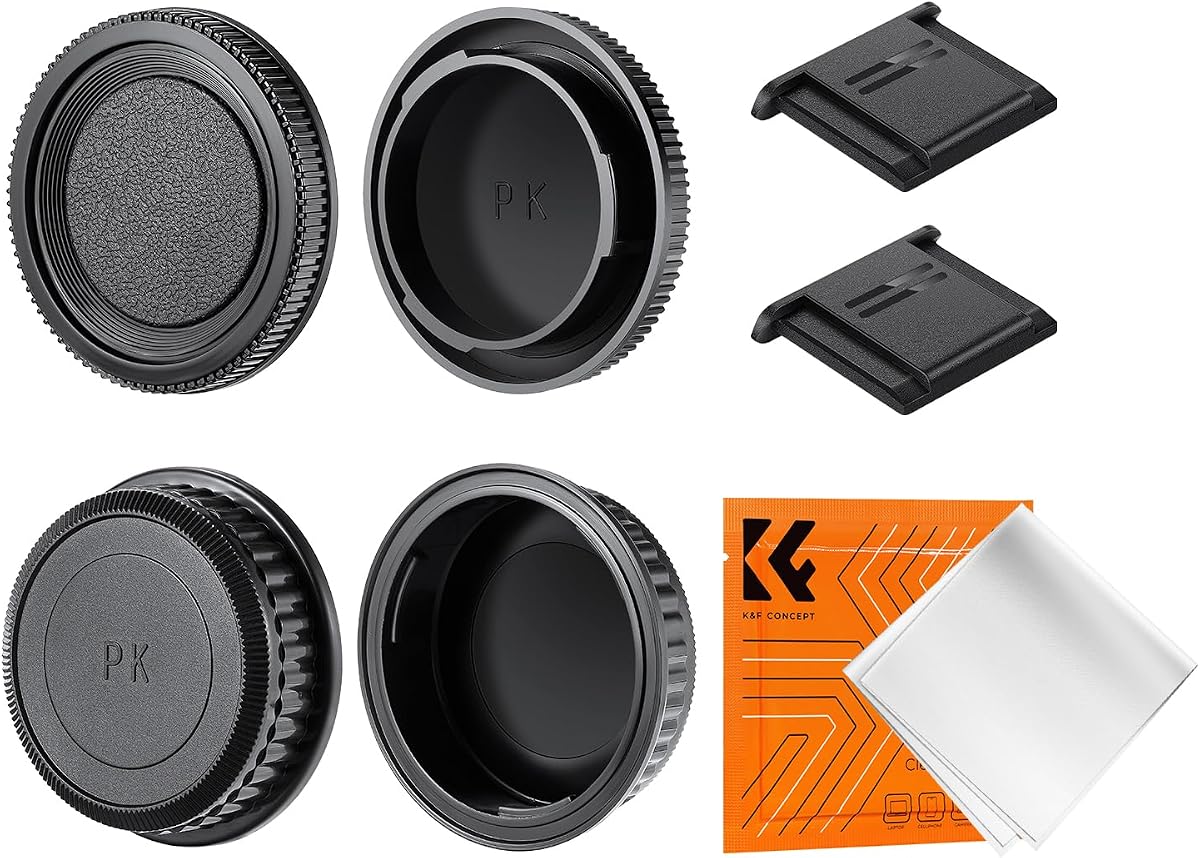
The K&F CONCEPT Rear Lens Cap and Body Cap Cover Kit is not a photographing lens, but it is directly relevant to anyone building a K-mount camera kit. With a 4.7 customer rating, it provides two body covers, two rear lens caps, two hot shoe covers, and a microfiber cleaning cloth in one protective set.
We may earn a commission when you buy through this link, at no additional cost to you.
The caps help protect the camera sensor area, rear lens elements, and hot shoe interface from dust, moisture, fingerprints, and physical damage. Their high-impact plastic construction is described as lightweight, portable, and resistant to drops, while the bayonet-style design allows quick installation and removal without complex tools.
Compatibility is listed for Pentax K-mount cameras and lenses, with examples including the K3, K3 II, K70, KS1, KS2, K500, and K50. The two body caps and two rear lens caps make the kit useful for a multi-camera setup or for keeping replacement covers accessible. A microfiber cloth adds a basic cleaning tool for the camera and lens surfaces.
Do not treat this kit as an alternative to a lens. Its value is preventive: it helps preserve cameras and lenses between shoots, particularly during travel or storage. It is most useful for Pentax owners who need extra body caps, rear caps, or hot shoe covers, and for those who want to keep a more complete protective set on hand.
Exposed sensor surfaces and lens elements are vulnerable to dust and fingerprints, particularly when equipment is carried or stored between sessions. Properly fitted body and rear caps create a basic physical barrier against those everyday sources of contamination.
The inclusion of two body covers and two rear lens caps is practical for photographers who alternate between bodies or lenses. The hot shoe covers further protect an exposed interface, while the included microfiber cloth supports routine surface maintenance.
We may earn a commission when you buy through this link, at no additional cost to you.
Choosing a K-mount lens starts with the subjects and shooting conditions you encounter most often. Focal length, aperture, focusing method, stabilization, size, and camera compatibility should be considered together so the lens remains practical for your preferred Pentax body.
A focal length determines both the angle of view and the amount of background separation you can create. A 35mm standard prime offers a moderately wide view suited to landscapes, travel, and environmental portraits. A 50mm prime feels more natural for street scenes, people, and still life, while the 18-135mm zoom provides major framing flexibility for everything from wide scenes to distant subjects. The Tamron 70-300mm focuses its capabilities on telephoto work, making it more specialized for wildlife, events, and distant details.
The maximum aperture controls how much light enters the lens and how shallow the depth of field can become at a given framing. The F1.7 primes listed here are the strongest choices for low light and background separation, while the F2 Pentax Asahi lens offers a similar approach. The 35mm F2.4 and 18-135mm F3.5-5.6 provide useful but less luminous apertures, and the 70-300mm's F4-5.6 range is most appropriate when reach is more important than a very bright viewfinder.
Autofocus is usually more convenient for moving subjects, events, children, and quick-changing compositions. It is a clear advantage of the Pentax 35mm F2.4, Tamron 70-300mm, Sigma 28-80mm, and Pentax 18-135mm. The 50mm alternatives are manual-focus lenses, which can provide deliberate control but require greater technique. Consider how often you work in dim light or react quickly to movement before accepting manual operation.
Stabilization can make handheld images easier when shutter speeds are slow. The Pentax SMC PENTAL-Da 35mm F2.4 benefits from the in-body shake reduction system found in compatible Pentax digital SLR K-series cameras. The other lenses do not have a stated stabilization feature, so stabilization should not be assumed. If your primary body lacks in-body stabilization or you regularly work at slow shutter speeds, verify the system's availability before selecting a lens.
A prime is often easier to carry than a zoom, particularly when the zoom is weather resistant and intended to replace several lenses. The Pentax 35mm F2.4 is especially compact at about 124 grams and 45 millimeters long. The Pentax 18-135mm offers much broader framing despite its length, while the 70-300mm naturally requires a larger carrying strategy. Your travel habits and shooting frequency should determine whether simplicity or range matters more.
The Pentax K family is broad, and a lens's electrical or mechanical features may vary across bodies. The Andoer specifically names the K1 and K-1 Mark II, while the Sigma listing identifies Pentax-AF compatibility. Other products are described as compatible with Pentax K-mount cameras, but it is still prudent to confirm the exact model. Check mount type, autofocus operation, aperture control, and whether electronic features are fully supported.
A manual-focus lens is not automatically better or worse; its ergonomics determine whether the experience is enjoyable. Consider focus-ring feel, focus accuracy, available focus aids, and your familiarity with the system. The bright 50mm primes are especially appealing for deliberate street and portrait work. The manual-focus Sigma is a broader zoom, while the 35mm F2.4 provides autofocus for users who want a straightforward standard lens.
Condition can affect price, appearance, accessories, and confidence. The renewed 50mm lenses may have visible wear, and the Pentax Asahi listing describes light signs of use. New examples provide a more predictable starting point, while a used lens can be attractive for a classic design. For any non-new item, examine actual photographs, focus and aperture behavior, mount condition, glass cleanliness, and the seller's return policy.
Begin by confirming the lens mount and body compatibility, then attach the lens by aligning its mounting marks with those on the camera. Remove the body and rear caps only when needed, keep fingers away from the front element, and avoid rotating the lens by twisting the front glass or filter thread. For a manual-focus prime, switch the camera to manual focus, set the desired aperture, and focus directly on the subject.
Use the lens's stated minimum focus or close-focusing behavior as a guide, but confirm the result on the camera display because magnification and framing can vary by body. With an autofocus zoom, select the appropriate focus mode and let the camera acquire focus before taking the shot. For a bright prime, monitor shutter speed, ISO, and depth of field carefully rather than opening the aperture without considering the entire scene.
Keep lenses capped when not in use, particularly with the K&F CONCEPT body and rear caps. Clean only with an appropriate lens cloth, inspect the mount for dust or damage, and avoid touching optical surfaces. For weather-resistant or specialized glass, follow the manufacturer's guidance and remove the lens from prolonged damp conditions even when the construction is designed to handle inclement weather.
Not every listing guarantees compatibility with every body. The Andoer specifically names the Pentax K1 and K-1 Mark II, while the Sigma is listed for Pentax-AF cameras, and several other products use broader K-mount language. Confirm the exact camera model, mount, autofocus behavior, and electronic communication before purchasing.
A 50mm prime is often simpler to carry and can provide a bright aperture and strong subject separation. A zoom offers a much wider range of focal lengths, which can be invaluable for travel, events, landscapes, and changing subjects. The best choice depends on whether you value maximum light and photographic simplicity or the ability to reframe without changing lenses.
The Pentax SMC PENTAL-Da 35mm F2.4 benefits from shake reduction built into compatible Pentax digital SLR K-series bodies. No dedicated lens stabilization is stated for the other products. If you regularly shoot at slow shutter speeds, confirm whether your camera body provides stabilization before selecting a lens.
The F1.7 50mm primes have the widest maximum apertures in the group, giving them a natural advantage when light is limited. The Pentax Asahi 50mm F2 is also bright, while the 35mm F2.4 and zoom lenses provide additional options. Aperture is only one consideration, so subject movement, shutter speed, and stabilization support also influence the result.
Its 18-135mm range provides broad framing flexibility with an extended 75X zoom coverage. It also includes weather-resistant construction, a quick and quiet DC autofocus motor, and a compact, lightweight design. That combination makes it particularly appealing as a versatile travel or general-purpose lens for Pentax photographers.
A renewed lens can be worthwhile if you accept cosmetic wear and want access to a desirable optical design. The main issue is that examples may differ in condition, and some listings provide little detail about focus accuracy, glass, or included accessories. Review the exact photographs, description, return policy, and warranty information before buying.
No. It is a protective accessory set containing body covers, rear lens caps, hot shoe covers, and a microfiber cloth. It does not provide any optical elements or focal length, but it can protect a Pentax K-mount camera and lens between uses, particularly during travel and storage.
Yes, and the 50mm primes are especially natural choices for portraits because they preserve a familiar perspective and provide relatively bright apertures. The Pentax 35mm F2.4 is useful for environmental portraits, while the 18-135mm and 70-300mm zooms allow tighter framing without changing lenses.
The Andoer 50mm F1.7 is the budget-focused choice for a photographer seeking a bright manual-focus standard prime. The Pentax SMC PENTAL-Da 35mm F2.4 is the most balanced general recommendation, combining a compact standard view, useful aperture, strong optical design, and body-based shake reduction. The Pentax DA 18-135mm F3.5-5.6 is the premium all-rounder for broad framing, quick autofocus, and outdoor durability.
Your priority should determine the direction of the final decision. Choose a fast 50mm prime for portraits and low light, the 35mm for compact everyday versatility, the Tamron 70-300mm for distant subjects, or the Pentax 18-135mm for travel and situations where carrying one lens is essential. Manual-focus models reward deliberate technique, while autofocus options are more convenient for fast-moving scenes.
Before purchasing, verify the mount and features against your exact Pentax body, inspect the condition of used or renewed glass, and review the current accessories included with the lens. Prices and availability can change, so check the latest listing details and use the comparisons in this guide as a starting point for a more informed choice.