
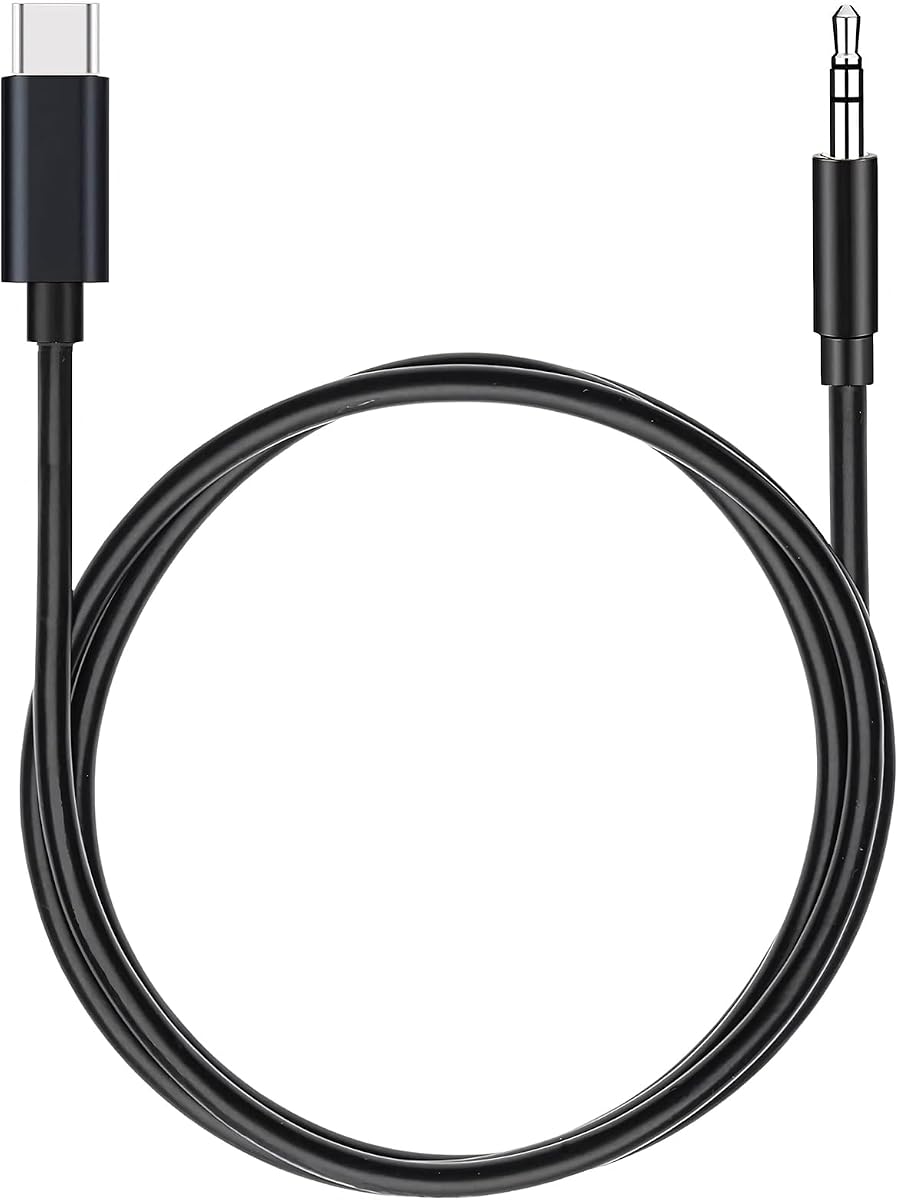
USB C to 3.5mm Audio Aux Cable 3.3FT
4.4Editor score
Built-in DAC decoding
Double-braided nylon exterior
Supports 25,000-plus bends
Discover the best Aux Cord for USB C by comparing compatibility, audio quality, durability, cable length, and features for cars, speakers, and headphones.
A USB-C aux cord is the simplest way to connect modern phones, tablets, and computers to car stereos, speakers, home audio equipment, and wired headphones with 3.5mm jacks. A worthwhile cable should provide stable playback, clear sound, broad device compatibility, and enough strength to survive regular travel and daily use.
The ten options in this guide were compared using the specifications and product information supplied for each cable. We focused on USB-C compatibility, DAC support, stated audio resolution, connector design, bend resistance, length, and intended uses such as vehicle audio, portable speakers, and private listening.
Each review identifies the most useful feature of a particular cable and explains who is likely to benefit from it. Ratings and specifications can change over time, while prices and promotions fluctuate frequently, so confirm the current listing details before making a final purchase.
4.4Editor score

4.5Editor score

4.4Editor score
This side-by-side comparison covers all ten USB-C aux cables, highlighting their connection direction, audio hardware, stated compatibility, construction, and practical strengths.



The JXMOX 4-foot cable is a conventional USB-C-to-3.5mm aux cable with a 4.3 rating and a broad compatibility list. Its most appealing combination is the relatively generous length, braided nylon exterior, and built-in DAC smart chip, giving it enough flexibility for car, desk, and home-audio use without requiring any app or driver.
We may earn a commission when you buy through this link, at no additional cost to you.
The four-foot length gives the 3.5mm plug room to reach a car dashboard or center-console input while still remaining manageable in a bag. Its advanced DAC is described as reducing noise and supporting higher-fidelity output, while the nylon braid and stated resistance to more than 12,000 bends address the two common weaknesses of basic aux cables: interference and connector fatigue.
Compatibility is one of this cable's strongest selling points. The supplied information names recent iPhone models, numerous Samsung Galaxy families, Google Pixel devices, iPad Pro and Air models, MacBook computers, and other USB-C equipment. The listing itself notes that compatibility problems can occur, so buyers should verify their exact model and the audio features of the destination device.
This is a strong general-purpose recommendation for someone who wants one cable to handle several environments. It is particularly useful for a car with a physical auxiliary input, although it does not provide the specifically stated 24-bit/96kHz ceiling or MFi certification highlighted by some alternatives.
A four-foot lead is long enough to reach a car stereo without excessive slack and can also serve portable speakers or home stereo equipment. It remains short enough to coil easily for storage in a bag or drawer.
The nylon braided construction is intended to improve durability and resist the twisting and abrasion associated with frequent use. The stated 12,000-bend rating also indicates attention to the connector transition, where aux cables commonly begin to fail.
We may earn a commission when you buy through this link, at no additional cost to you.
This compact white Seulliya cable has a 4.3 rating and focuses on portability, straightforward operation, and broad device support. At 3.3 feet, it is a practical length for a nearby car stereo, a desk speaker, or wired headphones, while the soft TPE construction is described as resistant to winding, knotting, and kinking.
We may earn a commission when you buy through this link, at no additional cost to you.
Its built-in DAC decoding chip supports up to 16-bit/48kHz according to the supplied product information. That figure is more than adequate for conventional music playback through a car or home system, although it is not the highest resolution claimed in this roundup. The cable requires no software, driver, or complicated setup, which makes it approachable for first-time users.
The compatibility list includes iPhone 15 and 16 families, Samsung Galaxy models from S8 through S25, several Google Pixel devices, iPad models, and multiple Mac computers. Buyers should distinguish USB-C models from older Lightning devices and confirm that the target headphones or stereo accept a standard 3.5mm plug.
This cable is best for buyers who value a compact, flexible lead and want a clean white option to match their accessories. Its main limitation is reach: a three-foot cable is less convenient when the vehicle input is deep in the console or when the audio device sits across a room.
The three-foot format keeps the cable easy to fold and carry. It works particularly well for short trips, office speakers, and headphones when the source device remains close to the 3.5mm input.
The soft TPE jacket is designed to remain flexible after being packed or coiled. That makes the cable a practical choice for commuters who routinely move it between a car, desk, and travel bag.
We may earn a commission when you buy through this link, at no additional cost to you.
This two-pack of four-foot USB-C aux cables is a strong all-around option for households or users who regularly connect more than one USB-C device. It carries a 4.4 rating, includes an advanced DAC chip, and combines a nylon braided jacket with reinforced wire joints for a construction-focused design.
We may earn a commission when you buy through this link, at no additional cost to you.
Having two cables removes a common inconvenience: one can remain in the car while another stays with headphones, a speaker, or a tablet. The four-foot length is suitable for many dashboard positions and home setups, while the braided exterior and reinforced joints target twisting, tugging, and ordinary wear.
The supplied compatibility information covers numerous recent iPhone models, Samsung Galaxy S22 through S25 devices, iPad Pro, Google Pixel phones, OnePlus, Huawei Mate and P-series devices, and other USB-C equipment. The cable sends audio from the USB-C source to a standard 3.5mm input, making it suitable for car stereos, headphones, speakers, and home audio systems.
The main advantage over a single-cable purchase is convenience rather than a unique technical specification. Buyers who travel frequently, share a vehicle, or switch between two devices are likely to appreciate the redundancy, while a single-cable buyer may prefer a model with a more clearly stated maximum audio resolution.
The two-pack is especially convenient for a car owner who also uses wired headphones. Keeping one cable in each location prevents the need to unpack a stored lead every time the listening setup changes.
Aux cable failures frequently begin where the conductors meet the plugs. Reinforced wire joints and a braided outer jacket are intended to make that transition more resistant to repeated bending and pulling.
We may earn a commission when you buy through this link, at no additional cost to you.
The Seulliya 24-bit model has a 4.3 rating and distinguishes itself through stated MFi certification and support for audio up to 24-bit/48kHz. For iPhone 15-series, 16-series, and listed 17-series owners, that certification may provide greater confidence in device recognition than an uncertified generic alternative.
We may earn a commission when you buy through this link, at no additional cost to you.
An advanced DAC handles the digital-to-analog conversion required to send audio through a 3.5mm jack. The listing describes the result as high-fidelity stereo output with cleaner sound. It also notes that the actual maximum output depends on the connected headset or receiving device, an important limitation when comparing resolution claims across cables.
The cable is designed for straightforward use with car stereos, home stereo systems, speakers, and headphones. It needs no software or driver, and its compatibility list includes multiple iPhone generations, Samsung Galaxy families, iPad models, MacBook computers, Google Pixel phones, and Huawei devices.
This is a sensible recommendation for buyers who place a high priority on formal iPhone accessory certification rather than a prominently stated bend-test rating. It offers more specific certification information than most products in the list while maintaining a broadly practical feature set.
The stated certification is particularly relevant for compatible iPhone users who want to reduce the chance of warning messages or uncertain recognition. The product information also describes the use of an original terminal and smart chip.
Although the cable supports up to 24-bit/48kHz, the connected phone, headset, and stereo also influence the final result. A high-resolution specification cannot add detail that the source or output equipment does not provide.
We may earn a commission when you buy through this link, at no additional cost to you.
The 3.3FT USB-C aux cable is a practical car-audio option with a 4.4 rating, an integrated DAC, double-braided nylon construction, and a stated bend rating of more than 25,000 cycles. Its elongated strain-relief zone and reinforced aluminum connectors are specifically designed to protect the areas where cables often crack.
We may earn a commission when you buy through this link, at no additional cost to you.
This is an active one-way audio cable: it streams from a USB-C phone or device to a 3.5mm output on a car stereo, speaker, or headphones. It does not send audio in reverse, support microphones, or operate inline controls. The product information also clearly states that it is for USB-C devices and is not compatible with Lightning ports.
Its 3.3-foot size should suit many dashboard aux inputs, and the slim step-down USB-C plug is designed to fit most phone cases without removal. A longer version is mentioned in the product information for reaching across a vehicle or room, but the featured 3.3-foot format prioritizes compactness.
For a buyer seeking a car cable with strong construction and clear operating limits, this is an excellent choice. It may be less suitable for a user who expects headset microphones, button controls, or a cable that can also feed audio into a USB-C device.
The extended flexible strain-relief transition absorbs sharp bends that can crack a conventional connector housing. Combined with the double-braided jacket, it targets the places where repeated use causes aux cords to fail.
The step-down profile is intended to enter the USB-C port even when a moderately sized protective case is fitted. That convenience is valuable in a car, where users often connect the cable immediately after getting into the vehicle.
We may earn a commission when you buy through this link, at no additional cost to you.
The QianLink two-pack gives buyers two matching 3.3-foot USB-C aux cables with a 4.4 rating. Each cable uses an advanced DAC smart chip, a nylon braided exterior, and a construction rated for more than 20,000 bends, making the set appealing for users who want a spare or multiple listening locations.
We may earn a commission when you buy through this link, at no additional cost to you.
The two-cable format can serve a car and a home setup simultaneously. It can also eliminate uncertainty when one cable is already in use elsewhere. At 3.3 feet, however, the lead is most appropriate when the USB-C source and 3.5mm destination are close together, such as a phone beside wired headphones or a car input near the center console.
Compatibility information includes iPhone 15, 16, and 17 families, current and previous Samsung Galaxy S-series models, Google Pixel devices, iPad Pro, iPad Air, iPad mini 6, Huawei devices, and OnePlus models. The advanced DAC is described as supporting high-definition output and noise reduction, while plug-and-play operation removes any software requirement.
This is a strong pick for someone who wants two durable cables at a standard compact length. It may not be the first choice for a driver whose dashboard input sits far from the phone or for an audiophile who wants a clearly documented maximum sampling rate.
Keeping the second cable at a separate location avoids leaving one device without a wired audio option. It is particularly useful in vehicles shared by multiple USB-C users or in homes with separate car and desk systems.
The nylon braid is combined with an advanced DAC and a stated 20,000-plus bend lifespan. These features suggest a cable intended to withstand regular coiling, travel, and repeated connector movement.
We may earn a commission when you buy through this link, at no additional cost to you.
This Seulliya cable has a 4.5 rating, the highest numerical rating among the ten products, and states support for audio up to 24-bit/96kHz. It is therefore the most compelling option for buyers who want a detailed digital-audio specification combined with stated MFi certification.
We may earn a commission when you buy through this link, at no additional cost to you.
The advanced DAC is central to the product's positioning. It converts the digital signal from a USB-C source into analog audio for a standard 3.5mm jack. The listing promises high-fidelity stereo output, although it appropriately notes that the final maximum resolution depends on the headset or receiving device.
It supports a broad range of devices, including iPhone 15 through 17 variants, Samsung Galaxy S-series phones, iPad Pro and iPad mini 6, MacBook computers, Google Pixel models, and Huawei devices. The cable works with car stereos, home systems, speakers, and headphones without software or a complicated connection sequence.
The main trade-off is the absence of a stated bend-test rating in the supplied information. For users who prioritize documented audio resolution and iPhone certification over a published endurance figure, it is the strongest technical match in the roundup.
USB-C audio devices internally produce digital signals that require conversion before reaching a conventional analog jack. The stated 24-bit/96kHz capability makes this cable appropriate for listeners who want the option of higher-resolution playback where their source and headphones support it.
Completed MFi certification requirements are a meaningful distinction for listed compatible iPhone models. The original terminal and smart chip are also described as supporting a secure connection without warning messages.
We may earn a commission when you buy through this link, at no additional cost to you.
The JSAUX 3.3-foot cable is a 4.4-rated option distinguished by a strong aluminum connector housing, flexible fiber construction, and a stated 10,000-plus bend tolerance. It is designed for USB-C phones, tablets, computers, and other compatible equipment that need a wired 3.5mm audio connection.
We may earn a commission when you buy through this link, at no additional cost to you.
Its built-in DAC decoding chip supports up to 16-bit/48kHz, and the listing says high-quality enamelled copper is used for signal transmission. The premium aluminum housing adds rigidity around the plugs, while the nylon braid and strain-relief design help the cable tolerate the repeated bending associated with carrying and connecting it.
The compatibility list is extensive, covering several recent iPhone generations, Samsung Galaxy S-series devices, iPad models, MacBook computers, Google Pixel phones, Huawei products, and even the listed Nintendo Switch 2. One important qualification appears in the supplied information: it is not compatible with every OnePlus model.
JSAUX is a sensible recommendation for users who value physical connector strength and a short, manageable cable. Its stated resolution is lower than the top Seulliya offering, and the OnePlus exception means buyers should confirm their exact model before purchasing.
Rigid aluminum around the connector interfaces helps protect them from impacts and repeated handling. This construction is especially relevant for a cable used daily in a car or moved frequently between devices.
The strong fiber exterior is described as increasing tensile strength while remaining flexible and reducing tangles. That balance makes the three-foot cable convenient for storage and repeated deployment.
We may earn a commission when you buy through this link, at no additional cost to you.
The black 3.3-foot Seulliya cable is a straightforward option for users who prefer a discreet lead with flexible construction. It has a 4.3 rating, a built-in DAC decoding chip supporting up to 16-bit/48kHz, and a stated bend lifespan exceeding 15,000 cycles.
We may earn a commission when you buy through this link, at no additional cost to you.
Soft TPE is used throughout the lightweight cable body, with the product information specifically highlighting resistance to winding, knotting, and kinking. These properties are useful for a cable that is carried in a pocket, backpack, or vehicle console and connected without warning.
The product works with many USB-C phones, tablets, and computers, including listed iPhone 15 and 16 families, Samsung Galaxy models from S8 through S23, Google Pixel phones, iPad models, and several Mac computers. It connects to car stereos, speakers, headphones, and other equipment with a standard 3.5mm audio input.
Its understated styling and flexibility make it a good everyday companion, especially for a desk or nearby car setup. As with the white version in the guide, the main limitation is its reach, while the lack of a stated MFi certification may matter to some iPhone owners.
The black finish blends well with dark phones, vehicle interiors, and desktop equipment. It is a practical alternative for users who do not want a brightly colored cable in a visible workspace.
A soft TPE body is easier to bend into a compact loop and less likely to develop a persistent kink. The 15,000-plus bend claim indicates a focus on the durability of a frequently handled cable.
We may earn a commission when you buy through this link, at no additional cost to you.
The 6.6-foot USB-C aux cable is the longest dedicated option featured in the guide, making it useful when the 3.5mm input sits deep in a vehicle, across a desk, or farther from the source device. It carries a 4.4 rating and includes a tangle-free nylon braid, reinforced strain relief, and an integrated DAC.
We may earn a commission when you buy through this link, at no additional cost to you.
Its elongated strain-relief zone is designed to absorb sharp bends and protect against casing cracks and internal wire failure. The stated 15,000-plus bend lifespan provides useful durability information, while the slim, step-down USB-C connector is intended to fit through most protective cases.
The product is compatible with USB-C iPhone 15, 16, and 17 models, Galaxy S23 through S25 devices, iPad Pro, MacBook, and other suitable sources. It can feed a car stereo, home theater, portable speaker, or wired headphones. Some equipment may require USB audio to be enabled in its settings.
An important limitation is that the three-pole TRS cable carries audio output only. It does not support a headset microphone or inline volume control. It can still support hands-free car calls in the sense that the caller's voice plays through the stereo while the phone's own microphone captures the user's voice, but it is not a two-way call headset.
Six and a half feet gives users additional freedom to place their phone or tablet without pulling the connector sideways. It is especially useful for vehicles with recessed inputs and home systems positioned away from a desk.
The flexible transition between the cable and plug is intended to prevent the abrupt strain that causes internal wires to fail. Reinforced boots further protect the connection during repeated plugging and removal.
We may earn a commission when you buy through this link, at no additional cost to you.
The right USB-C aux cable depends on where it will be used, which devices you own, and how much physical durability and audio performance you need. The following factors help narrow the field before purchase.
Choose a cable whose listed compatibility includes every device and accessory you intend to connect. When a manufacturer identifies model-specific exceptions, treat those exceptions seriously rather than assuming all devices from the same family behave identically.
Prioritize a one-way output cable for music, navigation prompts, podcasts, and car audio. Look for explicit bidirectional or microphone support if your intended use requires it.
For ordinary music listening, the stated 16-bit/48kHz options are practical. Choose a higher-resolution model when your entire audio chain supports it and documented specifications matter to you.
Measure the distance from the USB-C port to the 3.5mm input when possible. A comfortable route is more useful than extra length that must be tightly coiled or draped awkwardly.
Give particular attention to strain relief if the cable will be used in a car or moved between locations daily. A braided exterior and reinforced connector transition are stronger indicators of longevity than appearance alone.
Look for case-friendly wording or a low-profile step-down design. If your case has an unusually narrow edge, verify the fit before ordering.
Choose a two-pack when multiple locations or devices are regular use cases. A single cable is sufficient for one fixed source and destination.
For iPhone users, certification may be a deciding factor. For any purchase, read the current warranty and support conditions before relying on them for long-term ownership.
Begin by identifying the 3.5mm AUX IN socket on the car stereo, speaker, home receiver, or headphones, and the USB-C audio port on the source device. Connect the cable to the USB-C end first, then insert the 3.5mm plug into the audio input. Select the AUX source on the car stereo or appropriate input on the other system. If no sound appears, check the selected source, the device volume, and any setting needed to enable USB audio.
For the cleanest signal, start with the source device at a high volume and make most adjustments from the car stereo or amplifier. In a vehicle, route the cable so it does not cross a foot pedal, dashboard control, gear selector, or door hinge. Secure excess slack with a light clip or guide rather than creating a sharp bend at either plug. Do not pull the cable out by the 3.5mm connector.
To store the cable, disconnect it from both devices and coil it loosely in a loop. Keep the plug strain-relief sections straight rather than wrapping the cable tightly around them. Avoid pinching the cable, leaving it under heavy objects, or placing it in a hot car for long periods. Periodically inspect the jacket and connectors for cracks, exposed wire, or intermittent sound, and replace the cable if damage appears.
It works with iPhones that use a USB-C port, including the USB-C iPhone models identified in the relevant product listing. Older iPhones that use a Lightning connector require a Lightning-to-3.5mm adapter or cable instead. The source device must also support wired USB audio output, and the 3.5mm destination must have an analog audio input.
Most one-way USB-C-to-3.5mm cables do not send a microphone signal back through the 3.5mm plug, and many do not support inline controls. Some can still play the other party's voice through a car stereo while the phone's built-in microphone captures the user's voice. Check the product details carefully if two-way headset communication or button controls are essential.
Shorter cables are easier to store and work well for nearby headphones or compact speakers. Four-foot cables offer additional reach for many dashboard positions, while a 6.6-foot cable can reach a recessed vehicle input or a system across a room. Choose the shortest length that connects without strain or awkward cable routing.
A DAC is required to convert the source device's digital audio into an analog signal for a 3.5mm jack. Its implementation can affect decoding performance, noise, and supported resolution. A higher stated resolution only helps when the phone, application, source media, and connected audio equipment also support that quality.
Yes, provided the speaker or stereo has a standard 3.5mm audio input and the source device supports USB-C audio output. The cable can also connect to portable speakers and home audio equipment. Verify the correct input because some systems use proprietary connectors or require their own app-based adapters.
Check that the stereo is set to the AUX input, the 3.5mm plug is fully seated, and the phone or computer is not muted. Some devices require USB audio to be enabled in their settings, while a case may physically block the connector. If sound cuts out when the cable moves, the connection or cable may be damaged.
Length is useful only when the car's AUX socket is difficult to reach. A longer cable offers more routing freedom, but an excessively long lead can bunch up in the console or become caught near controls. Measure the available distance and choose a length that reaches comfortably while staying safely out of the way.
Avoid sharp bends at the plug transitions, never yank the cable from the device, and do not pinch it under seats or other objects. Loosely coil it for storage and inspect the flexible strain-relief areas for cracks. Choosing a braided cable with reinforced joints and a stated bend rating can further reduce the risk of everyday wear.
The strongest overall choices depend on what the cable must do. The Seulliya 24-bit/96kHz model stands out for documented high-resolution audio and MFi certification, the 3.3FT cable provides strong construction and a three-year warranty for car users, and the two-pack of four-foot cables offers convenient redundancy for multiple devices and locations.
Before purchasing, confirm that your source uses USB-C, the destination accepts a 3.5mm audio jack, and you do not require microphone input or inline controls. Then prioritize DAC specifications and certification if audio fidelity matters, bend protection and strain relief for frequent travel, and sufficient length for a comfortable connection path.
Ratings, compatibility details, warranty terms, and promotions can change, so review the current listing before ordering. Comparing the present product details, device support, and intended setup will help you select a USB-C aux cable that remains useful in a car, at home, or with wired headphones.